Search the whole station Hot Product Catalog
The mobile impact crushing station constitutes a complete crushing production line capable of self-propulsion or towing; every module—from feeding and crushing to discharge—is fully integrated onto a crawler or wheeled chassis. On-site, there is no need for concrete foundations or complex equipment installation.
Its core advantage lies in the high reduction ratio capability of the impact crusher—processing feed material of up to 200 mm into finished products of less than 40 mm in a single pass. Furthermore, the self-compensating wear design of the blow bars and impact liners significantly reduces the frequency of manual adjustments.
More importantly, the impact crushing principle naturally generates cubical-shaped aggregates; whether used for backfill, road base layers, or commercial concrete, these finished products satisfy aggregate gradation requirements more readily than those produced by jaw crushers.
For medium-to-low hardness materials—such as construction waste, brick and concrete rubble, and limestone—this equipment represents the mobile solution offering the fastest return on investment.
A mobile impact crusher operates on the high-velocity impact principle: a rotor equipped with heavy-duty blow bars spins at high speeds (typically 600-800 rpm), striking incoming material and hurling it against adjustable aprons (impact plates) for secondary breakage. This makes it ideal for soft to medium-hard, less abrasive materials like limestone, concrete rubble, asphalt, or quarry fines.
In contrast:
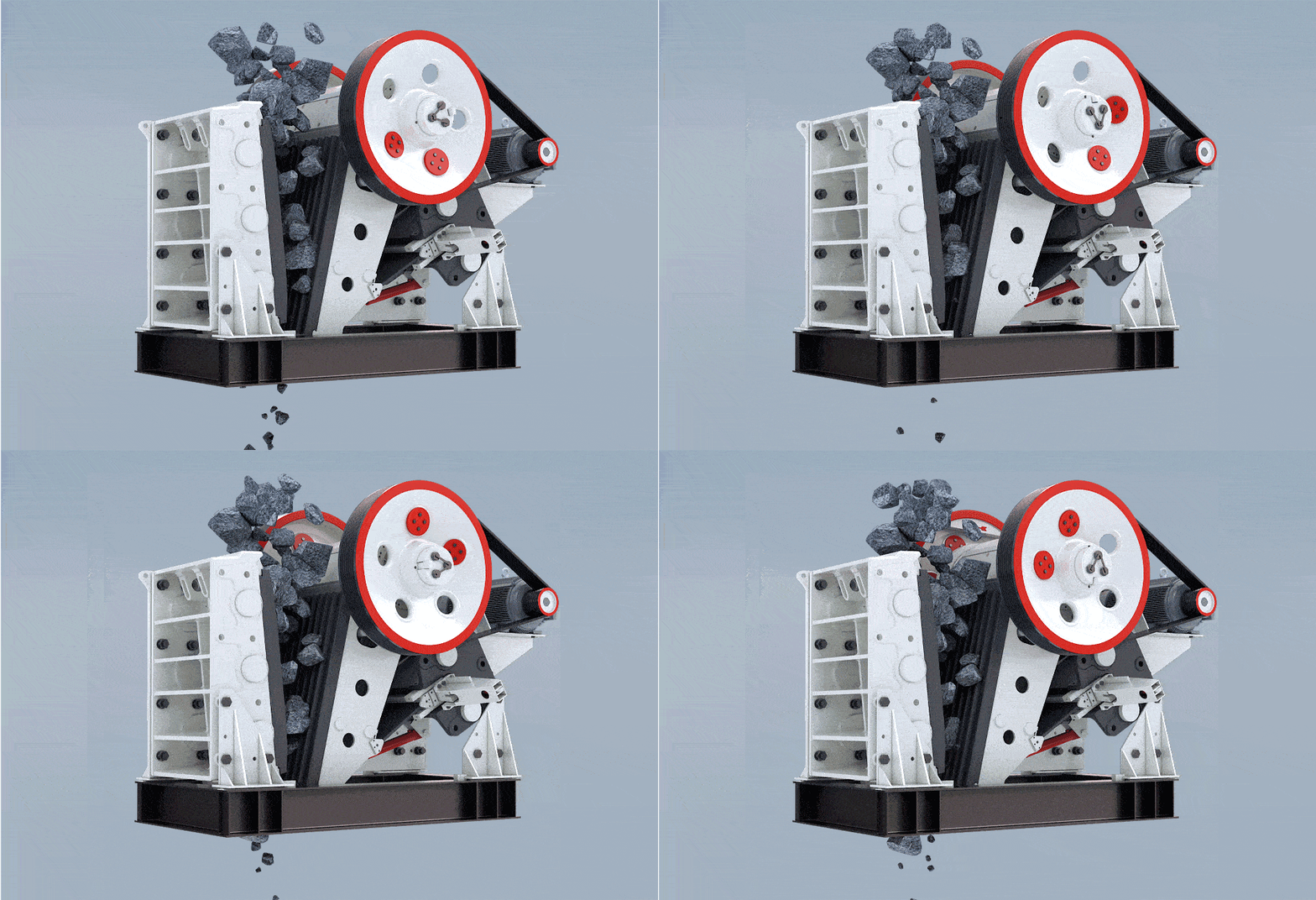
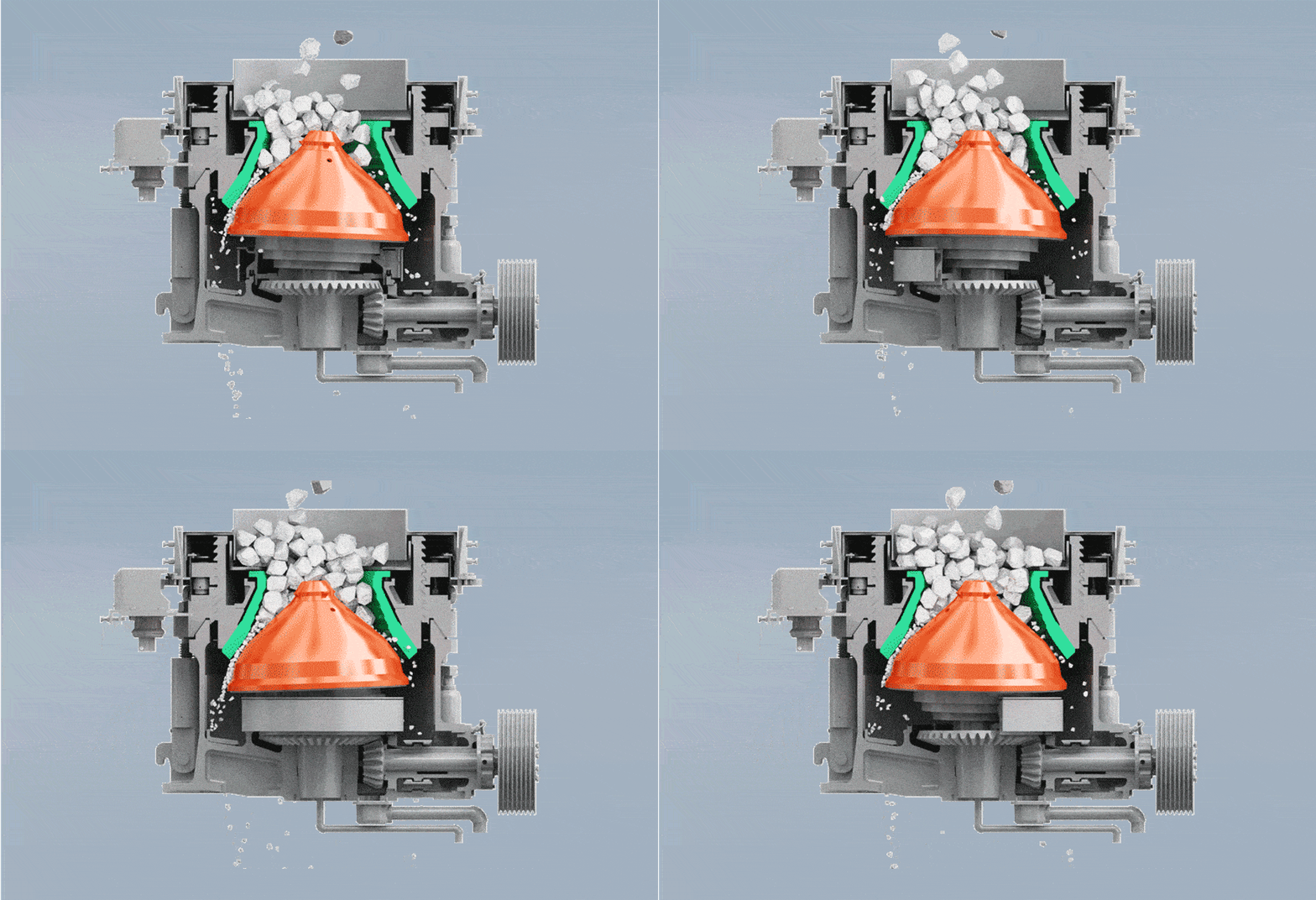

Materials are conveyed uniformly and quantitatively to the jaw crusher—via a variable-frequency-controlled vibrating feeder—for primary crushing (reducing the size of large-lump materials). Following primary crushing, the material is transferred via a main belt conveyor to an impact crusher for secondary shaping and crushing.
The core closed-loop logic operates as follows: the crushed mixed material enters a circular vibrating screen for classification; properly sized material (meeting the client’s specific particle size requirements) is conveyed directly to the crusher, while oversized material is precisely returned to the impact crusher via a return conveyor for re-crushing, thereby establishing a closed-circuit circulation system.
This design ensures that the material undergoes a complete crushing cycle within the crushing chamber, ultimately achieving the production goals of controllable particle size, as well as continuous and highly efficient operation.
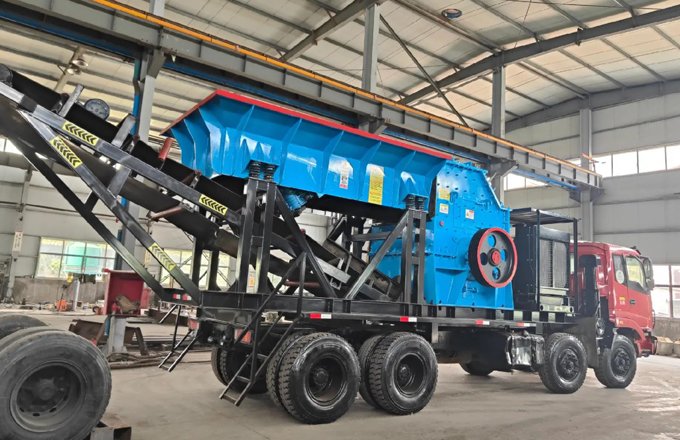
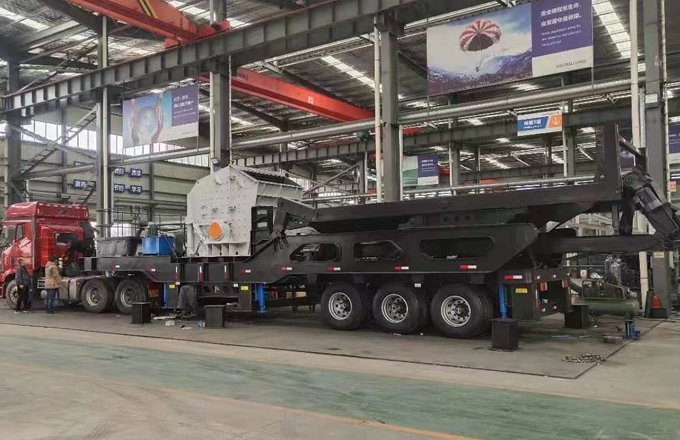
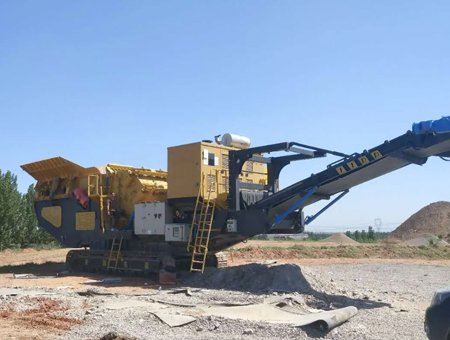
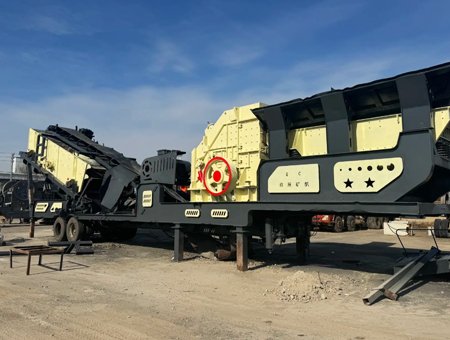
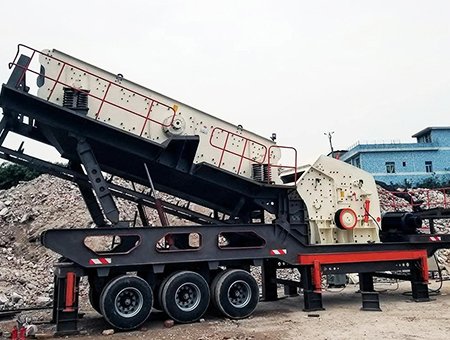
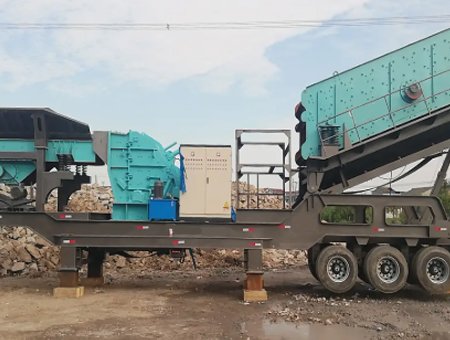
Choosing between a tracked or wheeled mobile impact crusher isn’t just about mobility — it’s about balancing on-site agility, transport logistics, and total operating cost per ton.
Tracked models are built for rugged, uneven terrain and confined spaces. With remote-controlled tracks, they can climb stockpiles, work on soft ground, and reposition in minutes without a support vehicle. They’re ideal for demolition waste recycling, quarry scaling, or remote mining sites where road access is poor.
Wheeled versions, by contrast, are road-legal in most regions. You can hook them to a truck and move between sites in hours, not days. However, they require compacted, level ground for stable operation and typically need an external power source or separate generator. Best suited for contractors moving between urban job sites or asphalt/concrete recycling yards.
Tracked units give you operational freedom at the cost of higher purchase price and slower highway transport. Wheeled units offer logistical simplicity and lower upfront cost, but demand better site preparation and often a second engine or electric hookup.
If you relocate more than once a week, choose wheeled. If your site conditions vary or ground is unstable, choose tracked.
| Feature | Tracked Chassis | Wheeled Chassis |
|---|---|---|
| Ground condition | Soft soil, mud, gravel, uneven or sloped terrain | Compacted, level ground (concrete or hard base) |
| On-site mobility | Remote‑controlled tracks – can climb stockpiles and reposition without support vehicle | Requires truck or loader to move; limited to flat area |
| Setup time | ~5 minutes (lower tracks → start crushing) | 15–30 minutes (level outriggers → connect power → start) |
| Transport between sites | Slow self‑travel (<1 km/h); needs low‑bed trailer for highway | Road‑legal in most regions; towed by truck at up to 80 km/h |
| Power source | Usually diesel‑hydraulic (self‑contained) | Diesel or electric (often needs external hookup or gen set) |
| Typical application | Quarries, remote mines, demolition debris yards, poor road access | Urban demolition, asphalt/concrete recycling yards, contractors moving weekly |
| Upfront cost | Higher (complex undercarriage + hydraulic drive) | Medium (simpler chassis, optional electric drive) |
| Recommended monthly moves | ≤ 4 times | ≥ 5 times |
| Model | ZDM938F1210 | ZDM938FW1214 | ZDM1149F1315 | ZDM1349HD1110 | ZDM1349HD1315 |
| Transportation Length(mm) | 12000 | 12000 | 13900 | 15450 | 15450 |
| Transportation Width(mm) | 2550 | 2550 | 2900 | 2950 | 2950 |
| Transportation Height(mm) | 3900 | 3900 | 4450 | 4500 | 4500 |
| Maximum Length(mm) | 12500 | 12500 | 13900 | 15450 | 15450 |
| Maximum Width(mm) | 3250 | 3260 | 3250 | 3250 | 3250 |
| Maximum Height(mm) | 5100 | 5200 | 5200 | 5200 | 5200 |
| Weight(t) | 39 | 44 | 54 | 62 | 62 |
| Crusher Model | PF-1210 | PF-1214 | PF-1315 | HD1110 | HD1315 |
| The Maximum Feeding Size(mm) | 350 | 350 | 500 | 400 | 700 |
| Production Capacity(t/h) | 70-130 | 100-180 | 130-250 | 112 | 280 |
| Vibrating Feeder | ZSW950×3800 | ZSW950×3800 | ZSW110×4900 | ZSW130×4900 | ZSW130×4900 |
| Main Belt Conveyor | B800×8.5M | B800×8.5M | B1000×9.5M | B800×11M | B1200×11M |
| Side-opening Belt conveyor(Optional) | B500×3.2M | B500×3.2M | B650×4M | B650×4M | B650×4M |
| Genset(Optional) (kw) | 320 | 320 | 400 | 320 | 440 |
| Iron Separator (Optional)(kw) | RCYD(C)-8 | RCYD(C)-8 | RCYD(C)-10 | RCYD(C)-8 | RCYD(C)-12 |
A: A jaw crusher uses compression to crush hard, abrasive materials like granite and basalt. It’s best for primary crushing and produces a coarse output. An impact crusher uses high-speed hammers to crush softer materials like limestone, concrete, and asphalt. It produces a more cubical, well-shaped product, which is preferred for road base and concrete aggregate.
A: The purchase price typically ranges from $200,000 to $500,000 USD for mid-range models. However, operating costs like fuel, wear parts, and maintenance often exceed the initial price over time. Electric models can significantly reduce fuel costs but require grid access.
A: Choose tracked if you work on rough, uneven, or soft ground and need to reposition frequently without support vehicles. Choose wheeled if you move between sites more than once a week, have paved roads, and level concrete pads. Tracked units offer operational freedom; wheeled units offer logistical simplicity.
A: Blow bars typically last 100 to 500 hours, depending on material abrasiveness. Side liners last 200 to 800 hours. Hard, high-silica materials like granite will wear parts much faster than limestone or concrete. Daily checks for wear and unusual noises can prevent unexpected downtime.
A: Yes, but with trade-offs. Impact crushers can process hard rock, but wear part life will be significantly shorter – often 50 to 75 percent less than with limestone. For high-volume hard rock applications, a jaw plus cone crusher setup is usually more economical.
A: Ask about certifications like CE or OSHA, transport width (keep it under 2.55 meters for European roads), spare parts availability and lead time, voltage compatibility with your local grid, English manuals, and whether the machine can handle your local climate – from 50°C heat to -30°C cold. Also request local references you can contact.
A: Absolutely. Concrete recycling is one of the most common applications. Mobile impact crushers excel at breaking down concrete rubble and can be equipped with a magnetic separator to remove rebar. The output is ideal for use as recycled base material or fill.
A: A tracked model can be ready to crush in about 5 minutes – just lower the tracks, start the engine, and feed material. A wheeled model typically takes 15 to 30 minutes because you need to level the outriggers and connect power. Setup time matters more if you move frequently.
A: Daily tasks take about 5 to 10 minutes: grease bearings, check engine oil and hydraulic fluid levels, inspect blow bars and liners for wear, and listen for unusual noises or vibrations. Consistent daily checks prevent costly breakdowns.
A: Yes. We stock common wear parts like blow bars, liners, and belts at regional warehouses. We can also ship parts by air for urgent needs. Contact us with your model and location, and we will tell you current lead times and shipping costs.
 Chunlei Mining Machinery