Dolomite is a term that often leads to head-scratching. Is it a rock, a mineral, or something else entirely? How does it differ from familiar stones like limestone or marble? And is it safe? If you’re searching for clear, accurate answers, you’ve come to the right place. Here’s your straightforward guide to understanding dolomite in under two minutes.
What Exactly Is Dolomite?
Dolomite is both a mineral and a rock—a dual identity that causes much of the confusion.
As a mineral: Dolomite is a calcium magnesium carbonate (CaMg(CO₃)₂). It often contains traces of iron, manganese, or other elements, which can influence its color.
As a rock: Geologists refer to rock primarily composed of the mineral dolomite as dolostone (a less ambiguous term). This sedimentary rock often includes impurities like calcite, quartz, or feldspar.
Characteristics of Dolomite
Dual Identity: Dolomite is both a mineral (calcium magnesium carbonate, CaMg(CO₃)₂) and a sedimentary rock (dolostone).
Hardness: 3.5–4 on the Mohs scale (harder than limestone, softer than quartz).
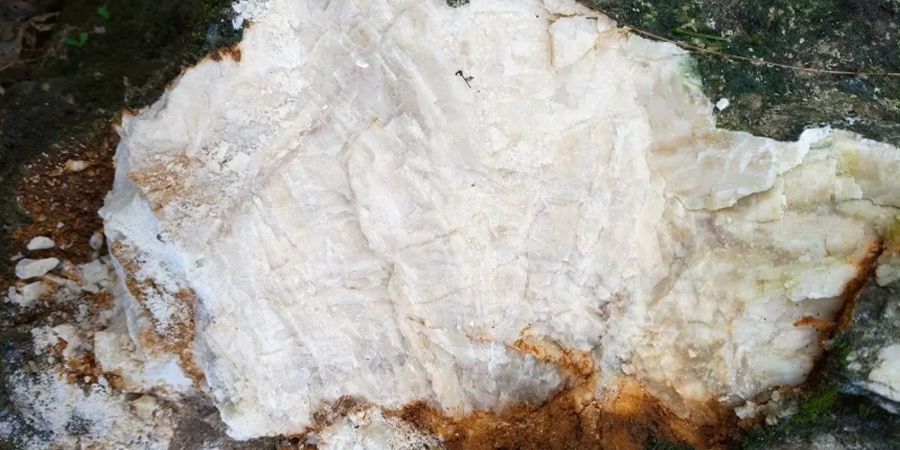
Appearance: Often white, gray, or pink; crystals are typically curved (saddle-shaped).
Reaction to Acid: Weak or no fizz (unlike limestone, which reacts strongly).
Formation: Forms in shallow marine environments via the alteration of limestone by magnesium-rich groundwater (dolomitization).
dolomite is a versatile, durable carbonate material with distinct chemical and physical properties that set it apart from similar rocks like limestone and marble.
Where Is Dolomite Found?
Dolomite rock forms in ancient, warm, shallow marine environments, similar to limestone. It’s created over time when magnesium-rich groundwater alters original calcium carbonate deposits—a process called dolomitization.
Major dolomite deposits are found worldwide, including in the Midwestern United States, Ontario (Canada), Switzerland, and the Italian Alps. The famous Dolomites mountain range in Italy is a majestic natural example of this rock.
Dolomite vs. Limestone: Key Differences
While often found together and used similarly, dolomite and limestone are not the same.
A rock with a composition between the two is called dolomitic limestone.
Feature
Dolomite (Rock)
Limestone
Primary Mineral
Dolomite (CaMg(CO₃)₂)
Calcite (CaCO₃)
Hardness (Mohs)
3.5 – 4 (Harder)
3 (Softer)
Reaction with Acid
Weak or no fizz
Vigorous fizz
Typical Impurities
Less common
More clay, silt, sand
Dolomite vs. Marble: Don’t Mix Them Up
No, dolomite is not marble. Marble is a metamorphic rock formed when limestone or dolostone is recrystallized under intense heat and pressure. Dolomite is a sedimentary rock. However, some marbles contain dolomite minerals and are sold as “dolomitic marble.”
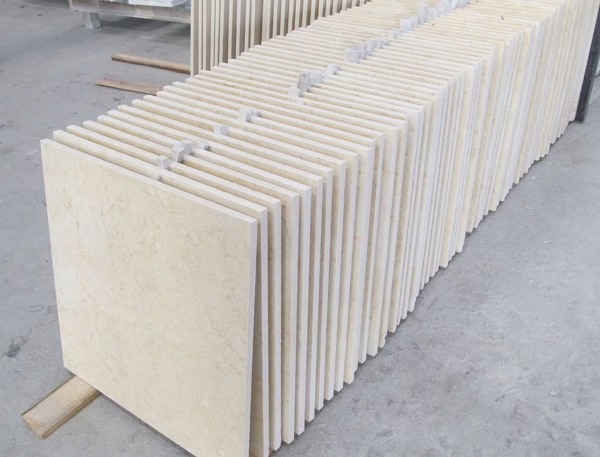
In construction, the term “marble” is often used broadly for various polished stones, including dolomite, used for countertops, tiles, and window sills.
Dolomite is a sedimentary rock with a specific mineral composition.
Marble is its metamorphic counterpart—if the original rock was dolomite, it becomes dolomitic marble after metamorphism.
The main difference lies in their origin and texture: dolomite forms chemically in water, while marble forms physically under heat and pressure, resulting in a recrystallized, often polished appearance.
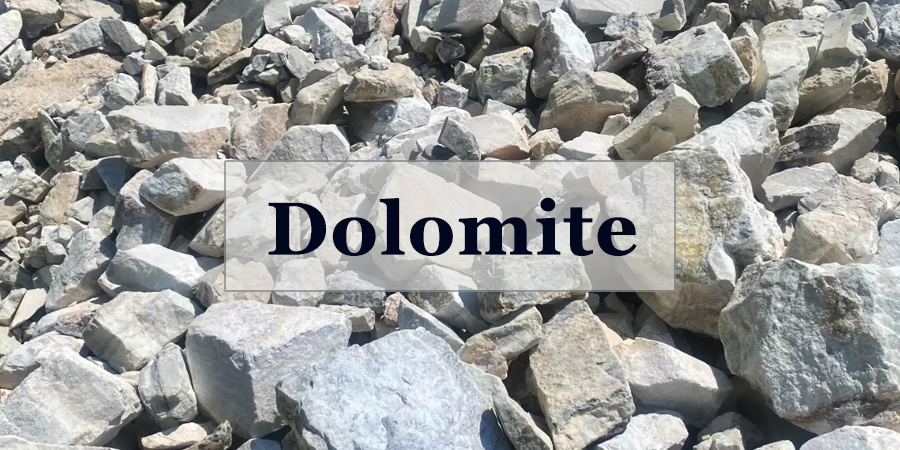
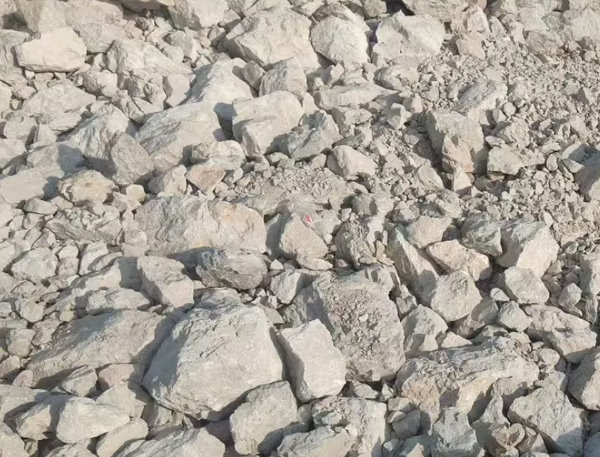
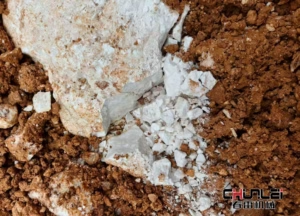
Raw-dolomite-rock
Marble
Feature
Dolomite
Marble
Rock Type
Sedimentary rock (formed by deposition and chemical alteration).
Metamorphic rock (formed by recrystallization under heat/pressure).
Primary Composition
Mineral dolomite [CaMg(CO₃)₂].
Mineral calcite [CaCO₃], but can be dolomitic marble if dolomite-rich.
Formation Process
Dolomitization: magnesium-rich water alters limestone.
Metamorphism: limestone or dolostone is subjected to heat and pressure.
Often granular, earthy; crystals may be curved/saddle-shaped.
Distinctive crystalline, sugary texture; often veined and takes a high polish.
Common Use
Construction aggregate, cement, agricultural lime, industrial source of MgO.
Prized as dimension stone for sculpture, countertops, flooring, and architecture.
Is Dolomite Harmful? Understanding the Risks
Dolomite itself is valuable for construction and industry, but processed forms like dolomite sand and powder require caution.
Dolomite Sand for Beaches: Using crushed dolomite as beach sand (e.g., Manila Bay project) is ecologically problematic. It is less stable than natural quartz sand, can erode quickly, and may harm marine ecosystems by altering water chemistry and smothering habitats.
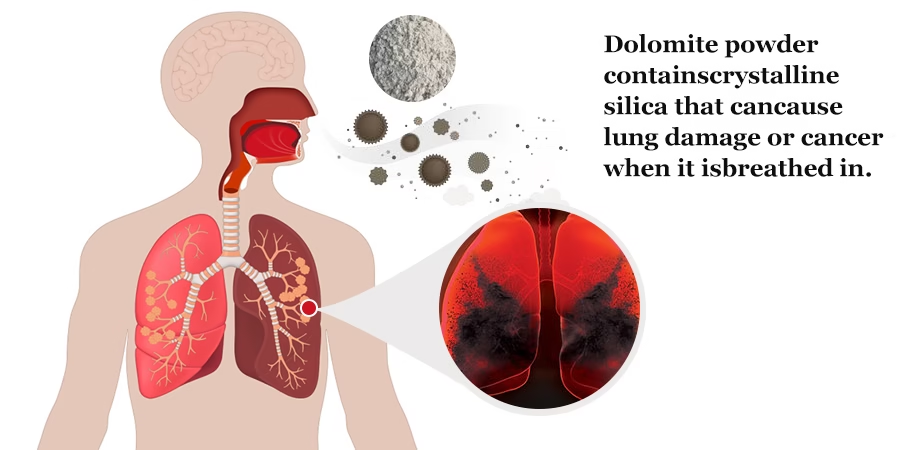
Dolomite Powder for Health: Dolomite powder is not safe as a dietary supplement. It can contain trace amounts of crystalline silica (a respiratory hazard) and heavy metals like lead or arsenic. Safer calcium/magnesium supplements are available.
Is dolomite harmful to humans?
The answer is it depends on the form and exposure. In its bulk, solid state (e.g., as countertops, construction aggregate), dolomite is generally not harmful and is safely used in industry and architecture. The primary concerns arise with processed fine particles.
Key Risks:
Respiratory Hazard: Inhaling fine crystalline silica dust (often present in crushed dolomite) can cause silicosis, lung scarring, and is a known carcinogen.
Heavy Metals: Natural deposits may contain traces of hazardous metals like lead, arsenic, or mercury, which pose risks if inhaled or ingested in powder form.
Conclusion: Occupational exposure without proper PPE (masks, ventilation) is dangerous. It is not safe as a home-sourced dietary supplement.
Conclusion
Dolomite possesses dual characteristics as both a mineral and a rock. In the construction industry, it is harder and more durable than limestone, making it a vital industrial raw material. However, its application requires careful consideration, particularly when processed into sand powder, where attention must be paid to environmental impacts and human health concerns.
In the field of barite processing, have you ever faced these challenges: subpar equipment performance, inconsistent product fineness, or persistently high overall operating costs?As a cornerstone material for drilling, chemical, and coating indus...
Sand is one of the most fundamental materials in construction, manufacturing, and industry. Yet its properties—particularly its density—vary dramatically based on particle size, composition, and moisture content. Understanding these variations is...
Magnetite Dressing Production Line
Process Introduction The magnetite beneficiation process is mainly used to select low-grade magnetite. Since the ore has strong magnetism and is easy to grind and select, the coarse-grained magnet...
Molybdenum Ore Beneficiation Process
Process Introduction Molybdenum ore dressing mainly goes through crushing and grinding - flotation - dehydration and refining, and the coarse concentrate is re-grinded and re-selected to improve...
Welcome to Chunlei machinery website. We are a leading manufacturer and exporter of mining machinery in China with more than 30 years history in China.
We offer you one-stop solutions: online consultation --- customized solutions --- fast delivery --- comprehensive after-sales service
 Chunlei Mining Machinery