Ball mills and vertical roller mills are two mainstream grinding equipment. Vertical roller mills offer higher production efficiency, while ball mills are the preferred choice for ensuring product quality. This article will detail the differences between the two:
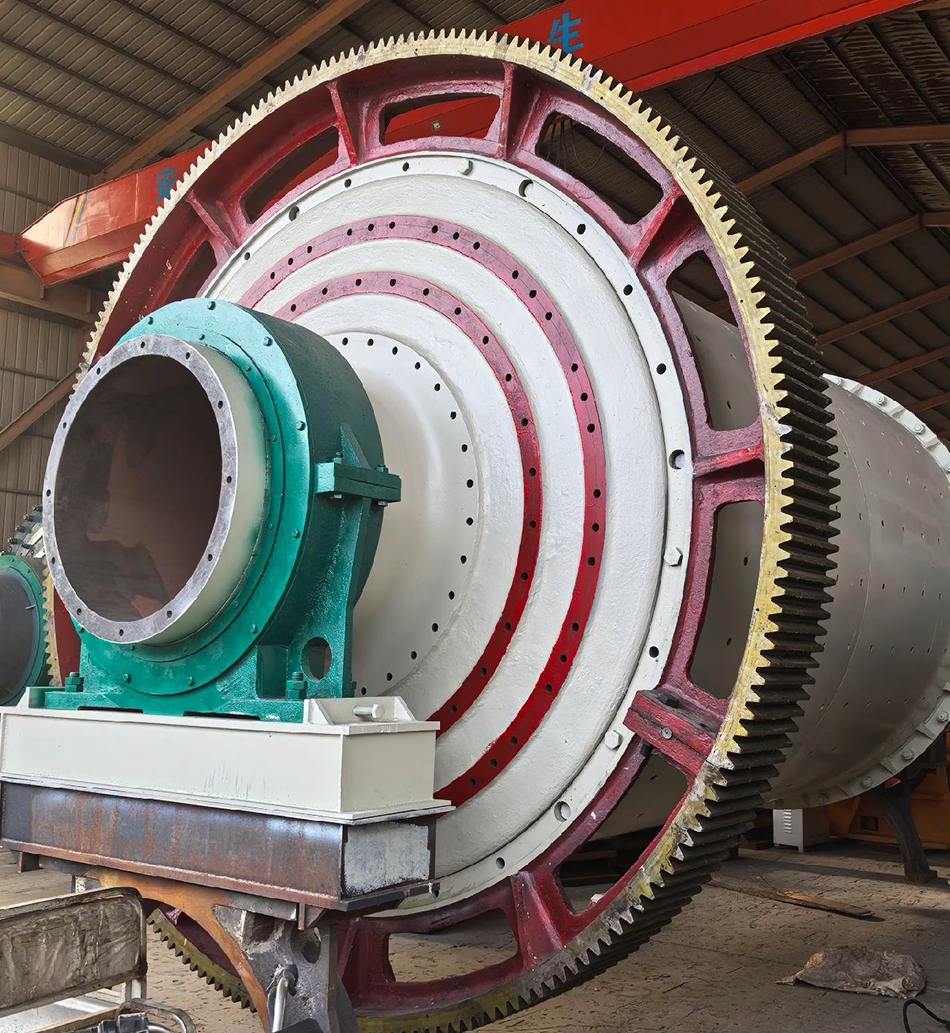
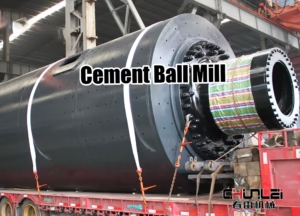
Ball Mills
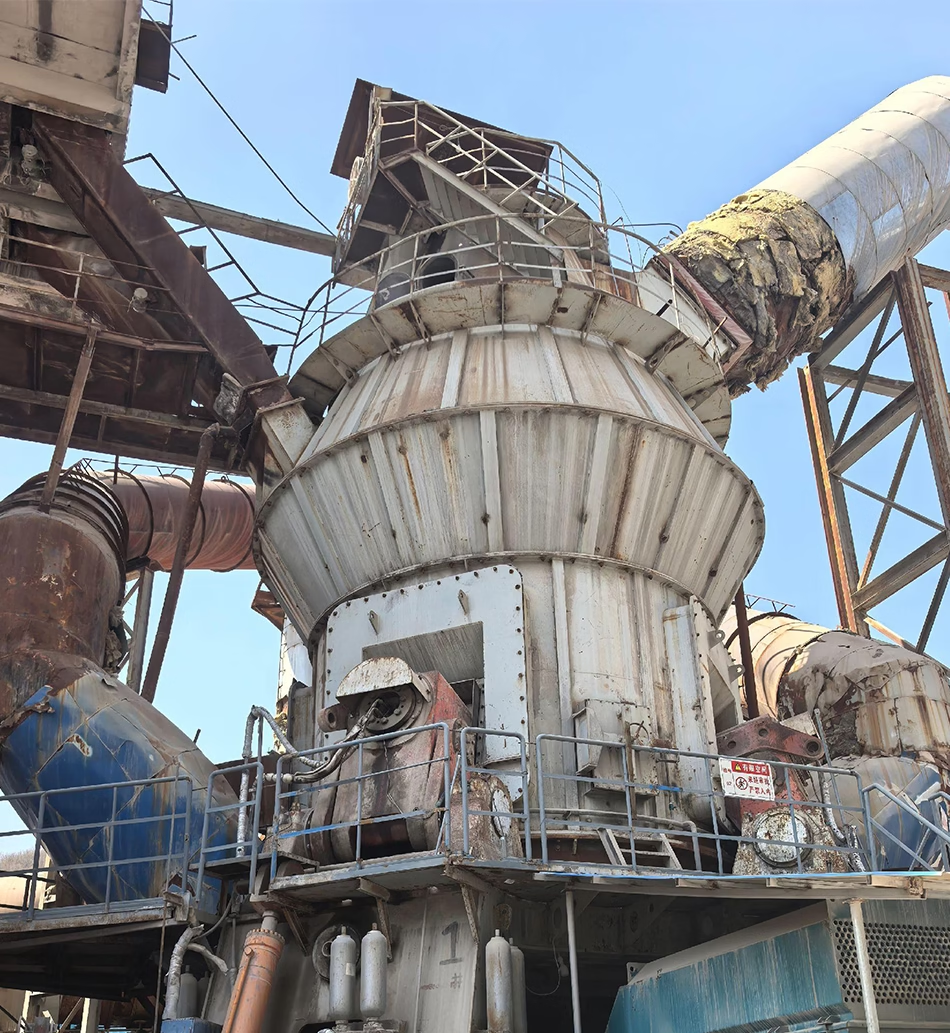
Cement Vertical Roller Mill
Different Working Principles
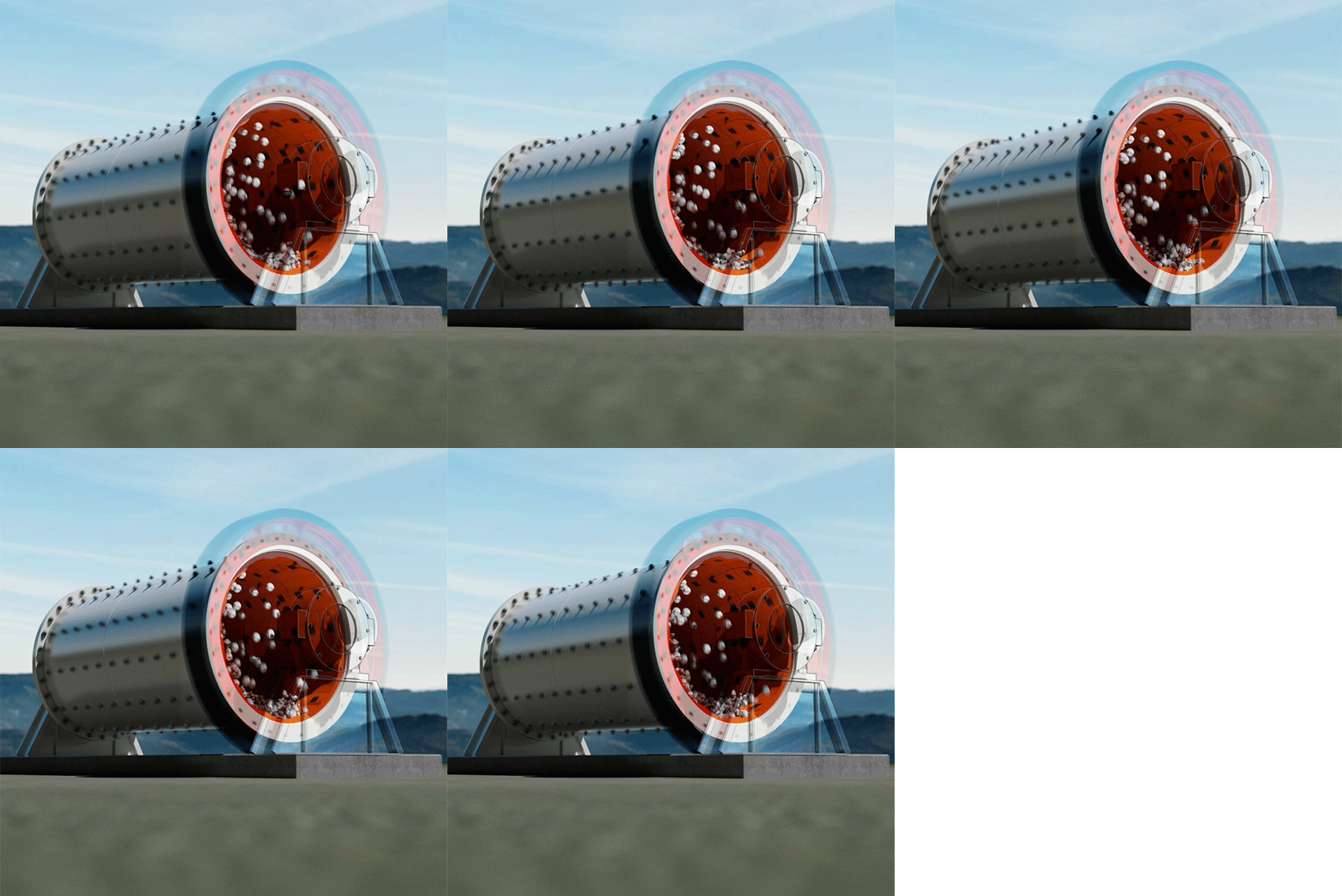
Ball mills primarily operate on the “free-fall grinding” principle, relying on the impact and friction generated by a rotating drum. Their core advantage lies in exceptionally reliable operation and simpler maintenance, making them a time-tested traditional piece of equipment. Cement vertical roller mills, also known as vertical mills, operate on the “compression grinding” principle. Materials are crushed between a rotating grinding disc and a pressurized grinding roller. Renowned for high grinding efficiency and low energy consumption, they are the preferred choice for modern new production lines.
Structural and Material Differences
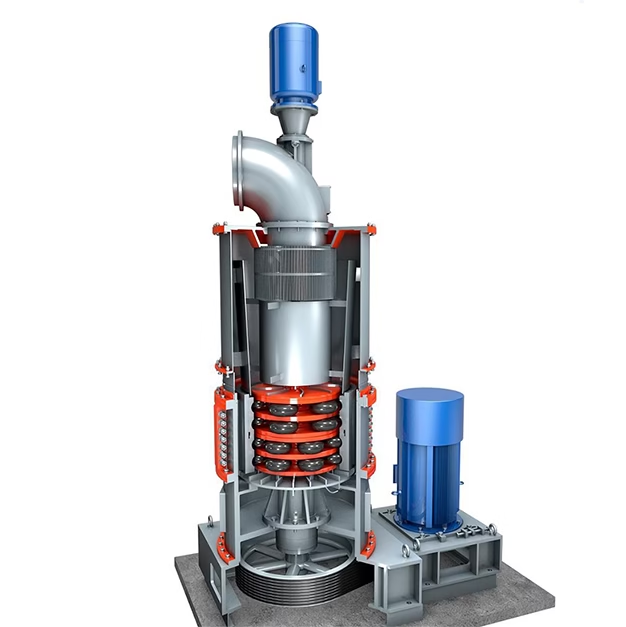
Structure: Ball mills feature a simple design consisting of a rotating cylinder. Their structure is less complex than the vertical mill’s intricate inner chamber, hydraulic system, and transmission system, resulting in fewer potential failure points and easier maintenance.
Maintenance: Routine maintenance tasks for ball mills, such as replacing liners or adding steel balls, are relatively straightforward and can be handled by most factory maintenance teams. In contrast, inspecting and replacing core components like grinding rollers and grinding discs in vertical mills requires specialized teams, often resulting in longer downtime.
Material Adaptability: Ball mills accommodate most materials with minimal sensitivity to particle size, grindability, or moisture content. They typically tolerate small metallic foreign objects within the feed. In contrast, vertical mills encountering such debris often suffer surface damage to grinding rollers and discs, leading to significant downtime losses.
Operating Conditions of Ball Mills
Cement Vertical Roller Mill structure
Product Quality (Core Advantages)
Cement Particles: Cement particles produced by ball mills exhibit a more spherical shape (better roundness) due to repeated impact and grinding, with a more continuous and rational particle size distribution. In contrast, cement particles from vertical roller mills are less uniform compared to those from ball mills.
Water Requirement: Due to the uniform particle size produced by ball mills, concrete made with ball-milled cement typically requires lower water content. This reduced water demand means less need for water-reducing agents or directly yields superior concrete performance. While vertical roller mills consume less energy, they generally require higher water content.
Product Stability: Due to the operational principles of ball mills, the cement produced exhibits highly uniform quality with long-term stable and reliable performance. Vertical roller mills, while highly efficient, demonstrate relatively poorer stability compared to ball mills.
Conclusion
Ball mills have a history spanning over a century, with both their manufacturing and maintenance technologies having reached a high level of maturity. For conservative or small-scale investors, ball mills represent a highly reliable and secure choice.
If you have any further questions, Click to contact us for tailored ball mill equipment specifications and quotations aligned with your production requirements.
Weight: 14-370 tonsOutput: 1.5-110 tons/hourPower: 55-3550 kWAdvantages: Fully automatic, high efficiency, etc.
A cement ball mill is a type of cement grinding machine, also known as a cement grinder. It is primarily u...
Hard rock crushing has long posed a significant challenge in mining operations. Ensuring effective crushing while controlling costs has become an urgent industry priority. Traditional crushing methods often involve high energy consumption and exc...
Fluorite Ore Dressing Production Line
Process Introduction Fluorite ore beneficiation methods include gravity separation and flotation, which are also divided into gravity separation equipment and flotation equipment. Gravity separ...
The thermal balance of cement ball mills refers to the calculation and analysis of the difference between heat input (such as physical heat carried by materials and mechanical heat generated during grinding) and heat release (such as heat ...
Welcome to Chunlei machinery website. We are a leading manufacturer and exporter of mining machinery in China with more than 30 years history in China.
We offer you one-stop solutions: online consultation --- customized solutions --- fast delivery --- comprehensive after-sales service
 Chunlei Mining Machinery