For gold miners, improving grinding efficiency and gold recovery rates are essential for boosting profits. By 2026, with rising mining costs and increasingly stringent environmental regulations, optimizing ball mill performance will be an indispensable choice. Selecting the right ball mill is the foundation for efficient grinding and gold recovery. Whether you operate a small-scale artisanal gold mine or a large-scale industrial processing plant, the following five scientific and practical recommendations will help you improve ball mill grinding efficiency, increase gold recovery rates, and reduce operating costs.
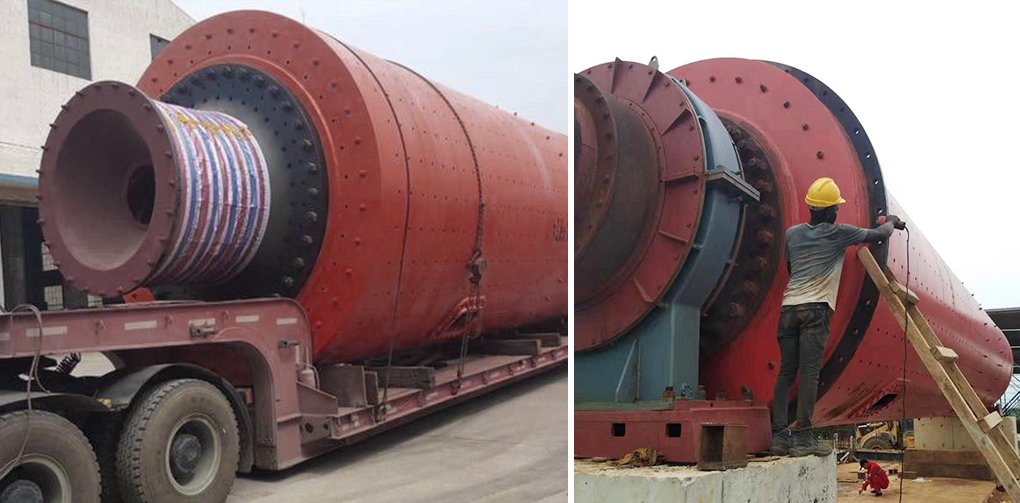
Chunlei’s gold-specific ball mills are designed to address the unique challenges of gold ore grinding. Whether dealing with hard quartz gold ore or complex sulfide gold ore, they ensure maximum liberation of gold particles while minimizing energy waste.
In this article, we will introduce:
Tip 1: Optimize Grinding Media Grade and Loading Rate
Grinding media (steel balls) are the “teeth” of a ball mill—their particle size, grade, and loading rate directly determine grinding efficiency and the degree of gold liberation. Many customers often use steel balls of a single particle size or overload or underload the mill, which leads to uneven grinding, wasted energy, and low gold recovery rates. Selective grinding (i.e., matching the size of the grinding media to the hardness of the ore) can significantly improve the liberation of gold minerals (by 15%–20%) and optimize subsequent gold extraction processes, such as bio-oxidation and carbon leaching.
Proven Optimization Strategy: Use a multi-grade steel ball configuration (large, medium, small) to ensure full contact with different-sized ore particles. For gold ore with Mohs hardness 6-8 (e.g., quartz gold ore), the ideal loading rate is 28-35% of the mill’s effective volume—not too high (which restricts media movement) or too low (which reduces impact force). Replace worn steel balls regularly (when wear exceeds 15%) to maintain consistent grinding performance; worn balls reduce impact force and increase energy consumption by up to 20%.
CHUNLEI Recommended Model & Parameters: CHUNLEI JM-1540 Grid Type Ball Mill is perfectly suited for this optimization, with a design that supports flexible grinding media configuration. Its key parameters are tailored for gold ore grinding:
- Cylinder Size: Φ1500×4000mm
- Rotation Speed: 32r/min (optimized to 70% of critical speed, the ideal range for gold ore grinding)
- Max Loading Capacity of Steel Balls: 8t (supports multi-grade configuration: 30% Φ60mm, 40% Φ50mm, 30% Φ40mm)
- Processing Capacity: 15-25t/h (ideal for medium-scale gold mines)
- Grinding Media: High-chromium steel balls (wear resistance 3-5 times higher than ordinary steel balls, reducing replacement frequency by 30%)
This model’s grid-type discharge design ensures fast, efficient discharge of ground ore, avoiding over-grinding and improving gold liberation—critical for boosting recovery rates.
The feed particle size of your ball mill is a hidden factor that drastically impacts efficiency. If the ore particles fed into the mill are too large (exceeding 25mm), the mill will waste energy on breaking large chunks instead of grinding to the optimal fineness (0.074-0.4mm) for gold recovery. Conversely, overly fine feed particles can cause clogging and reduce throughput. For difficult-to-process gold ores like arsenic-containing sulfide gold, controlling feed fineness to ensure sufficient mineral dissociation is even more critical for subsequent bio-oxidation processes.
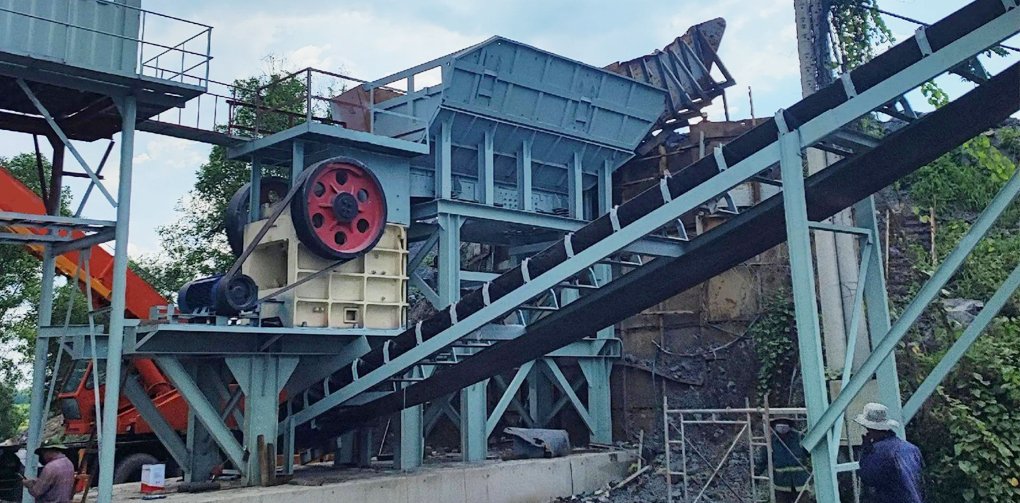
Proven Optimization Strategy: Install a high-efficiency jaw crusher or cone crusher before the ball mill to crush raw ore to ≤25mm—this reduces the ball mill’s workload by 30% and improves grinding efficiency by 15-20%. Use a vibrating feeder to ensure uniform feeding; uneven feeding leads to “empty grinding” (wasting energy) or “overloading” (causing downtime). For gold ore with high clay content, add a pre-screening step to remove fine slime, which can wrap gold particles and reduce recovery.
CHUNLEI Matching Solution: Pair your ball mill with CHUNLEI PE-600×900 Jaw Crusher (feed size ≤500mm, discharge size 60-120mm) and GZ-600×1200 Vibrating Feeder. This integrated system ensures feed particle size is controlled to 10-25mm, and feeding is uniform—perfectly matching CHUNLEI JM-2145 Overflow Type Ball Mill, which is designed for fine grinding of gold ore. The JM-2145 parameters:
- Cylinder Size: Φ2100×4500mm
- Rotation Speed: 27.5r/min
- Processing Capacity: 30-50t/h (suitable for large-scale gold mines)
- Discharge Fineness: 0.074-0.15mm (ideal for CIL/CIP gold recovery processes)
- Motor Power: 280KW (energy-saving motor, reducing energy consumption by 25% compared to traditional models)
The rotation speed of your ball mill determines the movement trajectory of the grinding media—and thus, the grinding effect. If the speed is too low, the steel balls cannot reach the optimal height to impact the ore; if too high, the balls stick to the mill wall (centrifugal effect) and lose grinding power. The optimal speed for gold ore grinding is 65-75% of the mill’s critical speed—the speed at which steel balls begin to centrifugally adhere to the cylinder wall.
Proven Optimization Strategy: Calculate the critical speed of your ball mill using the formula $$nc = 42.3 / \sqrt{(D – d)}$$ (where D = internal diameter of the mill, d = diameter of grinding media) and adjust the speed to 65-75% of nc. For hard gold ore, slightly increase the speed (72-75% of nc) to enhance impact force; for soft ore, reduce it (65-68% of nc) to avoid over-grinding. CHUNLEI’s ball mills are equipped with adjustable frequency conversion speed control, allowing real-time adjustment based on ore characteristics—no need for manual disassembly.
CHUNLEI Advantage: All CHUNLEI gold ball mills (JM series) feature PLC frequency conversion speed control, which can adjust the rotation speed within 20-40r/min. For example, the CHUNLEI JM-1836 Energy-Saving Ball Mill (ideal for small to medium gold mines) has a speed adjustment range of 28-35r/min, which can be precisely adjusted according to ore hardness. Its key parameters:
- Cylinder Size: Φ1800×3600mm
- Adjustable Rotation Speed: 28-35r/min
- Processing Capacity: 20-35t/h
- Energy Consumption: 18-22kWh/t (20-30% lower than traditional ball mills)
- Liner Material: Manganese steel (wear-resistant, extending service life by 30%)
This model’s energy-saving design not only reduces operating costs but also ensures stable grinding speed, directly improving gold recovery by 2-3%.
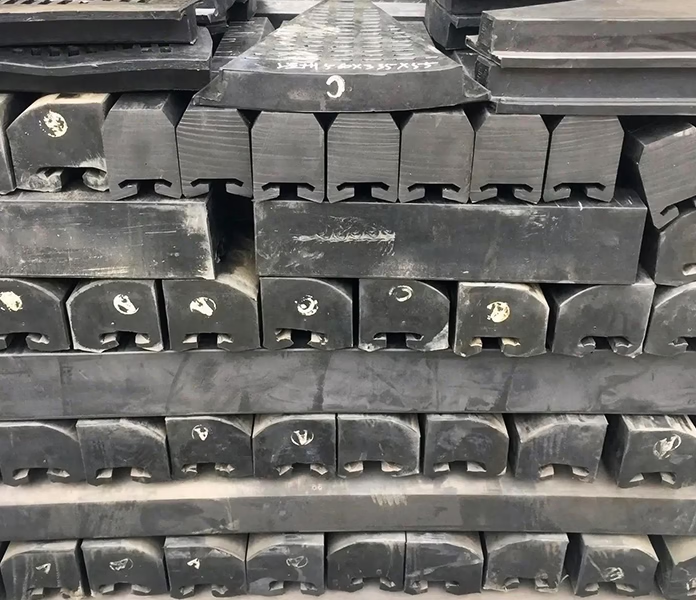
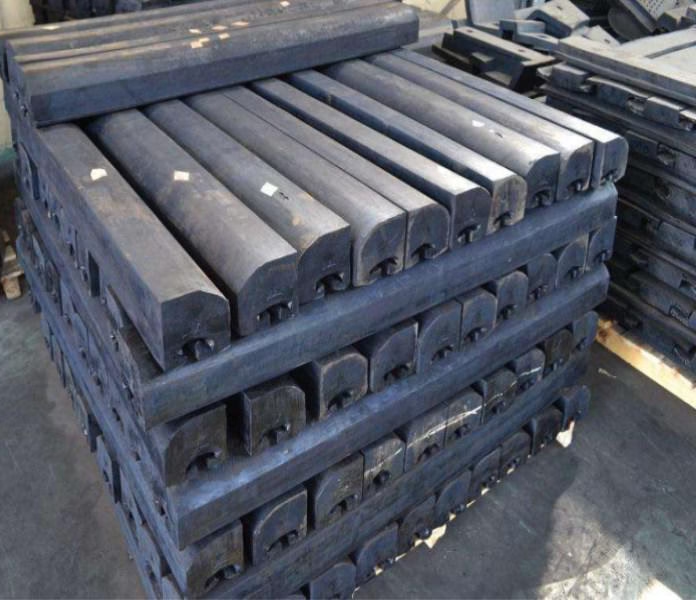
The liner of your ball mill protects the cylinder and enhances grinding efficiency—but worn or unsuitable liners can reduce efficiency by 10-15% and increase gold loss. Liners wear over time, and damaged liners cause uneven grinding, excessive noise, and even cylinder damage. Different liner materials are suitable for different ore types: manganese steel liners are ideal for hard gold ore (wear-resistant and impact-resistant), while rubber liners are suitable for soft ore (reducing noise and material pollution).
Proven Optimization Strategy: Inspect liners weekly for wear—replace them when the wear thickness exceeds 30% of the original thickness. Choose the right liner material for your ore: for hard quartz gold ore, use manganese steel liners; for oxidized gold ore, use rubber liners to avoid over-grinding. Additionally, CHUNLEI’s upgraded liners feature a wave-shaped design, which increases the contact area between the liner and ore by 20%, enhancing grinding efficiency and reducing energy consumption.
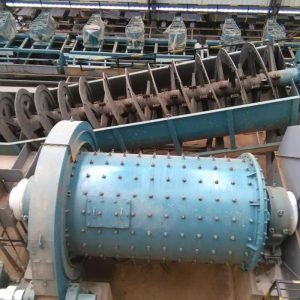
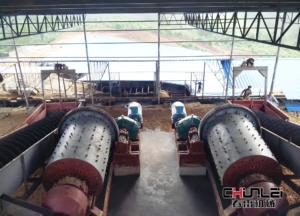
Most gold mines use a closed-circuit grinding system (ball mill + spiral classifier) to ensure consistent product fineness and improve gold recovery. However, an improperly configured closed-circuit system can lead to over-grinding (wasting energy) or under-grinding (reducing gold liberation). The goal is to return coarse particles to the mill for re-grinding while ensuring fine particles (optimal for gold recovery) are sent to the next beneficiation step (flotation, gravity separation, or CIL).
Proven Optimization Strategy: Adjust the spiral classifier’s speed to control the return ratio (coarse particles returned to the mill) to 200-300%. For gold ore, the ideal product fineness is 80% passing 200 mesh (0.074mm)—this ensures maximum gold liberation without over-grinding. Pair the ball mill with a high-efficiency spiral classifier to reduce coarse particle leakage and improve grinding efficiency by 15%. Additionally, a closed-circuit system can reduce energy consumption by 10-15% compared to an open-circuit system, while increasing gold recovery by 3-5%.
CHUNLEI Closed-Circuit Solution: Pair CHUNLEI JM-2470 Ball Mill with CHUNLEI FG-2000 Spiral Classifier for large-scale gold mines. This system ensures stable product fineness and high gold recovery, with the following key parameters for the JM-2470:
- Cylinder Size: Φ2400×7000mm
- Processing Capacity: 60-100t/h
- Return Ratio: 250-300% (adjustable via spiral classifier speed)
- Gold Recovery Rate: Up to 95% (when paired with CHUNLEI flotation machine)
- Applicable Ore Types: Oxidized gold ore, sulfide gold ore, placer gold ore
This integrated closed-circuit system is widely used in CHUNLEI’s African 100TPD gold processing projects, helping miners achieve stable, high-efficiency gold recovery and reduce operating costs.
Optimizing your ball mill’s performance starts with choosing the right equipment. CHUNLEI’s gold-specific ball mills are designed with the unique needs of gold miners in mind, combining energy efficiency, durability, and high recovery—all critical for 2026’s competitive mining landscape. Here’s why global gold miners trust CHUNLEI:
- Tailored for Gold Ore: All JM series models are optimized for gold ore grinding, with parameters adjusted to the optimal range for gold liberation and recovery, including compatibility with bio-oxidation and CIL/CIP processes.
- Energy-Saving & Eco-Friendly: Equipped with high-efficiency motors and optimized cylinder structures, reducing energy consumption by 20-30% and meeting global green mining standards.
- Durable & Low Maintenance: High-chromium steel balls and manganese steel liners extend service life by 30%, reducing replacement costs and downtime.
- Global After-Sales Support: 24/7 technical guidance, local service centers in Africa, Southeast Asia, and Latin America, and timely spare parts supply—ensuring your equipment runs smoothly.
- Proven Project Experience: Completed hundreds of gold mining projects worldwide, with a 98% customer satisfaction rate—including 100TPD and 500TPD gold processing lines.
Improving ball mill grinding efficiency and gold recovery doesn’t require expensive upgrades—it requires practical, targeted optimizations and the right equipment.
CHUNLEI Mining Machinery is committed to providing high-quality ball mills and complete gold beneficiation line solutions for global miners. Whether you’re a small-scale artisanal miner or a large industrial mine, we have the expertise and experience to help you select the perfect ball mill for your project.
Contact us today to get a free ore sample test and customized ball mill quote—let’s work together to make your 2026 gold mining project more efficient and profitable!
Website: https://www.chunleimining.com/
 Chunlei Mining Machinery