 Chunlei Mining Machinery
A Comprehensive Analysis of Common Iron Ore Classifications
As the most critical raw material for the global steel industry, iron ore classifications directly impact mining efficiency, processing costs, and steel quality. This article provides a comprehensive analysis of common iron ore classifications and their application scenarios based on magnetic properties and mineral composition, helping you better understand this vital resource.
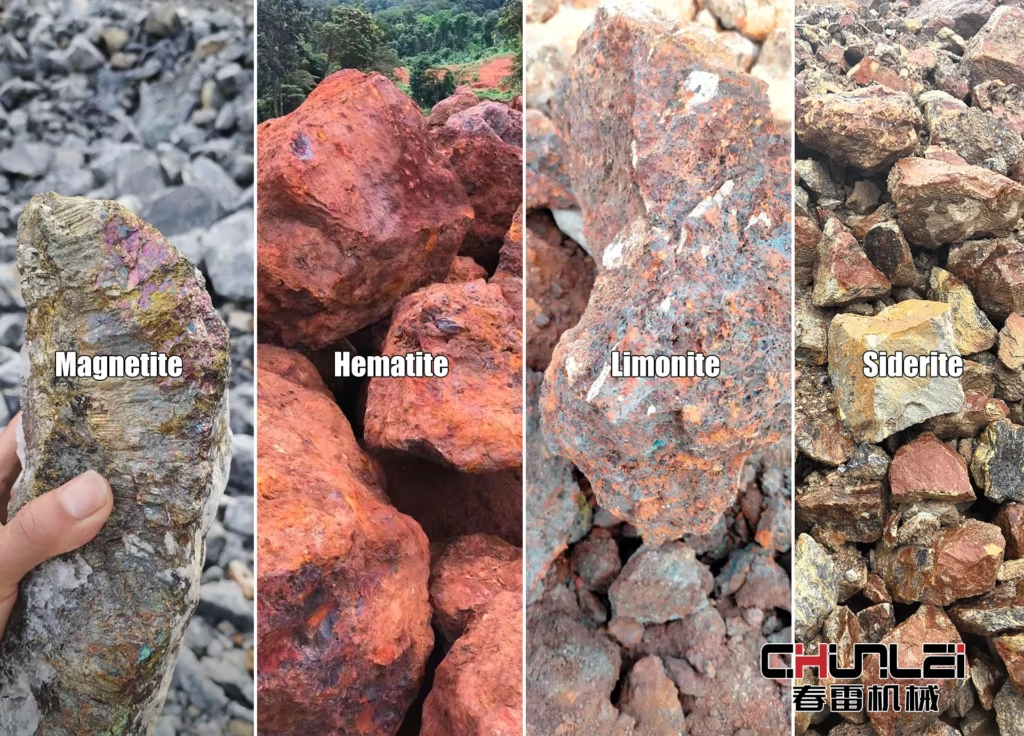
Magnetic Classification of Iron Ore
Iron ore can be categorized into strongly magnetic iron ore and weakly magnetic iron ore based on magnetic properties. Magnetic characteristics serve as the primary basis for iron ore separation, directly influencing the selection of mineral processing equipment and cost budgeting. Therefore, magnetic properties are the foremost consideration in industrial processing.
- Strongly Magnetic Iron Ore
Strongly magnetic iron ore primarily consists of magnetite (Fe₃O₄), making it the most magnetically responsive type among all iron ores. Due to its exceptionally high iron content, it can be easily separated from gangue or waste minerals using low-intensity magnetic separators—commonly referred to as magnetic separation. This method significantly reduces equipment investment costs. Magnetite is widely used in large steel mills where raw material purity is critically important. However, this type of ore is typically hard, requiring high energy consumption for crushing and grinding. - Weakly Magnetic / Non-Magnetic Iron Ore
Weakly magnetic iron ores possess insufficient magnetic properties for simple magnetic separation. Complex processes like flotation and gravity separation are necessary for extraction. The most common weakly magnetic iron ores are hematite and limonite.liminate contaminants, ensuring low-grade ore is transformed into high-grade raw material meeting smelting requirements.
Classification of Iron Ore by Mineral Composition
Iron ore can be classified into magnetite, hematite, limonite, and siderite based on mineral composition:
- Magnetite Ore: Primarily composed of Fe₃O₄, exhibiting a black metallic luster. Beyond its high iron content, it contains extremely low levels of harmful impurities like phosphorus and sulfur, making it an ideal raw material for producing high-quality steel (such as high-strength steel for automobiles).
- Hematite (Fe₂O₃): A non-magnetic iron ore with approximately 70% iron content. It exhibits a reddish-brown color and a cherry-red streak. Due to its high grade, it serves as the core raw material for both blast furnace steelmaking and direct reduction steelmaking, and is the world’s primary iron ore source. Its beneficiation process is more complex than magnetite’s, and the ore itself is relatively brittle.
- Limonite (Fe₂O₃・nH₂O): A hydrated iron hydroxide mineral appearing yellowish-brown with a yellowish-brown streak. Its iron content is relatively low, ranging from 45% to 60%. However, due to the presence of crystalline water, the actual iron yield after smelting is even lower. Extensive processing is required before smelting to remove impurities and moisture, resulting in higher energy consumption. It is primarily used by small and medium-sized steel enterprises.
- Siderite (FeCO₃): Appears grayish-yellow or light brownish-yellow, with limited reserves. Weathering turns it dark brown. Theoretical iron content is 48.2%, representing a low grade. Calcination at high temperatures releases CO₂, necessitating prior roasting to remove carbon dioxide. Processing alone is economically inefficient, so it’s often blended with other ores.
- Ilmenite (FeTiO₃): Although classified as an iron ore, it is primarily a source of titanium metal. Complex processing is required to separate iron and titanium.
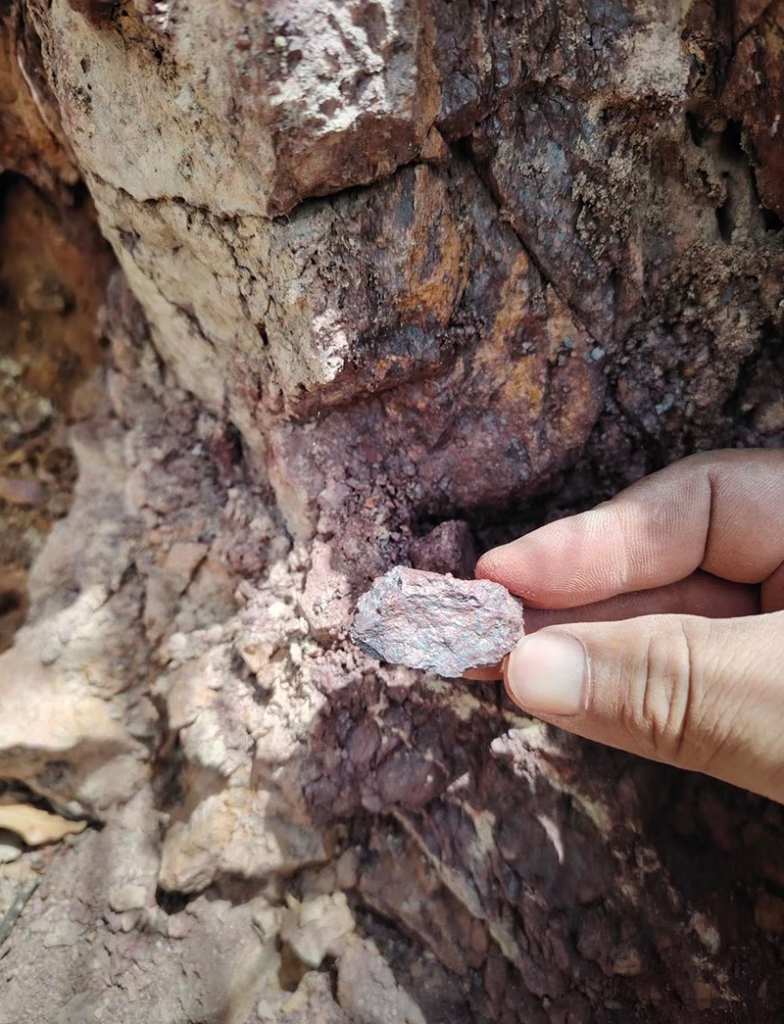
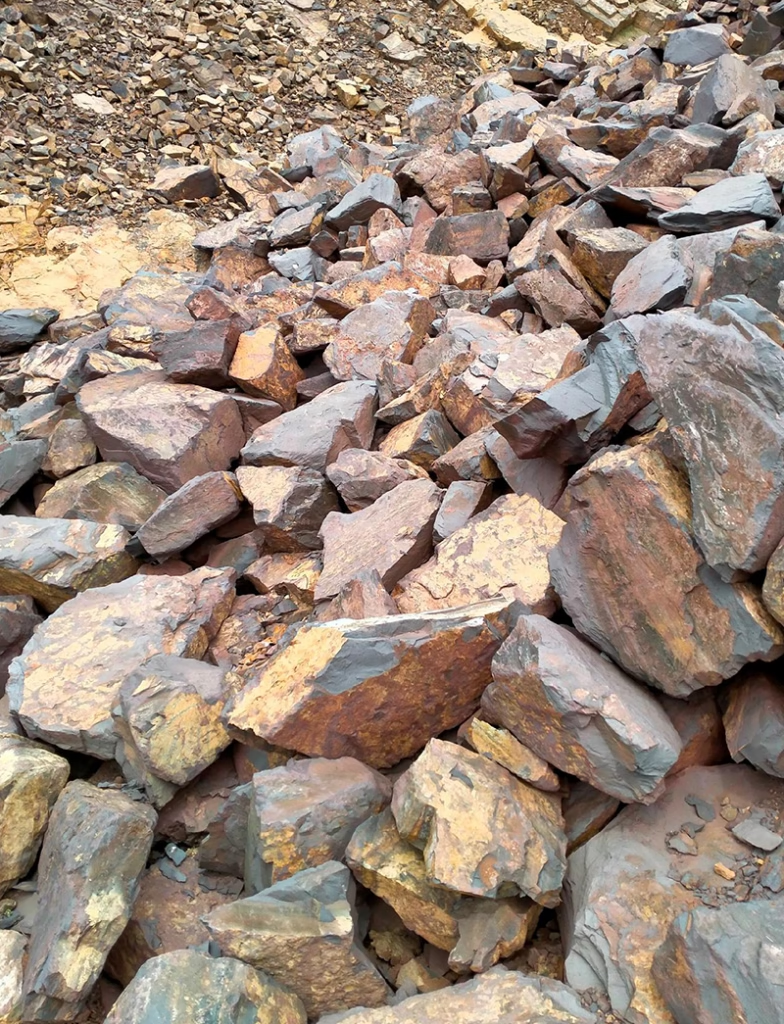
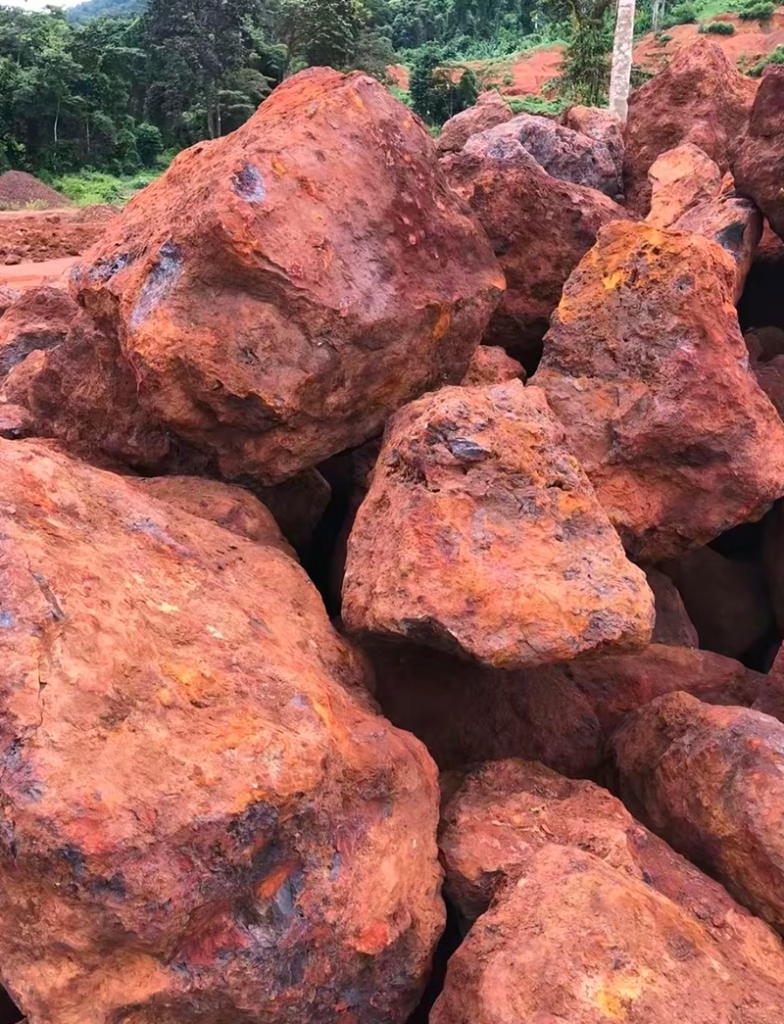
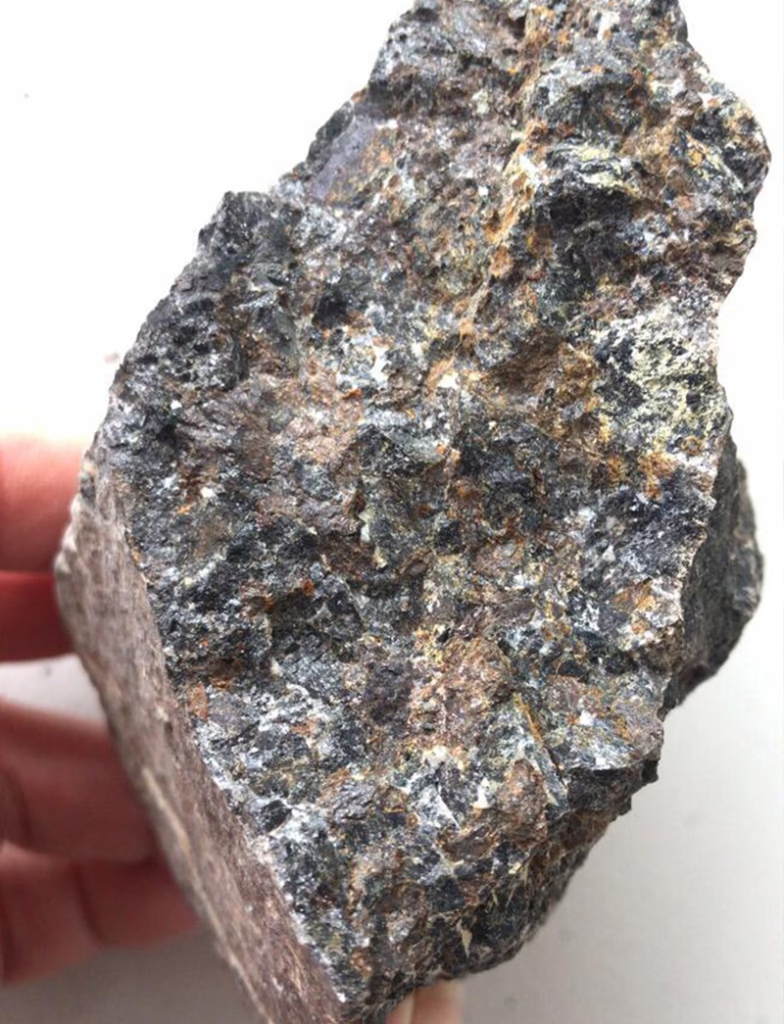
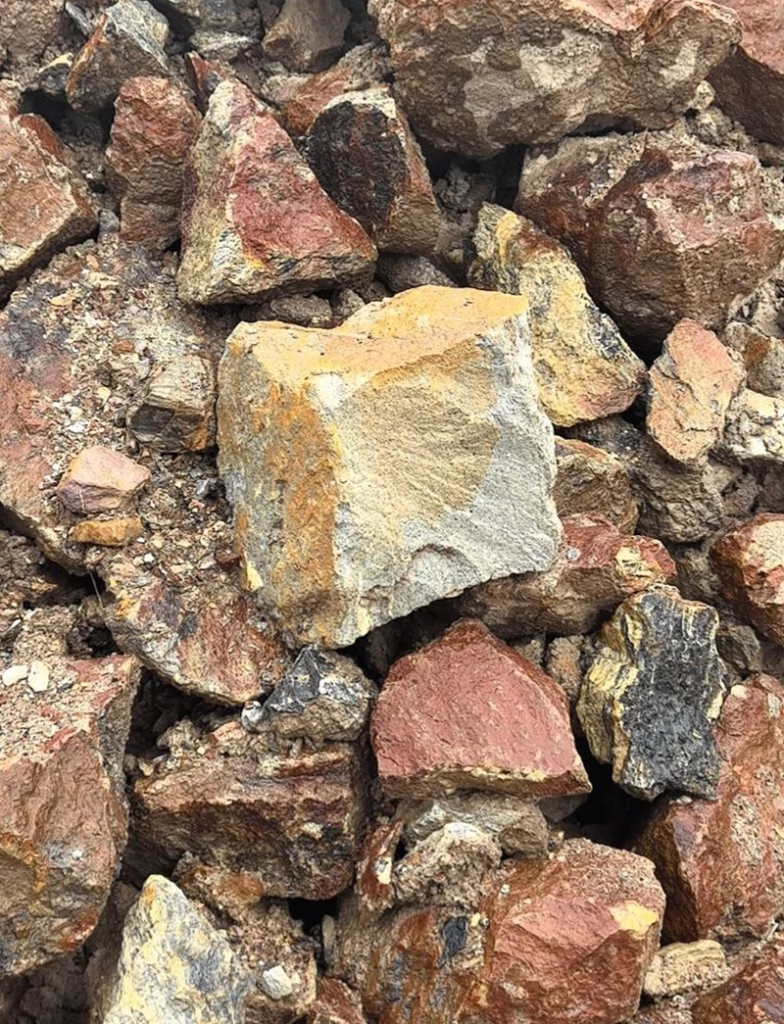
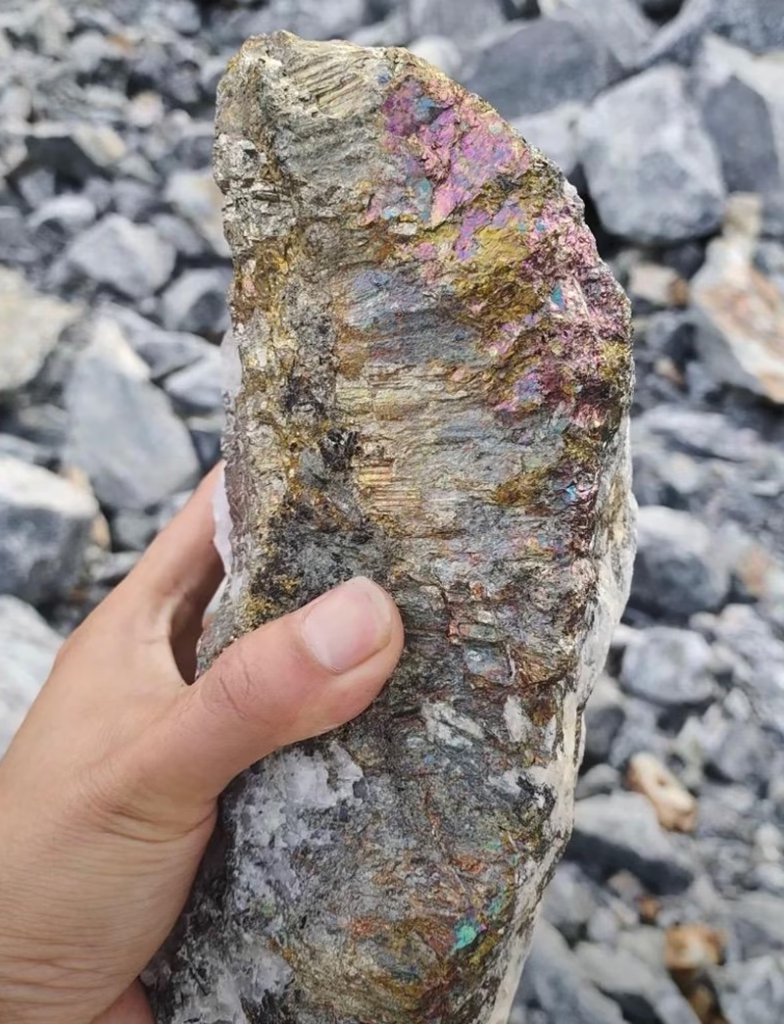
To help you better understand the differences between them, here’s a table for reference:
| Ore Types | Chemical Composition | Magnetic | Characteristic Features | Iron Content | Mineral Processing Difficulty |
| Magnetite | Fe₃O₄ | Strongly magnetic | Black, black streaks | 72.40% | Relatively easy (magnetic separation is highly efficient) |
| Hematite | Fe₂O₃ | Non-magnetic | Dark red, cherry-red streaks | 70% | Relatively difficult (requires gravity separation, flotation, etc.) |
| Limonite | 2Fe₂O₃・3H₂O | Non-magnetic | Yellowish brown, yellowish brown streaks, containing water | ~60% | Difficult (requires sintering and dehydration) |
| Siderite | FeCO₃ | Non-magnetic | Light yellow, produces CO₂ during roasting | 48.20% | Special (requires prior roasting) |
Iron ore classification represents ores formed by the integration of multiple factors. Consequently, in actual deposits, these ores rarely exist in isolation; they are both distinct and interconnected, typically coexisting in diverse types. For mining enterprises, classification guides extraction and beneficiation strategies; for steel mills, it determines raw material selection and product quality; for investors, it reveals market value and price trends. Commercially, ore value is most commonly assessed by grade (TFe content), such as: High-grade ore: >60% Medium-grade ore: 50%-60% Low-grade ore: <50%
The choice between magnetic separation, flotation, or gravity separation during beneficiation depends on the ore’s mineral composition and physical properties. Should you require assistance in this area, please contact our customer service team. We will provide you with a complimentary customized beneficiation equipment production line that saves costs, conserves energy, and delivers high-quality, efficient results.
Latest News

Bulk Density of Sand: Test Methods & Equipment Selection Guide
800If you work in the sand and gravel processing industry, you’ve probably heard the term “bulk density”—but do you know how it directly impacts your equipment selection? Choosing the wrong feeder or crusher based on inaccurate density data can le…
-
2026 Zimbabwe Gold Mine Ball Mill Buyer’s Guide: Avoid Costly Mistakes & Choose the Right Model
805Decades of experience in global gold mining reveals a common, costly mistake: Zimbabwe mine owners waste tens of thousands of dollars on mismatched ball mills. A machine that works for a South African hard rock mine will fail in Zimbabwe’s dust…
-
7 Common Ball Mill Faults & Quick Fixes for Mining Sites
805If you are responsible for operating a gold or ore beneficiation production line, you undoubtedly understand just how frustrating it is when a ball mill suddenly malfunctions—whether the issue involves vibration, overheating, a drop in output, …
-
Case Study: 100TPD Gold Processing Line with Ball Mill in Africa
801If you are planning to establish a 100-ton-per-day (100 TPD) gold beneficiation production line in Africa, you are likely facing a common dilemma: Which type of ball mill is best suited for processing African gold ores? Can the equipment effect…
loading…
已经是到最后一篇内容了!