Search the whole station Hot Product Catalog
The cement rotary kiln is a type of rotating heating equipment widely utilized in cement production. Currently, manufactured cement rotary kilns primarily serve as a foundational component for both dry-process and wet-process cement clinker production lines. During the cement manufacturing process, the rotary kiln is employed to subject raw cement materials to high temperatures, thereby inducing chemical reactions that result in the production of cement clinker.
Cement rotary kilns also find application in various other sectors, including metallurgy, chemical engineering, the manufacture of refractory building materials, and environmental protection. The rotary kiln assembly comprises several key components: the kiln shell, support devices, support devices equipped with thrust rollers, a transmission system, a movable kiln hood, a kiln tail sealing mechanism, and a pulverized coal injection system.
| Process Type | Raw Material State | Heat Consumption (kJ/kg Clinker) | Applicable Scenarios |
|---|---|---|---|
| Wet Process | Slurry with 32%–40% moisture content | 5000-5900 | High raw material moisture content; poor grindability |
| Dry Process | Dry powder with <1% moisture content | 3000-3200 | Preferred choice for modern cement plants; saves over 30% in energy |
Our Advantage: We can design upgrade solutions for you to convert traditional wet-process systems into modern dry-process systems, leveraging existing infrastructure to minimize investment costs.
The working principle of a cement rotary kiln involves the continuous movement of raw cement materials within a rotating kiln vessel. Throughout this entire process, heating and cooling are applied to ensure the raw materials remain at the precise temperatures required for the necessary chemical reactions to occur. Within the cement rotary kiln, the raw materials undergo five distinct stages—preheating, decomposition, calcination, cooling, and conveying—to produce cement clinker.
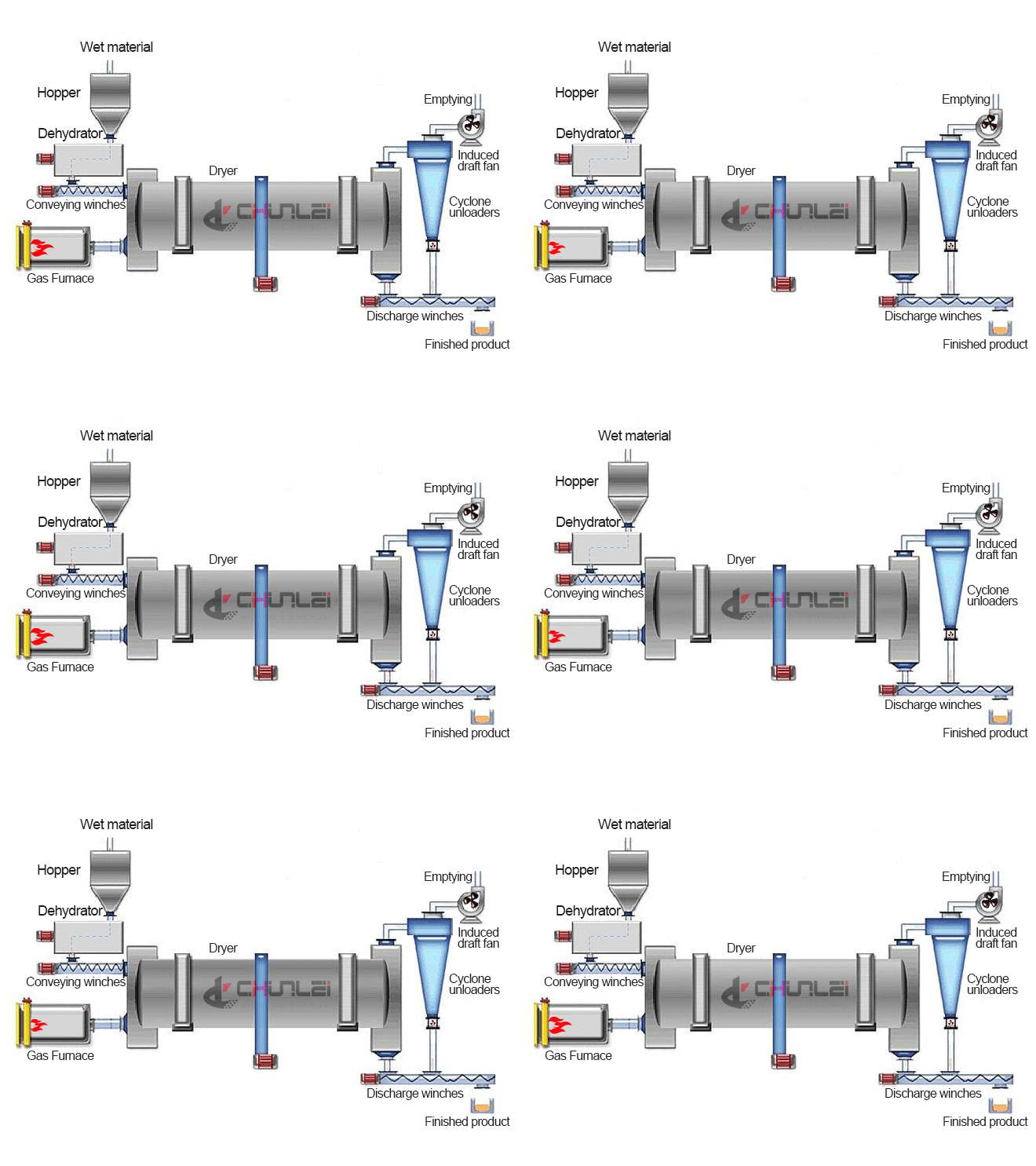
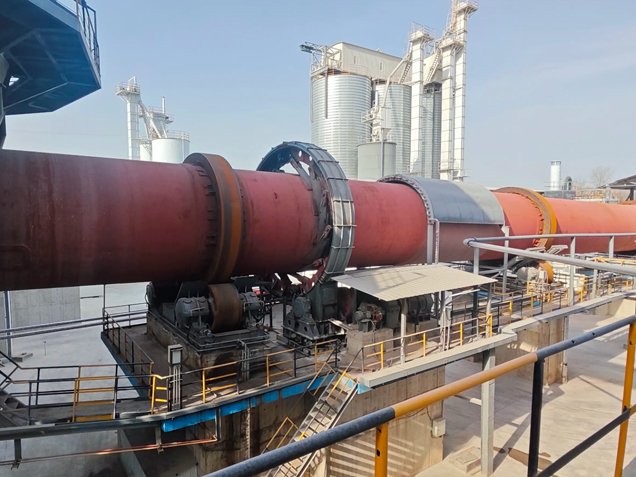
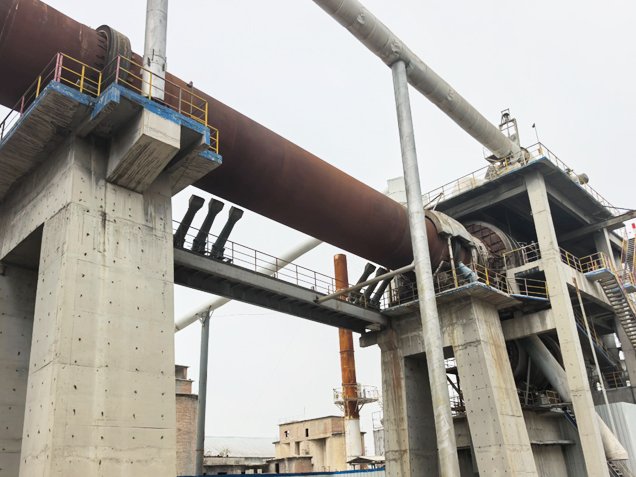
The cement rotary kiln serves as the core equipment for calcining cement clinker and is primarily categorized into two types: dry-process kilns and wet-process kilns. However, driven by advancements in processing technology, this same type of rotary kiln has seen its applications widely expanded into the following fields:
– Ceramsite Sand/Ceramsite: Used as proppants in oil and gas hydraulic fracturing, as well as lightweight aggregate building materials.
– Iron Ore Pellets: Used in steel plants for the roasting of dust or concentrate fines following the pelletizing process.
– Sponge Iron: Produced via coal-based direct reduction processes to yield reduced iron.
– Waste Incineration: High-temperature, harmless treatment of municipal and medical waste.
1. Pre-Construction Preparation: Dual Verification of Drawings and Site Conditions
Technical Guidance: It is recommended that certified safety officers and the manufacturer’s installation engineers provide full-time supervision throughout the project. Each specific process (e.g., alignment of support rollers, centering of the girth gear, seal installation) must undergo inspection and receive formal sign-off before proceeding to the next stage.
| Design Capacity (t/d) | Kiln Dimensions | Product | Preheater | Cooler | Fuel | Heat Consumption (KJ/KgC30) | ||
|---|---|---|---|---|---|---|---|---|
| Dimensions(m) | Effective Volume(m²) | Calcination Temperature(℃) | ||||||
| 150 | Φ2.5×40 | 142 | 1350/1250 | Active Lime / Calcined Dolomite | Circular Vertical Preheater | Square Vertical Cooler | Coal Gas / Pulverized Coal | 5300/5000 |
| 200 | Φ2.8×42 | 190 | 1350/1250 | Active Lime / Calcined Dolomite | Circular Vertical Preheater | Square Vertical Cooler | Coal Gas / Pulverized Coal | 5300/5000 |
| 250 | Φ3×46 | 235 | 1350/1250 | Active Lime / Calcined Dolomite | Circular Vertical Preheater | Square Vertical Cooler | Coal Gas / Pulverized Coal | 5300/5000 |
| 300 | Φ3.2×50 | 292 | 1350/1250 | Active Lime / Calcined Dolomite | Circular Vertical Preheater | Square Vertical Cooler | Coal Gas / Pulverized Coal | 5300/5000 |
| 350 | Φ3.5×54 | 390 | 1350 | Active Lime / Calcined Dolomite | Circular Vertical Preheater | Square Vertical Cooler | Coal Gas / Pulverized Coal | 5225 |
| 400 | Φ3.6×56 | 430 | 1350 | Active Lime / Calcined Dolomite | Circular Vertical Preheater | Square Vertical Cooler | Coal Gas / Pulverized Coal | 5225 |
| 500 | Φ3.8×58 | 505 | 1350 | Active Lime / Calcined Dolomite | Circular Vertical Preheater | Square Vertical Cooler | Coal Gas / Pulverized Coal | 5100 |
| 600 | Φ4×60Φ4.2×50 | 575/548 | 1350 | Active Lime / Calcined Dolomite | Circular Vertical Preheater | Square Vertical Cooler | Coal Gas / Pulverized Coal | 5100 |
| 750 | Φ4.3×58 | 670 | 1350 | Active Lime / Calcined Dolomite | Circular Vertical Preheater | Square Vertical Cooler | Coal Gas / Pulverized Coal | 4810 |
| 800 | Φ4.3×64 | 738 | 1350 | Active Lime / Calcined Dolomite | Circular Vertical Preheater | Square Vertical Cooler | Coal Gas / Pulverized Coal | 4810 |
| 1000 | Φ4.8×68 | 1005 | 1350 | Active Lime / Calcined Dolomite | Circular Vertical Preheater | Square Vertical Cooler | Coal Gas / Pulverized Coal | 4810 |
1. Q: What capacity can your cement rotary kiln handle?
A: We offer a full range from 50 to 5000 tons per day, from small Φ2.5×40m to large Φ4.6×70m. Just tell us your target output, and we will recommend the right model for you.
2. Q: Which is better, dry process or wet process kiln?
A: The dry process kiln is more energy saving, with over 30% lower heat consumption than the wet process. It is the first choice for modern cement plants. However, if your raw material has very high moisture, the wet process may work better. We can help you analyze based on your material conditions.
3. Q: Can you send someone to our country for installation?
A: Yes, we can. We provide 2 to 3 engineers to guide the on site installation and commissioning until the equipment runs properly. You just need to arrange local workers to assist.
4. Q: What are the wear parts of a rotary kiln? How often do they need replacement?
A: The main wear parts are refractory bricks, support rollers, and sealing rings. Refractory bricks typically last 12 to 18 months. Support rollers and sealing rings last longer. We keep spare parts in stock year round and can ship quickly.
5. Q: How do I know which kiln is right for my plant?
A: Very simple. You provide raw material type, target capacity, and fuel type. We will give you a free process flow diagram and recommendation within 24 hours. No charge, no purchase obligation.
 Chunlei Mining Machinery