 Chunlei Mining Machinery
Ball Mill vs Wet Pan Mill: Which Is Better for Gold Mining?
In gold mining operations, deciding whether to opt for a ball mill or a wet pan mill machine is one of the most challenging questions clients frequently ask me.
I have spoken with dozens of mine owners who wasted money because they selected the wrong equipment: some purchased wet pan mill machines in the hope of saving electricity, only to discover that the machines were incapable of processing hard ores. Others chose ball mills without first considering the scale of their mining operations—a decision that ultimately resulted in exorbitant electricity bills coupled with very low production yields.
In this article, I will use clear, easy-to-understand language to analyze the differences between ball mills and wet pan mill machines. I will provide an objective comparison, a practical breakdown of their respective pros and cons, and guidance on which type is best suited for your specific gold mine. Furthermore, I will highlight which CHUNLEI models perform best under various operating conditions—complete with actual technical specifications—to help you make an informed decision that maximizes your gold recovery rates and minimizes costs.
Whether you are operating a small-scale artisanal mine (50 tons/day) or a medium-sized industrial facility (200 tons/day), this guide has you covered.
In this article, we will introduce:
What is the difference between a ball mill and a wet pan mill?
Both ball mills and wet pan mills (or wet grinding pans) are used to grind gold ore into a fine powder (to facilitate the extraction of gold); however, their operating principles are fundamentally different.
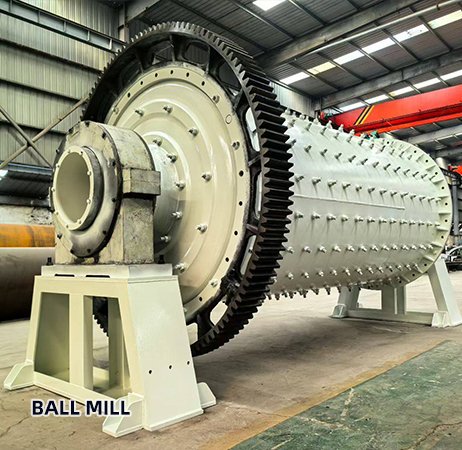
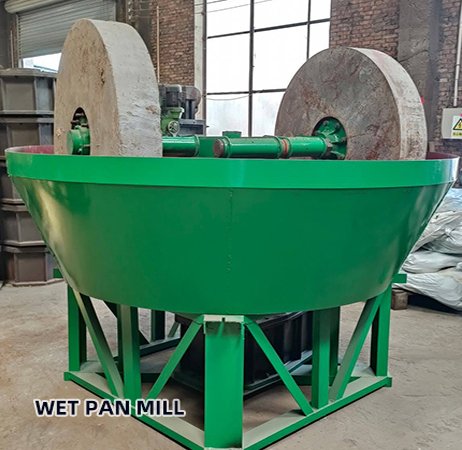
Ball Mill
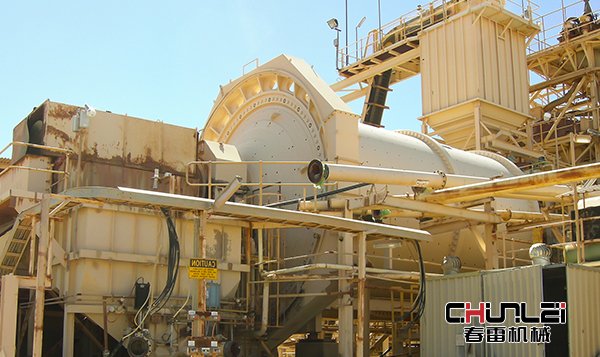
The ball mill is considered a workhorse in the field of gold mining. It consists of a rotating cylinder filled with steel balls; as the cylinder rotates, the internal steel balls violently impact the ore, grinding it to the desired fineness (typically requiring a particle size of 200 mesh, with 80% of the material passing through the sieve), thereby preparing it for subsequent leaching or gravity separation processes. Ball mills are highly versatile, capable of processing various types of ore, and can be easily scaled up or down to meet specific production requirements.
Wet Pan Mill
The wet pan mill (also known as a wet grinding pan) utilizes a rotating pan and heavy rollers to crush and grind ore. It features a more compact design and typically consumes less water than certain models of ball mills, making it particularly suitable for processing softer ores or for use in small-scale mining operations. However, this equipment does have its limitations: it struggles to effectively process harder ores (such as quartz-rich gold ore) and is unable to meet the demands of high-capacity production operations.
Ball Mills vs. Wet Pan Mills
I will compare these two types of equipment based on ore type, mine scale, production efficiency, and operating costs, to help you determine which “CHUNLEI” machine is the best fit for your operations.
1. Ore Type: Which equipment is better suited for processing your gold ore?
This is the most critical deciding factor. If you are mining hard ores (such as quartz-vein gold deposits, with a Mohs hardness of 6–8), you should opt directly for a ball mill. The grinding rollers in wet pan mills are made of softer materials; when processing hard ores, they experience extremely rapid wear. This will result in significantly higher costs for replacement parts and maintenance downtime.
If you are mining soft ores (such as oxidized gold ores, with a Mohs hardness of 3–5) or clay-rich ores, a wet pan mill might be adequate—provided that your mine operates on a small scale. However, for the vast majority of gold miners (especially those with mines containing mixed ore compositions), a ball mill remains the safer and more reliable choice.
Among the gold mining clients we serve (primarily located in Africa, Southeast Asia, and Latin America), 90% mine either hard or mixed-type ores—and, without exception, they have all chosen our ball mills. Our ball mills are equipped with wear-resistant high-manganese steel liners, enabling them to effortlessly handle the grinding challenges posed by various hard ores with exceptional performance.
2. Mine Scale: Small vs. Medium vs. Large
Let’s match the appropriate equipment to your daily processing capacity (TPD = Tons Per Day)—an area where many mine owners frequently make mistakes:
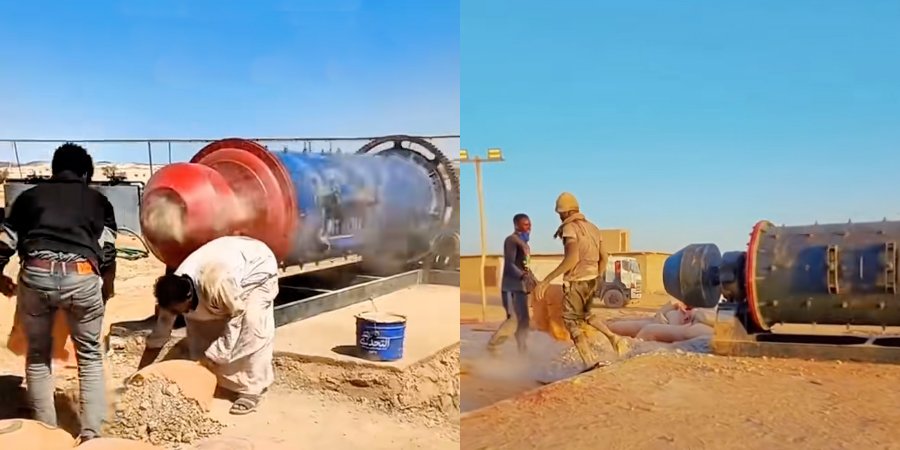
Small-scale Mines (50–100 TPD): Wet pan mills are only marginally suitable here, and only under the specific condition that you are mining soft ores. Even in such cases, however, a small-scale ball mill still holds a distinct advantage in terms of durability. We recommend the CHUNLEI JM-1230 ball mill; with its compact structure and high energy efficiency, it is the ideal choice for small-scale mining operations.
Medium-scale Mines (100–300 TPD): Wet pan mills are no longer capable of meeting operational demands at this scale—their processing speed is too slow, and their production capacity is severely insufficient. In this scenario, selecting a ball mill is the only—and indeed, the essential—choice. The CHUNLEI JM-1836 ball mill represents the optimal solution for mines of this scale.
Large-scale Mines (300+ TPD): Wet pan mills are simply not a viable option. You require a heavy-duty ball mill—such as the CHUNLEI JM-2470—to effortlessly handle the demands of high-throughput processing.
3. Efficiency and Gold Recovery Rates
The critical question is: how much gold can a given piece of equipment actually extract from the ore? The facts are as follows:
Ball mills grind ore to a much finer and more uniform consistency (achieving a fineness of 200 mesh, with 80% of the material passing through the sieve). This means that significantly more gold is liberated from the rock matrix. Compared to wet pan mills, this can boost your gold recovery rate by 5% to 10%. Wet pan mills, conversely, often leave behind coarse ore particles, resulting in a portion of the gold remaining trapped in the tailings—unrecoverable and lost.
Furthermore, ball mills support continuous operation; they can run around the clock (24/7) without interruption or the need for frequent shutdowns. In contrast, wet pan mills require more frequent maintenance (such as replacing grinding rollers or cleaning the grinding pan), which inevitably eats into your valuable production time.
4. Cost Considerations: Initial Investment vs. Long-Term Benefits
The initial purchase cost of a wet pan mill is indeed lower—a factor that can be hard to resist for newcomers entering the mining industry.
While the upfront investment for a wet pan mill designed for small-scale mines may be modest, if you are processing hard ores, you will need to replace the grinding rollers every 3 to 6 months (the cost of these rollers must be factored into your budget). A small-scale CHUNLEI ball mill, while requiring a slightly higher initial investment than a wet pan mill, features wear-resistant liners with a service life of 1 to 2 years and demands very little routine maintenance.
In the long run, a ball mill will save you a substantial amount of money—particularly if you intend to establish a long-term presence in the mining sector. When you factor in the additional advantage of the ball mill’s superior gold recovery rate, its Return on Investment (ROI) offers benefits that wet pan mills simply cannot match.
CHUNLEI Ball Mill Recommendations (Perfect for Gold Mining)
Like I said, for 90% of gold miners, a ball mill is the better choice—and CHUNLEI has a model for every mine size. Below are our top picks, with actual parameters so you can match them to your site:
1. For Small Mines (50-100 TPD): CHUNLEI JM-1230 Ball Mill
If you’re running a small artisanal mine or remote site, this compact workhorse is perfect. It’s smaller than a wet pan mill in footprint but way more durable:
- Perk: Portable design, easy to install on remote sites (runs on generator power)
- Cylinder Size: Φ1200×3000mm
- Processing Capacity: 8-15 TPD (fits 50-100 TPD mines)
- Grinding Fineness: Up to 200 mesh (ideal for gold leaching)
- Motor Power: 37KW (energy-saving, cuts power bills by 20% vs wet pan mills)
- Liner Material: Manganese steel (wear-resistant, lasts 1-2 years)
2. For Medium Mines (100-300 TPD): CHUNLEI JM-1836 Ball Mill
This is our most popular model—perfect for medium-scale mines that need consistent, high-efficiency grinding:
- Cylinder Size: Φ1800×3600mm
- Processing Capacity: 20-35 TPD (matches 100-300 TPD operations)
- Grinding Fineness: 200 mesh (80% passing, maximizes gold recovery)
- Motor Power: 110KW (frequency conversion, adjustable speed for different ore)
- Liner Material: High-chromium steel (3x more wear-resistant than ordinary liners)
- Perk: Grid discharge design, avoids over-grinding and boosts throughput
3. For Large Mines (300+ TPD): CHUNLEI JM-2470 Ball Mill
If you’re running a large industrial mine, you need a heavy-duty machine that can handle high throughput:
- Cylinder Size: Φ2400×7000mm
- Processing Capacity: 60-100 TPD (fits 300+ TPD operations)
- Grinding Fineness: 200-325 mesh (adjustable for different leaching processes)
- Motor Power: 450KW (high-efficiency motor, reduces energy cost by 25%)
- Liner Material: Wear-resistant alloy (lasts 2+ years, minimal maintenance)
- Perk: Sealed structure, prevents slurry leakage and keeps the site clean
When Should You Choose a Wet Pan Mill?
This equipment has its own unique application scenarios; a wet pan mill constitutes the optimal choice only when all of the following conditions are met simultaneously:
- Your mining operation is small-scale (daily processing capacity ≤ 50 tons).
- You are mining relatively soft, clay-rich ores (specifically, those free of hard quartz).
- You are working with a limited initial budget.
Conclusion
For the vast majority of gold miners, the ball mill is undoubtedly the superior choice. Not only is it exceptionally durable—capable of processing a wide variety of ore types—but it also offers the flexibility to scale up alongside your mining operations. This enables you to achieve higher gold recovery rates while simultaneously realizing significant long-term operational cost savings.
The wet pan mill, conversely, represents a niche, specialized option—best suited for mines of extremely small scale where the ore is relatively soft in texture.
If your goal is to maximize profitability and minimize downtime, CHUNLEI ball mills offer a comprehensive range of models across various specifications. We can even assist you in selecting the ideal equipment configuration, precisely tailored to the specific characteristics of your ore and the scale of your mining operation.
Ready to select the right equipment? Simply send us a sample of your ore (we provide free testing services!) and let us know your daily production requirements. We will then recommend the CHUNLEI ball mill that best fits your needs—or a wet pan mill, if appropriate—and provide you with a personalized, custom quotation. Say goodbye to guesswork; we deliver tangible, real-world results. a comment or message me directly. Share your ore data, and I’ll help you figure out which “leaching combination” works best for you!
Latest News

Case Study: 100TPD Gold Processing Line with Ball Mill in Africa
778If you are planning to establish a 100-ton-per-day (100 TPD) gold beneficiation production line in Africa, you are likely facing a common dilemma: Which type of ball mill is best suited for processing African gold ores? Can the equipment effect…
-
Types of Leaching Process in Gold Mining: Simple Guide for Miners
778Anyone in the mining industry knows that finding the right methods for processing low-grade ores and refining refractory ores is a key factor in determining a mine’s profitability. As metallurgists often joke, “Leaching isn’t a cure-all, but wi…
-
Gold Milling Machine Price: Choose the Right Complete Line for Your Mining Project
775If you’re searching for “gold milling machine price,” you’re probably looking for more than just a single piece of equipment. You need a reliable, efficient solution that scales with your mining operation—one that delivers consistent gold recov…
-
Complete Gold Ore Processing Production Line Setup: 2026 Latest Process Flow Chart and Equipment List
773Having worked in the mining equipment industry for so many years, I’ve noticed a phenomenon: many clients come to me with ore samples or test reports, and their first question is always, “Is this mine worth investing in? What equipment do I nee…
loading…
已经是到最后一篇内容了!