Calcium carbonate mills, also known as calcium carbonate grinders or calcium carbonate grinding mills, primarily grind calcium carbonate minerals into various powders suitable for diverse industrial applications.
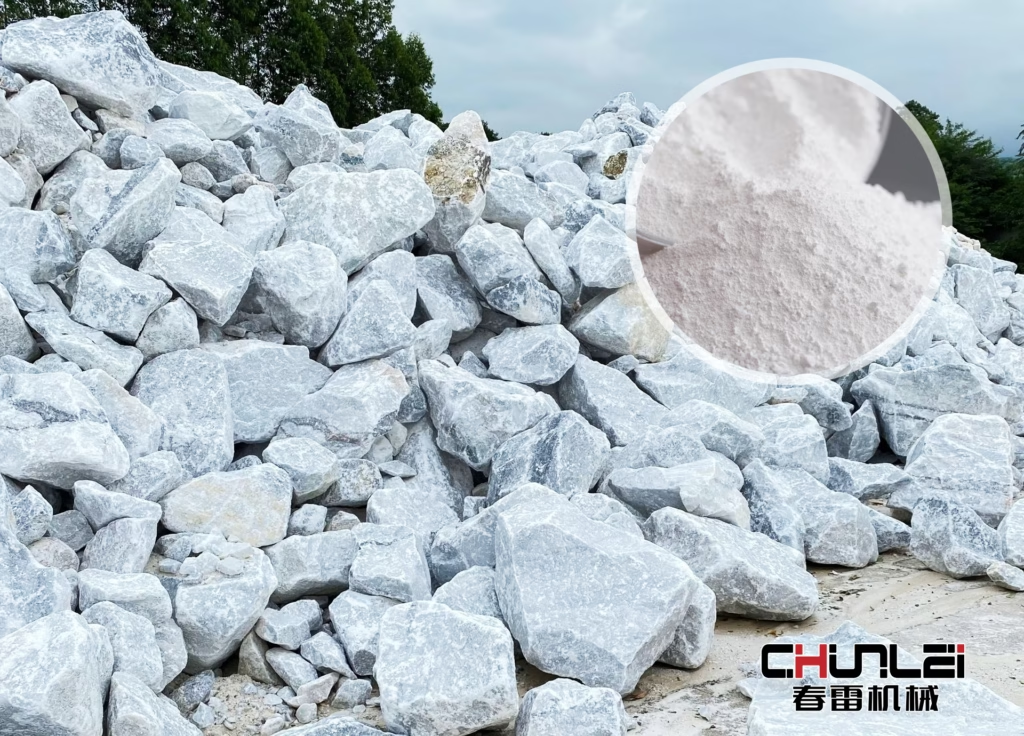
Calcium-carbonate-ore
What is calcium carbonate?
Calcium carbonate is an inorganic compound composed of calcium, carbon, and oxygen, with the chemical formula CaCO₃. It ranks among the most common minerals on Earth. It is commonly found in minerals such as marble, limestone, and calcite, and is also the primary component of shells and eggshells. This substance is chemically stable but readily reacts with acids. Consequently, it is widely utilized by humans in numerous fields, including building materials and industrial raw materials (such as smelting and cement manufacturing), serving as a fundamental raw material in industrial production.
Calcium Carbonate Grinding Process
Raw Material Pre-treatment
Lump calcium carbonate raw materials (such as limestone or calcite) are first crushed by a jaw crusher into coarse particles of approximately 50-100 mm in size. These are then subjected to secondary crushing using an impact crusher to produce fine particles of 5-10 mm, preventing large lumps from damaging grinding equipment.
Grinding Stage
Select grinding equipment based on dry or wet grinding:
1.Dry Grinding Process: Feed pretreated fine material into a Raymond mill for initial grinding to coarse powder (80-200 mesh). For finer grades (e.g., 500-3000 mesh), transfer coarse powder to a vertical mill for ultrafine grinding.
2.Wet Grinding Process: Pump the slurry into a ball mill. High-speed rotation of steel balls within the mill impacts and grinds the slurry to achieve a fineness of 1-10 microns.
Classification and Screening Stage
The ground powder enters a classifier. Coarse particles failing to meet the required fineness are returned to the grinding mill for reprocessing, ensuring uniform particle size in the final product.
Collection and Packaging
Qualified powder is collected via pulse dust collectors, where dust and impurities are removed. The purified powder is then automatically packaged into woven bags or sealed containers, completing the finished product production.
What is the best calcium carbonate grinding machine?
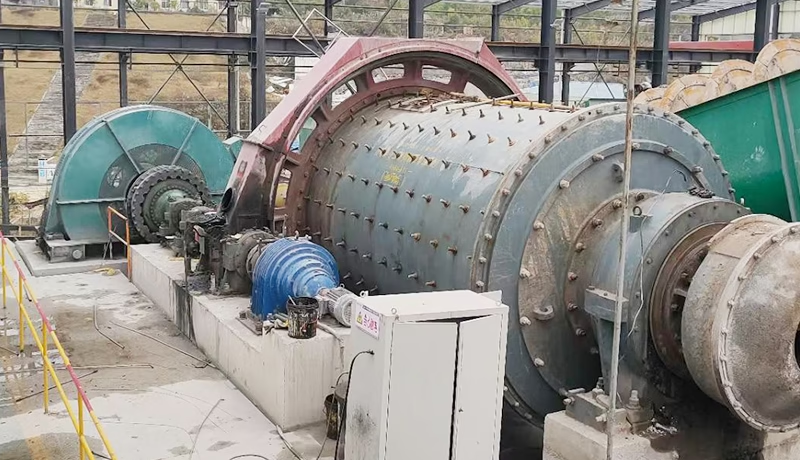
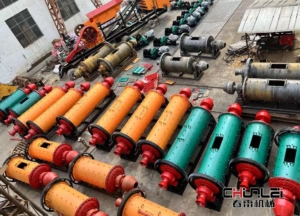
Calcium carbonate ball mills utilize internal grinding media to generate collision, impact, and shear forces. During this process, calcium carbonate particles are progressively ground to the target fineness. Ball mills can be categorized into wet grinding and dry grinding methods. Calcium carbonate ball mills typically process particle sizes greater than 800 mesh or within the 20-400 mesh range.
Ball Mill
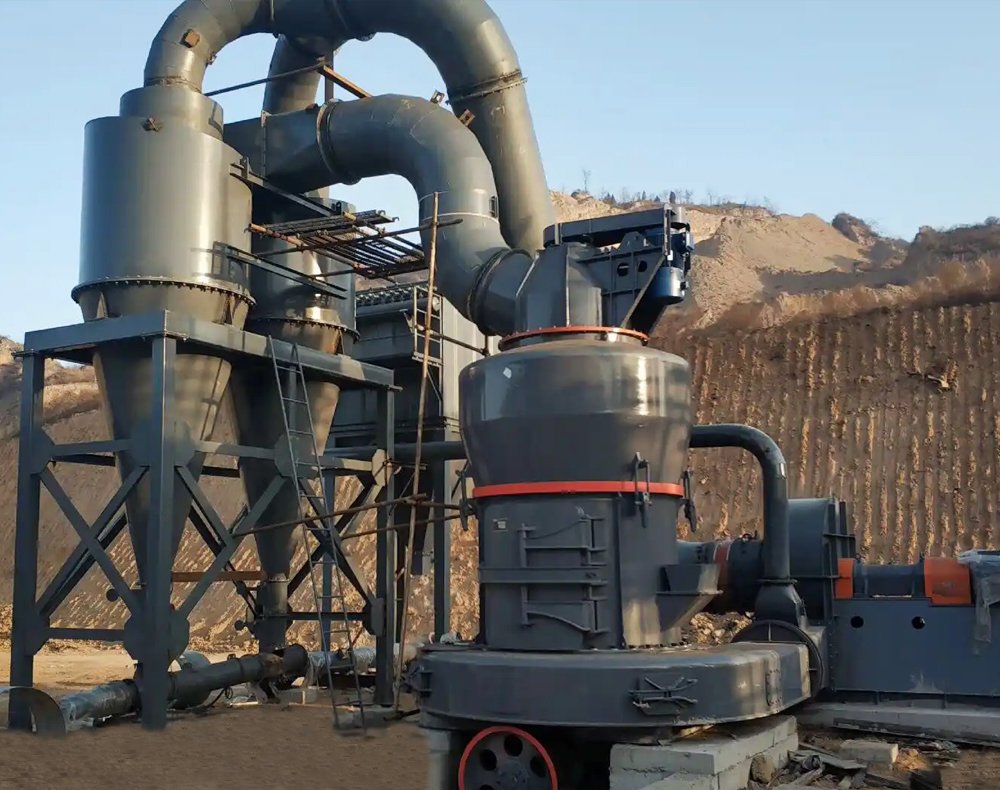
The calcium carbonate Raymond mill is a dry grinding equipment for processing calcium carbonate powder. It applies pressure and grinding to materials through the centrifugal rolling of grinding rollers within the grinding ring. Crushed calcium carbonate feedstock is pulverized into powder within the grinding zone. The powder is then conveyed by airflow to the top-mounted cyclone classifier for precise separation: qualified fine powder is collected as finished product, while coarse particles are returned to the grinding zone for reprocessing. This closed-circuit system efficiently produces calcium carbonate powder in various specifications ranging from 80 to 600 mesh.
Raymond Mill
What auxiliary equipment is used in calcium carbonate plants?
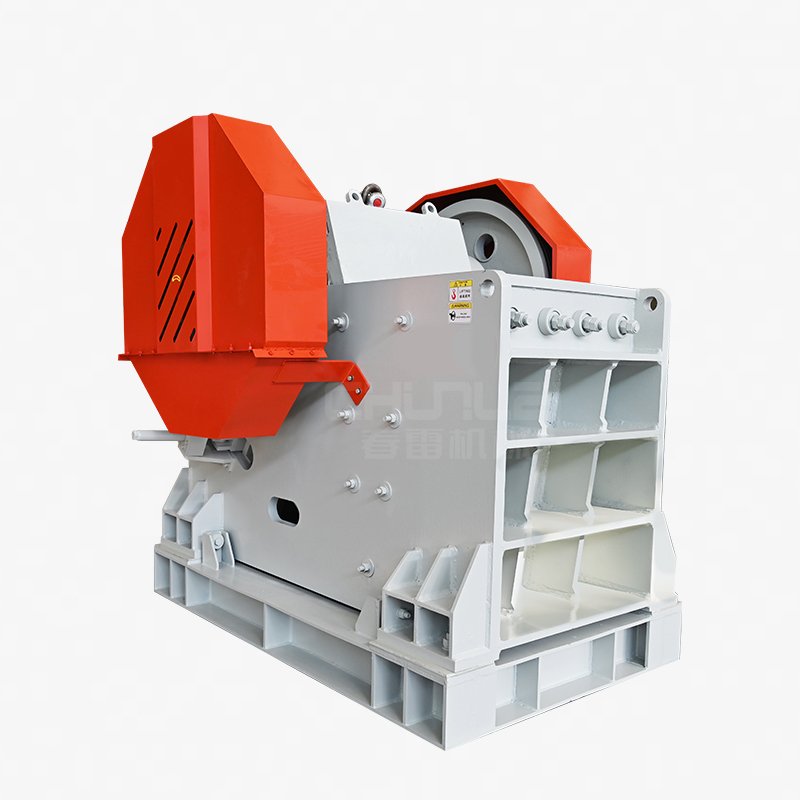
Jaw Crusher
The jaw crusher is the core equipment for primary crushing in mining and aggregate processing. It simulates the chewing motion of an animal using two jaw plates—a moving jaw and a stationary jaw—to perform coarse and medium crushing operations on materials. It efficiently processes various large, hard materials with compressive strengths up to 320 MPa (e.g., granite, basalt, ores), typically reducing feedstock to a particle size of approximately 10-350 mm in a single pass. This prepares appropriately sized material for secondary crushing or ball milling.
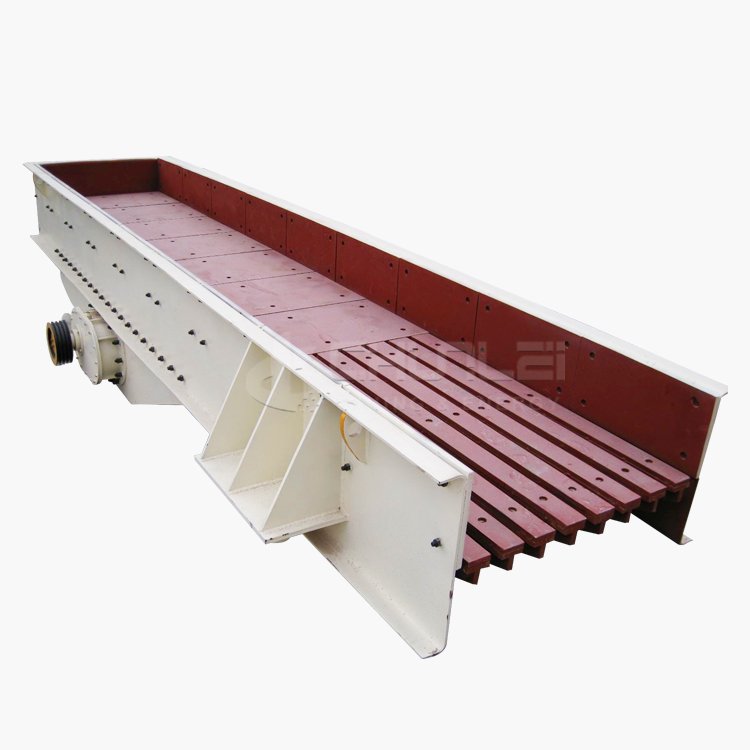
Vibrating Feeder
A vibrating feeder is mining machinery that utilizes vibration principles to uniformly and continuously transport lumpy or granular materials from storage bins to receiving equipment. Its feed rate can be precisely adjusted, and it effectively removes impurities, making it an indispensable key piece of equipment in production lines across mining, metallurgy, building materials, and chemical industries.
Classifiermachine
The classifier serves as the core sorting equipment in powder processing lines. It utilizes differences in settling velocity of particles within air or liquid streams to separate ground materials by particle size. Oversized particles are returned to the ball mill for re-grinding.
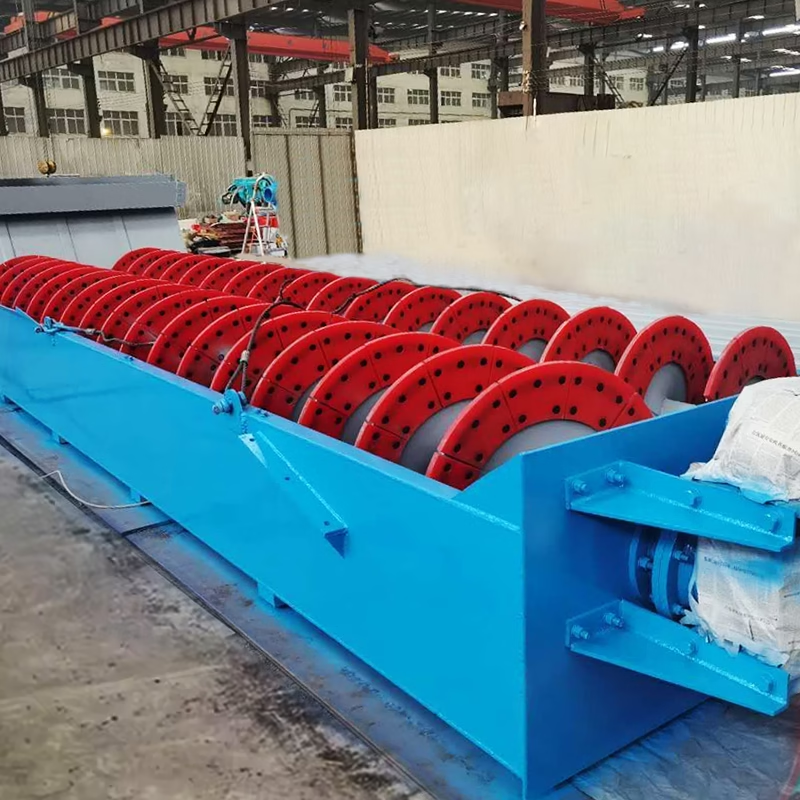
Spiral Sand Washing Machine
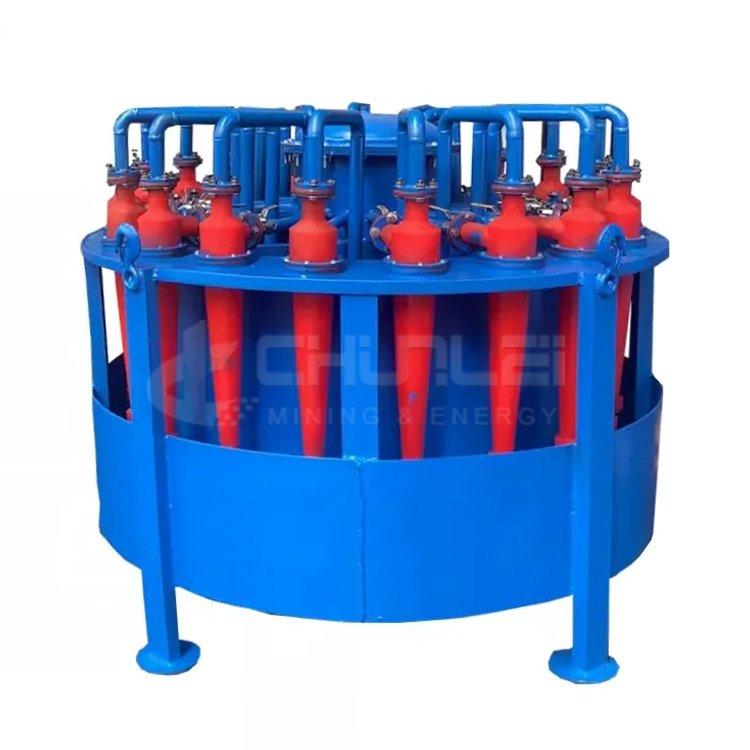
hydrocyclone
How to Optimize Calcium Carbonate Grinding Efficiency?
Grinding Media Optimization: Use a proportional mix of large, medium, and small steel balls. The ball filling volume should typically occupy 40%-50% of the ball mill’s effective capacity. Excessive or insufficient filling will impair grinding efficiency.
Feed Particle Size Control: Ensure calcium carbonate feedstock entering the ball mill has been crushed to a uniform and minimally small particle size (e.g., ≤10mm). For dry grinding, feed moisture content must be strictly controlled.
Closed-Circuit Grinding System Install a classifier (or hydrocyclone) downstream of the ball mill to create a closed-loop circuit. Undesirable material is returned to the mill, while qualified material proceeds to subsequent stages, preventing over-grinding. This is one of the most effective methods for enhancing efficiency.
Grinding Aids: Adding appropriate grinding aids (such as triethanolamine, certain salts, or specialized composite aids) allows them to adsorb onto material surfaces. This prevents agglomeration of fine particles during grinding, thereby improving grinding efficiency and reducing energy consumption.
Conclusion
The global calcium carbonate market is experiencing steady growth. The core value of ground calcium carbonate lies in transforming natural limestone from a common raw material into a versatile material. Widely used as the backbone of construction cement and concrete, it also serves as a functional filler in industries such as papermaking, coatings, plastics, and rubber. Further processed calcium carbonate is commonly found in household chemicals, food, pharmaceuticals, and even environmental desulfurization processes, earning it the title of “universal material.”
If you are interested in ball mills or have any inquiries, pleasecontact us—we are available 24 hours a day to address your questions. your free solution now!
Cement ball mills and Cement mixing ball mills are two distinct types of equipment with fundamentally different operating principles and application scenarios. Below are the differences between them, ranging from working principles to application...
Divided into dry and wet grinding, a ball mill is a rotating cylindrical drum, usually with steel balls, ceramic or rubber filling the interior. As the drum rotates, the balls fall and crush the material, creating a fine powder. Wet ball mill i...
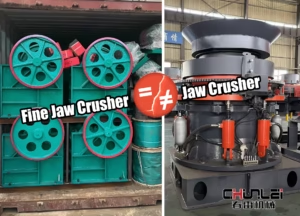
To be precise, a “fine jaw crusher” is a specific type of “Jaw Crusher.” Jaw crushers constitute a broad category, primarily divided into two main types based on their output particle size and application: Primary Jaw Crusher: This is the most ...
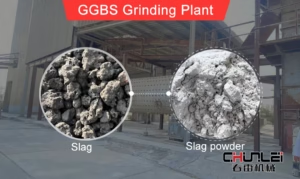
Blast furnace slag is an industrial byproduct generated during the ironmaking process in blast furnaces. When smelting pig iron, iron ore reacts at high temperatures with coke, limestone, and other flux agents within the furnace. Impurities in th...
Welcome to Chunlei machinery website. We are a leading manufacturer and exporter of mining machinery in China with more than 30 years history in China.
We offer you one-stop solutions: online consultation --- customized solutions --- fast delivery --- comprehensive after-sales service
 Chunlei Mining Machinery