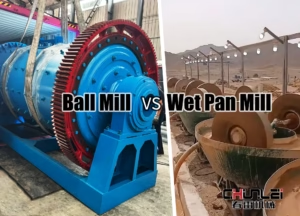
As a core grinding equipment in mining, building materials, chemical, and other industries, ball mills have long been subject to significant attention regarding wear issues. Among these, large gear wear is the most prevalent and critical concern, directly impacting the production efficiency and equipment lifespan of the entire production line. Gear wear not only leads to frequent shutdowns for maintenance but also causes severe economic losses. This article systematically analyzes the causes of large gear wear in ball mills and provides solutions ranging from prevention to repair, enabling you to transition from reactive maintenance to proactive prevention.
一、Wear Mechanism: Composite Damage Under Multiple Actions
Internal Wear: Friction Between Large and Small Gears
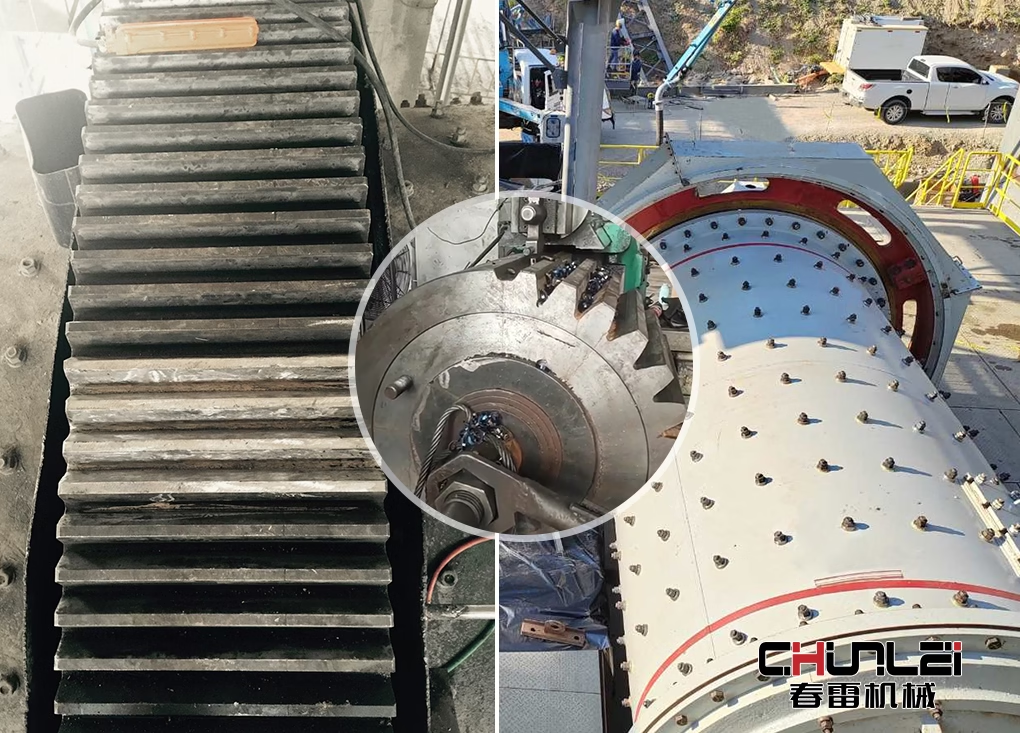
The wear of ball mill large gears is primarily the combined result of rolling friction, sliding friction, and abrasive wear. The interaction between the two gears in a ball mill is not simple rolling but involves rolling with sliding. This composite motion inherently generates friction.
Fatigue Pitting: Continuous operation without adequate lubrication causes elastic deformation or micro-spalling on gear protrusions, forming pitted surfaces.
Operational Tearing: Under extreme pressure and temperature, gears momentarily fuse during rotation before being torn apart, resulting in severe tear damage.
External Wear: Friction from Surrounding Dust and Slurry
The ball mill environment is filled with dust and mineral slurry. If seals are compromised, these hard particles invade the gears, causing microscopic cutting and compression spalling during meshing.
二、Material and Process Defects
Material selection is fundamental: premium alloy steel offers higher strength and durability. Heat treatment is critical—some manufacturers skip stress-relief processes to expedite production, resulting in insufficient gear hardness and reduced wear resistance. Quality gears must meet surface hardness standards, possess adequate hardened layer depth, and exhibit wear resistance without flaking under pressure.
三、 Lubrication System Failure
Lubrication must be thorough. Insufficient oil viscosity or poor oil quality prevents the oil film from adequately covering microscopic protrusions on gear surfaces, causing dry friction. Using the wrong lubricant can cause surface temperatures to spike, dramatically increasing wear and leading to severe gear damage. The配套 oil injection system must not be compromised—proper lubrication is the guarantee of longevity.
四、Inadequate Installation and Routine Maintenance
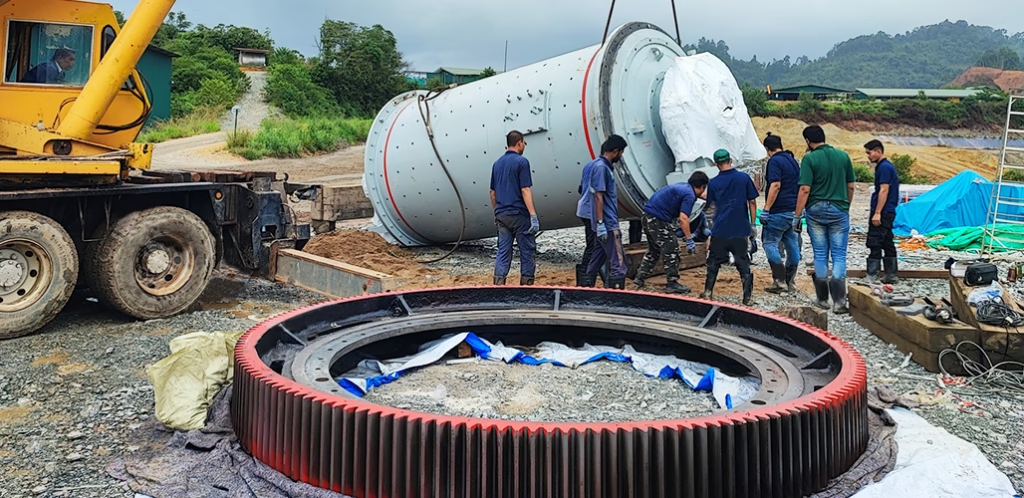
Precision determines success or failure. After installation, inspect contact spots—only those evenly distributed across the mid-section of the gear surface are acceptable. During installation, if the coaxiality error between the motor and pinion shaft exceeds 0.1mm, or if the side clearance between the large and small gears is uneven, it will induce impact loads, causing contact stress on the gear surface to surge by 2-3 times. During subsequent operation, failure to regularly remove accumulated contaminants from gear surfaces (e.g., a processing plant where deposits caused a 15°C temperature rise) or to promptly replace pinions exceeding wear limits (e.g., a steel mill where excessive pinion wear caused gear misalignment and reduced life by 60%) will accelerate pinion failure.
Ball-Mill-Installation
五、Direct Loading During Running-in Period
New gears or those after major overhauls require a “running-in period.” This period necessitates light-load operation to gradually wear down microscopic protrusions on the tooth surfaces, improve surface roughness, and expand the contact area. Skipping the running-in period or subjecting gears to full load operation immediately will cause severe wear.
Comprehensive Measures for Solutions and Extended Service Life
Prioritize high-quality alloy steel and perform standardized heat treatment to ensure compliance with hardness and toughness requirements.
Within budget constraints, elevate gear machining precision grades to reduce surface roughness and thereby lower wear rates.
Enhance sealing structures to ensure the gear cover itself maintains tight sealing integrity, fundamentally preventing contaminant ingress.
During installation, ensure contact spots are evenly distributed across the mid-section of the tooth surface. Implement pre-bias installation based on the deformation of the cylinder under load.
After installing new gears, conduct a light-load running-in period. Upon successful running-in, thoroughly clean the gears and oil tank, then replace with fresh lubricating oil.
Select and maintain lubricating oil correctly based on equipment load, rotational speed, and ambient temperature. Replace degraded lubricating oil promptly.
Establish and enforce strict daily inspection and periodic maintenance protocols to promptly identify issues (replace or repair gears), preventing wear and unnecessary expenses.
Conclusion
Chunlei has consistently been a leader in the mineral processing industry. We provide complete crushing equipment, mineral processing equipment, and solutions. We serve customers worldwide. Our equipment is renowned for its reliability, efficiency, and superior performance. We offer end-to-end support, including design, manufacturing, installation, and after-sales service.
Contact us today. Our experts can assist in designing or optimizing any crushing production line. Choosing us means acquiring more than just equipment—it means gaining a future-oriented, profit-generating production solution that lays a solid foundation for your project’s success.
To be precise, a “fine jaw crusher” is a specific type of “Jaw Crusher.” Jaw crushers constitute a broad category, primarily divided into two main types based on their output particle size and application: Primary Jaw Crusher: This is the most ...
Zinc Ore Beneficiation Process
Process Introduction The core of zinc ore beneficiation technology is flotation, which realizes the effective recovery and grade improvement of zinc minerals through the steps of pretreatment, roughin...
In gold ore processing, every incremental improvement in recovery rate directly impacts a company's input-output profitability ratio. Selecting the appropriate equipment for grinding gold ore is the primary factor determining gold recovery effici...
Gold carbon, as the name suggests, refers to gold-loaded activated carbon—activated carbon that has adsorbed gold and silver. Leaching means extraction. The gold carbon leaching plant refers to the process in the carbon-in-pulp gold extraction pr...
Welcome to Chunlei machinery website. We are a leading manufacturer and exporter of mining machinery in China with more than 30 years history in China.
We offer you one-stop solutions: online consultation --- customized solutions --- fast delivery --- comprehensive after-sales service
 Chunlei Mining Machinery