Choosing the right ball mill is one of the most critical decisions for any mining operation—it directly impacts your grinding efficiency, gold recovery rate, and long-term operating costs. Whether you’re a small-scale artisanal miner in Zimbabwe or managing a medium-sized processing plant, this step-by-step guide will walk you through how to select a ball mill that matches your ore type, capacity needs, and budget.
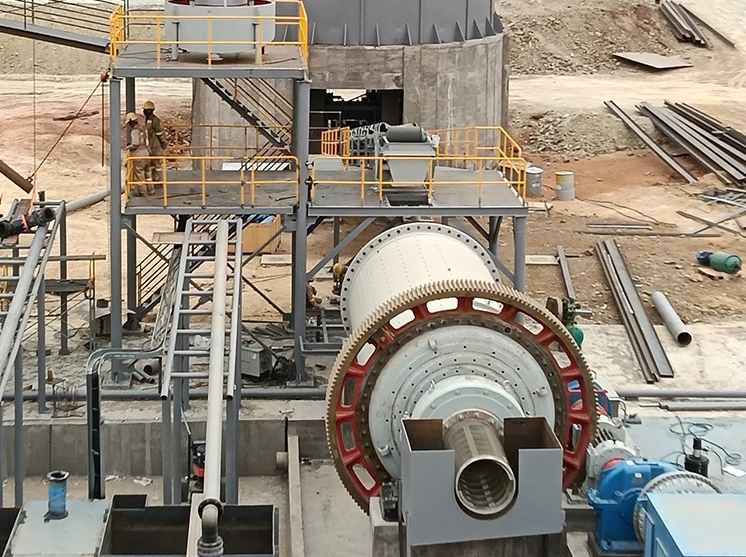
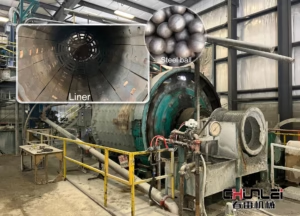
Working wet grinding ball mill for gold ore processing at a small-scale mine in Zimbabwe, demonstrating continuous operation and efficient grinding.
Before comparing models or prices, answer these 4 foundational questions—they will narrow down your options immediately:
What Type of Ore Are You Processing?
Different ores have distinct hardness and abrasiveness, which dictate the ball mill design:
Soft minerals (e.g., limestone, kaolin): Can use smaller, energy-efficient mills with ceramic balls for finer grinding.
Gold ore / Copper ore: Medium-hardness ores → wet grinding ball mills are most common (ideal for downstream leaching/CIP processes).
Hard rock (e.g., granite, iron ore): Require high-chrome grinding media and reinforced mill shells to resist wear.
What Is Your Required Daily Processing Capacity?
Capacity is measured in tons per hour (TPH) or tons per day (TPD). Match the mill size to your actual output:
Small-scale miners (1–5 TPD): Choose a small ball mill (e.g., Φ900×1800 or Φ1200×2400)—compact, easy to operate, and fits limited space.
Medium operations (10–50 TPD): Opt for medium ball mills (Φ1500×3000 to Φ2100×3600)—balances capacity and energy use.
Large plants (50+ TPD): Need custom large-scale mills with automated controls and continuous feeding systems.
Wet Grinding vs. Dry Grinding: Which Is Better?
This is a key choice for miners:
Grinding Type
Best For
Pros
Cons
Wet Grinding
Gold/copper ore, leaching processes
Higher efficiency, finer particle size, less dust
Requires water access, adds dewatering steps
Dry Grinding
Minerals sensitive to moisture, arid regions
No water needed, simpler downstream processing
Higher energy use, more dust pollution
For most Zimbabwean gold miners, wet grinding is the standard choice—it unlocks more gold particles for leaching.
What Is Your Budget & Operating Cost Limit?
Initial investment: Larger mills cost more upfront, but smaller mills may require frequent replacements. Long-term costs: Focus on energy consumption (kWh/ton) and wear parts lifespan (liners, grinding balls)—these make up 60–70% of total operating costs.
Key Technical Factors to Evaluate When Choosing a Ball Mill
Once you’ve defined your needs, dig into these technical details to pick the best model:
Mill Size & Speed
Diameter (Φ) & Length (L): Larger diameter mills grind coarser material faster; longer length mills produce finer powder. Rotational Speed: Optimal speed is 70–80% of critical speed—too slow = inefficient grinding; too fast = balls stick to the shell, reducing impact.
Grinding Media Selection
The balls inside the mill determine grinding performance:
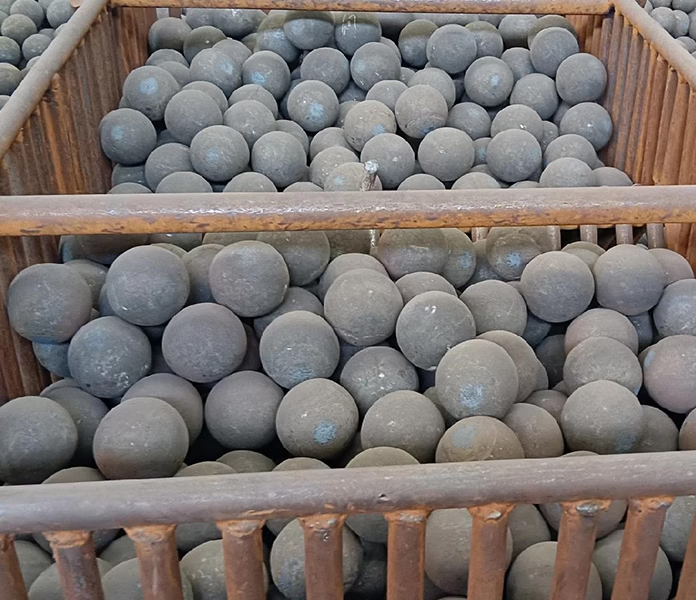
Steel balls: Durable, high impact—ideal for hard ores (gold, copper).
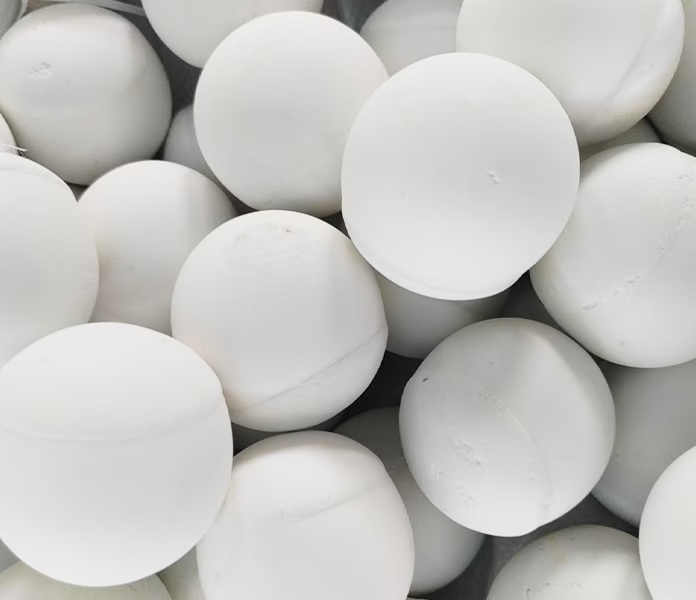
Ceramic balls: Lighter, non-contaminating—perfect for soft minerals or when metal contamination is a concern.
Stainless steel balls: Used for specialty minerals requiring corrosion resistance.
Steel-Balls
Ceramic-balls
Liner Material & Design
Liners protect the mill shell and transfer energy to the balls:
Rubber liners: Lightweight, quiet, and wear-resistant—great for small mills and wet grinding.
High-manganese steel liners: Extremely durable for heavy-duty, hard-rock grinding.
Lifter bars: Ensure balls are lifted to the optimal height for maximum impact.
Discharge Method
Overflow discharge: Produces fine particles, ideal for wet grinding (most common for gold mining).
Grid discharge: Faster grinding, better for coarser particles and dry processing.
Red Flags to Avoid When Selecting a Ball Mill Supplier
Not all ball mills are created equal—avoid these common pitfalls:
Vague pricing: Reputable suppliers provide transparent quotes, including shipping, installation, and warranty costs.
Oversized mills for small operations: Wastes energy and increases maintenance costs.
Cheap, low-quality liners/media: Lead to frequent breakdowns and higher long-term costs.
No local after-sales support: Critical for miners in remote areas like Zimbabwe—delays in repairs can halt production for weeks.
How CHUNLEI Mining Helps You Choose the Perfect Ball Mill
At CHUNLEI Mining, we specialize in tailoring ball mill solutions for African mining conditions, with over 30 years of experience serving miners in Zimbabwe and across the continent. Here’s how we support you:
Free Ore Testing & Process Analysis
Send us a sample of your ore, and our engineers will:
Test its hardness and grindability.
Recommend the optimal mill size, speed, and media type.
Simulate your production line to predict efficiency and recovery rates.
Customized Ball Mill Models
We offer a full range of ball mills for every miner:
Small ball mills (starting at $7,000): Perfect for artisanal and small-scale gold mines.
Medium/large mills: Custom-built for medium to large operations, with automated controls and energy-saving designs.
Wet/dry grinding options: Adaptable to your local climate and processing needs.
Full After-Sales Support
24/7 online technical support.
On-site installation and commissioning for large projects.
Spare parts supply chain covering Zimbabwe and Southern Africa.
Final Checklist: How to Choose a Ball Mill for Your Mine
✅ Define your ore type, capacity, and grinding method (wet/dry).
✅ Match mill size to your actual production needs (avoid over-sizing).
✅ Prioritize energy efficiency and wear-resistant components.
✅ Choose a supplier with proven experience in your region and industry.
✅ Request a free ore test and customized quote before making a decision.
Get Your Custom Ball Mill Quote Today
If you’re ready to choose the right ball mill for your mining operation, contact CHUNLEI Mining for:
A free, no-obligation quote tailored to your capacity and ore type.
A detailed technical specification sheet for our ball mill models.
A free copy of our guide: “The Miner’s Handbook to Ball Mill Efficiency & Gold Recovery”.
📱 24/7 Online Support: Chat with our mining experts directly on our website
Let’s build a ball mill solution that maximizes your gold recovery and minimizes your operating costs—request your quote today.) and complete gold ore processing production lines—meeting all your needs from ore crushing, grinding to gold separation.
Steel Slag Processing Production Line
Though steel slag appears to be low-cost waste material, crushed and purified slag boasts high iron content, soaring prices, and significant market demand. Processed steel slag can be utilized as a sm...
In the field of gold mining, ore type directly determines the optimal beneficiation process and equipment selection. Understanding the characteristics of different gold ore types not only enhances recovery rates but also significantly reduces ope...
Fluorite Ore Dressing Production Line
Process Introduction Fluorite ore beneficiation methods include gravity separation and flotation, which are also divided into gravity separation equipment and flotation equipment. Gravity separ...
The role of ball mills in heavy industries like mining and cement is undeniable, and liners are critical components of the mill cylinder. When the machine frequently emits abnormal, grating friction noises, it may indicate liner wear. This not on...
Welcome to Chunlei machinery website. We are a leading manufacturer and exporter of mining machinery in China with more than 30 years history in China.
We offer you one-stop solutions: online consultation --- customized solutions --- fast delivery --- comprehensive after-sales service
 Chunlei Mining Machinery