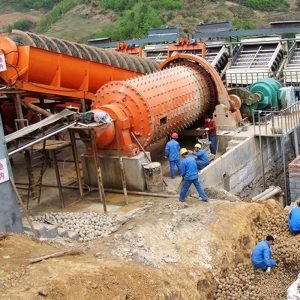
When designing and investing in an efficient and profitable aggregate production line, selecting the core crushing equipment is undoubtedly critical. Choosing the wrong crusher can lead to increased maintenance and downtime costs, compromised product quality, production stagnation, and ultimately, diminished profits. Should you opt for the rugged and durable jaw crusher or the highly efficient cone crusher? In reality, they are fundamentally different machines with distinct crushing principles. Let’s explore why this distinction is vital for your crusher selection.
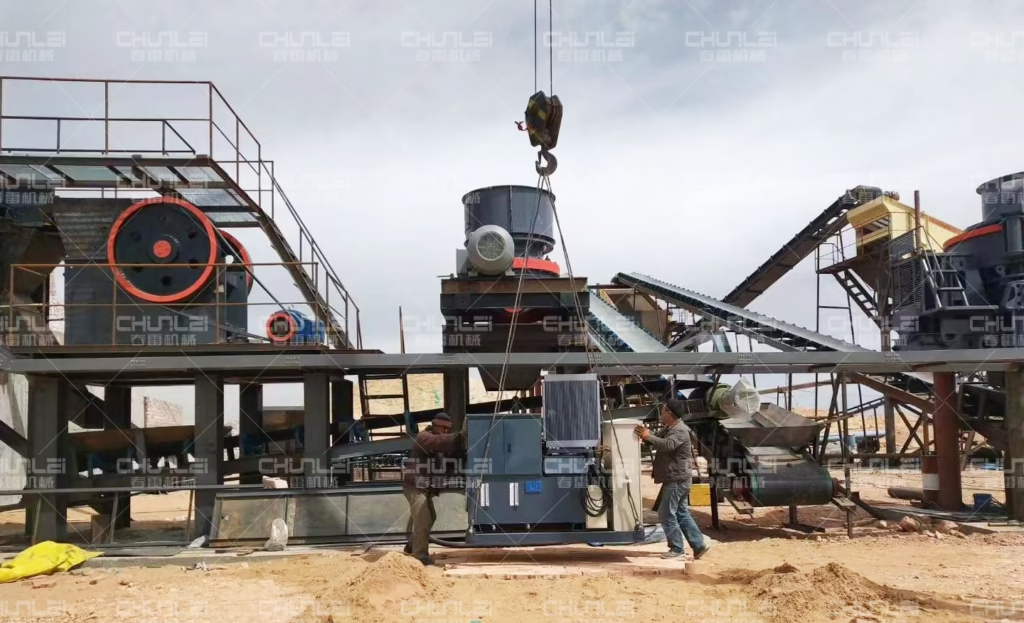
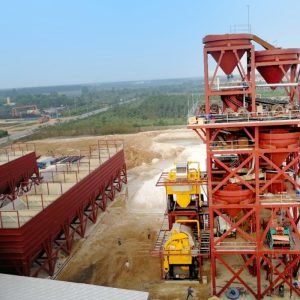
Stone-Crushing-Production-Line
Is the jaw crusher the best choice for coarse crushing?
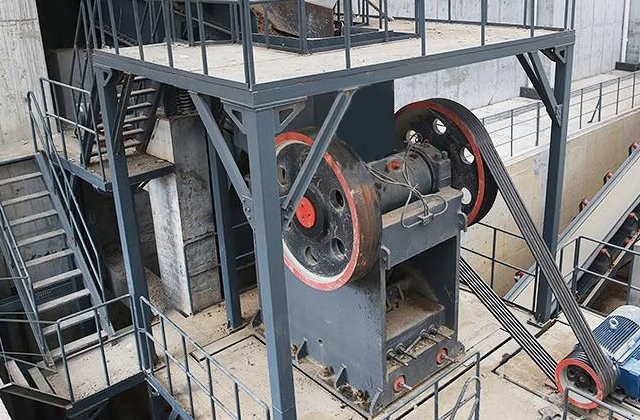
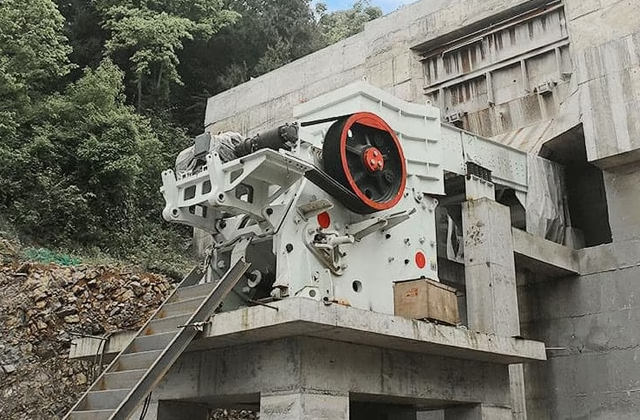
The jaw crusher is a primary crusher designed for coarse crushing of large raw ore. Rocks blasted from quarries are typically large and require breaking down into smaller pieces for subsequent processing and utilization. Why is the jaw crusher the preferred equipment for crushing large rocks?
First, the jaw crusher features a simple structure with a wide feed opening, specifically designed to handle large-volume materials, making it the preferred choice for primary coarse crushing.
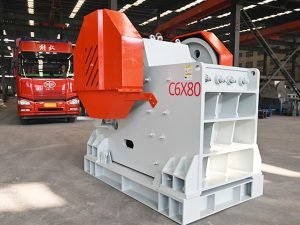
The jaw crusher boasts formidable crushing capacity and robustness. Its sole function is primary crushing. It crushes rock by forcing it between a movable jaw plate and a fixed jaw plate, subjecting the rock to intense compression and fracturing. They break large rocks from mines or quarries into smaller pieces for subsequent processing (typically reducing material to 100-250mm). This straightforward mechanical design ensures durability, withstanding the immense impact loads generated when crushing oversized boulders. Its most critical feature is the large feed opening, enabling it to handle materials that other crushers cannot process.
Is the cone crusher the top choice for medium and fine crushing?
The cone crusher serves as a secondary or tertiary crusher. After primary crushing in mining operations, materials still require medium and fine crushing to achieve finer, more uniformly shaped final products. Why is the cone crusher the core equipment for this stage?
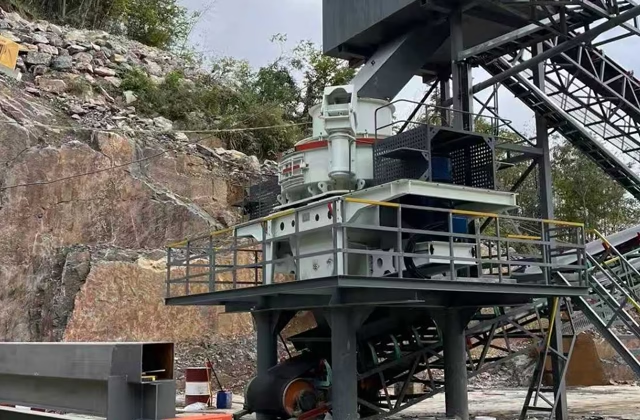
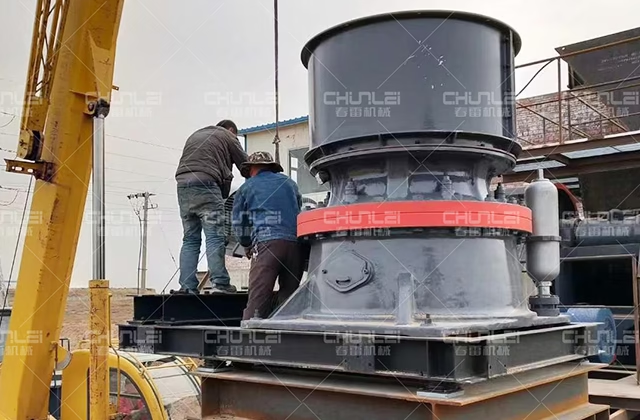
Cone crushers excel at medium and fine crushing due to their core advantage: the laminar crushing principle. Material undergoes repeated squeezing and fracturing within the crushing chamber formed by the moving and fixed cones, producing smaller rock pieces (e.g., below 40mm). Cone crushers are particularly adept at processing high-hardness materials, delivering absolute crushing efficiency for hard rocks like granite and basalt.
To achieve optimal performance, cone crushers must operate under “full feed” conditions, meaning the crushing chamber must remain continuously loaded. This forces rocks to grind against each other, significantly improving the cubicity of crushed particles and ensuring uniform wear on liners. This represents a key operational difference from jaw crushers.
Differences Between Jaw Crushers and Cone Crushers
To put it simply, a jaw crusher is like an animal’s “chewing” action—simple, powerful, and crushing large chunks of material one bite at a time. It handles the most rugged primary crushing. A cone crusher is like a blender’s “grinding” action—continuously and uniformly crushing material through compression and grinding. It handles efficient, fine secondary processing. Based on our design expertise and experience, here’s a direct comparison of the most critical factors between jaw crushers and cone crushers:
Jaw Crusher
Cone Crusher
Crushing Stage
Primary Crushing (First Stage Crushing)
Medium crushing, fine crushing (secondary crushing)
Working Principle
Compression: The moving jaw plate periodically approaches and retracts from the fixed jaw plate, simulating a “chewing” action.
Layer crushing: The moving cone performs uniform rotational swinging motion within the fixed cone, continuously squeezing and grinding the material.
Feed Size
Large (Capable of processing boulders up to 1.5 meters in diameter or larger)
Medium-sized (typically material pre-crushed by jaw crushers, ≤300-400mm)
Product Size
Coarse, with uneven product particle size and a higher proportion of flaky material. Wide range of discharge opening adjustment.
Finer and more uniform, with superior product particle size and a higher proportion of cubical particles (compared to jaw crushers).
Processing Capacity
Relatively low
High: Under equivalent feed conditions, cone crushers typically achieve higher hourly output.
Equipment Cost
Lower initial purchase cost
Initial purchase cost: High (more complex structure, higher technical content)
Operating Cost
Lower: Simple structure, easy replacement of wear parts (jaw plates) at low cost.
Operating cost: Relatively high: Complex structure, demanding maintenance requirements, and higher costs for wear parts (bowls, crushing walls).
Energy Consumption
Lower (due to intermittent operation)
Power consumption: High (due to continuous operation, motor always at full output)
Product Shape
Generally produces more flaky and needle-shaped particles.
Maintenance: Good, with superior particle shape and increased cubical particles achieved through laminated crushing.
Suitable Materials
Rocks of various hardnesses, construction waste, etc.
Medium-high hardness and above abrasive rocks.
Structural Features
Simple, robust, compact structure with large feed opening.
Complex structure requiring precise hydraulic or spring protection systems.
Key Advantages
Large feed capacity, simple structure, easy maintenance, low initial investment.
High output, excellent product gradation, stable operation, high automation.
When planning a complete aggregate production line, should one choose a single crusher or both?
During project planning, a common consideration arises: Can the circuit be simplified to save costs? Can one machine handle the job, or are both machines essential? In the vast majority of cases, a complete and efficient aggregate production line requires the simultaneous use of both a jaw crusher and a cone crusher. They are not competitors but partners—a golden duo. The jaw crusher handles the primary crushing that the cone crusher cannot perform, while the cone crusher completes the secondary crushing and shaping that the jaw crusher cannot achieve.
Exceptions (where only one may be needed):
Only coarse crushed material is needed: If your final product requires only coarse aggregate (e.g., for railroad ballast or foundation backfill) with no specific requirements for particle shape or gradation, a single large jaw crusher may suffice.
Feed material is already small: If your raw material consists of pre-crushed, small-sized rocks (e.g., ≤300mm), a cone crusher can be used directly.
Requires mobility: In scenarios like construction waste processing, a fixed production line may incur significant additional costs and inconveniences. In such cases, a “mobile jaw crushing plant” integrating feeding, jaw crushing, and screening functions may be employed for standalone operation.
Is there a crusher that can replace two pieces of equipment at once?
If your budget is extremely tight, purchasing a complete two-stage crushing system may be challenging. So, is there a “universal” machine that can bridge this gap? The table below outlines several equipment options that might meet your “one machine, multiple uses” needs, helping you quickly understand their key features:
Equipment Type
Key Features
Applicable Materials
Precautions
Heavy-duty Impact Crusher
✔️ High crushing ratio, capable of single-stage crushing
Medium-hardness and below materials with low abrasiveness, such as limestone and construction waste
❌ Plate hammers and impact plates wear out quickly, especially when processing high-hardness materials
✔️ Excellent product particle shape
❌ Product powder content may be relatively high
✔️ Relatively simple structure with moderate investment
Hammer Crusher
✔️ Truly achieves single-stage crushing with simplified process
Medium-to-low hardness materials like coal gangue, limestone, and shale
❌ Hammer wear accelerates when crushing hard materials
✔️ Simple and rational design with low operating costs
❌ High proportion of powdery material in output, low yield of large aggregate
Compound Crusher
✔️ Integrates fine crushing and coarse grinding functions
Medium-to-high hardness materials including various ores, cement clinker, and iron ore
❌ Feed size often restricted (e.g., ≤100mm for certain models), may require primary crushing
✔️ Large crushing ratio with adjustable output particle size
✔️ Strong adaptability to materials with high moisture content
Mobile Impact/Hammer Crushing Station
✔️ Integrated feeding, crushing, and conveying for flexibility and convenience
Construction waste and stone materials below medium hardness
❌ Unit cost may exceed comparable stationary equipment
✔️ Can be deployed directly at raw material sites, reducing transportation costs
❌ Capacity and feed size limitations may still fall short of traditional production lines
For softer, less abrasive rocks like limestone, impact crushers can serve as integrated solutions replacing dual equipment. However, for hard, highly abrasive rocks such as granite, they cannot substitute the combination of jaw and cone crushers.
The Trade-offs of “One Machine for Multiple Uses”
Equipment designed for “one machine for multiple uses” typically compromises performance to accommodate both coarse and fine crushing. You may need to accept lower production efficiency compared to specialized production lines, potentially suboptimal product particle shape and gradation (particle distribution), or faster wear of consumable parts leading to increased maintenance costs. This requires weighing these factors against your requirements for the final product quality.
Conclusion
To develop the most optimal solution, you must first identify your core requirements. Consider the following questions to clarify your needs:
What is the actual hardness of the stone material you’re processing?
What are your desired final product dimensions?
What is your required production capacity (tons per hour)?
How critical is the shape of the finished particles to your application?
If you have any further questions or uncertainties, feel free to consult Chunlei customer service at any time. We will assist you with our professional expertise and sincere attitude to resolve your concerns, ultimately designing the most suitable and cost-effective production line equipment for your needs. Contact us now!
Quartz Sand Dressing Production Line
Process Introduction The quartz sand beneficiation process is mainly for purification, removing small or trace amounts of impurities in quartz sand to obtain refined quartz sand or high-purity q...
Applicable materials: Ore, rock, coal, construction waste Customers say: Chunlei machinery technicians are very responsible, according to our needs recommended C6X80 crusher, the use of the machine configuration is excellent, large capacity,...
Ball mills and vertical roller mills are two mainstream grinding equipment. Vertical roller mills offer higher production efficiency, while ball mills are the preferred choice for ensuring product quality. This article will detail the differences...
Kaolin Dressing Production Line
Process Introduction Wet and dry separation are the two main processes of the Spring Thunder kaolin beneficiation process.The dry separation process is used to process kaolin ores with high whiteness...
Welcome to Chunlei machinery website. We are a leading manufacturer and exporter of mining machinery in China with more than 30 years history in China.
We offer you one-stop solutions: online consultation --- customized solutions --- fast delivery --- comprehensive after-sales service
 Chunlei Mining Machinery