Search the whole station Hot Product Catalog
Tracked crusher is a self-propelled, integrated crushing unit mounted on a heavy-duty crawler chassis. By integrating the main crusher, crawler chassis, feeding mechanism, conveying system, power unit, and control system into a single entity, it finds widespread application in fields such as mining, quarrying, construction waste recycling, and road and bridge construction. Characterized by its independence from fixed foundations, rapid setup, strong terrain adaptability, and flexible mobility, it has become the preferred choice for modern mobile crushing operations.
This article provides a comprehensive overview of three core models—the Tracked jaw crusher, Tracked cone crusher, and Tracked impact crusher—covering their definitions, working principles, advantages, applications, parameter matching, maintenance requirements, and selection guidelines, thereby assisting you in choosing the most suitable mobile crushing solution for your needs.
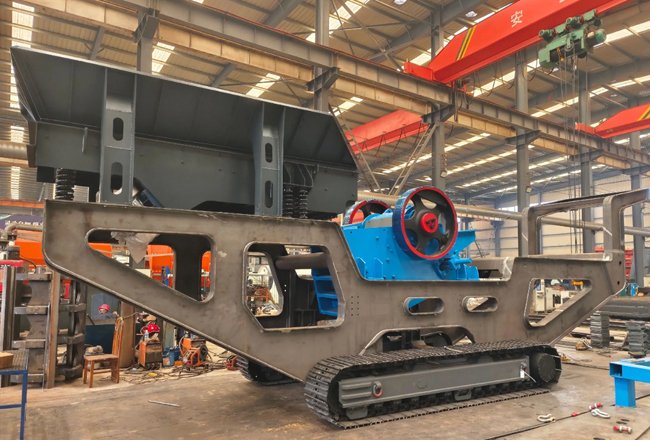
A tracked jaw crusher is a primary crushing unit that employs the principle of compression crushing (where a movable jaw periodically compresses material against a fixed jaw). It is mounted on a crawler chassis and integrates a vibrating feeder, a belt conveyor, and a power system. This equipment is primarily used for the coarse crushing of large raw materials, providing suitably sized feed for secondary and tertiary crushers.
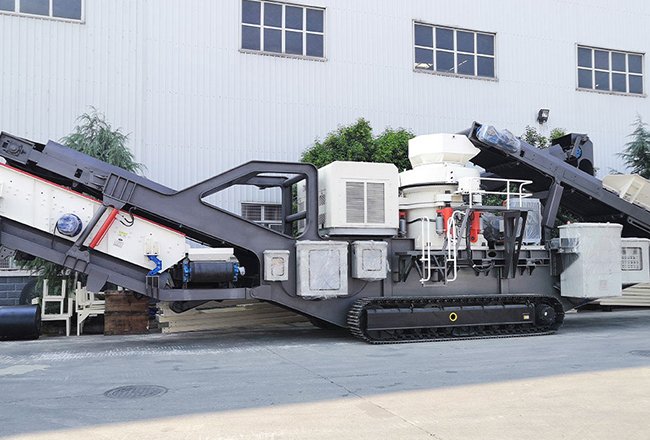
A tracked cone crusher is a compression-type crusher mounted on a crawler chassis (where the crushing process occurs between a rotating outer cone and a stationary inner cone), equipped with an independent power source, a hydraulic adjustment system, and a lubrication system. This equipment is primarily utilized for secondary, tertiary, or quaternary fine crushing; it is particularly well-suited for hard and abrasive materials and is capable of producing material with a consistent particle shape.
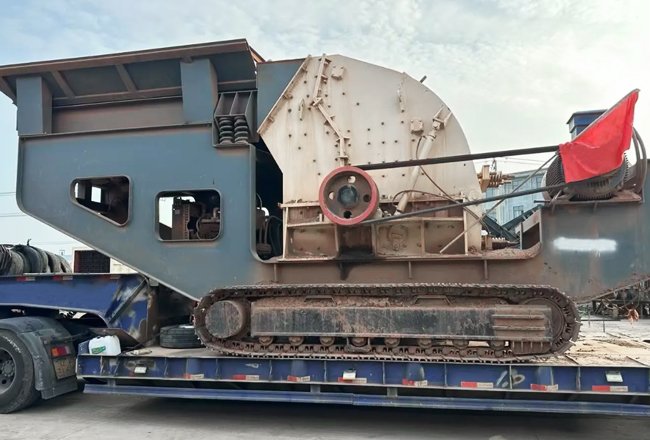
A tracked impact crusher achieves crushing by utilizing high-speed impact bars to strike the material, driving it into collision with impact plates. It is mounted on a crawler chassis that is equipped with feeding, conveying, and dust removal systems. This equipment is primarily used for secondary and tertiary crushing as well as material shaping, and is renowned for producing excellent cubical-shaped particles and achieving a high crushing ratio.
| Item | Tracked Jaw Crusher | Tracked Cone Crusher | Tracked Impact Crusher |
|---|---|---|---|
| Crushing Stage | Primary (Coarse) | Secondary/Tertiary/Quaternary | Secondary/Tertiary (Shaping) |
| Crushing Principle | Squeezing | Gyratory Compression | Impact Strike |
| Suitable Materials | All hardness, large feed | Hard–very hard, abrasive | Medium-soft–medium-hard, C&D waste |
| Product Shape | Angular | Good–Excellent (Cubic) | Best (Perfect Cubic) |
| Reduction Ratio | Moderate | Moderate–Large | Large |
| Wear Cost | Low | Medium | Medium (Soft) / High (Hard) |
| Mobility | High | High | High |
| Price Level | Medium | High | Medium |
It is a primary crushing equipment with strong adaptability to rock hardness, capable of crushing all types of rocks regardless of hardness, including but not limited to:
Core advantage: Focus on coarse crushing, can handle bulk materials with a size of 400–1000mm. It is the first choice for primary crushing in mines and quarries, and has the strongest adaptability to rock hardness without obvious taboos.
It is a professional medium-fine crushing equipment, mainly suitable forhard to extremely hard rocks and highly abrasive rocks, including:
Core advantage: Good at processing hard rock materials crushed by jaw crushers, and can produce high-quality cubic aggregates. It is not suitable for soft rocks, which will lead to low crushing efficiency and waste of equipment performance.
It is mainly used for shaping and crushing, suitable for medium-soft to medium-hard rocks and construction waste, including:
Core advantage: The cubicity of the produced aggregates is the best, which is ideal for high-grade concrete and asphalt pavement. It is not suitable for ultra-hard rocks and highly abrasive rocks with high SiO2 content, as this will cause rapid wear of wearing parts (such as blow bars and impact plates) and increase operating costs.

How to select the right mobile crushing station for your construction site depends primarily on the terrain, relocation requirements, production capacity, and budget.
| Key Factor | Tracked Mobile Crushing Plant | Wheeled Mobile Crushing Plant |
|---|---|---|
| Terrain Adaptability | Ideal for complex terrain (unpaved, steep, muddy), self-propelled, no temporary roads needed. | Suitable for flat, paved sites; requires towing, prone to skidding on rough ground. |
| Relocation | Flexible on-site movement; long-distance needs flatbed trailer. | Fast road relocation (towed directly); poor on-site mobility. |
| Capacity & Stability | Heavy-duty, stable for high-intensity, continuous operations (mines, large infrastructure). | Flexible, cost-effective for medium-low intensity (urban demolition, small projects). |
| Cost | Higher initial & maintenance costs (tracks as core consumables). | Lower purchase & maintenance costs; optional electric drive for savings. |
| Best For | Mines, mountainous sites, remote/wetland projects, frequent on-site relocation. | Urban sites, flat infrastructure, multi-site short-distance relocation, budget limits. |
When selecting tracked mobile crushers, focus on these core configurations:
Q1: Tracked vs Mobile crusher, which to choose?
A: Tracked for rugged sites, frequent in-field moving; Wheeled for long-distance highway transfer, better road conditions.
Q2: Can multiple units form a production line?
A: Yes. Common combinations:
Q3: How to extend wear parts life?
A: Maintain choke feeding; use proper cavity/CSS; pre-screen fines; remove tramp iron; regular lubrication & inspection.
Q4: What is actual capacity vs rated capacity?
A: Actual output is usually 60%–80% of rated, affected by material hardness, moisture, feed size and operation.
 Chunlei Mining Machinery