In the gold extraction process, carbon in leach (CIL) and carbon in pulp (CIP) have become the mainstream extraction technologies. In this article, we will deeply analyze the core advantages, working principle and purchase guide of CIL/CIP gold leaching tanks to help gold producers choose the most suitable leaching equipment to achieve higher recovery rate and lower operating costs. So what is the difference between the two? How should you choose?
The Core Difference Between CIL and CIP Gold Leaching Tanks
In the gold cyanidation extraction process, the key difference between carbon in leach (CIL) and carbon in pulp (CIP) lies in the timing arrangement of the leaching and adsorption processes and the resulting differences in equipment configuration.
1.CIP Gold Leaching Tank
CIP (Carbon In Place) is a cyanidation followed by adsorption process that requires two separate equipment systems: a leach tank and an adsorption tank, as well as corresponding auxiliary facilities.
The working principle of CIP (Carbon Impoundment Process) is that after the ore is finely ground, it reacts fully with the cyanide solution in a series of leaching tanks to complete the gold dissolution process, and then the slurry is pumped to another set of adsorption tanks, where activated carbon is added for countercurrent adsorption.
2.CIL Gold Leaching Tank
CIL (Carbon In Leach), on the other hand, achieves the breakthrough improvement of synchronizing leaching and adsorption without the need for two separate equipment systems.
The process consists of a stepped arrangement of 9 tanks, with the first 2-3 tanks dedicated to cyanide leaching, and the last 6-7 tanks performing both cyanide and carbon adsorption operations. This design eliminates the material transfer between the two equipment systems in the CIP process and significantly reduces the overall operating time.
CIL and CIP Process Flow Diagrams
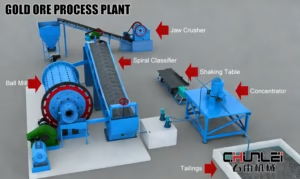
Key Equipment of Gold Ore Dressing Production Line
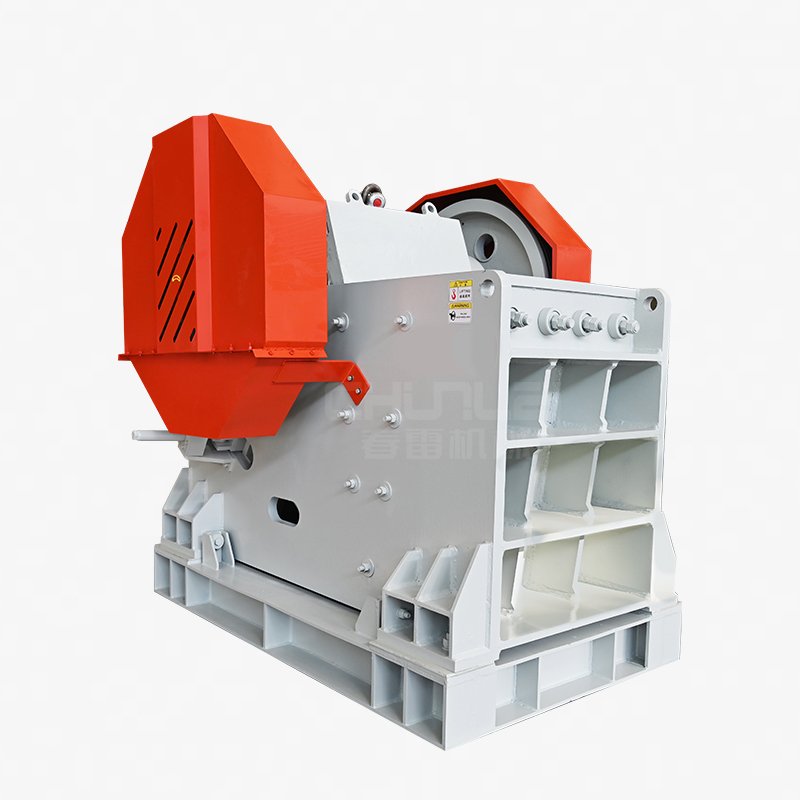
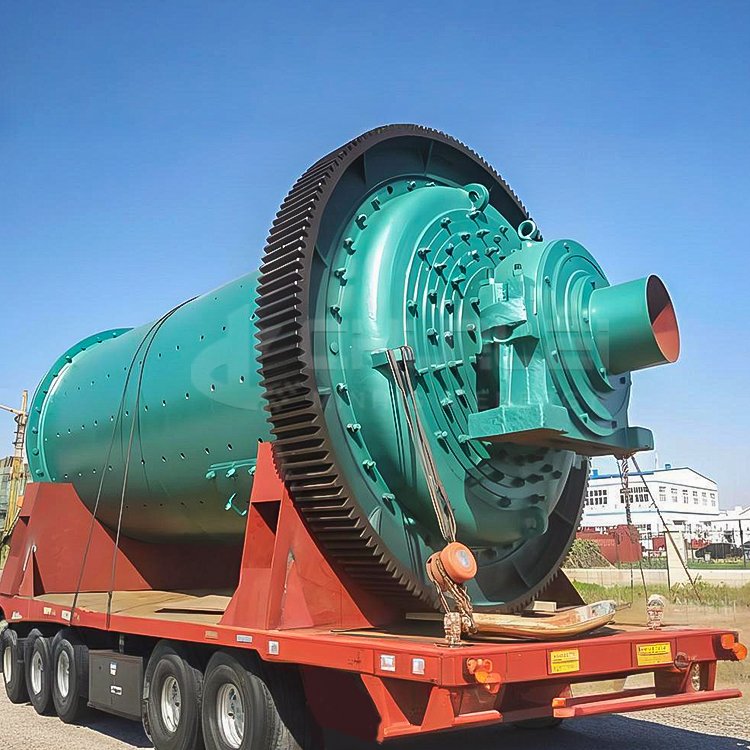
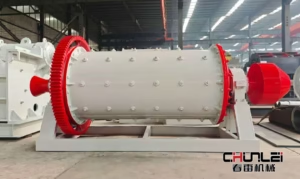
The main equipment required for the gold ore beneficiation production line process are: Jaw Crusher, Cone Crusher, Ball Mill, Spiral Classifier, Thickener, Mixing Trum.
How To Choose The Suitable CIL/CIP Gold Leaching Tank?
1. Choose according to the characteristics of the ore itself
The nature of the ore is the primary consideration in choosing the type of leaching tank. For easy to leach oxidized ores or high grade ores, CIL process is usually more suitable. For complex composition ores or low grade ores, the CIP process may be more flexible in operation.
2. From the perspective of investment cost
CIL process shows obvious advantages in terms of cost savings. For new projects or large-scale cyanidation plants (especially for treating soluble gold raw materials), CIL process is usually a better choice; while for the renovation of old plants with existing CIP facilities or small-scale applications, some CIP configurations can be considered to be retained.
 Chunlei Mining Machinery

金矿选矿生产线工艺示意图-1024x605.avif)