 Chunlei Mining Machinery
Gravity Separation Method
Gravity separation, also known as gravity sorting, operates on the core principle of separating minerals based on differences in their relative density (specific gravity). Mineral particles of varying densities experience distinct gravitational and kinetic forces within a fluid medium, causing them to follow different trajectories (sedimentation or flotation) and thereby achieving separation.
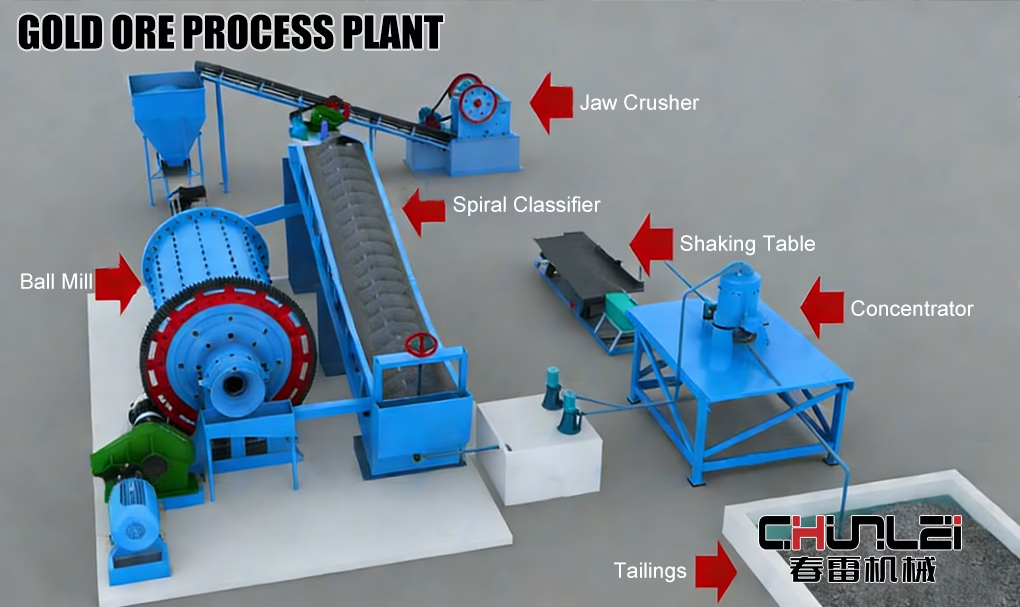
Gravity Separation Technologies
Gravity separation technologies encompass four primary forms: gravity sedimentation, centrifugal separation, fluidized bed separation, and composite gravity separation.
- Gravity Sedimentation: By controlling fluid velocity and duration, particles naturally settle under gravity. This method is applied in water treatment and food processing plants.
- Centrifugal Separation: Centrifuges operate at thousands of revolutions per minute, generating centrifugal forces that rapidly separate particles. Commonly used in precision fields like blood separation and cell culture.
- Fluidized Separation: Utilizes density differences to separate particles within gas or liquid streams. Widely employed in coal washing and mineral sorting.
- Composite Gravity Separation: Combines multiple forces—gravity, buoyancy, inertia—to achieve separation.
Applications of Gravity Separation
Gravity separation is one of the most classical and widely used gold extraction methods.
- When processing tin-bearing sands, tungsten ores, and rare metal placer deposits, target minerals often exist as individually liberated particles with significantly higher density than associated gangue. Thus, gravity separation becomes the most critical, efficient, and economical method for placer gold mining.
- When processing primary vein ores, gravity separation is typically integrated with spiral chutes, jigs, and shaking tables. This combination prevents over-grinding and pulverization, enhances overall recovery rates, and reduces costs. This method is commonly employed in small-scale gold mining operations and collective mining, particularly prevalent in Africa.
Conclusion
CHUNLEI has consistently led the mineral processing industry. We provide complete crushing and mineral processing equipment and solutions. We serve clients worldwide. Our equipment is renowned for reliability, efficiency, and superior performance. We offer end-to-end support, including design, manufacturing, installation, and after-sales service. If you are planning to build or upgrade such projects, feel free to contact us anytime
Latest News

Bulk Density of Sand: Test Methods & Equipment Selection Guide
800If you work in the sand and gravel processing industry, you’ve probably heard the term “bulk density”—but do you know how it directly impacts your equipment selection? Choosing the wrong feeder or crusher based on inaccurate density data can le…
-
2026 Zimbabwe Gold Mine Ball Mill Buyer’s Guide: Avoid Costly Mistakes & Choose the Right Model
805Decades of experience in global gold mining reveals a common, costly mistake: Zimbabwe mine owners waste tens of thousands of dollars on mismatched ball mills. A machine that works for a South African hard rock mine will fail in Zimbabwe’s dust…
-
7 Common Ball Mill Faults & Quick Fixes for Mining Sites
805If you are responsible for operating a gold or ore beneficiation production line, you undoubtedly understand just how frustrating it is when a ball mill suddenly malfunctions—whether the issue involves vibration, overheating, a drop in output, …
-
Case Study: 100TPD Gold Processing Line with Ball Mill in Africa
801If you are planning to establish a 100-ton-per-day (100 TPD) gold beneficiation production line in Africa, you are likely facing a common dilemma: Which type of ball mill is best suited for processing African gold ores? Can the equipment effect…
loading…
已经是到最后一篇内容了!