 Chunlei Mining Machinery

Shaking Table
The shaking table mainly consists of eight parts: bed head, motor, slope adjuster, bed surface, ore tank, water tank, rifling strip and lubrication system. According to the position of feeding device, shaking table can be divided into right shaking table and left shaking table. The feeding position on the right side of the shaking mechanism is the right shaking bed, and vice versa is the left shaking bed.
- Stroke :10-22mm
- Water consumption:50-190t/h
- Processing Capacity:8-30t/h
What is Shaking Table?
Shaking table is a gravity separation device used to separate fine-grained materials. It relies on differential reciprocating vibration and transverse flushing water flow to achieve mineral stratification by specific gravity, separating concentrate, middlings, and tailings in a single pass.
The CHUNLEI shaking table, equipped with an eccentric drive box, can achieve enrichment ratios of 100 to 500 times, making it a core piece of equipment for end-of-line purification in gravity separation lines. It is widely used in the separation of tin, tungsten, gold, silver, lead, zinc, tantalum, niobium, iron, manganese, ilmenite, and coal.
Shaking Table Structure
A shaking table mainly consists of a bed surface, transmission mechanism, frame, feeding device, flushing water system, and regulating device. It achieves separation based on mineral density differences through the reciprocating motion of the bed surface and the action of water flow.
- Bed Surface: The core separating component; the slurry undergoes stratification and separation on the bed surface.
- Transmission Mechanism: Drives the reciprocating motion of the bed surface, controlling the stroke and frequency.
- Feeding Device: Ensures uniform slurry input, improving separation stability.
- Flushing Water System: Assists in the separation of light and heavy minerals, improving concentrate recovery.
- Regulating Device: Adjusts the bed surface slope, feed rate, and operating parameters to adapt to different ore requirements.

Shaking Table Types Introduction
Shaking tables are mainly divided into coarse sand shaking tables, fine sand shaking tables, and slime shaking tables. Different types are used for different gravity separation processes, and users can choose according to their needs.
| Shaking Table Types | Applicable Particle Size | Main Features | Typical Applications |
| Coarse Sand Shaking Table | For coarser minerals | Higher processing capacity, stable separation, suitable for recovering coarse heavy minerals | Place gold, tin, tungsten, chromium, etc. |
| Fine Sand Shaking Table | For finer minerals | Higher separation accuracy, effectively recovering fine-grained valuable minerals | For gold, tin, tungsten, and other mineral beneficiation operations |
| Slime Shaking Table | For very fine-grained slime | Designed for fine-grained materials, improving the recovery of fine minerals | Fine-grained gold, ilmenite, zircon sand, etc. |
Shaking Table Working Principle
The entire sorting process consists of four consecutive steps:
- Water and Ore Distribution: Ore particles are fed into the feed chute at the top corner of the 6s vibrating screen, while transverse washing water is injected from the feed chute simultaneously;
- Differential Vibration: Under the influence of gravity, transverse water flow, inertia, and friction generated by the asymmetric reciprocating motion of the screen, the ore particles are stratified according to their specific gravity and particle size, and move longitudinally along the screen surface;
- Stratification and Zoning: Light gangue minerals drift towards the tailings side with the surface transverse water flow; medium-density minerals remain in the middle, forming a middlings zone;
- Zonal Discharge: Three guide channels at the tail end of the screen collect high-grade concentrate, reprocessable middlings, and waste tailings respectively, completing the sorting process.

Minerals Applicable to Shaking Tables
A shaking table is a high-precision gravity separation device. Besides recovering gold, it can also be used for gold, silver, tin, tungsten, chromite, lead, zinc, and other minerals. The decisive factor in separation is the density difference between the target mineral and other substances.
- Gold Ore: Recovers coarse-grained gold, fine-grained gold, and gravity concentrate, improving gold recovery rate.
- Tin and Tungsten Ore: Used for the beneficiation of heavy minerals such as cassiterite and wolframite.
- Chromite and Titanium Ore: Separates high-density minerals such as chromite and ilmenite.
- Tankalite, Niobium Ore, Zirconium Ore, Monazite, and other Rare Metal Ore: Achieves enrichment of valuable minerals.
- Iron Ore and Other Heavy Minerals: Used to improve concentrate grade and resource utilization rate.
What are the uses of a small gold shaking table?
A small gold shaking table is primarily used for small-scale gold beneficiation and laboratory gravity separation testing. It utilizes the density difference between gold and other minerals for separation. It has a small footprint, low cost, and is easy to move, making it suitable for beginners or small-scale gold beneficiation operations.
Common uses of small gold shaking tables include:
- Recovering free gold from river sand and alluvial sand, improving gold recovery efficiency.
- Providing data for laboratory testing to inform process design for large-scale gold beneficiation plants.
- Recovering residual gold from tailings or low-grade ore, improving resource utilization.
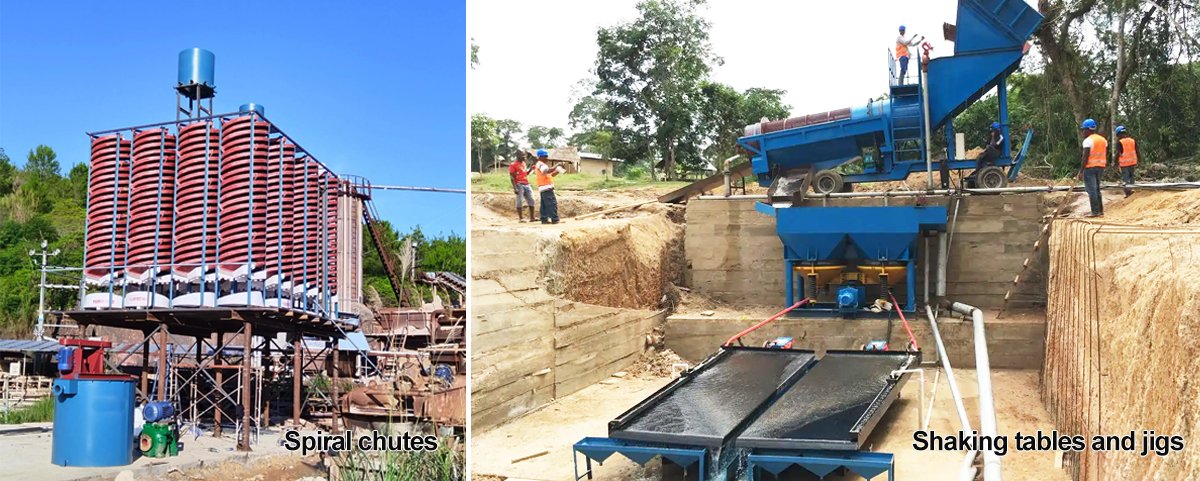
- Further purifying rough concentrates produced by jigs, spiral chute, and other equipment to improve gold concentrate grade.
Shaking table compared with other reselection devices
| Comparison Dimensions | 6S Mineral Processing Shaking Table | Spiral Chute | Jig |
| Equipment Positioning | High-Precision Finishing at the End | High-Flow Roughing and Tailings Disposal at the Front End | Pre-processing Roughing of Large Ores |
| Applicable Particle Size | 0.02–2mm, 0.074–0.5mm (Optimal) | 0.02–2mm Roughing | 0.2–15mm Coarse Particles |
| Enrichment Ratio | Extremely High (100–500 times, producing finished concentrate) | Low, only roughing | Medium |
| Single Unit Capacity | Small (10–60 tons/day) | Large (2–10 tons/hour) | Medium-High (30–250 tons/day) |
| Power Consumption | 1.1kw motor continuous power consumption | Zero power gravity flow | High power consumption with fan + transmission |
| Water Consumption | Medium-Low | Low | Extremely High |
| Footage | Long horizontal, large space required | Vertical small size | Large horizontal equipment |
What factors affect the separation effect of a shaking table?
- The inclination of the shaking table surface: The inclination of the table surface needs to be adjusted according to the specific gravity of the mineral. An excessively large angle can easily cause severe tailing, while an excessively small angle can lead to incomplete separation.
- Water consumption: The higher the specific gravity of the mineral, the greater the water consumption, especially when separating tungsten ore, tin ore, and copper granules. Insufficient water consumption can lead to incomplete recovery. Therefore, it is necessary to ensure that the water is unpressurized, allowing the water to directly wash the minerals. Uneven water supply will affect the mineral recovery rate.
- Foundation installation of the mineral processing shaking table: An unstable or unbalanced foundation installation will directly affect the mineral processing effect.
CHUNLEI specializes in the production of mining machinery. We will provide you with professional selection guidance based on your beneficiation plant characteristics, budget, and the grade of the material itself, helping you choose the appropriate model and design a customized production line according to your actual needs. If you would like to learn more about production lines, configuration schemes, and other related issues, please feel free to visit us. We will solve your problems immediately!
How to Choose the Right Shaking Table?
Choosing the right shaking table can improve gold recovery rates and reduce resource loss.
- For coarse-grained minerals, a coarse sand shaking table is recommended; for fine-grained minerals, a fine sand shaking table or a slime shaking table will provide better separation results.
- Select the shaking table model and quantity based on the hourly processing capacity to ensure sufficient output.
- Different mineral densities and slime contents also require the selection of matching table type and configuration.
- If you are processing gold, tin, tungsten, or other heavy minerals, you should focus on separation accuracy and concentrate grade.
If you are still unsure how to choose, please contact CHUNLEI engineers. We will provide suitable shaking table models and professional gravity separation solutions based on your ore properties, production scale, and process requirements.


How to Operate a Shaking Table?
Operating a shaking table seems simple, but achieving good separation results hinges on proper parameter adjustments. Many customers initially focus only on equipment operation, but detailed adjustments determine the final recovery effect.
- First, before starting the shaking table, check that all components are functioning correctly. Once confirmed, turn on the flushing water, ensuring the water flow evenly covers the table surface. Then, slowly add the slurry, avoiding excessive feed that could cause ore runoff.
- During operation, closely observe the distribution of mineral bands on the table surface. Under normal circumstances, heavy minerals will gradually accumulate in the concentrate area, while light minerals will be discharged with the water flow. If the concentrate band is too narrow or the tailings contain a large amount of valuable minerals, adjust the feed rate, flushing water volume, table slope, and stroke accordingly until optimal separation is achieved.
- Shaking table parameters are not fixed for different ores. For example, the operation methods for fine-grained gold ore and coarse-grained ore differ and need to be adjusted based on mineral particle size, density difference, and processing capacity.
In simple terms, the core of operating a shaking table is to ensure uniform ore feeding, stable water flow, and flexible parameter adjustments. After a period of operation and optimization, the shaking table can achieve stable separation, improving concentrate grade and mineral recovery rate.
What are some common problems encountered during shaking table operation?
Although shaking tables have a simple structure, improper adjustment of operating parameters can still affect the separation effect in actual production. Based on years of project experience, many customers encounter problems mainly concentrated in the following aspects:
1. What to do about low concentrate grade and tailings runoff?
This situation is usually related to excessive feed rate, excessive flushing water, or unsuitable bed slope. It is recommended to first check whether the feed is uniform, and then adjust the stroke, flushing frequency, and water volume according to the ore properties. Do not simply increase the throughput.
2. What causes unstable separation effect on the shaking table?
In most cases, it is caused by changes in slurry concentration. Shaking tables are quite sensitive to feed conditions. If the slurry is too concentrated, it will affect mineral stratification; if it is too thin, it will easily reduce the processing capacity. Maintaining a stable feed is very important.
3. What to do if there is uneven slurry distribution on the shaking table?
First, check whether the feed box is blocked to ensure that the slurry can enter the bed surface evenly. At the same time, pay attention to whether the flushing water distribution is normal to avoid excessive local water flow affecting separation.
4. What to do if the shaking table vibrates abnormally during operation?
This may be caused by loose transmission components, insufficient lubrication, or unstable equipment installation. Regularly inspecting the transmission system and fasteners can reduce these problems.
5. How to improve the recovery rate of the shaking table?
Don’t just focus on the equipment speed. Properly controlling the feed particle size, slurry concentration, table inclination angle, and flushing water volume is crucial to achieving the best separation effect.
Shaking Table Prices
Many customers inquire about shaking table prices hoping for a fixed quote. However, the price of a shaking table is actually influenced by factors such as model, processing capacity, table type, configuration requirements, and ore properties, resulting in significant price differences between different projects.
Generally, small-scale experimental or low-volume shaking tables are less expensive, suitable for ore testing and small-scale production. Large-scale mining shaking tables, due to their larger processing capacity and more sophisticated configurations, will be more expensive. For complete gravity separation production lines, the cost of supporting equipment such as feeders, conveyors, and dewatering systems must also be considered.
We advise customers not to focus solely on equipment price, but more importantly, to consider separation efficiency, equipment stability, and long-term operating costs. A cheap piece of equipment with low recovery rates and frequent maintenance may have higher long-term operating costs.
CHUNLEI will recommend suitable shaking table models based on your mineral type, processing capacity, target concentrate specifications, and site conditions, and provide reasonable equipment configuration solutions to help customers choose the most cost-effective gravity separation equipment.
Technical Parameters of Shaking Table
| Model | Coarse sand bed | Fine sand bed | Grooved bed |
|---|---|---|---|
| Bed Size(mm) | 4436X1825X1536 | ||
| Stroke(mm) | 16~22 | 10~16 | 10~16 |
| Strokes(r/min) | 240~290 | 300~320 | 330~340 |
| Water consumption(t/h) | 190 | 80 | 50 |
| Processing capacity(t/h) | 30 | 8 | 8 |
| Feed size(mm) | 2~0.2 | 0.5 ~0.037 | 0.074~0.019 |
| Ore concentration(%) | 20~25 | 15~20 | 15~20 |
| Min installation slope(° ) | 2°30″ | 1°50″ | 0°45″ |
| Overall Dimension(mm) | 5454X1825X1242 | ||
| Adjustable range of stroke(mm) | 8~22 | ||
| Power(kW) | 1.5 | ||
| Weight(kg) | 1012 | ||
Shaking Table Machine FAQ
Q1: Can shaking tables improve gold ore recovery rates?
A: Yes. Shaking tables are mainly used to recover fine and ultrafine heavy minerals, and are particularly suitable for processing free gold, tin, tungsten, and other materials. Through fine separation, they can effectively improve concentrate grade and reduce the loss of valuable minerals.
Q2: Do shaking tables require the addition of chemical reagents?
A: No. Shaking tables use gravity separation principles, utilizing the density difference of minerals for separation. No flotation reagents are needed, resulting in low operating costs and a more environmentally friendly design.
Q3: How much ore can a shaking table process per day?
A: The processing capacity of a shaking table depends on the equipment model, mineral particle size, and feed conditions. Different specifications of shaking tables have different processing capacities; single or multiple units can be selected for use according to customer capacity requirements.
Q4: Can shaking tables operate continuously?
A: Yes. Shaking tables have a stable structure and are suitable for continuous production. As long as a uniform feed, proper water supply, and regular maintenance are maintained, long-term stable operation is possible.
Q5: What conditions are required for the installation of a shaking table?
A: Installing a shaking table requires a stable foundation, a level installation location, and a reliable feeding and water supply system. The equipment should also be installed horizontally to avoid affecting the separation effect.
Q6: Why does ore run-off occur during shaking table separation?
A: Ore run-off is usually related to excessive feed rate, unreasonable flushing water, unsuitable bed inclination angle, or insufficient mineral liberation. The separation effect can be improved by adjusting operating parameters and optimizing grinding particle size.
Q7: How often should a shaking table be maintained?
A: During daily production, the transmission system, bed wear, and fasteners should be checked regularly. Timely maintenance or replacement of worn parts based on operating time and material abrasiveness can extend the equipment’s service life.
Q8: Can a shaking table be used with other mineral processing equipment?
A: Yes. Shaking tables are often used in conjunction with crushers, ball mills, spiral chutes, jigs, thickeners, etc., to form a complete gravity separation production line, improving the overall recovery effect.
Q9: Is a shaking table suitable for small-scale gold mine production?
A: Yes. Shaking tables have low investment costs and are easy to operate. They can be used in small mines as well as as a fine-graining device in large ore processing plants to improve the quality of the final concentrate.
Q10: What aspects should be considered when purchasing a shaking table?
A: In addition to the price, you should also pay attention to the manufacturer’s experience, the materials used in the equipment, the separation effect, after-sales service, and whether they can provide complete process solutions. Choosing equipment suitable for the properties of the ore is more important than simply pursuing the lowest price.
Related Products —
BLL Spiral Chute
BLL spiral chute, also known as spiral chute separator, is a heavy separation equipment that utilizes the inertial centrifugal force generated by the slurry in the spiral rotary motion to realize the separation of light and heavy minerals. …
Hydraulic Filter Press
A variety of models are available | Get the free price list! Hydraulic filter press, also called automatic hydraulic filter press, is a dewatering equipment that utilizes slurry pump pressure to make the liquid com…
Leaching Tank
A variety of models are available | Get the free price list! A leaching tank is a closed or open industrial vessel designed for liquid–solid chemical leaching reactions. Under appropriate temperature, pH, and agitati…
Magnetic Separator
Magnetic separators are highly efficient separation devices widely used in mineral processing. They utilize magnetic fields to precisely separate magnetic particles from non-magnetic materials, meeting the needs of various mineral processin…
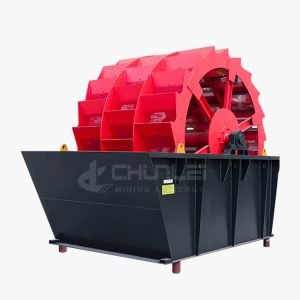
Wheel Sand Washing Machine
Wheel Sand Washing Machine is a kind of sand washing equipment used with sand making machine. It has high washing degree, reasonable structure, large handling capacity, small power consumption, and less sand loss in the sand washing proc…

loading…
已经是到最后一篇内容了!