 Chunlei Mining Machinery

BLL Spiral Chute
BLL spiral chute, also known as spiral chute separator, is a heavy separation equipment that utilizes the inertial centrifugal force generated by the slurry in the spiral rotary motion to realize the separation of light and heavy minerals.
- Feed size :0.02-2mm
- Spiral Outer Diameter:400-2000mm
- Processing Capacity:0.15-10t/h
What is BLL Spiral Chute?
The BLL spiral chute is a gravity-based, non-powered roughing separation device that utilizes the inertial centrifugal force generated by the slurry during spiral rotation to separate light minerals from heavy minerals. This equipment is particularly suitable for mining and mineral processing, especially for sand extraction operations at seashores, riverbanks, beaches, and riverbeds. This product features a rational design, simple installation, a small footprint, easy operation, stable mineral processing, clear separation, high processing capacity, high efficiency, high enrichment rates, high recovery rates, and reliable operation. It offers advantages such as light weight, moisture resistance, rust resistance, corrosion resistance, strong adaptability to fluctuations in feed rate, concentration, particle size, and grade, as well as quiet operation.
When BLL spiral chutes are used extensively in industrial settings, they should be arranged in groups, fed quantitatively by multi-tube classifiers, and lined up in continuous rows to save floor space. They are often paired with shaking tables to complete a combined roughing and concentrating process.


Working Principle of the Spiral Chute
During operation, the spiral chute is positioned vertically and aligned with the plumb line, then secured in place using an iron frame or wooden supports. A uniform slurry is slowly fed onto the surface of the spiral chute through one end—which is mounted on the feed chute—for sorting.
- Centrifugal Stratification: Centrifugal force generated during flow causes high-density heavy minerals to accumulate toward the inner side of the chute, while low-density gangue and silt flow toward the outer edge;
- Hydrodynamic Stratification: Additional water is added for flushing; light slurry rapidly flows downward with the outer water stream, while heavy minerals remain slowly on the inner side;
- Segmented Separation: An adjustable bottom baffle automatically divides the product into three layers: concentrate and middlings are returned for reprocessing, while tailings are directly discharged. The entire process operates without motors or vibration, relying solely on the slurry’s own weight to complete separation, resulting in zero electricity costs and extremely low noise levels.

What particle size ranges of ore are suitable for processing with spiral chutes?
Spiral chutes are suitable for the separation of medium- to fine-grained heavy minerals, typically handling particle sizes ranging from 0.02 to 2 mm. Within this range, minerals can fully utilize the effects of gravity, centrifugal force, and water flow to achieve good separation results.
For coarse-grained ore (>2 mm), it is recommended to first perform crushing or screening to ensure uniform feed size; for ultrafine-grained minerals (<0.02 mm), since particles are prone to being carried away by the water flow, separation efficiency and recovery rates will decrease. It is generally recommended to use them in conjunction with shaking tables, centrifugal separators, or flotation equipment to improve the recovery of fine-grained minerals.
BLL spiral chutes are widely used for roughing, concentrating, and tailings recovery in placer gold deposits, chromite, ilmenite, zircon, tungsten, tin, iron ore, and other heavy minerals. Selecting the appropriate feed size, slurry concentration, and equipment model can effectively improve recovery rates and concentrate grade.
Typical Applications:
Spiral chutes are commonly used for the rough sorting, pre-concentration, and recovery of tailings from ore, as well as for the separation of sand ore. They are typically integrated with equipment such as ball mills, spiral classifiers, hydrocyclones, shaking tables, and centrifugal separators to form a complete gravity separation production line, which can effectively improve the recovery rate of valuable minerals and reduce subsequent beneficiation costs. If the ore contains a high proportion of fine particles, has a complex mineral distribution, or is difficult to process, spiral chutes can be combined with equipment such as shaking tables, centrifugal separators, flotation cells, or magnetic separators to form a combined mineral processing circuit, thereby achieving higher recovery rates and concentrate grades.
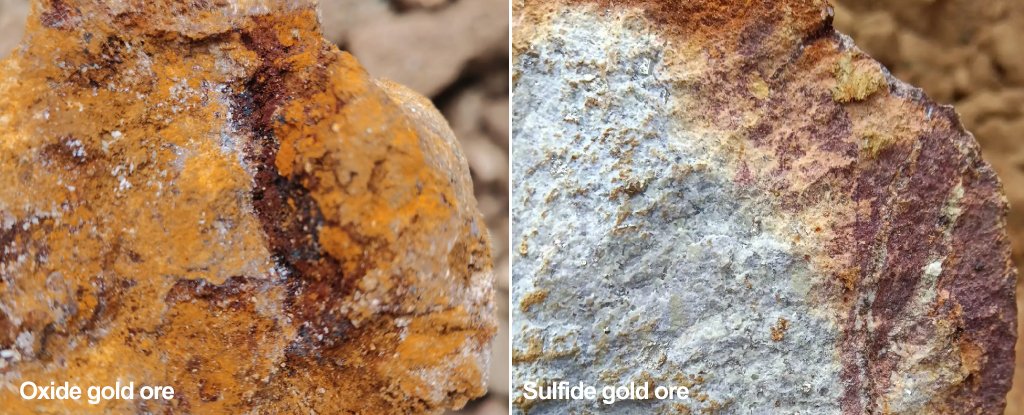
Are spiral chutes more suitable for processing oxidized gold ore or sulfide gold ore?
Spiral chutes are more suitable for processing oxidized gold ore, especially ore containing free gold, coarse-grained gold, and heavy minerals. They utilize differences in mineral density for gravity separation and can recover free gold with a higher specific gravity without the need for chemicals. They are widely used in placer gold deposits, oxidized gold ore, and heavy mineral extraction.
For sulfide gold ores, spiral chutes alone are insufficient for extraction because the gold in these ores primarily exists in an encapsulated or associated state. Such ores must first be crushed and ground to fully liberate the gold minerals, followed by recovery processes such as flotation and cyanide leaching (CIP/CIL). Spiral chutes can also be used to pre-recover some coarse-grained free gold, thereby reducing subsequent beneficiation costs.
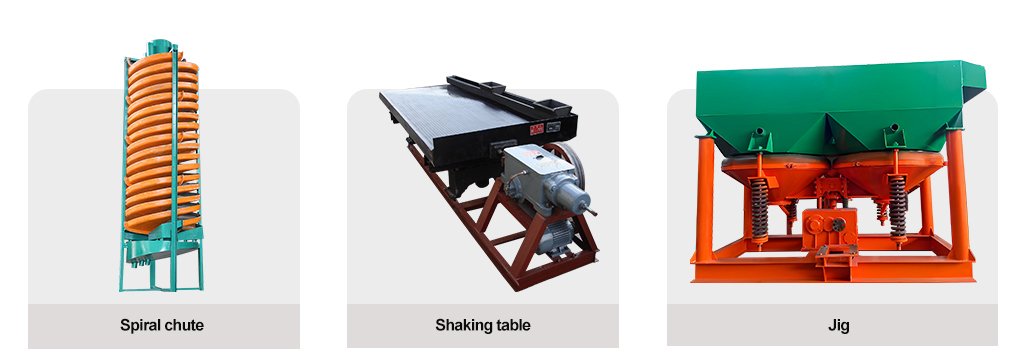
Spiral Chute vs. Shaking Table vs. Jig
All three types of equipment fall under the category of gravity separation equipment; they are not substitutes for one another but are used in conjunction with each other. For example, a gold gravity separation production line typically follows a process flow of roughing with a jig → concentration with a spiral chute → fine separation with a shaking table. This approach balances processing capacity, recovery rate, and concentrate grade to achieve higher beneficiation efficiency. These machines are widely used in the separation of gold, tin, tungsten, chromium, titanium, and other heavy minerals. However, they differ in their operating principles, applicable particle sizes, processing capacities, and application scenarios.
| Comparison Items | Spiral Chute | Shaking Table | Jig Machine |
| Working Principle | Sorting utilizes gravity, centrifugal force, and water flow. | Sorting utilizes the reciprocating motion of the table surface and water flow. | Sorting utilizes pulsating water flow to stratify minerals according to density. |
| Applicable Particle Size | 0.02~2 mm | 0.02~2 mm(fineer particles are more effective) | 2~30 mm(coarse-grained ore) |
| Processing Capacity | Large | Small-Medium | Large |
| Sorting Accuracy | Higher | Highest | Medium |
| Applicable Minerals | Gold, Chromium, Titanium, Tin, Tungsten, Zirconium, etc. | Fine-grained minerals such as gold, tin, tungsten, tantalum-niobium, etc. | Coarse-grained minerals such as placer gold, iron, manganese, tin, tungsten, etc. |
| Energy Consumption | No power or low energy consumption | Low | Low |
| Operating Costs | Low | Low | Low |
| Degree of Automation | High | Low | Medium |
| Main Advantages | Large processing capacity, simple structure, easy maintenance | High sorting accuracy, high concentrate grade | Good recovery of coarse-grained minerals, large processing capacity |
| Main Limitations | Moderate recovery effect on ultrafine-grained minerals | Smaller processing capacity, larger footprint | Unsuitable for ultrafine-grained mineral sorting |
| Typical Applications | Roughing, cleaning, tailings recovery | Cleaning, laboratory and high-grade concentrate production | Roughing, pre-sorting, placer gold recovery |
How to Choose?
- If you need high throughput and low operating costs, we recommend a spiral chute, which is suitable for large-scale, continuous gravity separation production.
- If you are seeking higher concentrate grades and better separation accuracy, we recommend a shaking table, which is particularly suitable for fine selection and the recovery of fine-grained minerals.
- If you are processing coarse-grained ore or placer gold deposits, a jig is usually the better choice, as it can quickly recover coarse-grained heavy minerals.
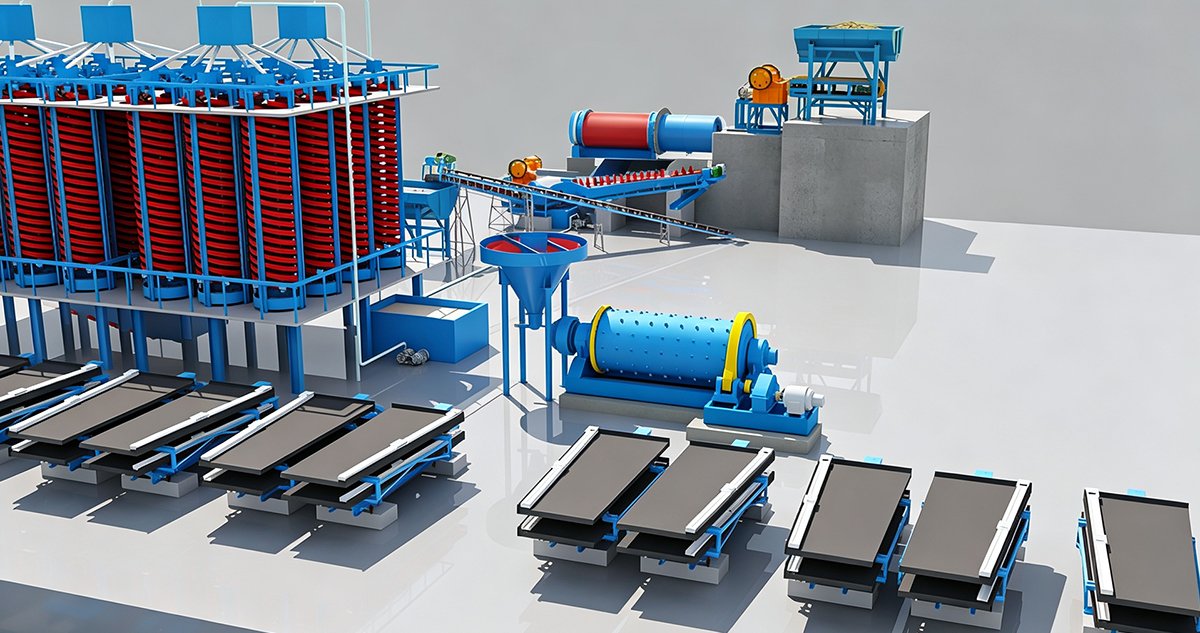
Complete Spiral Chute Gravity Separation Production Line Process
A complete spiral chute gravity separation production line typically consists of crushing, grinding, classification, gravity separation, dewatering, and tailings treatment. Through the coordinated operation of various pieces of equipment, it achieves efficient recovery of valuable minerals.
- Crushing Stage
The raw ore first enters equipment such as jaw crushers and cone crushers, where large ore chunks are crushed to a particle size suitable for grinding, thereby preparing the ore for subsequent separation. - Grinding and Classification Stage
The crushed ore enters a ball mill for fine grinding, ensuring thorough liberation of useful minerals from gangue. A spiral classifier or hydrocyclone classifies the slurry, and the fraction meeting the required particle size enters the gravity separation process. - Spiral Chute Gravity Separation Stage
The slurry is fed uniformly into spiral chutes, where separation occurs based on differences in mineral density under the combined action of gravity and water flow. High-density minerals are concentrated along the inner wall, while lighter minerals are discharged as tailings, achieving preliminary enrichment. - Concentrate Refining Stage
For projects requiring higher concentrate grades, refining equipment such as shaking tables and centrifuges can be installed to further purify the rough concentrate produced by the spiral chutes. - Tailings Treatment Stage
Tailings can be fed into thickeners and filter presses for dewatering, enabling dry tailings disposal and water recycling, thereby reducing environmental pressure.
Separation Range of Spiral Chutes
BLL spiral chutes primarily utilize the density differences between minerals for gravity separation and are suitable for the roughing, concentrating, and tailings recovery of medium- to fine-grained heavy minerals. Generally, the optimal separation size range for spiral chutes is 0.02–2 mm, with the best separation results achieved for minerals in the 0.074–0.5 mm range.
For high-density minerals, such as gold, tin, tungsten, tantalum-niobium, chromite, ilmenite, zircon, and iron ore, spiral chutes offer high recovery rates and effective enrichment. However, for materials with small density differences or particle sizes that are too coarse or too fine, separation efficiency decreases. In such cases, spiral chutes are typically used in conjunction with equipment such as ball mills, hydrocyclones, shaking tables, or jigs to achieve better mineral processing results.
How to Choose the Right Spiral Chute?
When selecting a spiral chute, you should consider the properties of the ore, processing capacity, feed size, and production objectives. Price alone should not be the deciding factor; the right equipment can not only improve recovery rates but also reduce operating costs and enhance overall efficiency.
When selecting a model, it is recommended to focus on the following aspects:
- Ore Type: Suitable for the separation of gold, tin, tungsten, chromium, titanium, zirconium, and other heavy minerals.
- Feed Size: Spiral chutes are suitable for processing minerals ranging from 0.02 to 2 mm, with optimal separation results achieved for particles between 0.074 and 0.5 mm.
- Processing Capacity: Select the appropriate spiral diameter, number of turns, and number of units based on the hourly throughput.
- Mineral Density Difference: Generally, the greater the density difference between the target mineral and the gangue, the better the gravity separation results.
- Production Process: Depending on actual requirements, spiral chutes can be used in conjunction with equipment such as ball mills, hydrocyclones, jigs, and shaking tables to improve overall recovery rates.
Contact a CHUNLEI engineer to receive professional advice on selecting the right spiral chute model and heavy-medium separation solutions tailored to your needs, helping you achieve higher recovery rates and more stable production efficiency.
How do I install my spiral chute?
Proper installation of the spiral chute is key to ensuring sorting efficiency and stable equipment operation.
- Before installation, allow sufficient space for installation and maintenance based on the production line layout, and ensure the foundation is solid and level.
- During installation, assemble the spiral channel, feed distributor, product diverter, and collection trough according to the manufacturer’s instructions.
- Once the equipment is installed, conduct a no-load test to verify that all components are functioning properly.
- Before officially feeding material, perform a test run using clean water to check the slurry flow direction and discharge conditions. Then, based on the properties of the ore, gradually adjust the feed rate, slurry concentration, and rinse water volume until optimal separation results are achieved.
How to Address Low Efficiency in Spiral Chutes?
A decline in the sorting efficiency of BLL spiral chute is typically related to ore particle size, feed concentration, feed rate, rinse water volume, and equipment parameters. Most issues can be effectively resolved by optimizing the process and standardizing operations.
- Control Feed Particle Size: Feed that is too coarse or too fine will affect sorting performance. It is recommended to perform screening or classification first to ensure the material size meets equipment requirements.
- Maintain a Uniform Feed Rate: Excessive feed rates or significant fluctuations can easily lead to mineral loss; therefore, a continuous, stable, and uniform feed rate should be maintained.
- Adjust Slurry Concentration: Slurry that is too concentrated can interfere with mineral stratification, while slurry that is too dilute can cause loss of valuable minerals; adjust to the appropriate concentration based on material characteristics.
- Properly Control Flushing Water Volume: Both excessive and insufficient flushing water can reduce separation efficiency; adjust promptly according to the properties of the ore.
- Inspect Equipment for Wear: Wear on the chute surface, damage to the feeder, or uneven distribution of material can all affect ore flow. Regular inspections should be conducted, and wear parts should be replaced promptly.
- Select the Appropriate Equipment Model: Different ore types, processing capacities, and particle size ranges require different specifications of spiral chutes. Proper model selection is key to improving recovery rates.
Why Choose CHUNLEI Spiral Chutes?
CHUNLEI BLL spiral chute are manufactured using an optimized spiral trough structure and wear-resistant materials. They offer advantages such as high recovery rates, high processing capacity, stable operation, and low maintenance costs, and can meet the production needs of mines and mineral processing plants of various scales.
Advantages of CHUNLEI Spiral Chutes:
- High Recovery Rate: The optimized spiral trough design enhances the enrichment of heavy minerals and minimizes the loss of valuable ore.
- High Processing Capacity: Suitable for continuous operation, meeting the high-capacity demands of medium- to large-scale mines.
- Low Operating Costs: Requires no complex power systems, features low energy consumption, and incurs minimal operating and maintenance expenses.
- Long Wear Life: Constructed from fiberglass-reinforced composite materials or wear-resistant polyurethane, ensuring corrosion resistance, wear resistance, and an extended service life.
- Stable Separation Performance: The rational structure ensures uniform slurry distribution, guaranteeing consistent separation results over the long term.
- Wide Range of Applications: Widely used in gravity separation processes for gold, tin, tungsten, tantalum-niobium, chromium, ilmenite, zirconium ores, and tailings recovery.
- Customizable Design: We provide configuration solutions for spiral chutes with varying specifications and numbers of layers based on ore properties, processing capacity, and on-site conditions.
- Comprehensive Technical Services: We offer equipment selection, process design, installation and commissioning, operator training, and after-sales support to help customers achieve rapid commissioning and stable operation.
CHUNLEI not only provides high-quality spiral chutes but also offers customers complete mineral processing production line solutions—including crushing, grinding, gravity separation, dewatering, and tailings treatment—to help improve mineral recovery rates, reduce operating costs, and achieve a higher return on investment. For drawings and itemized quotes for complete gravity separation production lines, please contact a CHUNLEI technical engineer.
Technical Parameters of BLL Spiral Chute
| Model | BLL-2000 | BLL-1500 | BLL-1200 | BLL-900 | BLL-600 | BLL-400 | ||
|---|---|---|---|---|---|---|---|---|
| Spiral Outer Diameter(mm) | 2000 | 1500 | 1200 | 900 | 600 | 400 | ||
| Pitch of spiral(mm) | 1200 | 900, 675 | 900, 720, 540 | 675, 540, 405 | 450, 360, 270 | 240, 180 | ||
| Pitch-to-diameter ratio (pitch/diameter) | 0.6 | 0.48, 0.36 | 0.75, 0.6, 0.45 | 0.75, 0.6, 0.45 | 0.75, 0.6, 0.45 | 0.6, 0.45 | ||
| Lateral inclination(° ) | 9° | 9° | 9° | 9° | 9° | 9° | ||
| Number of mounted helical heads | 3 | 4 | 4 | 4 | 2 | 2 | ||
| Ore feed size(mm) | 2.00~0.04 | 0.8~0.037 | 0.3~0.03 | 0.3~0.03 | 0.2~0.02 | 0.2~0.02 | ||
| Ore concentration(%) | 30~55 | 30 ~55 | 25 ~55 | 25 ~55 | 25 ~55 | 25 ~55 | ||
| Production capacity(t/h) | 7~10 | 6~8 | 4~6 | 2~3 | 0.8~1.2 | 0.15~0.2 | ||
| Overall dimensions | Length(mm) | 2120 | 1600 | 1360 | 1060 | 700 | 460 | |
| Width(mm) | 2120 | 1600 | 1360 | 1060 | 700 | 460 | ||
| Height(mm) | 5600 | 5300 | 5230 | 4000 | 2600 | 1500 | ||
| Weight(kg) | 900 | 850/800 | 700/650/600 | 450/400/350 | 120/100/80 | 50 | ||
Spiral Chute FAQ
Q: What materials can the BLL Spiral Chute separate?
A: It is ideal for separating fine-grained minerals such as ilmenite, chromite, iron ore, zircon, rutile, monazite, tungsten, tin, tantalum, niobium, and coal. It works best for materials with a particle size between 0.1mm and 3mm.
Q: How many spiral turns does the BLL model have, and why does it matter?
A: The BLL model typically has 5 to 7 turns. More turns provide a longer separation path and higher concentrate grade. Our BLL-5 (5 turns) is good for general use, while BLL-7 (7 turns) is better when you need a very high-purity final product.
Q: What is the capacity of a BLL Spiral Chute?
A: A single BLL spiral chute can process 1 to 4 tons per hour (depending on material density and particle size). For larger operations, we can combine multiple units (e.g., 4, 8, or 16 spirals) into a modular frame to increase total capacity.
Q: Is the BLL Spiral Chute easy to maintain?
A: Very easy. It has no moving parts – no motors, bearings, or shafts. All wear surfaces can be lined with polyurethane or rubber. You only need to flush with water after each shift to prevent material buildup. No special tools or daily lubrication required.
Q: Do you provide installation guidance for overseas buyers?
A: Yes. We provide a detailed installation manual and layout drawing. For larger orders, we can also send an engineer to your site to supervise installation and train your workers. Online video support is available 24/7.
Q: Do spiral chutes require electricity?
A: Spiral chutes do not require a power source; they rely primarily on gravity, water flow, and centrifugal force to separate minerals. As a result, they have low energy consumption and minimal operating costs, making them ideal for continuous production.
Q: Do spiral chutes require the addition of chemicals?
A: No. Spiral chutes use purely physical gravity separation, requiring no flotation agents or chemical reagents. This makes them more environmentally friendly and prevents contamination of the minerals.
Q: Are spiral chutes suitable for continuous 24-hour operation?
A: Yes. The equipment has a simple structure and operates stably. As long as a uniform feed rate is maintained and regular maintenance is performed, it can meet the continuous production needs of a mine.
Q: What should be considered when installing a spiral chute?
A: Ensure the equipment is installed level, the water supply is stable, and the feed is uniform. Also, allow sufficient space for maintenance to ensure optimal separation results.
Q: Do spiral chutes take up a lot of space?
A: A single unit occupies a relatively small footprint. Depending on processing capacity, they can be installed individually or in combinations, making them suitable for mineral processing plants of various scales.
Q: Can multiple spiral chutes be operated in parallel?
A: Yes. For large-scale mineral processing projects, multiple spiral chutes can be operated in parallel to increase processing capacity while ensuring stable separation results.
Q: Are spiral chutes suitable for ore with high clay content?
A: Materials with high clay content can affect gravity separation performance. It is generally recommended to perform ore washing or desliming treatment before feeding the material into the spiral chute to achieve better recovery rates.
Q: How often do spiral chutes need to be cleaned?
A: It is recommended to regularly clean the chute surface and feed inlet based on the properties of the ore and production conditions to prevent the accumulation of silt and sand, which can affect slurry flow and separation efficiency.
Q: Can spiral chutes be used for laboratory testing?
A: Yes. Small-scale spiral chutes can be used for ore recoverability tests and process validation, providing a reference for subsequent production line design.
Q: What is the service life of a spiral chute?
A: When operated correctly and maintained regularly, spiral chutes made of wear-resistant materials can typically provide stable service for many years. The specific service life depends on the abrasiveness of the ore and operating conditions.
Related Products —
Ball Mill
Maximize gold recovery and reduce grinding costs with CHUNLEI gold ball mill. Our equipment ranges in capacity from 0.5 tons/hour to 200 tons/hour and is suitable for a variety of ores, including gold, copper, iron, and quartz. Energy-effic…
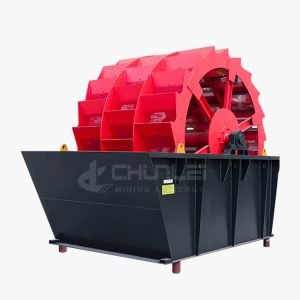
Wheel Sand Washing Machine
Wheel Sand Washing Machine is a kind of sand washing equipment used with sand making machine. It has high washing degree, reasonable structure, large handling capacity, small power consumption, and less sand loss in the sand washing proc…
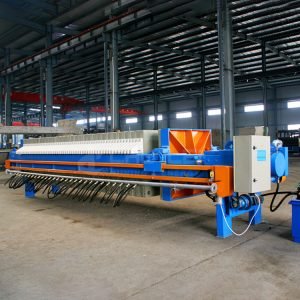
Hydraulic Filter Press
A variety of models are available | Get the free price list! Hydraulic filter press, also called automatic hydraulic filter press, is a dewatering equipment that utilizes slurry pump pressure to make the liquid com…
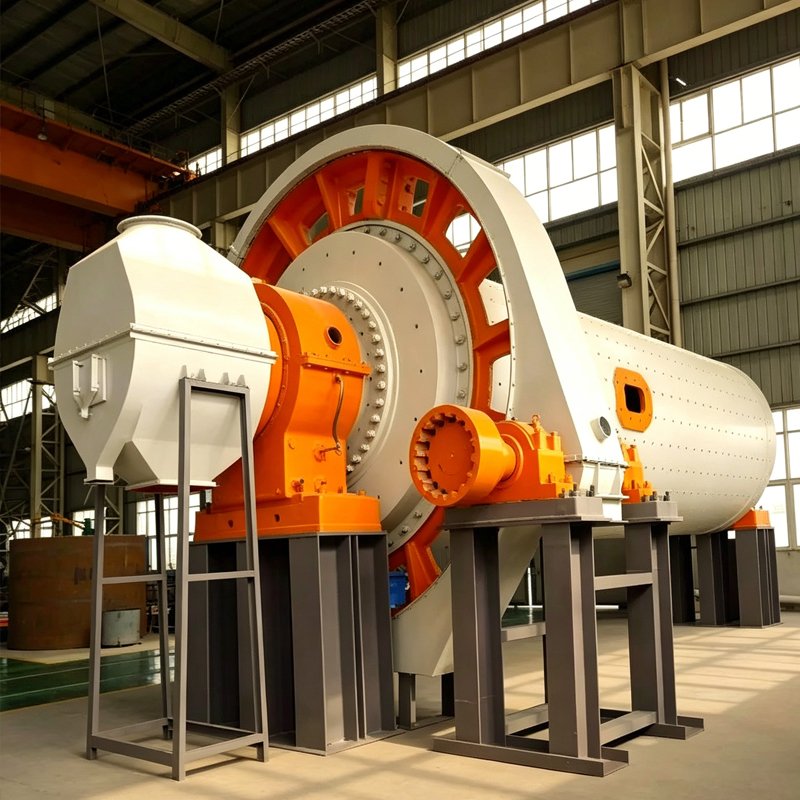
Ball Mill in Cement Industry
Ball Mill in Cement Industry offer capacities ranging from 10 to 500 tons per hour, capable of grinding raw materials—such as cement clinker, slag, gypsum, and limestone—into finished cement products that meet specific fineness requirements. T…
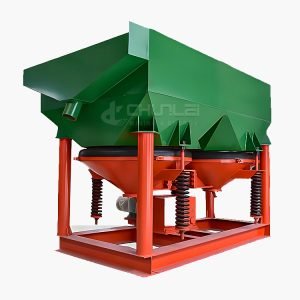
Jigging Separator
Jigging separator is a heavy separation equipment that utilizes the different settling speeds of minerals in the vertical alternating water flow to achieve the separation of light and heavy minerals. Jigging Separator…
loading…
已经是到最后一篇内容了!