 Chunlei Mining Machinery
Gold Mine CIP – Carbon in pulp Process

Gold Beneficiation: CIP Carbon-In-Pulp Process
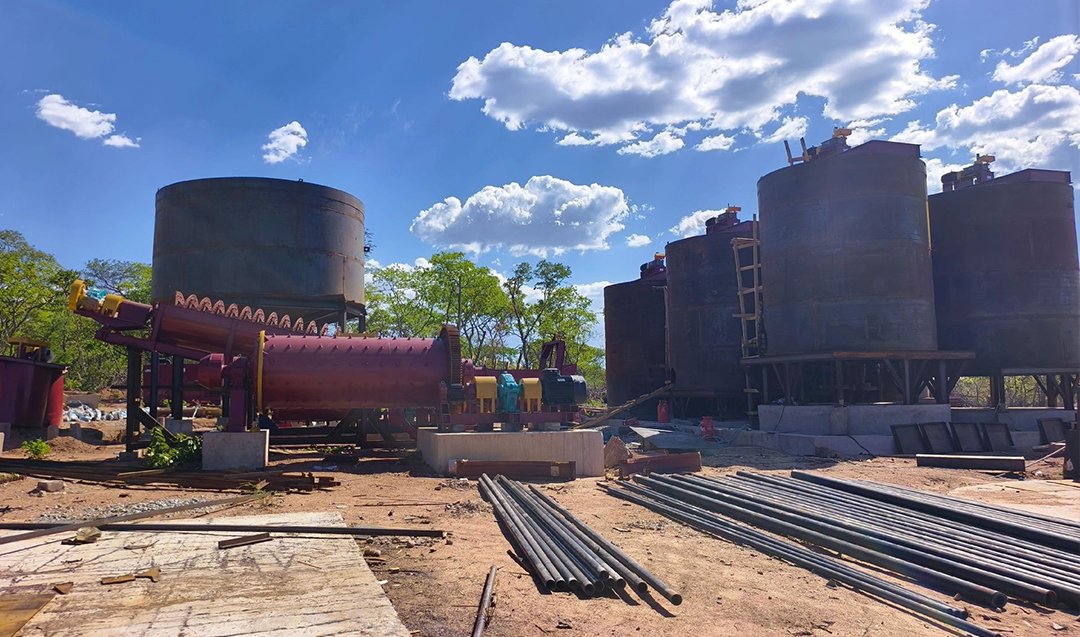
CHUNLEI has extensive experience in gold metallurgy and mineral processing engineering, and most gold losses are due to poor toner management. The physical handling of toner and slurry in the carbon-in-pulp (CIP) process determines its profitability.
Miners want to efficiently extract as much microscopic gold as possible from their ore—for them, a custom-designed CIP (Carbon-In-Pulse) gold processing plant is the ultimate solution. CHUNLEI specializes in building industrial-grade CIP systems that can transform low-grade quartz ore into high-value gold bars, with proven recovery rates of up to 95%.
Below, we’ll cover everything you need to design, build, and operate a CIP plant to help you achieve sustainable profitability, even for difficult-to-extract microscopic gold.
We Will Answer These Questions For You:
- What is a CIP Gold Processing Plant?
- When to Choose CIP (vs. CIL, Gravity, or Flotation)
- Role of Activated Carbon in Gold CIP Process
- Key Equipment for a High-Performance CIP Plant
- How to Maximize CIP Gold Recovery (Avoid Costly Losses)
- CIP Plant Cost: No Hidden Fees (2026 Price Quote)
- EPC Turnkey CIP Plant Installation & Commissioning
- Safe Cyanide & Tailing Management for CIP Plants
- Global CIP Plant Success Cases
- 2026 CIP Technology Trends (Stay Ahead of Competitors)
- FAQs
- Summary & Final Advice
- Contact Us for a Free CIP Plant Consultation
What is a CIP Gold Processing Plant?
CIP (Carbon-In-Pulp) plants are specialized chemical extraction systems that use cyanide to dissolve microscopic gold in ore slurry, and then recover the dissolved gold using activated carbon. Unlike gravity separation or flotation, which is suitable for large gold nuggets and more suitable for sulfur-bound gold, the CIP process is specifically designed for ores such as quartzite, which are most common in modern mines and contain invisible microscopic gold particles.
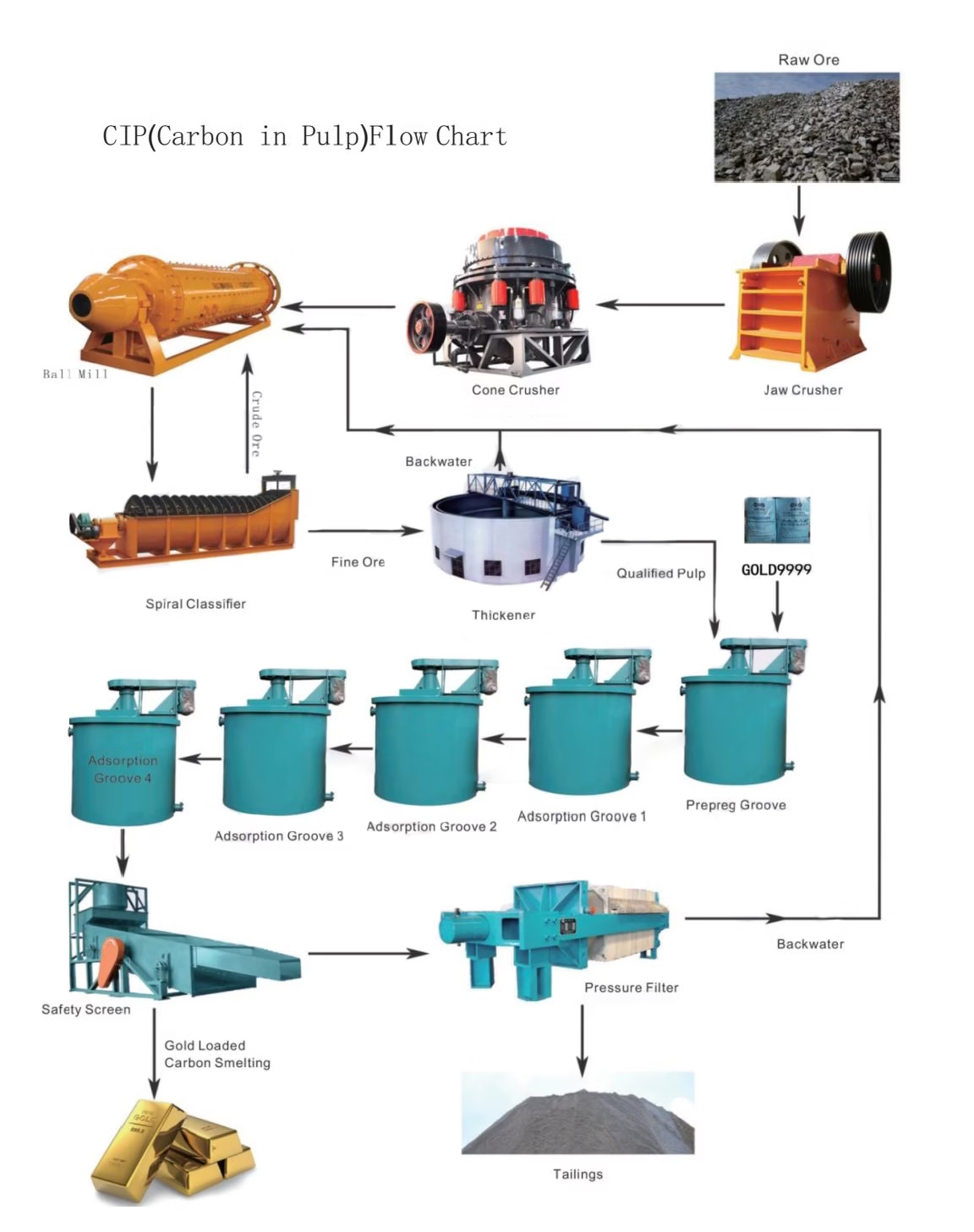
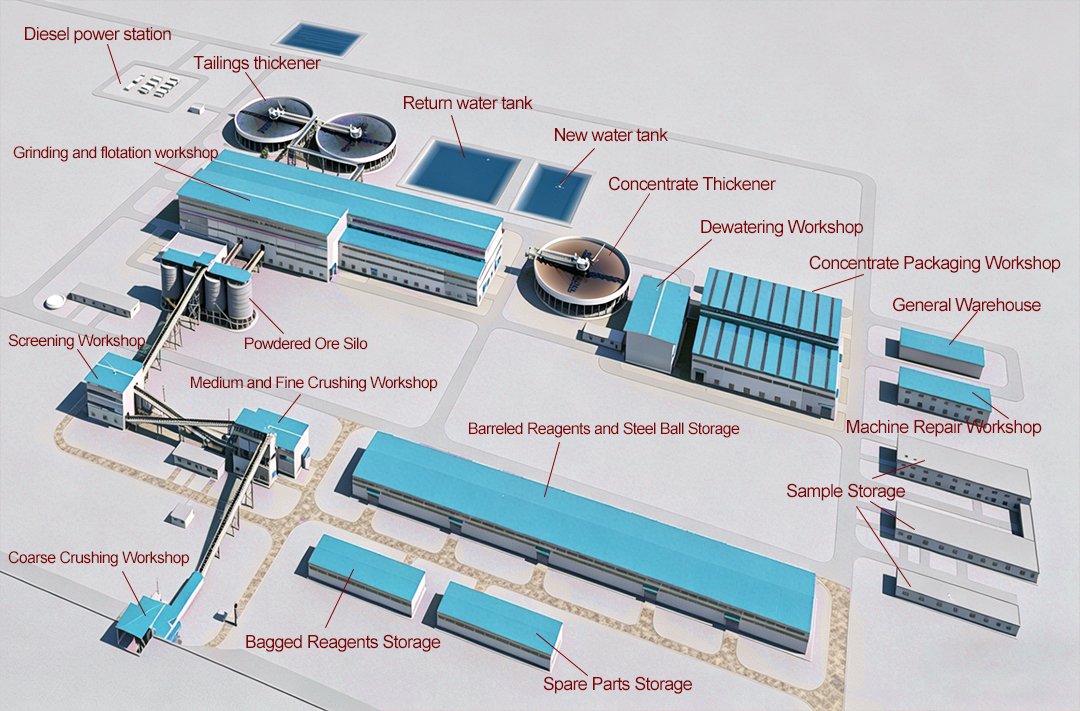
CIP is a continuous closed-loop process—no chemical waste and no gold loss. Its workflow is broken down into steps:
Step 1: Crushing and Grinding
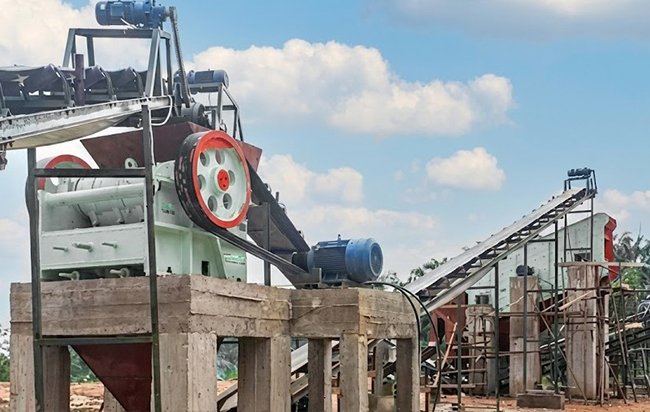
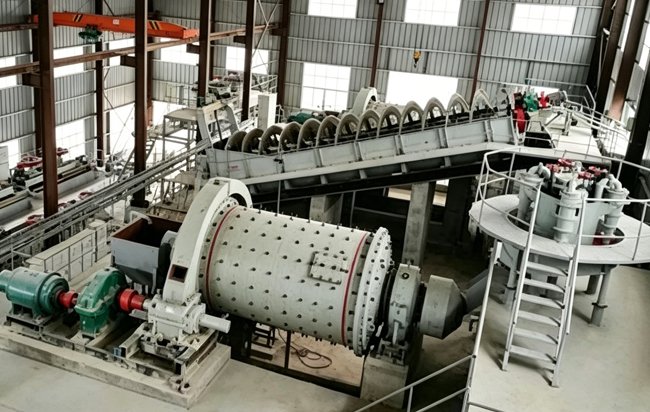
First, a jaw crusher is used to crush the gold ore into blocks, then a cone crusher to further break it into smaller pieces, and finally a ball mill to grind it into powder. Grinding into powder increases the surface area of the mineral, making it easier to dissolve gold.
Step 2: Leaching
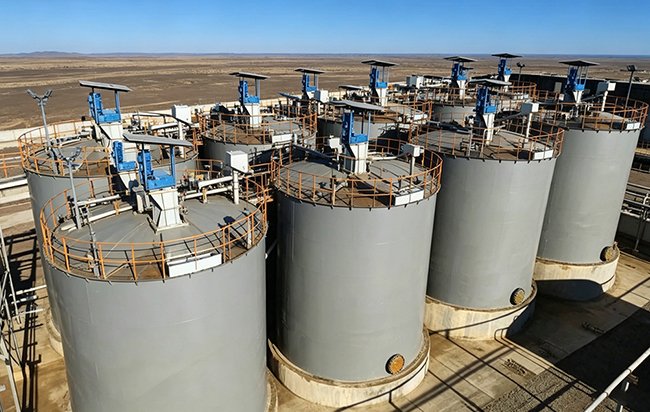
Water and a diluted cyanide solution are mixed with the powdered ore in a leaching tank. Cyanide acts as a “gold solvent,” breaking down the ore and releasing gold particles into the liquid.
Step 3: Adding Activated Carbon
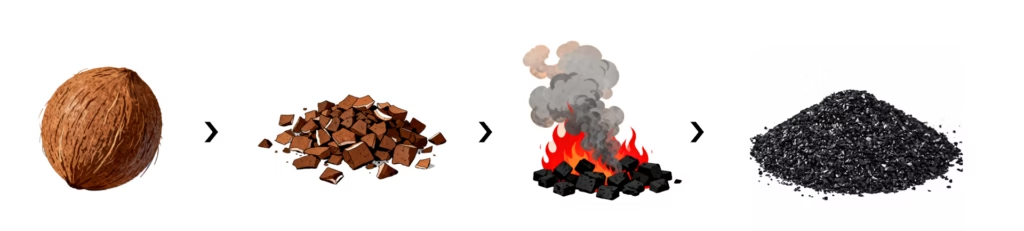
Activated carbon is typically made from organic materials such as coconut shells, wood, or coal through high-temperature carbonization and activation. It has a very large surface area, effectively adsorbing metal ions. Added to the ore slurry, activated carbon can adsorb gold ions dissolved in the liquid through its millions of micropores.
Step 4: Separating Gold-Containing Activated Carbon
After the activated carbon has absorbed most of the gold, the mixture is passed through a sieve to separate the gold-rich activated carbon from the waste liquid.
Step 5: Gold Recycling
The carbon material is cleaned with a hot solution to extract gold, which can then be refined into pure gold bars or ingots. The used carbon material can be reused.
The CIP process is beloved by miners because it’s scalable (works for 10 TPH to 1000 TPD plants) and cost-effective for low-grade ore (profitable at 1.5 grams per ton or higher).
| Factory Section | Main Activity | Key Output | Why It Matters to You |
|---|---|---|---|
| 1. Crushing | Break large ore rocks (up to 400mm) | 50mm gravel | Reduces energy use in grinding (the most power-hungry step). |
| 2. Grinding | Pulverize gravel with steel balls in ball mills | 200-mesh wet pulp | Exposes 100% of microscopic gold to cyanide (critical for recovery). |
| 3. Leaching | Mix pulp with cyanide in agitated tanks | Gold-cyanide solution | Dissolves gold into a recoverable liquid form. |
| 4. Carbon Adsorption (CIP) | Soak dissolved gold into activated carbon | Gold-loaded carbon | The “profit step”—captures 90%+ of dissolved gold. |
| 5. Elution & Smelting | Strip gold from carbon, melt into bars | 99.9% pure gold bars | Your final product for sale (maximizes per-ton profit). |
Role of Activated Carbon in Gold CIP Process
Activated carbon is indispensable in gold CIP processes. While its raw materials are diverse, coconut shell carbon is renowned for its highly developed microporous structure, making it the preferred choice for CIP applications. The entire process primarily involves two major steps: carbonization and activation.
Step 1: Carbonization
Carbonization involves heating raw materials in an oxygen-deficient or oxygen-free environment to 400-700°C. This removes volatile substances (such as water vapor, hydrocarbons, and tar) from the raw material, forming an initial pore structure to produce “carbonized material.” At this stage, the material possesses preliminary adsorption capacity, but its pores are prone to clogging and require further processing.
Step 2: Activation
Activation is the core process determining activated carbon’s final adsorption performance. It involves two methods: physical and chemical activation.
- Physical Activation: The carbonized material reacts with oxidizing gases (e.g., steam, carbon dioxide) at 800-1100°C to remove some carbon atoms, thereby cleaning and enlarging pores formed during carbonization. This process is relatively environmentally friendly but consumes high energy.
- Chemical Impregnation Method: The raw material is mixed with chemicals and impregnated. At temperatures between 450-900°C, tar formation is suppressed while corrosion and pore formation occur. This method is highly efficient and low in energy consumption but may cause equipment corrosion and environmental pollution.
CHUNLEI highlights a frequently overlooked step here—carbon testing. In gold mines employing the carbon-in-pulp (CIP) process, prolonged operation inevitably leads to activated carbon degradation. Therefore, regular carbon inspection is a critical step. It involves testing and analyzing the gold content, distribution, pore structure, and contaminants within the activated carbon used in the process to optim
When to Choose CIP (vs. CIL, Gravity, or Flotation)
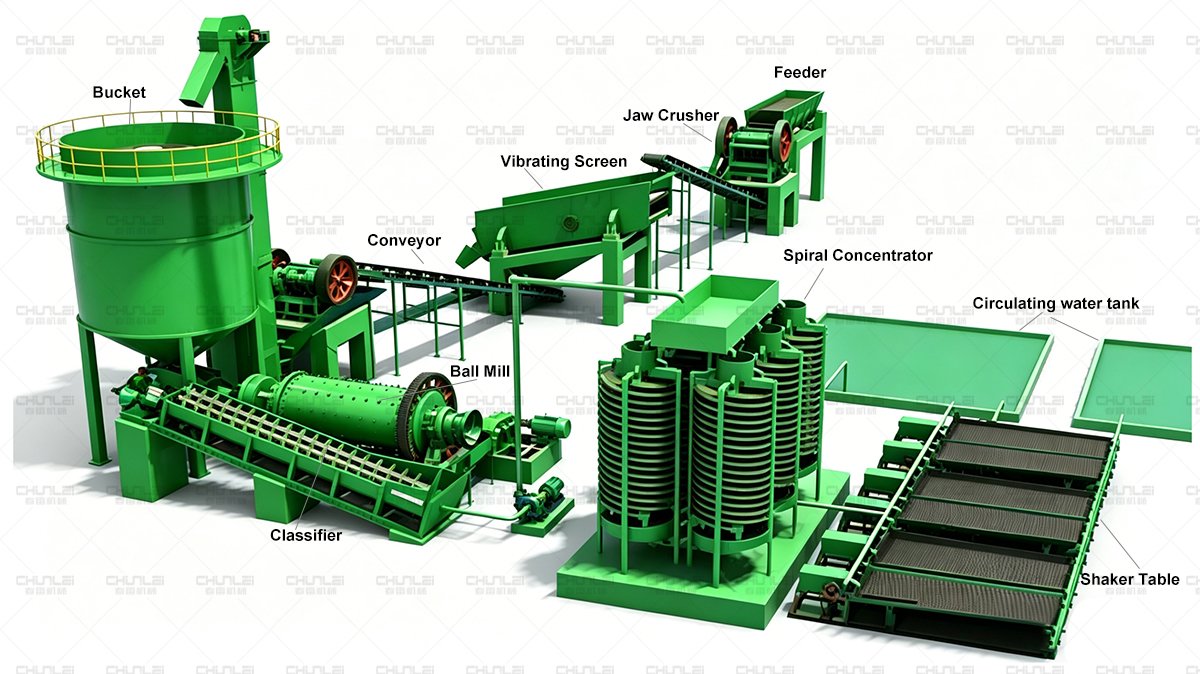
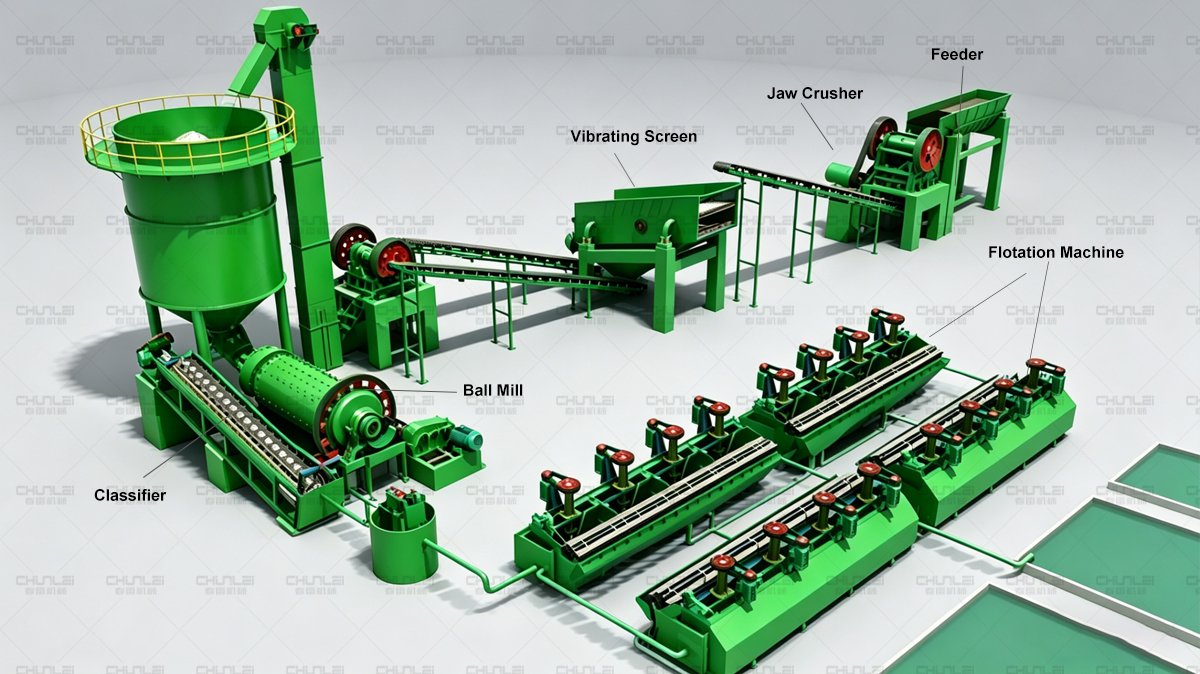
CIP is the best choice if your ore has microscopic gold locked in quartz (no visible nuggets, no sulfur). It outperforms other methods for the most common ore type in global gold mines—and we’ll prove it with lab tests.
| Extraction Method | Best For | Gold Recovery Rate | Cost (USD/TPH) |
|---|---|---|---|
| CIP | Microscopic gold in quartz | 90-95% | $800-$1,200 |
| CIL (Carbon In Leach) | High-clay quartz ore | 92-96% | $900-$1,300 |
| Gravity | Visible gold nuggets (>0.1mm) | 70-85% | $300-$500 |
| Flotation | Gold bound to sulfur (pyrite) | 85-90% | $600-$900 |
Actionable Advice for CIP Feasibility
- Test your ore first: Mail 50kg of representative ore to our lab—we’ll confirm if CIP is the most profitable method (free testing for serious buyers).
- Check for clay: If your ore has >15% clay, we’ll add a rotary scrubber to the crushing line (prevents clay from coating carbon and reducing recovery).
- Avoid over-cyanidation: Too much cyanide wastes money and increases environmental risk—our automated dosing systems fix this.
Real Example: A client in Mali tried to use gravity separation on quartz ore (0.8g/t gold). Recovery was 12%. We designed a 20 TPH CIP plant for them—recovery jumped to 91%, and they recouped their investment in 8 months.
Key Equipment for a High-Performance CIP Plant
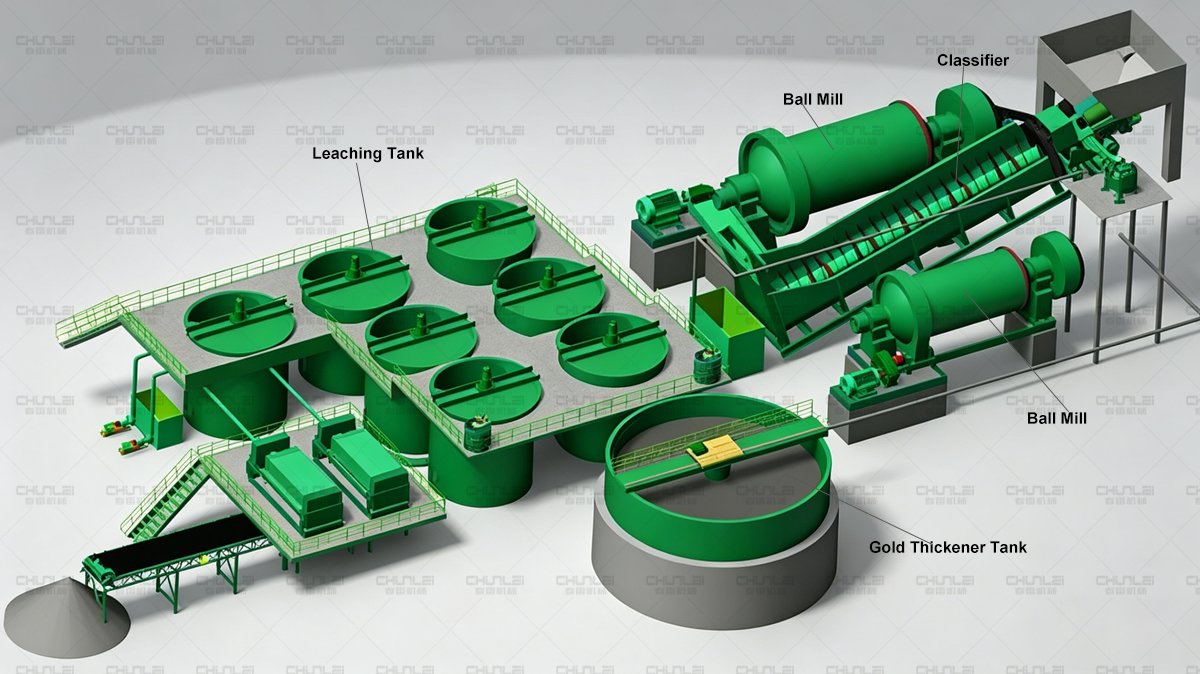
Your CIP plant’s success depends on heavy-duty, precision-engineered equipment—no cheap “one-size-fits-all” machines. We manufacture every component in our China factory (no middlemen) and customize it to your ore and production goals.
Must-Have CIP Equipment:
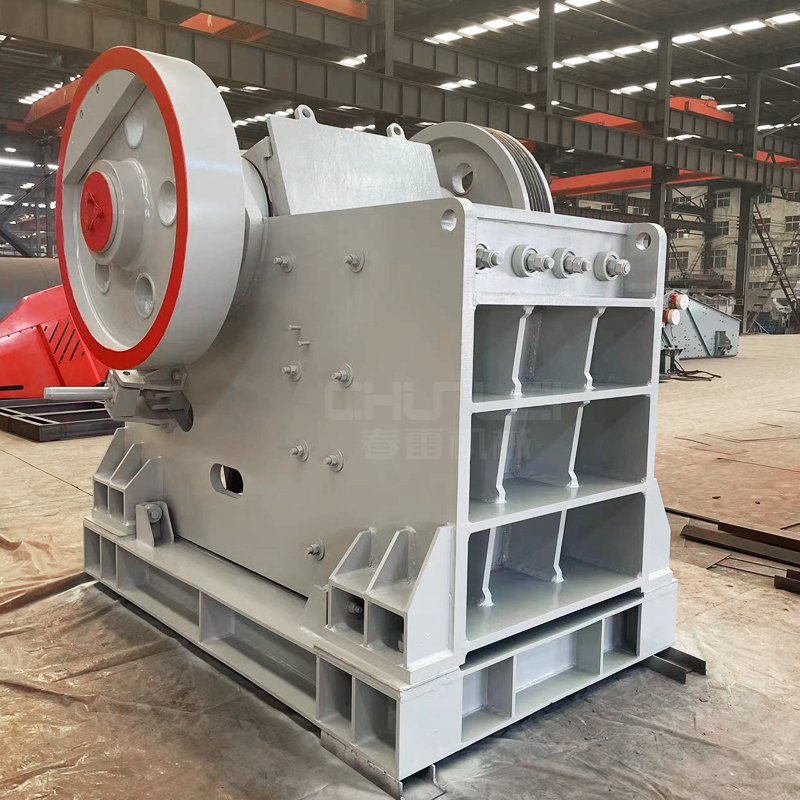
Crushes 400mm ore to 50mm—manganese steel jaws last 2x longer than standard steel (critical for hard quartz).
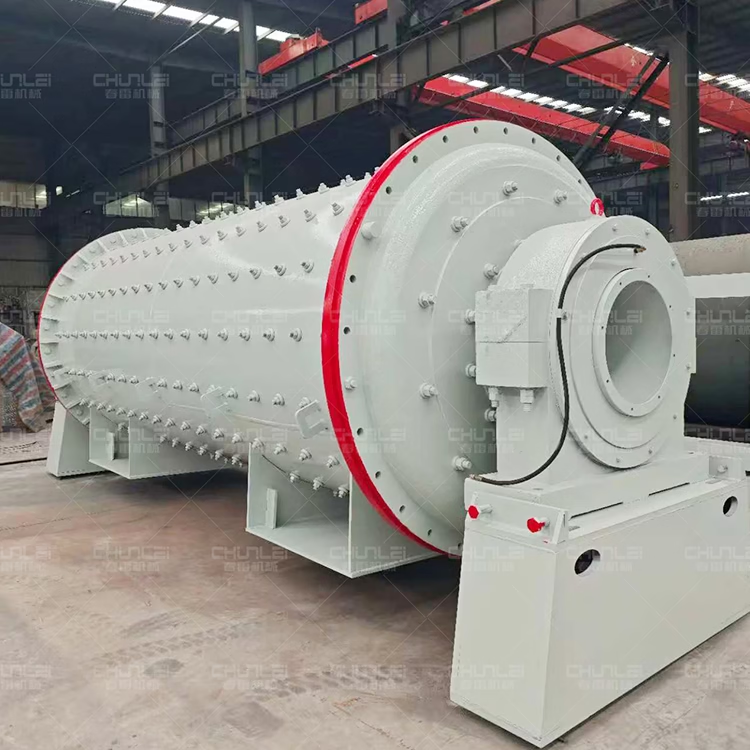
Grinds gravel to 200-mesh pulp—variable speed motors save 15% on electricity vs. fixed-speed models.

5,000-50,000L tanks with double-impeller agitators (prevents pulp from settling—keeps cyanide in contact with gold).
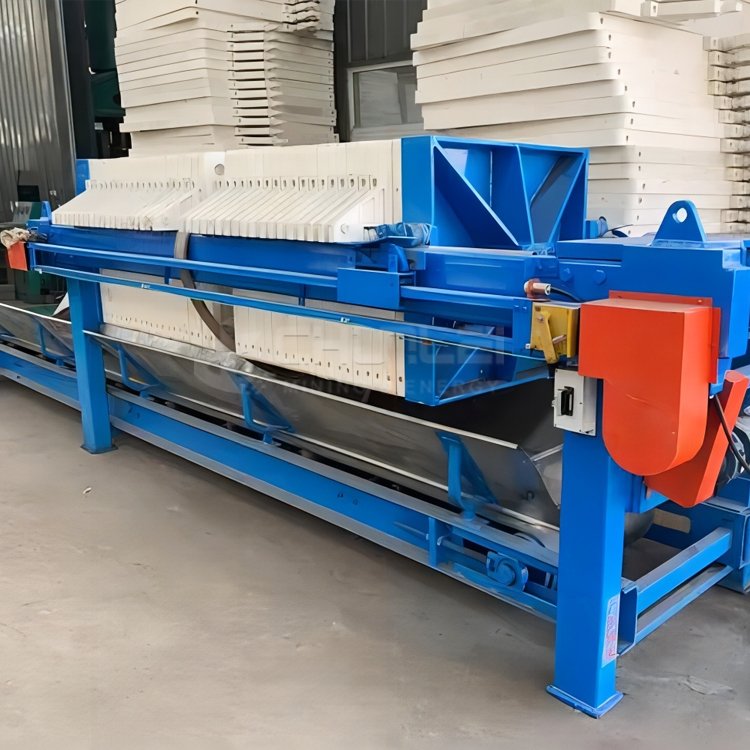
Squeezes tailings into dry bricks (eliminates wet tailing dams—complies with global environmental rules).
How to Maximize CIP Gold Recovery (Avoid Costly Losses)
For a plant with a daily processing capacity of 100 tons, a 2% decrease in recovery rate results in a loss of over $1 million in profits annually. Follow these rules to ensure a recovery rate of over 90%:
- Grind the slurry to 200 mesh: Use a hydrocyclone to automatically detect the particle size of the slurry—slurry exceeding the standard is returned to the ball mill for re-grinding (no cutting corners).
- Maintain optimal pH: Cyanide works best at a pH of 10.5-11.5—our automatic pH sensor adjusts the lime dosage every 10 seconds.
- Keep activated carbon flowing: Stagnant activated carbon in the tank reduces adsorption efficiency—our high-powered agitators ensure activated carbon is suspended 24 hours a day.
- Replace worn screens: Damaged screens cause activated carbon loss (resulting in significant losses)—each plant comes with one year’s supply of screen consumables.
- Monthly activated carbon activity testing: Old activated carbon has decreased adsorption capacity—we provide free activated carbon testing services (new carbon can be delivered quickly if replacement is needed).
CIP Plant Cost: No Hidden Fees (2026 Price Quote)
A small 10-ton/hour CIP plant starts at $250,000; a large 500-ton/day CIP plant costs $800,000 (price depends on ore type, location, and level of automation).
Our pricing is transparent—the cost breakdown is as follows (no hidden markups):
- Core equipment (crusher, ball mill, CIP cell, desorption column): 60% of total cost.
- Electrical control panels (automatic dosing, pH monitoring): 10%.
- Steel structure (conveyors, walkways, cell supports): 15%.
- Spare parts (jaw plates, screens, activated carbon): 5%.
- Transportation (sea freight to designated port): 10%.
Why choose us? We are a direct distributor (Chunlei Heavy Industry)—eliminating local intermediaries and saving 30% compared to competitors. We provide detailed price breakdowns (rejecting vague “package” pricing).
EPC Turnkey CIP Plant Installation & Commissioning
We provide a one-stop service—engineering design, equipment procurement, construction, and personnel training—saving you the hassle of figuring things out yourself. Our Chinese engineering team will fly to your site to install and commission the CIP factory (not outsourced to local contractors).
Our EPC Process (4-6 Months Total)
- Engineering Design (1 Month): Customized blueprints (CAD design) based on site conditions, considering terrain slope, water source, and power supply.
- Equipment Manufacturing (2 Months): Production of all equipment in our Chinese factory (video progress provided for your quality verification).
- Transportation and Delivery (1 Month): Loading equipment into ocean shipping containers (handling customs clearance and logistics, delivery to the designated port).
- On-site Installation (1-2 Months): Our team (mechanical engineers, welders, electricians) assembles the equipment, connects pipelines and circuits, and tests all systems.
- Training and Debugging: Train operators to run the CIP plant (cyanide safety operation, pH adjustment, activated carbon management) and stay on site until the first gold bar is produced (we will not leave until profitability is achieved).
Safe Cyanide & Tailing Management for CIP Plants
Illegal cyanide discharge = mine closure (and fines). We design CIP plants to comply with global environmental rules (EPA, ISO, local regulations).
Our Safe Cyanide/Tailing Solutions
- Cyanide Recycling: We add a washing thickener to recover unused cyanide from tailings (reuse it—cuts cyanide costs by 40%).
- Cyanide Detoxification: Add sodium thiosulfate to tailings to neutralize residual cyanide (safe for the environment).
- Dry Stacking: Use a filter press to squeeze tailings into dry bricks (no wet tailing dams—eliminates flood/leak risks).
- Cyanide Storage: Locked, ventilated storage tanks (with leak detectors) to prevent accidental spills.
Global CIP Plant Success Cases
Case 1: Tanzania (50 TPH CIP Plant)
- Ore Type: Quartz with 5.5g/t gold (microscopic, 10% clay).
- Client Challenge: Old gravity plant had 18% recovery; clay jammed crushers.
- Our Solution: Custom CIP plant with rotary scrubber (removes clay) + automated cyanide dosing.
- Result: 94% gold recovery, 24/7 operation (no jams), ROI in 7 months.
Case 2: Peru (30 TPH CIP Plant)
- Ore Type: Low-grade quartz (1.8g/t gold).
- Client Challenge: High energy costs (remote site, diesel power).
- Our Solution: Energy-efficient ball mill + solar-powered control panels.
- Result: 90% recovery, 20% lower electricity costs, profitable at 1.8g/t.
2026 CIP Technology Trends (Stay Ahead of Competitors)
Modern CIP plants are smarter, greener, and more efficient—we integrate these innovations into every new plant:
- Automated Cyanide Dosing: Computer-controlled valves add exact cyanide amounts (cuts waste by 15%).
- Non-Toxic Cyanide Alternatives: New eco-friendly reagents (no water poisoning) for mines with strict environmental rules.
- Remote Monitoring: Check tank levels, pH, and motor temps on your phone (manage the plant from anywhere).
- Carbon Regeneration: On-site carbon regeneration (no need to ship carbon off-site—saves time/money).
FAQs
Q1: How long does it take to build a CIP plant?
4-6 months total (2 months manufacturing, 1 month shipping, 1-2 months installation).
Q2: Do I need a lot of water for a CIP plant?
Yes—but we design closed-loop water systems (reuse 70% of water daily; only replace evaporated water).
Q3: Can I run a CIP plant on diesel generators?
Yes—we calculate exact power needs (kW) and design the plant to run on diesel (common for remote mines).
Q4: What’s the minimum ore grade for a profitable CIP plant?
1.5 grams per ton (for large-scale plants: 100+ TPD). Smaller plants (10-20 TPH) need 2.0+ g/t to be profitable.
Q5: Do you provide spare parts for CIP equipment?
Yes—we include a 1-year supply of spare parts (jaw plates, screens, carbon) with every plant. We ship replacement parts from China in 7-10 days.
Summary & Final Advice
A profitable CIP plant is not a “standard” setup—it’s a custom system matched to your ore type, production goals, and location. Here’s your action plan:
- Test your ore: Mail 50kg of ore to our lab (free testing) to confirm CIP is the right method.
- Avoid cheap machines: Trading companies sell low-quality equipment—buy direct from a manufacturer (CHUNLEI) with engineering expertise.
- Prioritize recovery: A 1% increase in recovery = massive long-term profits (don’t cut corners on grinding/agitation).
- Choose EPC services: Don’t try to install a CIP plant yourself—our team handles it (we guarantee success).
Contact Us for a Free CIP Plant Consultation
Ready to build a CIP plant that delivers 90%+ gold recovery and consistent profits? Contact CHUNLEI today:
- Our technical team will review your ore test results (free).
- We’ll provide a custom CIP plant design and transparent price quote (no obligations).
- We build, install, and commission CIP plants in Africa, South America, Asia, and beyond.