 Chunlei Mining Machinery

Leaching Tank
A variety of models are available | Get the free price list!
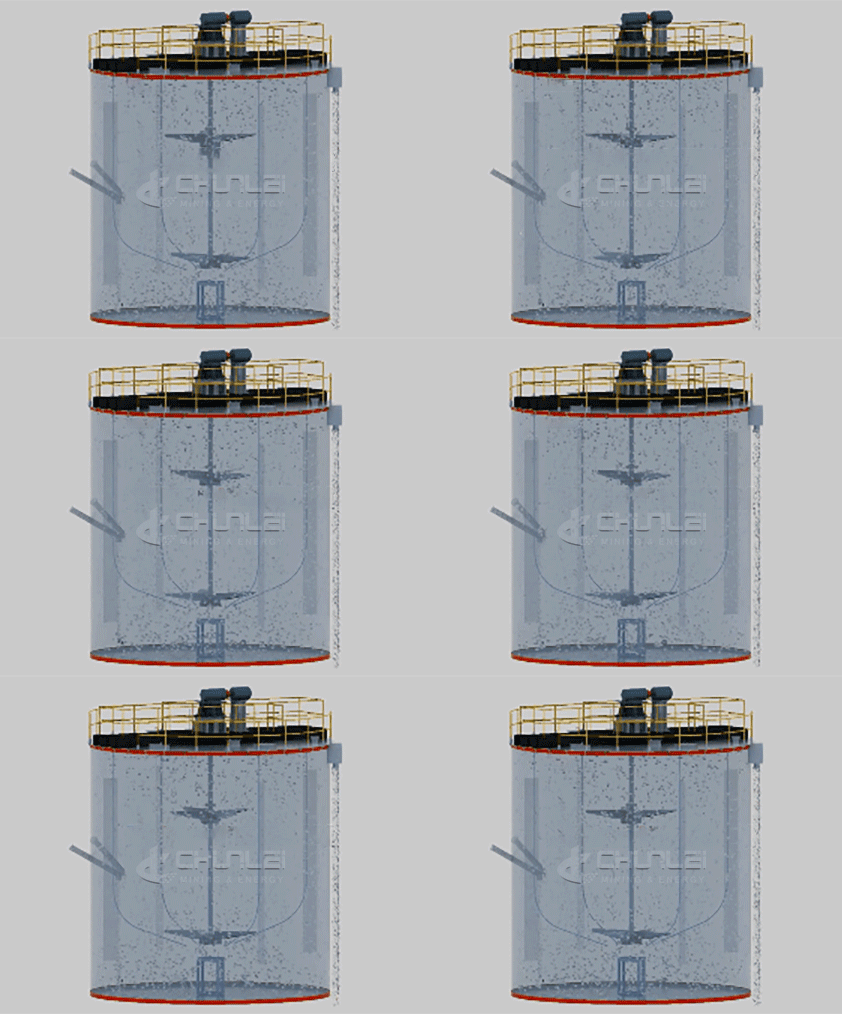
- Leaching Tank in mineral processing plant, is one of the more commonly used equipment. A cyanide leaching mixing equipment designed with reference to international technology, double-layer impeller, uniform mixing, low energy consumption; impeller covered with rubber, long service life; adopting multi-point air supply, uniform inflation.
- effective volumer:7-480m³
- Impeller speed:18.5-52r/min
- Processing Capacity:6-395m³
A leaching tank is a closed or open industrial vessel designed for liquid–solid chemical leaching reactions. Under appropriate temperature, pH, and agitation conditions, the leaching agent selectively dissolves valuable metals into the solution, separating them from gangue.
It replaces traditional heap leaching in modern mines, offering higher recovery, faster reaction, and smaller footprint. It is widely used in gold, copper, zinc, nickel, and uranium extraction.
It is the key equipment for CIL (Carbon-in-Leach) and CIP (Carbon-in-Pulp) production lines, providing full suspension, uniform mixing, and stable reaction environments to maximize metal recovery rates.
Key Specifications
- Applied Materials: Gold ore, copper ore, silver ore, oxide ore, sulfide ore, tailings
- Suitable Process: CIL, CIP, cyanide leaching, acid leaching, alkaline leaching
- Agitation Type: Double-impeller mechanical agitation
- Lining Material: Natural rubber / PU / stainless steel
- Volume Range: 5m³ – 200m³ (customizable)
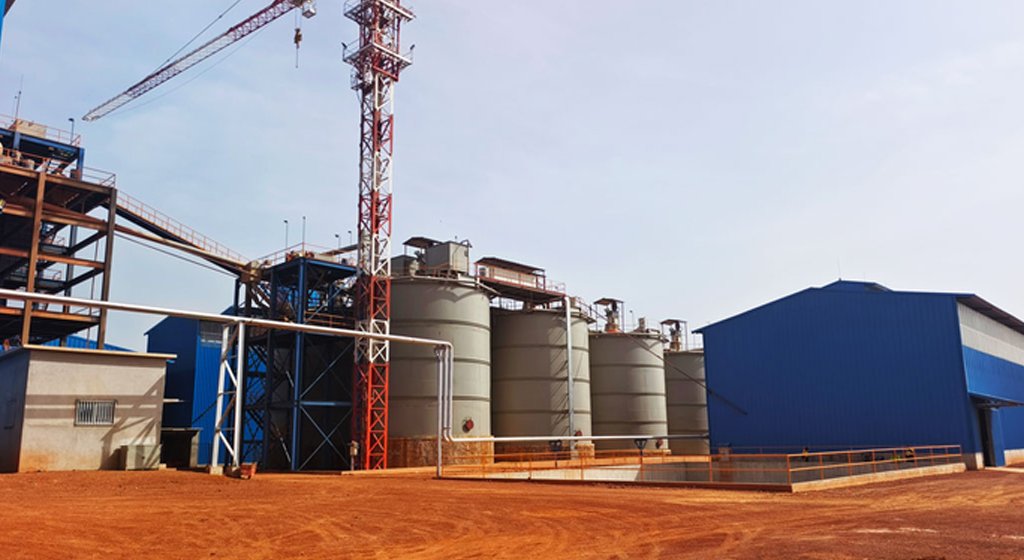
What is a Leaching Tank?
A leaching tank is an industrial device used for material solution extraction and solid-liquid separation. It is a core piece of equipment in hydrometallurgy, utilizing chemical solvents to dissolve and extract valuable metals from ore slurry. This equipment is widely used in gold and copper mining, as well as in the chemical, metallurgical, food processing, and pharmaceutical industries. By adjusting the stirring speed, temperature, and residence time according to different process requirements, it achieves efficient leaching, stirring, and chemical reactions.
The leaching tank has a reasonable structural design, is easy to operate, and is suitable for continuous or intermittent production, meeting the requirements of efficient and controllable industrial production.
What is the core function of a leaching tank?
The leaching tank is not simply a stirring vessel; it is a core reaction device that creates a stable, efficient, and controllable reaction environment for hydrometallurgical leaching operations and directly determines the metal leaching rate.
- Complete solid suspension: Continuous agitation of the slurry ensures full contact between ore particles and reagents, preventing losses due to dead zones and metal residue buildup.
- Efficient chemical mixing & mass transfer: The agitation device enables uniform dispersion of the reagents, accelerates the solid-liquid reaction rate, and improves the stability of the leaching operation.
- Effective gas dispersion & dissolved oxygen supplementation: Especially in gold cyanidation leaching, oxygen is a critical reactant. The agitation system draws and disperses air into tiny bubbles, increasing dissolved oxygen (DO) level and significantly speeding up gold leaching.
- Stable reaction condition control: It provides sufficient retention time and stable space for reactions. Combined with automatic monitoring, it maintains stable pH, reagent concentration, and temperature, ensuring continuous and efficient leaching.
- Adaptation to CIL/CIP processes: In CIL systems, it supports simultaneous leaching and carbon adsorption. The low-shear agitation reduces carbon abrasion, while inter-tank screens retain activated carbon, realizing continuous and stable production.
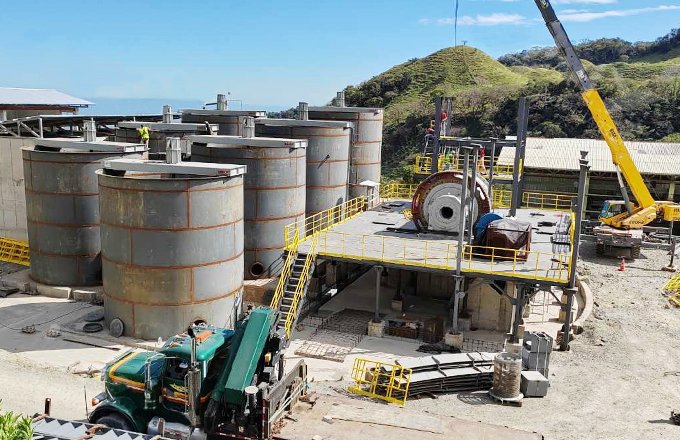
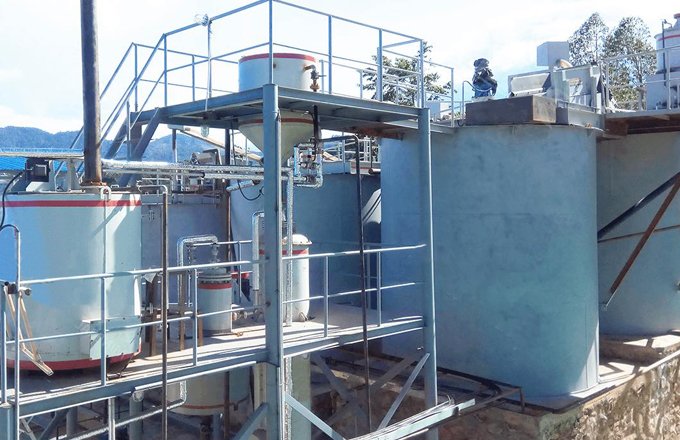
Main Advantages
Stirred tank leaching is a modern hydrometallurgical technology that significantly improves the economic and production advantages of ore processing plants compared to traditional heap leaching.
- Higher metal recovery rate: With complete material suspension and thorough reaction, gold ore recovery rates can reach 90%-98%, an improvement of 10%-30% compared to heap leaching.
- Shorter Cycle Time: Stirred tank leaching can be completed in just 24-48 hours, while heap leaching often takes tens of days or even months, shortening the production cycle and accelerating capital recovery.
- Smaller footprint & higher space utilization: For the same processing capacity, the leaching tank system requires 80% less space than a heap leaching site, flexibly adapting to site conditions and mining projects with strict environmental requirements.
- Lower long-term operating cost: The energy-saving dual-impeller structure reduces energy consumption, ensuring stable equipment operation and low maintenance frequency. Automated dosing avoids waste of labor and reagents.
- Wear-resistant and corrosion-resistant: Carbon steel lined with rubber or stainless steel structure, providing long-term resistance to chemical corrosion, resulting in low equipment failure rate and long service life.
- High degree of automation and easy operation: Can be equipped with online monitoring systems for pH, dissolved oxygen, and temperature, automatically adjusting parameters to reduce human error and improve production safety.
- Flexible configuration and strong adaptability: Can be used as a single unit or in series; volume, impeller, and lining material can all be customized according to ore properties and production conditions.
Product Structure & Components
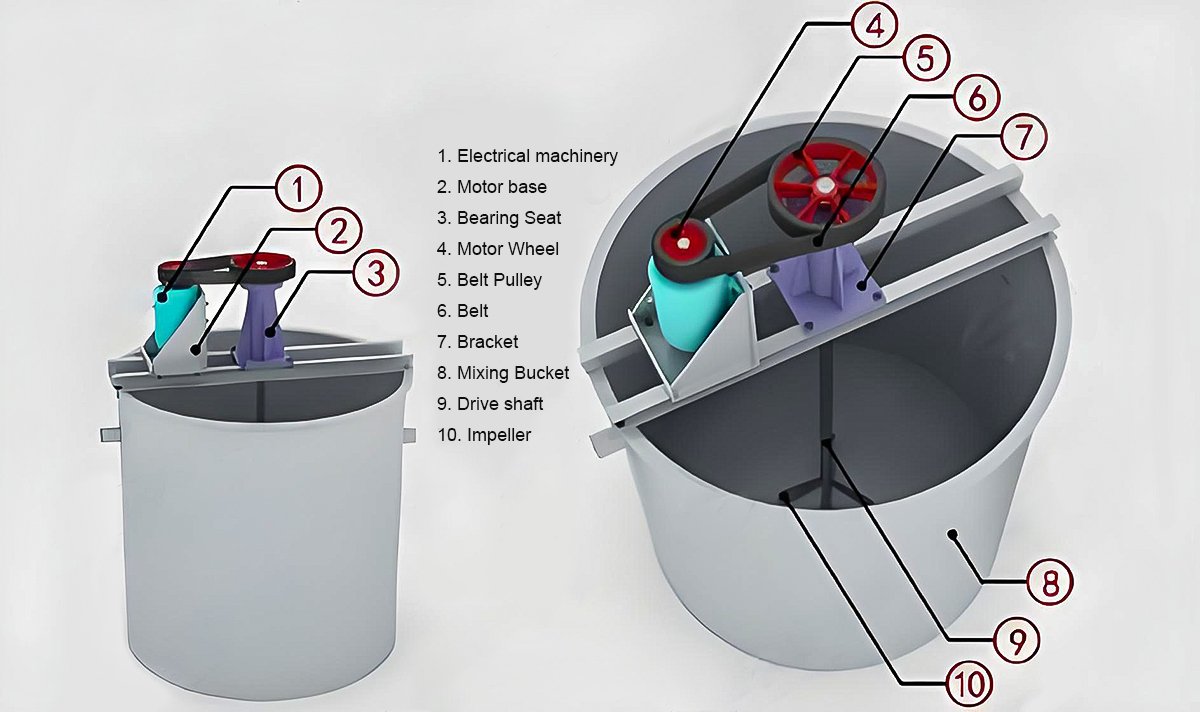
The leaching tank adopts a vertical cylindrical structure with top-mounted driving system.
| Component | Function | Common Material |
|---|---|---|
| Motor | Provides driving power | High-efficiency explosion-proof motor |
| Reducer | Converts high speed to high torque | Helical-bevel / planetary gearbox |
| Agitation Shaft | Transmits torque | Carbon steel with rubber lining |
| Double Impellers | Upper pushes down; lower lifts up for full circulation | Rubber-lined / PU coated |
| Tank Body | Holds pulp and reacts | Carbon steel + rubber lining |
| Baffles | Eliminate vortex, improve mixing | Rubber-lined steel plate |
| Lifting Device (Optional) | Lifts impeller for maintenance | Electric / hydraulic |
| Inter-Tank Screens (CIL) | Retain carbon, allow pulp passing | Perforated steel plate |
Leaching Tank Applications
Leaching tanks are suitable for industries such as chemical, metallurgical, food processing, and pharmaceutical extraction, efficiently completing solution leaching and solid-liquid separation. Main processes include:
- Solvent Leaching: Suitable for extracting active ingredients from materials such as oils, spices, and medicinal herbs.
- Solid-Liquid Separation: Rapidly separates solid materials from liquids, improving extraction efficiency.
- Chemical Reaction-Assisted Leaching: Accelerates component release and increases yield under acidic, alkaline, or other conditions.
- Temperature-Controlled Leaching: Optimizes leaching rate and product quality by adjusting temperature.
- Continuous Leaching: Suitable for large-scale production, achieving a stable and efficient process flow.
The parameters of the leaching tank can be flexibly adjusted according to different materials and process requirements, achieving safe and controllable production operations.
Working Principle
The working principle of leaching tanks is based on mechanical agitation + liquid–solid chemical reaction + mass transfer enhancement. The process is stable, continuous, and highly efficient.
- Feeding: Ore pulp and leaching reagents enter the tank continuously.
- Agitation & suspension: Double-impeller system forms stable axial circulation to keep all particles suspended without dead zones.
- Reaction & leaching: Minerals fully contact chemicals and dissolve valuable metals under stable pH and oxygen conditions.
- Gas dispersion: Agitation cuts air into tiny bubbles to increase dissolved oxygen and accelerate leaching speed.
- Overflow transmission: Qualified pulp overflows into the next tank to complete continuous leaching.
- Post-processing: After sufficient retention time, pulp flows to adsorption or displacement sections.
Leaching Tank Material & Lining Selection
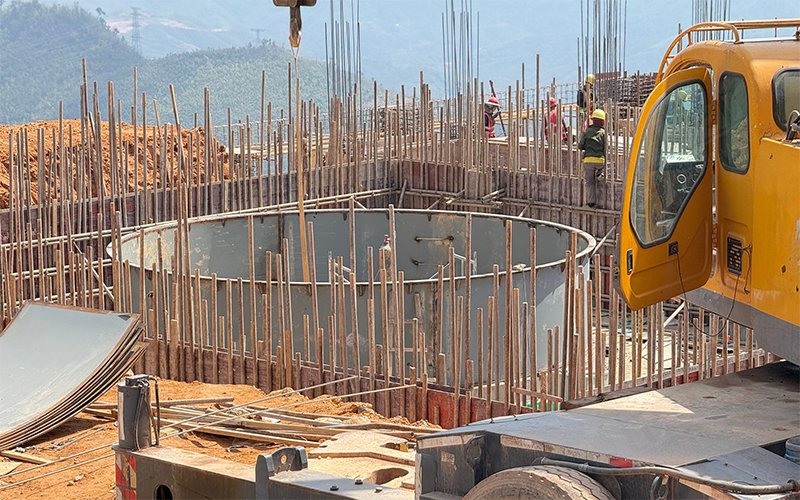
Leaching tanks operate in highly abrasive and corrosive environments. Material selection directly determines service life, safety, and operating cost. This chapter summarizes the most practical selection standards for global mining buyers.
Working Condition Classification & Recommended Materials
- Gold Cyanide Leaching (pH 10.5–12)Best choice: Carbon steel + 6–10mm natural rubber lining. 3–5 years service life, cost-effective and widely adopted in global CIL/CIP mines.
- Acid Leaching (Copper/Zinc/Nickel)Use 316L stainless steel, duplex steel 2205, or FRP anti-corrosion lining to resist strong acid erosion.
- High-Abrasion Hard OreAdopt 10–12mm thickened rubber lining + PU impellers to reduce sharp mineral abrasion.
- High-Temperature Leaching (>60°C)Use heat-resistant rubber or ceramic lining to avoid lining aging and softening.
| Working Condition | Tank Material | Lining Material |
|---|---|---|
| Gold cyanide leaching | Carbon Steel | Natural rubber 6–10 mm |
| Acid leaching (Cu/Zn/Ni) | 316L / Duplex Steel | FRP / Special polymer |
| High-abrasion ore | Carbon Steel | Thick wear-resistant rubber |
| High temperature | Carbon Steel / Alloy | Heat-resistant rubber / ceramic |
Technical Parameters (Real Factory Models)
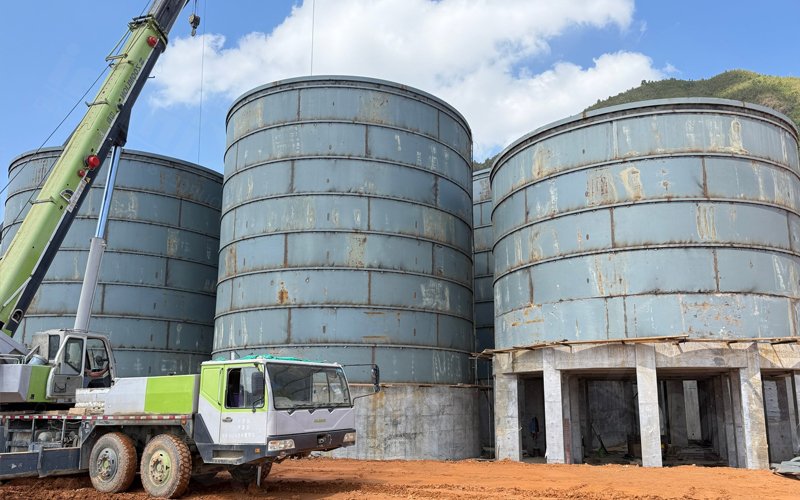
| Model Number | Tank Specifications (Diameter x Height) (mm) | Effective Volume (m³) | Impeller Speed (r/min) | Impeller Diameter (mm) | Motor Model | Motor Power (kW) | Gearbox Model | Tank Weight (kg) | Total Weight (kg) |
|---|---|---|---|---|---|---|---|---|---|
| SJ2.0X2.5 | 2000X2500 | 7.07 | 52 | 909 | Y100L1-4 | 2.2 | XLD2.2-4-29 | 1609 | 2144 |
| SJ2.5X2.5 | 2500X2500 | 10.8 | 43 | 935 | Y112M-4 | 4 | XLD4-5-35 | 2159 | 2729 |
| SJ2.5X3.15 | 2500X3150 | 13.92 | 52 | 935 | Y100L1-4 | 2.2 | XLD2.2-4-29 | 2398 | 3095 |
| SJ3.0X3.0 | 3000 X3000 | 19 | 43 | 1130 | Y112M-4 | 4 | XLD4-5-35 | 3480 | 4583 |
| SJ3X3.15 | 3000X3150 | 20 | 3480 | 4160.6 | |||||
| SJ3X3.5 | 3000X3500 | 22.97 | 3211 | 4334.6 | |||||
| SJ3.15X3.55 | 3150X3550 | 25.73 | 1260 | 3433.5 | 4322.8 | ||||
| SJ3.5X3.5 | 3500X3500 | 31.3 | 52 | 1310 | Y132S-4 | 5.5 | XLD5.5-5-29 | 3480 | 5025 |
| SJ3.5X4 | 3500X4000 | 35.6 | 4230 | 5429 | |||||
| SJ3.55X4.0 | 3550X4000 | 36.8 | 43 | Y112M-4 | 4 | XLD4-5-35 | 4260 | 5025 | |
| SJ3.7X4.2 | 3700X4200 | 42 | 42 | XLD4-5-43 | 5266 | 6153 | |||
| SJ4.0X4.5 | 4000 X4500 | 52.78 | 35 | 1750 | Y132M-4 | 7.5 | XLD7.5-7-43 | 6397 | 7569 |
| SJ4.0X6 | 4000 X6000 | 71 | 33 | 1750 | Y160M-4 | 11 | GRF137-Y11-4P-44.65-M4 | 7681 | 9200 |
| SJ4.5X5.0 | 4500 X5000 | 74.75 | 35 | 1750 | Y132M-4 | 7.5 | XLD7.5-7-43 | 8614 | 10864 |
| SJ5.0X5.6 | 5000X5600 | 104.5 | 31 | 2046 | Y160M-4 | 11 | XLD11-8-47 | 8740 | 14291 |
| SJ5.5X6.0 | 5500 X6000 | 135.42 | 2100 | 12467 | 18745 | ||||
| SJ6.5X7.0 | 6500 X7000 | 215 | 21 | 2400 | Y180L-4 | 22 | GRF147-Y22-4P-70.87 | 17890 | 25978 |
| SJ7.0X7.5 | 7000 X7500 | 269 | 2400 | Y200L2-6 | 22 | XLD22-10-47 | 20505 | 29030 | |
| SJ7.5X8.0 | 7500 X8000 | 331 | 23 | 2900 | Y200L2-6 | 22 | BLD7-43-22L | 22552 | 32796 |
| SJ8.0X8.5 | 8000X8500 | 402 | 18.5 | 3200 | Y250M-8 | 30 | TPS315-3F | 30559.5 | 42467.3 |
| SJ8.5X9.0 | 8500X9000 | 480 | 18.5 | 3300 | Y250M-8 | 30 | TPS315-3F | 34130 | 46623 |
Notes:
- All models support explosion‑proof motors.
- Rubber lining, impeller type, and speed can be customized.
- Lifting device is optional for easy maintenance.
Operation & Optimization Tips
To reach over 95% leaching efficiency, mine operators must control these five core operating parameters.
- Slurry Density: Maintain 25%–45% solids. Excessively thick pulp causes motor overload; too thin increases reagent waste.
- Dissolved Oxygen: Keep DO ≥ 8mg/L for gold leaching. Adjust impeller depth to enhance air intake.
- pH Stability: Cyanide leaching keeps pH between 10.5–11.5 to avoid chemical consumption.
- Agitation Speed: Use VFD to adjust speed. Avoid high RPM which causes carbon breakage and energy waste.
- Uniform Feeding: Keep stable pulp flow to prevent short-circuiting and incomplete reaction.
Common Problems & Solutions
This section summarizes Google high-search failure problems and practical solutions for mineral processing operators.
- Strong Vibration & Noise: Unbalanced impeller or loose bolts → Fasten parts and correct impeller balance.
- Low Leaching Recovery: Low DO, unstable pH or coarse grinding → Improve aeration and stabilize chemical parameters.
- **Carbon Abrasion (CIL)**: Excessive agitation speed → Reduce RPM and install low-shear impellers.
- Lining Peeling: Sediment scouring or chemical corrosion → Clean tank regularly and replace aging lining.
- Motor Overload: High pulp density or bearing damage → Reduce feeding concentration and lubricate bearings.
- Tank Sedimentation: Low agitation and worn impellers → Increase rotation speed and replace damaged parts.
Maintenance Guide
Simple and standardized maintenance effectively reduces downtime and extends tank service life. Below is a concise checklist for daily operation:
- Running Inspection: Regularly check motor temperature, vibration, noise, and liquid leakage to ensure stable operation.
- Wear Parts Inspection: Check impellers, agitation shaft, and rubber lining. Replace severely worn components in time.
- Lubrication Work: Periodically lubricate bearings and gearboxes to prevent transmission jamming and motor overload.
- Tank Cleaning: Remove bottom sediment and clean inter-tank screens to avoid poor pulp circulation.
- Bolt & Structure Check: Fasten all connecting bolts to prevent structural loosening after long-term agitation.
<img src=”https:/placehold.co1080x680″ alt=”Leaching Tank Maintenance Scene”/
Image: Technician inspecting impeller and shaft during leaching tank maintenance. Image filename: leaching-tank-maintenance-scene.jpg
FAQ
1. What metals can leaching tanks extract?
Gold, silver, copper, zinc, nickel, cobalt, uranium, and other hydrometallurgical minerals.
2. What is the service life of the rubber lining?
3–5 years under normal working conditions, depending on ore abrasiveness and maintenance frequency.
3. What’s the difference between CIL and CIP leaching tanks?
CIL integrates leaching and adsorption with carbon screens; CIP separates leaching and adsorption without screens.
4. How many leaching tanks do I need?
Generally 6–10 tanks in series, calculated based on hourly pulp flow and retention time.
5. Can leaching tanks work with refractory gold ore?
Yes, it requires longer retention time, higher dissolved oxygen, and customized reagents.
6. Why use double impellers?
Double impellers form up-down circulation, eliminate dead zones, and achieve full suspension of ore pulp.
7. Do you provide installation and commissioning?
Yes. We provide foundation drawings, on-site installation, commissioning, and operator training.
8. Can the tank be customized?
Yes, including volume, lining material, motor type, and automatic control system.
9. How much does a leaching tank cost?
The price depends on tank volume, material, and configuration. Contact us for factory direct quotation.
10. What is the typical leaching time for gold ore?
18–36 hours for most oxide and semi-oxide gold ores.
Why Choose Us?
We don’t just sell equipment — we deliver complete leaching solutions.
- 20+ years professional mining equipment manufacturer
- Specialized in CIL / CIP mineral processing plant design
- Full tank range from 5m³ to 200m³
- Custom rubber lining and anti-wear impeller design
- Strict quality inspection for corrosive and abrasive resistance
- Global installation, commissioning and after-sales service
- Factory direct price without middlemen
- Thousands of successful mining projects worldwide
We help you achieve higher recovery, lower cost, and stable long‑term operation.
Conclusion
A leaching tank is much more than just a mixing vessel—it is the core reaction equipment in modern hydrometallurgical plants and the foundation of stable, high‑efficiency metal extraction. Whether for gold, copper, silver, or other minerals, the performance of your leaching system directly determines recovery rate, operational cost, and production safety.
By choosing the right tank design, matching CIL or CIP process requirements, optimizing volume configuration, selecting proper materials and lining, and following scientific maintenance rules, mining enterprises can achieve higher leaching efficiency, lower energy consumption, and longer equipment service life.
Our industrial leaching tanks are engineered for complex mining conditions, featuring durable structure, stable agitation, and flexible customization. We provide one-stop technical support to help customers build reliable, high-yield leaching systems and obtain long-term economic benefits.
Related Products —
Ball Mill
Maximize gold recovery and reduce grinding costs with CHUNLEI gold ball mill. Our equipment ranges in capacity from 0.5 tons/hour to 200 tons/hour and is suitable for a variety of ores, including gold, copper, iron, and quartz. Energy-effic…
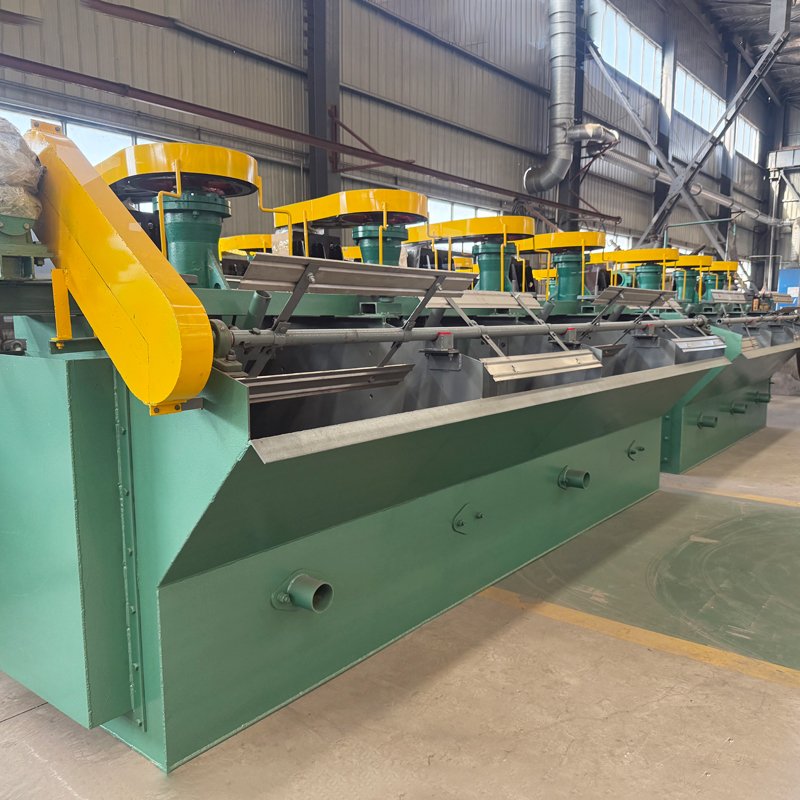
Flotation Machine
Flotation machine is a self-absorbing, self-absorbing pulp type mechanical agitation flotation equipment.It is widely used in the flotation operation of nonferrous metals, black metals and nonmetals. Flotation m…
Ceramic Ball Mill
The ceramic ball mill is a core piece of equipment designed for grinding high-purity non-metallic minerals and chemical raw materials. Featuring linings and grinding media made of alumina or zirconia ceramics, it is …
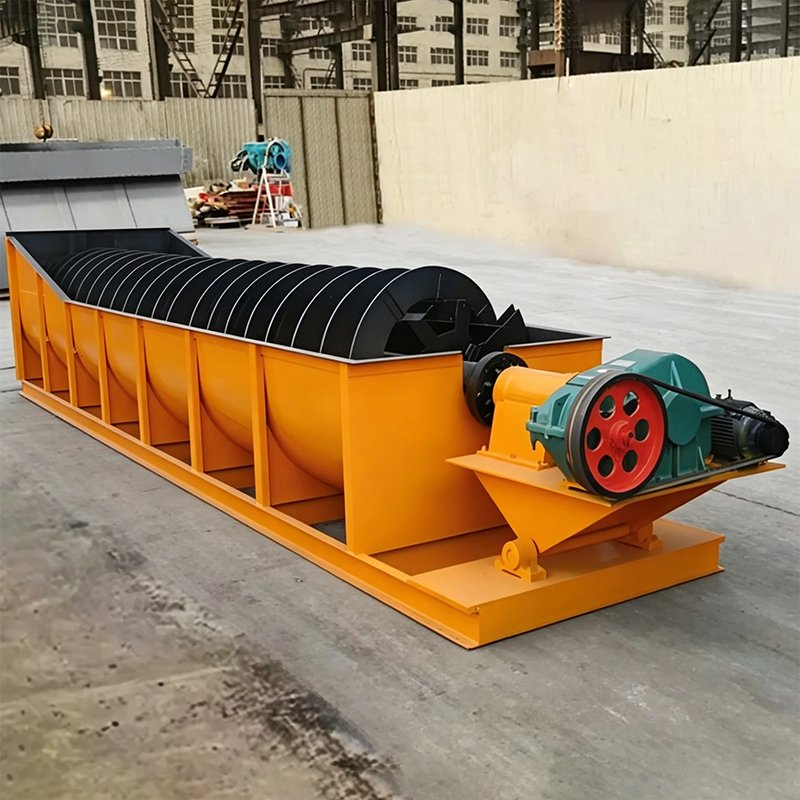
Submerged Spiral Classifier
Spiral classifier is a classifier with the spiral at the overflow end fully submerged under the liquid surface, commonly used in two-stage classification. In production lines such as mining, sand processing, and t…
High Gradient Magnetic Separator
A variety of models are available | Get the free price list! The High Gradient Magnetic Separator (HGMS) is a new type of strong magnetic separator developed on the basis of general strong magnetic separa…

loading…
已经是到最后一篇内容了!