Search the whole station Hot Product Catalog
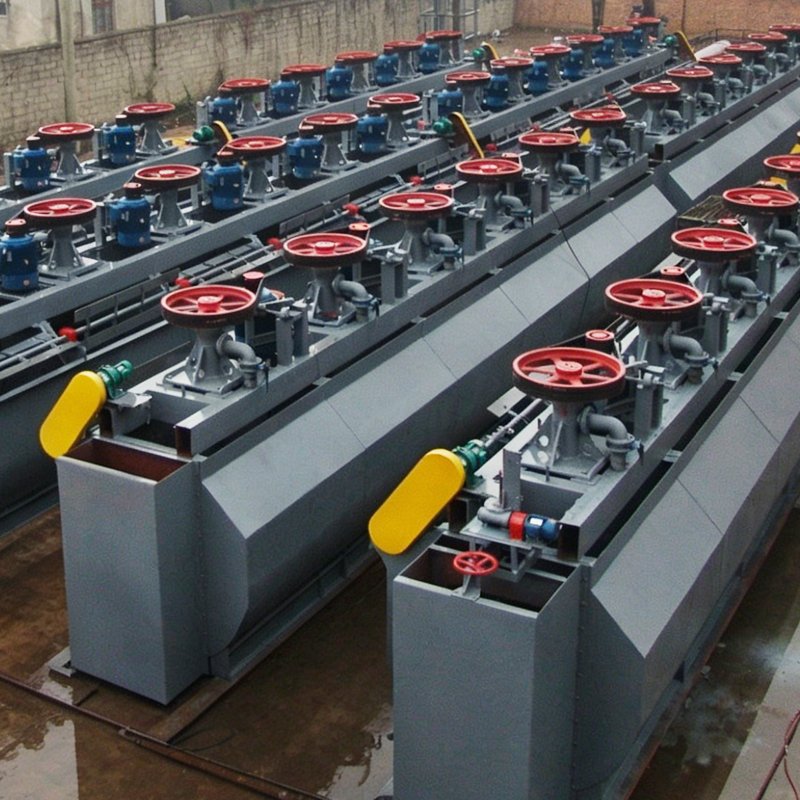
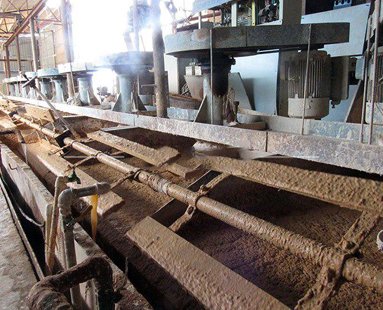
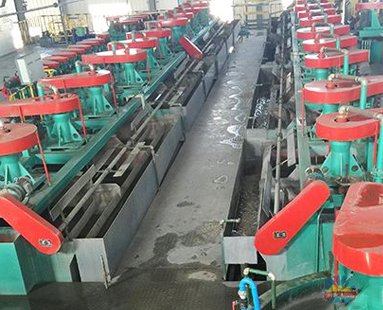
Flotation machine is a self-absorbing, self-absorbing pulp type mechanical agitation flotation equipment.It is widely used in the flotation operation of nonferrous metals, black metals and nonmetals.
Flotation machines (flotation cells) are the core equipment in mineral processing for flotation separation. They utilize the differences in the physicochemical properties of mineral surfaces to separate target minerals from waste rock. They are widely used to separate precious metals such as gold, copper, lead, and zinc, as well as non-metallic valuable minerals such as fluorite, graphite, phosphate rock, and lithium ore. CHUNLEI flotation machines can operate 24 hours a day in harsh mining environments, continuously improving mineral recovery rates and creating higher profits for your concentrator.
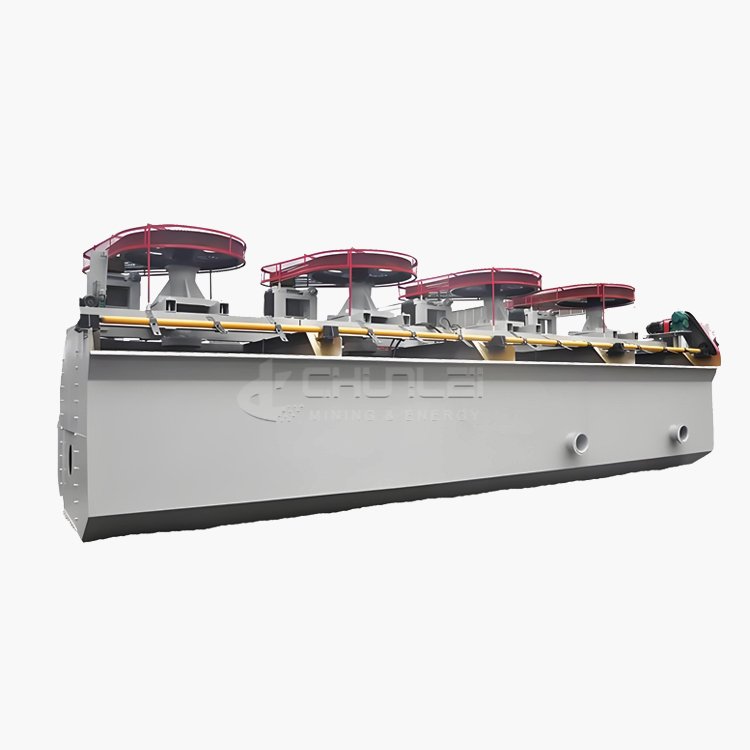
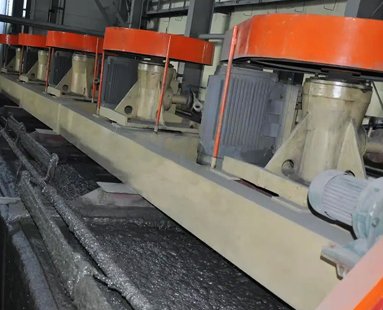
The flotation machine’s structure mainly consists of a tank welded from steel plates and gates welded from steel plates and round steel bars. The tank is equipped with a slurry inlet and a gate device; the gate is used to regulate the slurry level. Multiple flotation cells are connected via intermediate cells and gates to control the flow of slurry within the cells.
Based on my decades of experience, many mining operators make a serious mistake: choosing the wrong flotation machine, which directly leads to huge cost waste. This not only results in a 15% to 30% reduction in recovery rates but also increases overall operating costs.
In the following introduction, I will tell you everything about flotation machines—including types, working principles, how to choose the right model, and practical applications.


Understanding the core components of a flotation machine is critical to optimizing its performance. Each part is designed to work in harmony to maximize mineral separation efficiency.
| Machine Part | What It Is | What It Does | Why It Matters to You |
|---|---|---|---|
| Flotation Tank | Heavy-duty steel vessel | Holds ore slurry during separation | Corrosion-resistant tanks last 15+ years with minimal maintenance. |
| Impeller/Agitator | High-speed rotating impeller | Mixes slurry and disperses air into fine bubbles | Precision impellers ensure uniform bubble size for better mineral attachment. |
| Aeration System | Air blower + distribution pipes | Supplies controlled airflow to the slurry | Consistent aeration prevents mineral loss and boosts recovery rates. |
| Froth Launder | Overflow trough around the tank | Collects mineral-rich froth | Optimized launder design reduces froth spillage and increases yield. |
| Baffle Plates | Internal steel plates | Controls slurry flow and prevents short-circuiting | Reduces mineral dilution and improves concentrate grade. |
Real Example: A copper mine in Chile skipped impeller inspections for 6 weeks. Worn blades reduced airflow, cutting copper recovery by 18%. Replacing the impeller took 8 hours, but the mine lost 3 days of optimal production. Regular checks prevent costly losses.

1. Slurry Preparation and Conditioning:
The finely ground slurry is fed into the slurry tank (front end), where various flotation reagents and collectors are added. These selectively adsorb onto the surface of the target minerals, creating hydrophilic and hydrophobic differences.
2. Slurry Entering the Flotation Cell:
The reagent-conditioned slurry enters the flotation cell.
3. Aeration and Agitation (Core Function):
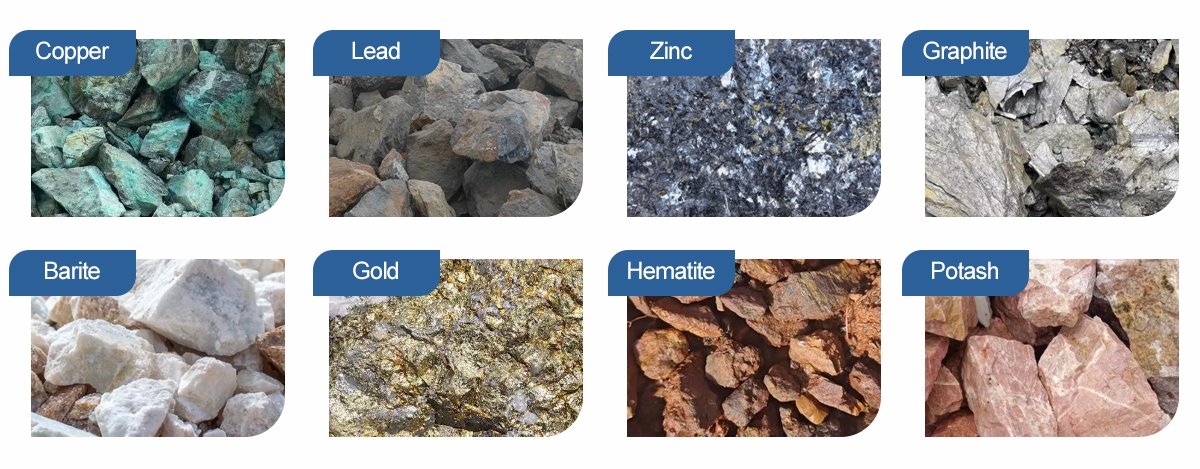
You can process gold ore, copper ore, lead-zinc ore, nickel ore, fluorite, graphite, phosphate rock, and lithium ore. CHUNLEI flotation machines adapt to nearly all metallic and non-metallic minerals that respond to froth flotation.
Since 2004, our R&D team has tested over 300 mineral types, so we customize every machine to your ore’s unique properties: we adjust tank size, impeller design, aeration rate, and reagent dosing systems. We also optimize the number of flotation stages (roughing, cleaning, scavenging) to maximize recovery—roughing for bulk mineral capture, cleaning for grade improvement, scavenging for residual mineral recovery from tailings.
You increase recovery by optimizing reagent dosages, pre-treating ore slurry, and maintaining consistent machine performance. Flotation is the biggest chemical and energy cost in mineral processing—small adjustments deliver big savings.
We often tell our customers: Proper ore processing is crucial for the flotation machine to perform at its best. CHUNLEI engineers conduct on-site ore tests and provide customized flotation solutions, avoiding one-size-fits-all equipment.
The selection of flotation machines can be based on the target hourly pulp volume and concentrate yield. Understanding key parameters such as tank volume, motor power, and aeration rate can prevent waste from oversized selection and bottlenecks from undersized selection.
We manufacture a full range of flotation machines from 0.3m³ (laboratory) to 30m³ (large industrial). Our engineers calculate the optimal configuration based on the following four points:
We can design complete flotation units, piping, pumps, and sluice layouts to ensure a smooth, bottleneck-free process. You only need to purchase the required capacity and reserve space for future expansion.
Flotation machine price: Small 1m³ approximately $2000. The final price depends on the tank volume, material (carbon steel/rubber lining), motor power, and level of automation.
We are a factory directly in China, eliminating middlemen and allowing you to enjoy factory prices. We offer standard models (fast delivery) and customized designs (tailored to the ore/processing plant). Custom designs increase costs by 10–15%, but improve recovery rates by 5–10%, typically achieving cost recovery in 6–12 months.
Transparent and clear pricing: Tank material, motor, impeller, aeration system, automation, and installation fees are listed item by item, with no hidden costs.
You must:
Our flotation machines are designed with quick-release access ports and rapid impeller replacement, allowing our maintenance team to complete the replacement in 2–3 hours (competitors typically require more than 8 hours). Faster maintenance means more production time.

We successfully installed a lead-zinc flotation circuit in Peru in 2024. Our client struggled with low zinc recovery (65%) due to fine-grained ore and inefficient flotation cells.
The Client Challenge: The client’s old flotation cells had fixed-speed impellers, leading to uneven bubble size. Fine zinc particles were lost in tailings, and reagent over-dosing increased costs. Their lead concentrate grade was too low (50% vs target 65%).
Solution: We redesigned the flotation circuit:
The client now achieves 87% zinc recovery and 92% lead recovery, with lead concentrate grade at 68%. They reduced reagent costs by 22% and run 24/7 with only monthly maintenance stops.
You need a supplier with metallurgical expertise—not just metal fabricators. A bad supplier delivers generic machines that fail to meet recovery targets, with no post-sales support.
We meet all these criteria. We have an ISO-certified metallurgical lab, 20 senior metallurgical engineers, and a global spare parts warehouse (China, South Africa, Chile, Australia). We have exported flotation equipment to 130+ countries and provide 24/7 technical support via phone/email.
We are a direct manufacturer of mineral processing equipment with 20 years of experience (founded 2004). Our 12,000-square-meter factory, with strict quality control on every component (ISO 9001 certified).
Our core advantages are:
Contact our technical sales team today for a free ore testing service, customized flotation circuit design, and direct factory price list.
CHUNLEI Machinery flotation equipment is available in two main types:
We have a total of eight series of flotation machines. Below are four of our best-selling series, which are sufficient to meet different flotation process requirements: SF, BF, KYF, and XCF.
The SF-type flotation machine allows a single flotation cell to complete the air intake, mud intake, and flotation processes. It is best suited for small to medium-sized mines. It features low investment costs and easy maintenance. It boasts a large air intake capacity and low energy consumption.
The BF flotation unit is an upgraded version of the SF series. Its optimized tank design and enclosed double-cone impeller significantly reduce the pulp dead zone, improving pulp circulation efficiency and flotation efficiency. It is the ideal choice for mines requiring higher concentrate quality and lower operating costs.
The KYF flotation unit features a unique U-shaped trough, hollow shaft air jet, and suspended stator. Its conical impeller with backward-curved blades, similar to a high-speed centrifugal pump, enhances slurry circulation and bubble dispersion. It is ideal for large flotation plants and high-capacity operations.
XCF flotation units are rarely used alone; they are typically configured in series or parallel with KYF series units to enhance the flexibility of flotation process design.
This design makes the XCF series stand out in the flotation of metal ores such as copper, lead, and zinc, resulting in a significant improvement in recovery rate.
Other flotation machines supplied by CHUNLEI:
| Model | Effective volume (m3) | Capacity (m3/min) | Impeller diameter(mm) | Impeller diameter (r/min) | Stirring motor power(kW) | Scraper motor power (kW) | Single slot weight (kg) |
|---|---|---|---|---|---|---|---|
| SF-0.37 | 0.37 | 0.2~0.4 | 300 | 352~442 | 1.5 | 0.55 | 468 |
| SF-0.7 | 0.7 | 0.3~1.0 | 350 | 336~384 | 3 | 1.1 | 629 |
| SF-1.2 | 1.2 | 0.6~1.6 | 450 | 312 | 5.5 | 1.1 | 1373 |
| SF-2 | 2 | 1.5 ~3 | 550 | 280 | 11 | 1.5 | 1879 |
| SF-2.8 | 2.8 | 1.5~3.5 | 550 | 280 | 11 | 1.5 | 1902 |
| SF-4 | 4 | 2.0 ~4 | 650 | 235 | 15 | 1.5 | 2582 |
| SF-6 | 6 | 3~6 | 760 | 191 | 30 | 2.2 | 3540 |
| SF-8 | 8 | 4.0 ~8 | 760 | 191 | 30 | 2.2 | 4129 |
| SF-16 | 16 | 5.0 ~16 | 850 | 169~193 | 45 | 1.5 | 7415 |
| SF-20 | 20 | 10 ~12 | 850 | 169~193 | 45 | 1.5 | 9828 |
2026 flotation technology focuses on automation, AI optimization, and eco-friendly reagents to boost efficiency and reduce environmental impact. Mining companies demand smart machines that adapt to ore changes in real time.
Large mining companies now require carbon-neutral flotation systems. We integrate energy-efficient motors, solar-powered aeration systems, and reagent recycling into our designs—helping you meet sustainability goals while cutting costs. Our smart flotation cells adapt to ore grade changes in real time, eliminating the need for constant manual adjustments.
Question 1: What reagent dosage do I need for my ore?
Reagent dosage depends on ore type, particle size, and slurry pH. We test your ore in our lab to determine the optimal dosage (typically 50-500 grams per ton of ore for collectors, 10-50 grams per ton for frothers). We supply pre-calibrated dosing pumps to ensure accuracy.
Question 2: How many flotation stages do I need?
Most plants use 3 stages: roughing (captures 80-90% of minerals), cleaning (improves concentrate grade), and scavenging (recovers minerals from roughing tailings). Fine-grained ores may need 2-3 cleaning stages; coarse ores may only need roughing + scavenging.
Question 3: Can I use the same flotation cell for different ores?
Yes—with adjustments. You can reconfigure impeller speed, airflow, and reagent dosages to process different ores (e.g., gold vs copper). We provide training on reconfiguration to minimize downtime between ore changes.
Question 4: Do you provide after-sales support?
Yes. We offer a 1-year warranty on all flotation machines, lifelong spare parts supply, and 24/7 technical support. Our engineers can visit your site for troubleshooting or optimization at any time.
Choosing the right flotation machine isn’t about size; it’s about matching it to your ore type, production targets, and budget. A suitable flotation machine can significantly improve recovery rates and concentrate grade, directly increasing profits.
Key points for cost reduction: ① Rational reagent use; ② Regular impeller and lining maintenance; ③ Pre-desliming of the ore. CHUNLEI is a supplier with years of experience in mineral processing technology and global service capabilities. Don’t just look at the price when choosing equipment; generic, cheap equipment will only lead to greater losses due to ore loss and downtime.
Take immediate action to improve recovery rates: Send us your ore samples and tell us your production targets. Our engineers will provide you with a free, customized flotation solution. Don’t accept low recovery rates; choose a professional flotation machine tailored to your ore.
The Thickener, with built-in degassing tank and sawtooth external overflow weir, prevents solid particles from attaching to air bubbles, improves localized suction phenomenon, and substantially increases the sedimentation area; at the same …
A variety of models are available | Get the free price list! A leaching tank is a closed or open industrial vessel designed for liquid–solid chemical leaching reactions. Under appropriate temperature, pH, and agitati…
Rod mill is divided into dry rod mill and wet rod mill, dry rod mill is a kind of dry rod mill equipment with fine discharging granularity, wet rod mill is a grinding machine with steel rods as grinding media, mainly used for coarse grin…
The shaking table mainly consists of eight parts: bed head, motor, slope adjuster, bed surface, ore tank, water tank, rifling strip and lubrication system. According to the position of feeding device, shaking table can be divided into right…
A variety of models are available | Get the free price list! Hydraulic filter press, also called automatic hydraulic filter press, is a dewatering equipment that utilizes slurry pump pressure to make the liquid com…
loading…
已经是到最后一篇内容了!
 Chunlei Mining Machinery