 Chunlei Mining Machinery
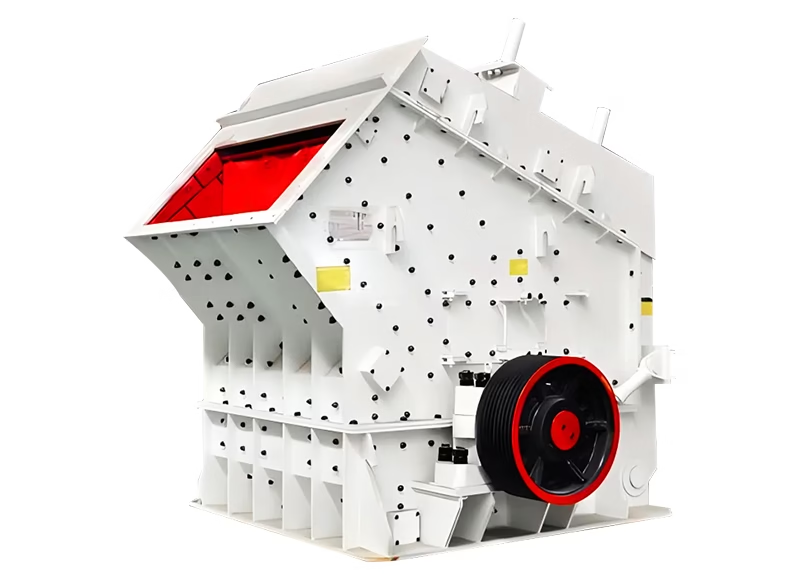
Impact Crusher
- High-performance impact crusher, suitable for medium and fine crushing and shaping of materials such as limestone, granite, basalt, and construction waste. Features include a large crushing ratio, excellent finished product particle shape, wear-resistant hammers, stable operation, direct supply from the manufacturer, and customization support.
- Feed size: ≤ 800mm
- Processing capacity: 30-2000t/h
- Application: The impact crusher is widely used in the crushing and processing of sand and gravel aggregate in the industries of high speed, high speed railway, water conservancy and hydropower, construction and commercial mixing.
What is Impact Crusher?
An impact crusher is a core piece of equipment in sand and gravel aggregate production for medium and fine crushing and shaping. It uses a high-speed rotor to drive hammer plates to impact the material, and the repeated impact of the impact plates breaks medium-sized materials into uniform cubic particles. It is mainly used in ore processing and construction waste recycling industries.
In crushing production lines, this equipment is often used for secondary/tertiary crushing, where coarsely crushed materials from jaw crushers are further crushed by the impact crusher. For some soft or medium-hard rocks, the impact crusher can directly crush them. Due to its good particle shape, large crushing ratio, and low energy consumption, it is the preferred shaping equipment for high-grade highway and construction aggregates. It is widely applicable to medium-hard and soft materials with a compressive strength ≤150MPa, such as limestone, granite, basalt, river pebbles, and construction waste.
The CHUNLEI impact crusher uses high-chromium alloy hammer plates, a high-strength rotor, and a hydraulic adjustment device, offering advantages such as high output, excellent particle shape, convenient maintenance, and low operating costs.
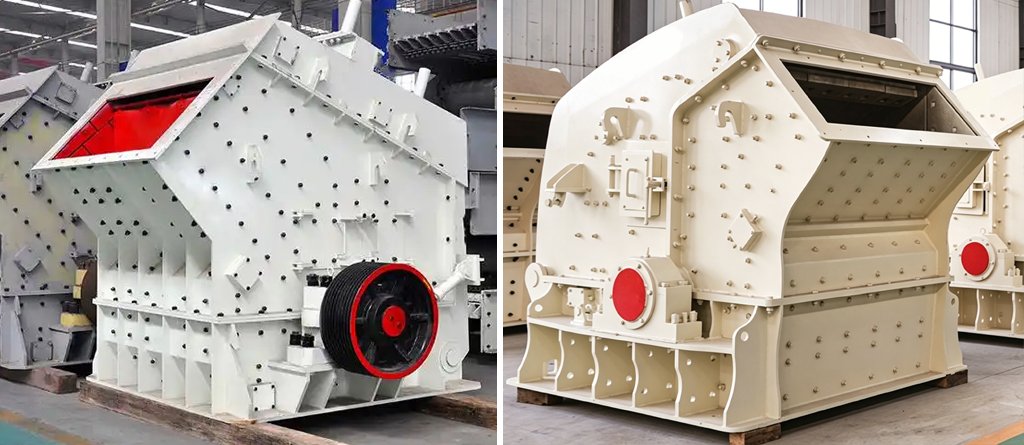
Advantages of CHUNLEI Impact Crusher
- As a secondary/tertiary crushing unit, it processes medium-sized raw stones into qualified finished aggregates.
- It produces cubic aggregates with elongated and flaky content ≤10%, exhibiting uniform and regular particle shape.
- It can operate continuously for 24 hours under harsh conditions and is suitable for high-load production lines.
- It is compatible with stationary production lines and mobile crushing stations, allowing for flexible relocation.
Main parts of the impact crusher
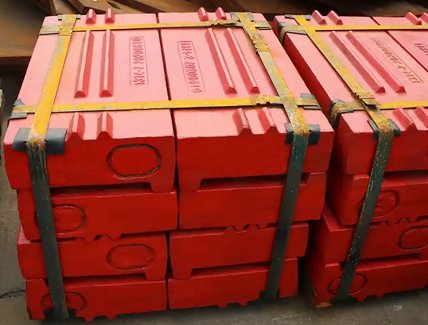
Made of high-chromium cast iron KmTBCr26, our single hammer weighs 230kg (compared to the conventional 160-180kg), resulting in greater impact inertia and more than double the wear life.
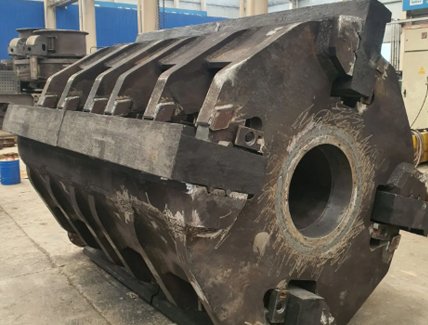
The rotor, welded from thick steel plates and castings, is dynamically balanced and operates smoothly even at -20℃, increasing rotational inertia by 80%.
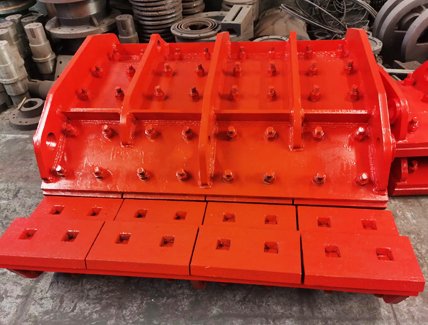
The three-section crushing chamber design allows for stepless adjustment of the distance between the impact plate and the hammer via a hydraulic system, precisely controlling the output particle size (adjustable from 10-80mm).
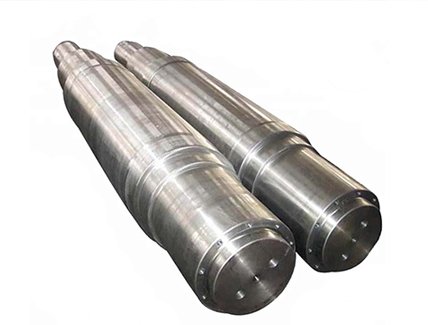
Forged from high-toughness alloy steel, it can withstand severe impact loads, ensuring long-term heavy-duty operation without breakage.
Working Principle of Impact Crusher
The impact crusher relies on impact energy to crush materials. When material enters the hammer zone, the high-speed rotation of the rotor drives the hammers to repeatedly impact the material. The material then rebounds from the impact liner back to the hammer zone for further impact, achieving efficient crushing and shaping. The complete crushing process consists of the following steps:
- Feeding: Medium-sized materials (≤500mm) enter the crushing chamber through the top feed inlet.
- Impact Crushing: The motor drives the rotor to rotate at high speed, and the hammers impact the material, causing it to break.
- Impact Crushing: The material is thrown against the impact plate for secondary impact crushing, then bounces back to the hammer impact zone.
- Circulating Crushing: The material repeatedly impacts between the hammers and the impact plate until it reaches the qualified particle size.
- Automatic Discharge: Qualified material is discharged from the bottom discharge port under gravity, while larger particles continue to be crushed in a circulating manner.
- Stable Production: In conjunction with a feeder, conveyor belt, and vibrating screen, continuous automated operation is achieved.

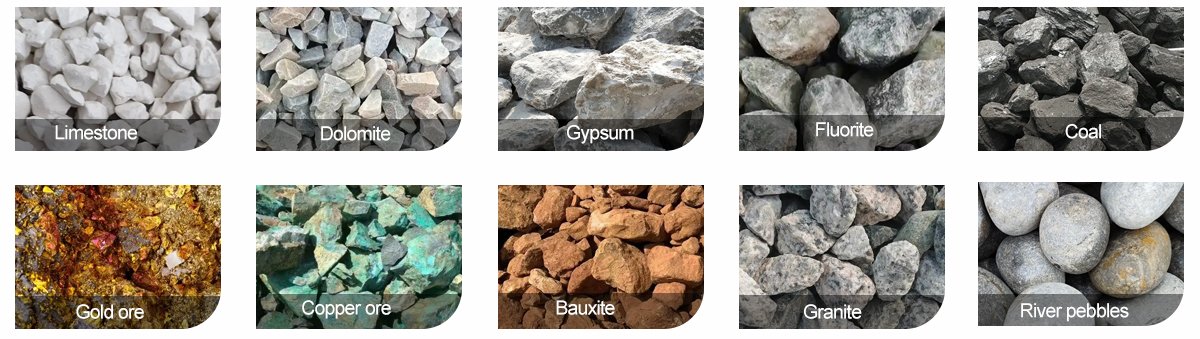
What ores can an impact crusher crush?
Impact crushers are suitable for medium-soft to medium-hardness ores and rocks with a compressive strength ≤150MPa. They are not suitable for extremely hard, highly abrasive ores (such as high-hardness iron ore and corundum). The following are common applicable ores and materials:
Non-metallic Ores
- Limestone: The most commonly used material, crushed for use in cement, building material aggregates, and lime production.
- Dolomite: Moderate hardness, used in metallurgy, building materials, and glass industries.
- Gypsum: Relatively soft, crushed for use in building gypsum and gypsum board raw materials.
- Fluorite: Medium hardness, used in metallurgy, chemical, and ceramic industries.
- Coal Gangue/Coal: Crushed for power generation, brick making, and comprehensive utilization of coal gangue.
Metallic Ores (Medium-Low Hardness)
- Gold Ore: Medium-soft hardness, used for medium-fine crushing before gold ore beneficiation.
- Copper Ore: Medium hardness, used for secondary crushing in copper ore production lines.
- Bauxite: Relatively soft, used for crushing raw materials in alumina production.
- Manganese ore (low grade): Medium hardness, used for manganese ore processing.
Rocks and Construction Waste
- Granite (weathered/soft): Good shaping properties, used for high-end sand and gravel aggregates.
- Basalt (soft): Used for road aggregates and construction crushed stone.
- River pebbles: Good particle shape, used for construction and concrete aggregates.
- Construction waste: Concrete, bricks, asphalt blocks, recycled aggregates for reuse.
Not recommended for crushing: High-hardness iron ore, quartzite, pebbles (high hardness), corundum, granite (high hardness), highly abrasive ores.
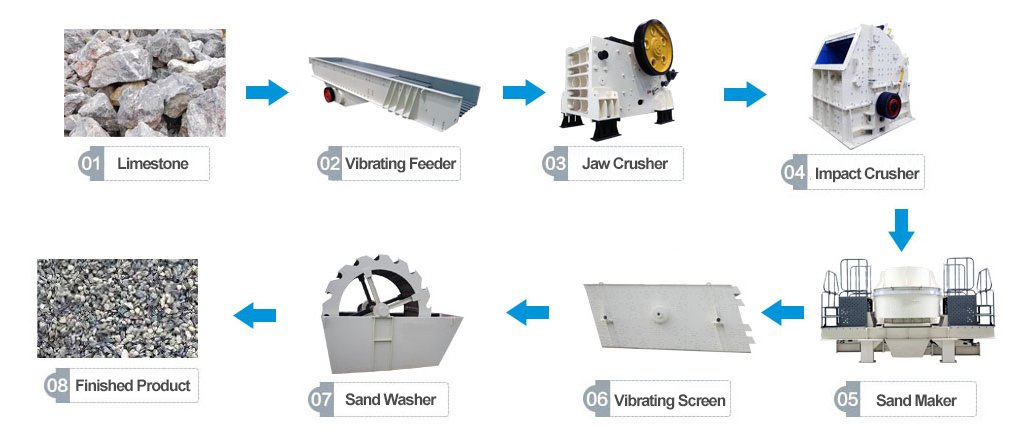
The Role of Impact Crusher in a Production Line
The impact crusher is the core medium and fine crushing equipment in a crushing production line. It takes over the coarse crushing from the jaw crusher, completing secondary/tertiary crushing and shaping tasks.
It crushes medium-sized stones into standard finished aggregates, ensuring the stable operation of the entire production line. Its excellent shaping capability improves the quality of the finished aggregates, meeting the requirements of high-grade projects. Simultaneously, it effectively reduces the load on downstream equipment such as cone crushers and sand making machines, reducing wear and extending equipment life, helping sand and gravel plants achieve high-yield, high-efficiency, and low-cost production.
How to Configure an Impact Crusher Production Line?
A high-efficiency impact crusher production line needs to be scientifically configured based on material hardness, feed size, hourly output requirements, and output particle size. The core equipment and process are as follows:
Basic Configuration (Small to Medium-Sized Sand and Gravel Plants, 30–150 tons per hour)
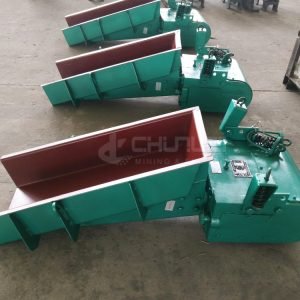
- Vibrating Feeder: Provides uniform feeding, prevents blockage, and stably feeds material to the jaw crusher.
- Jaw Crusher (Primary Crushing): Crushes large stones to 150–300mm, supplying material for the impact crusher.
- Belt Conveyor: Transports material from the jaw crusher to the impact crusher.
- Impact Crusher (Medium/Fine Crushing/Shaping): Crushes material to 5–50mm, producing cubic aggregate.
- Circular Vibrating Screen: Grades the material; qualified aggregate goes to the finished product bin, while large particles are returned to the impact crusher for secondary crushing.
- Finished Product Belt Conveyor: Transports qualified aggregate to the stockpile or finished product bin. 7. Dust Removal System: Collects dust, meets environmental standards, and improves the working environment.
Upgraded Configuration (Large-scale mines/hard rock, over 200 tons per hour)
- Add Cone Crusher: In hard rock scenarios, jaw crusher → cone crusher → impact crusher increases output, optimizes particle shape, and reduces wear.
- Configure Mobile Chassis: Optional mobile impact crusher production line, flexible relocation, suitable for field and demolition sites.
- Add Variable Frequency Control System: Adjusts feed rate and rotor speed, saves energy, reduces consumption, and stabilizes output particle size.
Configuration Highlights:
- Soft materials (limestone, construction waste): Jaw crusher + impact crusher + vibrating screen, high cost-effectiveness, good particle shape.
- Hard materials (granite, basalt): Jaw crusher + cone crusher + impact crusher + vibrating screen, high output, low wear.
- Fine output particle size requirement: Select a deep cavity impact crusher with small gap adjustment to control the proportion of fine materials.
Which is better, an impact crusher or a cone crusher?
Both impact crushers and cone crushers are commonly used secondary crushing equipment. The core differences lie in their crushing principles, applicable materials, finished product particle shape, and cost. The choice depends on the material hardness and aggregate requirements.
Impact Crusher(Shock Type)
- Applicable Materials: Medium to soft/medium hardness (limestone, construction waste, weathered granite, gold and copper ore), compressive strength ≤150MPa.
- Finished Product Particle Shape: Cubic, excellent particle shape, few needle-like and flaky particles, suitable for high-grade highway and construction aggregates, high selling price.
- Advantages: Low price, large crushing ratio, good shaping effect, simple maintenance, low energy consumption.
- Disadvantages: Fast wear on hard rock, frequent hammer replacement, slightly more fine powder.
Cone Crusher (Extrusion Type)
- Applicable Materials: High hardness (granite, basalt, iron ore, quartzite), compressive strength ≥150MPa.
- Finished particle shape: Relatively round and uniform particle shape, but with a lower cubic content than impact crushers, resulting in weaker shaping effect.
- Advantages: Wear-resistant, high output, high stability, low wear, suitable for large-scale hard rock production.
- Disadvantages: High price, small crushing ratio, poor shaping, complex structure, high maintenance costs.
How to choose?
- Soft material + requires shaping: Choose an impact crusher; high cost-effectiveness and good particle shape.
- Hard material + high output: Choose a cone crusher; wear-resistant and stable, suitable for long-term production.
- Hard material + requires high-quality aggregate: A combination of a cone crusher and an impact crusher balances output and particle shape.
Technical Parameters of Impact Crusher
| Model | Feed Port Size (mm) | Maximum Feed Particle Size (mm) | Discharge Port Adjustment Range (mm) | Processing Capacity(t/h) | Motor Power(kw) | Overall Dimensions (Length × Width × Height) (mm) |
| PF-1007 | Φ1000×700 | 400×730 | 300 | 30-70 | 4P 37-45 | 2330×1660×2300 |
| PF-1010 | Φ1000×1050 | 400×1080 | 350 | 50-90 | 4P 45-55 | 2370×1700×2390 |
| PF-1210 | Φ1250×1050 | 400×1080 | 350 | 70-130 | 6P 110 | 2680×2160×2800 |
| PF-1214 | Φ1250×1400 | 400×1430 | 350 | 80-180 | 6P 132 | 2650×2460×2800 |
| PF-1315 | Φ1320×1500 | 860×1520 | 500 | 100-280 | 6P 200 | 3180×2720×3120 |
| PF-1320 | Φ1300×2000 | 993×2000 | 500 | 140-380 | 6P 250 | 3220×3100×3120 |
| PF-1520 | Φ1500×2000 | 830×2040 | 700 | 200-550 | 4P 315-400 | 3959×3564×3330 |
| PF-1820 | Φ1800×2000 | 1260×2040 | 800 | 300-800 | 6P 630-710 | 4400×3866×4009 |
European version impact crusher technical parameters
| Model | Maximum Feed Particle Size (mm) | Motor Power(kw) | Processing Capacity(t/h) | Overall Dimensions (Length × Width × Height) (mm) |
| CI1110 | 250 | 160 | 60-210 | 2826×2087×2285 |
| CI1213 | 300 | 200 | 80-280 | 2903×2530×2411 |
| CI1316 | 300 | 250 | 100-350 | 3320×2770×2535 |
| CI1521 | 350 | 2×(200-250) | 200-600 | 3450×3620×2770 |
Common Faults and Solutions:
- Poor Particle Shape and Increased Needle-like/Flake-like Particles: Caused by severe wear of the hammer plates and excessive clearance between the impact plates.
- Solution: Replace the hammer plates and adjust the impact plate clearance.
- Decreased Output and Increased Energy Consumption: Caused by insufficient rotor speed, uneven feeding, and hammer wear.
- Solution: Check motor speed, adjust the feeder, and replace wear-resistant parts.
- Excessive Equipment Vibration and Severe Abnormal Noise: Caused by loose bolts, rotor imbalance, and worn bearings.
- Solution: Tighten bolts, correct rotor balance, and replace bearings.
- Overheating of Bearings: Caused by insufficient lubrication, damaged bearings, and shaft misalignment.
- Solution: Add lubricating oil, replace bearings, and correct installation clearance.
- Material Blockage in the Chamber: Caused by excessively fast feeding, damp material, and insufficient discharge gap.
- Solution: Stop feeding, clear blockages, and increase the discharge gap.
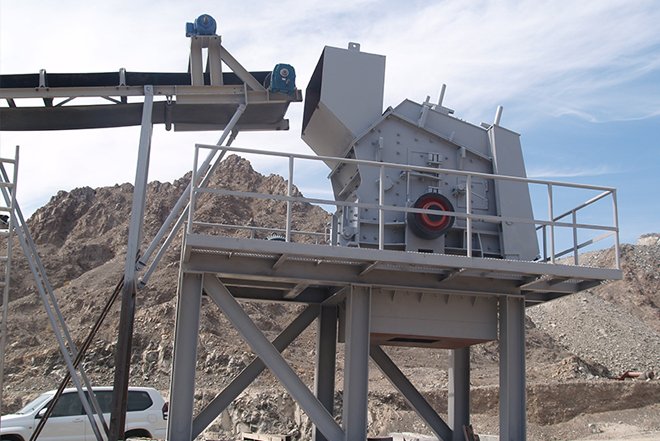
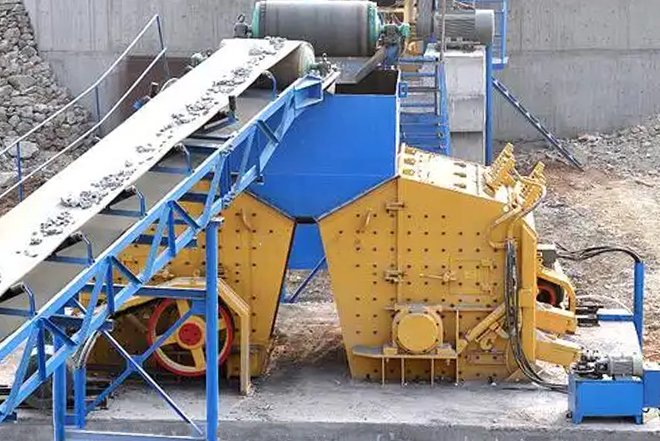
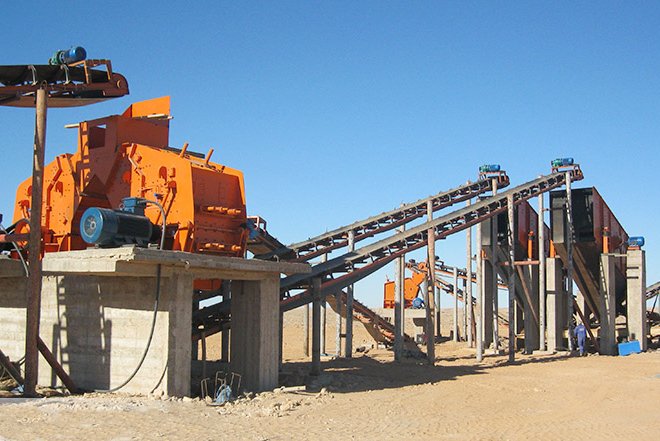
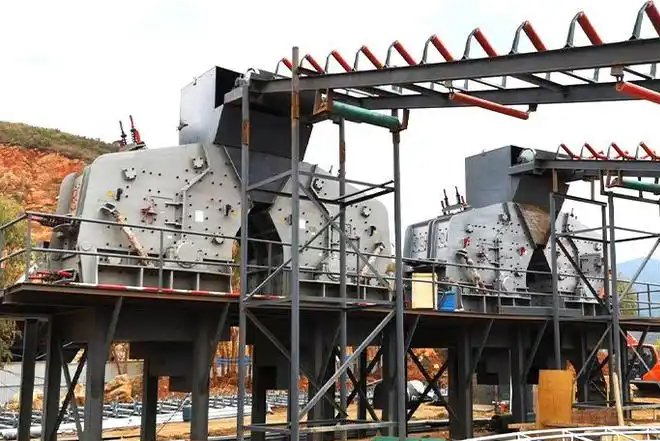
Customer Site
Our impact crushers have been widely used in domestic and international projects involving sand and gravel aggregates, mining processing, and construction waste recycling. The equipment operates stably, produces good particle shapes, and is easy to maintain, earning high praise from our customers.
FAQ
Q1: What materials can an impact crusher process?
A: Suitable for medium-soft/medium-hard materials with a compressive strength ≤150MPa, such as limestone, granite, basalt, river pebbles, and construction waste.
Q2: What is the difference between the PF and CI European-style impact crushers?
A: The PF series is the standard series, offering high cost-effectiveness and suitable for medium-soft materials; the CI series is the heavy-duty upgraded series, featuring a reinforced rotor and hydraulic adjustment, suitable for hard rock crushing and high-end shaping.
Q3: What is the typical service life of the hammer plates?
A: It depends on the material hardness and operating time. The standard service life is 3-6 months, while high-chromium alloy hammer plates can extend to 6-12 months.
Q4: Can it crush concrete and construction waste?
A: Yes, it is the mainstream equipment for construction waste recycling, capable of crushing concrete and bricks into qualified recycled aggregates.
Q5: Does it support equipment customization and on-site installation?
A: We support non-standard customization, mobile customization, and overall production line planning. We provide global on-site installation guidance and operation training services.
Q6: What is the discharge particle size range of the impact crusher?
A: The standard impact crusher discharge particle size is generally 5–50mm, while the hydraulic version can be precisely adjusted to 3–80mm to meet different aggregate specifications.
Q7: How many tons of material can an impact crusher produce per hour?
A: Small PF1007: approximately 30–50 tons/hour; medium PF1315: approximately 100–150 tons/hour; large CI1415: up to 200 tons/hour or more.
Q8: Can the impact crusher be used alone?
A: Yes, for soft materials and low-volume production scenarios, a feeder + impact crusher + vibrating screen can produce independently, without the need for a jaw crusher.
Q9: Is there a lot of dust when the impact crusher is running?
A: The equipment has a built-in sealed structure, and with the bag filter dust collection system, dust emissions are ≤30mg/m³, meeting environmental standards.
Q10: Does the impact crusher require a foundation?
A: Fixed impact breaker requires a concrete foundation; mobile impact breaker requires no infrastructure and can be put into operation as long as the site is level, making it suitable for temporary construction sites.
Related Products —
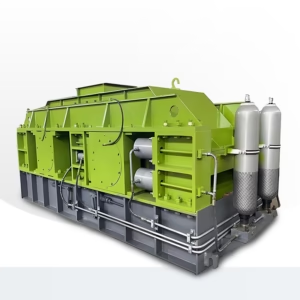
Hydraulic Roll Crusher
Hydraulic roller crushers (also known as hydraulic double roller crushers) are energy-saving medium and fine crushing core equipment in the fields of mining, sand and gravel plants, building materials and solid waste treatment. They are m…
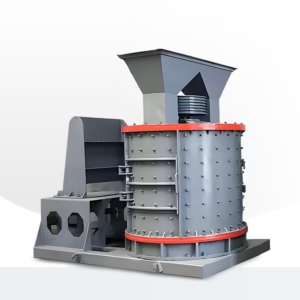
Combination Crusher
Combination Crusher is a new product optimized and designed based on our company’s PEL vertical compound crusher and combined with domestic and foreign fine crushing technology. The vertical compound crusher, also kno…
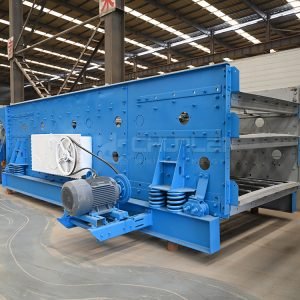
Three-shaft horizontal vibrating screen
A variety of models are available | Get the free price list! Three-shaft horizontal vibrating screen also called three-axis horizontal vibrating screen sieve , is a new type of vibrating screen with multi-layer num…
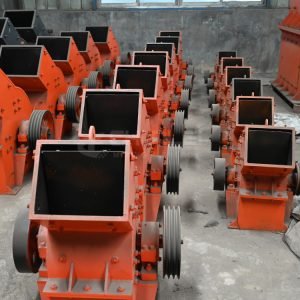
Small Hammer Crusher
A variety of models are available | Get the free price list! Small hammer crusher is a kind of small hammer crusher, which is mainly used for medium and fine crushing of various materials.Hammer crusher can be used…
Electromagnetic vibrating feeder
A variety of models are available | Get the free price list! Electromagnetic vibrating feeder is a kind of automated equipment that utilizes electromagnetic vibration principle to drive the continuous, uniform or q…
loading…
已经是到最后一篇内容了!