 Chunlei Mining Machinery

Combination Crusher
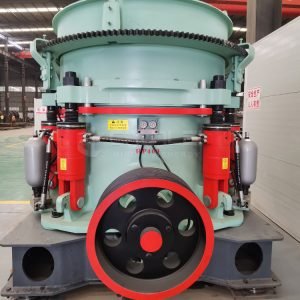
Combination Crusher is a new product optimized and designed based on our company’s PEL vertical compound crusher and combined with domestic and foreign fine crushing technology.
- Feed size: ≤100mm
- Capacity: 5-100t/h
- Applicable area: This series is suitable for crushing limestone, clinker, coal and other ores in the building materials, mining, metallurgy, and chemical industries.
What is Combination Crusher?
The vertical compound crusher, also known as a compound crusher, is a vertical multi-stage crushing equipment that integrates coarse crushing, medium crushing, fine crushing, and pre-grinding, combining four crushing methods: impact, hammering, extrusion, and grinding. It eliminates the traditional screen bar structure, making it less prone to clogging with high-moisture and high-mud content materials.
It is one of the most commonly used pieces of equipment in crushing and sand making production lines. The gap between the hammer and the impact plate is adjustable to adapt to various material conditions. It is widely used in the crushing of limestone, clinker, coal, and other ores in the building materials, mining, metallurgy, and chemical industries. Its compressive strength should not exceed 140 MPa, and its moisture content should not exceed 15%.
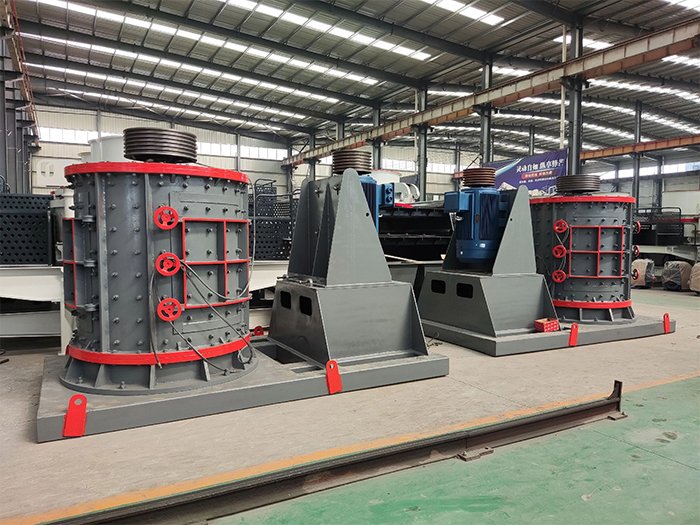
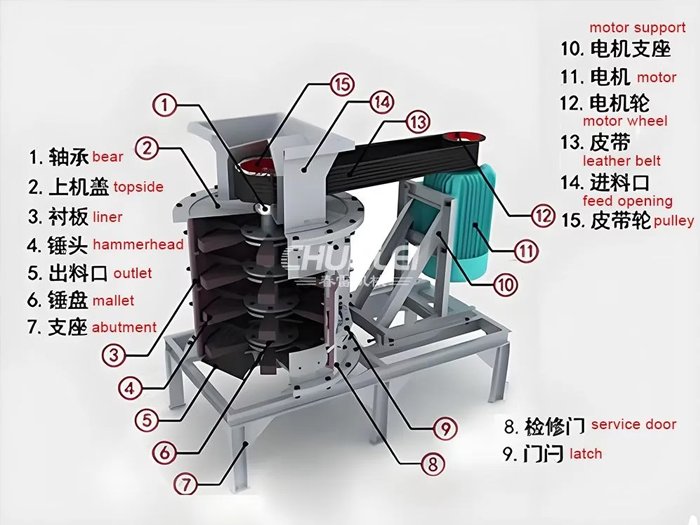
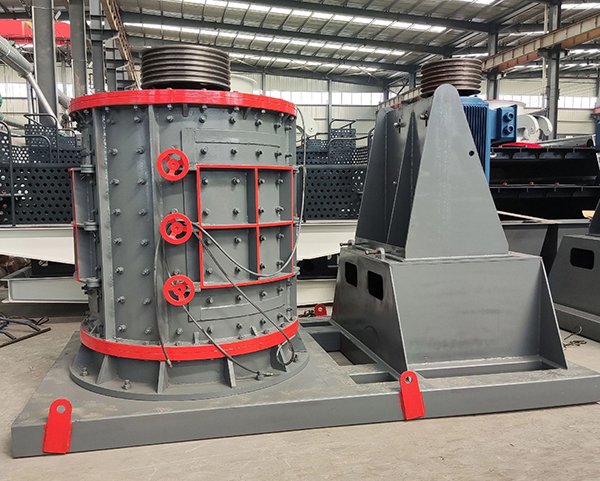
Compound Crusher Structure
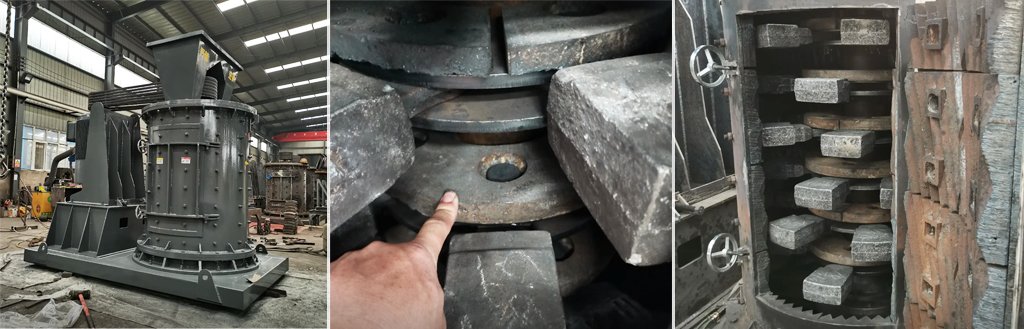
The compound crusher adopts a vertical integrated structure design, mainly composed of a frame, rotor assembly, hammers, crushing chamber, wear-resistant liners, main shaft, transmission device, and discharge device. It features a compact overall structure, small footprint, stable operation, easy replacement of wearing parts, and low maintenance costs. It is particularly suitable for the efficient crushing of medium-to-low hardness materials such as limestone, cement clinker, coal gangue, and dolomite, and is widely used in sand and gravel production lines, cement production lines, and mining crushing operations.
Working Principle of Compound Crusher
Materials fall vertically into the feed hopper from the top of the equipment, where they undergo multi-stage crushing via a high-speed rotating multi-stage rotor:
- Primary Impact Crushing: Material falls into the upper conical cavity and is violently impacted by the hammers, causing large pieces of stone to initially break apart;
- Secondary Impact Crushing: The crushed material is thrown at high speed towards the inner liner of the cylinder, further colliding with each other;
- Grading and Grinding: After crushing, the material slides down along the conical gaps into the lower grinding chamber, where it is repeatedly hammered and compressed;
- Direct Discharge and Forming: Without screen barriers, qualified fine material is discharged directly from the bottom, while oversized large pieces continue to circulate and be crushed within the chamber; The entire process can be completed by a single unit, eliminating the need for auxiliary fine crushing equipment. The output particle size can be freely controlled by adjusting the liner gap.
What materials are suitable for crushing with a compound crusher?
Compound crushers are suitable for medium and fine crushing of medium- to low-hardness, brittle materials, and are widely used in mining, building materials, cement, metallurgy, and chemical industries. Commonly processed materials include limestone, dolomite, coal gangue, gypsum, cement clinker, coal, shale, slag, construction waste, glass, and other non-metallic minerals. The output particle size is uniform, meeting the pretreatment requirements before crushing, sand making, and industrial grinding, making it an ideal equipment for small and medium-sized sand and gravel production lines and mineral processing production lines.

CHUNLEI Compound Crusher Core Advantages:
◎ Extremely high crushing ratio; multi-stage crushing in a single machine
Feed size ≤100 mm; raw rock is crushed to 3–5 mm in a single pass, eliminating the need for a two-stage jaw crusher and fine crusher setup and reducing capital investment.
◎ Screenless anti-clogging design
Processes high-moisture, high-silt material (moisture content ≤18%) without clogging, ensuring stable operation during rainy weather and in wet mining conditions.
◎ Adjustable Output Particle Size with Superior Particle Shape
Flexible adjustment of liner clearance produces angular, cubic-shaped final products with low content of needle- and flake-shaped particles, meeting concrete aggregate standards.
◎ Vertical, Compact Design with Small Footprint
Compared to horizontal impact crushers and hammer crushers with equivalent processing capacity, the footprint is reduced by 40%, making it suitable for use in confined workshops and as part of mobile crushing stations.
◎ Convenient Replacement of Wear Parts
With a side-mounted hydraulic cover, there is no need to disassemble the entire machine. A single operator can replace hammers and liners in just 2 hours, significantly reducing downtime.
◎ Low operating noise
The fully enclosed crushing chamber keeps operating noise at ≤75 dB. Dust can be easily managed with a dust collection system, ensuring compliance with environmental standards.
◎ High-temperature resistance suitable for clinker
The horizontal main shaft bearings feature a water-cooled design, allowing the machine to process high-temperature cement clinker up to 300°C without bearing seizure.
What are the differences between a compound crusher and a vertical shaft impact crusher (VSI)?
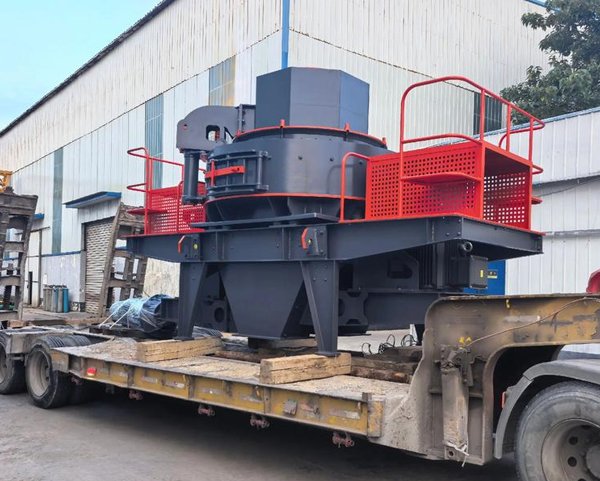
If your project primarily involves crushing low-to-medium hardness materials and you have a limited investment budget, a compound crusher is a more economical choice. However, if you need to produce high-quality manufactured sand or process high-hardness ores, a vertical shaft impact crusher (VSI) is more suitable. When choosing a crusher, you should comprehensively consider the material characteristics, finished product requirements, production capacity, and investment budget.
| Comparison Items | Compound Crusher | Vertical Shaft Impact Crusher (VSI) |
| Working Principle | Hammer impact + material impact crushing | Stone-to-stone or stone-to-iron high-speed impact crushing |
| Applicable Materials | Limestone, coal gangue, gypsum, cement clinker, medium and low hardness ores | Granite, basalt, river pebbles, quartz, and other medium to high hardness materials |
| Finished Particle Shape | Relatively uniform particle size, meeting general crushing needs | More rounded particle shape, lower needle-like and flaky content, more suitable for high-quality manufactured sand |
| Output particle size | Adjustable, suitable for coarse, medium, and fine crushing | Fineer output, mainly used for sand making and shaping |
| Investment cost | Lower cost, high cost-effectiveness | Higher cost, but better sand quality |
| Typical applications | Cement, building materials, mining crushing, coal gangue sand making | High-standard manufactured sand production, highway, railway, water conservancy, concrete aggregate |
Comparison of compound crusher vs. jaw crusher / impact crusher / hammer crusher
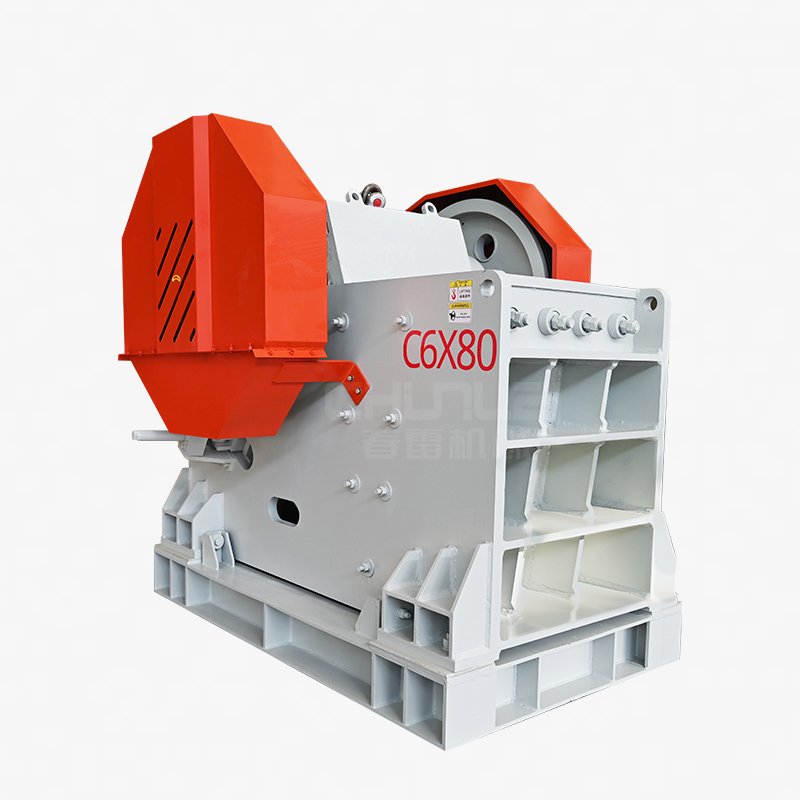
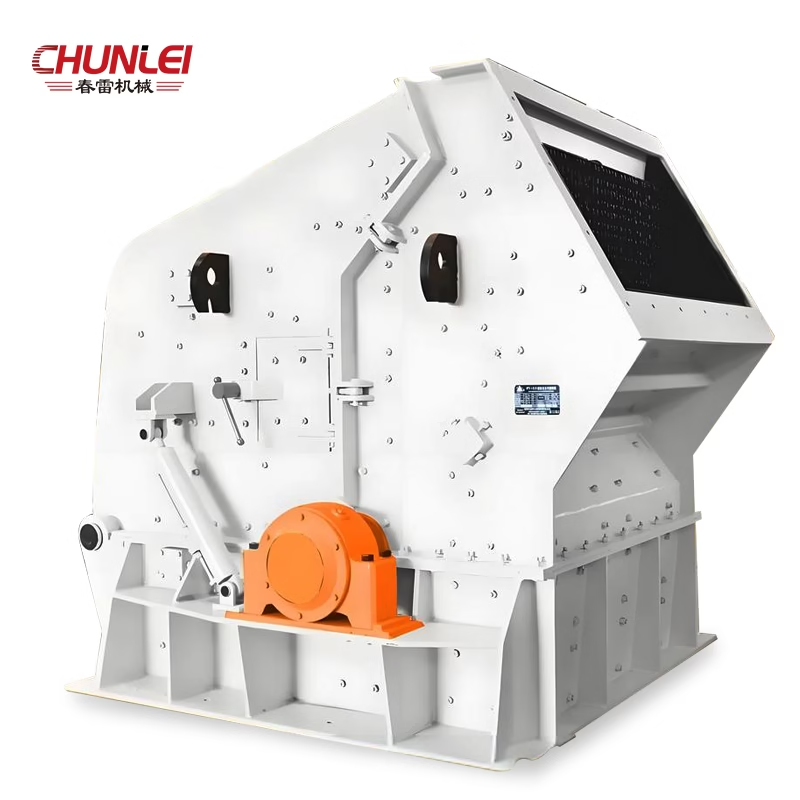
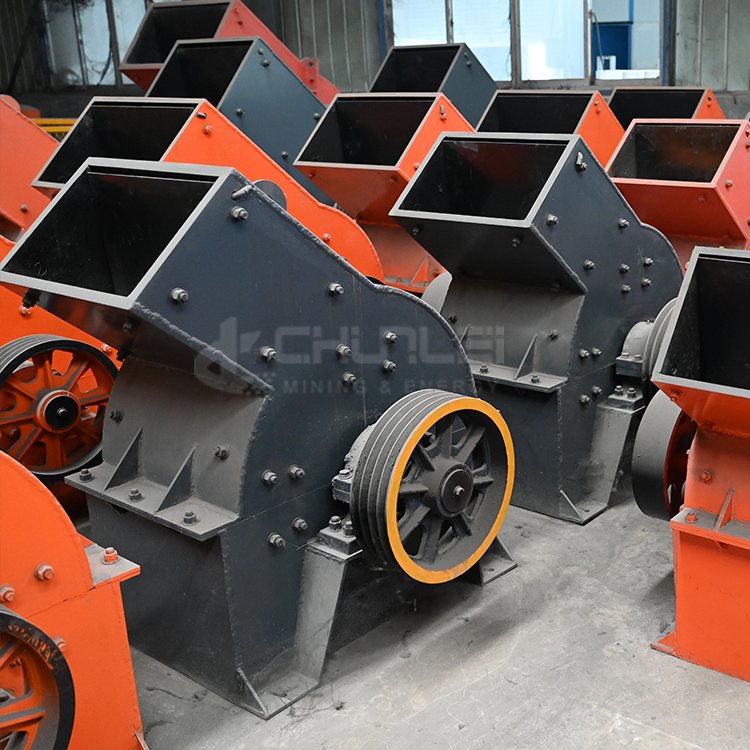
| Contrast Dimensions | Vertical compound crusher | PE jaw crusher | Impact crusher | Hamme Crusher |
| Broken stage | Integrated medium and fine crushing | Primary coarse chop only | Medium crushing, shaping | Small to medium broken, easy to block |
| Maximum feed | ≤100mm | ≤630mm | ≤250mm | ≤80mm |
| Crushing ratio | 15-25(one molding) | 3-5 | 8-12 | 6-10 |
| Wet mud material adaptability | Excellent (no sieve, no blockage) | Average | Poor (the screen is easily blocked) | Very poor |
| Finished grain shape | CubeExcellent | Lots of flakes | Optimal | High needle content |
| Covered area | Minimal vertical | Large horizontal | Large horizontal | Medium |
| Consumable parts consumption | Medium | Low (jaw plate only) | High (blow hammer wears out quickly) | Extremely high |
| Applicable process | Coarsely chopped and then medium and finely chopped | The first coarse crushing of the entire production line | High-demand sand and gravel shaping | Small low standard crushing |
How is a complete compound crushing production line configured?
Compound crushers are typically used as secondary crushing, fine crushing, or sand making equipment in a production line, and are widely applicable to the crushing and processing of materials such as limestone, cement clinker, coal gangue, dolomite, and construction waste. To ensure production efficiency and finished product quality, a complete compound crushing production line usually consists of the following equipment:
- Vibrating feeder: Provides uniform and continuous material feeding, improving equipment operational stability.
- Jaw crusher: Coarsely crushes large materials to a suitable feed size for the compound crusher.
- Compound crusher: Performs fine crushing or sand making; it is the core equipment of the entire production line.
- Vibrating screen: Screens the finished product; unqualified materials are returned to the compound crusher for further crushing, forming a closed-loop cycle and improving the finished product qualification rate.
- Belt conveyor: Connects various equipment, enabling continuous and efficient conveying.
- Dust removal system (optional): Reduces dust emissions, improves the production environment, and meets environmental protection requirements.
- Electrical control system (optional): Enables automated control of the entire line, improving production efficiency and reducing labor costs.
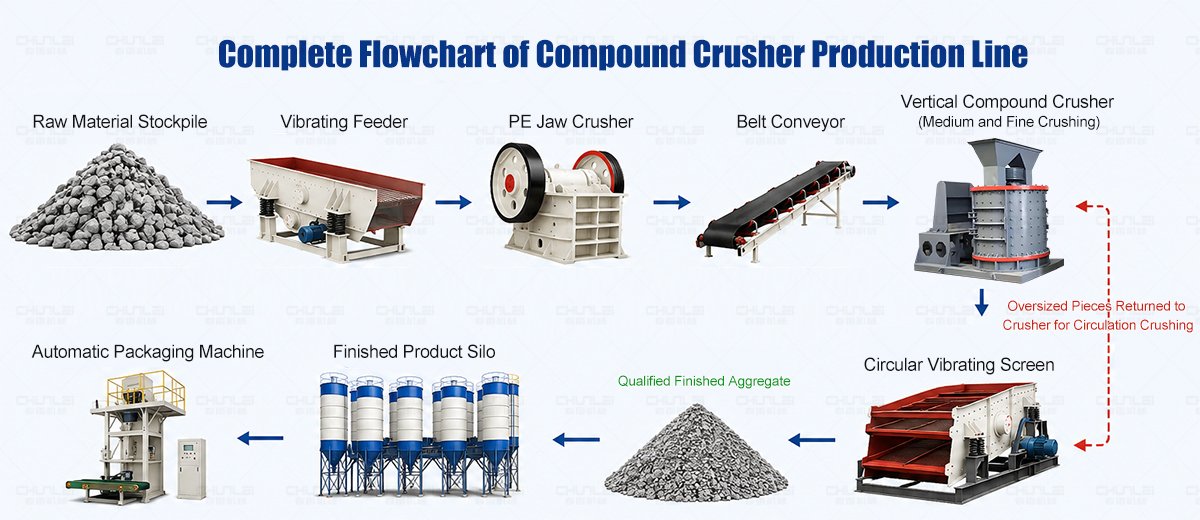
Different materials require different production line configurations. CHUNLEI can customize a complete compound crushing production line solution based on your material type, processing capacity, finished product particle size, and on-site conditions. Contact us for a free production line solution.
How to Choose the Right Compound Crusher Model?
When selecting a compound crusher, focusing solely on price is often counterproductive. Performance and after-sales service are even more crucial. A suitable model can improve production efficiency, reduce energy consumption, and lower maintenance costs. The following factors are the most important considerations when selecting a model:
◎ Confirm Ore Hardness:
≤250MPa: Limestone, slag, and construction waste should prioritize compound crushers; granite and high-hardness basalt are not recommended, use cone/impact crushers instead.
◎ Calculate Maximum Feed Size:
Feed size should not exceed 80% of the maximum size specified on the model to prevent material jamming and spindle overload.
◎ Determine Target Hourly Capacity:
10-40 tons: Select a small 800/1000 model; 40-100 tons: Select a 1250/1500 model; over 100 tons: Select a 1750 model with multiple units in parallel.
◎ Material Moisture Content:
Moisture content >12%: Prioritize screenless compound crushers; traditional hammer crushers are prone to clogging and shutdown.
◎ Site and Power Supply Conditions:
For small workshops, a vertical compound crusher is recommended; for overseas mines, a 60Hz/415V variable frequency motor can be customized.
If you are unsure which model to choose, please contact CHUNLEI engineers. We will recommend a more suitable compound crusher and complete production line solution based on your actual working conditions to help you achieve higher production efficiency and return on investment.
How to Reduce Wear on Vulnerable Parts of a Compound Crusher?
Compound crushers operate under high-speed impact and crushing conditions for extended periods, resulting in relatively severe wear on vulnerable parts such as hammers, liners, and rotors. Proper maintenance can extend their service life and reduce overall costs.
- Control Feed Size
Feed material according to the equipment’s maximum feed size to prevent oversized pieces from entering the crushing chamber, thereby reducing excessive impact and minimizing abnormal wear. - Maintain Uniform and Continuous Feeding
Stable feeding ensures even force distribution across the equipment, reduces localized wear on the rotor and wear parts, and improves crushing efficiency. - Avoid Crushing Extremely Hard Materials
Composite crushers are best suited for materials of medium hardness or lower, such as limestone, coal gangue, and cement clinker. Long-term crushing of high-hardness ores, such as granite and basalt, will significantly accelerate the wear of hammer heads and liners. - Inspect regularly and replace wear parts promptly
Regularly inspect key components such as hammer heads, liners, and rotors for wear. If severe wear is detected, replace them promptly to prevent further equipment damage. - Ensure proper lubrication and routine maintenance
Regularly check bearing lubrication and the tightness of all component fasteners. Keep the interior of the equipment clean to reduce vibration and abnormal wear.
Why Choose CHUNLEI?
CHUNLEI compound crushers use high-wear-resistant alloy materials for their wear parts and have an optimized crushing chamber structure, resulting in more uniform material stress. This effectively reduces wear on the hammers and liners, extends the service life of parts, and lowers long-term operating costs for customers.
What factors influence the price of a compound crusher?
The price of a compound crusher is primarily affected by factors such as equipment model, processing capacity, feed and discharge requirements, equipment materials, wear-resistant parts configuration, and level of automation. Different customers have different production needs, requiring different configurations, thus resulting in price variations.
For example, high-volume production lines require larger equipment and higher-performance motors, while crushing high-hardness materials necessitates more wear-resistant components. Therefore, when selecting a compound crusher, it is not recommended to compare only equipment prices. Instead, a comprehensive consideration of equipment performance, operating costs, maintenance expenses, and long-term production benefits is necessary to choose a crushing solution more suitable for your specific working conditions.
Technical Parameters of Combination Crusher
| Specification | Processing Capacity (t/h) | Motor Power(kw) |
| 800 | 5-15 | 4P 30 |
| 1000 | 10-30 | 4P 55 |
| 1250 | 17-60 | 6P 132 |
| 1500 | 25-80 | 8P 160 |
| 1750 | 30-100 | 8P 200 |
| 2000 | 60-150 | 8P 250 |
Combination Crusher FAQ
Q: Can a compound crusher handle mud and stone materials with high moisture content?
A: Yes, the screenless structure prevents clogging, and stable production is possible with a moisture content ≤18%.
Q: Is a compound crusher suitable for crushing granite and hard rock?
A: Not recommended. Hard rock will rapidly wear down the hammer liners, resulting in extremely high long-term maintenance costs.
Q: How to reduce wear on vulnerable parts of a compound crusher?
A: Proper iron removal and material control, matching wear-resistant materials, optimizing rotor speed, uniform feeding, and regular overhauling can extend the life of parts by 25%-40%.
Q: What is the maximum feed size for a compound crusher?
A: The maximum feed size for mainstream models is 50~100mm, and a jaw crusher must be used as a front-end coarse crusher.
Q: Can one compound crusher replace a jaw crusher + fine crusher?
A: It can directly replace jaw crushers and fine crushers in small and medium-sized limestone and construction waste production lines, saving on equipment investment.
Q: Can the output particle size be freely adjusted?
A: Adjustable cylinder liner gap, adjustable within the range of 0.5~10mm for finished product.
Q: Is the compound crusher noisy?
A: Fully enclosed cylinder, noise ≤75dB, equipped with pulse dust collector to meet environmental inspection requirements.
Q: Can high-temperature cement clinker be processed using a compound crusher?
A: Yes, the main shaft bearing has a water-cooled structure, and clinker at 300℃ can be processed normally.
Q: Is it difficult to replace vulnerable parts?
A: Side hydraulic door opening, no large hoisting equipment required, single person can complete replacement in a short time.
Related Products —
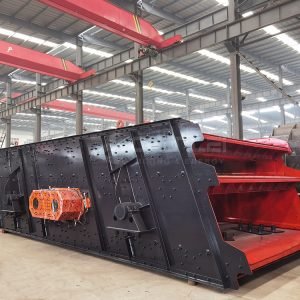
Circular Vibrating Screen
A variety of models are available | Get the free price list! Circular vibrating screens (also called inclined circular motion vibrating screens) are multi-layer high-efficiency screening equipment. Driven by an ecc…
Vibrating feeder
Vibrating feeder, also known as vibrating feeder, can provide continuous and uniform feeding for crushing machinery and screening of materials, which is widely used in crushing and screening combined equipment in mineral processing, buil…
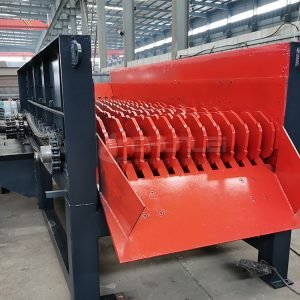
Mud and Stone Separator
Mud and stone separator, as the name suggests, is a device to separate mud and stone, also called mud and stone separating and screening equipment. Roller screen is made of multiple shafts, divided into multiple segments to drive the mat…
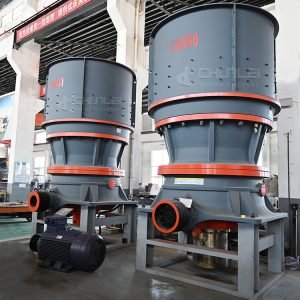
Single Cylinder Cone Crusher
Single Cylinder Cone Crusher, also called Single Bar Hydraulic Cone Crusher, is a medium and fine crusher with hydraulic system to adjust the discharge opening and for overload protection. The single-cylinder hydra…
Hydraulic Cone Crusher
Cone Crusher utilize a layered crushing principle, producing well-shaped particles and reducing the generation of needle-like and flaky particles. They are typically used as a secondary or tertiary crushing process. Their characteristics…

loading…
已经是到最后一篇内容了!