 Chunlei Mining Machinery


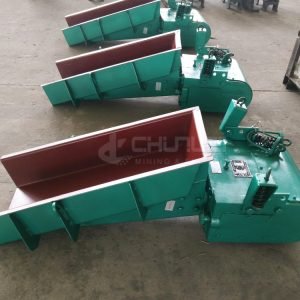
Vibrating feeder
Vibrating feeder, also known as vibrating feeder, can provide continuous and uniform feeding for crushing machinery and screening of materials, which is widely used in crushing and screening combined equipment in mineral processing, building materials, silicate and chemical industries.
- Maximum feed size: 300-1200mm
- Capacity: 80-1500t/h
- Installation inclination angle: 0-20°
What is Vibrating feeder?
A vibrating feeder is an industrial piece of equipment that uses vibration to feed materials. It is primarily used to uniformly and continuously transport various materials from a hopper to a receiving device, preventing large pieces of material from converging and causing problems such as crusher blockage, stalling, and overload shutdown. It is widely used in sand and gravel, metal ore, construction waste, and cement raw material production lines, and is an indispensable key piece of equipment for achieving automated production.
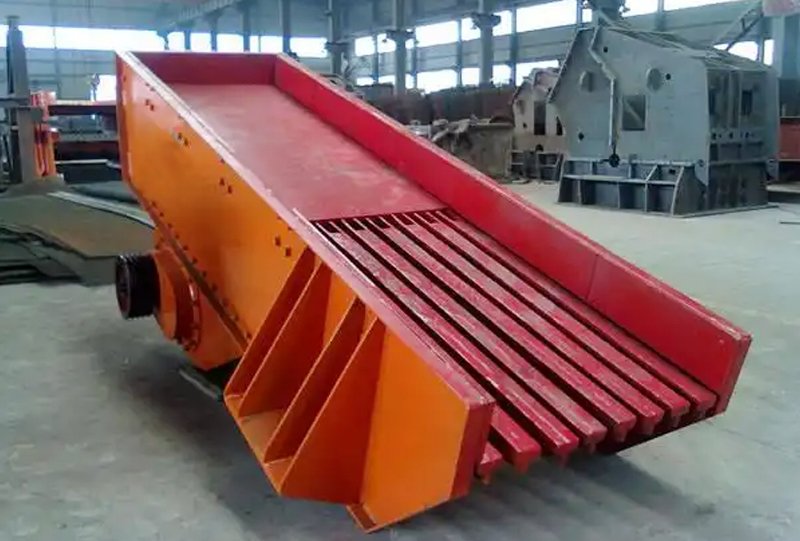
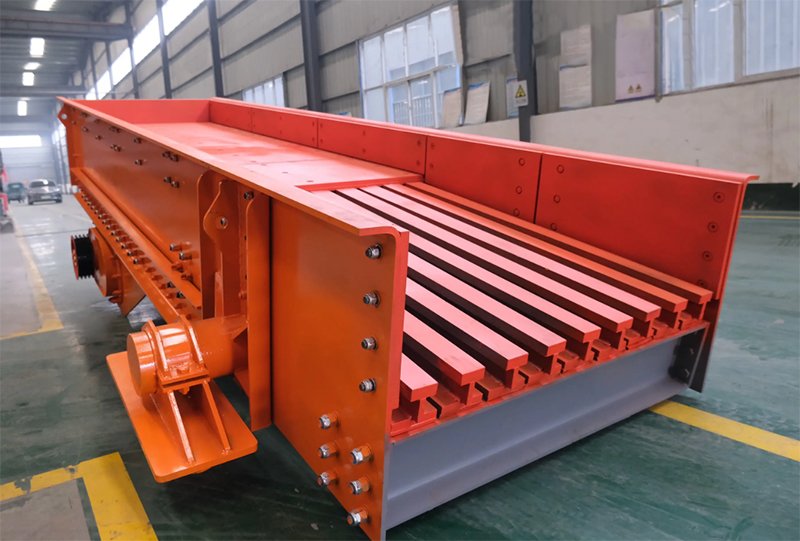
If you are new to vibrating feeders, please tell us your raw material characteristics, finished product requirements, site conditions, production budget, hourly output, and other needs. Our professional engineers will configure a reasonably priced and suitable model for you.
What are the key components and structure of a vibrating feeder?
Although the structure of a vibrating feeder is relatively simple, the various components are closely integrated. A stable vibrating feeder typically consists of core components such as a feeding trough, excitation device, drive system, spring support device, frame, and electrical control system. It can continuously, uniformly, and stably convey materials to crushers, ball mills, or screening equipment.

Working Principle of Vibrating feeder
The working principle of vibrating feeder is mainly to utilize the periodic vibration produced by the vibrator, which is transmitted to the material trough through the elastic coupling and vibrator, so that the material jumps, loosens and moves forward in the material trough. This movement drives the material in the hopper to produce the corresponding vibration, the material will continue to jump to the front of the screen mesh, and finally transported to the designated location. In addition, the vibrating feeder can also control the flow speed and flow rate of materials by adjusting the vibration frequency and amplitude.

What types of vibrating feeders are there?
Based on the driving method, vibrating feeders are mainly divided into two categories: mechanical vibrating feeders and electromagnetic vibrating feeders. Each type of equipment has its own characteristics and is suitable for different production conditions.
| Types | Mechanical Vibrating Feeder | Electromagnetic Vibrating Feeder |
| Drive Method | Mechanical drive: Vibrating motor or eccentric shaft | Electromagnetic exciter drive |
| Applicable Materials | Large ore, sand, coal, construction waste, etc. | Powdered, granular, and small-diameter materials |
| Feeding Capacity | Large throughput, suitable for continuous production | High feeding accuracy, suitable for small flow and quantitative feeding |
| Feed Particle Size | Can handle larger particle sizes | Suitable for smaller particle sizes |
| Feeding Adjustment | Adjust amplitude or motor speed | Feed rate can be precisely adjusted via controller |
| Typical Applications | Crushing production lines, sand making production lines, mining, metallurgy, building materials, etc. | Chemical, food, pharmaceutical, laboratory, and fine powder processing |
How to Choose?
If your production line needs to handle large ore blocks and high-volume continuous feeding, a mechanical vibrating feeder is recommended. If you prioritize feeding accuracy, flow control, or conveying small particles, an electromagnetic vibrating feeder is a more suitable choice.
CHUNLEI can recommend suitable vibrating feeder equipment and complete production line solutions based on material characteristics, processing capacity, and production processes.
What materials are suitable for a vibrating feeder?
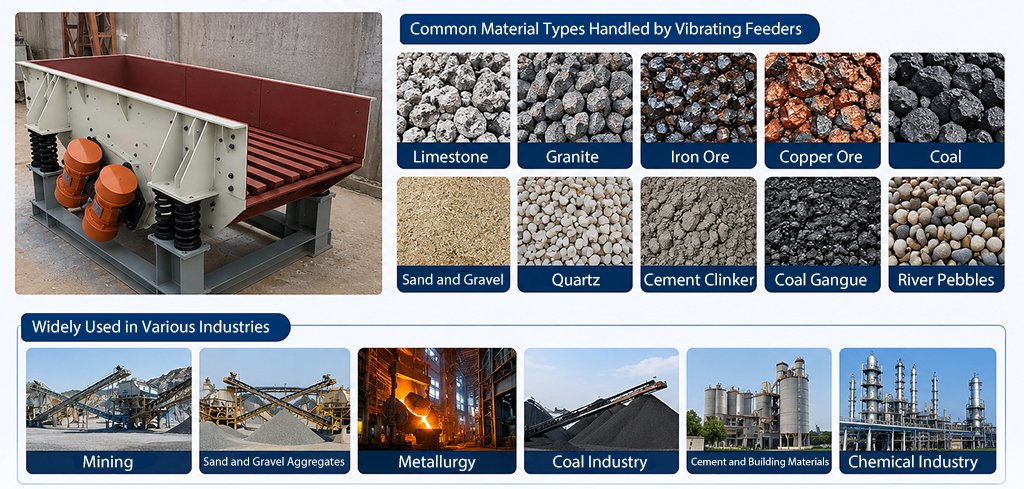
Vibrating feeders are suitable for conveying and uniformly feeding various lumpy, granular, and powdery materials. They feature continuous feeding, stable operation, and strong adaptability, and are widely used in mining, sand and gravel, building materials, metallurgy, and chemical industries.
Common applicable materials include:
- Ore materials: Iron ore, copper ore, gold ore, lead-zinc ore, barite, etc., which can be used for uniform feeding before crushing and screening.
- Sand and gravel aggregates: Granite, basalt, limestone, river pebbles, manufactured sand, etc., meeting the continuous feeding needs of sand and gravel production lines.
- Building material raw materials: Cement clinker, gypsum, coal gangue, ceramic raw materials, etc.
- Industrial materials: Coal, coke, slag, chemical raw materials, etc., enabling stable conveying and quantitative feeding.
How to Choose the Right Vibrating Feeder Model?
Many customers ask, “Is a larger model always better?” Actually, no. The model of a vibrating feeder mainly depends on the material characteristics, processing capacity, and installation location. When helping customers select a model, we generally first understand several key parameters before recommending suitable equipment.
- Consider the material type. For large materials such as limestone, granite, and ore, a model with a more robust trough and stronger feeding capacity is needed. For fine-particle materials such as sand and powder, focus on feeding speed and anti-clogging design.
- Consider the required processing capacity of the production line. The higher the output, the larger the vibrating feeder needs to be. This avoids increased equipment investment and energy waste.
Additionally, it is necessary to confirm the feed particle size, installation space, motor power, and compatibility with subsequent equipment. A suitable vibrating feeder not only ensures stable feeding but also reduces equipment wear and improves the overall operating efficiency of the production line.
I always advise customers not to choose a model solely based on price. If you are still unsure how to choose, contact CHUNLEI and we will recommend more suitable vibratory feeder models and configurations.
Can the feeding speed of a vibrating feeder be controlled?
Yes, the feeding speed of a vibrating feeder can be controlled. A vibrating feeder doesn’t simply transport material; rather, the conveying speed can be controlled by adjusting the vibration frequency, amplitude, and trough angle.
In actual production, maintaining a uniform and continuous feeding will also reduce wear on downstream crushers, ball mills, or screening equipment. For example, when there is a large amount of material, the vibration frequency can be appropriately increased to speed up the feeding speed; when the equipment load is heavy, the feeding speed can be reduced to avoid material blockage or equipment overload.
What are the vulnerable parts of a vibrating feeder?
Vibrating feeders are continuously operating equipment, and wear and tear is inevitable during use. Generally, common vulnerable parts include the following:
- Feed trough liner: Long-term impact and friction from materials will cause wear on the trough. When handling ores with high hardness, it is recommended to use wear-resistant liners to extend service life.
- Vibration springs: Springs subjected to vibration for extended periods may experience fatigue and deformation, requiring regular inspection and replacement.
- Vibrator bearings: Bearings will wear after prolonged operation. Proper lubrication and maintenance can reduce the occurrence of malfunctions.
- Connecting bolts: Continuous vibration during equipment operation may cause bolts to loosen, requiring regular inspection and tightening.
In actual production, the key to maintaining a vibrating feeder is the timely inspection of these vulnerable parts. Replacing worn parts in advance can reduce downtime and ensure stable operation of the production line.
Daily Maintenance of Vibrating Feeders
Having worked with vibrating feeders for many years, I’ve seen many customers make a common mistake: they buy and install the equipment and then neglect it. While vibrating feeders have a simple structure, during long-term continuous operation, components such as the motor, springs, vibrator, and connecting bolts all require regular inspection.
In daily use, operators are advised to observe the equipment’s operating status daily, checking for abnormal noise, unstable vibration, or uneven material feeding. Regularly check the vibrating motor, electrical wiring, and fasteners for looseness, and promptly clean any residual material from the trough to avoid affecting feeding efficiency. For easily worn parts such as springs and bearings, lubricate and replace them as needed.
We always tell our customers: the lifespan of a vibrating feeder isn’t extended through repairs, but through daily maintenance to reduce malfunctions. Performing simple checks and maintenance not only ensures stable feeding but also reduces downtime and later maintenance costs.
What precautions should be taken when installing a vibrating feeder?
Improper installation of a vibrating feeder can cause many problems during later operation. During installation, it’s crucial to focus not only on fixing and connecting the components but also on ensuring normal vibration to guarantee long-term stable operation.
When installing a vibrating feeder, it is recommended to pay close attention to the following points:
- Check the foundation for stability: The vibrating feeder generates continuous vibration during operation; the foundation must be stable to prevent loosening, displacement, or abnormal vibration during operation.
- Ensure the equipment is installed horizontally: Tilting the machine will affect the material flow rate and feeding uniformity.
- Properly install the vibrating motor (or exciter): Check that the motor fixing bolts are tightened and that the excitation force is adjusted consistently to avoid unbalanced vibration due to installation errors.
- Avoid overly securing the inlet and outlet connections: Sufficient space should be left when connecting the hopper, chute, and feeder to avoid restricting vibration and affecting normal operation.
- After installation, conduct a no-load test run: After starting the machine, observe whether the vibration is stable, and whether there are any abnormal noises, collisions, or material deviations. Only after confirming that everything is normal should you start feeding materials for production.


Technical Parameters of Vibrating feeder
| Model | Maximum Feed Particle Size (mm) | Processing Capacity(t/h) | Motor Power(kw) | Installation angle (°) | Tank Size (mm) |
| GZD-650×2300 | 300 | 80-100 | 1.1 | 10-20 | 650×2300 |
| GZD-750×2500 | 350 | 100-130 | 2×1.1 | 10-20 | 750×2500 |
| GZD-850×3000 | 400 | 120-150 | 2×1.5 | 10-20 | 850×3000 |
| GZD-1000×3600 | 500 | 150-200 | 2×2.2 | 10-20 | 1000×3600 |
| GZD-1100×3600 | 580 | 240-300 | 2×3 | 10-20 | 1100×3600 |
| GZD-1300×3600 | 650 | 450-600 | 2×3.7 | 10-20 | 1300×3600 |
| GZD-1500×3600 | 1050 | 450-1000 | 2×7.5 | 10-20 | 1500×3600 |
| GZD-2000×3600 | 1200 | 550-1000 | 2×10 | 10-20 | 2000×3600 |
| GZD-2500×5000 | 1500 | 650-1500 | 2×18 | 10-20 | 2500×5000 |
| ZSW-380×96 | 500 | 100-280 | 4p 11 | 0-5-10-15 | 3800×960 |
| ZSW-420×110 | 630 | 150-400 | 4p 15 | 0-5-10 | 4900×1100 |
| ZSW-490×130 | 750 | 400-700 | 4p 22 | 0-5-10 | 4900×1300 |
| ZSW-600×130 | 750 | 400-700 | 4p 22 | 0-5-10 | 6000×1300 |
| ZSW-600×150 | 800 | 500-900 | 4p 30 | 0-5-10 | 6000×1500 |
| ZSW-600×180 | 900 | 700-1300 | 4p 37 | 0-5-10 | 6000×1800 |
| ZSW-600×200 | 1200 | 800-1500 | 4p 55 | 0-5-10 | 6000×2000 |
Vibrating feeder FAQ
Q: Must a vibrating feeder be used with a jaw crusher?
A: It’s standard equipment in coarse crushing production lines, preventing crusher stalling and overloading. Electromagnetic models can also be used separately in ball mills and batching sections.
Q: What are the advantages of a bar feeder?
A: Synchronous pre-desliming during conveying reduces crusher load, making it the first choice for weathered sand and gravel, and riverbed ore.
Q: Can the feeding speed of a vibrating feeder be controlled?
A: Yes, it supports three methods: mechanical adjustment of the baffle plate, adjustment of the motor eccentric block, and stepless speed regulation via a frequency converter control cabinet. The frequency converter model is recommended for automated production lines.
Q: What are the vulnerable parts of a vibrating feeder?
A: Wear-resistant liners, screening bars, rubber damping springs, motor bearings, and sealing rings are the main vulnerable parts and need to be replaced regularly.
Q: What precautions should be taken when installing a vibrating feeder?
A: Ensure the foundation is level, use matching sets of springs, leave damping clearance between the machine and surrounding equipment, install the motor synchronously, conduct a successful no-load test before feeding material, and do not place the hopper on the trough.
Q: Can the vibrating feeder be used with a mobile crushing plant?
A: Customized lightweight integrated frames are supported, allowing integration with the mobile jaw crusher.
Q: Will wet clay stick to the trough and cause feeding problems?
A: Materials with a moisture content >22% are prone to sticking. Cleaning liners and pre-dewatering equipment can be added.
Q: What to do if the two vibrating motors are not synchronized?
A: Adjust the eccentric block counterweight, tighten the eccentric block bolts, and periodically synchronize the vibration parameters.
Q: Can 415V variable frequency motors be customized for overseas mines?
A: All models support 380/415V, 50/60Hz variable frequency complete non-standard configurations.
Q: Does the vibrating feeder require a heavy concrete foundation?
A: Only a simple load-bearing base is needed. Shock-absorbing springs isolate vibration; no large-scale infrastructure is required.
Q: Can the electromagnetic feeder convey large pieces of granite?
A: Not suitable. Impact will damage the electromagnetic vibrator. For large, hard rocks, choose the GZG motor model.
Q: When selecting a feeder, does its capacity need to be larger than the crusher’s?
A: A 10%~15% margin is needed to avoid insufficient feed supply at full capacity.
Related Products —
Circular Vibrating Screen
A variety of models are available | Get the free price list! Circular vibrating screens (also called inclined circular motion vibrating screens) are multi-layer high-efficiency screening equipment. Driven by an ecc…
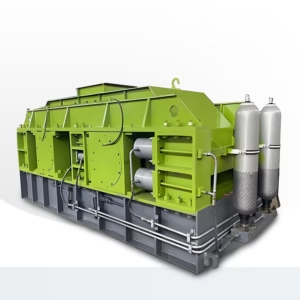
Hydraulic Roll Crusher
Hydraulic roller crushers (also known as hydraulic double roller crushers) are energy-saving medium and fine crushing core equipment in the fields of mining, sand and gravel plants, building materials and solid waste treatment. They are m…
Electromagnetic vibrating feeder
A variety of models are available | Get the free price list! Electromagnetic vibrating feeder is a kind of automated equipment that utilizes electromagnetic vibration principle to drive the continuous, uniform or q…
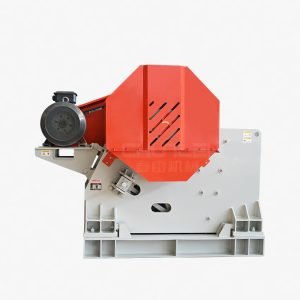
CJ European Jaw Crusher
CJ European Jaw crusher is a kind of stone crusher, which is mainly used for primary or secondary crushing of stone materials. The function of jaw crusher is to crush all kinds of stone materials into smaller sizes for transportation. …
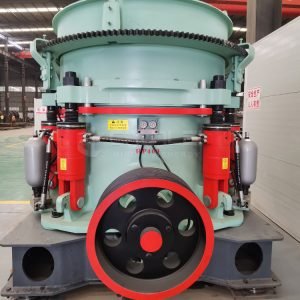
Hydraulic Cone Crusher
Cone Crusher utilize a layered crushing principle, producing well-shaped particles and reducing the generation of needle-like and flaky particles. They are typically used as a secondary or tertiary crushing process. Their characteristics…
loading…
已经是到最后一篇内容了!