 Chunlei Mining Machinery


Circular Vibrating Screen
A variety of models are available | Get the free price list!
- Circular vibrating screens can be used to separate ore into various particle sizes for further processing in stone crushing plants. Spring Thunder can design and supply all series of vibrating screens according to capacity and requirements.
- Feed Size:< 400mm
- Capacity:20-2000 t/h
- Applicable materials: Cobblestone, river pebbles, gangue, granite, basalt, shale, limestone, quartzite, iron ore and so on.
What is Circular Vibrating Screen?
Circular vibrating screens (also called inclined circular motion vibrating screens) are multi-layer high-efficiency screening equipment. Driven by an eccentric block vibrator, the screen box generates a near-circular vibration trajectory. Materials are screened and stratified on the inclined screen surface; particles smaller than the screen openings pass through the screen and fall, while larger particles move towards the discharge port and are discharged.
In the crushing process, circular vibrating screens serve to classify materials, return large particles, and sort finished products. A properly matched vibrating screen can reduce overload and wear on downstream crushers. Poor performance of the screening equipment will directly lead to mixed finished products, excessive recycled material, and ultimately, reduced capacity of the entire production line.
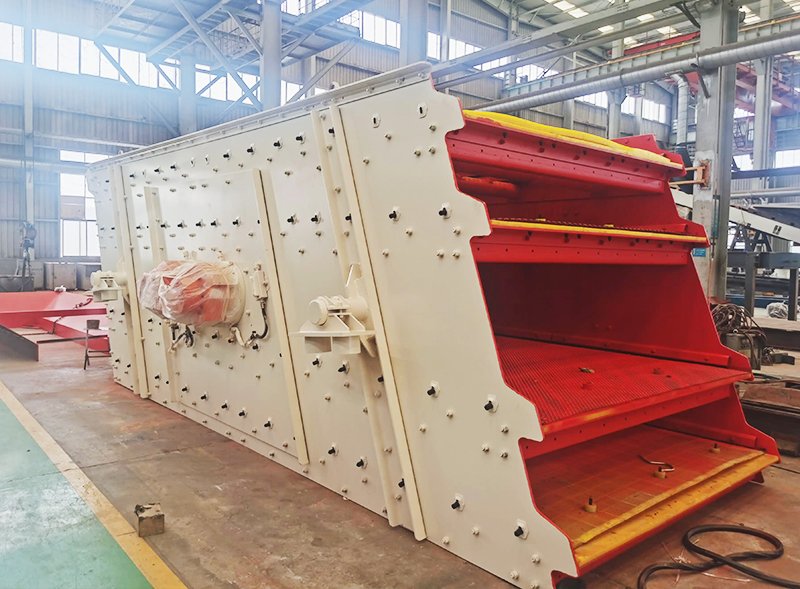
Mainstream Series and Classifications of Circular Vibrating Screens
Based on the vibrator structure and installation method, mainstream circular vibrating screens in the mining industry are mainly divided into the YA series and the YK series. The two series have clearly defined operating conditions, facilitating precise selection by the buyer.
YA Series Circular Vibrating Screen
- Equipment Positioning: Traditional heavy-duty circular vibrating screen, eccentric shaft vibrator, base-mounted type.
- Structural Features: Integral eccentric shaft vibrator, bolt-assembled screen box, screen inclination angle can be adjusted by adjusting the spring support height, grease lubrication.
- Applicable Scenarios: Small and medium-sized quarries, ore processing, ordinary aggregate production lines.
- Product Advantages: Mature design, low equipment investment cost, strong spare parts versatility, simple operation.
YK Series Circular Vibrating Screen (Block Eccentric Type)
- Equipment Positioning: Upgraded heavy-duty circular vibrating screen, block eccentric vibrator, designed for high-volume, harsh operating conditions.
- Structural Features: Block eccentric vibrator, high-strength boltless crossbeam, tire-mounted flexible coupling, optional oil bath lubrication.
- Applications: Large quarries, hard rock crushing production lines, high-capacity mineral processing plants; capable of 24-hour continuous full-load operation.
- Product Advantages: Greater excitation force, stable heavy-load operation, lower bearing temperature rise during prolonged operation, and longer service life of core components.
The YA and YK series can be customized with 2/3/4 layers of screens, producing 24 different particle sizes in a single operation.
Working Principle of Circular Vibrating Screen
A circular vibrating screen primarily relies on the rotation of an unbalanced roller in the vibrator to generate radially varying centrifugal inertial force (excitation force), driving the screen box and causing the screen mesh to vibrate, thus achieving screening. The movement trajectory of the screen frame is elliptical.
Material on the screen surface is thrown up by the upward movement of the screen surface, travels a certain distance, and then falls back onto the screen surface. This process repeats. Fine particles smaller than the screen aperture size pass through the screen mesh and fall to the lower screen surface or the bottom discharge chute; larger particles move forward along the screen surface and are discharged from the large particle discharge port. Screening is completed as the material moves from the feed end to the discharge end. Multi-layer screen equipment outputs multiple particle sizes from different side discharge ports; oversized particles are conveyed back to the crusher for secondary crushing, achieving closed-loop production.
The standard screen surface inclination angle for a circular vibrating screen is 15-20°. Adjusting the inclination angle changes the material movement speed and the residence time on the screen surface, directly affecting the actual throughput and screening efficiency.


CHUNLEI Circular Vibrating Screen Advantages
- Heavy-duty welded bolt frame: Side plates and crossbeams are made of high-strength steel and connected entirely with high-strength bolts, avoiding welding stress concentration and resisting long-term vibration and impact fatigue.
- Adjustable vibration amplitude: Adjusting the eccentric block counterweight allows for amplitude changes based on material hardness, moisture content, and feed rate, solving screen clogging problems associated with different materials.
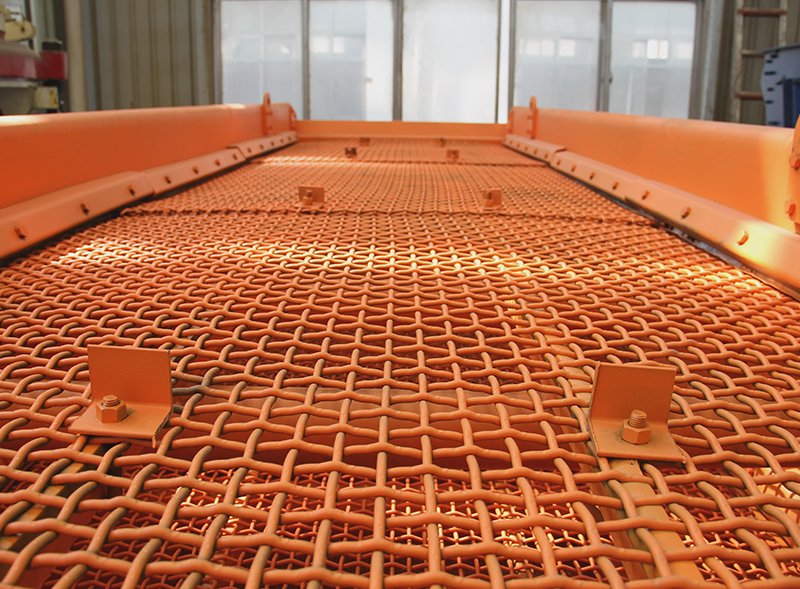
- Multiple screen options: High-manganese steel woven screens, perforated steel plates, and polyurethane screen plates are available. Polyurethane screen plates significantly reduce the probability of screen clogging with clay-containing materials.
- Rubber vibration isolation springs: Excellent vibration isolation effect, reducing vibration transmission to the foundation and steel structure support, and lowering on-site noise.
- Convenient maintenance: Modular screen plates allow for quick replacement; the vibrator can be disassembled for maintenance.
- Highly customizable: The number of screen layers, screen hole size, discharge height, lubrication method (grease/oil bath), and dust cover can be customized according to the site layout.
Specifications of Major Components and Materials
Components directly determine the reliability, downtime frequency, and total lifecycle cost of the equipment.
| Component Name | Core Function | Material / Specification |
| Screen Box (Side Plate + Crossbeam) | Bears material impact and vibration loads, forming the main frame of the equipment | High-strength low-alloy steel plate; all high-strength bolted connections |
| Vibrator | Generates excitation force, driving the screen box to perform circular motion | Forged alloy steel shaft, heavy-duty self-aligning roller bearing |
| Screen Layer / Screen Mesh | Achieves material particle size separation, directly contacts abrasive stones | High manganese steel / polyurethane modular screen plate |
| Rubber Vibration Isolation Spring | Damps and supports the screen box, isolates vibration transmission | High-elasticity fatigue-resistant rubber composite material |
| Tire Coupling | Flexible connection between the motor and the vibrator, compensates for installation deviations, and buffers vibration | Rubber tire elastic buffer structure |
| Drive Motor | Provides power for the rotation of the vibrator | Industrial three-phase asynchronous motor |
| Dust Cover (Optional) | Controls dust leakage during screening | Carbon steel plate, bolted assembly |
Main Application Areas
Circular vibrating screens are widely used in mining, quarrying, construction waste recycling, and bulk material processing industries, playing an irreplaceable grading role in crushing and screening processes.
- Quarry Aggregate Production: Grading of granite, basalt, limestone, and river pebbles to produce multi-specification standard aggregates for highways, concrete mixing plants, and building material projects; controlling finished product gradation and removing excess fine powder.
- Mineral Processing: Particle size classification of iron ore, copper ore, and gold ore before they enter the grinding and beneficiation process; supplying qualified feed to ball mills and separating large pieces of waste rock.
- Construction Waste Recycling: Screening and crushing of concrete and brick waste; separating and recycling coarse aggregate, fine aggregate, and impurities; the produced materials are used for road subbase and foundation backfilling.
- Coal and Industrial Bulk Material Processing: Particle size separation of non-metallic bulk materials such as raw coal, slag, and cement raw materials.
- Mobile crushing plant accessories: As a screening unit for wheeled/tracked mobile crushing skid-mounted equipment, it is suitable for construction sites that require frequent relocation.
The Role of Circular Vibrating Screens in Crushing Production Lines
Circular vibrating screens are crucial grading equipment in crushing production lines. Typically installed at the rear end of the crusher, they are used to screen crushed materials according to particle size.
- Screening Finished Products: The crushed material is separated into multiple specifications based on different particle sizes, such as 0–5 mm, 5–10 mm, and 10–20 mm, facilitating subsequent use or sales.
- Controlling Finished Product Particle Size: By changing screens with different aperture sizes, the particle size range of the finished product can be controlled, reducing the entry of oversized and unqualified materials into the next stage.
- Achieving Closed-Circuit Crushing: After screening, large particles can be returned to the cone crusher or other crushing equipment via a return conveyor belt for further crushing, thus forming a stable closed-circuit cycle.
- Improving Crushing Efficiency: Timely screening of fine materials that have reached the required size reduces repeated crushing in the crusher, lowering equipment load and wear, while simultaneously improving the overall processing efficiency of the production line.
- Simultaneous Production of Multiple Product Specifications: With multiple screens, a single circular vibrating screen can simultaneously produce products of different particle sizes, suitable for aggregate, manufactured sand, and ore processing production lines.
If the effective screening area of the vibrating screen is insufficient, even if the crusher itself has a high capacity, the entire production line will struggle to reach its designed output. A large number of substandard large particles cannot be screened out in time and must repeatedly return to the crushing stage, easily leading to excessive return material, increased equipment load, and even a decrease in overall production capacity.
What is the processing capacity of a circular vibrating screen?
The processing capacity of a circular vibrating screen is not a fixed value. It mainly depends on factors such as the screen surface area, screen aperture size, material properties, feed particle size, moisture content, and screening requirements.
Generally speaking, the larger the equipment model and the larger the screen surface area, the higher the processing capacity. However, if the material has a high moisture content, a high mud content, or requires high screening accuracy, the actual processing capacity will decrease accordingly.
Therefore, when selecting a circular vibrating screen, one should not only look at the theoretical capacity. It is recommended to make a comprehensive selection based on the actual processing capacity, material type, maximum feed particle size, and finished product particle size. This will ensure screening efficiency and stable operation of the entire production line.
Circular vibrating screen VS linear vibrating screen
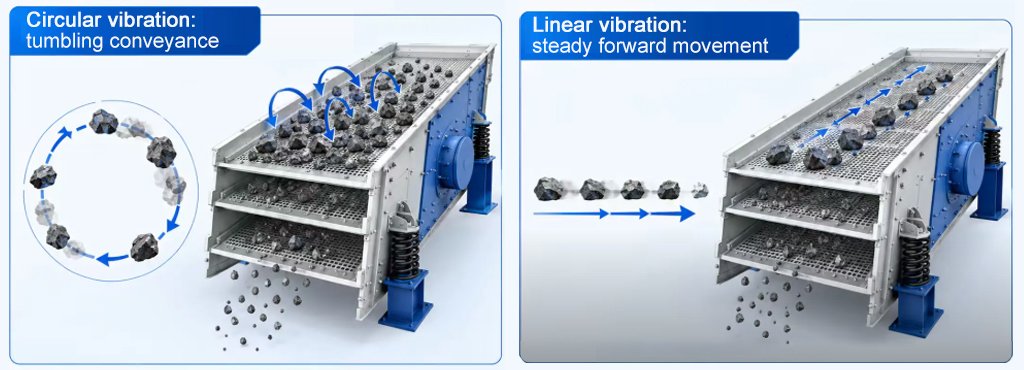
Circular vibrating screens and linear vibrating screens are both common vibrating screening equipment, but there are obvious differences in movement trajectories, screening methods, applicable materials and application scenarios. For crushing production lines, circular vibrating screens are usually more commonly used for grading ores and aggregates, while linear vibrating screens are more suitable for scenarios that require continuous, high-efficiency linear transportation and classification.
| Comparison Items | Circular Vibrating Screen | Linear Vibrating Screen |
| Vibration Trajectory | Material moves in a circular or near-circular motion | Material moves in a straight line |
| Screening Characteristics | High screening efficiency, suitable for larger particle sizes | Fast conveying speed, suitable for small and medium particle sizes |
| Processing Capacity | Generally strong | Suitable for continuous, high-efficiency screening |
| Applicable Materials | Ore, sand, aggregate, etc. | Coal, sand, powder, etc. |
| Material Moisture Content | Good adaptability to materials with certain moisture content | Careful selection is needed for materials with high moisture content and easy adhesion |
| Common Applications | Mining, sand and gravel aggregate, crushing production lines | Coal, chemical, building materials, dewatering screening, etc. |
| Multi-layer Screening | Suitable | Suitable |
| Matched with crushers | Very common | Selected according to process |
| Main Advantages | Mature structure, stable screening, strong adaptability | Smooth operation, strong material conveying capacity, fast screening speed |
How to Choose?
If your production line is primarily used for ore crushing, sand and gravel aggregate production, manufactured sand production, or product grading after secondary/tertiary crushing, a circular vibrating screen is generally a more common choice. It can be integrated with jaw crushers, cone crushers, impact crushers, and other equipment to form a closed-circuit crushing system.
If you prioritize linear conveying, continuous screening, or processes such as dewatering and desliming, a linear vibrating screen may be more suitable.
The actual selection should be based on a comprehensive consideration of factors such as throughput, feed size, screening size, material moisture content, number of screening layers, and final product requirements.
How to Choose the Right Circular Vibrating Screen Model?
The choice of circular vibrating screen model depends on the processing capacity, material properties, feed particle size, and finished product specifications.
For projects with large processing capacities, choose a larger screen area. If the material particle size is large or highly abrasive, prioritize the wear resistance of the screen mesh and the strength of the equipment.
Additionally, the number of screen layers and the screen aperture size directly affect model selection. If multiple different particle sizes are required simultaneously, a multi-layer circular vibrating screen can be chosen; for simple coarse and fine classification, a single-layer or double-layer screen is usually sufficient.
If you are still unsure how to choose, contact CHUNLEI engineers. We will match the most suitable circular vibrating screen model for you based on your working conditions, avoiding insufficient capacity due to an undersized model and unnecessary investment due to an oversized model.


How to match a circular vibrating screen with a crusher?
A circular vibrating screen is usually installed at the rear end of the crusher, mainly responsible for screening and grading. A common configuration is “jaw crusher + circular vibrating screen + cone crusher + circular vibrating screen“: the jaw crusher performs coarse crushing first, the circular vibrating screen screens out qualified particles, and large particles are returned to the cone crusher for further crushing.
If tertiary crushing or manufactured sand production is required, a fine crushing cone crusher or VSI sand making machine can be added at the rear end, and then the circular vibrating screen performs final grading. This forms a closed-loop cycle, reducing the repeated entry of unqualified large particles into the entire production line.
Why do circular vibrating screens frequently clog or break?
Screen clogging or damage is a common problem. Sometimes it’s not due to poor screen quality, but rather a mismatch between material properties, screen aperture specifications, feed rate, and equipment operating parameters. Once clogged, the effective screening area is reduced; prolonged overload operation can easily cause screen deformation, breakage, or accelerated wear.
Common causes include:
- High material moisture content: Wet and sticky materials easily adhere to the screen aperture surface, leading to clogging.
- Inappropriate screen aperture selection: Screen apertures that are too small or do not match the material particle size can easily cause material jamming and clogging.
- Excessive feed rate: An excessively thick material layer results in insufficient screening and increases the impact and wear on the screen.
- Large pieces of material directly impacting the screen: When the feed particle size is too large, it can easily cause localized screen deformation or breakage.
- Inadequate screen tension: A loose screen will produce abnormal vibration and friction, shortening its service life.
- Highly abrasive materials: Hard, highly abrasive materials such as granite, basalt, and iron ore will accelerate screen wear.
- Inappropriate equipment operating parameters: Inappropriate amplitude, vibration frequency, or feeding method can also affect screening efficiency and screen life.
In actual use, do not only focus on the screen itself. If the screen frequently clogs or is damaged, it is recommended to simultaneously check the material moisture content, feed particle size, feed rate, screen aperture size, and screen tension. Finding the cause from the entire screening system is usually more effective than frequently replacing the screen.
What is the price of a circular vibrating screen?
There is no fixed price for a circular vibrating screen. The larger the processing capacity, the larger the screen surface, and the higher the configuration, the higher the price will be.
For crushing production lines, it is necessary to select the appropriate model based on the output of the upstream crusher and the requirements of the downstream equipment. Price alone is not sufficient. Selecting an undersized model can lead to insufficient screening capacity, while selecting an oversized model will result in unnecessary investmentIf you need an accurate quote, please tell CHUNLEI the material type, maximum feed particle size, expected processing capacity, finished product specifications, and the number of screen layers required. We can recommend a suitable circular vibrating screen model and configuration based on the actual working conditions.
Technical Parameters of Circular Vibrating Screen
| Model | Screen Surface Specifications(mm) | Number of Screen Layers | Sieve Hole Size(mm) | Maximum Feed Particle Size (mm) | Processing Capacity(t/h) | Motor Power(kw) | Vibration Frequency(r/min) | Double Amplitude(mm) |
| YZS1237 | 3700×1200 | 1 | 3-50 | 200 | 10-120 | 11 | 870 | 5~9 |
| 2YZS1237 | 3700×1200 | 2 | 3-50 | 200 | 10-120 | 11 | 870 | 5~9 |
| 2YZS1548 | 4800×1500 | 2 | 3-100 | 400 | 30-275 | 15 | 870 | 5~9 |
| 3YZS1548 | 4800×1500 | 3 | 3-100 | 400 | 30-275 | 15 | 870 | 5~9 |
| 2YZS1848 | 4800×1800 | 2 | 3-100 | 400 | 56-330 | 18.5 | 870 | 5~9 |
| 3YZS1848 | 4800×1800 | 3 | 3-100 | 400 | 56-330 | 18.5 | 870 | 5~9 |
| 2YZS1860 | 6000×1800 | 2 | 3-100 | 400 | 65-586 | 22 | 870 | 5~9 |
| 3YZS1860 | 6000×1800 | 3 | 3-100 | 400 | 65-586 | 22 | 870 | 5~9 |
| 4YZS1860 | 6000×1800 | 4 | 3-100 | 400 | 65-586 | 22 | 870 | 5~9 |
| 2YZS2160 | 6000×2100 | 2 | 3-100 | 400 | 81-720 | 30 | 730 | 5~9 |
| 3YZS2160 | 6000×2100 | 3 | 3-100 | 400 | 81-720 | 30 | 730 | 5~9 |
| 4YZS2160 | 6000×2100 | 4 | 3-100 | 400 | 81-720 | 30 | 730 | 5~9 |
| 2YZS2460 | 6000×2400 | 2 | 3-150 | 400 | 100-810 | 37 | 700-900 | 5~9 |
| 3YZS2460 | 6000×2400 | 3 | 3-150 | 400 | 100-810 | 37 | 700-900 | 5~9 |
| 4YZS2460 | 6000×2400 | 4 | 3-150 | 400 | 100-810 | 37 | 700-900 | 5~9 |
Common Faults and Troubleshooting Solutions
After long-term operation, common problems with circular vibrating screens mainly include decreased screening efficiency, screen damage, abnormal vibration, increased noise, and bearing temperature rise. When encountering problems on-site, it is recommended to first check the feeder, screen, and fasteners, and then further check the vibrator and bearings.
| Common Faults | Possible Causes | Solutions |
| Decreased Screening Efficiency | Excessive feed rate, screen blockage, unsuitable screen holes, excessive material moisture content | Control feed rate, clean screen surface promptly, and select appropriate screen mesh according to material and finished product particle size |
| Screen Blockage | High mud or moisture content in material, fine particles adhering to screen holes | Clean screen surface, reduce feed moisture, replace with a more suitable screen mesh if necessary |
| Screen Damage | Excessive material impact, insufficient screen tension, or long-term wear | Check feed drop and material distribution, retighten screen mesh, replace severely damaged mesh promptly |
| Abnormal Vibration Amplitude | Abnormal eccentric component of vibrator, worn bearings, loose fasteners | Stop machine and check vibrator, bearings, and connecting bolts, repair or replace promptly |
| Excessive Equipment Vibration | Unstable foundation, damaged springs, uneven force on components | Check equipment foundation, support springs, and installation condition Ensure even stress distribution on all components. |
| Excessive operating noise | Loose bolts, worn bearings, collision with the screen box or other components. | Tighten connections, check bearings and screen box, and eliminate abnormal collisions. |
| Overheated bearings | Insufficient lubrication, excessive grease, worn bearings, or improper installation. | Check lubrication, add or replace with appropriate grease, and replace bearings if necessary. |
| Transverse swaying of equipment | Inconsistent vibration parameters on both sides, uneven installation, or abnormal vibrator. | Check vibrators, support structure, and installation level on both sides, and adjust accordingly. |
| Unstable screening machine or shutdown | Motor malfunction, transmission component failure, or equipment overload | Check the motor and transmission system, and reduce the feed rate to eliminate overload causes |
| Uneven material distribution | Uneven feeding, improper screen installation, or unbalanced equipment stress. | Adjust the feeding method, and check the screen installation and equipment level. |
Common Faults and Troubleshooting Solutions
After long-term operation, common problems with circular vibrating screens mainly focus on decreased screening efficiency, screen damage, abnormal vibration, increased noise, and bearing temperature rise. When encountering problems on-site, it is recommended to first check the feed, screen, and fasteners, and then further check the vibrator and bearings.
Special Notes During On-Site Maintenance
When problems occur with a circular vibrating screen, do not simply increase the vibration frequency or feed rate to pursue increased production capacity. If the screening area, screen specifications, or feeding method are mismatched, forcibly increasing the load can easily cause screen damage, bearing overheating, and abnormal equipment vibration.
For crushing production lines, the operating status of the vibrating screen also directly affects the amount of returned material. After a decrease in screening efficiency, a large amount of substandard material will return to the crusher, easily causing excessive returned material, increased crusher load, and decreased overall line output. Therefore, when a significant decrease in screening efficiency is observed, the screen surface, feed rate, and screening parameters should be checked promptly.
Circular Vibrating Screen FAQ
Q: What materials can a circular vibrating screen process?
A: Suitable for dry screening of medium-hard rocks, ores, and recycled building materials with a compressive strength ≤320MPa. It can be modified for wet screening of some sticky materials; not recommended for screening ultrafine powders below 0.074mm.
Q: Should I choose a 2-layer or 3-layer screen?
A: It depends on how many different particle sizes you need to produce. A 2-layer screen produces 3 sizes; a 3-layer screen produces 4 sizes. Our engineers can provide recommendations based on your aggregate specifications.
Q: What is the typical lifespan of the screen mesh?
A: It depends on the abrasiveness of the material, the feed rate, and the daily operating hours. High-manganese steel screens typically have a lifespan of 3-6 months under high-abrasive stone conditions; polyurethane screens offer better anti-clogging performance and a longer lifespan.
Q: Can a circular vibrating screen be mounted on a mobile crushing plant?
A: Yes. We offer specially optimized mobile skid-mounted screening units with optimized frames and suspension structures.
Q: Do you support non-standard customization and on-site installation services?
A: We support customization of non-standard sizes, special screens, and dustproof structures. We provide global installation guidance, technical documentation, and after-sales technical support.
Q: What factors affect the screening efficiency of a circular vibrating screen?
A: Screening efficiency is mainly related to the screen surface area, screen aperture size, material particle size distribution, moisture content, feed rate, and vibration parameters. In actual production, excessive feed or excessively wet material can reduce screening efficiency.
Q: Why does incomplete screening occur with a circular vibrating screen?
A: Common causes include excessive feed rate, screen aperture blockage, screen wear, or high mud or moisture content in the material. Adjusting the feed and screening parameters based on site conditions is necessary, rather than simply increasing the vibration intensity.
Q: Can a circular vibrating screen handle wet materials?
A: Yes, but the appropriate screen and screening scheme must be selected based on the material’s moisture content and viscosity. For high-moisture, high-viscosity materials, screen clogging should be a primary concern.
Q: How often should the screen of a circular vibrating screen be replaced?
A: There is no fixed replacement cycle for the screen. Its actual lifespan depends mainly on the material hardness, abrasiveness, screening capacity, and screen material. Replace it promptly if obvious damage, deformation, or enlarged screen holes are found.
Q: Why does a circular vibrating screen make noise during operation?
A: Abnormal noise may be related to bearing wear, loose bolts, loose screens, or malfunctions in internal parts. Normal vibration sounds and abnormal mechanical noise need to be distinguished.
Q: Can a circular vibrating screen simultaneously screen several sizes of finished products?
A: Yes. By configuring screens with different numbers of layers and screen hole sizes according to production requirements, multiple particle sizes can be screened at once, suitable for sand and gravel aggregate and ore processing.
Q: Why should the circular vibrating screen be matched with the crusher’s capacity?
A: If the screening machine’s processing capacity is less than the crusher’s capacity, a large amount of material cannot be screened in time, leading to material backflow, frequent crusher cycles, and even reduced output for the entire production line. Therefore, the selection of screening equipment is equally important.
Q: How to reduce daily maintenance costs for a circular vibrating screen?
A: First, ensure the equipment does not operate under overload. Second, regularly inspect bearings, vibrators, springs, screens, and fasteners, and promptly address any abnormal vibrations or wear issues. Stable operation is generally more cost-effective than repairing after a malfunction.
Related Products —
Three-shaft horizontal vibrating screen
A variety of models are available | Get the free price list! Three-shaft horizontal vibrating screen also called three-axis horizontal vibrating screen sieve , is a new type of vibrating screen with multi-layer num…
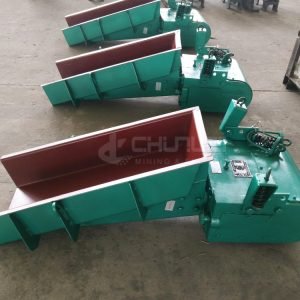
Vibrating feeder
Vibrating feeder, also known as vibrating feeder, can provide continuous and uniform feeding for crushing machinery and screening of materials, which is widely used in crushing and screening combined equipment in mineral processing, buil…
Electromagnetic vibrating feeder
A variety of models are available | Get the free price list! Electromagnetic vibrating feeder is a kind of automated equipment that utilizes electromagnetic vibration principle to drive the continuous, uniform or q…
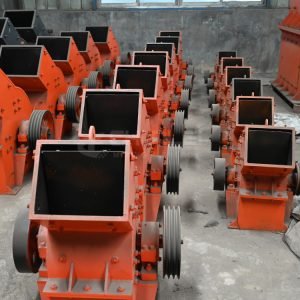
Small Hammer Crusher
A variety of models are available | Get the free price list! Small hammer crusher is a kind of small hammer crusher, which is mainly used for medium and fine crushing of various materials.Hammer crusher can be used…
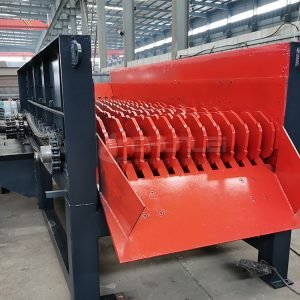
Mud and Stone Separator
Mud and stone separator, as the name suggests, is a device to separate mud and stone, also called mud and stone separating and screening equipment. Roller screen is made of multiple shafts, divided into multiple segments to drive the mat…

loading…
已经是到最后一篇内容了!