 Chunlei Mining Machinery


Mud and Stone Separator
Mud and stone separator, as the name suggests, is a device to separate mud and stone, also called mud and stone separating and screening equipment. Roller screen is made of multiple shafts, divided into multiple segments to drive the material forward and the shafts are linked. So named as multi-shaft linkage roller (there are also non-linkage type), due to the wider application, so it can also be called multi-shaft linkage separator or multi-shaft linkage separator screen, feed screen and other names.
- Feed size:≤500mm
- Screening capacity:10-200t/h
- Screening size:≤20-50mm
What is Mud and Stone Separator?
A mud-stone separator, also known as a mud-stone screen or mud-stone separation equipment, primarily functions to separate mud and stones mixed in with raw ore. It separates large stones from fine mud impurities in raw ore containing mud, clay, and silt. Traditional vibrating screens are prone to clogging when encountering high-moisture, high-viscosity materials, while the mud-stone separator’s self-cleaning structure quickly peels away mud adhering to the surface of stones, perfectly solving the problem of material blockage during screening.
In the entire crushing production line, the mud-stone separator is installed before the jaw crusher for pre-screening. Pre-screening low-value mud prevents crusher clogging, reduces jaw plate wear, and improves the purity of the finished sand and gravel aggregate.
- Applicable materials: Mud mixed with stone, high-viscosity yellow clay, stripping layer waste, construction waste, weathered stone from mines, river pebble cleaning mud, etc.
- Main applications: Pre-screening before crushing lines, quarry waste recovery, mud and stone sorting in earthwork projects.
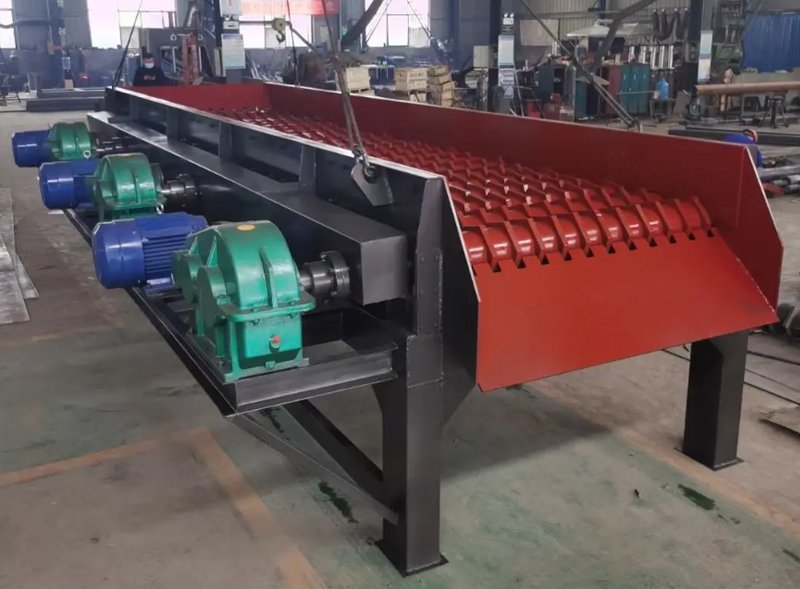
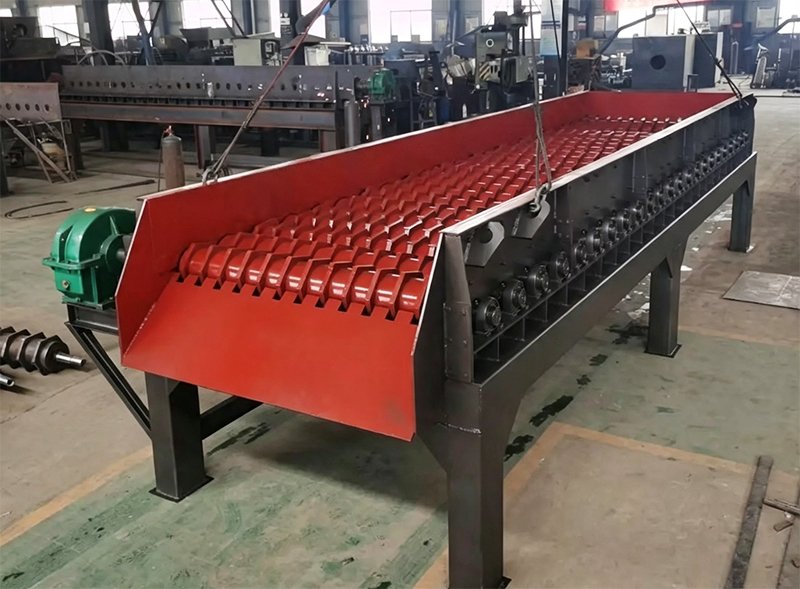
Working Principle of a Mud and Stone Separator
The mud and stone separator is used to separate materials smaller than a specified particle size. It employs a multi-shaft continuous rotation in the same direction to propel the material, achieving efficient screening through dynamic impact:
- Uniform Feeding: The mud and stone mixture is directly poured into the feed hopper by a feeder or excavator.
- Multi-shaft Propulsion and Shaking: The power system drives multiple rollers to rotate in the same direction, and the polygonal screen discs on the shafts continuously tumble the material.
- Mud and Stone Stripping: The centrifugal force and impact force generated by the rotation of the screen discs break up the mud adhering to the stones. The mud and fine particles fall through the gaps in the screen discs into the collection belt below.
- Large Material Discharge: Large stones that cannot pass through the gaps are continuously rolled and propelled to the front discharge port, and sent to the next crushing process.
- Overload Protection: When encountering an oversized hard object that gets stuck, the intelligent control system can automatically reverse to discharge the foreign object, protecting the motor and bearings.

CHUNLEI Sludge and Stone Separator Advantages:
- High screening precision, high efficiency, processing capacity is the same volume of traditional trommel screen 2 times, clay stone screening efficiency is 1.5 times of the trommel screen, production capacity can be as high as 800t/h.
- Adopt frequency conversion drive control mode, small power, low energy consumption, high safety and stability, adjustable processing capacity of small size, does not occupy space, easy to move.
- The material is automatically discharged, can be continuous operation, in different mines can play a transport, separation and screening functions, to realize the multi-purpose machine.
- High operational stability, durable machine, low noise, less wearing parts, easy to replace.
- Wide range of soil and stone screening, suitable for all kinds of industrial waste mud and stone, sand, gravel, ore and other types of stone, decoration, construction waste, sticky and wet material separation conditions.
- According to the output requirements of customized model size, can be assembled with diesel engine drive and tire mobile car.
Applications of Mud and Stone Separators
- Quarry Overburden Treatment: Cleans the surface of mountains covered with yellow mud and weathered stones, recovering usable stones encased in mud.
- Sand and Gravel Aggregate Production Line: Pre-screening before crushing to remove fine materials with high mud content, improving aggregate purity and crusher efficiency.
- Construction Waste Recycling: Separates slag, bricks, and large concrete blocks from construction waste.
- Mine Waste Rock Utilization: Screens tailings and waste rock piles to separate reusable ores.
- Water Conservancy and Earthwork Engineering: Treats river dredging materials and wet clay.
Equipment Structure and Core Components
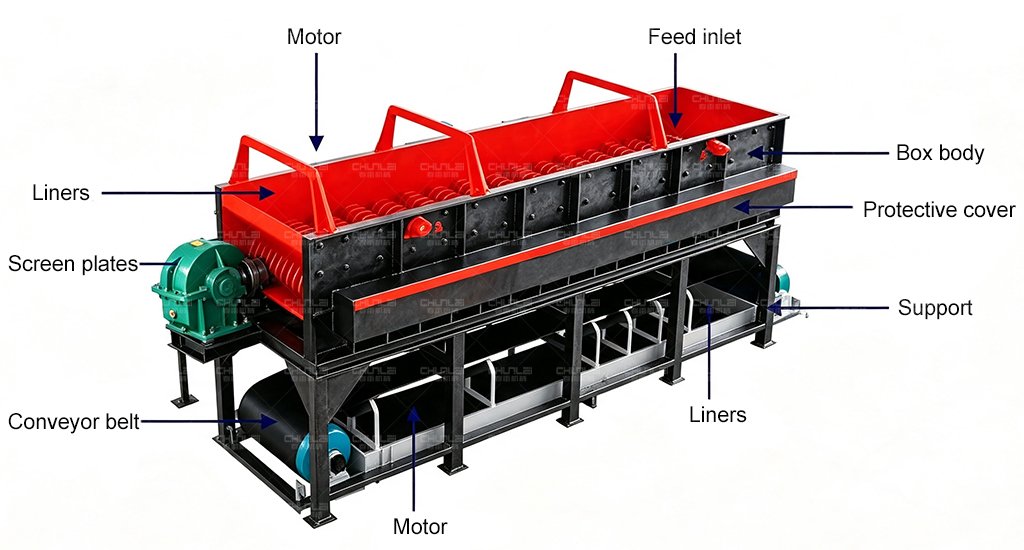
All key components directly determine the screening efficiency, anti-clogging capability, and overall service life of the machine. The materials and functions of each component are detailed below:
| Component Name | Core Function | Material |
| Main Unit Frame | Withstands the impact of feeding and supports all roller assemblies | Q235 thickened steel plate, integrally welded, with cast steel reinforcement in high-load areas |
| Roller Main Shaft | Drives the disc to rotate, conveying and tumbling materials for separation | Medium carbon alloy steel, integrally quenched for torsional resistance and wear resistance |
| Separation Disc (Roller Disc) | Scrapes away clay from the surface of stones, creating screening gaps between the shafts | High manganese wear-resistant cast steel, service life 3–8 months (depending on raw material) |
| Drive Motor + Reducer | Each roller group has independent power, supporting frequency conversion speed regulation | Three-phase frequency conversion motor, hardened gear reducer |
| Drive Chain and Sprocket | Synchronizes roller rotation, overload buffer protection | Alloy wear-resistant chain, self-lubricating sprocket |
| Underscreen Conveyor | Collects and conveys separated fine mud and sand | Wear-resistant rubber conveyor belt, side baffles to prevent spillage |
| Feed Hopper + Wear-resistant liner plates | Buffers the impact of large stones during feeding, protecting the frame | High manganese steel wear-resistant liner, bolted for quick replacement |
| Shock-damping support base | Reduces overall machine vibration and stabilizes the equipment | Heavy-duty rubber shock absorbers, thickened channel steel support |
The Role of Mud-Stone Separators in Production Lines
In mine crushing production lines containing mud, mud-stone separators are pre-treatment screening equipment that improves efficiency and reduces costs:
- Preventing Clogging and Downtime: Wet mud entering jaw crushers or cone crushers easily causes clogging. Mud-stone separators intercept mud at the source, ensuring efficient operation of the crushers.
- Reducing Energy Consumption and Wear: The screened material then enters the crusher for further crushing, reducing wear on the crusher liners and power consumption.
- Improving Product Quality: The finished aggregate after mud removal has a low mud content, meeting the high standards of some industries.
What equipment is used in conjunction with a mud and rock separator?
Mud and rock separators are typically used as pretreatment equipment and work in conjunction with the following:
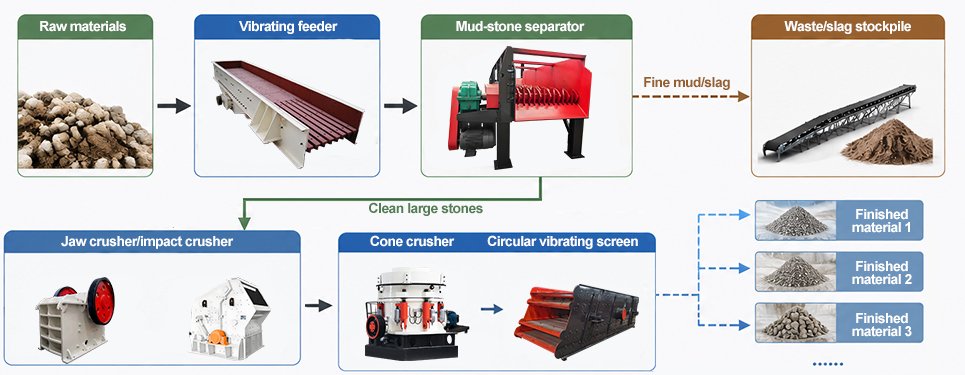
- Plate feeder / Heavy-duty feeder: Provides uniform feeding and withstands the impact of large, heavy materials falling from a height.
- Jaw crusher: Clean, large stones after mud and rock separation are directly fed into the jaw crusher for primary crushing.
- Belt conveyor: Transports the separated mud and stones to different stockpiles or equipment.
- Environmental dust control/spraying system: Suppresses dust emissions in dry and dusty conditions.
How to Choose a Mud and Stone Separator? Key Selection Guide
Many customers only focus on the processing capacity when choosing a mud and stone separator, but the actual selection also needs to consider the material properties, mud content, and production requirements. Choosing the right equipment will improve screening efficiency and reduce material blockage and maintenance costs.
| Selection Factors | Issues to Consider |
| Material Type | River pebbles, mine waste rock, construction waste, or muddy sand and gravel? |
| Mud Content | High clay and high moisture content require stronger separation capabilities |
| Processing Capacity | Select the appropriate model based on hourly output |
| Feed Size | Large materials require suitable feed inlets and screening structures |
| Subsequent Processes | Whether to connect to crushing, sand making, or aggregate production lines |
For materials with high mud content, it is recommended to choose a mud-stone separator with strong screening capabilities and anti-clogging design. If used in mining or sand and gravel production lines, the wear resistance of the equipment and the replacement cost of vulnerable parts should also be considered.
CHUNLEI will recommend a suitable model based on the customer’s material conditions, production requirements, and site conditions to avoid over-selection leading to wasted investment or under-selection affecting production efficiency.
Contact us, provide your material information and production needs, and obtain a suitable mud-stone separation solution.


Comparison of mud and stone separator vs. traditional screening equipment
| Equipment Type | Target for High-Viscosity Wet Sludge Materials | Anti-Clogging Capacity | Processing Capacity | Maintenance & Water Consumption | Overall Recommendation |
| Sludge Separator (Butterfly Screen) | Excellent (Specially Designed) | Very High (Self-Cleaning, No Clogging) | Large (Continuous High Efficiency) | No material washing required, dry separation, low cost | Preferred for wet sludge/quarry stripping materials |
| Roller Washer | Good | Average (Easily accumulates sludge) | Medium | Requires large amounts of water, sedimentation tank required | Suitable for scenarios with abundant water resources and sand washing |
| Heavy-Duty Vibrating Screen | Very Poor (Immediately clogs) | Very Low (High-viscosity materials easily clog the screen) | Low (Reduced to zero after clogging) | Frequent shutdowns for screen cleaning, high labor costs | Suitable only for dry materials and non-sludge/stone screening |
What is the price of a mud-stone separator?
There is no fixed price for a mud-stone separator. The price depends primarily on the processing capacity, equipment model, material conditions, and configuration requirements. Different projects have significantly different operating conditions, resulting in varying prices.
Generally, the main factors affecting the price of a mud-stone separator include:
| Influencing Factors | Impact on Price |
| Equipment Model | Larger processing capacity requires larger equipment size and configuration, resulting in a higher price. |
| Processing Capacity | Tens of tons per hour versus hundreds of tons per hour; equipment configuration varies significantly. |
| Material Properties | Mud content, moisture content, and stone hardness affect the screening structure design. |
| Equipment Configuration | Whether it includes a feeder, conveyor, and electrical control system. |
| Customization Requirements | Different inlet/outlet sizes and site layouts may require special design. |
When selecting a mud-rock separator, the most important factors to consider are:
- Whether it matches your material type;
- Whether it meets your target output;
- Whether it can operate stably and continuously;
- Whether wear parts are easy to replace.
CHUNLEI will recommend suitable mud-rock separator models and configurations based on photos of the raw materials, mud content, processing capacity, and usage scenarios provided by the customer, helping them avoid unnecessary investment.
Contact us to obtain a quote and technical solution for a mud-rock separator suitable for your project.
Common Faults and Troubleshooting Solutions
When processing materials such as mine waste rock, sand, and construction waste for extended periods, mud separators are susceptible to mud adhesion, stone impact, and continuous operation. Proper daily maintenance can reduce downtime and extend the equipment’s lifespan.
| Common Problems | Possible Causes | Solutions |
| Decreased Screening Efficiency | Screen Clogging, High Mud Content in Material | Clean the screen promptly and control the mud content in the feed |
| Uneven Discharge | Feeding Speed Too Fast or Unstable | Adjust the feed rate to maintain uniform feeding |
| Abnormal Equipment Vibration | Loose Bolts, Worn Bearings | Check fasteners and replace damaged parts promptly |
| Severe Wear of Screen Cylinder | Long-Term Processing of Hard Materials | Regularly inspect the screen cylinder and replace wear-resistant parts promptly |
| Overheating Motor | Overload Operation or Insufficient Lubrication | Check the load and improve lubrication maintenance |
Routine Maintenance Recommendations:
- Regularly inspect the screen, bearings, and transmission components for wear;
- Maintain a proper lubrication system to reduce operating resistance;
- Prevent large foreign objects from entering the equipment to avoid damaging the screen cylinder;
- Adjust the feeding speed according to the material properties to avoid prolonged overload operation of the equipment.
Technical Parameters of Mud and Stone Separator
| Model | Power(kw) | Reducer (model) | Capacity(t/h) | Number of shafts (roots) | Weight (t) |
| 1040 | 7.5(1台) | 350(2台) | 50-70 | 18 | 5.5 |
| 1240 | 11(2台) | 400(2台) | 150-200 | 18 | 7 |
| 1260 | 11(3台) | 400(3台) | 200-300 | 27 | 9 |
| 1540 | 15(2台) | 500(2台) | 300-400 | 18 | 8 |
| 1560 | 15(3台) | 500(3台) | 400-500 | 27 | 13 |
Mud and Stone Separator FAQ
Q: What raw materials can the mud-stone separator process?
A: Mixtures of soil, clay, sand, and hard rock. The compressive strength standard of the raw materials must be consistent with the feeding requirements of a jaw crusher. The optimal screening effect is achieved when the moisture content is ≤40%. Suitable for mountain rocks, river pebbles, iron ore, construction waste, tunnel slag, and coal gangue.
Q: What is the difference between stationary and mobile mud-stone separators?
A: Stationary models are used for long-term fixed quarries and have a larger single-machine processing capacity; trailer-mounted mobile models support frequent relocation, can be powered by diesel without external industrial electricity, and are compatible with mobile jaw crusher stations.
Q: Does the equipment require a concrete foundation for installation?
A: Stationary models require a simple concrete base to fix the support legs; trailer-mounted mobile models do not require a foundation and can be put into operation after the site is leveled and hardened.
Q: Can a mud-stone separator replace a stone washing machine?
A: The mud-stone separator is a dry separation device, mainly used for separating large pieces of soil and fine sand. If your finished aggregate requires extremely high mud content (such as high-grade concrete aggregate), it is recommended to install a stone washing machine after the mud-stone separator. This can significantly reduce the water consumption and mud treatment pressure of the stone washing machine.
Q: Are the screen discs of the mud-stone separator prone to wear? Are they easy to replace?
A: The screen discs are wear parts, but we use high-wear-resistant alloy materials, and their service life can reach 8-18 months under normal operating conditions. The modular, split-assembly design allows for individual replacement of worn screen discs without disassembling the entire drive shaft, making maintenance extremely simple.
Q: Will highly sticky red/yellow mud stick to the rollers?
A: Our mud-stone separator uses non-circular symmetrical screen discs (butterfly/polygonal), with the screen discs on the shafts placed in an alternating pattern. During rotation, relative shearing forces are generated between the screen discs, providing automatic mud scraping and self-cleaning, effectively preventing mud from sticking to the walls.
Q: Does the equipment support non-standard customization? What is the delivery time?
A: Customization is supported. We can customize the number of shafts, width, and mobile chassis according to your processing volume, feed size, output particle size, and available space. The production cycle for standard models is generally 15-20 days.
Related Products —
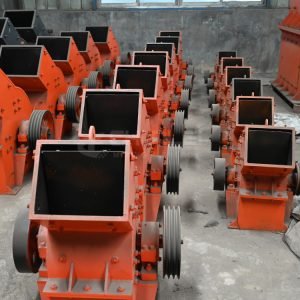
Small Hammer Crusher
A variety of models are available | Get the free price list! Small hammer crusher is a kind of small hammer crusher, which is mainly used for medium and fine crushing of various materials.Hammer crusher can be used…
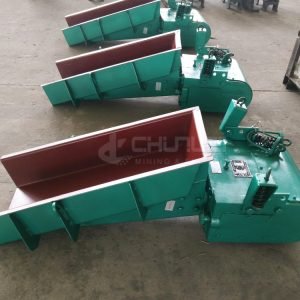
Electromagnetic vibrating feeder
A variety of models are available | Get the free price list! Electromagnetic vibrating feeder is a kind of automated equipment that utilizes electromagnetic vibration principle to drive the continuous, uniform or q…
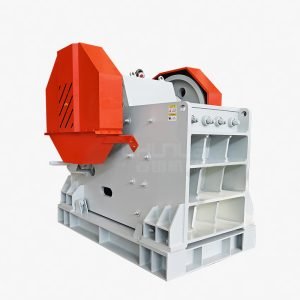
PE/PEX Jaw Crusher
Jaw Crusher is a commonly used ore crushing equipment, widely used in mining, smelting, building materials, highway, railroad, water conservancy and chemical industry and many other industries of the primary crushing equipment, mainly us…
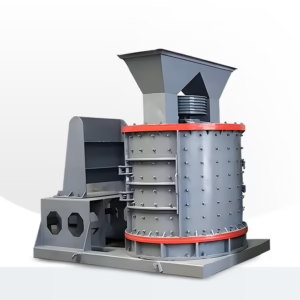
Combination Crusher
Combination Crusher is a new product optimized and designed based on our company’s PEL vertical compound crusher and combined with domestic and foreign fine crushing technology. The vertical compound crusher, also kno…
Single Cylinder Cone Crusher
Single Cylinder Cone Crusher, also called Single Bar Hydraulic Cone Crusher, is a medium and fine crusher with hydraulic system to adjust the discharge opening and for overload protection. The single-cylinder hydra…
loading…
已经是到最后一篇内容了!