 Chunlei Mining Machinery


Single Cylinder Cone Crusher
Single Cylinder Cone Crusher, also called Single Bar Hydraulic Cone Crusher, is a medium and fine crusher with hydraulic system to adjust the discharge opening and for overload protection.
- Capacity:30-1300 t/h
- Power:90-750kW
- Applicable materials: Iron ore, nonferrous metals, granite, limestone, quartzite, sandstone, river pebbles and other various ores and rocks.
What is Single Cylinder Cone Crusher?
The single-cylinder hydraulic cone crusher—often referred to simply as the single-cylinder cone crusher—is a core piece of equipment for fine crushing in mining and aggregate production lines; it is suitable for processing high-hardness ores such as granite, basalt, and iron ore. The machine features support at both the top and bottom ends of the main shaft and a scientifically optimized crushing chamber design, while its hydraulic and lubrication systems utilize a dual-safety control mechanism. Compared to other cone crushers, this model offers higher production capacity and lower energy consumption.


Working Principle of the Single-Cylinder Cone Crusher
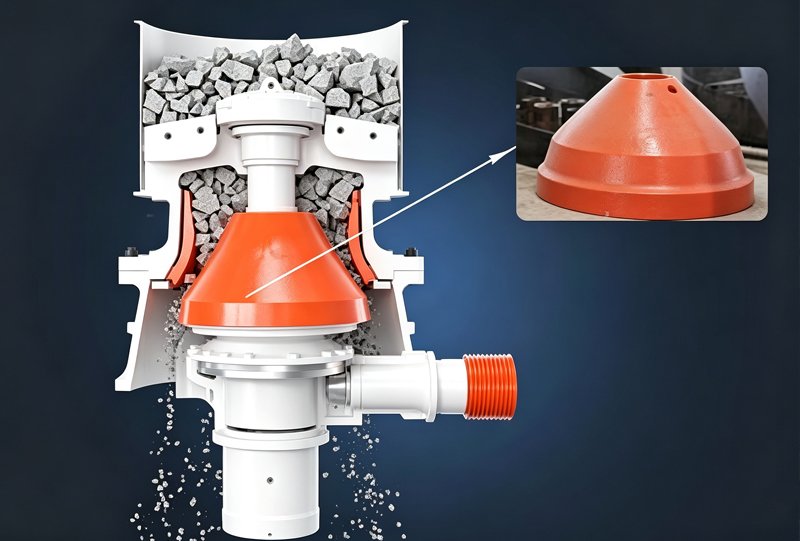
The single-cylinder hydraulic cone crusher consists primarily of an upper frame, a middle frame (for intermediate crushing models), a lower frame, a moving cone assembly, an eccentric sleeve, a drive mechanism, and a hydraulic cylinder. The motor drives the eccentric sleeve to rotate via a pulley and drive shaft; the eccentric sleeve then causes the main shaft and moving cone to perform a gyratory, reciprocating motion:
- Feeding: Medium-sized stones (typically from a primary jaw crusher) fall from the feed hopper into the crushing chamber;
- Inter-particle (layer) crushing: The moving cone periodically approaches the fixed cone, subjecting the material to high-pressure compression and grinding, causing it to fracture layer by layer;
- Discharge control: A hydraulic cylinder at the bottom raises or lowers the main shaft to adjust the gap between the moving and fixed cones, allowing for flexible control of the finished product’s particle size;
- Tramp iron protection: If tramp iron or other uncrushable hard objects enter the chamber, the hydraulic system automatically widens the discharge opening to eject the foreign object, preventing equipment damage;
- Continuous cycle: Particles meeting size specifications are discharged from the bottom, while larger material remains in the chamber for further inter-particle crushing; when paired with a vibrating screen, this creates a closed-circuit crushing loop.


Core Structure and Component List of the Complete Unit
| Component Name | Material | Primary Function | Reference Replacement Cycle |
| Main Cast Steel Frame | One-piece cast steel | Bears the full crushing impact force; serves as the machine base | No replacement required during machine lifespan |
| Main Shaft Assembly | High-strength alloy steel | Supports the moving cone; transmits crushing loads | 3–5 years |
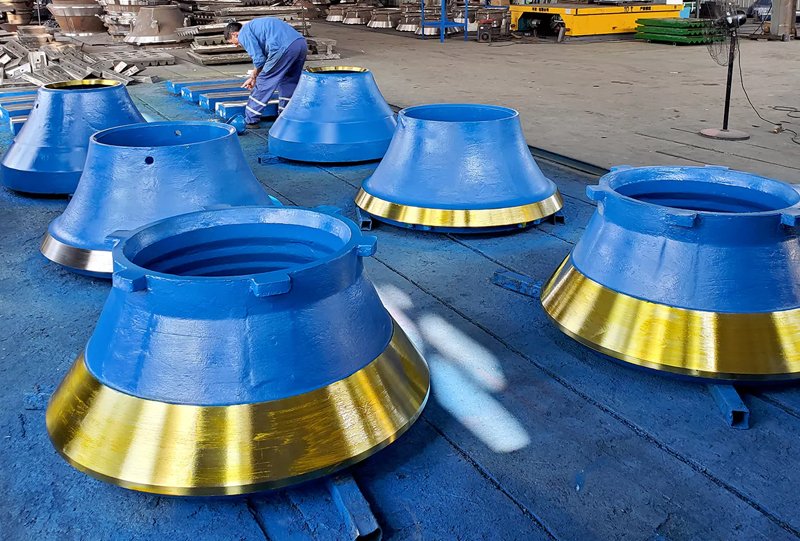
| Moving Cone Crushing Wall (Mantle) | High-manganese alloy | Directly compresses material; serves as the wear-resistant working surface | 6–12 months (halved for hard rock) |
| Fixed Cone Bowl Liner | High-manganese wear-resistant steel | Serves as the stationary crushing working surface | 6–12 months |
| Bottom Single Hydraulic Cylinder | High-pressure seamless cylinder body | Discharge adjustment, tramp iron protection, and blockage clearing | Seals replaced every 6 months |
| Eccentric Sleeve Copper Bushing | High-wear-resistance copper alloy | Reduces rotational friction loss of the main shaft | 12–24 months |
| Drive Pulley / Gear Set | Cast steel | Power transmission | 2 years |
| Positive-Pressure Dust Seal Assembly | Aging-resistant rubber | Prevents dust from entering the lubrication system | 4–8 months |
What materials are suitable for processing with a single-cylinder cone crusher?
Single-cylinder cone crushers are primarily used for the secondary and tertiary crushing of medium-to-high hardness ores and rocks—such as granite, basalt, iron ore, copper ore, gold ore, quartz, and river pebbles.
If your raw material is particularly hard or abrasive, a single-cylinder cone crusher can be used after initial coarse crushing (e.g., by a jaw crusher) to further reduce particle size and enhance the efficiency of downstream grinding or sand-making processes.
In practical applications, these crushers are commonly employed in metal ore beneficiation lines, aggregate production lines, and large-scale crushing operations. However, factors such as material hardness, moisture content, and target output influence equipment selection; therefore, it is advisable to assess the ore’s properties before selecting a model to ensure the equipment is well-suited to the application.
Advantages of the CHUNLEI Single-Cylinder Hydraulic Cone Crusher
The CHUNLEI single-cylinder hydraulic cone crusher is designed to meet real-world production needs; featuring a simple structure and stable operation, it is particularly well-suited for the secondary and tertiary crushing of hard rock materials.
- High Crushing Efficiency: An optimized crushing chamber design ensures more uniform force distribution on the material and consistent output, meeting the demands of continuous operation in large-scale aggregate production lines.
- Easier Maintenance: The single-cylinder hydraulic structure reduces the number of components, simplifying maintenance and reducing both downtime and maintenance costs.
- Enhanced Safety with Automatic Protection: The hydraulic system enables tramp iron protection and discharge opening adjustment, effectively safeguarding the equipment when encountering uncrushable materials.
- Excellent Wear Resistance: Key components are manufactured from wear-resistant materials, making the crusher suitable for the long-term processing of high-hardness materials such as granite, basalt, and iron ore.
- Low Operating Costs: Low energy consumption and easy replacement of wear parts help customers reduce long-term production costs.
When selecting a cone crusher, one should look beyond the initial purchase price and consider long-term production efficiency and maintenance costs. The CHUNLEI single-cylinder hydraulic cone crusher is a reliable machine designed to ensure stable, long-term profitability for customers.
What is the difference between single-cylinder and multi-cylinder cone crushers?
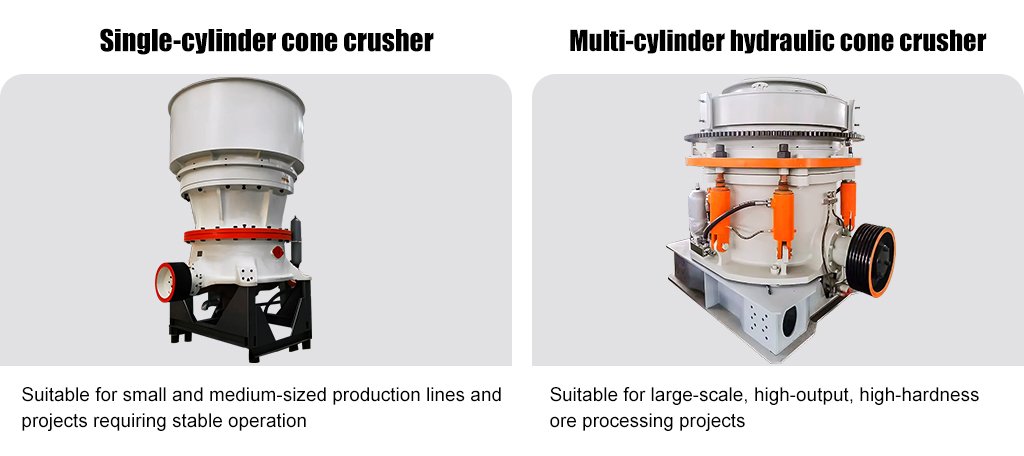
Single-cylinder cone crushers feature a simple structure and are easy to maintain, making them well-suited for small-to-medium production lines and customers prioritizing stable operation; multi-cylinder cone crushers offer greater crushing force and more flexible adjustment, making them ideal for large-scale, high-output projects involving hard ore.
| Comparison Item | Single-Cylinder Cone Crusher | Multi-Cylinder Cone Crusher |
| Structural Design | Main shaft supported by a single hydraulic cylinder; simple structure | Multiple hydraulic cylinders evenly distributed; more stable load distribution |
| Crushing Capability | Suitable for crushing medium-to-high hardness materials | Better suited for ultra-hard rock and large-scale mining operations |
| Crushing Efficiency | Stable operation with high efficiency | Stronger crushing force and higher processing capacity |
| Product Particle Shape | Good particle shape; suitable for standard sand and gravel production | Precise particle shape control; suitable for high-quality aggregates |
| Adjustment Method | Discharge opening adjusted via hydraulic system | Multi-cylinder hydraulic adjustment; more convenient and precise |
| Maintenance Cost | Fewer parts, simple maintenance, lower costs | Complex structure; relatively higher maintenance requirements |
| Investment Cost | Lower equipment price and ongoing maintenance costs | Higher initial investment; suitable for large-scale projects |
| Application Scenarios | Sand and gravel plants, construction aggregates, small-to-medium mines | Large-scale mines, metal mines, ultra-high capacity production lines |
What are the wear parts of a single-cylinder cone crusher?
With years of experience in the mining equipment industry, we know that customers are most concerned about whether the equipment can operate stably over the long term and what the subsequent maintenance costs will be. Common wear parts for single-cylinder cone crushers include the concave (bowl liner), mantle, bronze bushings, sealing rings, thrust plates, and liner plates.
Among these, the mantle and concave are the components that come into direct contact with the ore; they wear out relatively quickly and require periodic replacement based on material hardness and production volume. Transmission components such as bronze bushings and thrust plates primarily provide support and lubrication; proper maintenance can effectively extend their service life.
We recommend that customers choose genuine parts made from wear-resistant materials and inspect or replace them promptly based on the equipment’s operating conditions. Effectively managing the cost of wear parts ensures stable production output, minimizes downtime, and maximizes overall profitability.
What kind of maintenance does a single-cylinder cone crusher require?
Routine maintenance for a single-cylinder cone crusher is not complicated, provided the following key areas are addressed:
- Regularly check the condition of the lubricating oil to ensure the lubrication system functions correctly;
- Monitor the wear on consumable parts—such as the concave (bowl liner) and mantle—and replace them promptly to avoid affecting the output particle size;
- Clear debris from inside the equipment and check for loose fasteners.
Proper maintenance not only ensures more stable operation but also extends the crusher’s service life and reduces downtime. For mining projects involving long-term, continuous production, routine maintenance is crucial to ensuring consistent output.
What is the price of a single-cylinder cone crusher?
There is no fixed price standard for single-cylinder cone crushers; the cost depends primarily on the equipment model, processing capacity, feed and discharge sizes, configuration requirements, and the operating environment.
Generally speaking, small single-cylinder cone crushers are relatively affordable and suitable for small-to-medium-sized aggregate production lines. While large-scale equipment requires a higher initial investment, it offers higher output and greater operational stability, resulting in lower long-term operating costs.
With years of experience in the mining equipment industry, CHUNLEI advises customers to look beyond the price tag and consider factors such as crushing efficiency, the service life of wear parts, long-term maintenance costs, and manufacturer support. Based on your specific material (e.g., granite, basalt, iron ore), production requirements, and desired product specifications, we can recommend the appropriate model and configuration to ensure you avoid the wasted investment that comes from purchasing equipment that is either too large or too small for your needs.
How do you choose the right single-cylinder cone crusher model?
When selecting a single-cylinder cone crusher, bigger is not necessarily better; the key is to consider actual production requirements.
When clients consult me, I typically begin by gathering specific information: the type of raw material, the feed particle size, the desired output size, the required hourly production capacity, and the on-site installation conditions. For instance, the crushing configuration for hard materials like granite or basalt differs significantly from that used for ordinary limestone.
If your production line demands high output and continuous, stable operation, you should select a model with greater processing capacity. Conversely, for small- to medium-sized aggregate plants, it is best to weigh investment costs against long-term operating expenses to choose the model that best suits your specific needs.


CHUNLEI helps you select the right single-cylinder cone crusher model based on your specific ore characteristics, production requirements, and finished product specifications, rather than simply recommending “large-scale equipment.” Choosing the correct model ensures operational efficiency while minimizing unnecessary investment and maintenance costs.
If you are unsure which single-cylinder cone crusher model best suits your project, please contact us with details regarding your raw materials, capacity requirements, and desired output size; our engineers will recommend the appropriate model and crushing solution for you.
Technical Parameters of Single Cylinder Cone Crusher
| Model | Cavity | Maximum feed size(mm) | Minimum Discharge Size (t/h) | Maximum installed power (kw) |
| CSG420 | S1(Ultra-coarse) | 240 | 22 | 90 |
| S2(Medium Coarse) | 200 | 19 | ||
| CHG420 | H1(Fine) | 135 | 10 | |
| H2(Medium fine) | 65 | 8 | ||
| H3(Super fine) | 38 | 4 | ||
| CSG430 | S1(Ultra-coarse) | 360 | 25 | 160 |
| S2(Medium Coarse) | 300 | 22 | ||
| S3(Coarse) | 235 | 19 | ||
| CHG430 | H1(Fine) | 185 | 13 | |
| H2(Medium fine) | 90 | 10 | ||
| H3(Super fine) | 50 | 6 | ||
| CSG440 | S1(Ultra-coarse) | 450 | 35 | 250 |
| S2(Medium Coarse) | 400 | 29 | ||
| S3(Coarse) | 300 | 25 | ||
| CHG440 | H1(Fine) | 215 | 16 | |
| H2(Medium fine) | 110 | 13 | ||
| H3(Super fine) | 70 | 8 | ||
| CSG660 | S1(Ultra-coarse) | 560 | 41 | 315 |
| S2(Medium Coarse) | 500 | 38 | ||
| CHG660 | H1(Fine) | 275 | 16 | |
| H2(Medium fine) | 135 | 16 | ||
| H3(Super fine) | 65 | 13 | ||
| CHG870 | H1(Fine) | 300 | 22 | 520 |
| H2(Medium fine) | 155 | 19 | ||
| H3(Super fine) | 80 | 10 | ||
| CHG890 | H1(Fine) | 370 | 25 | 750 |
| H2(Medium fine) | 195 | 22 | ||
| H3(Super fine) | 85 | 10 |
Note: The output will vary depending on different materials, feed particle size and other factors.
FAQ
Q: Can a single-cylinder cone crusher directly crush large raw stones?
A: No; it is designed for secondary (medium-to-fine) crushing. A jaw crusher must be used upstream for primary (coarse) crushing.
Q: How do I choose between single-cylinder and multi-cylinder cone crushers?
A: Choose a single-cylinder model for small-to-medium aggregate plants focusing on 10–30mm sizes; choose a multi-cylinder model for large-scale mining operations requiring ultra-fine finished products.
Q: Can the discharge size of a single-cylinder cone crusher be adjusted online?
A: Yes; equipped with a hydraulic control cabinet, the gap can be adjusted with the push of a button without stopping the machine.
Q: Can a single-cylinder cone crusher handle wet, sticky clay?
A: It is not suitable for sticky clay, which tends to adhere to the liners and cause chamber clogging; for high-clay ores, a desliming screen should be installed upstream.
Q: Is it difficult to replace the wear parts on a single-cylinder cone crusher?
A: The liners are installed without backing compound; a single person can complete the replacement quickly without the need for heavy lifting equipment.
Q: Does the equipment support customized 415V motors for overseas markets?
A: The entire product line supports non-standard electrical configurations, including 380V/415V and 50Hz/60Hz options.
Q: Is the aggregate produced by a single-cylinder cone crusher suitable for high-grade concrete?
A: The inter-particle (lamination) crushing process yields a low crushing value, making the product fully compliant with standards for C60 and higher-grade commercial concrete aggregates.
Q: Will the equipment be damaged if a piece of iron enters the crusher?
A: The bottom hydraulic cylinder automatically releases pressure to lower the main shaft, allowing the iron to pass through and protecting the machine.
Related Products —
Three-shaft horizontal vibrating screen
A variety of models are available | Get the free price list! Three-shaft horizontal vibrating screen also called three-axis horizontal vibrating screen sieve , is a new type of vibrating screen with multi-layer num…
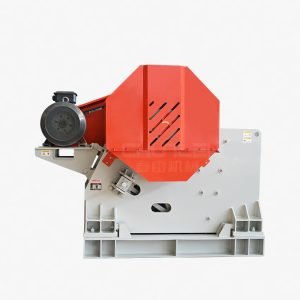
CJ European Jaw Crusher
CJ European Jaw crusher is a kind of stone crusher, which is mainly used for primary or secondary crushing of stone materials. The function of jaw crusher is to crush all kinds of stone materials into smaller sizes for transportation. …
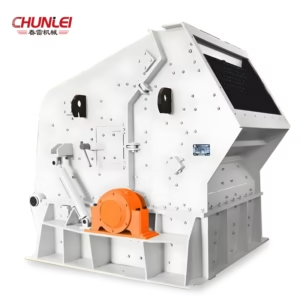
Impact Crusher
An impact crusher is a core piece of equipment in sand and gravel aggregate production for medium and fine crushing and shaping. It uses a high-speed rotor to drive hammer plates to impact the material, and the repeated…
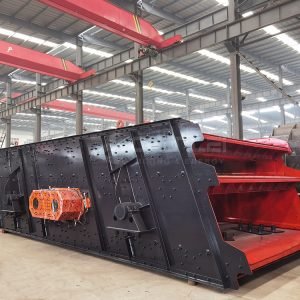
Circular Vibrating Screen
A variety of models are available | Get the free price list! Circular vibrating screens (also called inclined circular motion vibrating screens) are multi-layer high-efficiency screening equipment. Driven by an ecc…
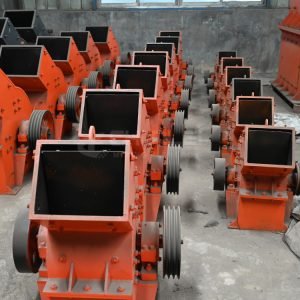
Small Hammer Crusher
A variety of models are available | Get the free price list! Small hammer crusher is a kind of small hammer crusher, which is mainly used for medium and fine crushing of various materials.Hammer crusher can be used…
loading…
已经是到最后一篇内容了!