Search the whole station Hot Product Catalog
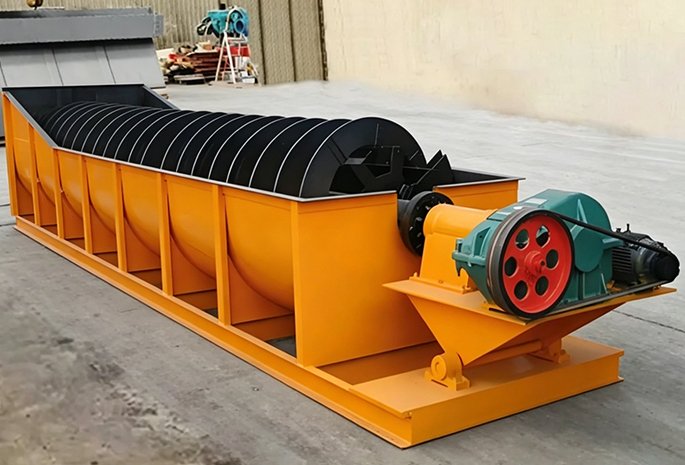
Spiral classifier is a classifier with the spiral at the overflow end fully submerged under the liquid surface, commonly used in two-stage classification.
In production lines such as mining, sand processing, and tailings recovery, common issues include insufficient classification accuracy, inconsistent particle size, rapid equipment wear, and frequent downtime. These problems directly reduce grinding efficiency, lower downstream flotation/gravity separation recovery rates, and increase operational costs.
The spiral classifier is a gravity settling classification device designed specifically to address these pain points. It accurately classifies ores, sand, and industrial materials by particle size and density, integrating classification, desliming, and dewatering in one unit. With a simple structure, low failure rate, and easy operation and maintenance, it is suitable for continuous 24/7 industrial production and is widely used in mining, sand plants, metallurgy, chemical, and environmental protection industries.
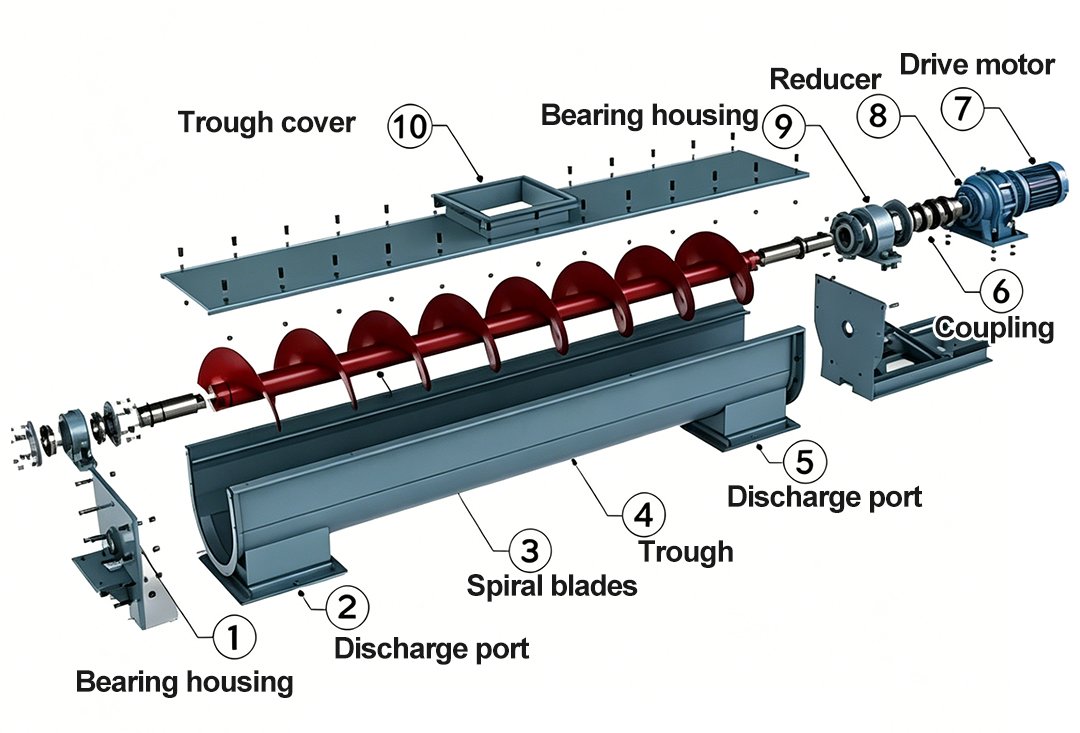
The spiral classifier mainly consists of a spiral shaft, trough, feeding device, discharge port, and drive system. Material enters the trough through the feeding device and moves upward or downward along the rotating spiral shaft under the action of water flow or gravity. Different particle sizes and densities are separated into different grades under the spiral separation effect, achieving classification or dewatering.
The operation of a spiral classifier can be divided into three continuous stages:
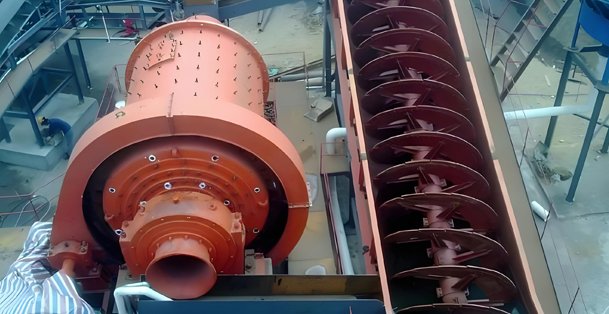

Spiral classifiers are also divided intosingle spiral and double spiral classifiers. The impellers are made of manganese steel or polyurethane, and customers can customize products according to their needs.
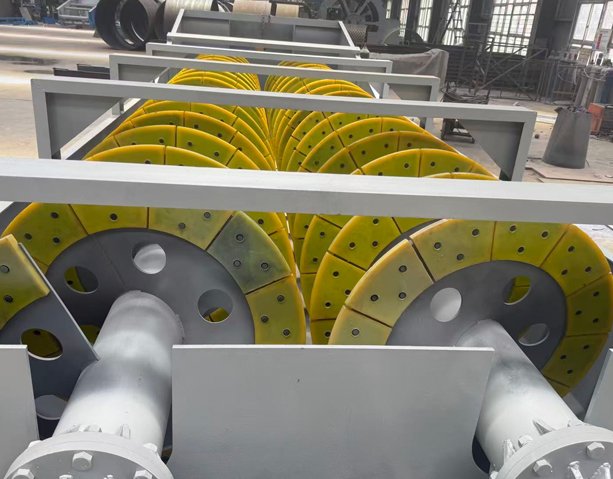
Polyurethane (PU) Blades
Polyurethane blades are made of high-molecular elastomer materials, exhibiting high wear resistance, high elasticity, and resistance to acid and alkali corrosion. Their smooth surface prevents sludge buildup and clogging, resulting in more stable grading efficiency. Due to their lightweight nature, they effectively reduce vibration and noise, minimizing the impact on bearings and transmissions. Their operating temperature range is typically -40°C to 120°C, but they are prone to aging under prolonged high temperature or high humidity environments.
They exhibit excellent wear resistance in fine-particle, low-impact, or acidic slurries, demonstrating superior performance under low-stress wear conditions compared to ordinary manganese steel. However, under large-particle or high-impact conditions, they may exhibit biting or tearing. In terms of service life, they can reach 1-3 years under normal operating conditions, and when handling strongly acidic fine-particle slurries, their service life is 1.5-2 times that of manganese steel.
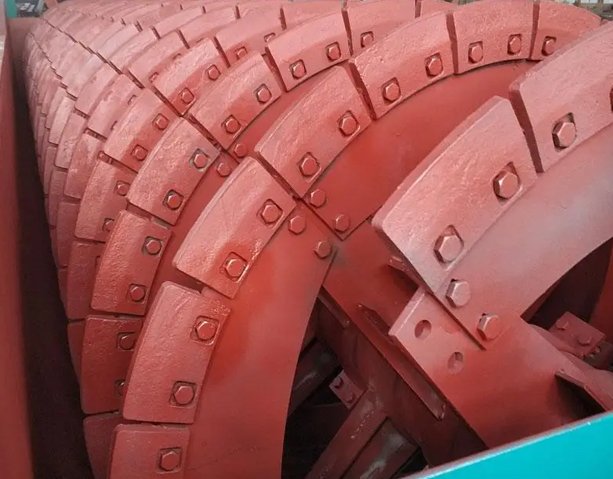
High-manganese steel (Mn13) blades
High-manganese steel blades are made of high-manganese austenitic steel with a relatively low initial hardness (HB180-220). After impact, the surface hardens to HB500+, exhibiting high strength, high toughness, and good impact resistance, and is not easily deformed. The metal surface is prone to dirt adhesion, and grooves may appear after wear, but it has excellent temperature resistance and can operate stably below 500℃.
Its wear resistance is outstanding in large-particle, high-impact, and highly abrasive conditions (such as coarse sand, gravel, and iron ore). The greater the impact, the more complete the hardening and the longer the service life. However, it is prone to corrosion in acidic slurries and has poor corrosion resistance. The typical service life is 1-2 years under strong impact dry/wet wear, while the service life is shorter under fine-particle, weak-impact conditions.
The spiral classifier consists of 6 key components:
| Component | Function | Material & Features |
|---|---|---|
| Transmission Device | Motor, reducer, gears to drive spiral rotation | Stable, low noise, long service life |
| Spiral (Single/Double) | Hollow shaft, blades, wear‑resistant lining | Seamless steel pipe, high strength |
| Lower Support | Supports the spiral, immersed in slurry | Movable sleeve + nylon bearing, easy replacement |
| Tank | Holds pulp, provides settling space | Steel plate welding, strong load capacity |
| Drain Valve | Empties slurry during maintenance | Quick opening, reliable sealing |
| Lifting Device | Lifts spiral during shutdown to protect parts | Automatic lifting, prevents overload |
To achieve accurate classification, high output, no coarse particle carryover, and no clogging, the key is to focus on the following five points, which are simple to implement on site:
Optimal slurry density is 20%–40% solids. Too thick results in poor classification; too thin wastes water and electricity, reducing efficiency.
The sand return volume from the classifier must balance with the ball mill’s capacity to ensure maximum efficiency of the entire production line.
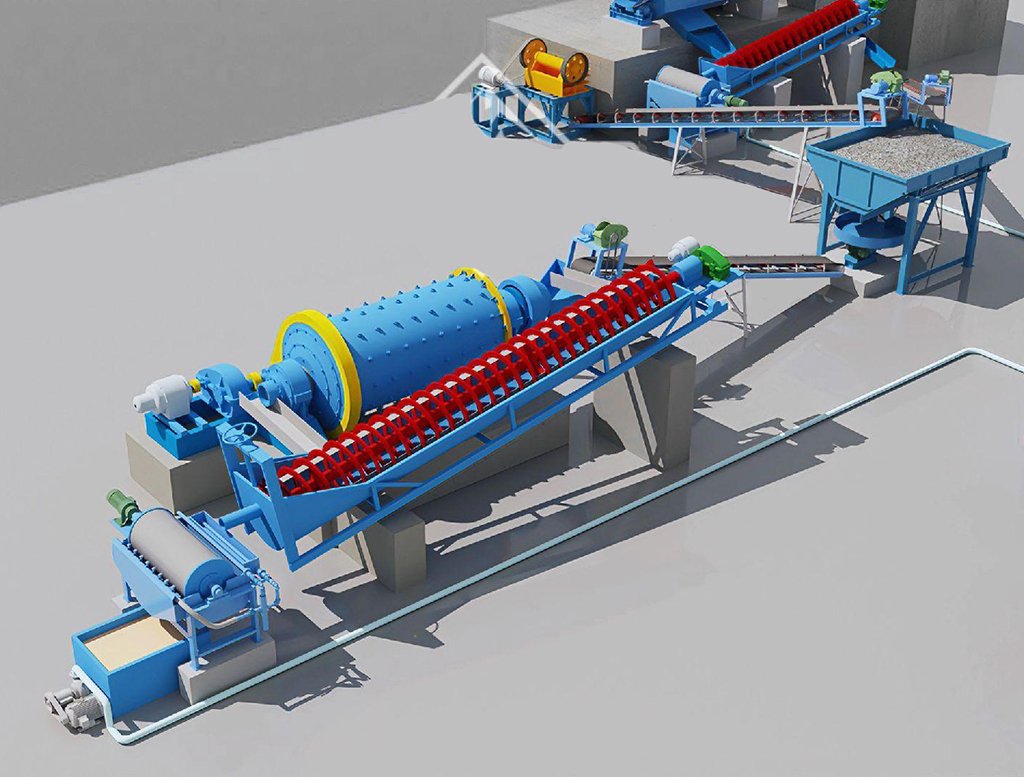
In a mineral processing line, ore is first crushed into small pieces, then ground by a ball mill into slurry. At this stage, the slurry contains particles of varying sizes, and the spiral classifier plays a key role:
| Model | Spiral Diameter (mm) | Trough Length (mm) | Spiral rotate speed (r/min) | Processing capacity(t/d) | Motor Power(kw) | Dimensions(mm≤) | Total weight (t) | ||||
| Sand -return | Overflow | For driving | For lifting | Length | Width | Height | |||||
| FG-3 | 300 | 3000 | 12-30 | 80-150 | 20 | 1.1 | —- | 3850 | 490 | 1140 | 0.7 |
| FG-5 | 500 | 4500 | 8-12.5 | 135-210 | 32 | 1.1 | —- | 5430 | 680 | 1480 | 1.9 |
| FG-7 | 750 | 5500 | 6-10 | 340-570 | 65 | 3 | —- | 6720 | 980 | 1820 | 3.1 |
| FG-10 | 1000 | 6500 | 5-8 | 675-1080 | 110 | 5.5 | —- | 7590 | 1240 | 2380 | 4.9 |
| FC-10 | 8400 | 675-1080 | 85 | 7.5 | —- | 9600 | 1240 | 2680 | 6.2 | ||
| FG-12 | 1200 | 6500 | 4-6 | 1170-1870 | 155 | 7.5 | 2.2 | 8180 | 1570 | 3110 | 8.5 |
| FC-12 | 8400 | 1170-1870 | 120 | 7.5 | 2.2 | 10370 | 1540 | 3920 | 11 | ||
| 2FG-12 | 6500 | 2340-3740 | 310 | 15 | 4.4 | 8230 | 2790 | 3110 | 15.8 | ||
| 2FC-12 | 8400 | 2340-3740 | 240 | 15 | 4.4 | 10370 | 2790 | 3920 | 17.6 | ||
| FG-15 | 1500 | 8300 | 4-6 | 1830-2740 | 235 | 7.5 | 2.2 | 10410 | 1880 | 4080 | 12.5 |
| FC-15 | 10500 | 1830-2740 | 185 | 7.5 | 2.2 | 12670 | 1820 | 4890 | 16.8 | ||
| 2FG-15 | 8300 | 2280-5480 | 470 | 15 | 4.4 | 10410 | 3390 | 4080 | 22.1 | ||
| 2FC-15 | 10500 | 2280-5480 | 370 | 15 | 4.4 | 12670 | 3370 | 4890 | 30.7 | ||
| FG-20 | 2000 | 8400 | 3.6-5.5 | 3290-5940 | 400 | 11-15 | 3 | 10790 | 2530 | 4490 | 20.5 |
| FC-20 | 12900 | 3210-5940 | 320 | 11-15 | 3 | 15610 | 2530 | 5340 | 28.5 | ||
| 2FG-20 | 8400 | 7780-11880 | 800 | 22-30 | 6 | 11000 | 4600 | 4490 | 35.5 | ||
| 2FC-20 | 12900 | 7780-11880 | 640 | 22-30 | 6 | 15760 | 4600 | 5640 | 48.7 | ||
| FG-24 | 2400 | 9130 | 3.67 | 6800 | 580 | 15 | 3 | 11650 | 2910 | 4970 | 26.8 |
| FC-24 | 14130 | 6800 | 490 | 18.5 | 4 | 16580 | 2930 | 7190 | 41 | ||
| 2FG-24 | 9130 | 13600 | 1160 | 30 | 6 | 12710 | 5430 | 5690 | 45.8 | ||
| 2FC-24 | 14130 | 13700 | 910 | 37 | 8 | 17710 | 5430 | 8000 | 67.9 | ||
| 2FG-30 | 3000 | 12500 | 3.2 | 23300 | 1785 | 40 | 8 | 16020 | 6640 | 6350 | 73 |
| 2FC-30 | 14300 | 23300 | 1410 | —- | —- | 17091 | —- | 8680 | 84.8 | ||
Q: What factors affect the capacity of a spiral classifier?
A: Capacity is mainly affected by spiral diameter, trough width, spiral speed, slurry density, and material particle size. Reasonable adjustment of these parameters can significantly improve classification efficiency and throughput.
Q: How to determine if a spiral classifier is achieving accurate classification?
A: Observe whether the particle size distribution of the overflow and underflow is uniform and check for fine particle loss. Accurate classification means coarse particles settle properly, fine particles discharge through the overflow, and the sand return volume matches the ball mill capacity.
Q: Can a spiral classifier handle high-silt slurry?
A: Yes, but it requires controlling slurry density, appropriately reducing spiral speed, and regularly cleaning sediment from the trough bottom to prevent clogging and ensure classification accuracy and stable operation.
Q: Does a spiral classifier consume a lot of electricity?
A: Power consumption depends on spiral diameter, speed, slurry volume, and lifting height. Using a frequency converter allows speed adjustment based on actual material conditions, reducing energy consumption while maintaining efficiency.
Q: Does worn spiral blades affect classification?
A: Yes. Worn blades lead to uneven material lifting and inaccurate classification. Therefore, blades must be inspected regularly and replaced promptly.
Q: Can a spiral classifier be used with flotation cells or other mineral processing lines?
A: Absolutely. Spiral classifiers are commonly used downstream of ball mills to separate fine and coarse materials, providing uniform, suitable slurry for flotation or subsequent processes, thereby improving overall processing efficiency.
Q: How to extend the service life of a spiral classifier?
Q: What production scales are suitable for spiral classifiers?
A: They are suitable for everything from small mines to large processing plants. Small output can use a single-spiral model, while large output or high-silt ores can use a double-spiral model with frequency control to improve efficiency.
With its high classification efficiency, strong dewatering capability, durable structure, and easy maintenance, the spiral classifier has become an indispensable core equipment in industries such as mining, sand plants, metallurgy, chemical, and environmental protection. Whether processing highly abrasive ores or performing fine classification of tailings or sand, the spiral classifier provides a stable, efficient solution. Selecting the right model and maintaining the equipment properly not only improves production efficiency but also extends service life, achieving cost savings and maximizing resource utilization. Inquire now or request a customized solution to make your production more efficient and reliable.
Rod mill is divided into dry rod mill and wet rod mill, dry rod mill is a kind of dry rod mill equipment with fine discharging granularity, wet rod mill is a grinding machine with steel rods as grinding media, mainly used for coarse grin…
The Thickener, with built-in degassing tank and sawtooth external overflow weir, prevents solid particles from attaching to air bubbles, improves localized suction phenomenon, and substantially increases the sedimentation area; at the same …
Raymond mill is a complete set of grinding equipment that can independently and autonomously generate a production system. Applicable materials: limestone, calcite, quicklime, dolomite, barite, talc, calcium carbonate, gypsum, bentonit…
The shaking table mainly consists of eight parts: bed head, motor, slope adjuster, bed surface, ore tank, water tank, rifling strip and lubrication system. According to the position of feeding device, shaking table can be divided into right…
The shaftless tumbler screen is a classification device that operates by rotating a cylindrical drum without a central shaft; the drum is supported by rubber wheels, eliminating the need for a central drive shaft or …
loading…
已经是到最后一篇内容了!
 Chunlei Mining Machinery