 Chunlei Mining Machinery


Rotary kiln
- Rotary kiln is a rotary heat treatment equipment, rotary kiln is mainly used for calcining cement clinker, divided into two categories of dry production cement kiln and wet production cement kiln. Metallurgical chemical kiln is mainly used in metallurgical industry iron and steel plant poor iron ore magnetization roasting; chromium, nickel iron ore oxidation roasting.
- Speed: 0.1-5r/min
- Capacity: 180-10000t/d
- Applicable materials: Lime, limestone, white ash, cement, sludge, zinc oxide, nickel iron, ceramic sand, magnesium metal, bauxite, clinker, sponge iron, limonite, activated carbon, kaolin, etc.
What is Rotary kiln?
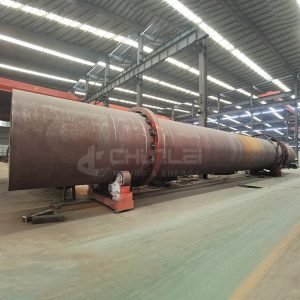
Rotary kiln is a kind of rotary calcining kiln, which belongs to the category of building materials equipment. It is a steel thin-walled cylinder with a certain slope (usually 1%-6%) installed on the supporting device. Rotary kiln can be divided into cement kiln, metallurgical chemical kiln and lime kiln according to different materials.
Cement kilns are mainly used for calcining cement clinker, and are divided into two categories: dry production cement kilns and wet production cement kilns. Metallurgical chemical kiln is mainly used for metallurgical industry iron and steel plant poor iron ore magnetization roasting; chromium, nickel iron ore oxidation roasting; refractory factory roasting high aluminum vanadium ore and aluminum plant roasting clinker, aluminum hydroxide; chemical plant roasting chrome ore sand and chrome ore powder and other types of minerals.
Lime kiln (i.e. active lime kiln) is used for roasting active lime and lightly burned dolomite used in iron and steel plants and ferroalloy plants.
If you are a beginner and do not know about Rotary kiln, tell us your raw material characteristics, finished product requirements, site conditions, production budget, hourly production, and other requirements, we have professional engineers to equip you with a suitable model at a reasonable price. Next, let’s see the types of Rotary kiln we can supply.
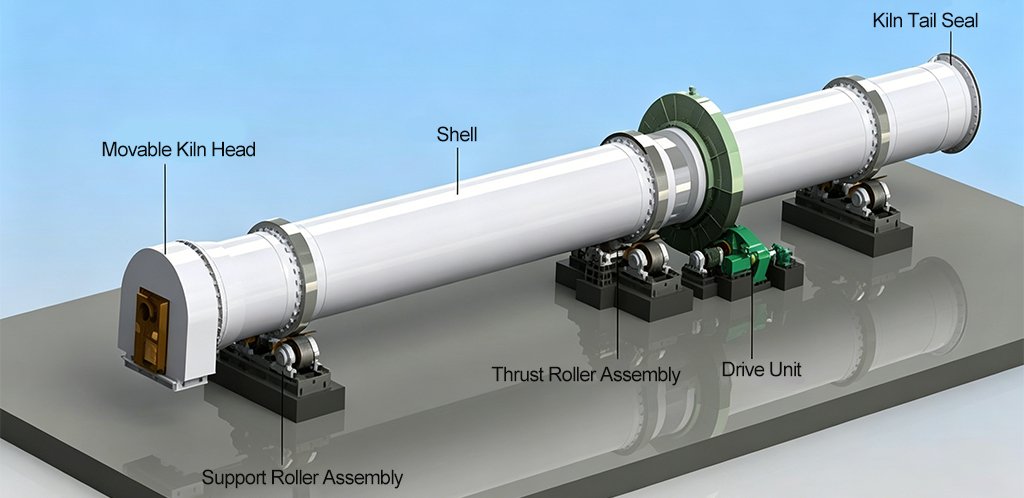
The Four Core Stages of a Rotary Kiln System
The rotary kiln production system comprises four core stages; while each stage operates independently, they are also interconnected and interdependent. Materials undergo an orderly flow and transfer process facilitated by belt conveyors, screw feeders, and discharge conveying equipment. Furthermore, by leveraging the 3° to 5° inclination of the rotary kiln body itself, the system achieves gravity-assisted material discharge—thereby reducing energy consumption and enhancing both operational efficiency and production stability.
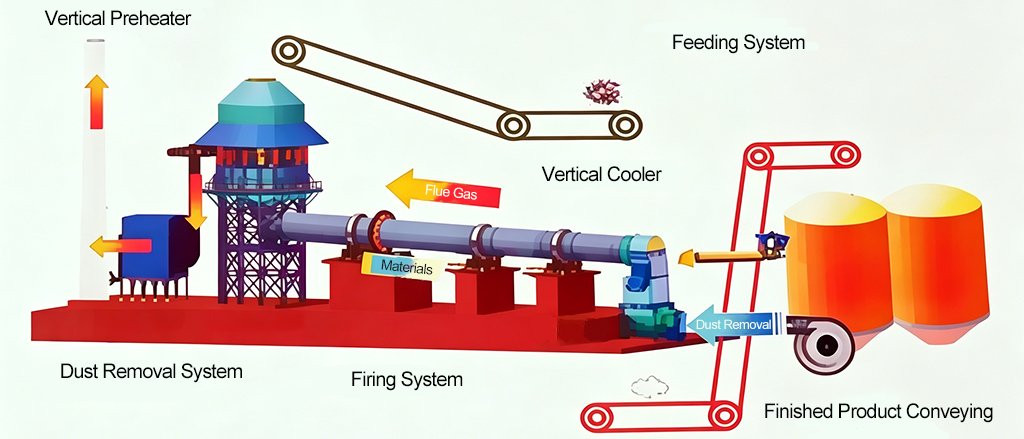
| Section | Primary Function | Key Output | Value Proposition |
| 1. Feeding System | Uniformly feeds material into the kiln | Stable material flow (adjustable: 1–50 tons/hour) | Prevents blockages and interruptions in material flow, ensuring stable thermal reactions within the kiln |
| 2. Kiln Body & Heating System | High-temperature roasting/calcination of ore (using natural gas, coal, or diesel) | Thermally processed ore (achieving target physicochemical properties) | Core profit-generating stage; achieves 90–98% of the expected thermal reaction efficiency |
| 3. Cooling System | Rapid cooling of high-temperature discharge | Cooled ore (≤100°C) | Prevents oxidation and ensures safe material conveyance |
| 4. Dust Removal System | Collects dust generated during roasting | Recoverable ore fines (recovery rate ≥95%) | Ensures environmental compliance, recovers valuable ore fines, and minimizes waste |
Working Principle of Rotary kiln
The working principle of rotary kiln mainly involves the movement of materials in the kiln, the flow of gas in the kiln, fuel combustion and heat transfer between materials and gas and other phenomena and laws. The raw material enters the cylinder from the kiln tail cylinder at high temperature into the cylinder for calcination. Due to the kiln body’s tilt and slow rotation, the material produces a composite movement that both tumbles along the circumference and moves from high to low along the axial direction. Fuel is injected from the kiln head and burned in the kiln, and the heat emitted heats the raw material, making it calcined into clinker. The hot air formed in the process of heat exchange with the material enters the kiln end system from the kiln feed end, and is then discharged into the atmosphere by the chimney.


Why Choose a Rotary Kiln for Mineral Thermal Processing?
The rotary kiln stands as the most cost-effective and stable equipment available for large-scale mineral thermal processing. Traditional fixed kilns suffer from uneven heating and low throughput, while fluidized bed roasters impose strict requirements on ore particle size; the rotary kiln, with its exceptional adaptability and continuous operation capabilities, perfectly resolves these critical pain points.
Rotary Kilns: Scalable, Highly Adaptable, and Economically Efficient:
- Broad Raw Material Adaptability: Capable of processing ores ranging from 0 to 50 mm in size with a moisture content of ≤30%; suitable for sulfide ores, carbonate ores, and drying mineral materials.
- Precise Temperature Control: Features multi-zone temperature monitoring (with an accuracy of ±5°C) to precisely match the specific temperature requirements of different ores (e.g., 600–800°C for pyrite; 900–1100°C for limestone).
- Low Long-Term Operating Costs: Achieves high thermal insulation efficiency (utilizing aluminum silicate fiber and refractory bricks), reducing heat loss by 30% compared to traditional kilns, while ensuring high fuel utilization efficiency.
We begin by conducting laboratory tests on your specific ore—analyzing its composition, moisture content, and thermal properties—to determine the optimal kiln diameter, length, temperature profile, and fuel type best suited to your needs.
Advantages of CHUNLEI Rotary Kilns
- Robust Processing Capacity: Rotary kilns enable continuous operation and deliver exceptionally high output, making them ideal for large-scale production lines.
- Stable Product Quality: Materials tumble continuously and advance through the kiln, ensuring uniform heating and, consequently, consistent product quality and stability.
- High Resource Utilization: Rotary kilns are versatile enough to handle the calcination and processing of a wide variety of materials; notably, they can directly calcine fine-grained limestone with particle sizes ranging from 10 to 50 mm—a material type that other kiln technologies are typically unable to utilize.
- Energy Efficiency and Environmental Protection: The kiln outlet is equipped with a vertical preheater; the flue gas discharged from this preheater features lower temperatures and reduced dust content, thereby contributing to environmental protection.
- Reduced Fuel Consumption: The vertical cooler situated at the kiln inlet serves a dual purpose: it cools the high-temperature lime to enhance product reactivity while simultaneously facilitating subsequent transportation and storage.
- Convenient Operation and Maintenance: Enhanced levels of automation allow operators to monitor and adjust the kiln’s operational status in real-time via a centralized control system, thereby effectively reducing labor intensity.
How to Enhance Rotary Kiln Processing Efficiency?
By precisely controlling temperature, optimizing residence time, and improving combustion efficiency, it is possible to maximize production capacity and minimize energy consumption. The following methods effectively address potential issues:
- Intelligent Temperature Control: Automated systems adjust fuel supply in real-time, preventing waste caused by overheating and inefficiency resulting from insufficient heat.
- Residence Time Management: Adjust the kiln’s rotational speed and inclination angle to maintain a residence time of 15–60 minutes (varying based on ore type)—a duration that is too short leads to incomplete reactions, while one that is too long results in excessive energy consumption.
- Combustion Optimization: Employ staged combustion and optimize the air-to-fuel ratio (typically 10–15:1 for natural gas) to boost fuel utilization efficiency by 10–15%.
- Waste Heat Recovery: Utilize waste heat boilers or preheat combustion air to reduce fuel consumption by 20–25%.
- Real-time Monitoring: Continuously monitor temperature profiles, discharge conditions, and flue gas parameters on an hourly basis—we provide professional training to facilitate this process.
Do You Need a Customized Rotary Kiln Process Flow?
Yes—the thermal properties, moisture content, and other characteristics of ore vary significantly from one country to another, and even between different locations within the same region. Blindly adopting a generic solution is therefore destined to fail. A customized process ensures that every piece of equipment, pipeline, and control system is specifically designed to suit the unique characteristics of your ore. You can customize your rotary kiln system by focusing on the following key aspects:
- Analysis of Ore Assay Reports (Composition, Moisture Content, Thermal Curves)
- Site Layout Optimization Based on Topography (To Minimize Energy Loss)
- Calculation of Fuel, Electricity, and Water Consumption (e.g., a 50-ton/hour kiln requires approximately 10,000 m³ of natural gas and 500 kW of electricity per day)
The Result: A rotary kiln system perfectly tailored to your specific site, ore type, and budget—featuring no redundant equipment, no operational bottlenecks, and absolutely no wasted resources.
What is the energy efficiency of modern rotary kilns?
Modern new-process dry-method rotary kilns demonstrate significantly improved energy efficiency; their thermal efficiency can reach 60%–75%—two to three times that of traditional kilns—while energy consumption per ton of clinker continues to decline.
Equipped with advanced energy-saving structures and mature waste heat recovery technologies, modern rotary kilns exhibit outstanding overall energy efficiency performance. These units feature an optimized inclined layout combined with a comprehensive process-wide thermal energy recovery design, thereby substantially minimizing heat loss and electricity consumption. Compared to traditional kiln equipment, they offer higher thermal utilization rates, lower production energy consumption, and more stable operating costs, fully meeting the energy-saving and low-carbon production requirements across various industries.
Energy Efficiency Comparison (Modern vs. Traditional)
| Metric | Modern Rotary Kiln | Traditional Rotary Kiln | Improvement Margin |
| Thermal Efficiency | 60%–75% | 30%–40% | Approx. 100% |
| Standard Coal Consumption | 94–100 kg/t | 130–150 kg/t | Reduced by 25%–35% |
| Power Consumption | 55–58 kWh/t | 70–80 kWh/t | Reduced by 20%–30% |
| Waste Heat Utilization Rate | 30%–40% | <10% | Increased by 300%+ |
Typical Production Capacity of Rotary Kilns
The typical production capacity of rotary kilns varies widely, ranging from a few hundred kilograms to tens of thousands of tons per day, depending on the specific type, specifications (diameter and length), and the material being processed.
| Application Fields | Typical Daily Capacity |
| Cement Production | 1000 – 10000 tons |
| Metallurgy / Chemicals | 0.5 – 1500 tons |
| Lime Production | 150 – 1200 tons |
Technical Parameters of Rotary kiln
| Product specification (m) | Kiln body size | Motor power (kw) | Gross weight (t) | Remark | ||||
| Diameter(m) | Length(m) | Slope(%) | Output (t/d) | Rotational speed(r/min) | ||||
| Φ2.5×40 | 2.5 | 40 | 3.5 | 180 | 0.44-2.44 | 55 | 149.61 | |
| Φ2.5×50 | 2.5 | 50 | 3 | 200 | 0.62-1.86 | 55 | 187.37 | |
| Φ2.5×54 | 2.5 | 54 | 3.5 | 280 | 0.48-1.45 | 55 | 196.29 | Decomposingkiln outside kiln |
| Φ2.7×42 | 2.7 | 42 | 3.5 | 320 | 0.10-1.52 | 55 | 198.5 | —— |
| Φ2.8×44 | 2.8 | 44 | 3.5 | 450 | 0.437-2.18 | 55 | 201.58 | Decomposingkiln outside kiln |
| Φ3.0×45 | 3 | 45 | 3.5 | 500 | 0.5-2.47 | 75 | 201.94 | —— |
| Φ3.0×48 | 3 | 48 | 3.5 | 700 | 0.6-3.48 | 100 | 237 | Decomposing kiln outside kiln |
| Φ3.0×60 | 3 | 60 | 3.5 | 800 | 0.3-2 | 100 | 310 | —— |
| Φ3.2×50 | 3.5 | 50 | 4 | 1000 | 0.6-3 | 125 | 278 | Decomposing kiln outside kiln |
| Φ3.3×52 | 3.3 | 52 | 3.5 | 1300 | 0.266-2.66 | 125 | 283 | Preheating calciner |
| Φ3.5×54 | 3.5 | 54 | 3.5 | 1500 | 0.55-3.4 | 220 | 363 | Preheatingcalciner |
| Φ3.6×70 | 3.6 | 70 | 3.5 | 1800 | 0.25-1.25 | 125 | 419 | Preheatingpower kiln |
| Φ4.0×56 | 4 | 56 | 4 | 2300 | 0.41-4.07 | 315 | 456 | Preheatingcalciner |
| Φ4.0×60 | 4 | 60 | 3.5 | 2500 | 0.396-3.96 | 315 | 510 | Preheatingcalciner |
| Φ4.2×60 | 4.2 | 60 | 4 | 2750 | 0.41-4.07 | 375 | 633 | Preheatingcalciner |
| Φ4.3×60 | 4.3 | 60 | 3.5 | 3200 | 0.396-3.96 | 375 | 583 | Preheatingcalciner |
| Φ4.5×66 | 4.5 | 66 | 3.5 | 4000 | 0.41-4.1 | 560 | 710.4 | Preheatingcalciner |
| Φ4.7×74 | 4.7 | 74 | 4 | 4500 | 0.35-4 | 630 | 849 | Preheating calciner |
| Φ4.8×74 | 4.8 | 74 | 4 | 5000 | 0.396-3.96 | 630 | 899 | Preheatingcalciner |
| Φ5.0×74 | 5 | 74 | 4 | 6000 | 0.35-4 | 710 | 944 | Preheatingcalciner |
| Φ5.6×87 | 5.6 | 87 | 4 | 8000 | Max4.23 | 800 | 1265 | Preheatingcalciner |
| Φ6.0×95 | 6 | 95 | 4 | 10000 | Max5 | 950×2 | 1659 | Preheating calciner |
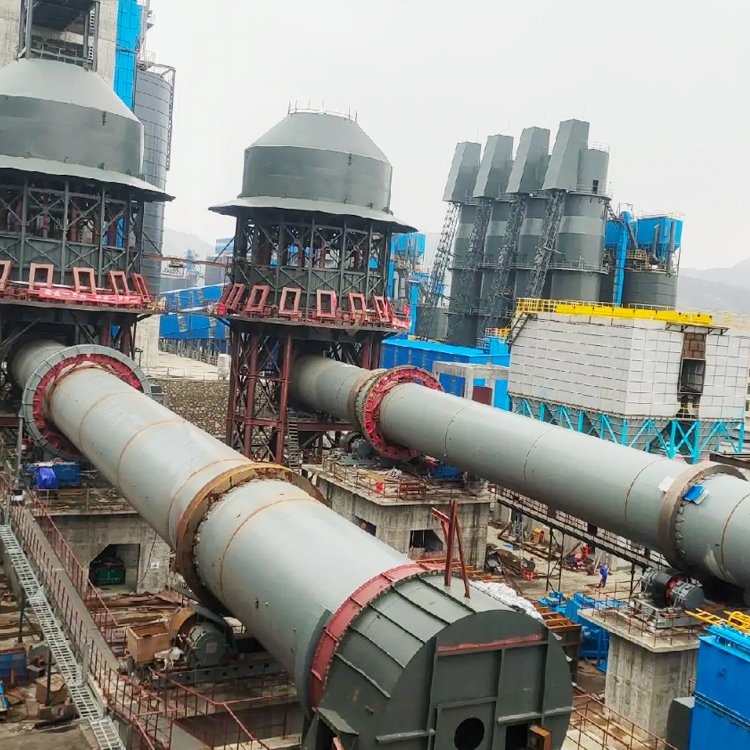
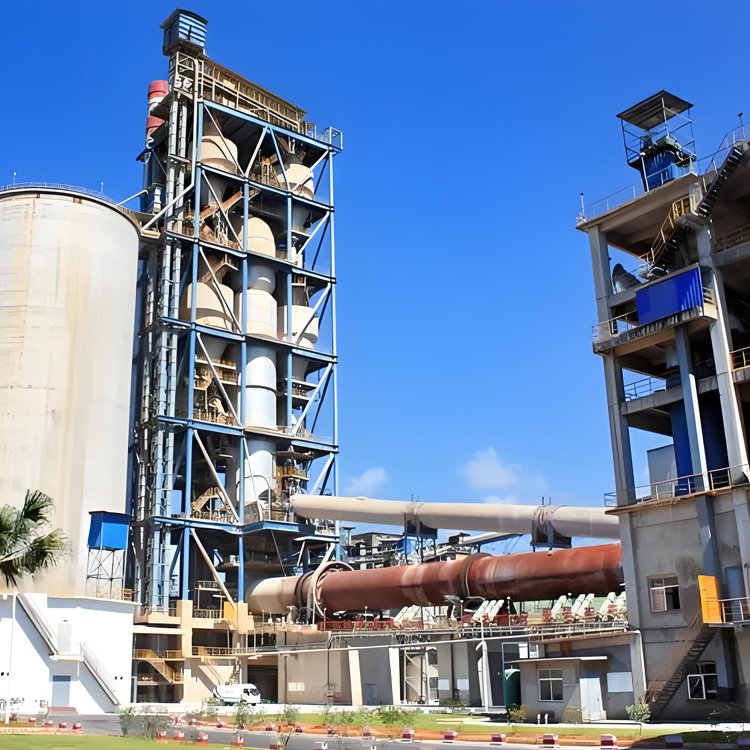
Rotary kiln ordered by Customer
Chunlei Machinery has been engaged in mining machinery manufacturing for more than 30 years, with a wealth of experience in building websites and customer cases, served customers all over the world!


How to Choose a Reliable Rotary Kiln Supplier?
Avoid trading companies that lack thermal engineering expertise—a rotary kiln requires scientific thermal design; it is not merely a simple steel structure. Select a supplier that meets the following criteria:
- In-house Laboratory: Offers free testing of 50kg ore samples to determine optimal temperature curves and operating parameters.
- Professional Engineering Team: Provides detailed thermal and structural CAD drawings.
- Manufacturing Capabilities: Demonstrates production strength through factory videos (showcasing CNC bending, robotic welding, and refractory processing lines).
- Global EPC Experience: A proven track record of over 180 successful projects worldwide.
- After-Sales Support: Offers 24-hour technical assistance, with established service centers located across Africa, South America, and Asia.
2026 Rotary Kiln Technology Trends
In 2026, rotary kiln technology is centered on intelligent automation, energy conservation, and carbon reduction—aiming to lower operating costs while ensuring full compliance with environmental standards.
- AI Intelligent Temperature Control: Sensors provide real-time monitoring of temperature, flue gas, and material flow; AI automatically adjusts fuel input, rotation speed, and feed rate—reducing human error by 85%.
- Low-NOx Burners: Employing staged combustion techniques, these burners reduce NOx emissions by 40%, ensuring full compliance with the latest environmental regulations.
- High-Efficiency Insulation Materials: Featuring a combination of nano-coatings and lightweight refractory bricks, these materials reduce heat loss by 30% and extend the service life of the kiln lining by 50%.
- Upgraded Waste Heat Recovery: Flue gas waste heat recovery systems generate electricity capable of meeting 30–40% of the kiln system’s total power requirements.
The 2026 CHUNLEI Rotary Kiln models fully integrate all of the above technologies—offering a one-step investment solution for a worry-free future.
FAQ
Q: How many tons of material can a rotary kiln process in a single day?
A: It depends on the specifications. Small-scale kilns typically produce 30–50 tons per day, while large-scale cement kilns can reach 8,000–10,000 tons.
Q: What causes the bearing shells (bushings) of a rotary kiln to overheat?
A: This is usually caused by poor-quality lubricating oil, an interruption in the cooling water supply, or wear on the bearing shells themselves. First, check the oil and cooling water; if the issue persists, the bearing shells will need to be scraped (re-fitted).
Q: How do you correct axial surging (back-and-forth movement) of the kiln shell?
A: Adjust the support rollers. Push the roller on the “uphill” side slightly inward, or adjust the parallelism of the support roller axes.
Q: Is it mandatory to “turn” (slow-rotate) the kiln after a shutdown?
A: It is absolutely mandatory. If the kiln is not turned, the significant temperature difference between the upper and lower sections of the shell will cause it to warp; once warped, it is extremely difficult to straighten.
Q: How long do refractory bricks typically last?
A: It depends on the operating conditions. Under normal conditions, they last 1–2 years; however, if the kiln is frequently started and stopped, or if localized overheating occurs, the bricks may begin to fall out within just a few months.
Q: What should be done if a “ring” (buildup) forms inside the rotary kiln?
A: First, determine whether it is a front-end ring or a rear-end ring. For a front-end ring, adjust the flame shape; for a rear-end ring, adjust the raw material mix and kiln speed. In severe cases, the kiln must be shut down to physically break up the ring.
Q: What causes dust emissions from the kiln tail (discharge end)?
A: This is typically caused by an excessive feed rate, or by a leak in the kiln tail sealing ring. First, inspect the seal; then, stabilize the material feed rate.
Q: How can one determine when the riding rings (tires) and support rollers need to be replaced?
A: If the surfaces become pitted or start to spall (peel), or if visible run-out (wobbling) occurs—and these issues cannot be resolved through adjustment—then the components require either repair or replacement.
Summary and Recommendations
The key to a high-yield rotary kiln system for mineral processing lies in the precise matching of equipment parameters with the thermal characteristics of the ore. This requires a rational feeding mechanism to ensure a stable supply of material, a customized kiln body and heating system to facilitate efficient thermal reactions, and a comprehensive cooling and dust removal system to guarantee safe and environmentally compliant operations.
Step One: Collect a 50kg representative sample of ore from your mine and ship it to our laboratory. We will conduct a free analysis and design a customized rotary kiln solution—eliminating guesswork and waste.
Contact CHUNLEI Heavy Industry for a free consultation on rotary kiln solutions; our technical team will help you engineer a production line that maximizes both mineral processing efficiency and profitability.
Related Products —
Lime Rotary Kiln
A lime rotary kiln production line is specialized industrial equipment designed to produce quicklime by calcining limestone (calcium carbonate, CaCO₃) at high temperatures (900–1200°C) within a rotary kiln. Characterized…
Three Drum Dryer
A three-roller dryer consists of three concentric rotating drums. It continuously dries bulk wet materials through staged heating and hot air circulation. The equipment relies on the synchronous rotation of the inner, mi…
Drum Dryer
A rotary drum dryer, also known as a tumble dryer, is a core drying equipment in ore processing. It is suitable for high-moisture mineral concentrates, mineral powders, slags, and industrial by-products. Used in mini…
Cement Rotary Kiln
The cement rotary kiln is the core thermal processing equipment within a cement production line, primarily used to calcine raw cement meal into clinker. Because the equipment is installed at an incline and operates throu…
loading…
已经是到最后一篇内容了!