 Chunlei Mining Machinery
Steel Slag Production Line
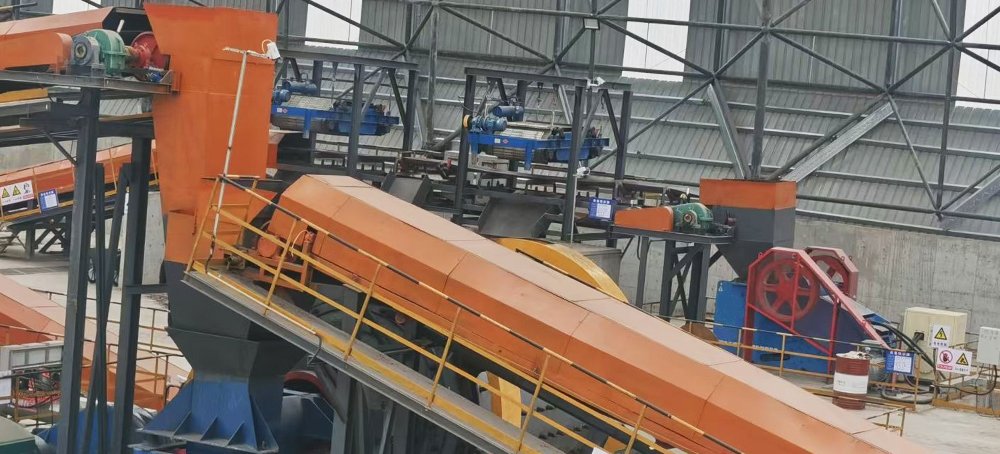
Steel Slag Production Line
Steel slag production lines can transform industrial steel slag generated from steelmaking and ironmaking into valuable resources, processing it into high-value-added building material aggregates, mineral powder, and recycled metals. The CHUNLEI steel slag treatment system boasts a comprehensive resource utilization rate of up to 98%, helping large, medium, and small steel mills and solid waste recycling companies achieve profitability.
Steel slag may seem like a low-cost waste material, but after crushing and purification, it not only has a high iron content but also commands a rising price, with strong market demand. Processed steel slag can be utilized as a smelting flux, cement raw material, building aggregate, road aggregate, brick raw material, and slag fertilizer. Improper handling of these residues can easily cause environmental pollution. So, how can we maximize the recovery of iron resources from steel slag? CHUNLEI has extensive experience in iron resource recovery and provides complete steel slag processing production line equipment.
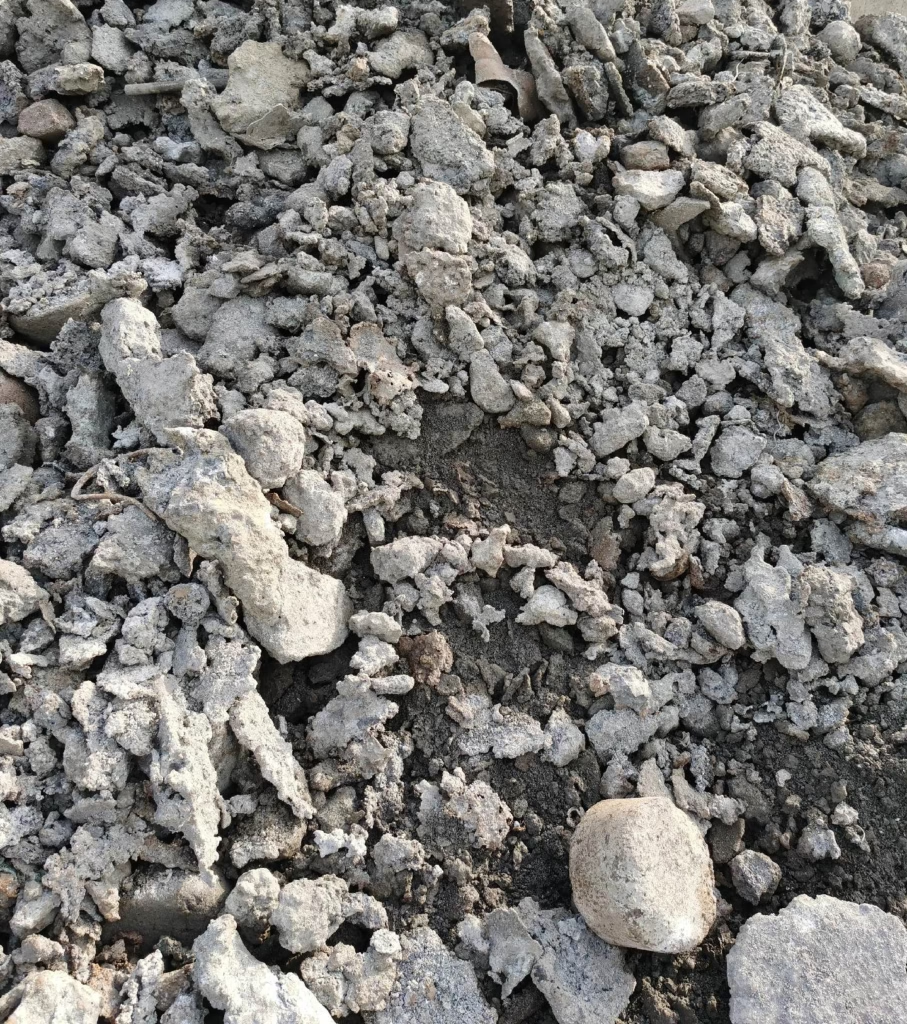
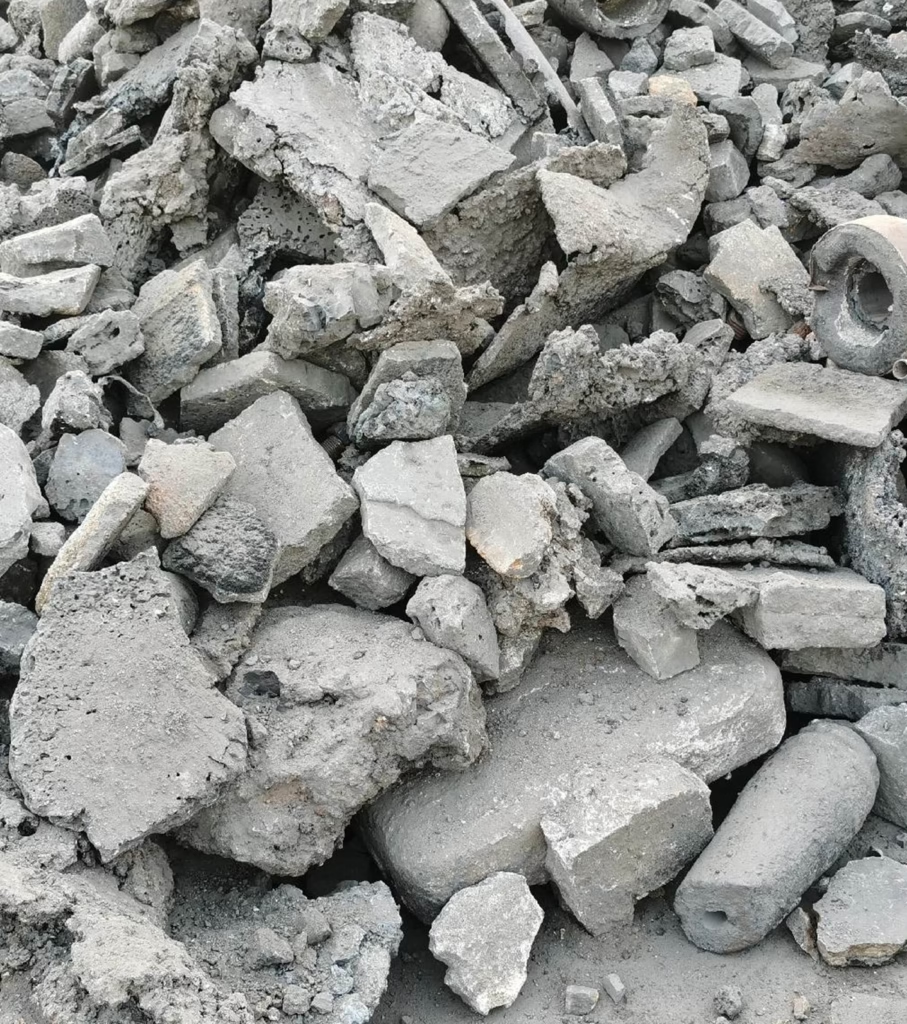
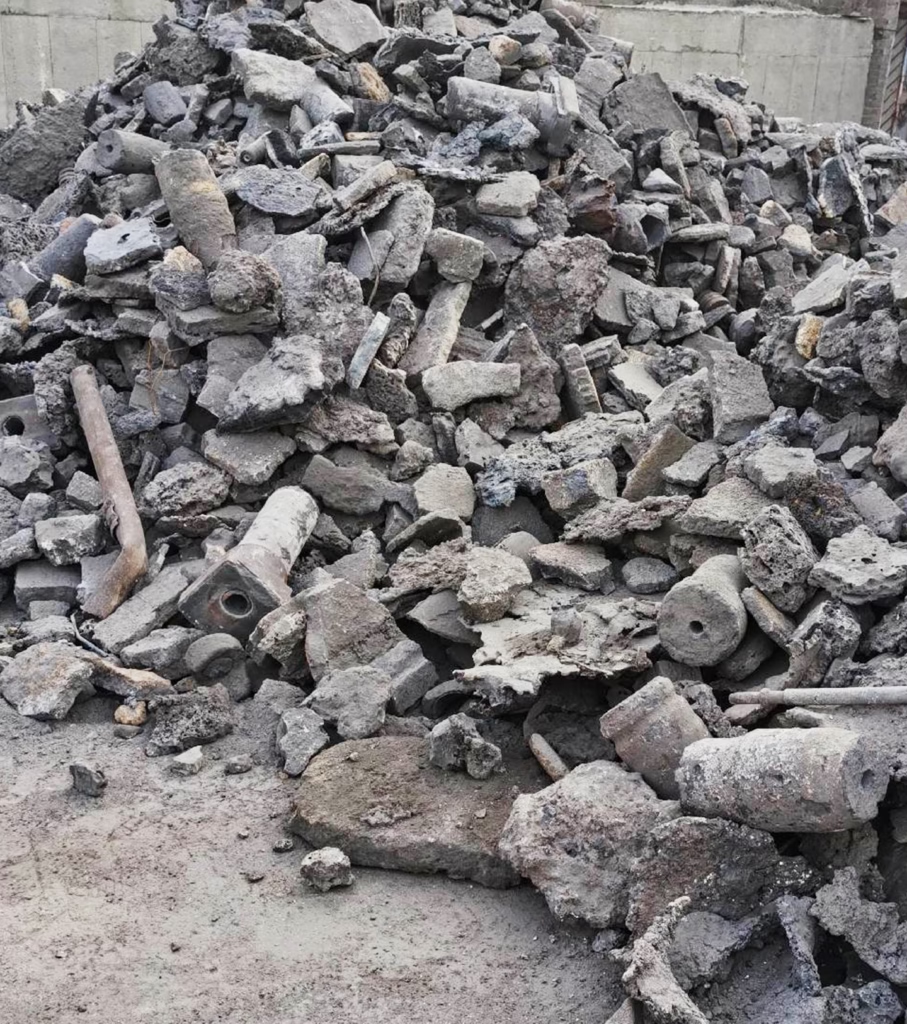
What is steel slag?
Steel slag is the waste residue discharged during steelmaking, a high-volume industrial solid waste accounting for approximately 15%-20% of crude steel production. Depending on the type of steelmaking furnace, it can be classified as converter slag, blast furnace slag, or electric furnace slag. Steel slag primarily consists of calcium, iron, silicon, magnesium, and trace amounts of oxides such as aluminum, manganese, and phosphorus. Among these, calcium, silicon, manganese, and other trace elements can also serve as effective fertilizers for acidic soils.
What is a steel slag processing plant?
A steel slag processing plant is a complete production system specifically designed for crushing, ball milling, magnetic separation, screening, grinding, and resource utilization of steel slag generated during the steelmaking process. After processing, the steel slag not only recovers reusable steel resources but also produces products such as steel slag powder, building aggregates, cement admixtures, and road base materials, improving resource utilization and reducing environmental pollution.
Professional steel slag processing plants are designed for the three main types of steel slag, achieving a closed-loop resource utilization process with no waste discharge, making them highly environmentally friendly.
Six core processes of steel slag production line
| Process Section | Main Work Content | Output | Practical Function |
| 1. Cooling Pretreatment | Cooling high-temperature steel slag (up to 1500℃) using air cooling and water cooling methods, sorting large impurities | Forming regular steel slag blocks (particle size ≤300mm) | Preventing subsequent cracking and expansion of steel slag, reducing wear on subsequent equipment |
| 2. Primary Crushing | Jaw crusher and other equipment crush 300mm slag blocks to about 50mm | Small and medium-sized steel slag aggregate | Reducing energy consumption in fine crushing and grinding |
| 3. Magnetic Separation for Iron Extraction | High-intensity magnetic separation equipment separates metallic materials from the slag | Purity ≥90% Recycled scrap steel | Core profit link, iron material sales can cover 20%~30% of operating costs |
| 4. Secondary Crushing + Screening | Further crushing and grading, producing aggregates of 0-5mm, 5-10mm, etc. | Finished steel slag aggregate | Strictly matching construction material standards, ensuring product sales |
| 5. Grinding Process (Optional) | Ball mill or vertical mill grinds slag into fine powder. | Steel slag fine powder | Used as a cement admixture, the profit is 2-3 times that of ordinary aggregate. |
| 6. Stabilization Treatment (Optional) | Hydration with water/special additives reduces free calcium oxide (f-CaO). | Standardized slag (f-CaO ≤ 3%) | Meets building material safety standards, avoiding finished product rejection. |
What are the core equipment requirements for a steel slag processing production line?
A complete steel slag processing production line typically includes the following core equipment:
- Vibrating feeder: uniformly conveys steel slag material;
- Jaw crusher: coarsely crushes large pieces of steel slag to 50mm;
- Fine jaw crusher: further fine crushes, improving metal dissociation;
- Magnetic separator: recovers metallic iron from the steel slag, improving resource utilization;
- Vibrating screen: screens and grades the steel slag;
- Ball mill: grinds the steel slag into fine powder, increasing added value;
- Belt conveyor: connects various processes, enabling continuous production;
- Dust removal equipment: reduces dust emissions, meeting environmental protection requirements.
Among these, the magnetic separator is responsible for metal recovery, and the ball mill is responsible for preparing fine steel slag powder; both are key pieces of equipment in the steel slag production line.
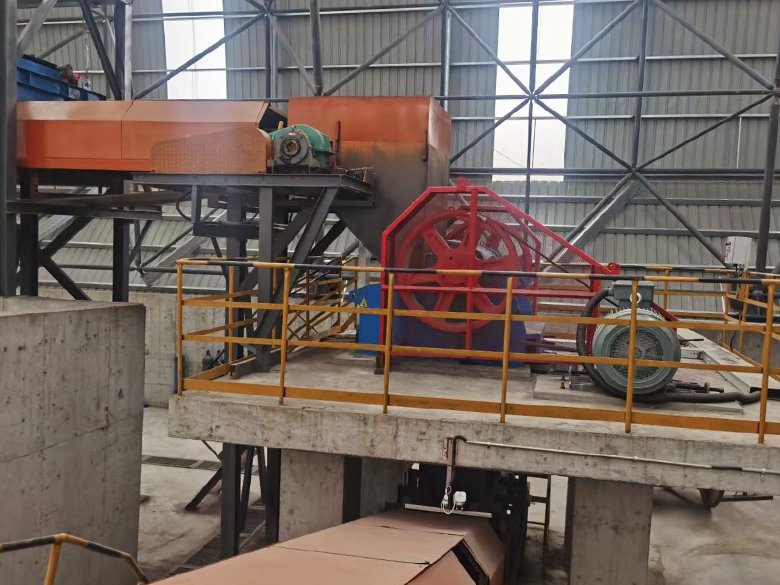
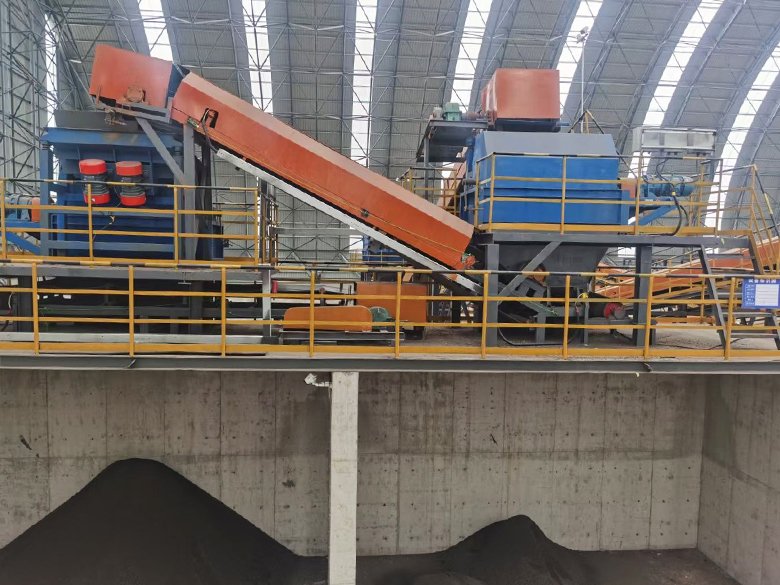
Dry Steel Slag Separation vs. Wet Steel Slag Separation
Dry Separation (Dry Magnetic Separation): After crushing, steel slag directly enters the magnetic separation system for iron recovery. The entire process requires no water addition or slurry preparation, and is mainly used for pre-separation of coarse-grained steel slag, tailings disposal, and steel particle recovery.
Wet Separation (Wet Grinding): After crushing, steel slag enters a ball mill or rod mill for grinding, water is added to make slurry, and then wet magnetic separation + classification and dewatering are used to recover fine iron concentrate.
Advantages of Dry Steel Slag Treatment:
- No Water Consumption, No Wastewater Pollution: The dry separation process does not require a circulating water system and does not generate wastewater or sludge, effectively avoiding wastewater pollution. It is especially suitable for water-scarce areas or steel companies with strict environmental protection requirements.
- Low Infrastructure Investment, Small Footprint: Eliminating the need for water tanks, filter presses, thickeners, return water pipelines, and tailings ponds, the civil engineering investment is 30%~45% lower than wet separation, and it can be easily installed in the open air.
- Low operating costs: No water pumps, filter presses, or wastewater treatment equipment are required, resulting in lower overall energy consumption and maintenance costs, effectively reducing steel slag processing costs.
- Dry products, direct sales: Recovered scrap steel and steel granules are in a dry state, requiring no dehydration or drying, and can be directly recycled or sold; tailings can be used as road aggregate, building aggregate, or steel slag powder raw material without dehydration.
- Applicable to coarse-grained, hot slag, and existing dry-stocked steel slag: Processes particle sizes from 0 to 100 mm, with strong adaptability to hot-quenched/naturally cooled dry slag and long-term stockpiled dry steel slag in plant areas.
- Simple production management: The equipment structure is relatively simple, and environmental compliance can be achieved through a closed conveying and bag filter dust collection system.
While dry steel slag processing offers advantages such as low investment, low operating costs, and no water requirement, its fine-grained metallic iron recovery rate is relatively low. Because it relies solely on crushing and magnetic separation processes, the fine iron particles encapsulated in the steel slag are difficult to fully dissociate, leading to the loss of some valuable metals with the tailings. Furthermore, obtaining high-purity iron concentrate is difficult. Additionally, a comprehensive dust removal system is required during production to achieve environmental protection.
Advantages of wet steel slag treatment:
- Extremely high metal recovery rate, complete recovery of fine iron particles: Water-based particle dispersal and grinding dissociate encapsulated iron, even 0.03mm fine iron powder can be separated; tailings MFe can be reduced to 0.8%~1.5%, with a total recovery rate of 88%~95%, suitable for high-value iron powder export.
- High concentrate grade and low impurities: Water washing removes adhering sludge, and multi-stage wet magnetic separation can produce high-purity iron concentrate with TFe≥88%, commanding a higher price and allowing direct reuse by steel mills.
- No dust pollution, clean workshop environment: Full slurry processing eliminates dust; hot slag cooling and dust suppression effects are naturally present.
- Better tailings stability: Water washing removes free calcium oxide and alkali salts, resulting in tailings with better stability as building materials and cement admixtures compared to dry-processed tailings; wet grinding facilitates the digestion of f-CaO.
- Can be integrated with flotation and gravity separation processes: For applications requiring dephosphorization and iron concentrate purification, wet systems can be combined with flotation, which is impossible with dry processes.
While wet steel slag treatment offers high metal recovery rates and iron concentrate grades, its drawbacks are also significant. It consumes substantial amounts of water, necessitating a comprehensive water treatment system, leading to substantial investment and land occupation. Furthermore, the continuous operation of equipment such as ball mills and pumps increases energy consumption and maintenance costs. Therefore, wet steel slag treatment is more suitable for large and medium-sized steel slag resource utilization projects that prioritize high recovery rates and high value-added products.
| Comparison Dimensions | Dry Steel Slag Separation (Dry Magnetic Separation) | Wet Steel Slag Separation (Wet Grinding) |
| Water Resources | Zero consumption, no water pollution | Large water consumption, alkaline wastewater requires treatment |
| Infrastructure Investment | Low, no water ponds or tailings ponds | High, complete water treatment system required |
| Metal Recovery Rate | 75%~85%, severe loss of fine iron | 88%~95%, full recovery of micro-fine iron |
| Concentrate Grade | 775%~85%, high amount of slag inclusions | 88%~92%, high purity, high selling price |
| Energy Cost | Low, no grinding, dewatering, or water pump power consumption | High, ball milling, filter press, High energy consumption during dryin |
| Product State | Dry material, directly sold for remelting | Wet ore, requires dehydration and drying |
| Environmental Risks | Dust risk, no wastewater | Dual risks of wastewater and tailings leachate |
| Applicable Particle Size | Coarse particles 0~100mm, pre-disposal tailings | Full range of coarse and fine particles, deep purification of iron powder |
| Tailings Uses | Aggregate, roadbed, moderate stability | Cement admixture, steel slag powder, excellent stability |
| Suitable Scenarios | Water-scarce areas, coarse steel particle recovery, low-cost pretreatment, steel slag inventory utilization | Water-sufficient areas, pursuing high recovery rates, exporting high-grade iron powder, deep processing in building materials |
How to Choose Between Dry and Wet Steel Slag Treatment?
The choice between dry and wet steel slag treatment processes mainly depends on the characteristics of the steel slag, product requirements, investment budget, and environmental conditions. If the project aims to recycle scrap steel, reduce investment costs, and achieve rapid production, dry steel slag treatment is usually a more economical choice. However, if the goal is to achieve higher metal recovery rates, high-grade iron concentrate, and the production of fine steel slag powder, then wet steel slag treatment is more advantageous.
For large-scale steel slag resource utilization projects, an increasing number of companies are adopting a combined “dry separation + wet separation” process. First, large-particle scrap steel is recovered through dry magnetic separation, and then fine iron powder is recovered using ball mills and wet magnetic separation. This approach controls investment costs while achieving higher metal recovery rates and economic benefits.
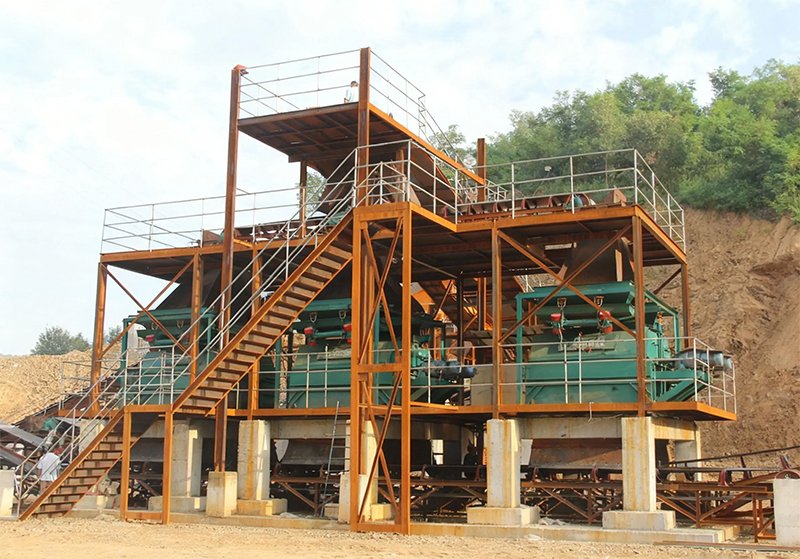
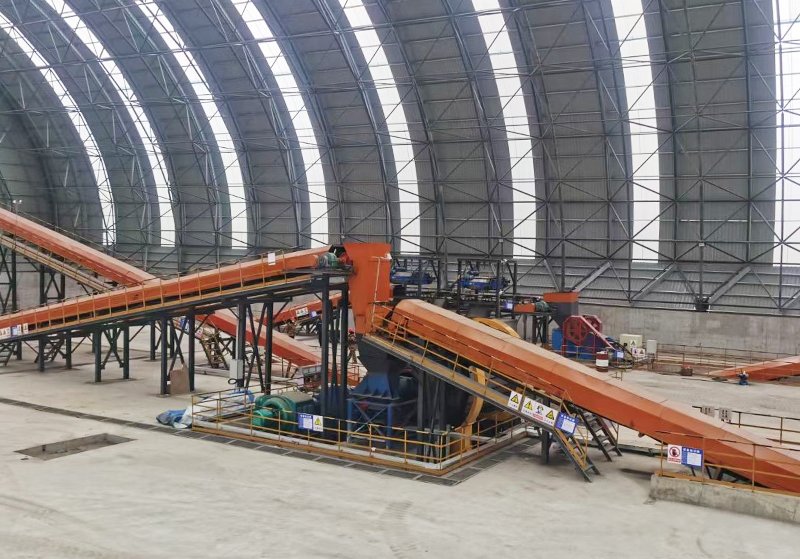
The Role of Ball Mills in Steel Slag Processing Production Lines
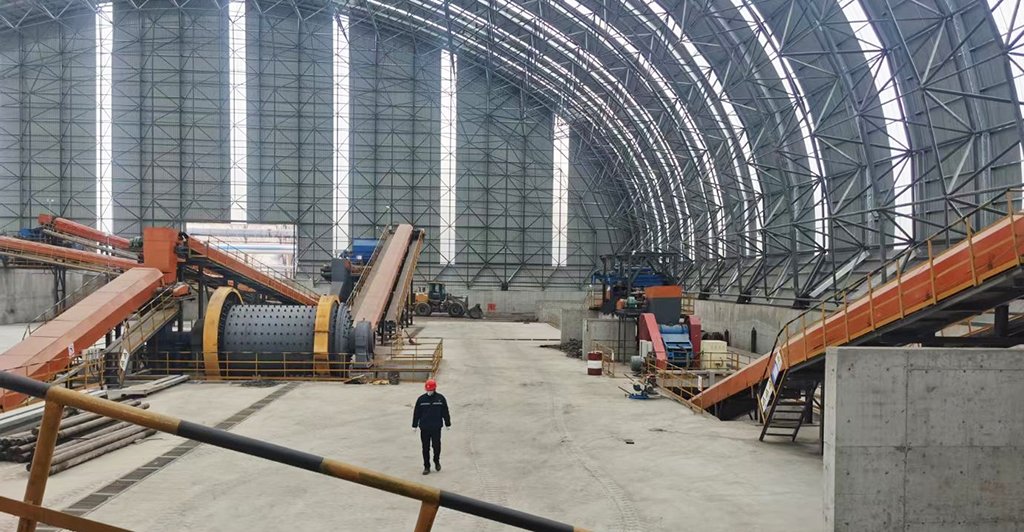
Ball mills are one of the core pieces of equipment in steel slag processing production lines. Their primary function is to finely grind crushed and magnetically separated steel slag to produce high-value-added steel slag powder.
Through ball mill grinding, steel slag particles achieve the required fineness, increasing their activity and utilization value, thus enabling their widespread application in the cement, concrete, and building materials industries.
The main functions of ball mills are:
- Grinding steel slag to the required fineness, improving product quality;
- Improving the activity of steel slag, enhancing its performance as a cement admixture;
- Producing high-value steel slag powder, increasing product added value;
- Improving the comprehensive utilization rate of steel slag resources, reducing waste accumulation;
- Creating more economic benefits for enterprises and achieving green recycling.
In steel slag powder production projects, the grinding efficiency and finished product fineness of the ball mill directly affect the final product quality; therefore, selecting efficient and energy-saving ball mill equipment is particularly important.
What is the optimal fineness for grinding steel slag?
The optimal fineness for grinding steel slag depends primarily on its end application. Generally, the specific surface area of steel slag powder is typically controlled at 400–500 m²/kg, ensuring activity while balancing grinding energy consumption and production costs.
- Cement admixture: 400–450 m²/kg
- Steel slag powder production: 450–500 m²/kg
- High-activity mineral admixture: Above 500 m²/kg
It’s important to note that finer is not always better. While excessive grinding can increase activity, it also increases energy consumption and costs. Therefore, choosing the appropriate fineness is crucial. Based on our experience, a fineness below 350 m²/kg can easily lead to insufficient strength; above 700 m²/kg, production costs surge, potentially resulting in losses without high-end orders.
What are the uses of processed steel slag?
Steel slag, after being crushed, magnetically separated, and ground, can be utilized as a resource and is widely used in building materials, road engineering, and environmental protection. Main uses include:
- Cement admixture: Steel slag powder can partially replace cement clinker, reducing production costs.
- Mineral admixture: Used in ready-mixed concrete to improve its durability and later-stage strength.
- Road base material: Used in the construction of roadbeds for highways, railways, etc., providing good stability and load-bearing capacity.
- Building aggregate: Processed steel slag can be used as building aggregate.
- Environmentally friendly building materials: Can be used to produce permeable bricks, blocks, and other new building materials.
- Iron recovery: Scrap steel and iron resources in steel slag can be recovered through magnetic separation, improving economic efficiency.
Processing steel slag through a production line not only turns waste into treasure and creates economic value but also reduces solid waste accumulation, achieving resource recycling and green environmentally friendly production.
How to Achieve Iron Recovery in Steel Slag Processing Production Lines?
Iron recovery is the core profit-generating process in steel slag production lines. The industry primarily uses magnetic separation combined with multi-stage crushing and screening to form a tiered recovery process, achieving a conventional iron recovery rate of over 85%.
Iron Recovery Process:
- Using equipment such as jaw crushers and cone crushers, large pieces of steel slag are gradually crushed, fully releasing the iron trapped within.
- Primary coarse separation is performed using a magnetic separator to recover larger-diameter scrap steel and high-grade iron, improving recovery efficiency.
- Vibrating screens are used to classify materials of different particle sizes; materials that do not meet the requirements are returned for further crushing.
- Fine-grained steel slag undergoes secondary magnetic separation, also known as secondary cleaning, to further recover residual iron and improve the iron resource recovery rate.
- If steel slag powder is required, a magnetic separation process can be added after ball milling to recover fine iron powder, maximizing resource utilization.
Advantages of iron metal recycling:
- Improved steel resource utilization
- Reduced metal waste and increased economic benefits
- Reduced wear on subsequent grinding equipment
- Improved the quality of steel slag powder
- Reduced solid waste accumulation and achieved green recycling
Through the rational configuration of magnetic separation equipment, steel slag production lines can typically achieve a metallic iron recovery rate of over 90%, which not only improves steel utilization but also reduces metal waste. This enhances the project’s economic benefits and aligns with energy conservation and environmental protection requirements.
How to Choose a Suitable Steel Slag Processing Production Line?
When selecting a steel slag processing production line, a comprehensive evaluation should be conducted based on the characteristics of the steel slag, capacity requirements, intended use of the finished product, and the investment budget to ensure reasonable equipment configuration, efficient operation, and maximized return on investment. The following factors should be considered during selection:
- Steel Slag Properties: Understand the basic parameters of the steel slag, such as particle size, iron content, and moisture content.
- Processing Capacity: Determine the required hourly or daily output of steel slag.
- Finished Product Requirements: Determine whether the product is for recycling scrap steel, producing steel slag aggregate, or processing steel slag powder.
- Equipment Configuration: Select crushers, magnetic separators, ball mills, screening equipment, etc., based on process requirements.
- Environmental Requirements: Configure dust removal systems and noise reduction measures to meet local environmental standards.
- Investment Budget: Choose the production plan with the highest cost-effectiveness based on the project scale.
Recommended solutions for different working conditions
| Operating Condition Type | Recommended Process Flow | Core Configuration | Estimated Investment Range |
| Small Steel Plant, Iron Extraction Only | Cooling + Two-Stage Crushing + Single-Stage Magnetic Separation | Jaw Crusher + Suspended Iron Separator | US$100,000 – US$120,000 |
| Small to Medium-Sized Projects, Aggregate-Focused | Crushing + Magnetic Separation + Screening + Simple Stabilization | Two-Stage Crushing + Drum Magnetic Separator + Vibrating Screen | US$120,000 – US$160,000 |
| Commercial Full-Category Production and Sales | Complete Crushing + Magnetic Separation + Screening + Grinding + Stabilization | Complete Equipment + Conventional Automation | US$160,000 – US$250,000 |
Customer Case
CHUNLEI provides energy-efficient, environmentally friendly, reliable, and low-operating-cost integrated equipment and solutions for comprehensive steel slag recycling.
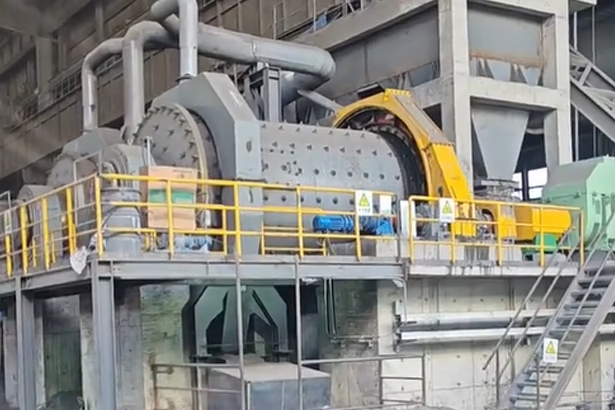
150,000-ton-per-year Eco-Friendly EPC Steel Slag Processing Line
Process Flow:
Feeding — Magnetic separator removes iron pieces and metals from steel slag — PEV hydraulic jaw crusher performs primary crushing — Magnetic separator conducts secondary iron removal to eliminate iron pieces and metals from the jaw crusher output – GMBZ high-efficiency energy-saving rod mill for secondary grinding of steel slag — Eccentric circular vibrating screen for material screening — Magnetic separator for magnetic separation of finished product — Central control room monitors entire production line to ensure stable and efficient operation
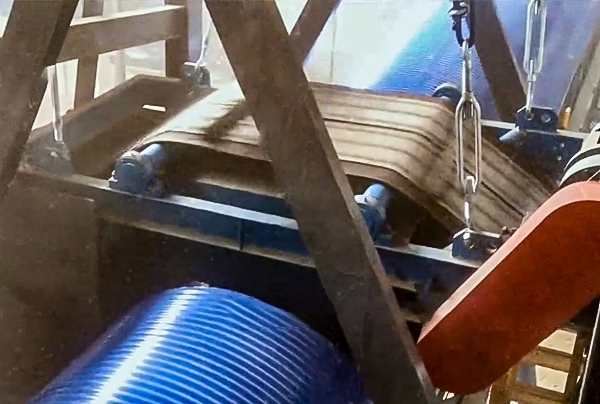
150,000 m³/h Processing Capacity
150,000 m³/h processing capacity, wet-wet electrostatic precipitator system, applied in the steel smelting industry. Addresses high-temperature, high-humidity, and high-viscosity dust control during steel slag processing, empowering traditional steel smelting—once a major polluter—to achieve efficient, green, and compliant dust emissions.
FAQ
Q: What types of steel slag is the steel slag processing production line suitable for?
A: The steel slag production line can process various steel smelting waste slags such as converter steel slag, electric furnace steel slag, and refining slag, and can customize process plans based on material characteristics.
Q: What is the metal recovery rate of the steel slag processing production line?
A: After using multi-stage crushing and magnetic separation processes, the metal iron recovery rate can usually reach more than 90%, effectively improving resource utilization.
Q: Does the steel slag processing production line occupy a large area?
A: The floor space depends on the production capacity and process configuration. Modern modular design can optimize equipment layout and reduce site occupation.
Q: Is the operating cost of the steel slag processing production line high?
A: Operating costs mainly come from power consumption, wearing parts and manual maintenance. Proper configuration of equipment can effectively reduce long-term operating costs.
Q: Does the steel slag production line need to be equipped with a ball mill?
A: If you need to produce steel slag powder or high value-added mineral admixtures, you usually need to configure a ball mill for fine grinding.
Q: Does the steel slag processing production line meet environmental protection requirements?
A: Modern steel slag production lines are usually equipped with dust removal, noise reduction and wastewater circulation systems, which can meet the environmental protection standards of most countries and regions.
Q: Can the steel slag processing production line be automated?
A: Yes. Through the PLC control system and intelligent monitoring system, automatic feeding, automatic magnetic separation and remote monitoring can be realized to reduce labor costs.
Q: Can the steel slag production line recycle scrap steel and produce steel slag powder at the same time?
A: Yes. A complete steel slag processing production line can not only recycle metallic iron, but also produce steel slag powder to achieve comprehensive utilization of resources.
Q: How long is the investment payback period for a steel slag processing production line?
A: Depending on local raw material sources, product selling prices and production scale, the project investment payback period is usually about 1-3 years.
Q: Why choose CHUNLEI steel slag processing production line?
A: CHUNLEI provides customized process design, high recovery rate magnetic separation system, high-efficiency ball milling equipment and complete technical support to help customers achieve higher resource utilization and return on investment.
Summary
Choosing the right steel slag processing solution is crucial for project profitability. It’s essential to base your decisions on raw material testing data. Don’t just compete on price; comprehensively evaluate equipment quality, manufacturer technical capabilities, and overall service. Contact CHUNLEI engineers for a customized solution and precise quote tailored to your specific working conditions.