Search the whole station Hot Product Catalog
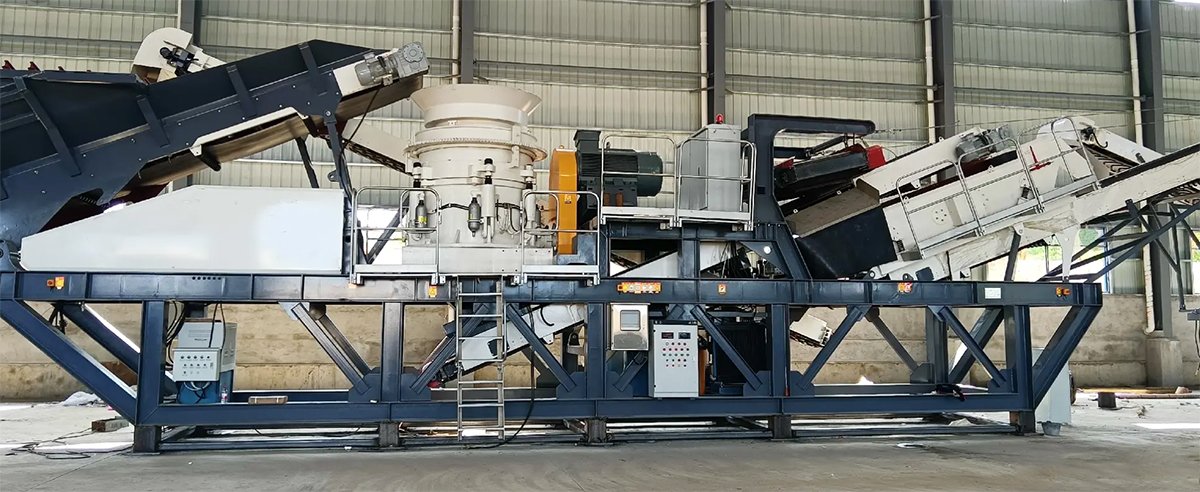
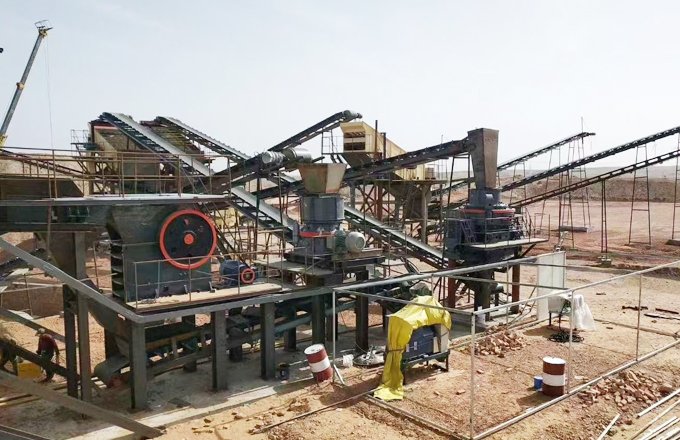
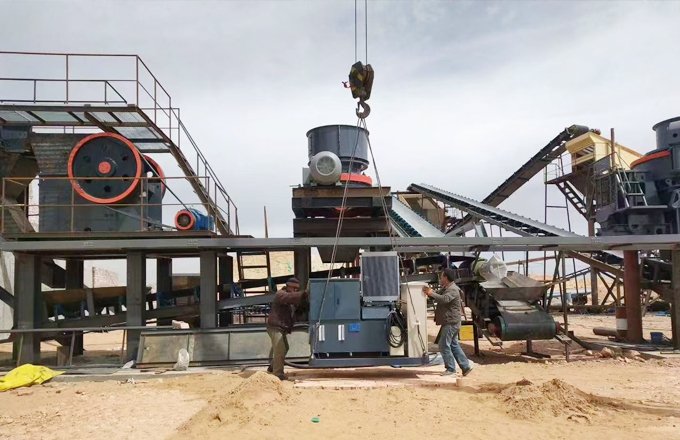
Modular crushing station,is also called modular crushing plant, they are integrated, mobile crushing systems composed of prefabricated functional modules for crushing, screening, and conveying. They can be quickly assembled and relocated. Eliminating the traditional concrete foundation of crushing plants, they utilize a steel frame base and a tire/tracked chassis for mobility. The entire system is pre-assembled and tested in the factory; on-site installation only requires simple connections to the electrical circuits and conveying components, enabling immediate assembly and production upon arrival.
Traditional fixed crushing plants require civil engineering, hoisting, and long-term commissioning (3-4 months), while modular crushing plants have all their independent components that can be disassembled, facilitating assembly, disassembly, and transportation. They are adaptable to complex terrains such as mountainous areas and remote mines, and can be reconfigured according to ore type and production requirements, truly allowing the equipment to follow the material wherever it goes.
The crushing plant is also equipped with loading ladders, handrails, and a surrounding walkway for easy inspection and maintenance of the main crushing unit.
Mobile crushing plants include: modular jaw crushers, modular cone crushers, modular impact crushers, modular sand making machines, and modular vibrating screens.
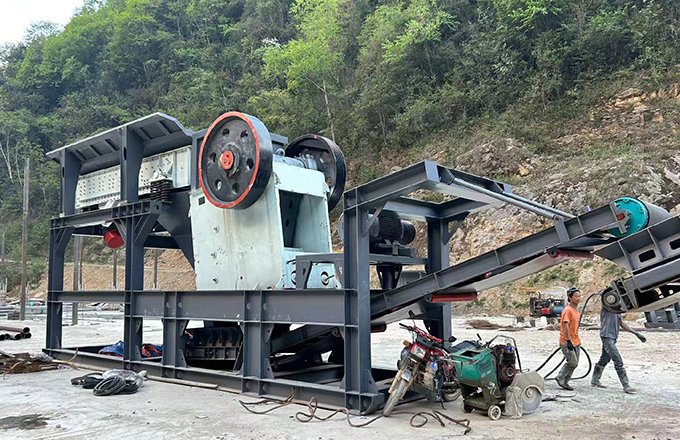
The CHUNLEI modular jaw crusher is a self-contained crushing unit mounted on a heavy-duty steel base or rails. It falls between a stationary crushing plant and a fully mobile crusher. It allows for quick on-site installation and easy disassembly, combining flexibility with high performance.
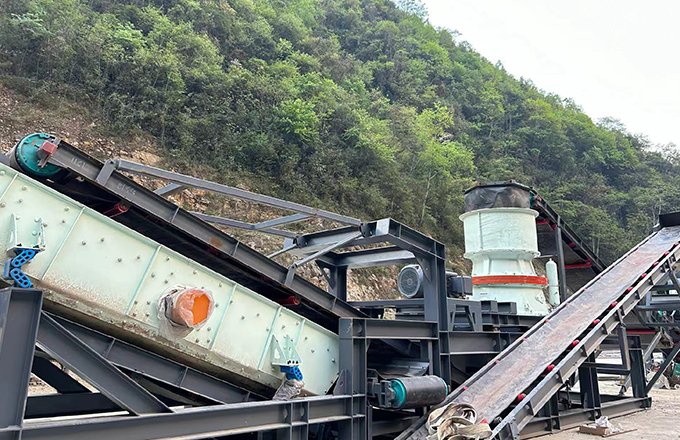
The modular cone crusher production line is a complete prefabricated engineering system. It combines the advanced performance of a cone crusher with a flexible modular design. Specifically designed for secondary and tertiary crushing, it can convert raw materials into stable output and excellent particle shape.
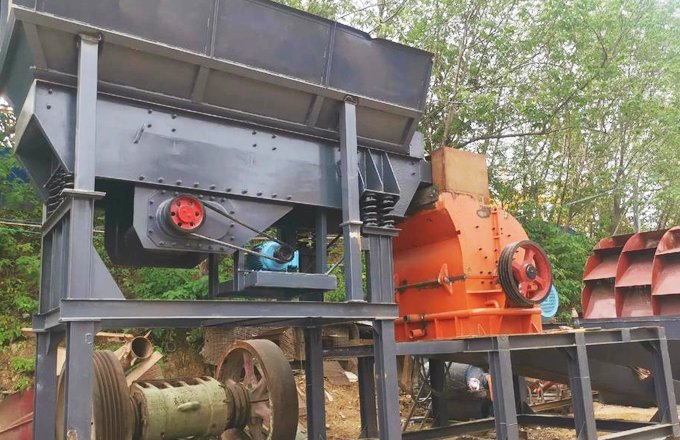
Modular impact crushing plants, with their flexible deployment and rapid installation, can adapt to ever-changing site requirements, ensuring superior performance in the processing of materials such as limestone and construction waste.
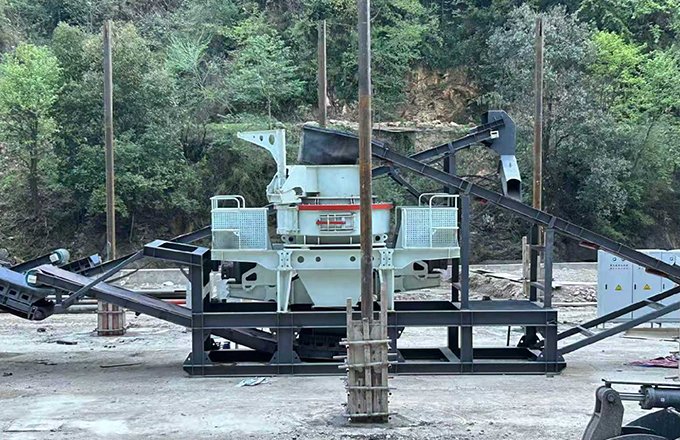
Modular sand making equipment offers a modern, efficient, and flexible solution. It can improve project schedules and ensure superior performance. Whether processing raw stone, construction waste, or tailings, it performs exceptionally well.
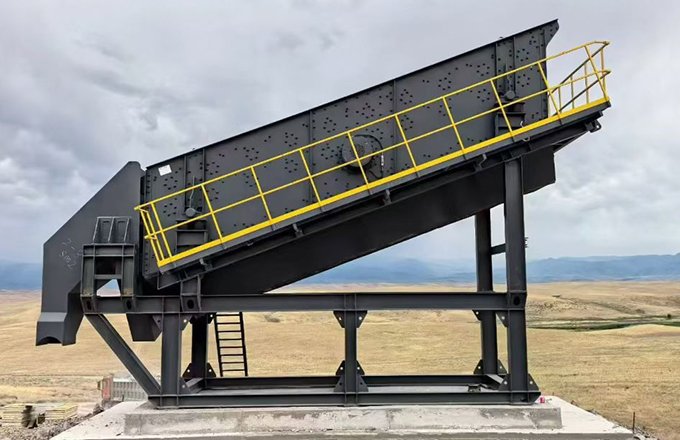
Modular screening equipment perfectly combines precise grading, efficient screening, and exceptional flexibility. These systems are designed for rapid installation, reducing civil engineering costs and providing flexible solutions for aggregate and ore screening needs.
| Feature / Aspect | Modular Jaw Crusher | Modular Cone Crusher | Modular Impact Crusher | Modular VSI Crusher (Sand Maker) | Modular Screener |
|---|---|---|---|---|---|
| Primary Function | Primary Coarse Crushing: Reduces blasted rock or large ore to a medium size. The first stage in a crushing circuit. | Secondary/Tertiary Crushing: Produces uniform, smaller particles. Ideal for high-hardness materials. | Secondary/Tertiary Crushing & Shaping: Uses impact energy. Ideal for producing high-grade aggregates with cubic shape. | Sand Making & Shaping: Produces high-quality manufactured sand. Optimizes particle shape via “rock-on-rock” principle. | Screening & Grading: Separates materials by size into different specifications. No crushing capability. |
| Working Principle | Compression Crushing: A moving jaw plate periodically approaches a fixed jaw plate, applying immense pressure to fracture the material. | Laminate Compression: A rotating mantle (moving cone) compresses material against a stationary concave (fixed cone), fracturing it through inter-particle compression. | Impact Crushing: A high-speed rotor throws material against impact aprons, fracturing it through high-energy impact forces. | High-Velocity Projectile Impact: Material is thrown at high speed against a lining or material bed, fracturing and shaping through impact and friction. | Screen Mesh Grading: Vibration moves material across a screen surface. Particles smaller than the mesh size fall through, achieving size classification. |
| Suitable Materials | Various ores, granite, basalt, concrete. Hard, abrasive materials with large feed sizes. | High-hardness, highly abrasive materials (e.g., pebbles, granite, iron ore). Ideal for hard rock. | Medium-hard to soft materials (e.g., limestone, gypsum) and brittle materials (e.g., construction waste, concrete blocks). | Both hard and soft rock. Specifically for manufactured sand production and shaping pebbles. Removes flat/elongated particles. | Various dry or wet materials after crushing. Can handle from fine powder to large rocks depending on screen mesh size. |
| Final Product Shape | Good, but may contain some flat or elongated particles. | Uniform shape, but may have slightly higher flakiness compared to impact crushers. | Excellent cubical shape with low flakiness. Preferred for high-quality aggregates. | Best particle shape. Produces well-graded, rounded sand meeting high standards. | Does not change shape. Only sorts by size, producing multiple product specifications. |
| Capacity Range | High. Often the bottleneck. Typically 100-500+ t/h. | Wide range. Tertiary crushing output matches primary. Modular units often 200-400 t/h. | Medium. Approximately 30-500 t/h, depending on model and material hardness. | Relatively lower, focused on fine processing. Example: max capacity around 190 t/h for some models. | High capacity, matching the crushing line. Achieves high throughput with multiple decks. |
| Key Advantages | 1. Robust structure: withstands extreme conditions 2. High capacity: large feed opening, high reduction ratio 3. Low operating costs: electric drive, no engine maintenance | 1. High wear resistance: long liner life for continuous operation 2. Stable operation: consistent product gradation curve 3. High automation | 1. Excellent product shape: meets high aggregate standards 2. Large reduction ratio 3. Handles wet material without clogging | 1. Best yield and shape 2. Adjustable fineness modulus 3. Unique “rock-on-rock” technology: reduces wear costs | 1. Accurate grading: ensures product quality 2. Protects crushers: removes fines to reduce downstream wear 3. Modular design: easy installation and maintenance |
| Typical Layout Position | After the feed hopper. First step in the crushing process. | After the jaw crusher. Second or third step in the crushing process. | Replaces cone as secondary/tertiary, or after a cone crusher for shaping. | After all other crushers. Final step in the sand making process. | Flexible. Pre-screening (before crushing) or check screening (after crushing). Often the final output stage. |
Compared to traditional stationary crushing production lines, modular crushing plants offer significant advantages in terms of installation time, transportation methods, and site adaptability. Traditional production lines typically require extensive civil engineering foundations, welding, and lengthy installation periods, while modular crushing plants utilize pre-assembled modules for rapid transportation and installation, significantly shortening project construction cycles.
For mining, quarrying, and overseas projects, modular crushing plants effectively reduce infrastructure and labor costs, and facilitate future expansion and equipment upgrades. The equipment can also be flexibly combined with jaw crushers, cone crushers, impact crushers, screening, and conveying systems to form complete crushing production solutions based on different operating conditions.
For projects requiring rapid commissioning, reduced construction costs, or overseas deployment, modular crushing plants are becoming an increasingly popular crushing solution.
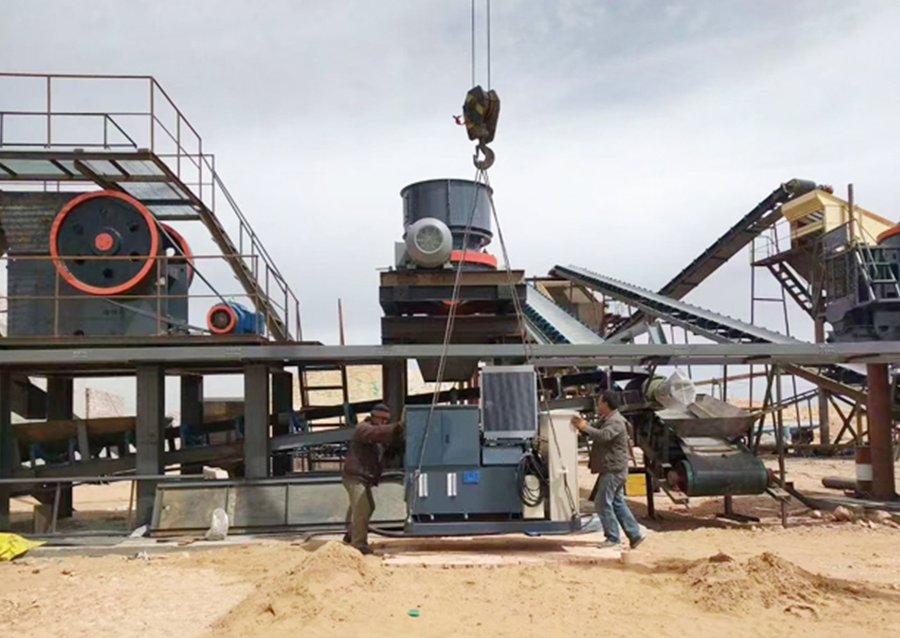
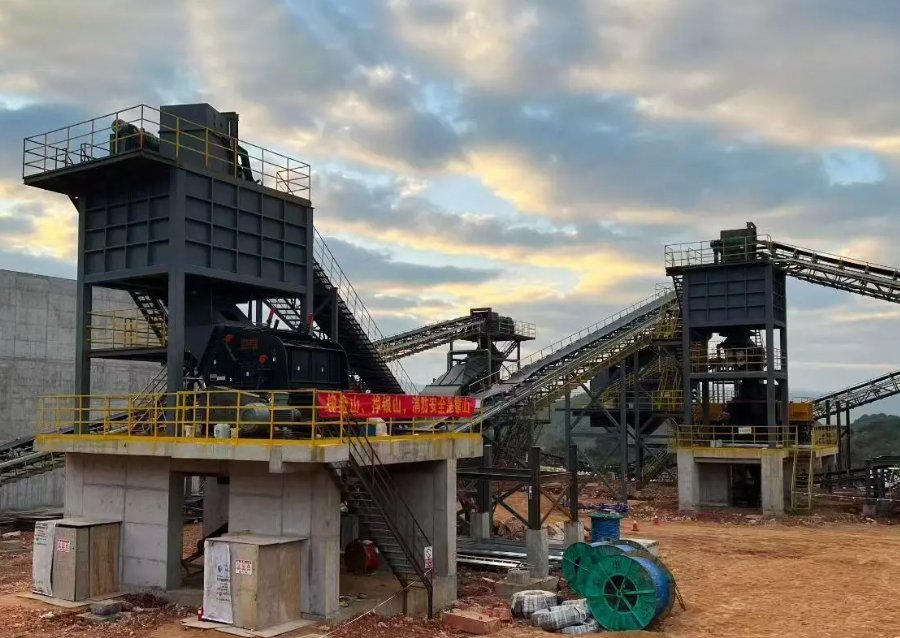
The processing capacity of a modular crushing plant varies depending on the equipment configuration, the type of crushing unit, the material hardness, and the production process. Generally, the processing capacity ranges from 50 tons/hour to over 300 tons/hour, meeting the diverse needs of sand and gravel production lines with varying outputs.
Modular crushing plants can flexibly combine jaw crushers, cone crushers, impact crushers, screening and conveying systems according to project requirements, achieving integrated coarse, medium, fine crushing, and screening production.
Actual output is affected by material hardness, moisture content, feed uniformity, and the condition of wearing parts. For hard rock conditions, the output is typically estimated at 70%–80% of the nominal output.
Modular crushing plants utilize a modular pre-assembled design, significantly shortening the installation cycle compared to traditional fixed production lines. Typically, it takes only 3–7 days to put into operation, depending on the project size, the number of modules, and site conditions.
The advantages of modular design include:
Therefore, modular crushing plants are particularly suitable for projects requiring rapid commissioning, short-term projects, or overseas mines and aggregate projects.
Choosing the right modular crushing plant model requires a comprehensive assessment based on the project’s material type, production targets, feed size, finished product requirements, and on-site operating conditions. Appropriate selection not only improves crushing efficiency but also reduces energy consumption, minimizes investment risk, and enhances production stability.
Here are the key selection factors:
Material Characteristics
Target Output
Feed Size and Finished Product Requirements
Operating Environment
Power and Energy Configuration
Automation and Intelligent Control
Choose a Jaw Crusher if: You need to process large, hard, abrasive rock (e.g., granite, basalt) as the first stage of your production line. It is the most reliable and efficient choice.
Choose a Cone Crusher if: You are processing high-hardness materials for continuous, high-load production. It offers lower cost per ton.
Choose an Impact Crusher if: Your material is medium-hard (e.g., limestone) and you have high requirements for cubical aggregate shape.
Choose a VSI Crusher if: Your core need is producing high-quality manufactured sand, whether from crusher fines or pebbles. It is the ideal choice.
Choose a Screener if: You need to separate materials into 2-5 different size specifications, or pre-remove fines to protect downstream crushers. It is an essential companion.
| Series | Standard Model | Vehicle-mounted Equipment | Vehicle-mounted Equipment | Handling Capacity(t/h) | Transport Dimensions(mm) |
| Jaw crusher plant | KJ98 | GZDT9538 | HDX98 | 90-350 | 12750×3020×3850 |
| KJ110 | GZDT1145B | HDX110 | 120-450 | 13050×3050×4000 | |
| Impact crusher plant | KJ1213 | GZDT9538 | C11213 | 80-320 | 12970×3020×3920 |
| KJ1316 | GZDT1145B | C11316 | 100-400 | 13290×3050×4080 | |
| Cone crusher plant | KJ300 | – | HPM300C1 | 60-280 | 15650×3270×3780 |
| KJ250 | – | SC250F1 | 90-350 | 15600×32700×3800 | |
| Sand making crusher plant | KJ0926 | – | HVI0926 | 85-240 | 15400×2770×3780 |
| KJ1040 | – | HVI1040 | 120-284 | 15400×2920×3970 | |
| Screening plant | KJ1865S-3 | – | 3HX1865 | 65-350 | 15200×2900×3000 |
| KJ2165S-4 | – | 4HX2165 | 85-500 | 15200×2900×3200 |
Q: What materials are suitable for a modular jaw crusher?
A: Primarily used for primary crushing of various hard ores and rocks with a compressive strength not exceeding 320 MPa, such as granite, basalt, and limestone.
Q: How long does installation take?
A: Due to its prefabricated steel frame structure, on-site assembly and commissioning can typically be completed in just 2-3 days, several weeks faster than traditional fixed installations.
Q: What are the main applications of a modular cone crusher?
A: Used for medium to fine crushing operations, processing materials from jaw crushers. Suitable for high-hardness, highly abrasive stones, such as iron ore and river pebbles.
Q: What are the application scenarios for a modular impact crusher?
A: Suitable for secondary or tertiary crushing of medium-soft to medium-hard materials (such as limestone and concrete waste), producing materials with good particle size, commonly used in aggregate production and recycling.
Q: What are the main applications of a modular vertical shaft impact crusher?
A: Used for artificial sand making and stone forming, it can process 5-40mm crushed stone into well-graded manufactured sand, suitable for concrete mixing plants and dry-mixed mortar production lines.
Q: Can the modular screening machine be used alone?
A: Yes. It can be used independently for material grading, or it can be combined with various modular crushers to form a complete modular crushing and screening production line.
Q: Is it easy to move?
A: Very easy. The entire set of equipment is fixed on a steel frame and can be transported as a whole using a flatbed truck, suitable for rotating operations between multiple construction sites.
Q: What is the difference between a modular crushing plant and a traditional fixed production line?
A: Fixed lines require a concrete foundation, have a construction period of 3-6 months, and cannot be relocated; modular lines require no foundation, can be put into operation in 1-3 days, can be relocated at any time, have lower investment, and are more scalable.
Q: What is the processing capacity of a modular crushing plant?
A: Standard range 60–500 tons/hour, small 60–100 t/h, medium 100–300 t/h, large 300–500 t/h, customizable and expandable.
Q: Does a modular crushing plant require a complex foundation?
A: No. No concrete, steel reinforcement, or deep excavation are needed. As long as the ground is flat and compacted, the built-in steel base will allow for stable operation.
Q: How to choose the right modular crushing plant model?
A: First, consider the material hardness → then determine the hourly output → select the chassis type → match the number of screening layers. Follow these four steps for precise matching.
 Chunlei Mining Machinery