Search the whole station Hot Product Catalog
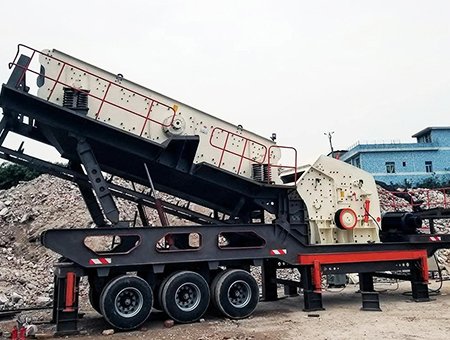
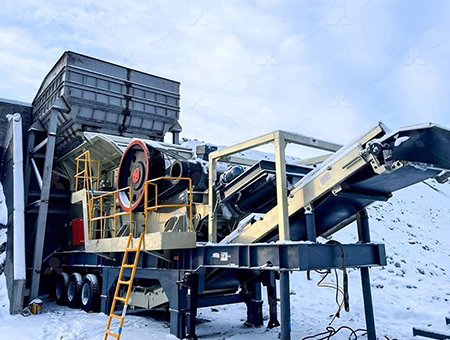
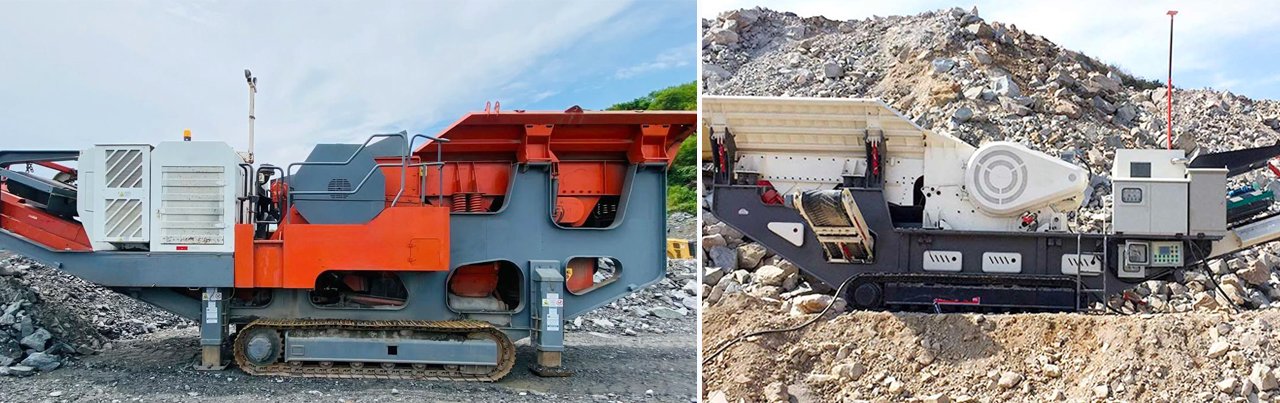
A mobile jaw crusher (also known as a mobile jaw crushing station) is a self-propelled on-site crushing solution. It integrates a feeder, jaw crusher, vibrating screen, conveyor belt, and power system onto a single chassis, making it a wheeled/tracked mobile crushing unit. Unlike stationary crushing stations, it eliminates the need for long-distance ore transportation, allowing it to operate directly at the mine face. It requires no concrete foundation or complex installation, significantly reducing transportation costs.
Mobile jaw crushers are specifically designed for mining, quarrying, and construction waste recycling. They are particularly suitable for crushing hard rocks such as granite, basalt, sulfide gold ore, and iron ore, as well as for small to medium-sized mines, temporary construction sites, and construction waste recycling projects.
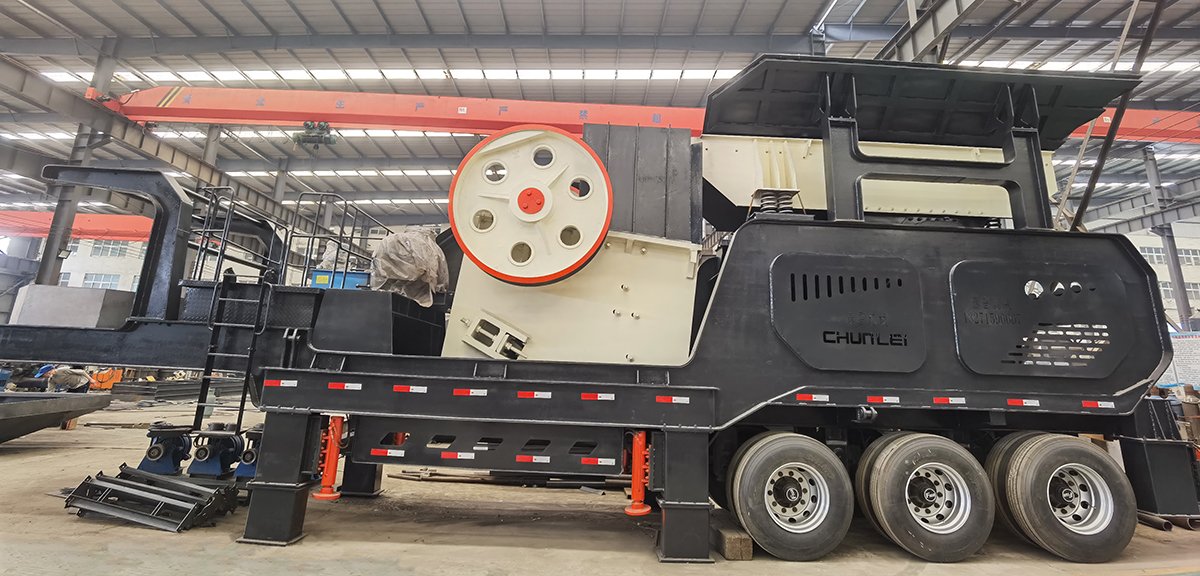
The CHUNLEI mobile jaw crusher features an integrated, heavy-duty, wear-resistant, and intelligent stable design, offering significant advantages in mining crushing scenarios, making it more worry-free, durable, and cost-effective.
The material flow is divided into three steps:
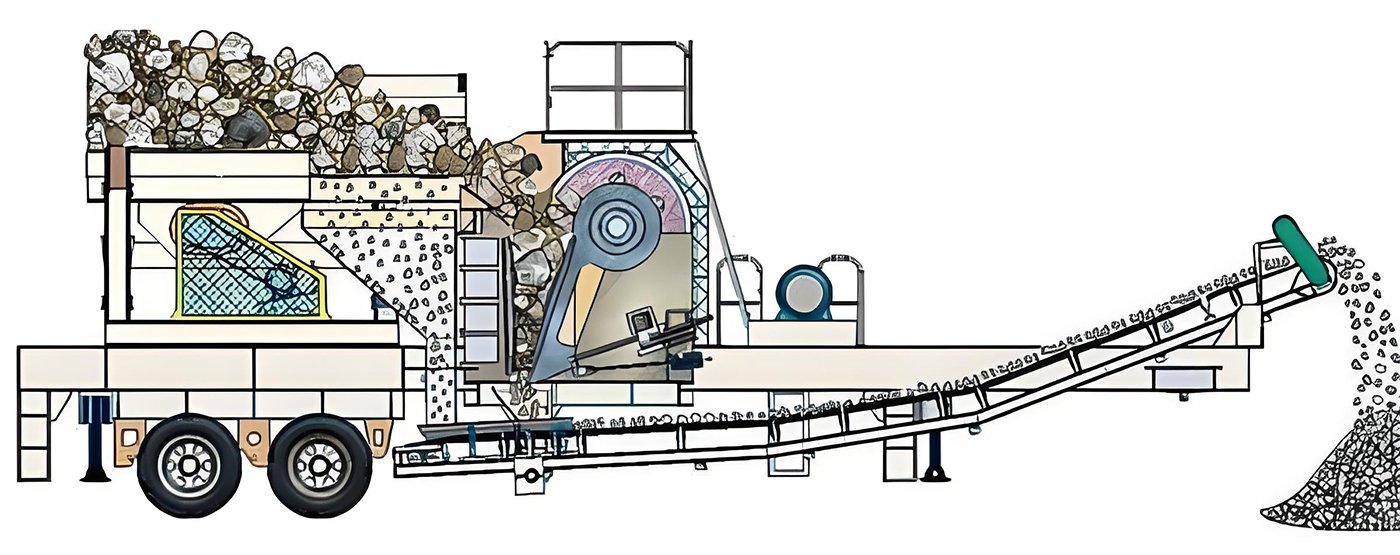
Furthermore, for applications requiring maximum capacity but less stringent particle size requirements (e.g., roadbed fill), the vibrating screen of the tire-mounted mobile crushing station can be disassembled, allowing material to be discharged immediately after passing through the jaw crusher. This modular, quick-release design allows customers to completely remove the vibrating screen module simply by loosening its bolts. The tire chassis allows for transport using ordinary trucks, eliminating the need for low-bed trailers and saving on transportation permit costs.
Mobile jaw crushers are suitable for on-site crushing of various medium-to-high hard materials, and are widely used in mining, quarrying, construction waste recycling, and aggregate production industries. The equipment uses the jaw crushing principle, can process large raw materials, and has strong adaptability.
The processing capacity of a mobile jaw crusher varies depending on the equipment model, feed size, material hardness, and on-site conditions. For high-hardness materials such as granite, basalt, and iron ore, the actual output will also be affected by material moisture content, feed particle size, and discharge port adjustments. Modern mobile jaw crushers typically employ heavy-duty crushing units and intelligent control systems, ensuring high output while maintaining stable operation and uniform material discharge.
| Equipment Model / Brand | Processing Capacity (days/tons) | Maximum Feed Size (mm) | Features / Applicable Scenarios |
| Small Class | 95 – 220 | Approx. 300 | Compact and flexible, suitable for dismantling and recycling, small-scale operations |
| Medium Class | 165 – 400 | Approx. 400 | Common main model, suitable for quarries, medium-sized projects |
| Large Class | 280 – 650 | Approx. 500 | High capacity, suitable for large mines, aggregate production |
| Extra Large Class | Maximum approx. 1000 | Approx. 650 | Top capacity, suitable for large-scale centralized crushing operations |
Are you primarily looking to crush hard materials like granite, or softer materials like construction waste? Tell me the specific material type to get a free solution.
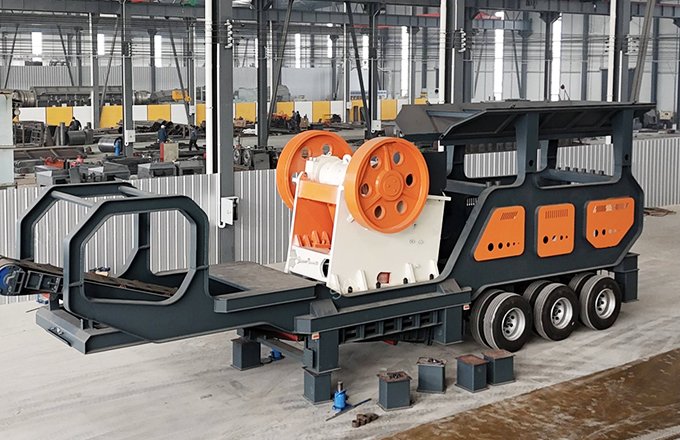
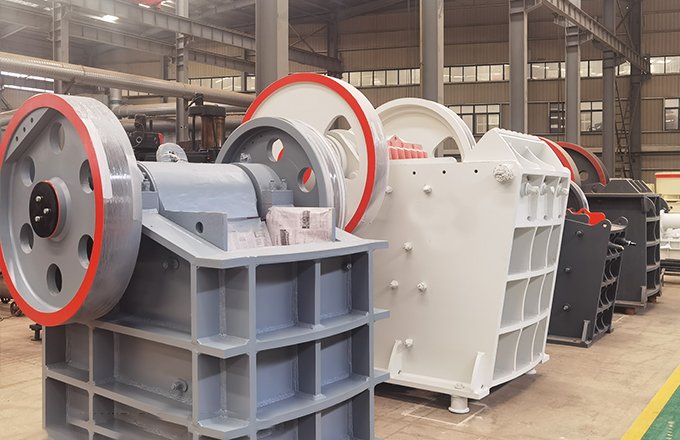
The biggest feature of mobile jaw crushers is their mobility. They are more convenient for projects requiring frequent relocation, scattered construction sites, or on-site construction waste recycling. Large mines and long-term fixed production lines, on the other hand, tend to use stationary crushing systems.
| Comparison Dimensions | Stationary Crusher | Mobile Jaw Crusher |
| Mobility | Poor. Once installed and fixed, it is almost impossible to move. Relocation requires disassembly, hoisting, and reinstallation, which is time-consuming and labor-intensive. | Excellent. Equipped with tires or tracks, it can be towed by a trailer or remotely controlled, enabling rapid relocation. It moves with the project, resulting in high equipment utilization. |
| Applicable Scenarios | Stable sites, long-term production. Such as large mines, fixed quarries, concrete mixing plants, etc., with project cycles typically exceeding 3-5 years. | Variable sites, short-term projects. Such as construction waste treatment, road maintenance, tunnel engineering, small mines, etc. Once one project is completed, the next project can be immediately started. |
| Investment and Cost | Low initial investment. For the same capacity, the price of the equipment itself is much lower than that of a mobile crusher (the price of a mobile crusher can be 5 times that of a stationary one). However, it requires supporting infrastructure, plant buildings, long-distance conveyor belts, etc., resulting in high overall initial investment and a long cycle. | High initial investment. The machine itself is a mobile production line, but the overall initial investment is low. This is because it eliminates the significant infrastructure costs and time associated with civil engineering, installation, factory buildings, and long-distance transport belts. |
| Capacity and Efficiency | High and stable capacity. A single machine can easily exceed 1000 tons/hour, suitable for large-scale, continuous production. Once operational, capacity is guaranteed. | Moderate capacity. Due to the mobile chassis, the types of machines that can be mounted are limited, with mainstream capacities generally ranging from 100-650 tons/hour. More suitable for small to medium-scale crushing operations. |
| Equipment Configuration | Flexible customization. Different models of crushing, screening, and conveying equipment can be freely selected and combined according to material characteristics and finished product requirements to form complex production lines. | High integration. Feeding, crushing, screening, and conveying functions are all integrated into a single frame, resembling a “mobile factory.” |
| Commissioning Cycle | From site leveling, foundation laying, factory construction to installation and commissioning, it typically takes 2-3 months or even longer. | Once the equipment arrives on site, it can be put into production in as little as 2 hours after being connected to power or refueled. |
Absolutely. Mobile jaw crushers are one of the most widely used pieces of equipment in construction waste recycling. They can directly enter demolition sites to crush concrete blocks, bricks, asphalt, and other waste materials on-site, reducing material transportation and storage costs.
Compared to traditional fixed production lines, mobile jaw crushers require no complex infrastructure construction and can quickly enter the site for operation. They are particularly suitable for urban demolition, highway reconstruction, and construction waste recycling projects. They produce recycled aggregates, eliminating the need for external transportation, saving on freight costs, and are more environmentally friendly.
Modern mobile jaw crushers are often equipped with iron removal devices, screening systems, and intelligent control systems, improving crushing efficiency while achieving resource utilization and environmentally friendly treatment of construction waste. They are currently an important piece of equipment in the field of construction solid waste recycling.
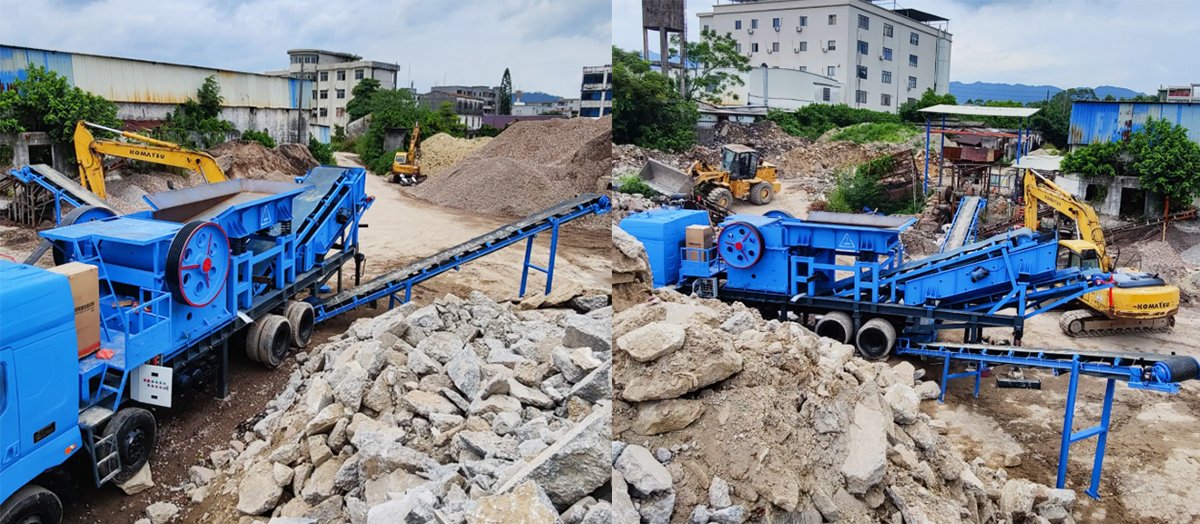
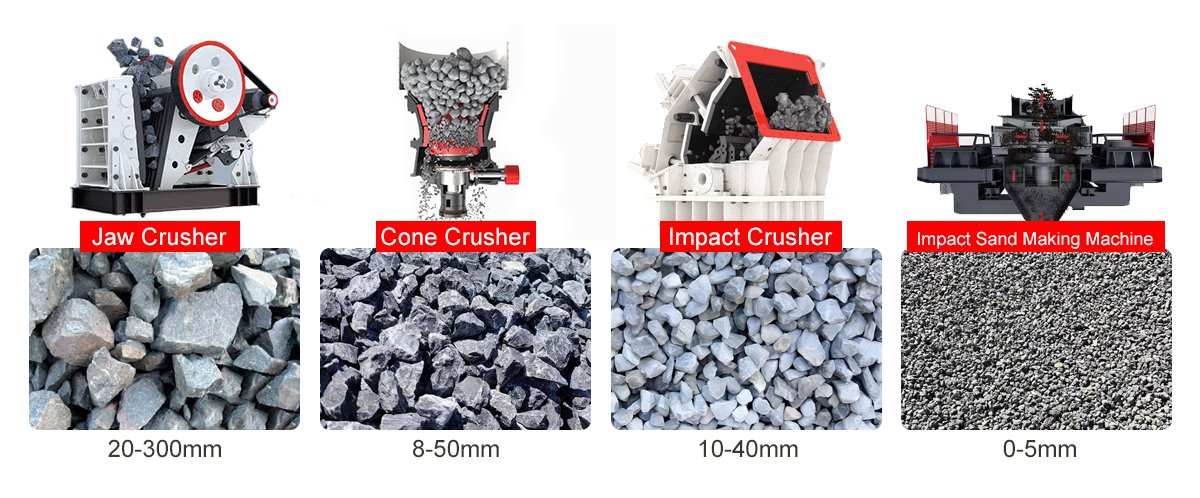
This preference stems not merely from the jaw crusher’s reliable performance, but—more importantly—from how its unique operating principle aligns perfectly with the demands of mobile operations. Unlike impact or cone crushers, the jaw crusher does not require precise control over feed particle size; instead, it achieves material reduction through the compressive force generated between a stationary jaw plate and a movable jaw plate. This specific characteristic offers two key advantages for mobile applications:
Mobile jaw crushers directly process raw ore or construction demolition waste into finished products with particle sizes ranging from 100 mm to 200 mm, thereby fully preparing the material for subsequent cone crushing or screening stages. This is precisely why, among the various types of mobile crushing stations available, over 70% of units continue to select the jaw crusher as their primary core component.
When selecting a mobile jaw crusher model, a comprehensive assessment is needed based on the material type, feed size, output requirements, and site conditions. Different projects have different requirements for crushing capacity, movement method, and output particle size. Appropriate selection can improve production efficiency and reduce operating costs.
The main factors to consider when choosing a model are material hardness, output requirements, and site conditions:
Consult now to get a customized mobile crushing solution.
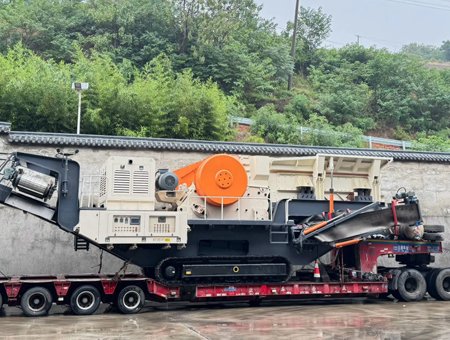
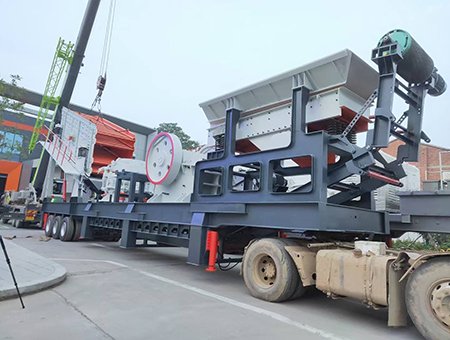
Common malfunctions of mobile jaw crushers fall into three categories, all of which are frequent problems in mining operations:
Mobile jaw crushers are ideal for use in mines and quarries, especially for coarse crushing of large materials such as granite, basalt, limestone, and iron ore. The equipment can directly enter the mining site and move with the mining face, enabling on-site crushing and continuous feeding, significantly improving the overall operational efficiency of the mine and aggregate yard.
Compared to traditional stationary crushing production lines, mobile jaw crushers require no complex foundation construction, have a shorter installation period, and offer greater flexibility in relocation, making them particularly suitable for projects with dispersed mining areas, complex construction environments, or those requiring frequent relocation.
Furthermore, the equipment utilizes a heavy-duty jaw crusher host, providing strong crushing capacity. Combined with screening, conveying, and intelligent control systems, it can form a complete mobile crushing production line, improving aggregate production efficiency and on-site operational capabilities.
Proper operation not only improves the production efficiency of mobile jaw crushers but also extends their service life.
| Item | unit | MG938E69 | MG1142E710 | MG1349E912 | MG1349SK87 | MG1349SK110 |
| Transport Length | mm | 11900 | 13100 | 14600 | 14600 | 15400 |
| Transport Width | mm | 2550 | 2550 | 1950 | 1550 | 1950 |
| Transport Height | mm | 3650 | 4450 | 4500 | 4500 | 4500 |
| Length | mm | 12100 | 13300 | 14600 | 14600 | 15400 |
| Width | mm | 2900 | 2950 | 3300 | 3300 | 3300 |
| Height | mm | 4060 | 4810 | 5300 | 5300 | 5700 |
| Weight | t | 39 | 57 | 83 | 65 | 92 |
| Tire Configuration | Dual-axis mounting | Triple-axis mounting | Triple-axis mounting | Triple-axis mounting | Triple-axis mounting | |
| Crusher Model | PE600×900 | PE750×1060 | PE900×1200 | SKJ870×1100 | SKJ1100×1300 | |
| Maximum Feed Size | mm | 480 | 630 | 750 | 720 | 960 |
| Discharge Adjustment Range | mm | 65-160 | 80-140 | 95-180 | 85-220 | 120-260 |
| Processing Capacity | t/h | 90-180 | 110-320 | 220-450 | 130-360 | 260-580 |
| Feeder Model | GZD960×3800 | GZD1100×4200 | GZD1300×4900 | GZD1300×4900 | GZD1300×4900 | |
| Main Conveyor Model | B800×8.5M | B1000×9M | B1200×9.5M | B1200×9.5M | B1200×9.5M | |
| Side Discharge Conveyor Model (Optional) | B450×3M | B500×3.5M | B650×4M | B650×4M | B650×4M | |
| Generator set model (optional) | kw | 160 | 200 | 220 | 250 | 300 |
| Magnetic separator model (optional) | RCMD(C)-8 | RCMD(C)-10 | RCM(C)-12 | RCMD(C)-12 | RCMD(C)-12 |
Q: What materials is a mobile jaw crusher suitable for processing?
A: Suitable for coarse crushing of granite, basalt, limestone, construction waste, concrete, and various ores.
Q: What is the output of a mobile jaw crusher?
A: Different models have different processing capacities, generally ranging from tens to hundreds of tons of material per hour.
Q: Does a mobile jaw crusher require a foundation?
A: Usually, no complex foundation is needed. The equipment can be put into production quickly after arriving on site.
Q: Is a mobile jaw crusher suitable for construction waste recycling?
A: Very suitable. It can crush concrete, bricks, and other waste materials on-site, reducing transportation costs.
Q: Can a mobile jaw crusher process high-hardness stones?
A: Yes, the equipment is suitable for high-hardness materials such as granite, basalt, and iron ore.
Q: Is the fuel consumption of a mobile jaw crusher high?
A: Modern equipment uses an energy-saving power system and intelligent control, resulting in low overall energy consumption.
Q: How to choose the right mobile jaw crusher model?
A: The selection should be based on a comprehensive consideration of material hardness, feed size, target output, and on-site conditions.
Q: Are mobile jaw crushers prone to clogging?
A: Proper feeding and regular maintenance can effectively reduce clogging problems.
Q: What supporting systems are required for the equipment?
A: It can be equipped with a vibrating feeder, screening machine, conveyor, and iron removal device to form a complete production line.
Q: Why are more and more mines choosing mobile crushing equipment?
A: Because mobile jaw crushers are quick to install, flexible to relocate, and have high on-site operating efficiency, which can reduce overall operating costs.
 Chunlei Mining Machinery