Search the whole station Hot Product Catalog
A three-roller dryer consists of three concentric rotating drums. It continuously dries bulk wet materials through staged heating and hot air circulation. The equipment relies on the synchronous rotation of the inner, middle, and outer drums. Materials first enter the first drum to evaporate moisture, then enter the second and third drums, ensuring full contact between the wet material and the hot air, resulting in uniform and continuous drying of high-moisture materials.
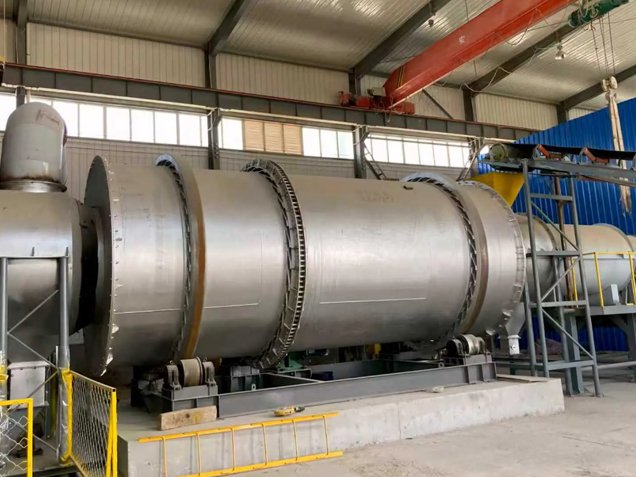
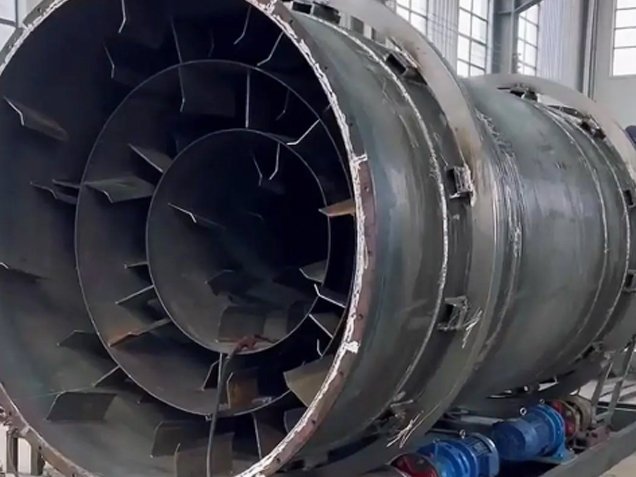
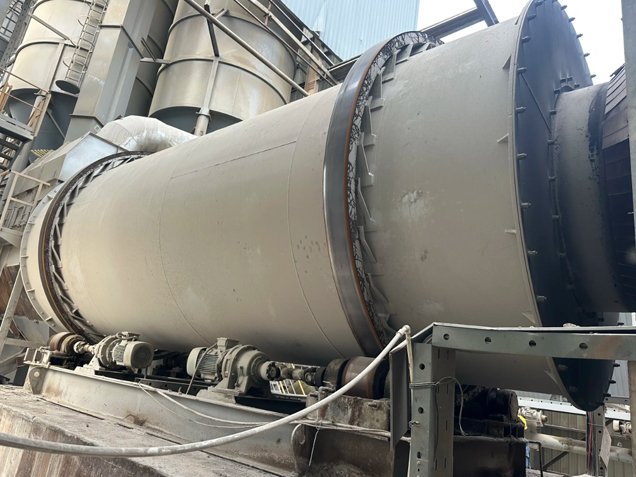
The three-roller dryer is a core piece of heavy-duty drying equipment, suitable for high-moisture mineral concentrates, industrial sludge, and bulk ore materials. Commonly processed materials include flotation gold concentrate, coal slime, and iron ore powder. The equipment can operate continuously and stably, with low energy consumption, excellent drying uniformity, and is suitable for complex mining environments. It is widely used in gold, copper, and iron ore beneficiation plants, as well as in industrial waste treatment scenarios.
The three-roll dryer employs a three-layer concentric sleeve, counter-current heat exchange, and multi-pass drying principle. Utilizing the length and temperature differences between the three cylinders, it allows wet materials to come into multiple, thorough contacts with high-temperature hot air, efficiently evaporating moisture. It is suitable for high-moisture, high-viscosity, and high-volume mineral materials.
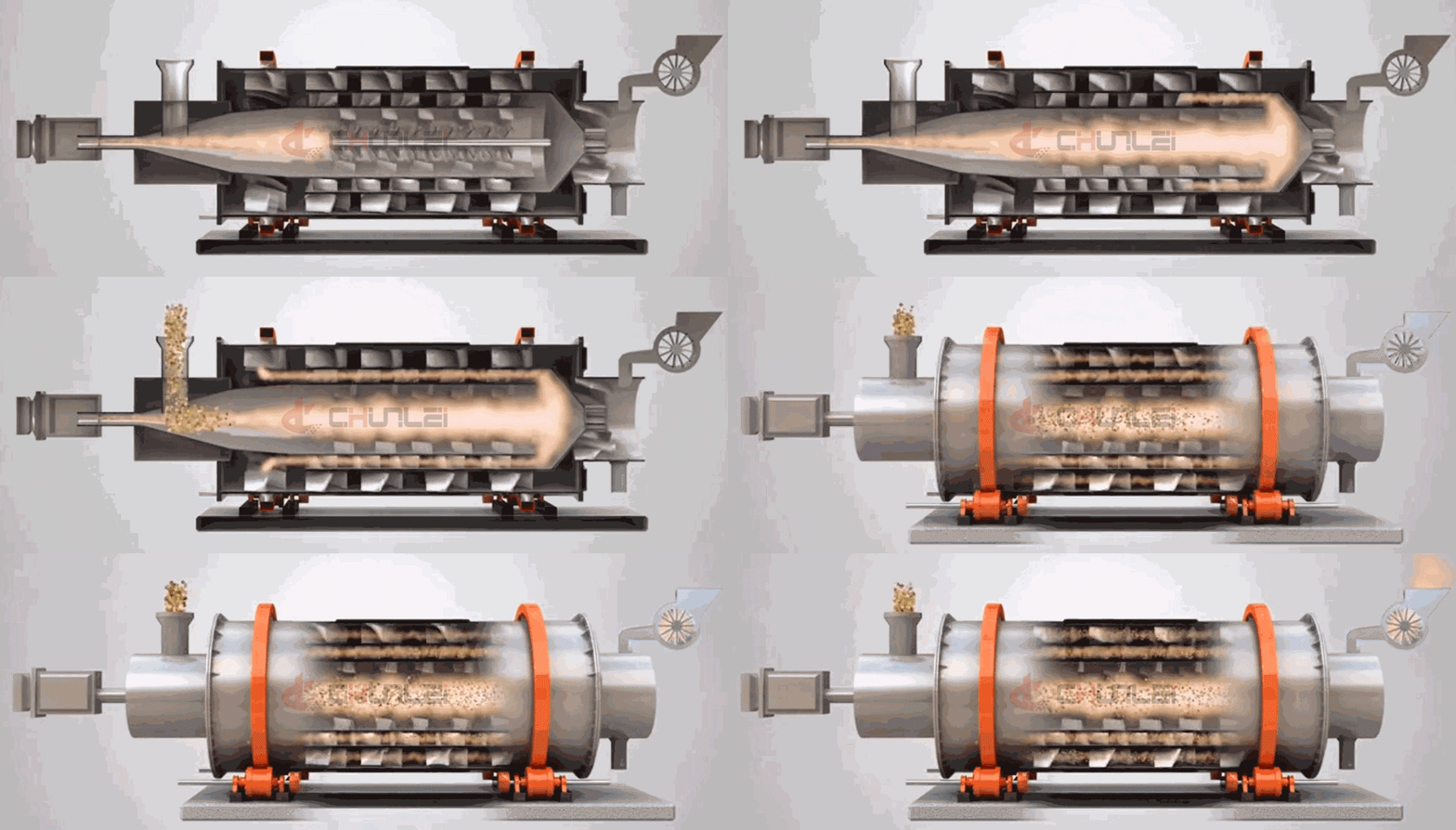
Core Workflow:
In short: The three-drum dryer allows wet materials to undergo “high-temperature rapid drying → medium-temperature deep drying → low-temperature stable drying,” with three layers of repeated heat exchange, resulting in high efficiency, uniform drying, and anti-sticking properties. It is specifically designed for minerals with high moisture content.
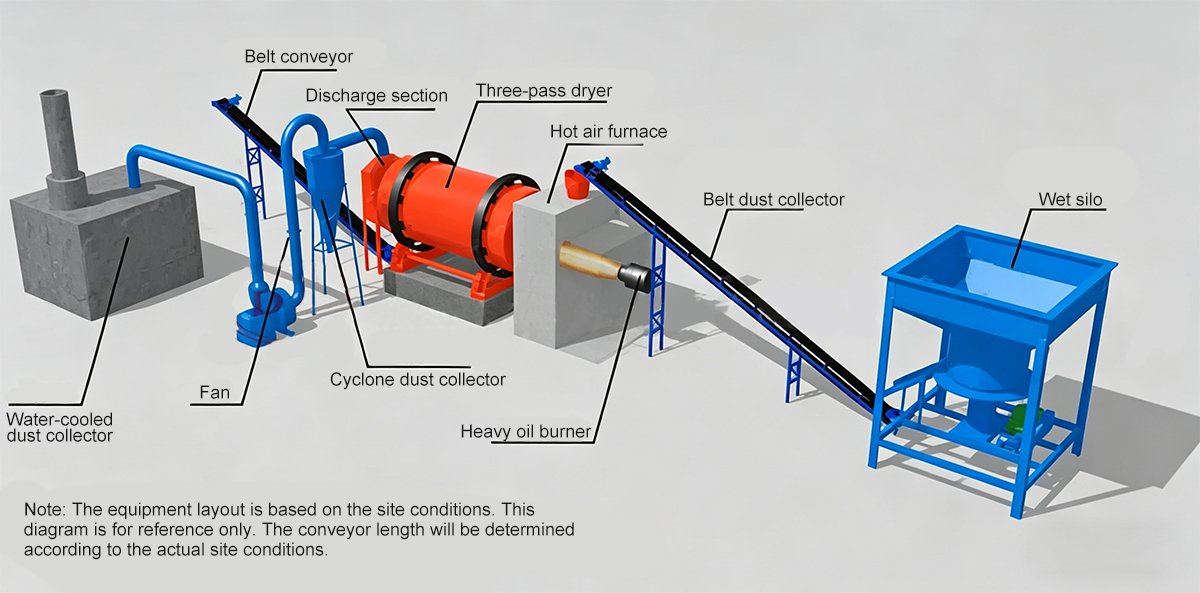
A three-drum dryer mainly consists of three coaxial inclined drums, supplemented by support and drive systems, hot air systems, feeding and discharging systems, and auxiliary systems.
This design ensures that the material is dried step-by-step within the three drums, resulting in uniform drying and high efficiency, suitable for continuous processing of high-moisture, high-volume materials.
CHUNLEI’s three-drum dryer is specifically designed for high-moisture, high-yield minerals and industrial materials. The equipment boasts stable operation and high thermal efficiency, meeting the production needs of various materials and operating conditions. From R&D and production to EPC turnkey projects, the entire supply chain is independently controlled, making it a reliable partner preferred by global mining clients.
1. 30 Years of Professional Experience in Mining Drying, More Mature Technology
2. Highly Adaptable Customized Solutions, Fitting Your Materials
3. Robust Quality, Durable and Worry-Free
4. Intelligent Control, Environmentally Friendly Design
5. Full-Chain Service, Worry-Free Overseas Deployment
Choosing CHUNLEI isn’t just about buying a piece of equipment; it’s about choosing a complete solution for high-humidity mineral drying that reduces costs and increases efficiency, ensuring stable profits and long-term peace of mind for your drying projects. Get a free customized solution now!
The three-roll drum dryer is highly adaptable to various materials, and is best suited for handling high-moisture, high-viscosity, and high-volume bulk industrial materials. It is widely used in building materials, metallurgy, mining, chemical, and cement industries. This equipment can process various granular and powdery materials, reducing the moisture content to below 1%, meeting subsequent processing and storage requirements.
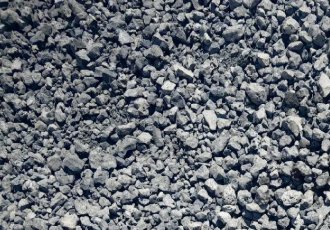
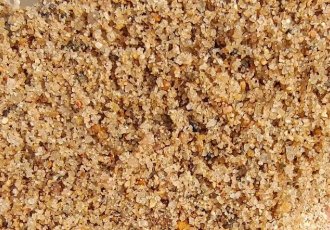
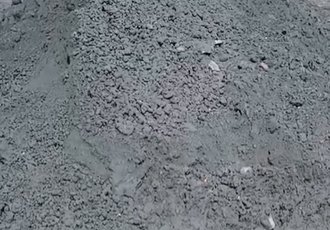
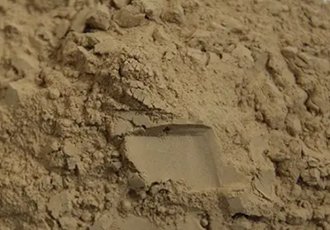
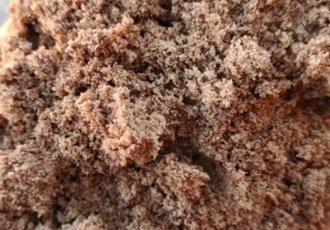
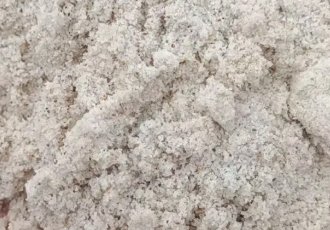
The processing capacity of a three-rotor dryer varies considerably depending on the drum specifications, material characteristics, and feed moisture content:
The actual processing capacity is also affected by the following factors:
Absolutely! A three-rotor dryer is the preferred drying equipment for materials with high moisture content (30%-80%), especially widely used in mining, building materials, metallurgy, chemical, and biomass industries. Modern three-rotor dryers can also be equipped with automated temperature control, waste heat utilization, and dust removal systems, ensuring uniform drying of high-moisture materials while reducing energy consumption and improving production efficiency.
Applicable Materials:
A single-drum dryer has a simple structure with only one drum. The material spends a short time in the drum, making it suitable for materials with low moisture content and uniform particle size. However, its output is limited, and its thermal efficiency is relatively low.
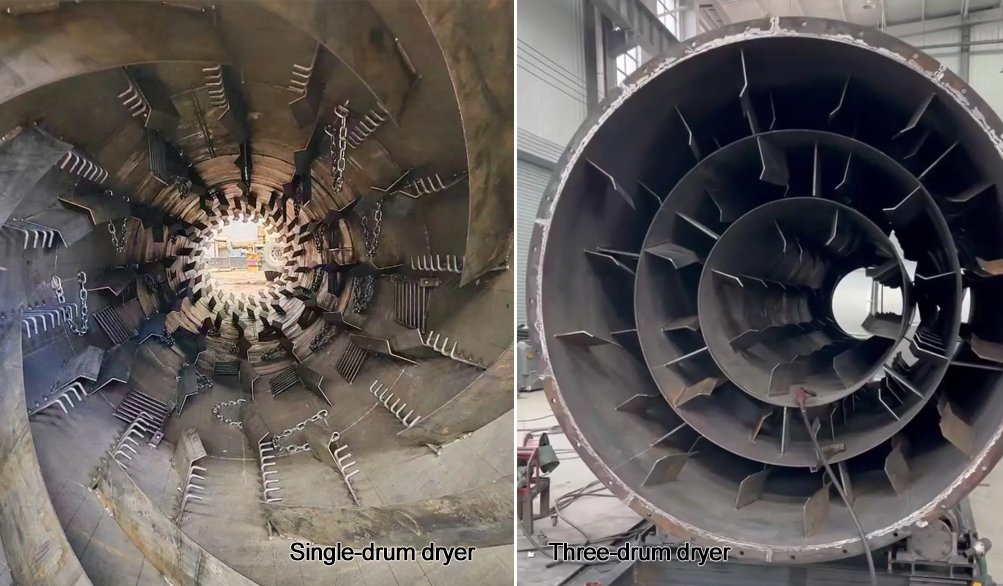
In contrast, a triple-drum dryer consists of three coaxial inclined drums. The material is dried sequentially within each of the three drums, resulting in a longer residence time and better drying uniformity. Even high-moisture, high-viscosity materials such as slag, sand, concentrate, or some biomass materials can achieve stable and continuous drying. The multi-drum design, combined with hot air recovery and automated control, makes triple-drum dryers more efficient and energy-saving in high-volume production, making them the preferred equipment for modern mining and industrial production lines.
In short, single-drum dryers are cheaper but less efficient and prone to sticking to the walls; triple-drum dryers are slightly more expensive but energy-efficient, non-stick, and durable, making them more cost-effective in the long run.
The three-roller dryer boasts numerous advantages, making it the preferred equipment for drying high-moisture materials in the mining, building materials, metallurgy, chemical, and biomass industries. Firstly, its three-stage drum drying design ensures sufficient residence time for the material within the drum, resulting in uniform heating and stable drying even for high-moisture, high-viscosity materials.
Secondly, the three-roller dryer offers high output, suitable for continuous industrial production. Its high thermal efficiency, combined with hot air recovery and an automated control system, significantly reduces fuel consumption and operating costs. The wear-resistant drum body and robust structure, along with supporting rollers, drive systems, and dust removal systems, guarantee long-term stable operation.
Furthermore, the multi-roller design broadens the equipment’s applicability, enabling efficient drying of materials ranging from slag, sand, and concentrates to fly ash, straw, and biomass pellets. Overall, the three-roller dryer is characterized by high efficiency, energy saving, stability, and strong adaptability, making it a reliable choice for modern large-scale industrial drying projects.
CHUNLEI offers free testing of incoming material moisture content, particle size, viscosity, and heat resistance, and can tailor-make drum structures, lifting plate styles, and heating systems to suit individual needs. Contact our experts now for a free solution!
The typical market reference price for a triple-rotor dryer is around US$15,000–100,000. The specific price will vary depending on output, material characteristics, and customized configuration.
It is important to note that equipment with excessively low prices often carries the following risks:
Therefore, when purchasing a three-rotor dryer, in addition to considering the price, it’s crucial to focus on equipment quality, thermal efficiency, and reliability to ensure long-term stable and efficient operation.
Yes, a three-rotor dryer typically requires customized process design based on material characteristics, moisture content, output, and production needs. Different materials vary significantly in particle size, viscosity, and moisture content. Using a general-purpose process cannot adapt to all materials; a customized solution is essential to ensure stable production.
Professional technical team process services:
A reasonable customized process not only improves drying efficiency and output but also reduces energy consumption and maintenance costs, ensuring stable and reliable equipment operation in the long term.
Contact us now for a free dryer customization solution!
| Mode(m) | Ф2×4.5 | Ф2.2×5 | Ф2.5×6 | Ф2.7×6.5 | Ф3.0×6.5 | Ф3.2×7 | Ф3.6×8 | Ф4.2×8 |
| Outer tube diameter(m) | 2 | 2.2 | 2.5 | 2.7 | 3.0 | 3.2 | 3.6 | 4.2 |
| Length of outer tube(m) | 4.5 | 5 | 6 | 6.5 | 6.5 | 7 | 8 | 8 |
| Cylinder volume(m3) | 14.13 | 18.99 | 29.43 | 37.19 | 45.92 | 56.27 | 81.39 | 110.78 |
| Cylinder speed(r/min) | 4-10 | 4-10 | 4-10 | 4-10 | 4-10 | 4-10 | 4-10 | 4-10 |
| The maximum intake air temperature(℃) | 700-750 | 700-750 | 700-750 | 700-750 | 700-750 | 700-750 | 700-750 | 700-750 |
| Capacity(T/h) | 13-18 | 15-23 | 20-28 | 24-33 | 35-40 | 40-60 | 55-75 | 70-120 |
| Motor power(kw) | 5.5×2 | 7.5×2 | 5.5×4 | 7.5×4 | 11×4 | 15×4 | 18.5×4 | 22×4 |
Q: How long does it take from ordering to putting the entire set of equipment into production?
A: The overall cycle is 2-3 months, with 20-25 days for production, approximately 45 days by sea, and 15 days for on-site installation and commissioning.
Q: Does the equipment consume a lot of water?
A: Only a small amount of water is used for heat source cooling and dust removal. Materials do not come into contact with water throughout the process, making it suitable for use in arid mining areas.
Q: Can a diesel generator power the equipment in mining areas without a power grid?
A: Yes, a generator set can be matched to the total power of the equipment to meet the production conditions of remote mines.
Q: What is the minimum profitable production capacity of the equipment?
A: A capacity of 3-5 tons per hour is sufficient to achieve profitability. The higher the capacity, the lower the unit material drying cost.
Q: Can the three-drum dryer dry slurry with high mud content?
A: Yes, with a customized V-shaped anti-sticking and self-cleaning structure, high-mud slurry will not stick to the drum or clump, ensuring stable drying.
Q: Is there a lot of mineral dust after drying? Does it meet environmental standards?
A: Equipped with a two-stage dust collection system of cyclone + bag filter, dust emissions are ≤30mg/Nm³, meeting environmental standards of multiple countries.
Q: Will sulfide ore oxidize during drying?
A: Hot air temperature is controlled at 250-350℃ to avoid high-temperature oxidation and preserve the mineral’s flotation value.
Q: Can the three-drum dryer be installed outdoors?
A: Yes, it can be installed outdoors. The entire machine is treated for corrosion and rust prevention, and the drum is insulated and rainproof, adapting to harsh mining environments.
Q: Will low temperatures in winter affect the drying effect?
A: No, the drum is insulated, and the hot air supply is stable, so drying efficiency is basically unaffected in low-temperature environments.
Q: Is daily maintenance of the equipment complicated?
A: Maintenance is simple. Regularly check the lifting plates, rollers, and seals; no complicated operations are required.
 Chunlei Mining Machinery