Search the whole station Hot Product Catalog
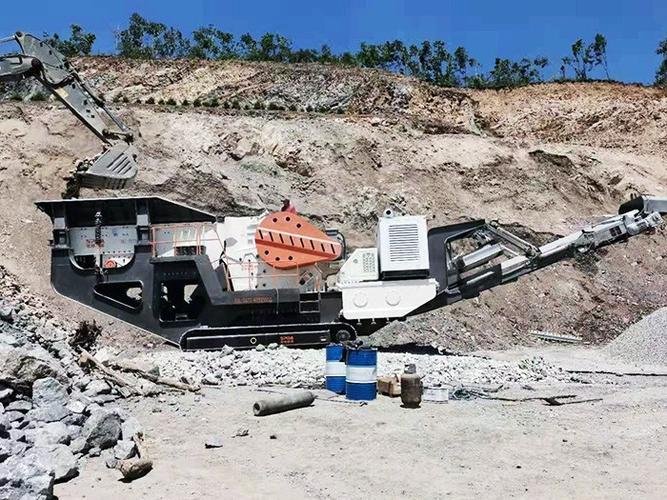
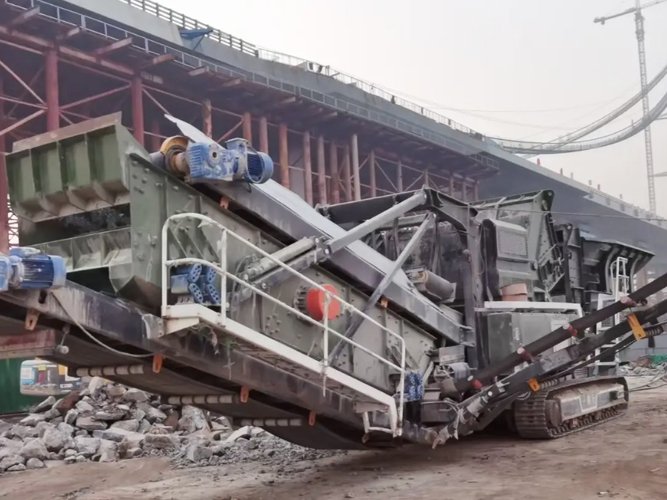
Tracked crusher is a self-propelled, integrated crushing unit mounted on a heavy-duty crawler chassis. By integrating the main crusher, crawler chassis, feeding mechanism, conveying system, power unit, and control system into a single entity, it finds widespread application in fields such as mining, quarrying, construction waste recycling, and road and bridge construction. Characterized by its independence from fixed foundations, rapid setup, strong terrain adaptability, and flexible mobility, it has become the preferred choice for modern mobile crushing operations.
This article provides a comprehensive overview of three core models—the Tracked jaw crusher, Tracked cone crusher, and Tracked impact crusher—covering their definitions, working principles, advantages, applications, parameter matching, maintenance requirements, and selection guidelines, thereby assisting you in choosing the most suitable mobile crushing solution for your needs.
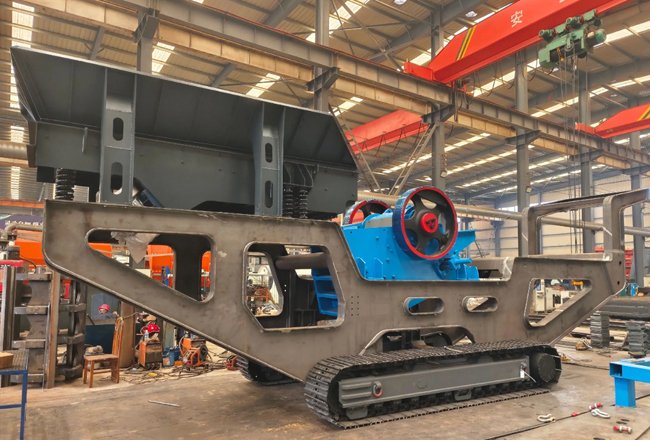
A tracked jaw crusher is a primary crushing unit that employs the principle of compression crushing (where a movable jaw periodically compresses material against a fixed jaw). It is mounted on a crawler chassis and integrates a vibrating feeder, a belt conveyor, and a power system. This equipment is primarily used for the coarse crushing of large raw materials, providing suitably sized feed for secondary and tertiary crushers.
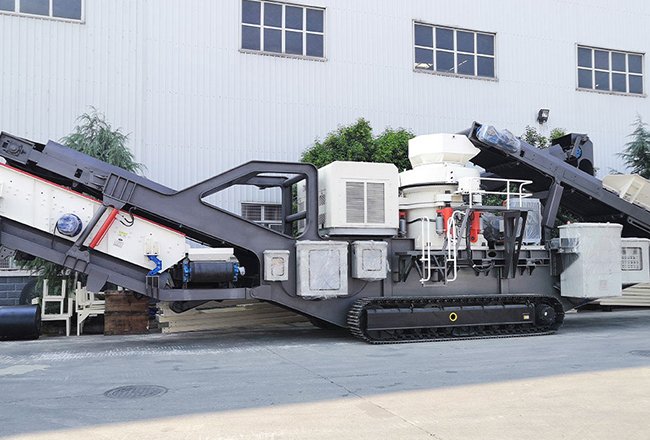
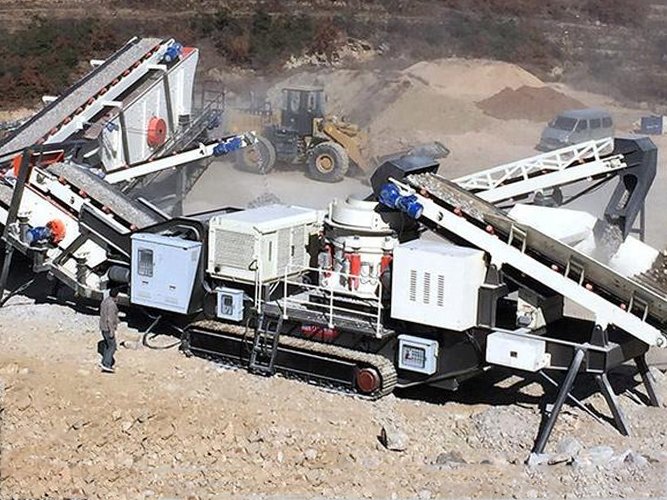
A tracked cone crusher is a compression-type crusher mounted on a crawler chassis (where the crushing process occurs between a rotating outer cone and a stationary inner cone), equipped with an independent power source, a hydraulic adjustment system, and a lubrication system. This equipment is primarily utilized for secondary, tertiary, or quaternary fine crushing; it is particularly well-suited for hard and abrasive materials and is capable of producing material with a consistent particle shape.
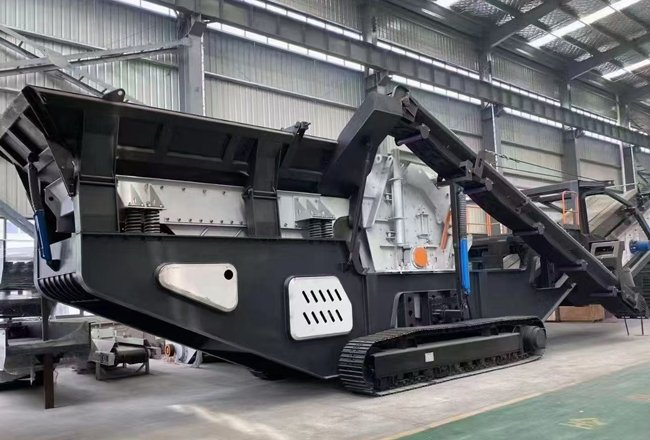
A tracked impact crusher achieves crushing by utilizing high-speed impact bars to strike the material, driving it into collision with impact plates. It is mounted on a crawler chassis that is equipped with feeding, conveying, and dust removal systems. This equipment is primarily used for secondary and tertiary crushing as well as material shaping, and is renowned for producing excellent cubical-shaped particles and achieving a high crushing ratio.
| Item | Tracked Jaw Crusher | Tracked Cone Crusher | Tracked Impact Crusher |
|---|---|---|---|
| Crushing Stage | Primary (Coarse) | Secondary/Tertiary/Quaternary | Secondary/Tertiary (Shaping) |
| Crushing Principle | Squeezing | Gyratory Compression | Impact Strike |
| Suitable Materials | All hardness, large feed | Hard–very hard, abrasive | Medium-soft–medium-hard, C&D waste |
| Product Shape | Angular | Good–Excellent (Cubic) | Best (Perfect Cubic) |
| Reduction Ratio | Moderate | Moderate–Large | Large |
| Wear Cost | Low | Medium | Medium (Soft) / High (Hard) |
| Mobility | High | High | High |
| Price Level | Medium | High | Medium |
It is a primary crushing equipment with strong adaptability to rock hardness, capable of crushing all types of rocks regardless of hardness, including but not limited to:
Core advantage: Focus on coarse crushing, can handle bulk materials with a size of 400–1000mm. It is the first choice for primary crushing in mines and quarries, and has the strongest adaptability to rock hardness without obvious taboos.
It is a professional medium-fine crushing equipment, mainly suitable forhard to extremely hard rocks and highly abrasive rocks, including:
Core advantage: Good at processing hard rock materials crushed by jaw crushers, and can produce high-quality cubic aggregates. It is not suitable for soft rocks, which will lead to low crushing efficiency and waste of equipment performance.
It is mainly used for shaping and crushing, suitable for medium-soft to medium-hard rocks and construction waste, including:
Core advantage: The cubicity of the produced aggregates is the best, which is ideal for high-grade concrete and asphalt pavement. It is not suitable for ultra-hard rocks and highly abrasive rocks with high SiO2 content, as this will cause rapid wear of wearing parts (such as blow bars and impact plates) and increase operating costs.
How to select the right mobile crushing station for your construction site depends primarily on the terrain, relocation requirements, production capacity, and budget.
| Key Factor | Tracked Mobile Crushing Plant | Wheeled Mobile Crushing Plant |
|---|---|---|
| Terrain Adaptability | Ideal for complex terrain (unpaved, steep, muddy), self-propelled, no temporary roads needed. | Suitable for flat, paved sites; requires towing, prone to skidding on rough ground. |
| Relocation | Flexible on-site movement; long-distance needs flatbed trailer. | Fast road relocation (towed directly); poor on-site mobility. |
| Capacity & Stability | Heavy-duty, stable for high-intensity, continuous operations (mines, large infrastructure). | Flexible, cost-effective for medium-low intensity (urban demolition, small projects). |
| Cost | Higher initial & maintenance costs (tracks as core consumables). | Lower purchase & maintenance costs; optional electric drive for savings. |
| Best For | Mines, mountainous sites, remote/wetland projects, frequent on-site relocation. | Urban sites, flat infrastructure, multi-site short-distance relocation, budget limits. |
When selecting tracked mobile crushers, focus on these core configurations:
Tracked crushers are not universal models. Selecting the right type based on the material directly affects efficiency and lifespan.
| Machine Model | Suitable Materials | Main Output | Value to You |
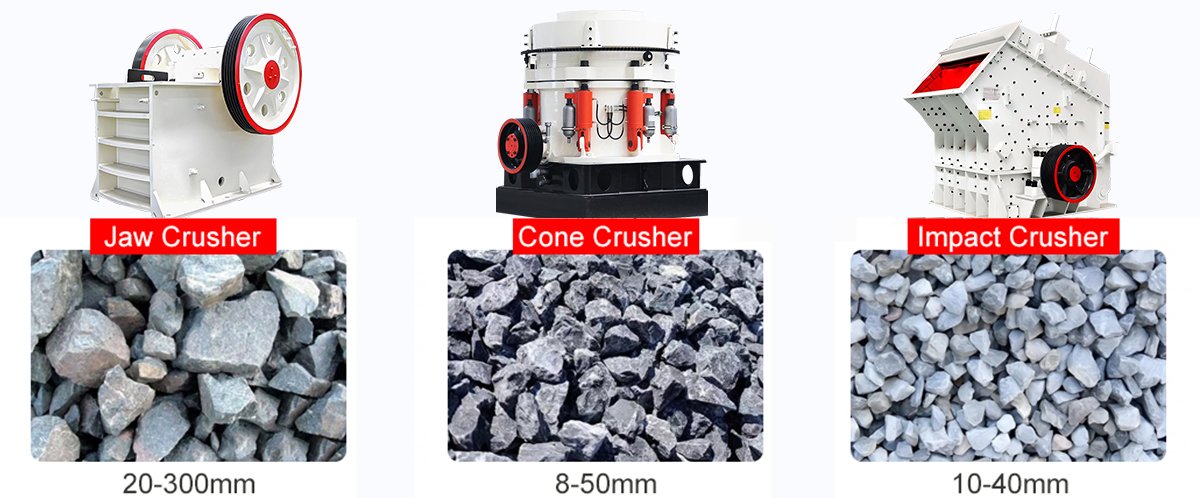
| 1. Tracked Jaw Crusher | Hard rock (granite, basalt, ore), large materials (≤800mm) | Coarse aggregate (20–80mm) | Primary crushing mainstay, impact resistant, low failure rate |
| 2. Tracked Cone Crusher | Medium-hard ore (limestone, iron ore), secondary/tertiary crushing | Fine aggregate (5–20mm) | High crushing ratio, uniform particle shape, suitable for construction aggregates |
| 3. Tracked Impact Crusher | Soft materials (recycled concrete, coal, limestone), requiring shaping | Graded aggregate (10–40mm) | High output, good particle shape, low cost of recycled materials |
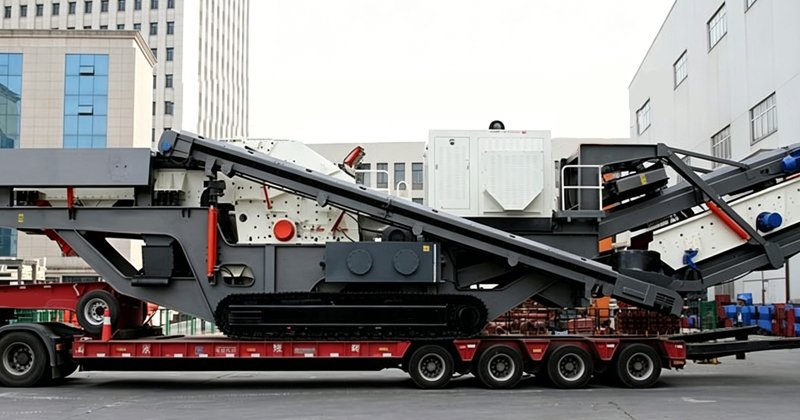
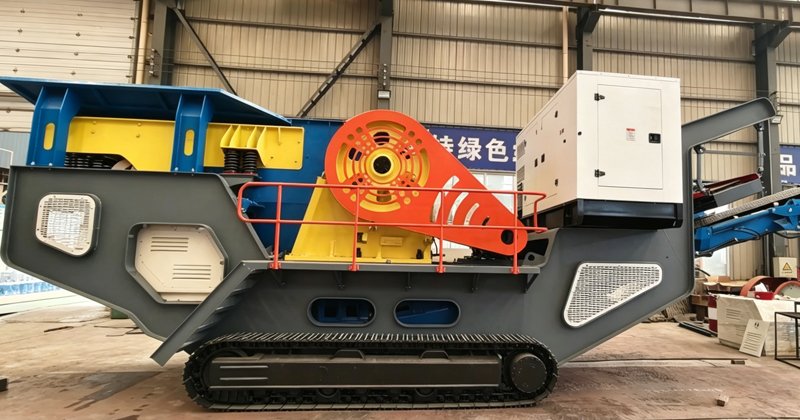
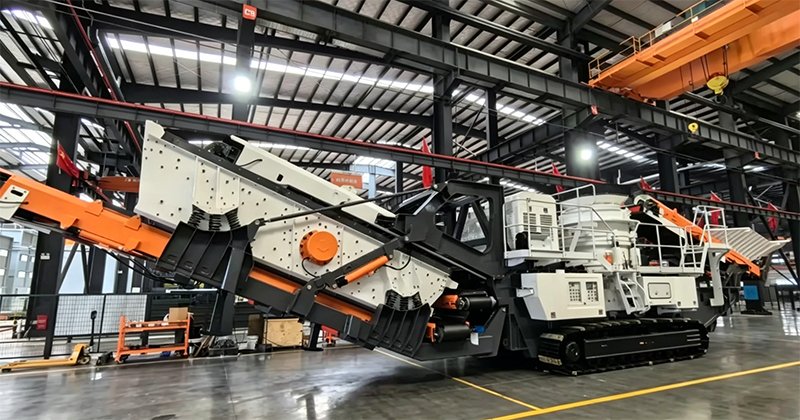
When selecting a tracked crusher, price shouldn’t be the only factor. Core parameters and configurations directly determine whether the equipment is suitable for the operating conditions, whether the output meets standards, the failure rate, and the service life. Only by choosing the right key aspects can you avoid problems such as insufficient capacity, high maintenance costs, and inability to relocate later on.
| Category | Key Parameters / Configuration | Why is it important? | Selection Points |
| Capacity and Adaptability | Maximum Feed Size | Determines smooth feeding and prevents clogging | Must be ≥ Maximum raw stone size on site |
| Hourly Processing Capacity (t/h) | Directly determines daily output and revenue | Estimated based on 70%–80% of theoretical value for hard rock | |
| Discharge Adjustment Range | Meets the needs of different aggregate specifications | Preferably hydraulically adjustable for flexible range | |
| Traffic and Passability | Track Type / Ground Pressure | Determines whether it can pass through mud and mountains | Rubber tracks are preferred for muddy mines |
| Climbing Ability | Capacity for transferring to complex terrain | Recommended ≥ 25° | |
| External Dimensions | On-road, access, and width restriction | Width should ideally be ≤ 2.5m | |
| Durability and Reliability | Crusher Type | Adapts to material hardness, determines lifespan | Jaw crusher for hard rock / Cone crusher; impact crusher for soft materials. |
| Wear-resistant parts material | Directly affects maintenance costs | High manganese steel and high chromium alloys are more wear-resistant | |
| Hydraulic System Functions | Anti-jamming, reduced downtime | Requires hydraulic clearing + overload protection | |
| Power and Stability | Engine/Motor Power | Insufficient power results in stalling and increased fuel consumption | Power and output must be strictly matched |
A proper combination of tracked crushers and mobile screening equipment can achieve seamless integration of crushing and screening, improving the efficiency of sand and gravel aggregate and construction waste processing. To stably produce finished aggregates of specified specifications, only three core principles need to be followed: capacity matching, particle size matching, and process matching.
In actual projects, the following aspects typically require special attention:
Typically, for coarse crushing, a tracked jaw crusher + single/double-layer moving screen is selected; for fine particle size, a tracked cone crusher + double/triple-layer moving screen is selected, forming a closed-loop cycle; a complete production line uses a tracked jaw crusher + tracked cone crusher + three-layer moving screen.
By scientifically matching tracked crushers with mobile screening equipment, not only can overall output and finished product quality be improved, but labor and operating costs can also be reduced, making it an important configuration solution for modern mobile crushing production lines.
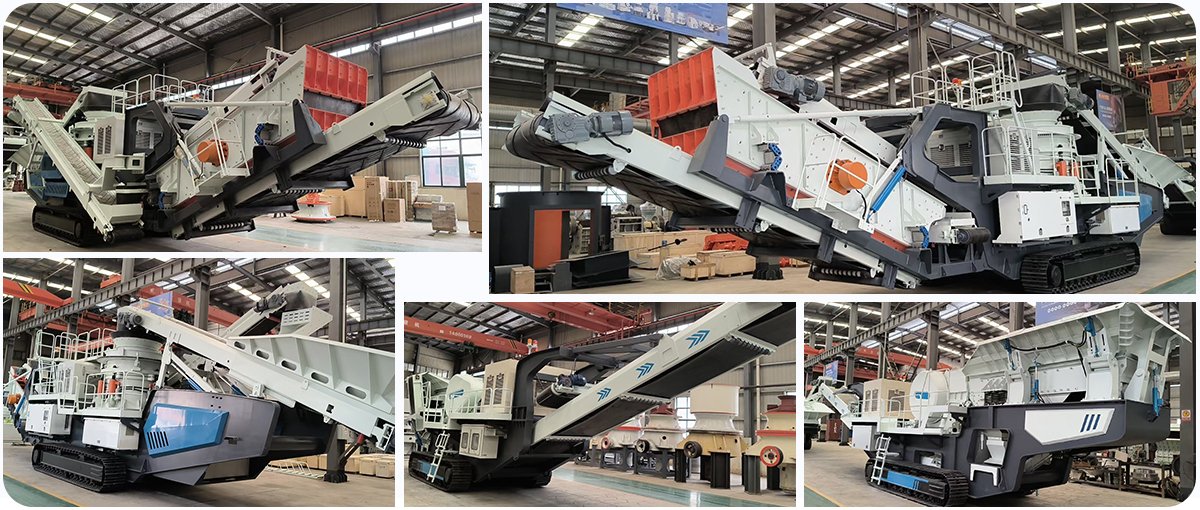
Tracked crushers are driven by tracked chassis, offering superior off-road capability and adaptability compared to wheeled equipment. They maintain stable operation even in complex construction environments such as muddy and rugged terrain. The equipment requires no infrastructure construction and can be put into operation immediately upon arrival, making it particularly suitable for mining, construction waste processing, water conservancy projects, and construction projects in remote areas.
Tracked crushers possess excellent climbing ability and off-road performance, allowing for flexible movement in narrow spaces or uneven ground, improving on-site operational efficiency. Modern equipment typically also features heavy-duty hydraulic systems, intelligent controls, and dust and noise reduction designs, enabling it to meet the demands of high-intensity, long-term continuous production.
Compared to stationary production lines, tracked crushers not only reduce infrastructure costs but also alleviate material transportation pressure. Their greater flexibility and economy in complex working conditions and harsh environments have made them increasingly popular with customers worldwide.
The actual hourly output of a tracked crusher is not a fixed nominal value, but is directly related to the type of crusher, material characteristics, operating conditions, and wear status. Different crushing machines have significantly different output ranges and key influencing factors. The following are reference data and key influencing factors under actual operating conditions.
| Main Unit Type | Actual Output Range (t/h) | Main Process Positioning | Key Factors Affecting Actual Output |
| Crawler Jaw Crusher | 50–200 | Coarse Crushing, First Crushing of Large Raw Stones | 1. Maximum Feed Size and Feed Uniformity 2. Discharge Opening Gap Size 3. Material Hardness, Mud Content, and Moisture Content 4. Jaw Plate Wear |
| Crawler Cone Crusher | 90–200 | Medium and Fine Crushing, High-Quality Hard Rock Aggregate | 1. Cavity Shape and Liner Wear Condition 2. Discharge Opening CSS Accuracy 3. Whether Full-Cavity Continuous Feeding is Possible 4. Rock Abrasiveness |
| Crawler Impact Crusher | 80–300 | Medium Crushing, Recycled Material / Limestone Shaping | 1. Hammer and Impact Plate Gap 2. Rotor Speed Setting 3. Material Moisture and Viscosity 4. Impurity Content of Construction Waste |
The price of a tracked crusher typically ranges from $80,000 to $300,000, with the exact cost varying depending on the type of equipment, processing capacity, main equipment configuration, and whether a screening system is included. Jaw, impact, and cone tracked crushers also show significant price differences.
Key factors affecting price include:
Some of my previous clients, due to initial funding constraints, chose low-priced tracked crushers on the market. They encountered problems such as poor steel quality, unstable hydraulic systems, short lifespan of wear parts, and high failure rates, leading to higher maintenance and downtime costs. CHUNLEI has been in the mining machinery industry for decades, with its own factory, ensuring equipment quality while offering the most reasonable prices in the industry. For mining, construction waste recycling, and large-scale sand and gravel projects, choosing reliable and stable equipment is more beneficial for long-term production and return on investment.
| Series | Standard Model | Vehicle-mounted Equipment | Vehicle-mounted Equipment | Handling Capacity (t/h) | Transport Dimensions (mm) |
| Mobile jaw crusher | WT96 | HVF9538 | CJ96 | 70-150 | 13500×2800×3500 |
| WT106 | HVF1140 | CJ106 | 90-250 | 15100×2800×3500 | |
| WT116 | HVF1242 | CJ116 | 100-300 | 16000×3100×3750 | |
| WT120 | HVF1242 | CJ120 | 110-350 | 16000×3100×3800 | |
| Mobile impact crusher | WT1110S | HVF9538 | CI1110M | 60-150 | 16500×3400×3600 |
| WT1213S | HVF1242 | CI1213M | 80-200 | 17000×3460×3700 | |
| WT1316 | HVF1242 | CI1316 | 100-300 | 15000×3300×3800 | |
| Mobile cone crusher | WT200/S | – | HPM200 | 80-150 | 16400×3300×3700 |
| WT300S | – | HPM300 | 100-200 | 17800×3400×3700 | |
| WT160S | – | SC160 | 70-200 | 17000×3300×3700 | |
| WT250 | – | SC250 | 100-250 | 15500×3300×3800 | |
| Mobile Sand Making and Crushing Plant | WT0818 | – | HVI0818 | 70-150 | 15000×3100×3700 |
| WT0926 | – | HVI0926 | 85-200 | 16000×3300×3800 | |
| Mobile screening plant | ST722 | – | ZS1548H | 60-400 | 15700×3180×3500 |
| ST833 | – | 3YK1560H | 60-300 | 15500×3100×3500 | |
| ST833S | – | 3YK1560H | 60-300 | 17500×3100×3500 | |
| ST1083 | – | 3YK1860H | 80-400 | 16500×3400×3650 | |
| ST1083S | – | 3YK1860H | 80-400 | 18500×3400×3650 | |
| ST6203 | – | THS2060 | 100-500 | 18500×3260×3600 |
Q: Which industries are suitable for tracked crushers?
A: Widely used in mining, quarries, construction waste recycling, highway construction, water conservancy projects, and the sand and gravel aggregate industry.
Q: Can tracked crushers handle high-hardness stones?
A: Yes, the equipment can handle various high-hardness materials such as granite, basalt, river pebbles, and iron ore.
Q: Does a tracked crusher require a concrete foundation?
A: Usually not. The equipment can be put into production quickly after arriving on site.
Q: Can tracked crushers operate directly on-site?
A: Yes, the equipment supports on-site crushing, reducing material transportation costs and improving construction efficiency.
Q: Are tracked crushers suitable for construction waste recycling?
A: Very suitable. It can directly process concrete, cement blocks, and demolition waste to achieve recycled aggregate production.
Q: Can tracked crushers be combined with screening equipment?
A: Yes, they can form a complete mobile crushing and screening production line.
Q: Are tracked crushers fuel-intensive?
A: Actual fuel consumption varies depending on the equipment model, material hardness, and output requirements. Modern equipment typically uses energy-saving hydraulic systems to reduce energy consumption.
Q: Are tracked crushers easy to relocate?
A: The tracked chassis allows for flexible movement, making it suitable for projects requiring frequent site changes.
Q: Are tracked crushers suitable for rainy weather or complex terrain?
A: The equipment has strong mobility and is suitable for muddy areas, mines, and complex construction environments.
Q: How to choose the right tracked crusher model?
A: The selection needs to be based on a comprehensive consideration of material type, output requirements, feed size, and site conditions.
 Chunlei Mining Machinery