 Chunlei Mining Machinery


Ceramic Filter Press
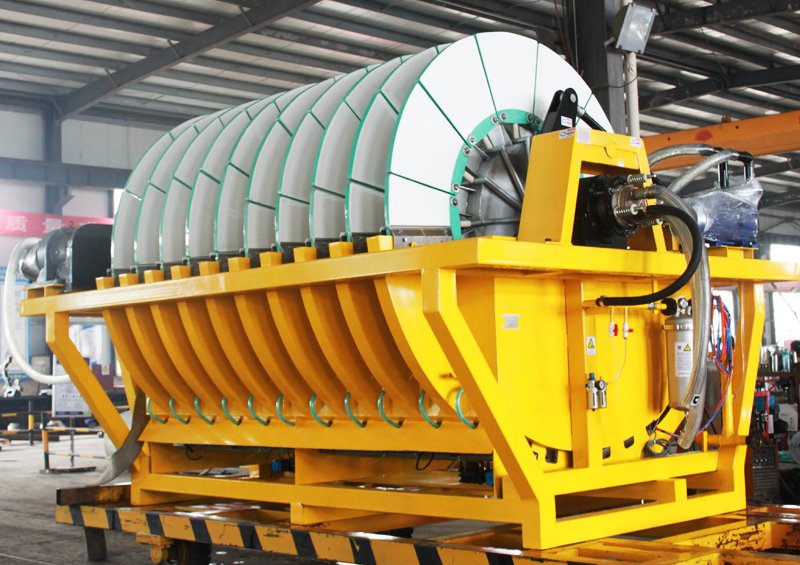
Ceramic Filter Press is a kind of high-efficiency and energy-saving filtration equipment relying on vacuum suction and capillary action to realize solid-liquid separation, which is widely used in mining, metallurgy, chemical industry, environmental protection and other industries.
- Filtering area: 4-150㎡
- Tank volume: 0.21-24m³
- Power: 2.0-47kw
What is Ceramic Filter Press?
Ceramic filter presses, also known as ceramic vacuum filters, are continuous vacuum solid-liquid separation and dewatering equipment. The core filter medium is a porous alumina ceramic filter plate. Utilizing the principle of vacuum adsorption combined with microporous ceramic filter plates, it achieves highly efficient solid-liquid separation, primarily used for slurry dewatering and concentrate filtration. The entire machine integrates a rotating ceramic drum, a vacuum distribution system, an ultrasonic acid washing unit, a slurry mixing tank, and a PLC fully automatic control cabinet. The filtrate is clear and 100% recyclable, meeting global environmental standards for dry tailings discharge and zero wastewater discharge.
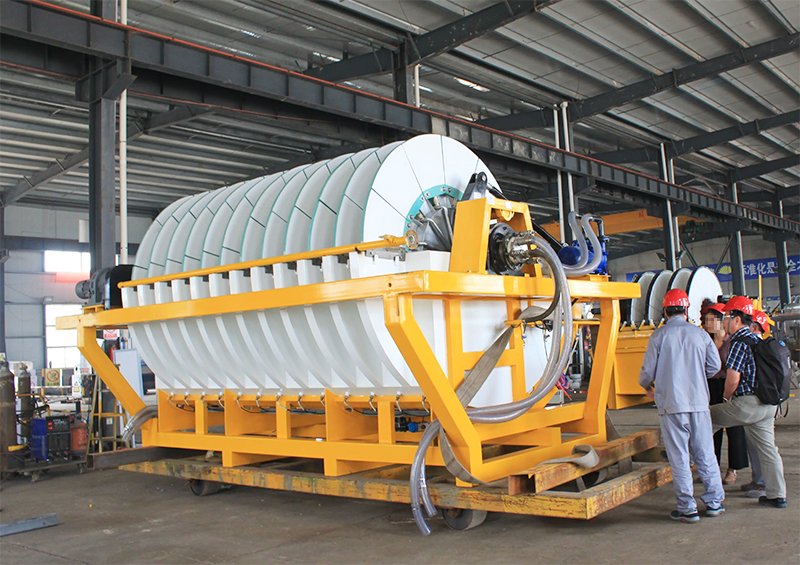
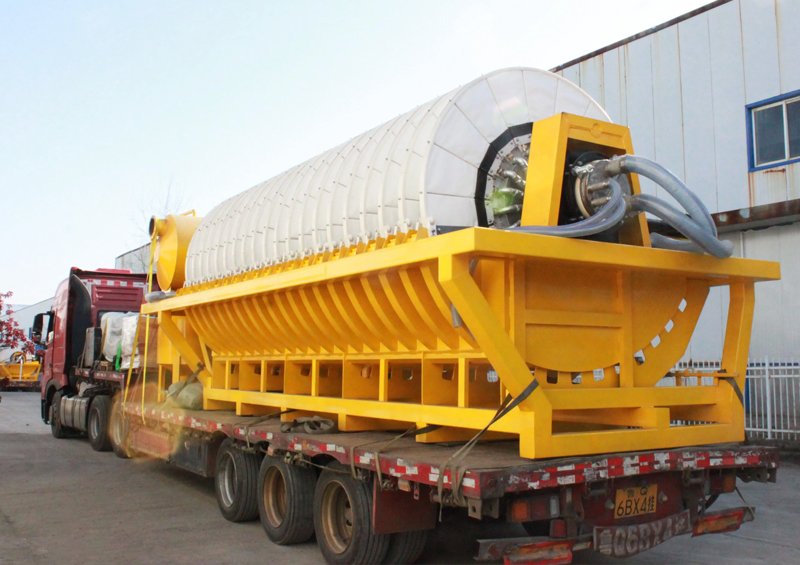
Complete Four-Stage Continuous Working Process:
- Suction Zone: The lower half of the drum is immersed in the slurry tank. Vacuum negative pressure adsorbs solid particles through the ceramic micropores, while liquid seeps into the ceramic cavity.
- Drying Zone: The drum rotates out of the liquid surface. Continuous negative pressure removes capillary water, significantly reducing the moisture content of the filter cake.
- Discharge Zone: The vacuum channel is cut off, and a wear-resistant scraper automatically scrapes off the dried filter cake, which is then transported out by belt conveyor.
- Regeneration and Cleaning Zone: The drum enters the cleaning station, where ultrasonic waves and dilute acid are used to rinse the ceramic micropores, preventing micropore blockage and stabilizing the dehydrated moisture content.
Working Principle of Ceramic Filter Press
The working principle of the ceramic filter Press is mainly based on vacuum suction and capillary microporous action. Specifically, when the vacuum pump is activated, negative pressure is formed in the filtration chamber, under the action of negative pressure, the solid material in the slurry tank is adsorbed on the surface of the ceramic filter plate, forming a cake, while the liquid is due to the action of the vacuum pressure difference and the hydrophilicity of the ceramic filter plate, through the surface layer of ceramic filter plate into the inner cavity of the ceramic plate, and then through the pipeline to reach the discharge tank and then discharged, so as to achieve the purpose of solid-liquid separation. After that, the rotor drives the filter plate and the cake adsorbed on the plate to the drying area, where the cake continues to be dewatered under the action of vacuum. With the filtration process, solid particles in the ceramic filter plate surface to form a layer of cake, when the cake reaches a certain thickness, the need to stop filtering and ultrasonic with a low concentration of acid for joint cleaning to ensure that the ceramic plate for efficient use.


Why Choose CHUNLEI Ceramic Filter Press?
- High-Precision, High-Vacuum Filtration: The micropores of the ceramic filter plates are typically less than 2μm, efficiently trapping solid particles, resulting in clearer filtrate and lower filter cake moisture content. Vacuum levels can reach 0.09–0.098MPa, providing excellent filtration for fine particles as well.
- Energy-Efficient and High-Efficiency: Utilizing the capillary action of the ceramic filter plates for solid-liquid separation, it boasts low energy consumption, high processing capacity, and more economical operating costs.
- Highly Automated: Employing a PLC control system, it enables automatic feeding, filtration, cleaning, and unloading, reducing manual operation and improving operational stability.
- Strong Corrosion Resistance: The ceramic material exhibits excellent corrosion resistance, making it suitable for complex slurries and harsh working conditions, resulting in a longer service life.
- Strong Adaptability: It can process materials of different particle sizes and properties and supports process conditions requiring washing, offering a wide range of applications.
- Compact Structure: The equipment has a small footprint, is easy to install, and is ideal for industrial sites with limited space.
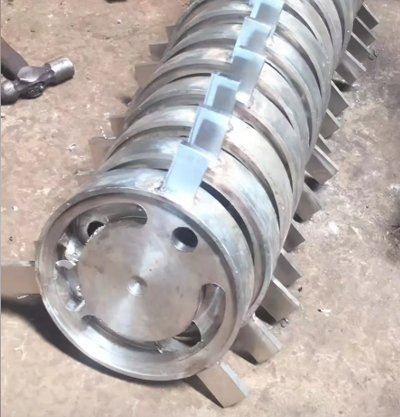
List of Core Components and Wear Parts of Ceramic Filter Press
1. Core Durable Structure of the Main Unit
| Component Name | Material | Core Function | Standard Service Life |
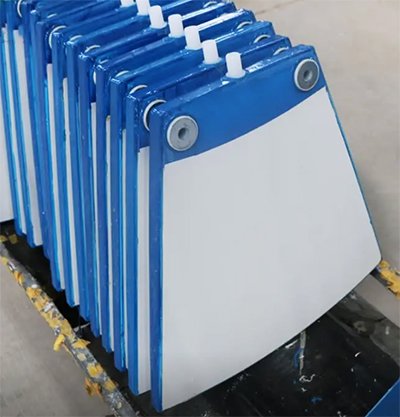
| Ceramic Filter Disc (Filter Plate) | High-purity alumina microporous ceramic | Core capillary filtration medium, determining dewatering moisture content | 2–4 years |
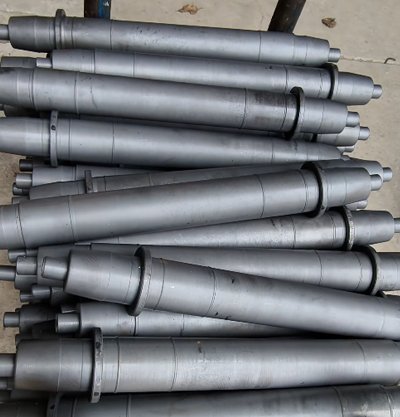
| Rotary Drum Main Shaft | Thickened 304 stainless steel | Supports uniform rotation of all ceramic discs | 8–10 years |
| Vacuum Distributor Head | Wear-resistant alloy + fluororubber seal | Switches between suction/drying/discharging vacuum chambers | 3–5 years |
| Slurry Mixing Tank | 304/316 stainless steel | Prevents fine particle sedimentation and stratification | Same lifespan as the whole machine |
| Frame Base | Carbon steel anti-corrosion paint | Supports the entire machine’s load-bearing capacity | 10 years + |
| PLC Control Cabinet | Industrial explosion-proof electrical components | Logic control and fault alarm for the entire machine | 5–8 years |
2. Frequent Replacement of Consumable Parts
- Fluororubber sealing gasket for distributor: 6–12 months; leakage will reduce vacuum and increase moisture content.
- Wear-resistant scraper for unloading: 3–8 months; wear and residual material will clog ceramic pores, increasing moisture content.
- Vacuum rubber hose: 10–18 months; aging and leakage will lead to insufficient negative pressure.
- Ultrasonic cleaning transducer: 12–24 months; cleaning failure will cause micropore blockage.
- Slurry pump impeller and mechanical seal: 4–10 months.
- Wear-resistant belt for belt conveyor: 6–12 months.
Maintenance Tips: CHUNLEI new machines come with a complete set of basic consumable parts. Overseas parts transit warehouses deliver directly to the mine/ceramic factory within 7–15 days.
What are the differences between ceramic filter presses and plate and frame filter presses?
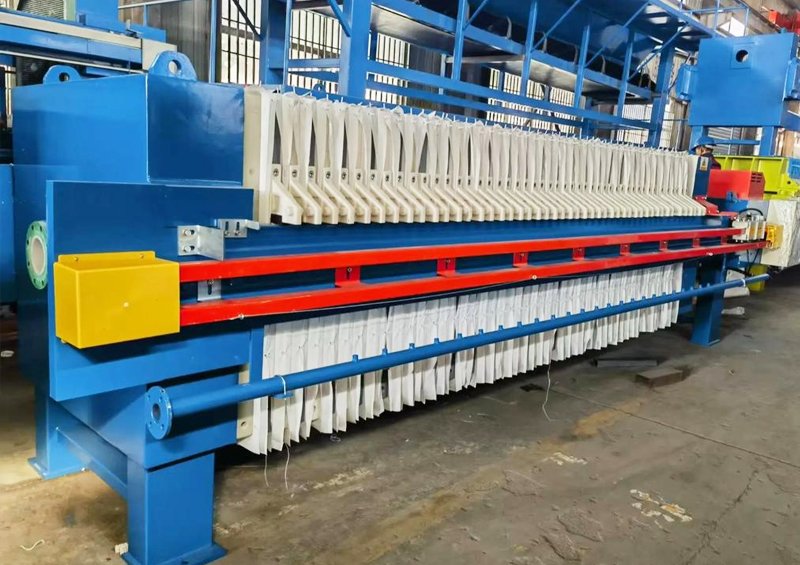
Plate and frame (chamber/diaphragm) filter presses are traditional intermittent high-pressure dewatering equipment, while ceramic vacuum filters are a new generation of continuous vacuum dewatering equipment. The two differ significantly in their application to tailings and concentrate dewatering conditions:
| Comparison Dimensions | Ceramic Vacuum Filter Press (Ceramic Filter Press) | Plate and Frame/Diaphragm Filter Press |
| Operating Mode | 24-hour fully automatic continuous dewatering, unattended operation | Intermittent batch feeding and pressing, frequent shutdowns |
| Filter Media | Alumina ceramic filter plates, no filter cloth consumables | PP filter cloth, complete replacement every 3–6 months |
| Filter Cake Moisture Content | Concentrate 6.5%–11.5%; Tailings 10%–16% | Regular 22%–40%, extremely high moisture content |
| Annual Consumable Cost | No filter cloth expenditure | Continuous large-scale filter cloth procurement costs |
| System Energy Consumption | 70%–90% power saving, only small vacuum pump | Continuous power consumption of high-power hydraulic pumps |
| Filtrate Clarity | Ultra-fine particle interception, clean water can be directly reused | Contains a large amount of fine mud, requiring secondary treatment in a sedimentation tank |
| Labor Requirements | 1 person to operate multiple units | Dedicated person to open and clean the filter cloth |
| Suitable Materials | -200 Ultrafine concentrate, various fine tailings | Coarse construction waste, coarse slag |
Selection Summary:
Ceramic filters are preferred for ultrafine concentrate, flotation tailings, ceramic sludge, and lithium materials; plate and frame filters are optional for short-term coarse sludge projects.
Can ceramic filter presses process tailings?
Yes. Ceramic filter presses are widely used for tailings dewatering in various mines, especially for solid-liquid separation of flotation tailings from iron ore, copper ore, gold ore, lead-zinc ore, phosphate ore, lithium ore, and rare earth ore. Through vacuum filtration and the high-efficiency filtration of ceramic filter plates, the moisture content of tailings can be effectively reduced, improving the efficiency of tailings transportation, storage, and comprehensive utilization.
The filtrate produced is very clean, with a high retention rate of ultrafine tailings particles, and can be recycled, reducing water consumption and wastewater treatment costs. It is an indispensable cost-reducing and revenue-increasing device for modern mineral processing tailings treatment.
What is the achievable moisture content of the filter cake from a ceramic filter press?
The moisture content of the filter cake produced by a ceramic filter press (ceramic vacuum filter) can typically be stably controlled between 10% and 20%. The actual dewatering effect is affected by factors such as material properties, particle size, slurry concentration, and process parameters.
For easily filterable minerals such as iron ore, copper ore, and gold ore, the filter cake moisture content can usually be reduced to below 10%; while for difficult-to-filter materials such as ultrafine tailings, high-viscosity slurries, or ceramic mud, the moisture content will be relatively higher.
CHUNLEI can optimize key configurations such as ceramic filter plates, vacuum systems, drum speed, and automatic cleaning systems according to different material characteristics, providing customers with customized dewatering solutions to help achieve lower filter cake moisture content, higher filtration efficiency, and more stable production operation, meeting various application needs such as mine tailings dry discharge, concentrate dewatering, and ceramic powder processing.
Complete Ceramic Filtration Production Line Equipment
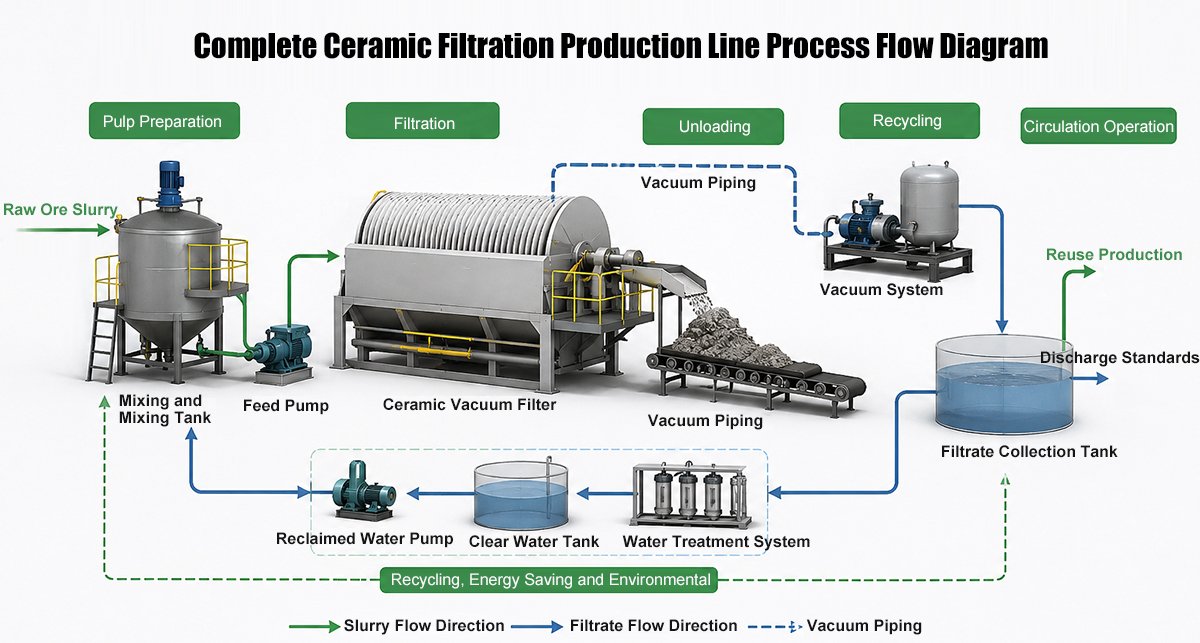
While the structure of a complete ceramic filtration production line is not complex, the coordination of each stage is crucial. The entire production line consists of: slurry preparation → filtration → unloading → recovery → continuous operation.
- Front-end Slurry Preparation System
Includes a slurry mixing tank, slurry preparation pool, and slurry pump, used to ensure stable slurry concentration and uniform flow. - Core Filtration Equipment
Uses a ceramic vacuum filter as the main unit, equipped with a vacuum pump and automatic control system to achieve continuous solid-liquid separation. - Unloading and Conveying System
Includes a scraper and conveyor belt or screw conveyor for stable output of the filter cake. - Filtrate Recovery System
Collects the filtered liquid and returns it to the production process via a return water pump for recycling. - Vacuum and Auxiliary System
Vacuum pumps, air compressors, and piping systems provide stable power support for filtration. - Automatic Control System
PLC control cabinet + sensors enable automatic operation, monitoring, and alarm functions.
How to Choose the Right Ceramic Filter?
Choosing the right ceramic filter depends on several factors: production capacity, material complexity, and moisture content.
- Processing Capacity: The most crucial factor is the hourly or daily slurry volume, which determines the filter size and filtration area.
- Material Properties: The presence of fine mud and viscosity in the slurry affects filtration difficulty; more difficult filtration requires larger filters.
- Solid Content: Higher concentrations generally result in easier filtration, while lower concentrations necessitate larger equipment to ensure sufficient capacity.
- Moisture Content Requirements: Higher requirements for filter cake dryness necessitate correspondingly larger equipment configurations and specifications.
If you have any further questions or wish to configure a suitable ceramic filter, please contact CHUNLEI engineers. We will provide the most suitable product based on your project requirements.
Technical Parameters of Ceramic Filter Press
| Model number | Filter area/m2 | Filter disc/ring | Number of filter plates/pieces | Tank volume/m3 | Installed power/KW | Operating power/Kw | Host machine(L×W×H)/m |
| TC-1 | 1 | 1 | 12 | 0.21 | 3.5 | 2.0 | 1.6×1.4×1.5 |
| TC-4 | 4 | 2 | 24 | 1.0 | 7.0 | 3.0 | 2.4×2.5×2.1 |
| TC-6 | 6 | 2 | 24 | 1.2 | 7.0 | 6.0 | 2.4×2.9×2.5 |
| TC-9 | 9 | 3 | 36 | 1.7 | 9.0 | 7.0 | 2.7×2.9×2.5 |
| TC-12 | 12 | 4 | 48 | 2.2 | 11.0 | 7.5 | 3.0×2.9×2.5 |
| TC-15 | 15 | 5 | 60 | 2.7 | 11.5 | 8.0 | 3.3×3.0×2.5 |
| TC-21 | 21 | 7 | 84 | 4.0 | 13.5 | 9.0 | 4.6×3.0×2.6 |
| TC-24 | 24 | 8 | 96 | 4.5 | 16.5 | 10.5 | 4.9×3.0×2.6 |
| TC-27 | 27 | 9 | 108 | 5.0 | 17.0 | 11.0 | 5.2×3.0×2.6 |
| TC-30 | 30 | 10 | 120 | 5.5 | 17.5 | 11.5 | 5.5×3.0×2.6 |
| TC-36 | 36 | 12 | 144 | 7.0 | 23.0 | 16.0 | 6.6×3.0×2.6 |
| TC-45 | 45 | 15 | 180 | 8.5 | 25.0 | 19.0 | 7.5×3.0×2.6 |
| TC-60 | 60 | 15 | 180 | 12.5 | 33.0 | 22.0 | 7.5×3.3×3.0 |
| TC-80 | 80 | 20 | 240 | 16.2 | 40.0 | 24.0 | 9.0×3.3×3.0 |
| TC-102 | 102 | 17 | 204 | 18.5 | 53.0 | 35.0 | 8.8×3.6×3.3 |
| TC-120 | 120 | 20 | 240 | 20 | 60.0 | 40.0 | 9.7×3.6×3.3 |
| TC-150 | 150 | 25 | 300 | 24 | 75.0 | 47.0 | 11.2×3.6×3.3 |
Ceramic Filter Price
The price of a ceramic filter is mainly determined by its processing capacity, level of automation, and configuration. Generally:
- Small equipment: Approximately $15,000 – $30,000
- Medium equipment: Approximately $30,000 – $50,000
- Large industrial-grade: Approximately $50,000
FAQ
Q: What are ceramic filters mainly used for?
A: They are used for solid-liquid separation of mineral slurries, widely applied in concentrate dewatering and tailings treatment in gold, copper, and iron mines.
Q: What is the difference between a ceramic filter and a traditional filter press?
A: A ceramic filter is a continuously operating device with a high degree of automation; a filter press operates intermittently and has relatively lower efficiency.
Q: What is the typical moisture content of the filter cake after filtration?
A: It can usually be stably controlled at a low level, depending on the material properties and process conditions.
Q: Can the equipment operate continuously?
A: Yes, ceramic filters are continuous solid-liquid separation equipment and can operate stably for extended periods.
Q: Which minerals are suitable?
A: Suitable for metallic ores such as iron, copper, gold, and molybdenum, and can also be used for dewatering some non-metallic mineral slurries.
Q: 6. Is it effective for processing materials with a high content of fine mud?
A: It can process such materials, but if the fine mud content is too high, slurry preparation needs to be optimized or the filtration area increased.
Q: Is manual operation required?
A: Most models are PLC-controlled automatically, requiring only minor inspections and maintenance.
Q: Is the equipment energy-intensive?
A: Energy consumption mainly comes from the vacuum system and transmission system; overall, it is at a moderate energy consumption level.
Q: Do the ceramic filter plates need frequent replacement?
A: They have a long lifespan under normal use, but regular cleaning and maintenance are necessary to maintain efficiency.
Q: What is the most important factor when selecting a model?
A: The core factor is the throughput, followed by the slurry properties and moisture content requirements.
Summary
Ceramic filters, as highly efficient continuous solid-liquid separation equipment, offer numerous advantages in concentrate dewatering and tailings treatment. However, the selection will vary depending on the type of ore, processing capacity, and operating conditions. If you are planning such a project, we recommend providing specific material parameters and capacity requirements. CHUNLEI can then provide you with a more suitable selection scheme and process configuration free of charge, helping you reduce costs and increase profits.
Related Products —
Wheel Sand Washing Machine
Wheel Sand Washing Machine is a kind of sand washing equipment used with sand making machine. It has high washing degree, reasonable structure, large handling capacity, small power consumption, and less sand loss in the sand washing proc…
Ultrafine Powder Grinding Mill
The Ultrafine Powder Grinding Mill (a medium-speed, micro-powder mill featuring a three- or four-ring design) is a high-efficiency, low-consumption processing unit developed by CHUNLEI’s R&D team through extensive innovation, testing, a…
BLL Spiral Chute
BLL spiral chute, also known as spiral chute separator, is a heavy separation equipment that utilizes the inertial centrifugal force generated by the slurry in the spiral rotary motion to realize the separation of light and heavy minerals. …
High Gradient Magnetic Separator
A variety of models are available | Get the free price list! The High Gradient Magnetic Separator (HGMS) is a new type of strong magnetic separator developed on the basis of general strong magnetic separa…
Raymond Mill
Raymond mill is a complete set of grinding equipment that can independently and autonomously generate a production system. Applicable materials: limestone, calcite, quicklime, dolomite, barite, talc, calcium carbonate, gypsum, bentonit…


loading…
已经是到最后一篇内容了!