Search the whole station Hot Product Catalog
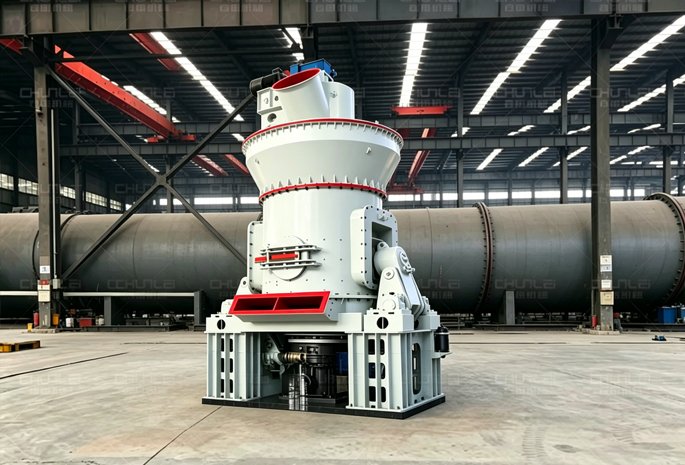
The Ultrafine Powder Grinding Mill (a medium-speed, micro-powder mill featuring a three- or four-ring design) is a high-efficiency, low-consumption processing unit developed by CHUNLEI’s R&D team through extensive innovation, testing, and design. It successfully replaces the complex grinding and classification processes associated with traditional jet mills and ball mills, thereby significantly reducing production costs and enhancing product fineness.
Application: The ultrafine grinding mill is a piece of equipment designed for processing ultrafine and micro-fine powders; it is primarily suitable for non-flammable, non-explosive, and brittle materials of low to medium hardness (Mohs hardness ≤ 6).
An ultrafine powder grinding mill is a high-efficiency grinding machine designed to process non-metallic minerals and industrial raw materials into ultrafine powders. Commonly known as a three-ring mill, three-ring micropowder mill, or medium-speed mill, it utilizes the crushing and grinding action between grinding rollers and rings, combined with a classification system for precise separation, to produce ultrafine powders ranging from 150 to 3000 mesh.
These mills are suitable for processing brittle materials that are non-flammable, non-explosive, and have a Mohs hardness of 6 or less and a moisture content of less than 6%. They are widely used across various sectors in my country, including metallurgy, electric power, chemicals, iron and steel, building materials, and coal.
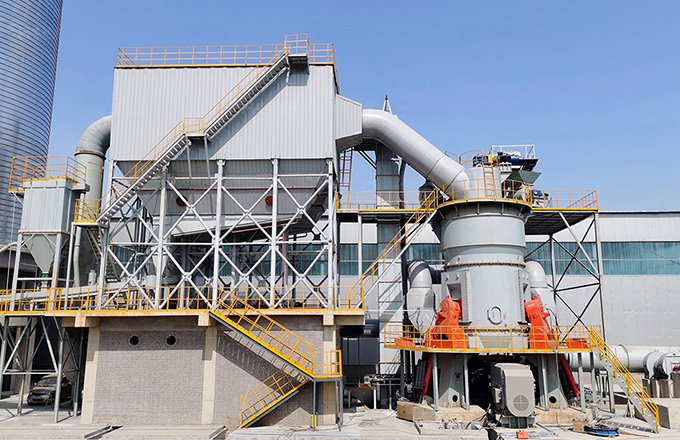
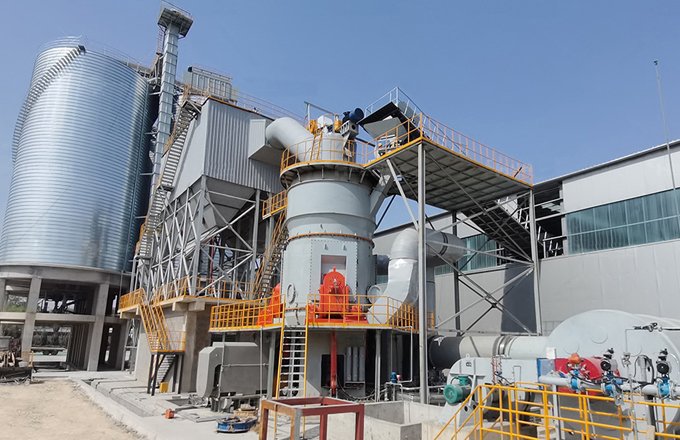
The ultrafine powder grinding mill primarily consists of a main unit, a classifier, a blower, and a powder collection system. During operation, the motor drives the main shaft and grinding rollers to rotate at high speed; once the material enters the grinding chamber, it undergoes repeated crushing, impact, and grinding between the rollers and the grinding ring under the action of centrifugal force, thereby achieving pulverization.
After entering the grinding chamber, the material is subjected to repeated crushing, impact, and grinding by the rollers and the grinding ring. The pulverized material is carried by the airflow into the classification system; particles that do not meet the required fineness are returned to the grinding chamber for further processing, while qualified fine powder is collected by the collection unit, ultimately yielding an ultrafine powder product with uniform particle size. This equipment is widely used for the ultrafine pulverization of non-metallic minerals such as calcium carbonate, limestone, talc, kaolin, and bentonite.
The CHUNLEI ultrafine powder grinding mill is specifically designed for high-fineness powder processing. Combining high output, low energy consumption, and stable operation, it meets the diverse needs of various industries for ultrafine powder production.
Ultrafine powder grinding mills are suitable for materials with a Mohs hardness of 6 or less and a moisture content controlled within 6%, provided they are free from flammable, explosive, or highly tough/plastic impurities. Typical materials include:
Calcium carbonate, limestone, calcite, marble, dolomite, talc, barite, gypsum, bentonite, kaolin, quartz, feldspar, mica, graphite, activated carbon, fly ash, slag, etc.
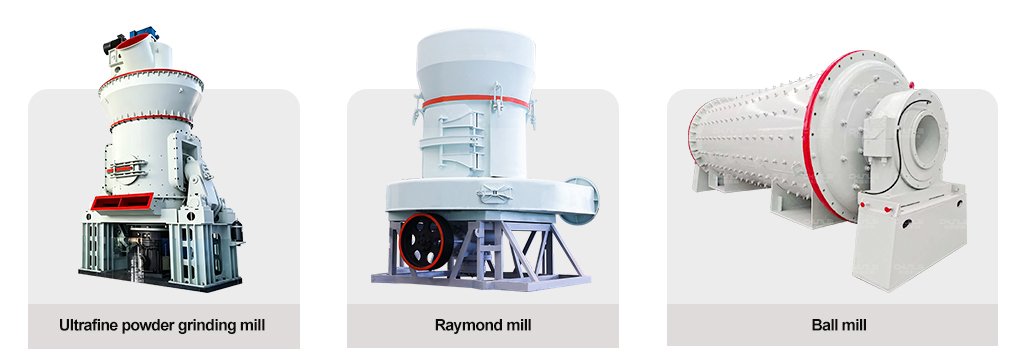
| Comparison Item | Ultrafine Mill | Raymond Mill | Ball Mill |
| Working Principle | Grinding roller & ring compression + closed-circuit classification | Roller pressing against grinding ring + air classification | Steel ball impact & grinding |
| Finished Product Fineness | 150–3000 mesh (ultrafine powder) | 80–400 mesh (medium-fine powder) | 60–800 mesh (coarse to medium-fine powder) |
| Production Method | Continuous closed-circuit production | Continuous production | Mostly batch or semi-continuous |
| Output Efficiency | High; suitable for large-scale ultrafine powder production | Moderate | Relatively low |
| Energy Consumption | Low | Moderate | High |
| Product Particle Size | Uniform; high fineness | Average | Relatively non-uniform |
| Suitable Materials | Ultrafine processing of non-metallic minerals | Conventional mineral powder processing | Coarse grinding of various ores |
| Typical Applications | High-end powders (calcium carbonate, talc, kaolin, etc.) | Construction materials, metallurgy, chemicals | Mineral processing, cement, ore grinding |
In short, choose an ultrafine mill for ultrafine powder (high value-added); a Raymond mill for standard powder; and a ball mill for coarse grinding of ore.
The hourly output of ultrafine powder grinding mills varies significantly, typically ranging from a few hundred kilograms to over ten tonnes. The specific output depends primarily on the equipment model:
Note: Actual output will fluctuate based on material hardness, feed size, and the required fineness of the finished product (the finer the requirement, the lower the output).
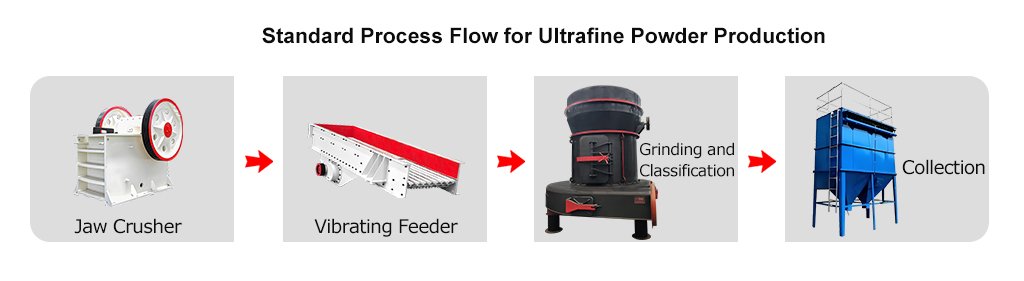
The ultrafine powder production line comprises a suite of core equipment working in concert to facilitate continuous production, ranging from raw material processing to final product packaging.
Initially, a jaw crusher performs primary crushing on large raw material chunks; a bucket elevator then transports the material to a storage silo for buffering and homogenization. Subsequently, an electromagnetic vibrating feeder ensures stable, metered feeding into the main unit. The core ultrafine grinding mill performs efficient pulverization, followed by a classifier that precisely sorts the powder to ensure the final product meets fineness specifications. Qualified fine powder is efficiently collected via a pulse dust collector, and an automatic packaging machine completes the final packaging, resulting in a highly efficient, stable, and environmentally friendly production process.
When selecting an ultrafine powder grinding mill, it’s necessary to comprehensively consider the characteristics of the raw materials, the fineness of the finished product, and the required production capacity to ensure the equipment meets production requirements and achieves the best return on investment.
The following factors should be considered when selecting equipment:
Equipment Configuration: Based on production needs, select whether to include auxiliary equipment such as elevators, feeders, classifiers, dust collectors, and packaging machines to create a complete production line.
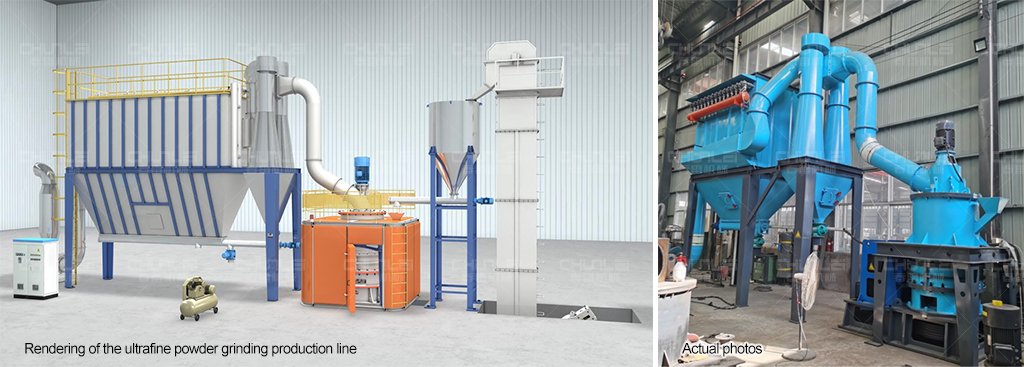
Regardless of the material or ultrafine powder you need to produce, CHUNLEI engineers can recommend the most suitable ultrafine mill model and a comprehensive solution based on your requirements for raw materials, fineness, and output, helping you achieve high returns and low costs.
| Parameter | HGM60 | HGM80 | HGM100 | HGM125 | HGM168 |
| Average operating diameter (mm) | 600 | 800 | 1000 | 1250 | 1680 |
| Number of grinding rings | 3 | 3 | 4 | 4 | 4 |
| Number of grinding rollers | 15 | 21 | 28 | 30-40 | 30-44 |
| Main shaft speed (rpm) | 230-260 | 230-240 | 180-200 | 135-155 | 120-130 |
| Main unit power (kW) | 22 | 55 | 110 | 185-200 | 315 |
| Feed particle size (mm) | ≤20 | ≤20 | ≤20 | ≤20 | ≤20 |
| Finished product particle size range (μm/mesh) | 74-5(200-2500) | 74-5(200-2500) | 74-5(200-2500) | 100-6(150-2000) | 100-9(150-1500) |
| Finished product output (t/h) | 0.2-2.6 | 0.5-4.5 | 1-9 | 2.8-20 | 5-45 |
| Overall dimensions (m) | 12.2×4×5.6 | 13.9×4×6.2 | 18.4×4.6×8.6 | 14.9×10.25 | 23.3×7.5×11.9 |
The price of an ultrafine grinding mill varies depending on the equipment model, production capacity requirements, finished product fineness, configuration, and the scale of the production line.
Generally, the price of a single ultrafine grinding mill ranges from tens of thousands to hundreds of thousands of RMB, while the investment for a large-scale ultrafine powder production line is higher.
To recommend the most suitable equipment model for you, please provide the following information:
Q: What is the production capacity of the ultrafine powder mill?
A: The general capacity range is 0.5–45 tons per hour, depending on the material and fineness requirements.
Q: Is the equipment suitable for large-scale production?
A: Yes, it supports continuous production and meets the needs of medium-to-large-scale powder processing lines.
Q: Is the equipment energy-efficient?
A: Yes, it utilizes a high-efficiency grinding and classification system, resulting in lower energy consumption compared to traditional equipment.
Q: Is the equipment environmentally friendly?
A: It employs a fully enclosed negative-pressure system that minimizes dust emissions, complying with environmental production standards.
Q: Is maintenance complex?
A: Maintenance is relatively simple; the main wear parts are the grinding rollers and grinding rings, requiring only periodic inspection.
Q: What equipment is included in the complete production line?
A: It typically includes a crusher, elevator, feeder, ultrafine mill, classifier, dust collector, and packaging system.
Q: What are the main applications of ultrafine powder?
A: It is primarily used for fillers, modified materials, coating reinforcement, rubber and plastic modification, and the production of high-end industrial products.
Q: Are there requirements regarding material moisture content?
A: Yes; generally, the moisture content should be controlled within 6% to ensure stable operation.
Q: What is the difference between an ultrafine mill and a ball mill?
A: Ultrafine mills primarily use continuous classification and grinding, offering higher efficiency and finer output; ball mills are better suited for coarse or medium-fine grinding.
Q: Is manual operation required during equipment operation?
A: It features a high degree of automation; under normal operating conditions, only minimal inspection and parameter adjustments are required.
Q: What is the service life of the wear parts?
A: Wear parts such as grinding rollers and rings have a long service life, though this depends on material hardness and usage frequency.
Q: Can a single unit produce powders of different fineness levels?
A: Yes; switching between different fineness levels is achieved by adjusting the classification system.
Q: Is customized production line design supported?
A: Yes; we can provide complete customized solutions based on the client’s capacity, fineness requirements, and material characteristics.
The Thickener, with built-in degassing tank and sawtooth external overflow weir, prevents solid particles from attaching to air bubbles, improves localized suction phenomenon, and substantially increases the sedimentation area; at the same …
BLL spiral chute, also known as spiral chute separator, is a heavy separation equipment that utilizes the inertial centrifugal force generated by the slurry in the spiral rotary motion to realize the separation of light and heavy minerals. …
Rod mill is divided into dry rod mill and wet rod mill, dry rod mill is a kind of dry rod mill equipment with fine discharging granularity, wet rod mill is a grinding machine with steel rods as grinding media, mainly used for coarse grin…
A variety of models are available | Get the free price list! The High Gradient Magnetic Separator (HGMS) is a new type of strong magnetic separator developed on the basis of general strong magnetic separa…
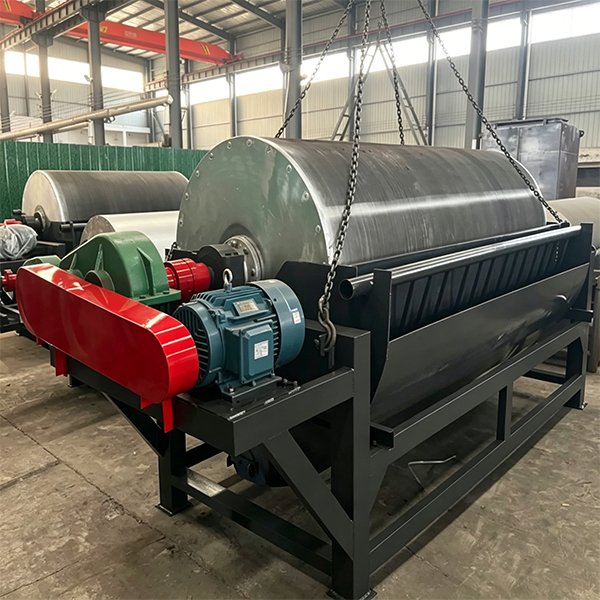
Magnetic separators are highly efficient separation devices widely used in mineral processing. They utilize magnetic fields to precisely separate magnetic particles from non-magnetic materials, meeting the needs of various mineral processin…
loading…
已经是到最后一篇内容了!
 Chunlei Mining Machinery