 Chunlei Mining Machinery


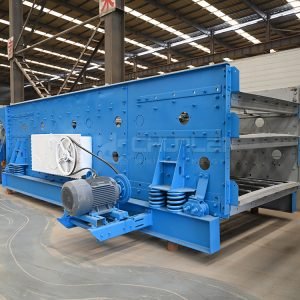
Electromagnetic vibrating feeder
A variety of models are available | Get the free price list!
- Electromagnetic vibrating feeder, also known as electro-vibrating feeder, is a use of electromagnetic vibration principle to drive the material continuous, uniform or quantitative supply of automation equipment, is the implementation of the automation of the necessary equipment for the implementation of the flow of work, open and closed type two.
- Feed size: 50-500mm
- Capacity: 5-1400 tons/hour
- Applicable materials: Limestone, calcite, calcium carbonate, dolomite, barite, talc, gypsum, pyroxene, quartzite, bentonite, and so on.
What is Electromagnetic vibrating feeder?
Electromagnetic vibrating feeder is a kind of automated equipment that utilizes electromagnetic vibration principle to drive the continuous, uniform or quantitative supply of materials. It is mainly composed of material trough, electromagnetic exciter, damper and other parts. It is a kind of equipment that transmits materials from the silo to the downstream equipment or working area with certain speed and flow rate through electromagnetic vibration.
It is mainly used for the material from the storage silo or other storage equipment to uniformly or quantitatively supplied to the receiving equipment, is the implementation of the automation of the necessary equipment for the flow of work. Widely used in mining, metallurgy, coal, electric power, chemical industry, building materials, light industry, food and other industries.
What Is Electromagnetic vibrating feeder Used For?
Electromagnetic vibrating feeder is widely used in various industries such as mining, metallurgy, coal, electric power, chemical industry, food, glass, refractory materials, grain, etc. It is suitable for the quantitative or continuous supply of lumpy, granular or powdery materials. For example, it can feed into screw conveyor, belt conveyor, bucket elevator, vibrating screening equipment and other equipment.
Electromagnetic vibrating feeder ordered by Customer
Chunlei Machinery has been engaged in mining machinery manufacturing for more than 30 years, with a wealth of experience in building websites and customer cases, served customers all over the world!


Technical Parameters of Electromagnetic vibrating feeder
| Type | Model | Productivity (t/h) | Feeding size mm | double-amplitudemm | Power Supply(V) | electricity(A) | effective power(Kw) | Matching control box signal | ||
| Level | -10度 | working current | Representation current | |||||||
| Basic type | GZ1 | 5 | 7 | 50 | 1.75 | 220 | 1.34 | 1 | 0.06 | XKZ-5G2 |
| GZ2 | 10 | 14 | 50 | 3.0 | 2.3 | 0.15 | ||||
| GZ3 | 25 | 35 | 75 | 4.58 | 3.8 | 0.2 | ||||
| GZ4 | 50 | 70 | 100 | 8.4 | 7 | 0.45 | XKZ-20G2 | |||
| GZ5 | 100 | 140 | 150 | 12.7 | 10.6 | 0.65 | ||||
| GZ6 | 150 | 210 | 200 | 1.5 | 380 | 16.4 | 13.3 | 1.2 | XKZ-20G3 | |
| GZ7 | 250 | 350 | 250 | 24.6 | 20 | 3 | ||||
| GZ8 | 400 | 560 | 300 | 39.4 | 32 | 4 | ||||
| GZ9 | 600 | 840 | 350 | 47.6 | 38.6 | 5.5 | XKZ-200G3 | |||
| GZ10 | 750 | 1050 | 500 | 39.4*2 | 32*2 | 4*2 | XKZS-200G3 | |||
| GZ11 | 1000 | 1400 | 500 | 47.6*2 | 38.6*2 | 5.5*2 | ||||
| Upmode | GZ3S | 25 | 35 | 75 | 1.75 | 220 | 4.58 | 3.8 | 0.2 | XKZ-5G2 |
| GZ4S | 50 | 70 | 100 | 8.4 | 7 | 0.45 | XKZ-20G2 | |||
Working Principle of Electromagnetic vibrating feeder
Electromagnetic vibrating feeder working principle of a double prime point directional forced vibration of the elastic system, the whole system works in a low critical resonance state. Through the electromagnetic force generated by the exciter to drive the trough body for reciprocating vibration, so that the material along the trough body jump and move forward according to the parabolic trajectory. In this way, the trough is continuously vibrating reciprocally with the frequency of AC power supply, and the material is vibrated on the trough to overcome the friction between the trough and the material and move forward along the inclined direction of the trough.


Advantageous features of Electromagnetic vibrating feeder
- Feeding uniformity, good continuity: electromagnetic vibrating feeder has the role of loose materials, can be uniform, continuous supply of materials from the storage silo or other storage equipment to the receiving equipment, to avoid the accumulation of materials and clogging, to ensure the smooth progress of the production process.
- Wide range of application: it can be used to convey materials in various forms such as lumps, granules or powder, and is widely used in mining, metallurgy, coal, building materials, chemical industry, electric power, machinery, grain and other industries.
- Low noise: the equipment runs with relatively low noise, does not produce excessive noise pollution, improves the working environment, and is conducive to the physical and mental health of the operators.
- Simple structure: electromagnetic vibrating feeder has a simple structure, no rotating parts, no need to add lubricant, easy to use and maintain.
- Small wear and tear: because the material is transported in the trough as jumping, not sliding on the surface of the trough, so the trough wear is very small.
- Handling scorching materials: electromagnetic vibrating feeder can convey scorching materials below 300℃, with strong adaptability.
Electromagnetic vibrating feeder FAQ
1. Q: What is an electromagnetic vibrating feeder used for?
A: It is used to continuously and uniformly feed bulk materials from a hopper or bin onto a conveyor, screen, or crusher. It handles materials like ore, coal, sand, and aggregates.
2. Q: How does an electromagnetic vibrating feeder work?
A: It uses an electromagnetic drive unit that creates high-frequency vibrations (3000-3600 cycles per minute). These vibrations cause the material to move forward along the trough in small, rapid hops.
3. Q: What is the feeding capacity of an electromagnetic vibrating feeder?
A: Capacities range from as low as 1 ton per hour for small units up to over 1000 tons per hour for large industrial models. It depends on trough width and material density.
4. Q: Can an electromagnetic vibrating feeder handle sticky or wet materials?
A: It can handle slightly sticky or damp materials, but highly cohesive or very wet clay may cause buildup. For such materials, a larger trough slope or a mechanical feeder is recommended.
5. Q: How do I control the feed rate?
A: The feed rate is controlled by adjusting the input voltage to the electromagnetic coil. This is done using a simple thyristor controller, allowing stepless adjustment from 0% to 100%.
6. Q: Does an electromagnetic vibrating feeder require much maintenance?
A: No. It has only one moving part – the spring system. There are no bearings, motors, or belts to replace. Maintenance is typically limited to checking the springs and cleaning the trough.
7. Q: What voltage and frequency options are available?
A: Standard options include 110V, 220V, 380V, 415V, or 440V, with 50Hz or 60Hz frequency. We can also customize to your local electrical standards.
8. Q: Can the trough be made of different materials?
A: Yes. Troughs can be made from carbon steel, stainless steel (for food or corrosive materials), or lined with abrasion-resistant plate for handling sharp or heavy ores.
9. Q: What is the difference between an electromagnetic feeder and a vibrating motor feeder?
A: An electromagnetic feeder uses an electromagnetic coil and works at higher frequencies (3000-3600 rpm), offering precise control. A motor feeder uses two eccentric motors at lower speeds (750-1500 rpm) and is better for very large capacities or heavy impact loads.
10. Q: How do I choose the right size for my application?
A: Provide your desired feed rate (tons/hour), material type, bulk density, lump size, and moisture content. We will recommend the trough width, length, and slope angle accordingly.
Related Products —
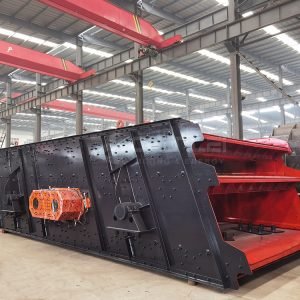
Circular Vibrating Screen
A variety of models are available | Get the free price list! Circular vibrating screens (also called inclined circular motion vibrating screens) are multi-layer high-efficiency screening equipment. Driven by an ecc…
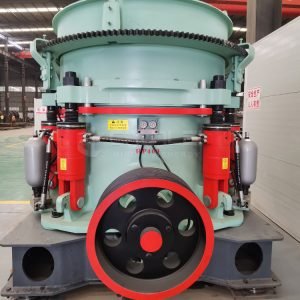
Hydraulic Cone Crusher
Cone Crusher utilize a layered crushing principle, producing well-shaped particles and reducing the generation of needle-like and flaky particles. They are typically used as a secondary or tertiary crushing process. Their characteristics…
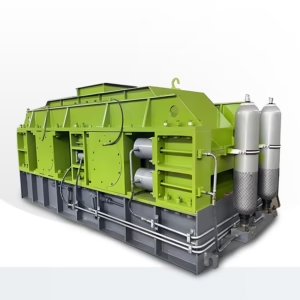
Hydraulic Roll Crusher
Hydraulic roller crushers (also known as hydraulic double roller crushers) are energy-saving medium and fine crushing core equipment in the fields of mining, sand and gravel plants, building materials and solid waste treatment. They are m…
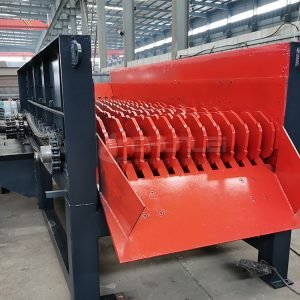
Mud and Stone Separator
Mud and stone separator, as the name suggests, is a device to separate mud and stone, also called mud and stone separating and screening equipment. Roller screen is made of multiple shafts, divided into multiple segments to drive the mat…
Three-shaft horizontal vibrating screen
A variety of models are available | Get the free price list! Three-shaft horizontal vibrating screen also called three-axis horizontal vibrating screen sieve , is a new type of vibrating screen with multi-layer num…
loading…
已经是到最后一篇内容了!