Search the whole station Hot Product Catalog
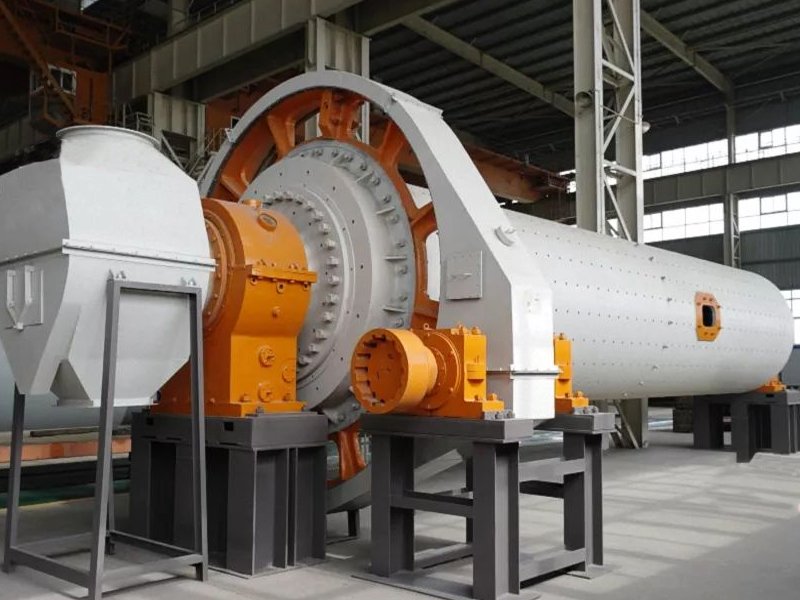
Ball Mill in Cement Industry offer capacities ranging from 10 to 500 tons per hour, capable of grinding raw materials—such as cement clinker, slag, gypsum, and limestone—into finished cement products that meet specific fineness requirements. The equipment supports both closed-circuit and open-circuit grinding configurations. We provide customized solutions tailored to your needs, along with free cost estimates.
The cement ball mill is a core piece of equipment within a cement production line, utilized to grind hard clinker, gypsum, and various admixtures into a fine powder (finished cement). Employing a horizontal rotating drum structure, it relies on grinding media—such as steel balls and rods—to subject the materials to impact and abrasion, thereby pulverizing raw inputs—including cement clinker, slag, gypsum, and limestone—into finished cement products that meet specific fineness requirements. Characterized by its strong adaptability, stable operation, and excellent particle size distribution of the finished product, it serves as the standard primary grinding unit for dry-process, wet-process, open-circuit, and closed-circuit cement production lines.
As the mill shell rotates, the grinding media within it generate centrifugal force, friction, and gravity. Under the influence of these forces, the material is repeatedly lifted and then cascaded downward; as the large-diameter steel balls fall, they crush large lumps of material with immense impact force. The smaller-diameter steel balls roll along with the shell, subjecting the material to a crushing and grinding action between the balls themselves, as well as between the balls and the liner plates. Simultaneously, abrasive and shearing forces are generated between the grinding media and between the media and the liners, causing the material to undergo progressive refinement. The material is repeatedly subjected to impact and grinding within the mill shell, gradually transforming into a fine powder. Driven by the rotation of the shell and the internal airflow, the powder is discharged from the outlet end, thereby yielding the finished cement product.
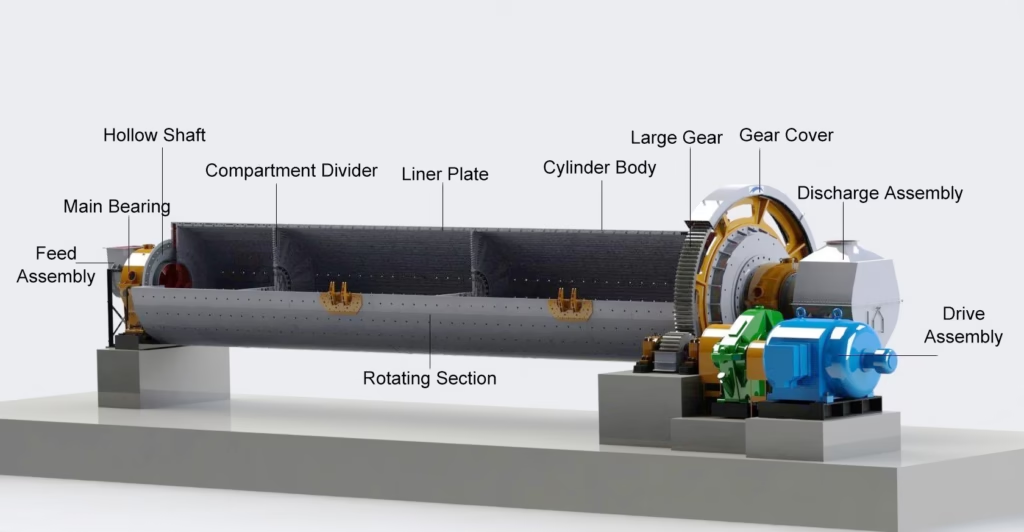
The production capacity of a cement ball mill primarily depends on the specific model, drum dimensions, rotational speed, feed particle size, and the material characteristics of the cement clinker and additives. Generally speaking:
It is important to note that production capacity is also influenced by factors such as the mill load, liner wear, steel ball charge, and the hardness and moisture content of the clinker. By appropriately configuring the drum dimensions, optimizing the grinding process, and controlling the feed particle size, both production capacity and grinding efficiency can be maximized.
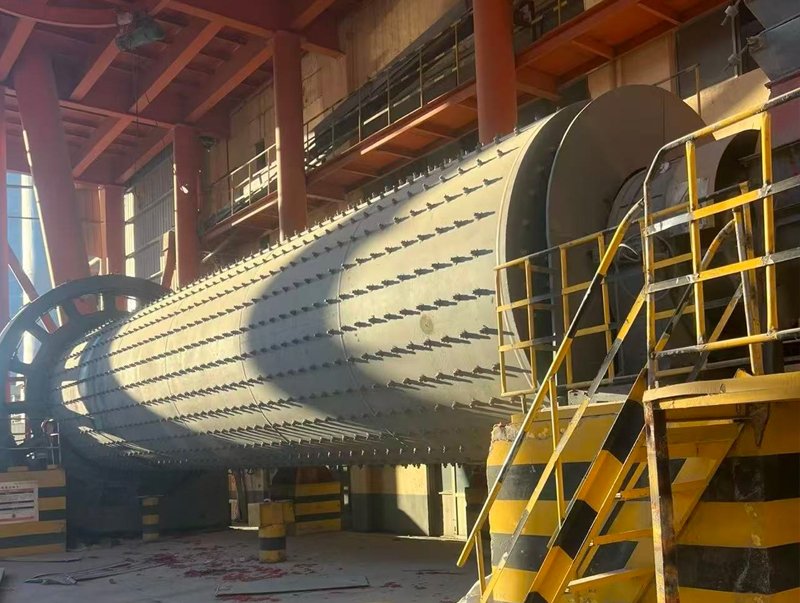
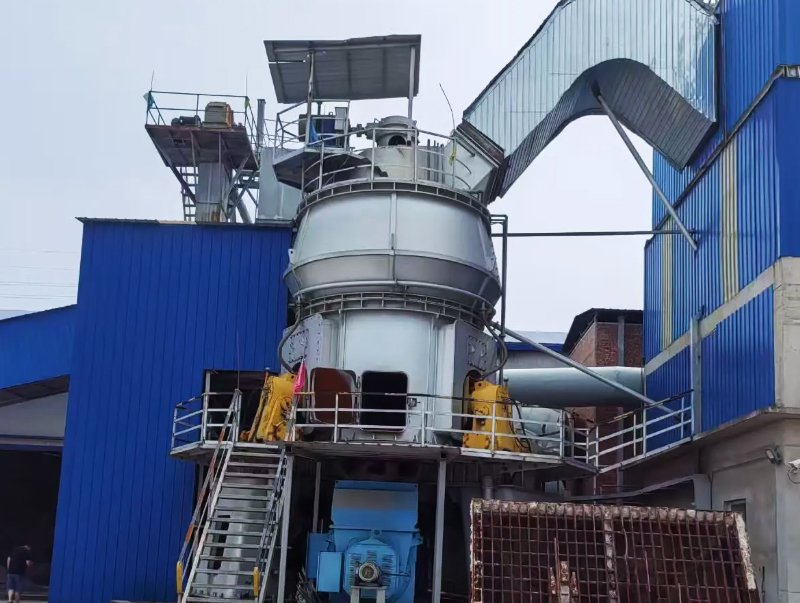
Cement ball mills and vertical roller mills exhibit distinct differences in terms of grinding mechanisms, energy consumption, output capacity, and applicable scale. Ball mills feature a simple structure and mature operational technology, making them suitable for small to medium-sized cement plants; conversely, vertical roller mills offer low energy consumption, produce a uniform product, and require minimal floor space, rendering them better suited for large-scale cement plants and high-output production lines. The table below compares the key parameters and applicable characteristics of both types of equipment, enabling users to quickly and effectively determine the most suitable choice for their specific needs.
| Comparison Criteria | Cement Ball Mill | Vertical Roller Mill |
| Grinding Principle | Cylinder + Steel Ball Impact Grinding | Grinding Roller Crushing + Airflow Dry Grinding |
| Specific Energy Consumption | Higher (28–35 kWh/t) | Lower (20–25 kWh/t) |
| Output Range | 10–500 t/h | 200–1000+ t/h |
| Product Fineness | Adjustable; uniformity is moderate | Uniform powder; high fineness is controllable |
| Footprint | Larger | Compact; smaller footprint |
| Applicable Scale | Small to medium-sized cement plants | Medium to large-sized cement plants |
| Maintenance | Simple; wear parts primarily consist of liners and steel balls | More complex; grinding rollers and rings require periodic inspection and maintenance |
The price of a cement ball mill is influenced by various factors, including production capacity (throughput), drum dimensions, motor configuration, and the level of automation.
| Model Type | Typical Capacity (t/h) | Reference Price (USD) |
| Small Ball Mill | 10–50 t/h | $15,000 – $45,000 |
| Medium Ball Mill | 18–50 t/h | $120000 – $150000 |
| Large Ball Mill | 100 t/h | $400000– $50,0000+ |
Tell us your production requirements and material properties (hardness, moisture content, grinding specifications), and CHUNLEI experts will create a customized solution for you—completely free of charge!
When selecting a cement ball mill, decisions should be based on required output, material characteristics, and the desired fineness of the finished product. Avoid blindly opting for oversized models; the unit that best fits your specific needs is the optimal choice, ensuring that you achieve maximum returns with minimum investment.
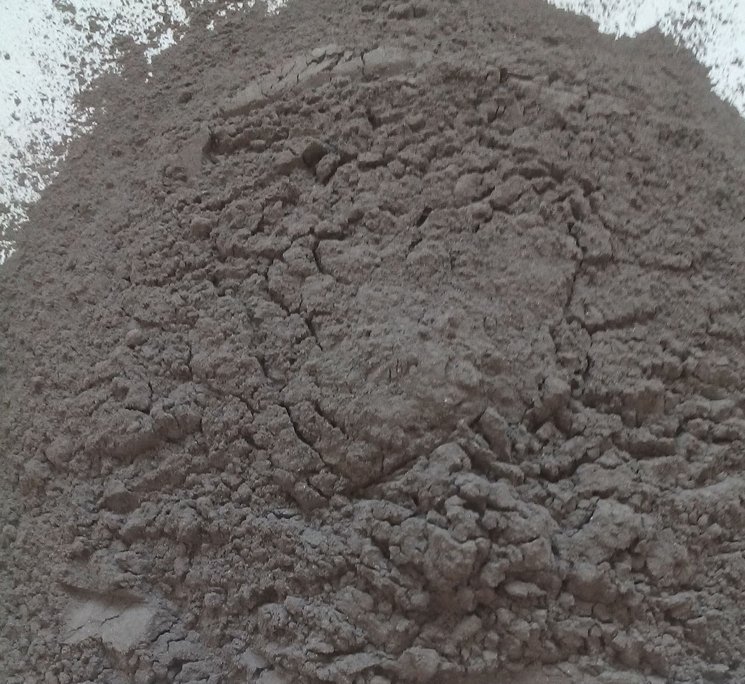
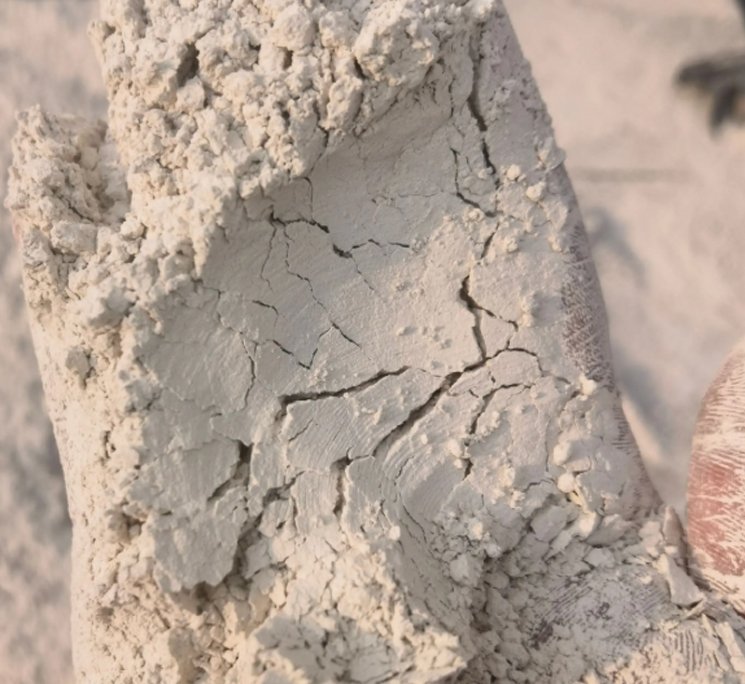
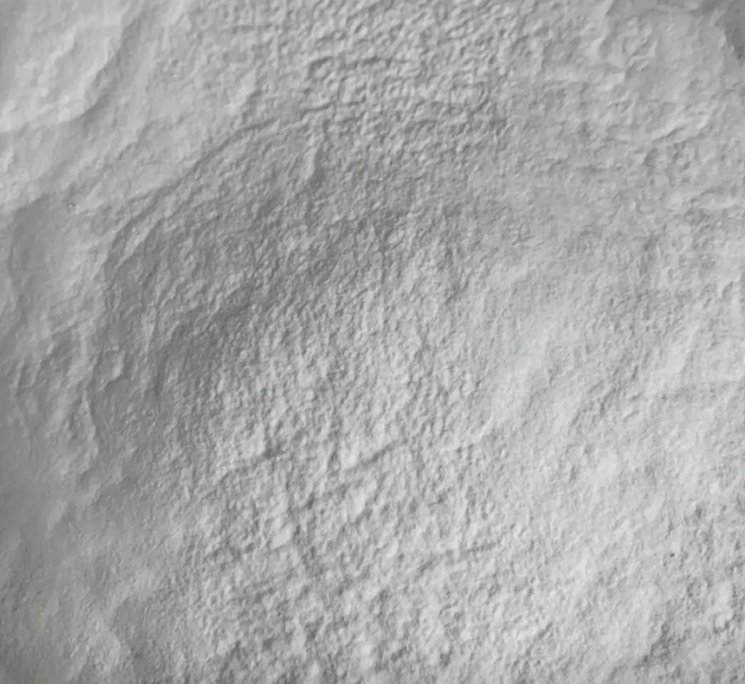
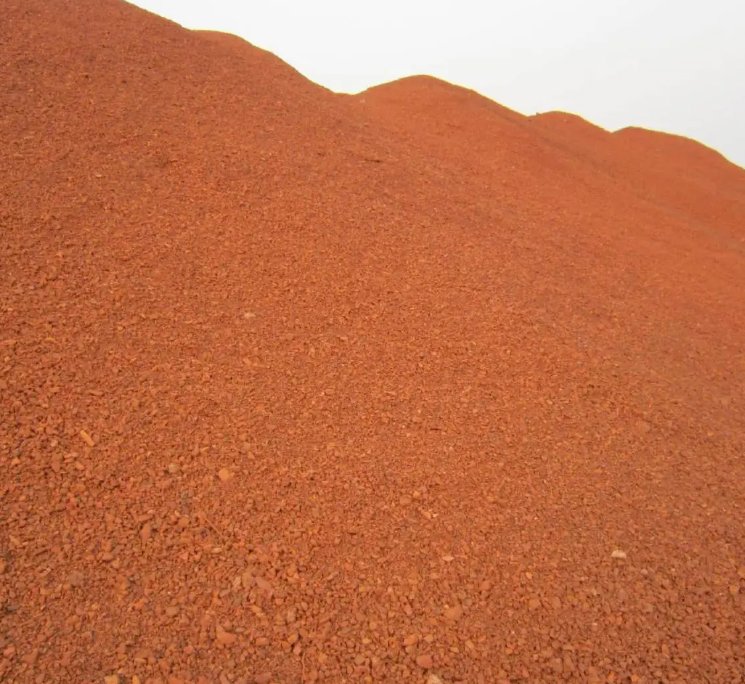
Cement ball mills are highly versatile; they are not only utilized for clinker grinding in cement production but can also process a wide variety of minerals and industrial raw materials—by adjusting the grinding media, rotational speed, and classification system—to meet the specific fineness requirements of different materials. Consequently, they are widely employed in cement plants, grinding stations, building material factories, and mineral processing projects.
Common materials processed include:
Improving cement grinding efficiency not only boosts output but also reduces specific power consumption and production costs. For a cement production line, the rational optimization of equipment configuration and process parameters is key to enhancing ball mill performance.
The following aspects are particularly crucial for improving grinding efficiency:
The power consumption of a cement ball mill primarily depends on the equipment model, production output, material hardness, and the required fineness of grinding. Generally, the specific power consumption of a cement ball mill is approximately 28–35 kWh per ton of cement; however, by utilizing high-efficiency air classifiers and optimizing the grinding process, this figure can be reduced to 25–30 kWh per ton.
It is important to note that lower power consumption is not necessarily the sole objective; rather, the key metric is the energy consumption per unit of output. By optimizing the steel ball charge gradation, controlling the feed particle size, employing high-efficiency air classifiers, and implementing automated control systems, it is possible to effectively reduce electricity consumption—thereby enhancing overall production efficiency—while simultaneously ensuring the quality of the finished product.
Choosing a CHUNLEI cement ball mill means more than just purchasing a piece of equipment; it signifies selecting a comprehensive, efficient, stable, and energy-saving grinding solution designed to help cement plants boost output, reduce energy consumption, and shorten their investment payback periods. Key advantages include:
In summary, CHUNLEI cement ball mills offer not only stability and high efficiency but also—through energy conservation and intelligent operation—empower clients to achieve superior production efficiency and economic returns. They represent the premier choice for the upgrading and modernization of modern cement production lines.
With numerous models available on the market, you need to consider the following key factors:
Q: What is the primary function of a cement ball mill?
A: The cement ball mill is the core grinding equipment in a cement production line. It is primarily used to grind cement clinker, gypsum, and admixtures into finished cement products of the required fineness. The fineness of the material discharged from the mill directly influences the cement’s strength, setting time, and early hydration properties.
Q: How should the grinding media in a cement ball mill be rationally proportioned?
A: The proportioning of grinding media should adhere to the principle of “larger balls at the inlet, smaller balls at the outlet,” utilizing either a two-stage or three-stage gradation. Larger balls are used to crush coarse particles, while smaller balls are used to grind fine materials. A conventional ratio suggests that when the feed material size is ≤ 25 mm, the maximum diameter of the steel balls should be between 90 and 100 mm. The fine-grinding compartment primarily utilizes small balls or steel segments with diameters ranging from Φ15 to 25 mm, typically maintaining a filling rate of 28% to 32%.
Q: What steps should be taken if a cement ball mill exhibits low output and high power consumption?
A: Low output coupled with high power consumption is typically caused by the following factors: irrational grinding media gradation, severe wear of the liner plates, blockage of the partition plates, or poor ventilation. It is recommended to first adjust the media gradation and clean the partition plates. If no improvement is observed, a high-efficiency air classifier can be installed to establish a closed-circuit grinding system, or grinding aids can be utilized to enhance grinding efficiency.
Q: Which material is best for the liner plates in a cement ball mill, and what is their expected service life?
A: High-chromium cast iron liner plates offer the best wear resistance, with a service life of 3 to 5 years; they are suitable for the second compartment or the fine-grinding compartment, where impact forces are relatively low. High-manganese steel liner plates possess excellent toughness and impact resistance, making them suitable for the coarse-grinding compartment, with a service life of approximately 2 to 3 years. Rubber liner plates generate less noise but cannot withstand temperatures exceeding 70°C; their service life is typically between 1.5 and 2.5 years.
Q: What are the consequences of excessive discharge temperature in a cement ball mill?
A: If the discharge temperature exceeds 120°C, the dihydrate gypsum undergoes dehydration, converting into hemihydrate gypsum or anhydrite. This phenomenon causes the cement to exhibit “false setting,” which severely compromises its performance during construction applications. Additionally, high temperatures can compromise the bearing oil film and accelerate wear. It is recommended to keep the discharge temperature at or below 110°C; this can be achieved by enhancing ventilation within the mill or by installing a water-spray cooling system on the mill shell.
Q: Why do the large gears (girth gears) on a cement ball mill exhibit abnormal vibration and noise?
A: Gear vibration and noise typically stem from the following causes: improper tooth-face clearance or uneven wear, loose bearing housings, unsecured foundation bolts, or poor gear lubrication. Solutions: Inspect and adjust the tooth-tip clearance to the specified design value, tighten all foundation bolts, and replace the gear lubricant with a suitable, high-quality product.
Q: Which is superior: a closed-circuit grinding system or an open-circuit grinding system for cement ball mills?
A: The open-circuit system features a simpler process flow, but it is prone to over-grinding and consumes more electricity. The closed-circuit system incorporates an air classifier to promptly separate and extract finished fine powder, while returning coarse particles to the mill for further grinding. This system offers 15% to 20% energy savings compared to the open-circuit method; furthermore, it ensures greater stability in the specific surface area of the finished product and allows for a wider range of particle size adjustments, making it the preferred choice for large-scale cement mills.
Q: What steps should be taken if the temperature of the cement ball mill’s journal bearings (slide bearings) becomes excessively high?
A: If the bearing temperature exceeds 65°C, the mill must be shut down for troubleshooting. Common causes include: insufficient lubricant volume, degradation of the lubricant quality, failure of the cooling water system, or heat conduction from the mill shell. Remedial measures: Replenish or replace the lubricant, verify the flow rate of the cooling water, install thermal insulation shields to minimize heat transfer, and—if necessary—increase the cooling capacity of the centralized thin-oil lubrication station.
Q: How can one effectively stabilize and control the fineness (specific surface area) of the output from a cement ball mill when it exhibits significant fluctuations?
A: Common causes for fineness fluctuations include: inconsistent feed rates, disruption of the grinding media gradation (ball charge distribution), and drift in the air classifier’s rotational speed. Stabilization measures: Install a flow-stabilizing bin and a variable-frequency metering scale to regulate the feed rate; replenish the grinding media every two weeks (calculated based on the estimated wear rate of the steel balls); periodically calibrate the air classifier’s variable-frequency drive; and maintain a constant air pressure within the system.
Q: How can the grinding efficiency of a cement ball mill be improved, and how can its specific power consumption (energy consumption per unit of output) be reduced?
A: One can approach this from four angles: optimizing the grinding media gradation to increase the proportion of small balls, thereby enlarging the grinding surface area; utilizing high-efficiency air classifiers to improve the efficiency of the closed-circuit system; adding 0.02% to 0.1% of cement grinding aids; and ensuring that the airflow velocity inside the mill is maintained between 0.8 and 1.2 m/s. Following this comprehensive optimization, the electricity consumption per ton of cement can be reduced by 6 to 12 kWh.
Chunlei Machinery is one of China’s leading manufacturers of cement ball mills, offering high-quality ball mill equipment.
If you are interested in ball mills or have any inquiries, please contact us—we are available 24 hours a day to address your questions.
A variety of models are available | Get the free price list! The High Gradient Magnetic Separator (HGMS) is a new type of strong magnetic separator developed on the basis of general strong magnetic separa…
The shaking table mainly consists of eight parts: bed head, motor, slope adjuster, bed surface, ore tank, water tank, rifling strip and lubrication system. According to the position of feeding device, shaking table can be divided into right…
Hydrocyclone adopts involute feeding mode, this involute feeding mouth is conducive to increase the centrifugal force of the material, improve the classification effect, and greatly reduce the wear and tear of the feed box. The working…
Maximize gold recovery and reduce grinding costs with CHUNLEI gold ball mill. Our equipment ranges in capacity from 0.5 tons/hour to 200 tons/hour and is suitable for a variety of ores, including gold, copper, iron, and quartz. Energy-effic…
A variety of models are available | Get the free price list! A dewatering screen is a vibrating device that uses high-frequency vibration and an inclined screen surface to achieve solid-liquid separation of mineral…
loading…
已经是到最后一篇内容了!
 Chunlei Mining Machinery