 Chunlei Mining Machinery


Hydrocyclone
Hydrocyclone adopts involute feeding mode, this involute feeding mouth is conducive to increase the centrifugal force of the material, improve the classification effect, and greatly reduce the wear and tear of the feed box.
The working modes of hydrocyclone include: classification, thickening, dewatering, desliming, desanding, washing, ultrafine classification and so on.
- Overflow Diameter:30-280mm
- Diameter of sand sinking port:8-150mm
- Capacity:≤542m³/h
What is Hydrocyclone?
Hydrocyclone (centrifugal de-selector) is a kind of high-efficiency classifying and de-sludging equipment for fine-grained materials, which is mainly used in the second stage grinding, coarse grinding or concentrate regrinding and closed-circuit process composed of machinery. Hydrocyclone utilizes centrifugal force to classify the slurry. Lack of movement and power device, need to support the corresponding slurry pump. Mainly used in mineral processing industry for classification, separation, concentration, desliming and so on. Its classification operation is carried out according to the particle size. In the closed-circuit grinding system, it is characterized by high grading efficiency under high ore concentration and fine overflow fineness.
Sometimes this equipment is used in conjunction with dewatering screen to achieve perfect performance.
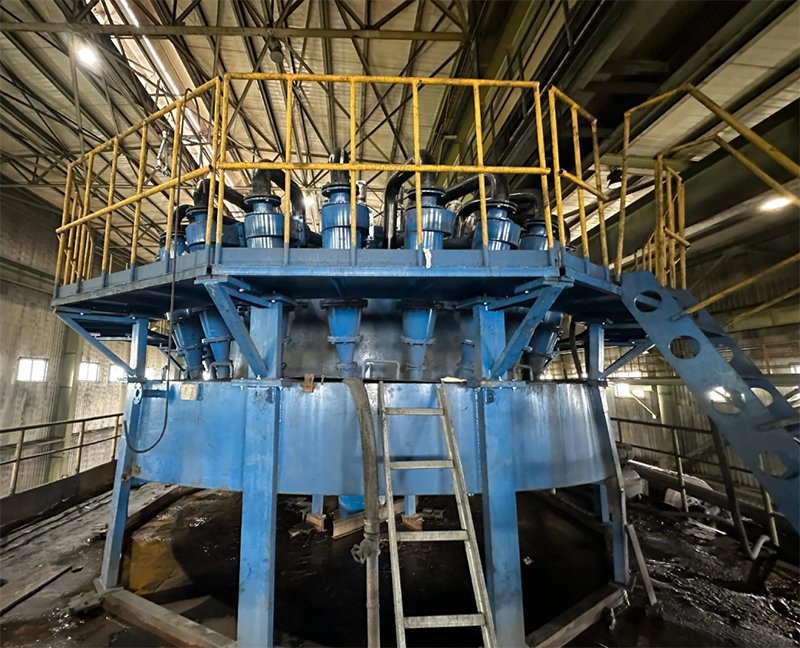
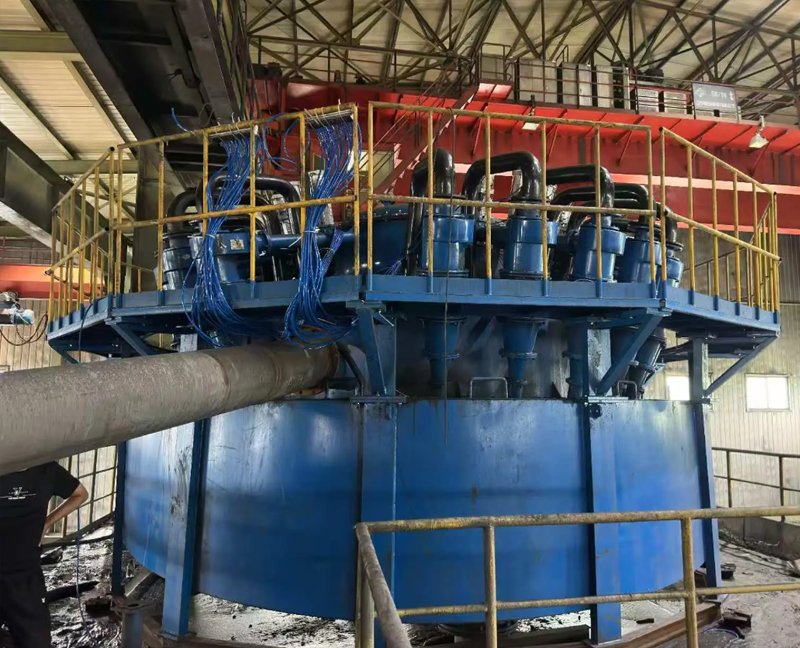
Four-stage complete separation process:
- Tangential feed: Pressurized slurry enters the cylinder tangentially, forming a high-speed external vortex;
- Centrifugal stratification: Coarse and heavy particles are thrown towards the cylinder wall by centrifugal force and flow downwards along the cone wall; fine and light particles gather in the central low-pressure zone;
- Underflow discharge: Coarse sand and high-concentration slurry are discharged from the bottom underflow nozzle (underflow, used for secondary dry discharge of the dewatering screen);
- Overflow discharge: Fine mud and low-concentration clean water rise with the central internal vortex and flow out from the top overflow pipe (overflow is returned to the flotation/concentration process).
Working Principle of Hydrocyclone
The working principle of hydrocyclone is mainly centrifugal sedimentation, when the two-phase (or three-phase) mixture to be separated at a certain pressure from the cyclone feeder into the cyclone, resulting in a strong three-dimensional elliptical strong rotational shear turbulence movement.
Due to the different densities of particles, the centrifugal force, centripetal buoyancy, fluid traction and other different sizes, by the centrifugal sedimentation, most of the coarse particles (or heavy phase) discharged by the cyclone bottom outlet, while most of the fine particles (or light phase) discharged by the overflow pipe, so as to achieve the purpose of separation and grading.
Chunlei hydrocyclone structure is uniquely designed, using a multi-stage column composite structure, according to the need to increase or decrease the height of the column, if the height increases, the overflow fineness increases, up to 10μm or so; and each diameter has a unique combination of cylinder length and cone angle, can be in the smallest total length of the cyclone to achieve the maximum tangential speed, thus increasing the centrifugal force of the material to improve the efficiency of grading.


What are the differences between a hydrocyclone and a spiral classifier?
Both hydrocyclones and spiral classifiers are commonly used classification equipment in mineral processing production lines, but they differ in their working principles, classification efficiency, and applicable scenarios. Generally speaking, hydrocyclones have higher classification efficiency and larger processing capacity, making them suitable for modern large-scale mineral processing plants; spiral classifiers have a simpler structure and more stable operation, making them more suitable for small and medium-sized production lines or coarse-grained classification.
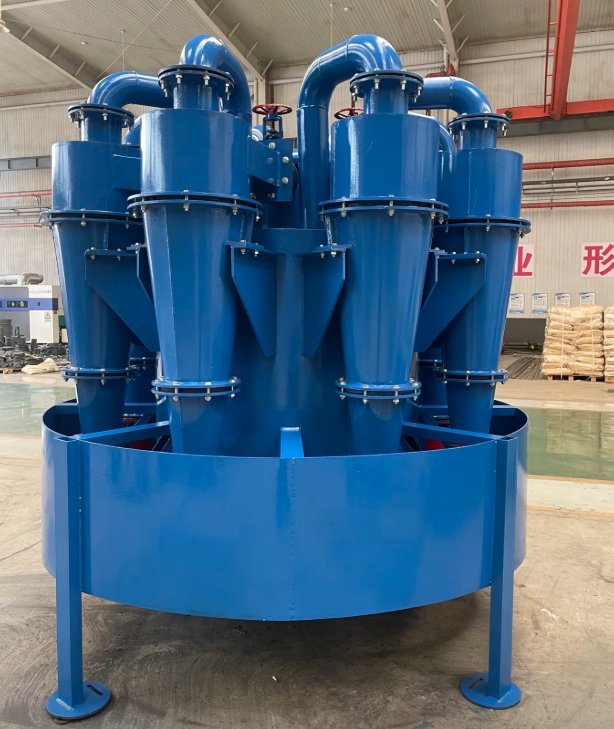
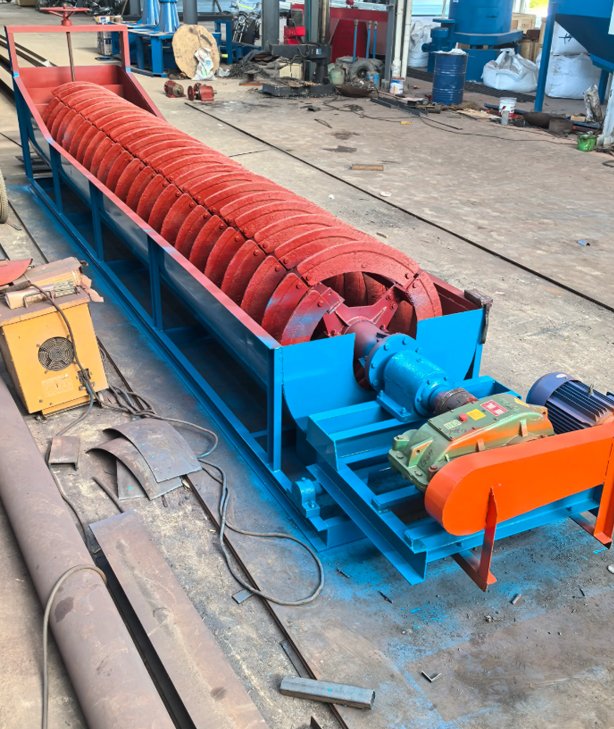
Hydrocyclone vs Spiral Classifier
| Comparison Items | Hydrocyclone | Spiral Classifier |
| Working Principle | Uses centrifugal force for particle classification | Uses gravity settling and spiral conveying for classification |
| Classification Efficiency | ⭐⭐⭐⭐⭐ High | ⭐⭐⭐ Medium |
| Processing Capacity | Large, suitable for continuous production | Medium |
| Classification Particle Size | Finer, suitable for fine particle classification before flotation | Suitable for coarse particle classification |
| Large Footprint | Small, flexible installation | Large |
| Energy Consumption | Low | High |
| Maintenance Cost | Few vulnerable parts, easy maintenance | Many mechanical parts, higher maintenance requirements |
| Applicable Processes | Closed-circuit ball mill grinding, flotation, tailings treatment | Coarse grinding classification, washing, desliming |
| Applicable Scale | Medium to large-scale concentrators | Medium to small-scale concentrators |
If your production line uses closed-circuit ball mill grinding, or requires improved grinding efficiency and controlled fine particle classification, a hydrocyclone is recommended. It offers advantages such as large processing capacity, high classification accuracy, and a high degree of automation, making it the most commonly used classification equipment in modern gold, copper, iron, and lithium mines.
If the project is smaller in scale, or mainly involves coarse particle classification, washing, and desliming, a spiral classifier is also an economical and practical choice, characterized by its simple structure, stable operation, and convenient maintenance.
The Role of Hydrocyclones in Mineral Processing
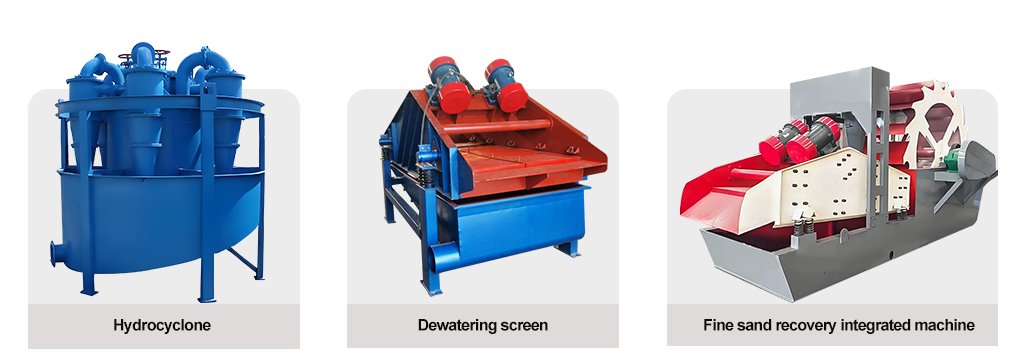
Hydrocyclones, dewatering screens, and integrated sand washing and recovery machines are commonly used equipment in mining, sand and gravel, and tailings treatment production lines. However, their working principles, main functions, and application scenarios differ. Proper selection of equipment can not only improve production efficiency but also reduce material losses and operating costs.
| Comparison Items | Hydrocyclone | Dewatering Screen | Integrated Sand Washing and Recycling Machine |
| Working Principle | Uses centrifugal force for classification and concentration | Vibration dewatering | Integrated sand washing, dewatering, and fine sand recycling |
| Main Functions | Classification, desliming, concentration | Reducing material moisture content | Washing, dewatering, and fine sand recycling |
| Processing Objects | Mine slurry, tailings, fine-particle minerals | Washed sand and tailings | Natural sand, manufactured sand, quartz sand |
| Final Products | Overflow and settling | Low moisture content materials | Clean sand and recycled fine sand |
| Can it be used independently? | Yes | Yes | Yes |
| Typical Applications | Mineral processing plants, tailings treatment, grinding and classification | Sand washing production lines, tailings dewatering | Sand and gravel production lines, manufactured sand production lines |
| Core Advantages | High classification efficiency, small footprint | Good dewatering effect | Reduces fine sand loss and increases yield |
How to Choose the Right Equipment?
- For slurry classification, desliming, or grinding classification, hydrocyclones are recommended. They are widely used in mineral processing production lines for gold, copper, iron, and lithium mines.
- For reducing the moisture content of materials, dewatering screens are recommended, as they effectively improve the efficiency of finished product transportation and storage.
- For washing, dewatering, and recovering fine sand, integrated sand washing and recovery machines are recommended, especially suitable for production lines producing manufactured sand, natural sand, and quartz sand.
Are hydrocyclones suitable for tailings treatment?
Yes, they are suitable. Hydrocyclones are commonly used classification and concentration equipment in tailings treatment production lines, widely applied in gold, copper, iron, lead-zinc, lithium, and non-metallic mineral tailings treatment. They utilize centrifugal force to rapidly separate coarse and fine particles, effectively removing fine mud, increasing tailings concentration, and providing a stable feed for subsequent processes such as tailings dry discharge, thickening, filtration, and wastewater recovery.
In tailings treatment systems, hydrocyclones are typically used in conjunction with slurry pumps, thickeners, and filter presses, reducing the load on subsequent equipment, improving dewatering efficiency, and lowering operating costs. For projects requiring the recovery of fine-grained valuable minerals, hydrocyclones can also achieve mineral pre-enrichment, improving resource utilization.
CHUNLEI can customize suitable hydrocyclone models and complete tailings treatment solutions according to tailings particle size distribution, processing capacity, slurry concentration and process requirements, helping customers achieve efficient classification, stable operation and energy saving, and meet the tailings treatment needs of different mining projects.
Can hydrocyclones be used in manufactured sand production lines?
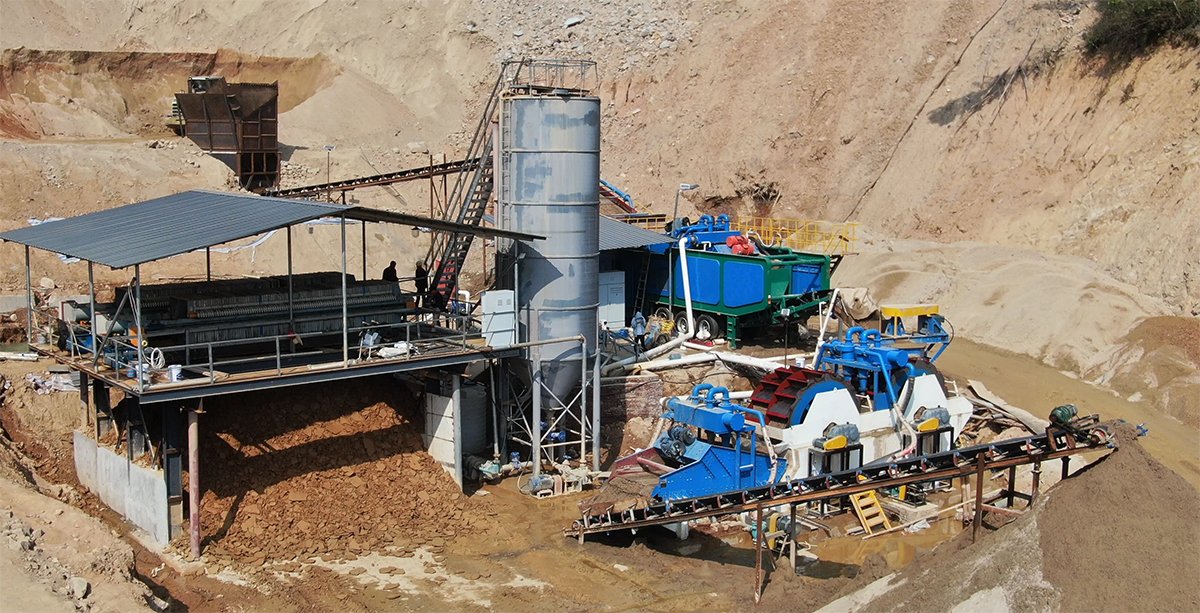
Yes, and hydrocyclones have become increasingly common equipment in wet manufactured sand production lines. They are mainly used for fine sand recovery, mud-powder separation, particle size classification, and wastewater treatment. They effectively reduce fine sand loss, optimize manufactured sand gradation, improve finished product quality, and simultaneously reduce water consumption and production costs. They are typically used in conjunction with sand washing machines, dewatering screens, and fine sand recovery systems, and are one of the essential pieces of equipment in modern manufactured sand production lines.
What factors affect the classification and concentration effects of hydrocyclones?
The classification and concentration effects of hydrocyclones are mainly affected by factors such as feed pressure, slurry concentration, material particle size, hydrocyclone specifications, and the dimensions of the underflow outlet and overflow pipe. Appropriately adjusting these parameters can improve classification accuracy, concentration efficiency, and fine particle recovery rate, meeting the processing requirements of different materials and processes.
How to choose a suitable hydrocyclone?
For production lines with high throughput requirements, large-diameter hydrocyclones can be selected; smaller-diameter hydrocyclones are preferred for classification or fine sand recovery. The model and structure of hydrocyclones also differ for different processes such as mineral processing, tailings treatment, and manufactured sand production.
If you are unsure, it is recommended to select a model based on material characteristics and production needs. If necessary, sample testing or process design can be conducted to ensure optimal classification and recovery results.
Why Choose CHUNLEI Hydrocyclones?
CHUNLEI hydrocyclones utilize wear-resistant materials and optimized flow channel design to achieve efficient classification, stable operation, and low maintenance costs. Whether in mineral processing, tailings treatment, or manufactured sand production lines, they provide reliable classification and fine sand recovery solutions, helping customers improve production efficiency and resource utilization.
- High Classification Efficiency: Optimized cyclone structure improves separation accuracy and achieves more stable classification results.
- Long Wear-Resistant Lifespan: Key components use highly wear-resistant materials, adapting to highly abrasive slurries and reducing replacement frequency.
- High Processing Capacity: Supports various specifications and combinations to meet different production capacity requirements.
- Stable Operation: No moving parts, low failure rate, simple maintenance, and more reliable continuous production.
- Wide Applicability: Suitable for various industries such as mineral processing, tailings treatment, manufactured sand, coal, and chemicals.
- Energy Saving and Consumption Reduction: Compact structure and low energy consumption effectively reduce operating costs.
- Customized Solutions Support: We offer professional selection and customized solutions based on material characteristics, throughput, and process requirements.
- Comprehensive After-Sales Service: We provide technical consultation, installation guidance, commissioning training, and spare parts support to ensure long-term stable operation of the equipment.
For complete hydrocyclone + dewatering screen process drawings and itemized quotations, please contact the CHUNLEI technical team for customized solutions.
Hydrocyclone ordered by Customer
Chunlei Machinery has been engaged in mining machinery manufacturing for more than 30 years, with a wealth of experience in building websites and customer cases, served customers all over the world!


Technical Parameters of Hydrocyclone
| Model | Norm | Capacity(m3/h) | Classification particle size(μm) | Overflow diameter(mm) | Sinker diameter(mm) | Inlet pressure(MPa) |
|---|---|---|---|---|---|---|
| XC II F 150 | 150 | 10 ~23 | 25 ~74 | 30 ~50 | 8~22 | 0.06 ~0.15 |
| XC II F 200 | 200 | 17 ~38 | 28 ~80 | 40 ~65 | 16 ~32 | |
| XC II F 250 | 250 | 24 ~53 | 30 ~82 | 65~100 | 16 ~40 | |
| XC II F 300 | 300 | 40~100 | 36 ~90 | 65~120 | 20 ~40 | |
| XC II F 350 | 350 | 56~118 | 40~100 | 80~120 | 30 ~70 | |
| XC II F 375 | 375 | 74~157 | 42~105 | 90~135 | 30 ~70 | |
| XC II F 450 | 450 | 90~192 | 44~110 | 100~150 | 30 ~70 | |
| XC II F 500 | 500 | 128~300 | 50~115 | 130~220 | 35~100 | |
| XC II F 550 | 550 | 155~368 | 52~120 | 140~240 | 35~100 | |
| XC II F 600 | 600 | 200~468 | 57~125 | 160~260 | 65~110 | |
| XC II F 660 | 660 | 237~524 | 60~130 | 180~280 | 80~150 |
Hydrocyclone FAQ
Q: In which industries are hydrocyclones mainly used?
A: Widely used in mining, tailings treatment, sand and gravel production, coal washing, chemical industry, environmental protection, and wastewater treatment. They can be used for processes such as classification, desliming, thickening, dewatering, and fine sand recovery.
Q: Why does a hydrocyclone overflow and coarse material flow?
A: This is usually caused by insufficient feed pressure, blockage at the underflow port, excessively high slurry concentration, or component wear. Adjusting the pressure, clearing blockages, or replacing wearing parts can improve the classification effect.
Q: What to do if the hydrocyclone underflow discharge is abnormal?
A: Underflow that is rope-like, interrupted, or splashing is mostly related to feed pressure, slurry concentration, or underflow port size. Adjusting operating parameters and checking for blockages can restore normal discharge.
Q: What factors affect the classification efficiency of a hydrocyclone?
A: These mainly include feed pressure, slurry concentration, throughput, material particle size, hydrocyclone specifications, and wear of wearing parts.
Q: How to choose the appropriate hydrocyclone model?
A: The appropriate hydrocyclone specifications and quantity should be selected based on processing capacity, target particle size for grading, slurry concentration, material characteristics, and process requirements.
Q: Why are hydrocyclones prone to clogging?
A: Large debris, excessively high slurry concentration, an underflow port that is too small, or failure to clean the system promptly after shutdown can all lead to clogging. Regular inspection and maintenance can effectively prevent this problem.
Q: What should I do if the hydrocyclone feed pressure is unstable?
A: This is generally caused by abnormalities in the feed pump, pipeline, or feeding system. The pump body, pipeline, and valves should be checked to maintain a stable feed pressure.
Q: How should hydrocyclones be maintained?
A: Regularly inspect vulnerable parts such as the underflow port, overflow pipe, and wear-resistant lining. Timely cleaning of accumulated material and replacement of worn parts can ensure long-term stable operation of the equipment.
Q: How often should vulnerable parts of a hydrocyclone be replaced?
A: The sand discharge nozzle, overflow pipe, and wear-resistant lining are major vulnerable parts. The replacement cycle is typically 3–12 months, depending on the abrasiveness of the material and operating conditions.
Q: How to debug a newly installed hydrocyclone?
A: During debugging, first check the equipment and pipelines, then gradually adjust the feed pressure, slurry concentration, and underflow outlet size until the ideal classification effect is achieved.
Related Products —
Dewatering Screen
A variety of models are available | Get the free price list! A dewatering screen is a vibrating device that uses high-frequency vibration and an inclined screen surface to achieve solid-liquid separation of mineral…
Thickener
The Thickener, with built-in degassing tank and sawtooth external overflow weir, prevents solid particles from attaching to air bubbles, improves localized suction phenomenon, and substantially increases the sedimentation area; at the same …
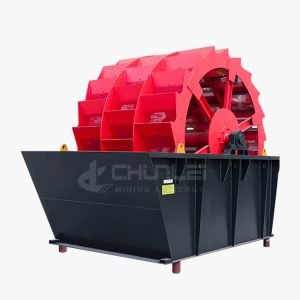
Wheel Sand Washing Machine
Wheel Sand Washing Machine is a kind of sand washing equipment used with sand making machine. It has high washing degree, reasonable structure, large handling capacity, small power consumption, and less sand loss in the sand washing proc…
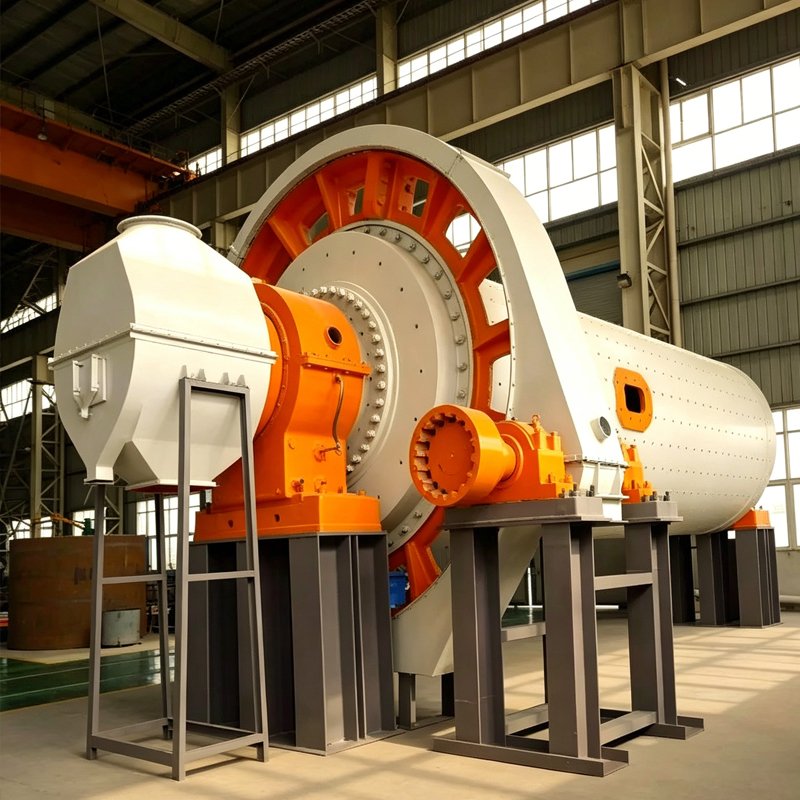
Ball Mill in Cement Industry
Ball Mill in Cement Industry offer capacities ranging from 10 to 500 tons per hour, capable of grinding raw materials—such as cement clinker, slag, gypsum, and limestone—into finished cement products that meet specific fineness requirements. T…
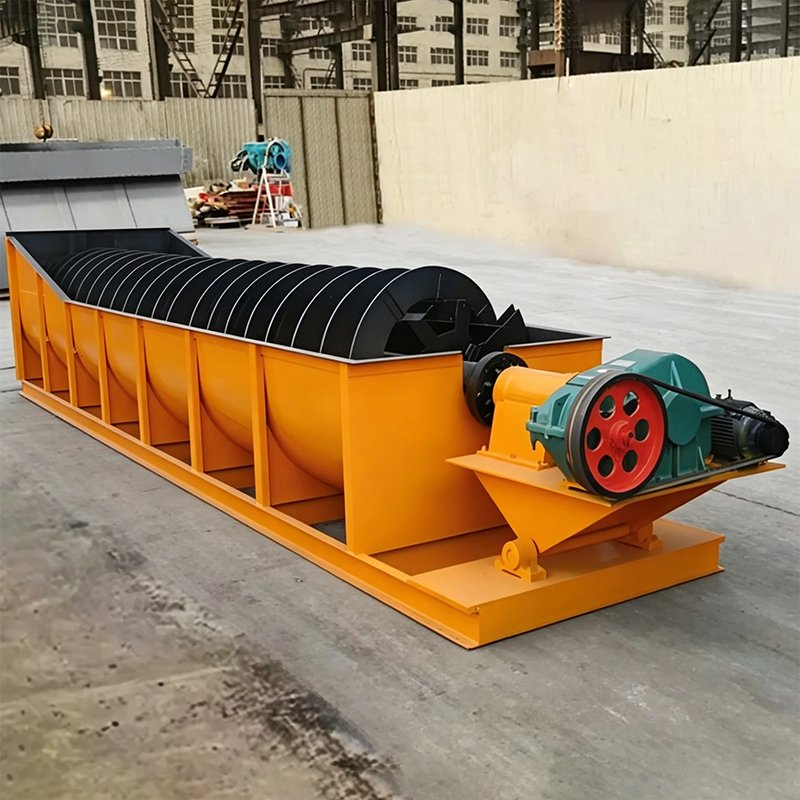
Submerged Spiral Classifier
Spiral classifier is a classifier with the spiral at the overflow end fully submerged under the liquid surface, commonly used in two-stage classification. In production lines such as mining, sand processing, and t…
loading…
已经是到最后一篇内容了!