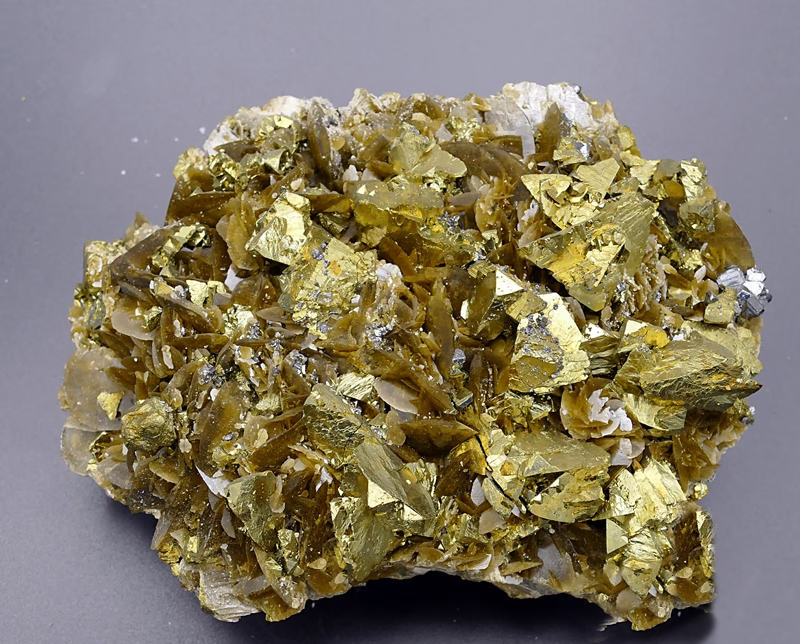
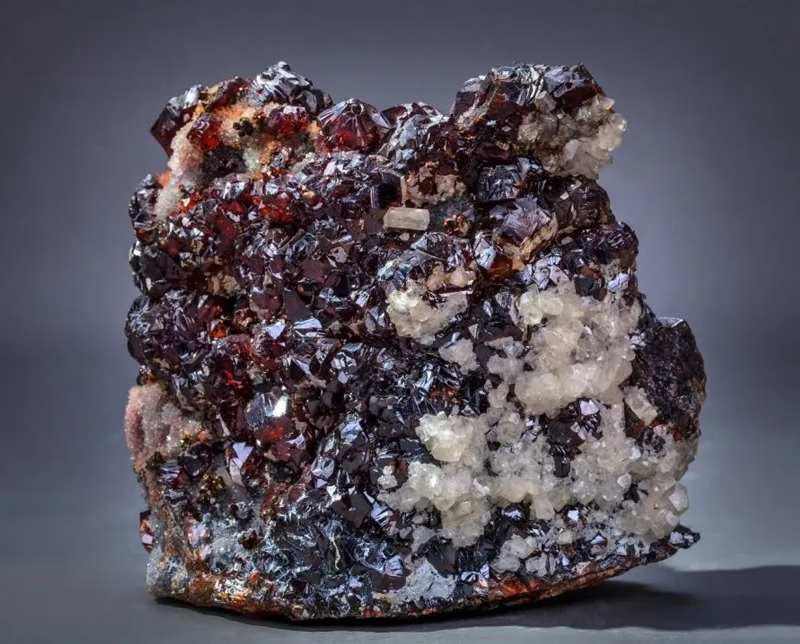
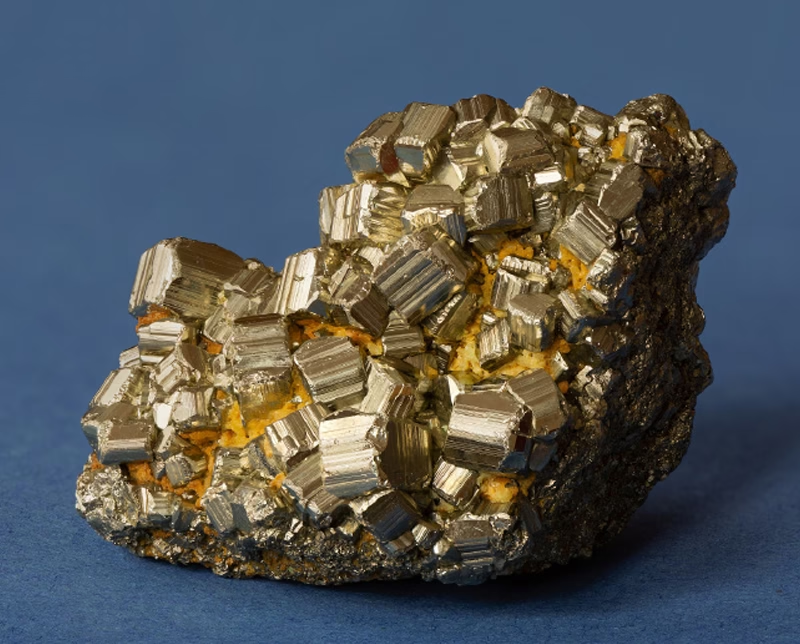
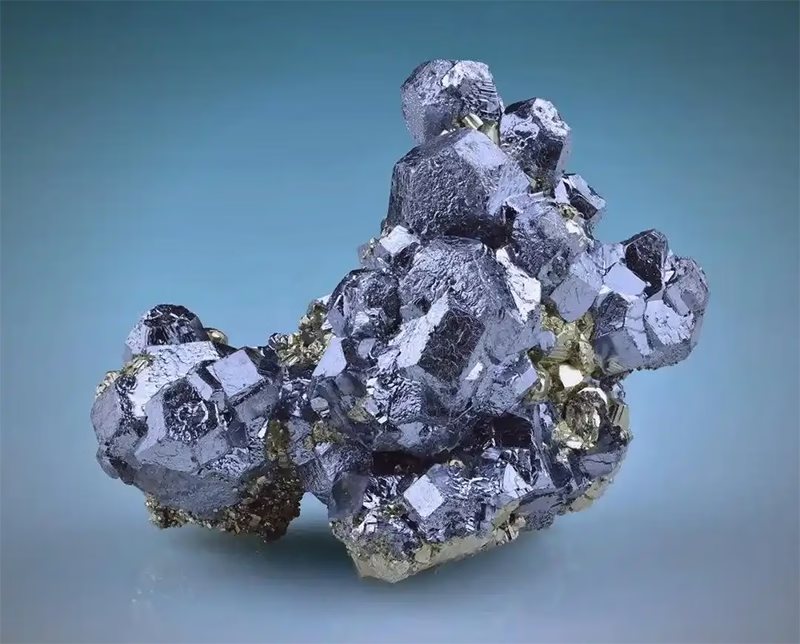
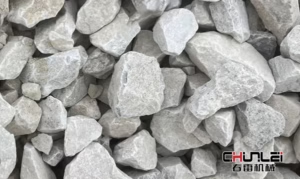
Lead-zinc ores serve as vital non-ferrous metal raw materials, constituting the primary sources of lead and zinc metals. Lead (derived from chalcopyrite) and zinc (from pyrite) are nearly inseparable, often coexisting with multiple metals to form polymetallic deposits. Due to their exceptional wear resistance and corrosion resistance, these metals find extensive applications across numerous sectors including electrical engineering, machinery, defense, metallurgy, chemical processing, light industry, and pharmaceuticals. The common objective of all lead-zinc ore processing methods is to separate valuable minerals.
Chalcopyrite
Sphalerite
Pyrite
Galena
Different Processing Methods for Lead-Zinc Ores
Based on their degree of oxidation, naturally occurring lead-zinc ores are typically classified into sulfide ores, oxide ores, and mixed ores. Due to differences in mineral structure and composition, each type exhibits unique leaching and distribution characteristics, necessitating distinct processing flows and equipment during mineral processing.
Sulfide Lead-Zinc Ore: Typically processed using flotation.
Oxidized Lead-Zinc Ore: Processed by flotation, or by gravity separation followed by flotation, or by gravity separation followed by sulfuric acid treatment and then flotation.
Mixed Lead-Zinc Ore: Lead-zinc ores containing multiple metals generally employ combined mineral processing methods.
Lead-Zinc Sulfide Ore Beneficiation Process
Lead-zinc sulfide ores constitute a significant proportion of mineral resources, primarily containing minerals such as galena, sphalerite, pyrite, and chalcopyrite. Associated gangue minerals include calcite, quartz, dolomite, and others. The core challenge lies in effectively separating galena (PbS) and sphalerite (ZnS) through flotation while comprehensively recovering associated valuable elements. Common flotation methods include priority flotation, mixed flotation, equal flotation, and asynchronous flotation. The following table illustrates the distinctions among these four flotation techniques:
Process Name
Core Approach
Applicable Ore Characteristics
Advantages
Limitations
Preferential Flotation
Recover minerals sequentially by adding inhibitors and collectors in the order “lead first, zinc second.”
Lead-zinc minerals exhibit uneven grain size distribution, complex associations, or significantly higher lead content than zinc.
More targeted separation with relatively mature and stable process flows.
Requires multiple grinding and separation stages, resulting in a lengthy process; stringent control of reagent systems is essential.
Mixed Flotation
First float all sulfide minerals (lead, zinc, sulfur, etc.) together, then separate them.
Lead-zinc minerals feature fine grain size distribution with close associations, or the ore grade is relatively low.
Simplified procedures reduce grinding costs and facilitate rapid rough concentration.
Subsequent separation of mixed concentrates is challenging, necessitating complex de-reagents and regrinding steps.
Equal Flotation
Based on natural floatability, flotate easily floatable and difficult-to-float minerals separately without distinguishing between lead and zinc.
The ore contains multiple useful minerals with highly variable flotation properties.
Balances recovery rates and reagent costs by minimizing inhibitor usage, promoting comprehensive resource utilization.
Process control is more complex, demanding high technical proficiency from operators.
Asynchronous Flotation
Divide the flotation process for the same mineral into two or more stages conducted under different conditions.
Target minerals (e.g., zinc) contain fractions with differing flotation properties (e.g., high-iron and low-iron sphalerite).
The process is intricate, requiring multiple reagent systems.
Oxidized Lead-Zinc Ore Beneficiation Process
Oxidized lead-zinc ore is a secondary mineral formed through prolonged weathering and surface water leaching of sulfide lead-zinc ores. Due to its complex mineral composition, fine grain size distribution, susceptibility to muddiness, and high content of soluble salts and organic matter, it is widely recognized as a difficult-to-process ore. Common beneficiation methods include flotation, integrated beneficiation-roasting processes, and pre-treatment combined with integrated flowsheets. The following table outlines the distinctions among four flotation approaches:
Process Category
Core Principles
Applicable Scenarios
Key Advantages and Disadvantages
Flotation Method
Utilizing differences in the physicochemical properties of mineral surfaces, selective attachment of target minerals to bubbles is achieved through chemical agents to accomplish separation.
Processes relatively simple or lead-zinc oxide ores whose selectivity is enhanced after specific pretreatment.
Advantages: Mature technology with widespread application.
Disadvantages: Limited effectiveness for complex, difficult-to-process ores; stringent requirements for reagent control.
Integrated Beneficiation and Metallurgy Process
Combining mineral processing (such as flotation) and metallurgical (such as leaching) methods, zinc oxide is first leached, followed by flotation to recover lead minerals and zinc sulfide minerals.
Advantages: High comprehensive resource recovery rate, capable of processing ores difficult to treat by traditional flotation methods.
Disadvantages: Complex process, relatively high cost, potential environmental risks.
Pre-treatment and Integrated Flow
Introducing additional technologies such as hydrothermal sulfidation, grinding-leaching synergistic processes, and gravity separation-flotation before or during conventional mineral processing to enhance separation efficiency.
For ores with special refractory factors, such as extremely fine grain size, high clay content, and organic matter inclusion.
Advantages: Effectively resolves specific technical challenges and improves separation efficiency.
Disadvantages: May require additional equipment and involves more complex process control.
Mixed Lead-Zinc Ore Processing
Mixed lead-zinc ores contain both oxidized and sulfide lead-zinc minerals, with an oxidation rate ranging from 10% to 30%. There is no fixed process for treating mixed lead-zinc ores; the approach must be tailored based on factors such as the sulfide content, types of oxidized minerals, and clay content. Typically, an integrated beneficiation-metallurgy process is adopted. First, flotation is employed to maximize recovery of sulfide lead, sulfide zinc, and easily floatable oxide lead. Subsequently, the flotation tailings or middlings (rich in refractory oxide zinc) undergo hydrometallurgical treatment (e.g., acid leaching). Oxide zinc is leached using sulfuric acid. Once dissolved, the zinc is purified and produced as electrolytic zinc through electrolysis.
Lead-Zinc Ore Beneficiation Equipment
The beneficiation process for lead-zinc ore varies slightly, and the required equipment may differ accordingly. However, it generally involves four stages: crushing, grinding, separation, and drying.
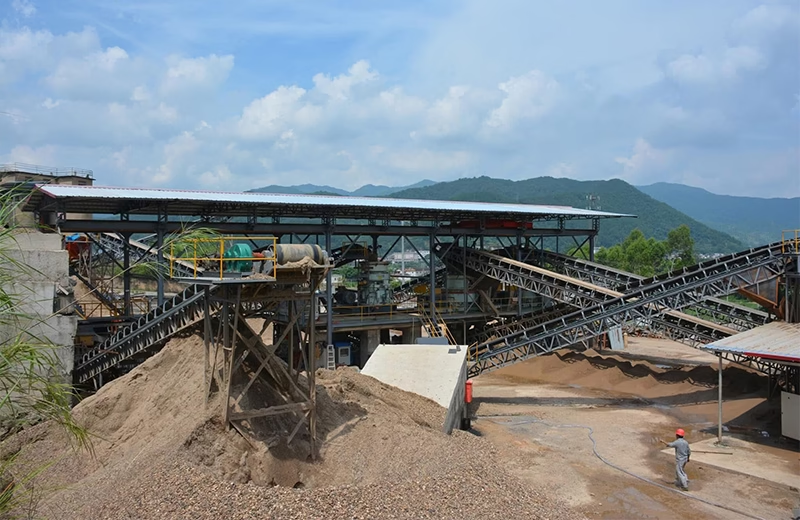
Crushing-and-Screening
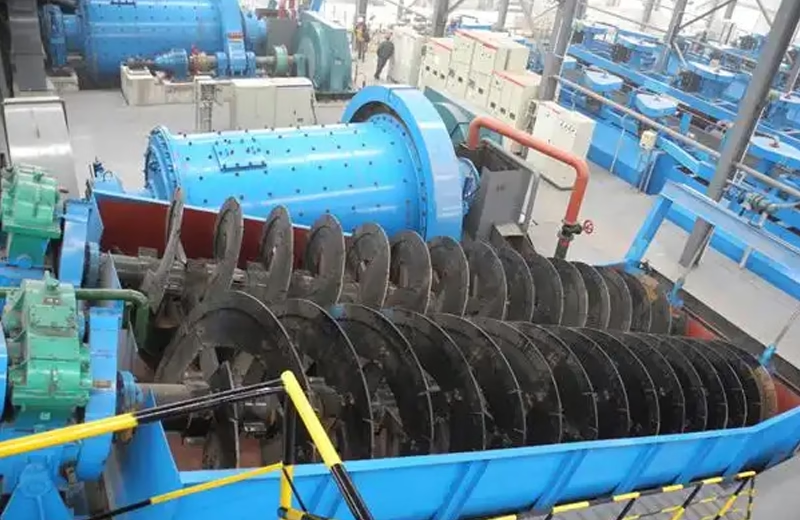
Grinding
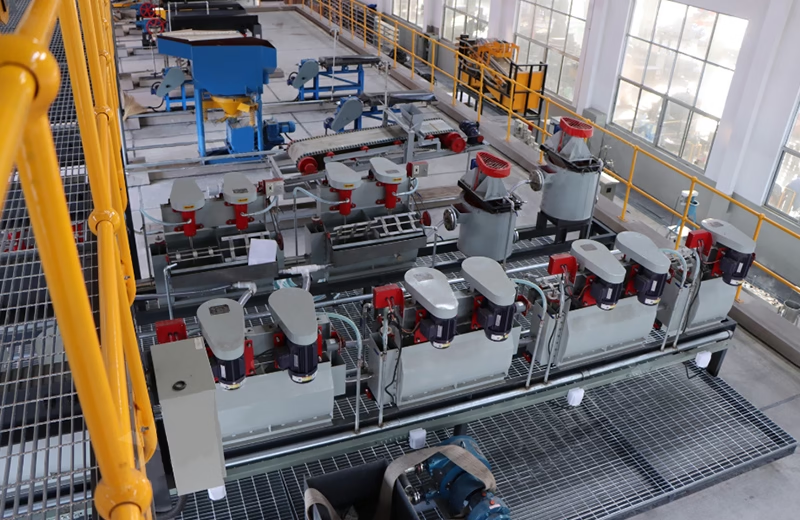
Flotation
Stage 1: Lead-Zinc Ore Crushing and Screening Equipment
Crushing is typically divided into primary and secondary crushing. Primary crushing uses a jaw crusher to coarsely break large rocks into smaller pieces. Secondary crushing employs a cone crusher to further reduce the coarse fragments into medium and fine sizes. Screening equipment usually involves a circular vibrating screen, where qualified material proceeds to the next stage while undersize material is returned to the cone crusher for reprocessing.
Stage 2: Lead-Zinc Ore Grinding Equipment
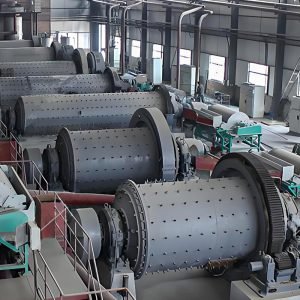
Grinding and classification operate in a closed-circuit system, primarily employing ball mills for grinding. Classification equipment mainly utilizes hydrocyclones and spiral classifiers, with spiral classifiers performing both classification and washing functions. Some large-scale processing plants require grinding fineness below 0.15 mm, necessitating a two-stage grinding process to achieve -200 mesh content of 70% to 80%.
Stage 3: Lead-Zinc Ore Separation Equipment
The beneficiation of lead-zinc ores primarily relies on froth flotation and gravity separation. Based on the flotation process, the flotation equipment used is the flotation machine. For fine-grained ores with complex associations, the flotation process can achieve ideal separation results and enhance flotation efficiency, making it commonly used for the concentration and scavenging of lead-zinc ores. For coarse-grained or grain-sized disseminated lead-zinc ores, heavy media separation is employed to discard large volumes of gangue and waste rock. Shaking tables and jigs are suitable for this purpose.
Stage 4: Lead-Zinc Ore Drying and Dewatering Equipment
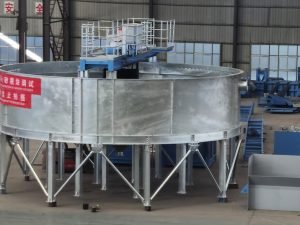
Concentrates from flotation or gravity separation contain residual moisture, necessitating dewatering for both concentrates and tailings. Concentrate dewatering typically employs thickeners and filter presses. High-efficiency thickeners perform primary dewatering, while filter presses or dryers handle further dewatering.
Conclusion
In lead-zinc ore processing plants, conducting scientifically sound mineral processing tests is crucial given the complex diversity of lead-zinc ores. CHUNLEI Machinery introduced selective flotation for lead-zinc, enhancing the flotation process to increase the total lead-zinc recovery rate by nearly 3% while maintaining concentrate grade. As a factory-direct manufacturer, we control quality at every step, delivering maximum output with minimal investment to achieve peak recovery rates and profitability for our clients. Act now to receive a solution tailored specifically for your needs.
As a core grinding equipment in mining, building materials, chemical, and other industries, ball mills have long been subject to significant attention regarding wear issues. Among these, large gear wear is the most prevalent and critical concern,...
Dolomite is a term that often leads to head-scratching. Is it a rock, a mineral, or something else entirely? How does it differ from familiar stones like limestone or marble? And is it safe? If you're searching for clear, accurate answers, you’ve...
The Philippines customer has a gold ore processing plant, the plant originally used ordinary thickener for tailings treatment, but the low concentration of the bottom stream, small capacity, resulting in a large tailings storage area and low util...
Feldspar Ore Dressing Production Line
Process Introduction According to different types of feldspar minerals and ore properties, Chunlei has developed a series of different feldspar ore dressing processes, including magnetic separa...
Welcome to Chunlei machinery website. We are a leading manufacturer and exporter of mining machinery in China with more than 30 years history in China.
We offer you one-stop solutions: online consultation --- customized solutions --- fast delivery --- comprehensive after-sales service
 Chunlei Mining Machinery