Refined kaolin appears as an ordinary white powder, yet it holds indispensable significance in industrial applications. Its extraction process involves a complex industrial workflow, where purity levels directly determine its value and application domains. For investors, gaining insight into the complete process and value chain—from kaolin mining to deep processing—is crucial. This article provides a professional overview of kaolin processing techniques and their application value.
Core Characteristics and Application Value of High-Purity Kaolin
Property Category
Core Characteristics
Specific Description and Industrial Value
Optical Properties
High whiteness and brightness
Features exceptionally high natural whiteness and calcination whiteness (typically >90%), delivering outstanding coverage, brightness, and pure base color for paper, coatings, ceramics, and plastics while reducing the need for expensive pigments like titanium dioxide.
Physical Form
Fine particle size and narrow distribution
Advanced processing enables micron- or even nano-level particle sizes with uniform distribution. This ensures outstanding gloss, smooth tactile feel, strong hiding power, and excellent suspension stability.
Surface Chemistry
Excellent dispersibility and rheological properties
Particles disperse uniformly and stably in both aqueous and organic systems, delivering ideal rheological properties (e.g., thickening, suspension). This is critical for coating performance in paints and inks, as well as for forming ceramic slurries.
Chemical Composition
Chemical inertness and electrical insulation
Primarily composed of silicoaluminate, it exhibits stable properties, excellent acid and alkali resistance, low electrical conductivity, and outstanding thermal stability. This makes it an ideal filler for manufacturing high-performance cables, rubber, plastics, and chemically resistant coatings.
Crystal Structure
Plate-like crystal structure and reinforcing properties
Its unique microcrystalline flake structure creates effective barrier pathways within composite materials. This enhances the impermeability of coatings, improves the barrier properties of plastic films, and increases the mechanical strength, stiffness, and dimensional stability of rubber and plastics.
High-purity kaolin is hailed as the “white gold” of modern industry. With its high whiteness and fine particle size, it has become a core raw material for high-end sectors such as papermaking, premium coatings, and pharmaceuticals.
Kaolin Processing Technology: From Primary Processing to Deep Purification
Kaolin beneficiation primarily employs two processing routes: dry and wet methods.
The dry process is a relatively simple and cost-effective kaolin processing method. Its core lies in transforming raw ore into compliant powder products through physical methods—crushing, drying, grinding, and classification—without using water.
Dry Processing Flowchart:
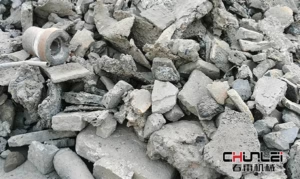
Primary Crushing: Kaolin is crushed by a jaw crusher into 20-30mm chunks suitable for drying and grinding.
Drying: The crushed material passes through a dryer to remove free water and partially bound water, reducing moisture content to a level suitable for subsequent grinding.
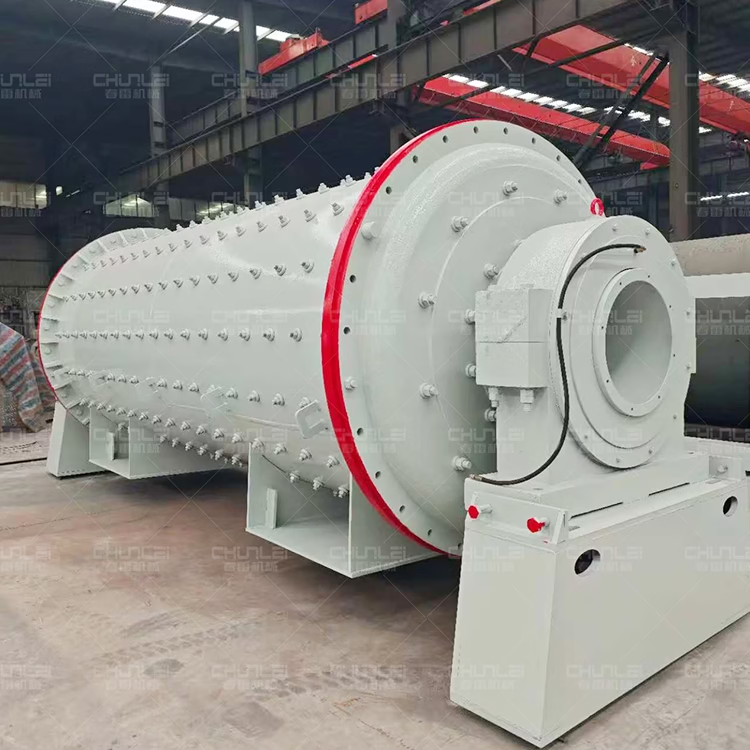
Grinding and Classification: The dried lumpy kaolin is fed into ball mills or Raymond mills to grind it into fine powder. Qualified fine powder is separated, while coarse particles are returned for further grinding.
Product Collection: Qualified fine powder enters a dust collector for collection. Simultaneously, ensure exhaust gas meets emission standards to protect the environment while improving recovery rates.
Although the dry process is the most fundamental and economical method for kaolin processing, it is better suited for high-quality raw ore due to its limited purification capacity.
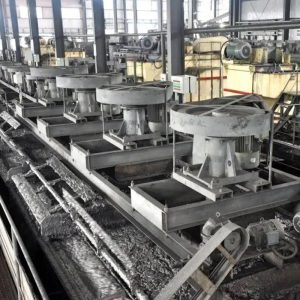
The wet process is a refined processing technique that utilizes water and physicochemical methods to separate impurities and refine particles. It transforms ordinary earthy ore into the “white gold” of high-tech industries, realizing its high value. However, this process is also a precise, efficient, and high-operating-cost technology. Kaolin Wet Processing Flowchart:
Crushing: Raw kaolin ore is crushed using a jaw crusher. The crushed ore is mixed with water to form a slurry, preparing it for subsequent stages.
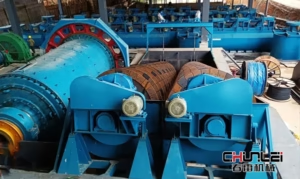
Grinding: Further exfoliate thicker kaolinite crystals into thinner, smaller flakes using grinding mills.
Magnetic Separation: Remove iron and titanium compounds via magnetic separators to enhance whiteness.
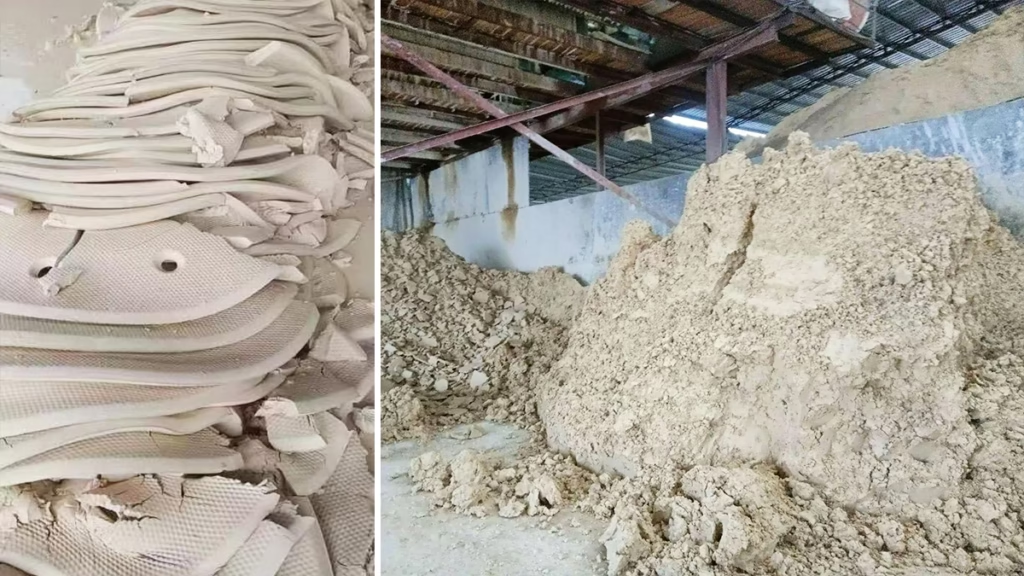
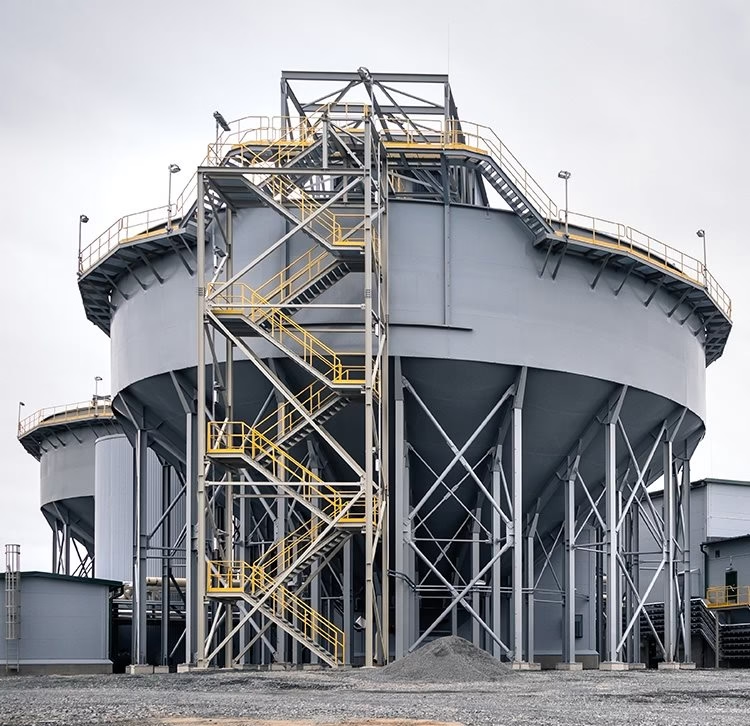
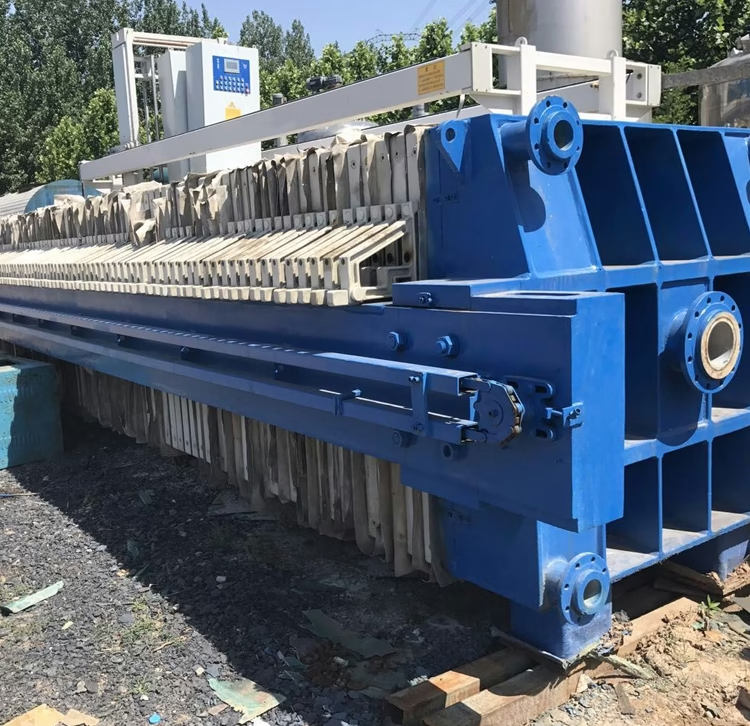
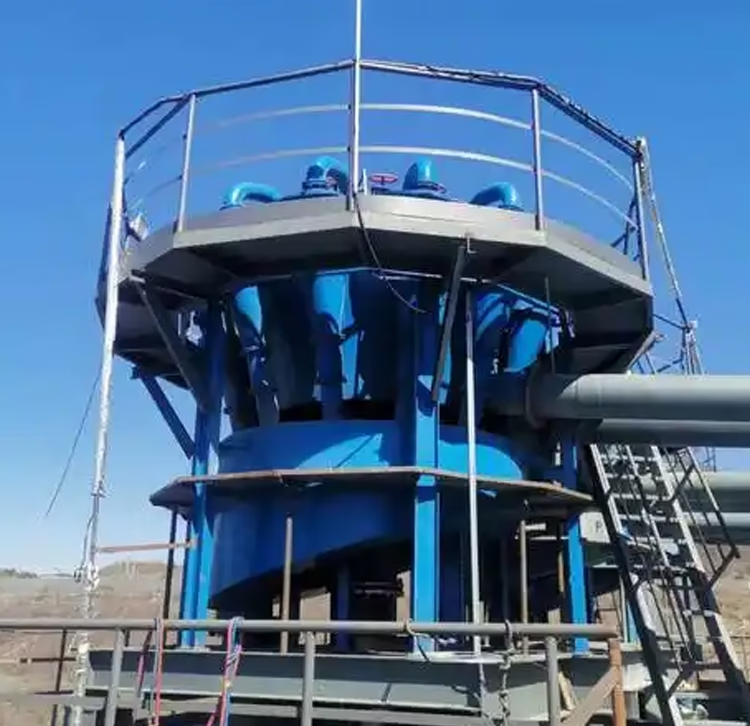
Drying: Concentrators convert the purified, whitened slurry into solid powder. Filter presses dewater the slurry into filter cakes with approximately 30% moisture content.
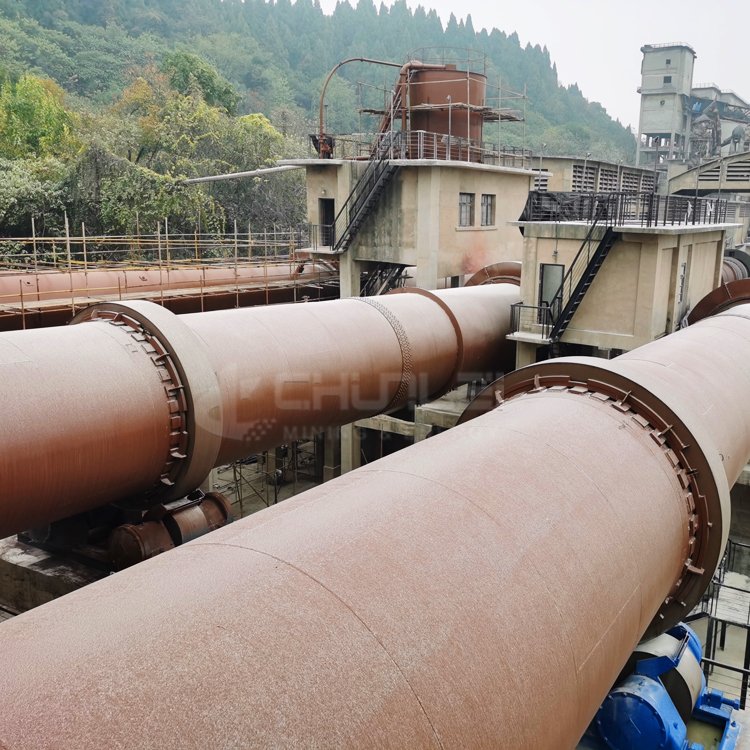
Processing: Calcination in rotary kilns enhances the kaolin’s whiteness, porosity, and insulation properties, making it suitable for high-end applications.
Ball-Mill
Magnetic-Separator
Rotary-kiln
Comparison of Dry and Wet Processing Methods for Kaolin
Comparison Dimensions
Dry Process
Wet Process
Core Principles
Separates impurities through physical methods such as drying, crushing, and classification.
Utilizes water as a medium to purify through physicochemical methods including dispersion, classification, magnetic separation, and bleaching.
What are the stringent standards that high-purity kaolin products must meet for high-end industries?
To establish a foothold in the high-end market, high-purity kaolin must satisfy a series of rigorous physical, chemical, and process performance metrics. The following table summarizes key standards across different industries:
Application Areas
Core Performance Metrics
Chemical Composition Requirements
Process and Safety Requirements
Paper Manufacturing (Coatings)
High whiteness (≥85-90%), fine particle size (-2μm content must be controlled), low viscosity, high hiding power, excellent dispersibility
Low content of coloring oxides such as iron (Fe₂O₃) and titanium (TiO₂)
Maintain intact flake crystal structure to enhance gloss and printability
Stable alumina-silica ratio (Al₂O₃/SiO₂), with strict control of impurities including iron (Fe₂O₃) and titanium (TiO₂)
Ensure high strength and ideal glaze effect after firing
Paints/Coatings
High whiteness and brightness, high hiding power, superior dispersibility, suitable oil absorption value, controlled particle size distribution (e.g., D50, D90)
Low impurities such as iron (Fe₂O₃) and titanium (TiO₂)
Chemically inert, weather-resistant, and highly compatible with the system
How to Obtain a Complete Series of Kaolin Processing Solutions?
To acquire a customized, integrated solution for high-purity kaolin mining and deep processing, it is essential to comprehensively consider resources, technology, equipment, and the target end product.
Raw material assessment to determine ore characteristics
Development of customized process solutions
Selection of collaborative suppliers
CHUNLEI is a professional mining machinery supplier and manufacturer. Our engineers will conduct a comprehensive analysis based on your kaolin characteristics and tailor a process flow diagram to ensure maximum purity and recovery rates. CHUNLEI also offers a complete range of equipment, including jaw crushers, ball mills, magnetic separators, and rotary kilns. For any questions or technical challenges, feel free to consult us anytime. We will provide expert guidance and technical support to ensure your success.
In the production of cement clinker at cement grinding plants, the ball mill is undoubtedly the most central and widely used equipment. It serves as the core link between clinker calcination and the final cement product, grinding the hardened cli...
Graphite Ore Dressing Production Line
Process Introduction Crystalline graphite has natural floatability, so flotation is mainly used to separate graphite ore. For graphite ore with multiple gangues, gravity separation and flotatio...
Titanium ore processing is a complex and precise operation that presents challenges alongside significant opportunities. Efficient separation forms the foundation for transforming raw ore into high-value concentrates. Experience teaches us that d...
Steel Slag Processing Production Line
Though steel slag appears to be low-cost waste material, crushed and purified slag boasts high iron content, soaring prices, and significant market demand. Processed steel slag can be utilized as a sm...
Welcome to Chunlei machinery website. We are a leading manufacturer and exporter of mining machinery in China with more than 30 years history in China.
We offer you one-stop solutions: online consultation --- customized solutions --- fast delivery --- comprehensive after-sales service
 Chunlei Mining Machinery