 Chunlei Mining Machinery
Lithium Spodumene Processing: How to Efficiently Produce High-Grade Lithium Concentrate
At the heart of the global renewable energy transition lies a critical mineral: lithium. As a primary source of lithium, spodumene is powering electric vehicles and a wide range of portable electronic devices. However, transforming hard spodumene ore into high-purity lithium concentrate is a precise process. This article takes you through every key step from ore to concentrate, helping you achieve efficient and economical lithium concentrate production.
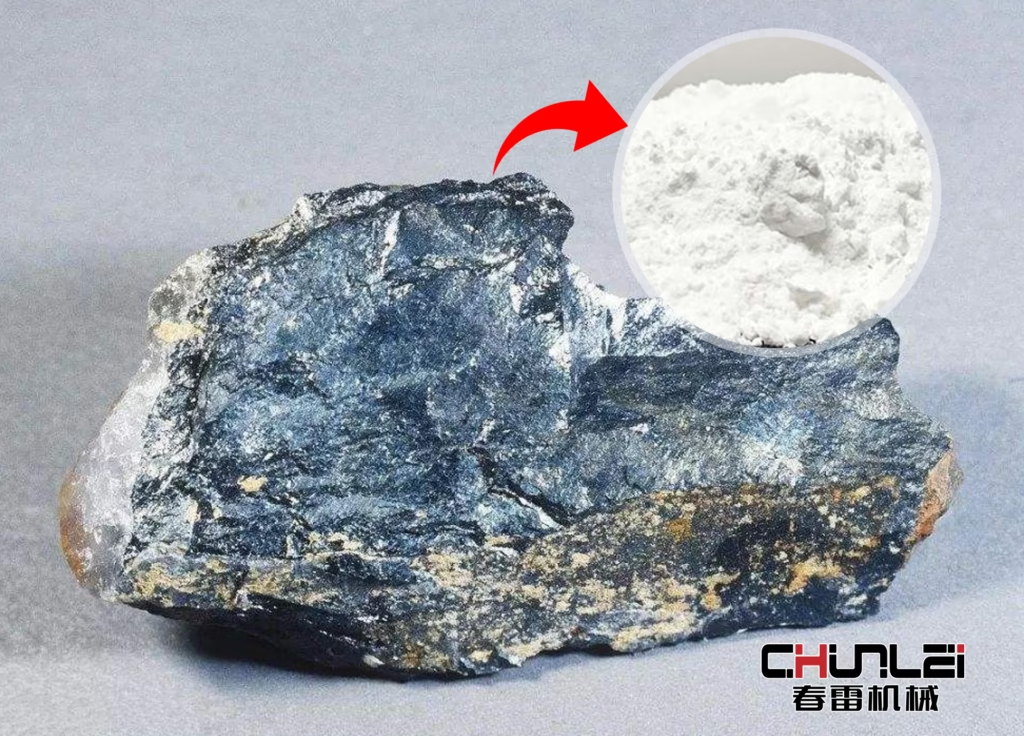
Applications of Lithium Concentrate
In this new era driven by growing demand for electric vehicles, consumer electronics, and grid-scale energy storage, lithium has undeniably earned its title as the “white oil.” Its primary source—spodumene—has consequently become a cornerstone of global resources. Spodumene is far more than just a mineral; it serves as a foundational raw material bridging the mining industry and high-tech sectors.
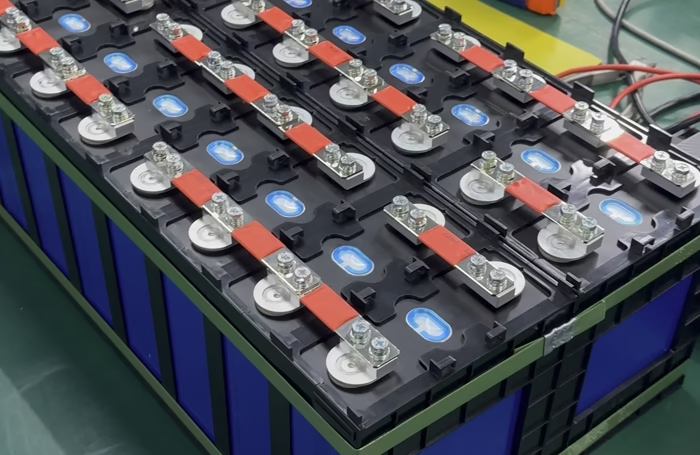
The following table summarizes lithium’s primary uses across global industries, clearly illustrating the extensive applications of this “white oil”:

| Primary Application Areas | Specific Applications and Products | Key Functions and Properties | Importance/Demand Trends |
| Batteries and Energy Storage (Core Area) | Electric vehicle power batteries, consumer electronics batteries (mobile phones, laptops), utility-scale energy storage systems, power tools, electric two-wheelers | As a core material in lithium-ion batteries (cathode materials such as lithium iron phosphate and ternary lithium compounds), it delivers high energy density, extended cycle life, and rechargeability. | Extremely high and rapidly growing |
| The primary driver of global lithium demand growth, accounting for the vast majority of worldwide lithium consumption. | |||
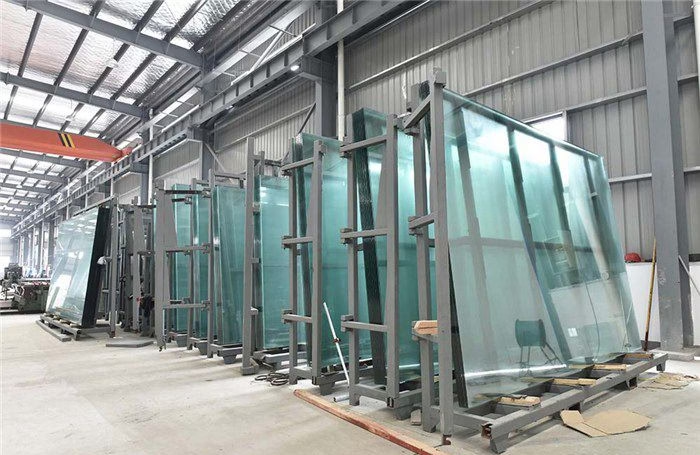
| Ceramics and Glass | Ceramic glazes, heat-resistant glass (e.g., pot lids), glass fiber, specialty glass | Reduces melting point and viscosity while lowering thermal expansion coefficient, thereby enhancing thermal shock resistance and strength in ceramics and glass. | Stable Demand |
| A traditional key application area for lithium with consistent market demand. | |||
| Lubricants | High-performance multi-purpose grease for automotive, aerospace, industrial machinery, and military equipment | Significantly improves grease performance across extreme temperatures, oxidation resistance, and mechanical stability. | Stable Demand |
| An irreplaceable additive for high-performance lubricants. | |||
| Metallurgy and Alloys | Additives for aluminum and magnesium alloys | Improves alloy fluidity and density while boosting strength and toughness for aerospace and high-end manufacturing applications. | Stable Demand |
| An efficient additive used in small quantities with significant impact. | |||
| Polymers and Rubber | Catalysts for synthetic rubber (e.g., styrene-butadiene rubber) and plastic (e.g., PVC) production | Serves as an efficient catalyst to enhance polymerization reaction efficiency and product quality. | Stable Demand |
| A key industrial catalyst. | |||
| Pharmaceuticals and Chemicals | Psychiatric drugs for treating bipolar disorder, air treatment (e.g., submarines, aircraft cabins), synthesis of other chemicals | Lithium carbonate functions as a vital mood stabilizer; lithium hydroxide is used for carbon dioxide absorption. | Niche but Critical |
| Used in relatively small volumes but indispensable in specific applications. | |||
| Emerging Fields | Nuclear fusion reactors (e.g., future ITER project) | Lithium tritium represents a potential fuel for thermonuclear weapons and future fusion reactors. | Huge Future Potential |
| Currently used in minimal quantities but holds strategic long-term significance. |
Mineral Processing Flow for Lithium Extraction from Spodumene
- Crushing and Grinding
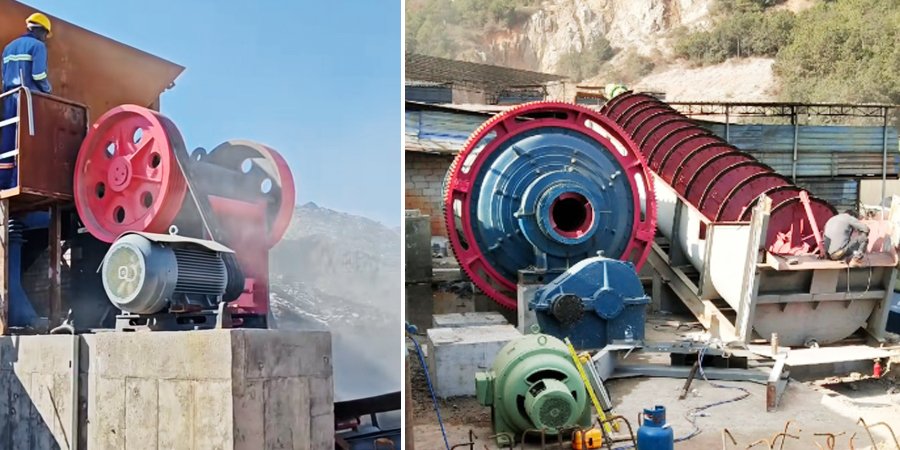
Raw ore is crushed to smaller particle sizes using equipment such as jaw crushers and cone crushers. It is then finely ground in ball mills to achieve thorough liberation of spodumene from gangue minerals (e.g., feldspar, quartz), preparing it for separation. - Heavy Media Separation
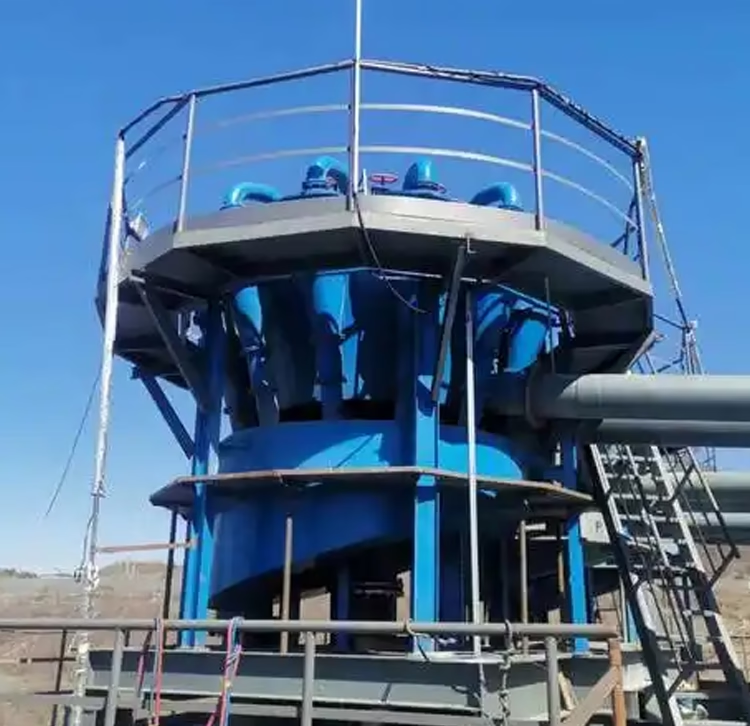
Heavy Media Separation (HMS), also known as Dense Media Separation (DMS), serves as an efficient pre-concentration and waste rejection process in spodumene beneficiation. Leveraging the density difference between spodumene and gangue minerals (e.g., feldspar, quartz), pre-concentration occurs in a hydrocyclone using a heavy liquid (e.g., ferro-silicon suspension). Heavier lithium feldspar particles are discharged through the cyclone wall under centrifugal force, while lighter particles are discarded. This step enhances the efficiency of subsequent flotation. - Flotation
Lithium feldspar and its associated minerals exhibit similar flotation properties. Therefore, specific reagents must be used to amplify the differences between them, making lithium feldspar more readily attachable to bubbles for recovery. - Separation and Impurity Removal
Magnetic separation in spodumene processing primarily removes iron-bearing magnetic impurities. Even trace iron content disqualifies the material as battery-grade feedstock. Magnetic separators eliminate weakly magnetic iron minerals, also creating favorable conditions for subsequent high-temperature calcination. - Concentration and Dewatering
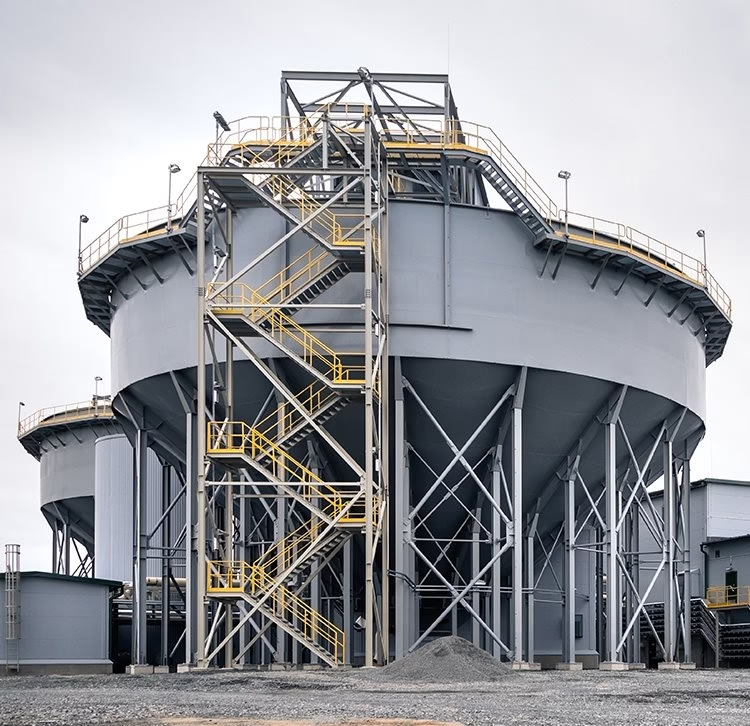
The iron-depleted concentrate undergoes preliminary dewatering in a thickener to form a high-concentration slurry. This slurry then enters a filter press for further physical dewatering, forming a filter cake. Finally, the filter cake is sent to a dryer for complete removal of residual moisture, yielding a commercial-grade lithium concentrate product.

How does lithium concentrate meet battery-grade requirements?
Transforming lithium concentrate into battery-grade material involves a series of complex hydrometallurgical and purification processes. These steps convert the concentrate into high-purity potassium carbonate and lithium hydroxide, which serve as precursors for lithium battery cathode materials.
| Indicator | Typical Specifications for Battery-Grade Lithium Carbonate | Typical Specifications for Battery-Grade Lithium Hydroxide | Why is this so important? |
| Main Content | Li₂CO₃ ≥ 99.5% | LiOH·H₂O ≥ 56.5% | Ensuring lithium content is fundamental to active ingredient quality. |
| Impurity Elements | Sodium, Potassium, Calcium, Magnesium, Iron, Copper, Lead, Chromium, Sulfate, Chloride, etc. | Trace impurities are “performance killers”: they impact battery cycle life, self-discharge rates, and can even cause short circuits and safety incidents. | |
| Magnetic Foreign Matter | ≤ 0.1 ppm (parts per million) | Extremely Demanding | Tiny metal particles may puncture battery separators, triggering internal short circuits—the number one enemy of safety. |
| Particle Size Distribution | D50 typically ranges from 3-8μm with a narrow distribution | They affect tapped density and processing performance, which in turn impact cathode material coating uniformity and battery energy density. |
Prospects and Development of Spodumene
The lithium industry is rapidly expanding, with enhancing efficiency, reducing costs, and achieving green, low-carbon development serving as core objectives for enterprises. The following table outlines the primary trends and development directions in current spodumene processing:
| Trend Areas | Development Direction | Core Features and Objectives |
| Upgrading Mineral Processing Technologies | Application of pre-selection and waste removal technologies such as dense media separation (DMS) | Enhance Efficiency, Reduce Costs: Pre-sorting large volumes of waste rock before grinding significantly reduces subsequent processing loads and energy consumption. |
| Green and Low-Carbon Smelting | New green lithium extraction processes (e.g., Xinjiang Nonferrous Metals’ technology) | Source Waste Reduction, Collaborative Carbon Reduction: Eliminates sulfuric acid usage, addressing sodium sulfate byproduct treatment at the source; utilizes solid waste to lower processing costs. |
| Disruptive Extraction Technologies | Flash Joule heating (FJH) technology | Ultra-Fast, Eco-Friendly, High-Efficiency: Compresses multi-day processes into seconds; eliminates acid-base requirements while drastically reducing water consumption; delivers high-purity lithium products in a single step with exceptional recovery rates. |
| Supply Chain and Business Models | Regional differentiation of production capacity and technology localization | Enhanced Safety and Resilience: Lowered processing barriers and costs enable on-site resource processing, strengthening supply chain resilience. |
How to Obtain a Customized Lithium Spodumene Processing Plant Design?
- Ore Testing: Understand the specific properties of your raw spodumene ore, including composition, grade, and mineral distribution characteristics. These factors determine the subsequent core process flow.
- Product Objectives: Determine whether the final product is spodumene concentrate or further processed lithium salts such as lithium carbonate or lithium hydroxide. Different product targets result in significant variations in process routes and plant configurations.
- Customized Process Design: We will design a tailored mineral processing circuit based on your specific conditions and requirements, encompassing crushing, gravity separation, flotation, and magnetic separation.
- Core Equipment Supplier: We provide comprehensive services including plant layout, equipment supply, installation guidance, and personnel training. An optimal equipment solution can significantly impact the plant’s investment costs, operational expenses, and future competitiveness.
Frequently Asked Questions About Lithium Spodumene Processing
- What is spodumene?
An important lithium-bearing ore, it is the primary source of hard-rock lithium and is commonly found in granitic pegmatites. - What equipment is required for spodumene processing?
Main equipment includes crushers, grinding mills, flotation machines, thickeners, dryers, etc. - What challenges and innovations exist in flotation technology?
Traditional collectors exhibit poor selectivity, adjusters may be toxic, and ionic interference is unavoidable. Modern innovations like ultrasonic pretreatment enhance flotation efficiency. - How can recovery rates be enhanced?
Measures include optimizing grinding fineness and flotation configurations, implementing dispersion pretreatment, and intensifying leaching processes. - Why is iron removal critical for high-grade lithium concentrates?
Iron (Fe) is a detrimental impurity that compromises battery performance. Magnetic separation reduces iron content, ensuring concentrates meet stringent battery-grade purity standards.
Conclusion
The transformation from spodumene to lithium concentrate represents an industrial process that elevates worthless rock into indispensable material. Each step demands meticulous engineering, making the selection of a professional and reliable supplier imperative. CHUNLEI Machinery brings over 30 years of mining expertise, backed by extensive project experience and proven case studies. Should you have any questions or concerns regarding spodumene, please feel free to contact us.
Latest News

Bulk Density of Sand: Test Methods & Equipment Selection Guide
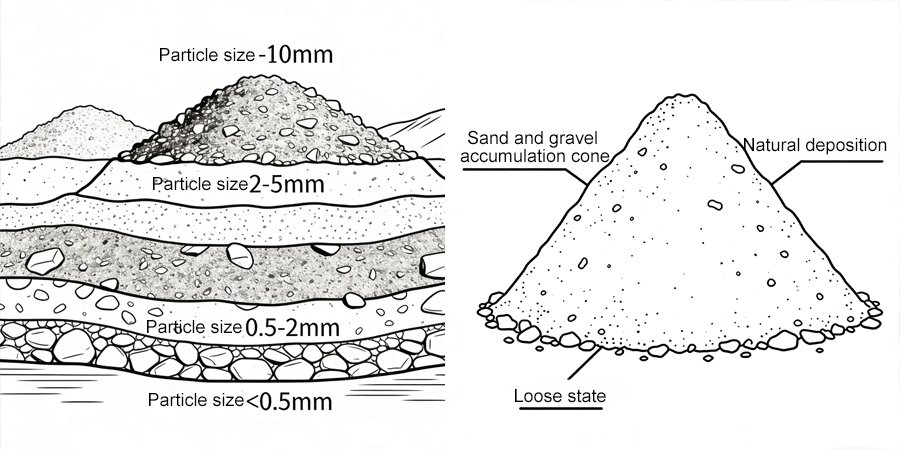
800If you work in the sand and gravel processing industry, you’ve probably heard the term “bulk density”—but do you know how it directly impacts your equipment selection? Choosing the wrong feeder or crusher based on inaccurate density data can le…
-
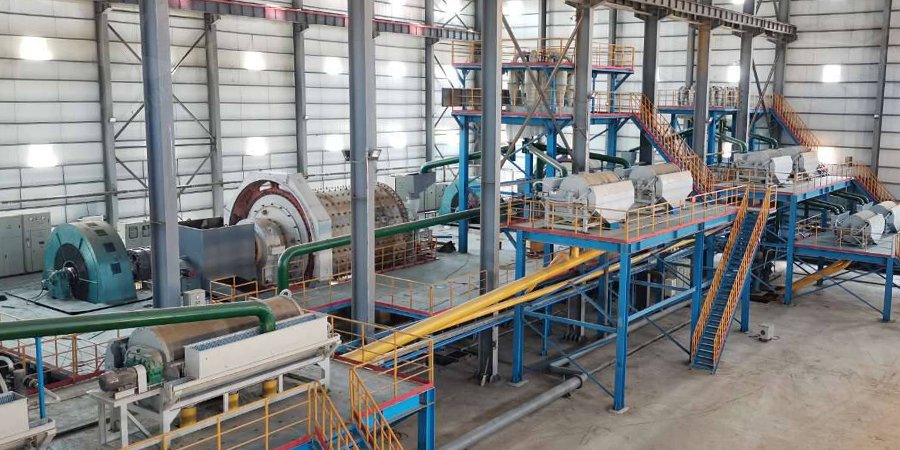
2026 Zimbabwe Gold Mine Ball Mill Buyer’s Guide: Avoid Costly Mistakes & Choose the Right Model
805Decades of experience in global gold mining reveals a common, costly mistake: Zimbabwe mine owners waste tens of thousands of dollars on mismatched ball mills. A machine that works for a South African hard rock mine will fail in Zimbabwe’s dust…
-
7 Common Ball Mill Faults & Quick Fixes for Mining Sites
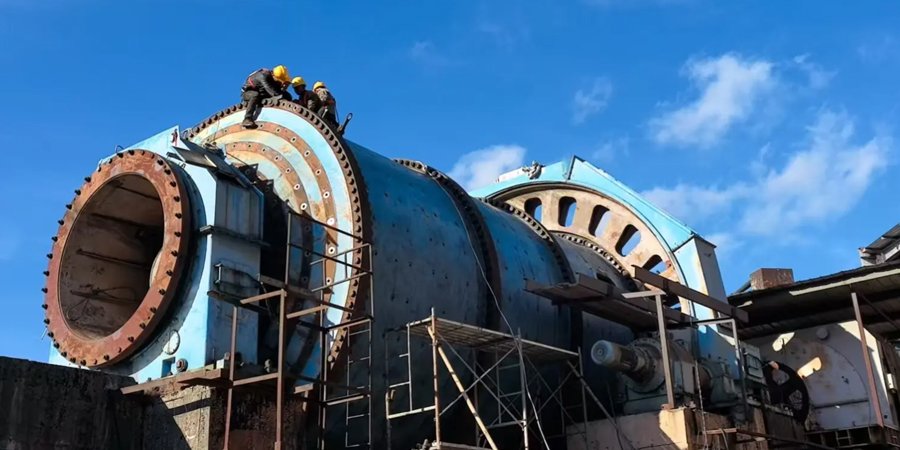
805If you are responsible for operating a gold or ore beneficiation production line, you undoubtedly understand just how frustrating it is when a ball mill suddenly malfunctions—whether the issue involves vibration, overheating, a drop in output, …
-
Case Study: 100TPD Gold Processing Line with Ball Mill in Africa
801If you are planning to establish a 100-ton-per-day (100 TPD) gold beneficiation production line in Africa, you are likely facing a common dilemma: Which type of ball mill is best suited for processing African gold ores? Can the equipment effect…
loading…
已经是到最后一篇内容了!