Sand is one of the most fundamental materials in construction, manufacturing, and industry. Yet its properties—particularly its density—vary dramatically based on particle size, composition, and moisture content. Understanding these variations isn’t just academic; it’s essential for calculating material requirements, ensuring structural integrity, and controlling costs in projects ranging from backyard patios to skyscrapers.
Sand density refers to the mass per unit volume of sand, typically expressed in kilograms per cubic meter (kg/m³) or pounds per cubic foot (lb/ft³). This measurement comes in two primary forms:
Bulk density: The mass of dry sand divided by the total volume it occupies, including the spaces between particles
Particle density: The density of the individual sand grains themselves, excluding void spaces
For practical applications like construction and engineering, bulk density is the more critical measurement as it determines how much sand you need to fill a given space.
How Particle Size Directly Affects Sand Density
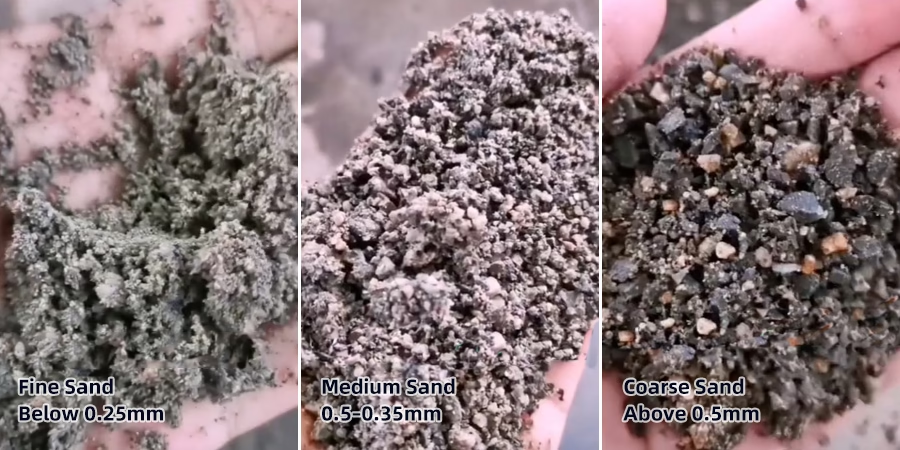
Sand is classified by particle size, typically measured in millimeters. The Unified Soil Classification System (USCS) categorizes sand as follows:
Sand Type
Particle Size Range
Typical Density (kg/m³)
Fine Sand
0.075 – 0.425 mm
1,400 – 1,600
Medium Sand
0.425 – 2 mm
1,600 – 1,800
Coarse Sand
2 – 4.75 mm
1,700 – 1,900
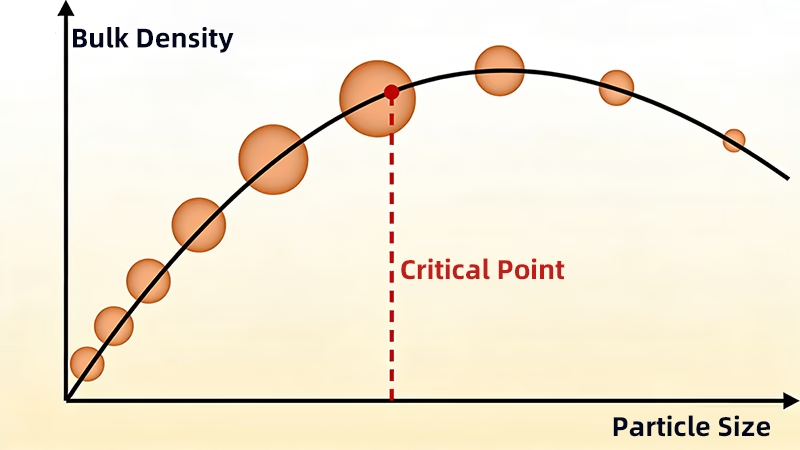
The Density-Particle Size Relationship: Contrary to what you might expect, larger sand particles typically create higher bulk density. This occurs because coarse sand grains can pack more efficiently with fewer void spaces between them. Fine sand, with its smaller particles, creates more air pockets and thus lower bulk density—unless compacted.
Key Factors Beyond Size That Influence Sand Density
1. Moisture Content: The Hidden Variable
Water dramatically affects sand density. Dry sand has lower bulk density than wet sand because water fills the voids between particles. However, saturated sand (where water completely surrounds grains) can actually become less dense than damp sand due to water separating particles.
2. Composition and Origin
River sand: Typically rounded particles, moderate density
Crushed stone sand: Angular particles, higher density due to better interlocking
Beach sand: Contains salts and organic matter, variable density
Desert sand: Very fine, rounded grains, lowest practical density
3. Compaction and Settling
Mechanical compaction can increase sand density by 15-25% by reducing void spaces. Freshly poured sand will settle over time, gradually increasing its density without external force.
Practical Applications: Why Density Matters in Real Projects
Construction and Concrete Production
The density of sand directly affects concrete strength and durability. Builders must calculate sand by weight, not volume, for consistent concrete mixes. Using the wrong density estimate can lead to structural weaknesses or excessive material costs.
Landscaping and Foundation Work
For filling and leveling, knowing sand density helps accurately estimate:
Material requirements (avoiding costly over-ordering)
Load-bearing capacity
Settlement predictions
Industrial Manufacturing
In foundries and glass production, consistent sand density ensures uniform heat transfer and casting quality.
Measurement Methods: How to Determine Sand Density
Field Test (Simple Method)
Fill a container of known volume with sand
Weigh the container with sand
Subtract the container weight
Calculate: Density = Mass / Volume
Laboratory Standard (Proctor Test)
For engineering applications, the modified Proctor test determines maximum dry density and optimal moisture content through controlled compaction.
Comparative Density Table: Sand vs. Other Materials
Material
Typical Density (kg/m³)
Fine Dry Sand
1,400 – 1,600
Wet Packed Sand
1,900 – 2,100
Gravel
1,500 – 1,700
Cement
1,440
Water
1,000
Concrete
2,300 – 2,500
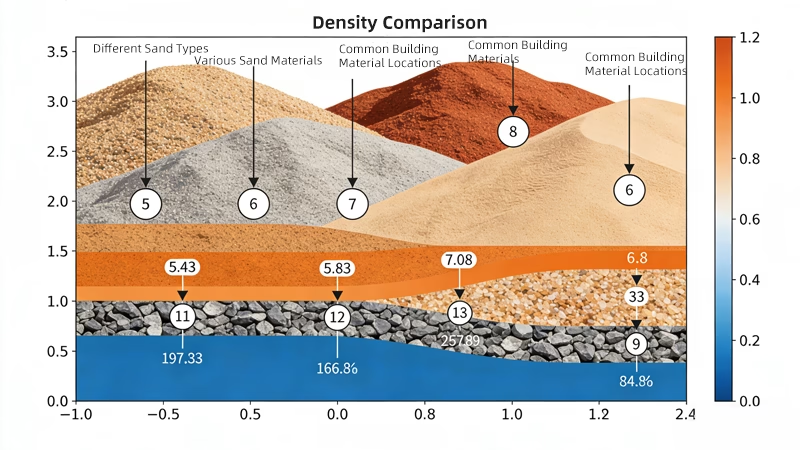
Density Comparison
Optimizing Sand Selection for Your Projects
When to Choose Fine Sand
Mortar and plaster mixes (better workability)
Sandboxes and recreational areas
Filtration systems
When to Choose Coarse Sand
Concrete aggregates (strength)
Drainage layers (permeability)
Road base construction (stability)
Pro Tip for Accurate Calculations
Always request density specifications from your sand supplier, as “bank run” or “pit sand” can vary significantly even within the same classification. When in doubt, conduct a simple field test with a sample before large-scale ordering.
Conclusion
Sand directly impacts construction quality. By understanding how particle size, moisture content, and composition collectively determine density, engineers can enhance the performance and durability of construction projects.
Whether you’re selecting sand for concrete, plastering, or backfilling, these properties and conversion ratios ensure the right material is used for the right job.
CHUNLEI’s expert team stands ready to customize tailored processes for you, offering one-stop services from design to equipment supply. Inquiries welcome!
Fluorite Ore Dressing Production Line
Process Introduction Fluorite ore beneficiation methods include gravity separation and flotation, which are also divided into gravity separation equipment and flotation equipment. Gravity separ...
As the most critical raw material for the global steel industry, iron ore classifications directly impact mining efficiency, processing costs, and steel quality. This article provides a comprehensive analysis of common iron ore classifications an...
In mineral processing, the selection of classification equipment determines the technical performance and economic efficiency of the entire production line. The operational efficiency of classification equipment directly impacts energy consumptio...
In gold ore processing, every incremental improvement in recovery rate directly impacts a company's input-output profitability ratio. Selecting the appropriate equipment for grinding gold ore is the primary factor determining gold recovery effici...
Welcome to Chunlei machinery website. We are a leading manufacturer and exporter of mining machinery in China with more than 30 years history in China.
We offer you one-stop solutions: online consultation --- customized solutions --- fast delivery --- comprehensive after-sales service
 Chunlei Mining Machinery