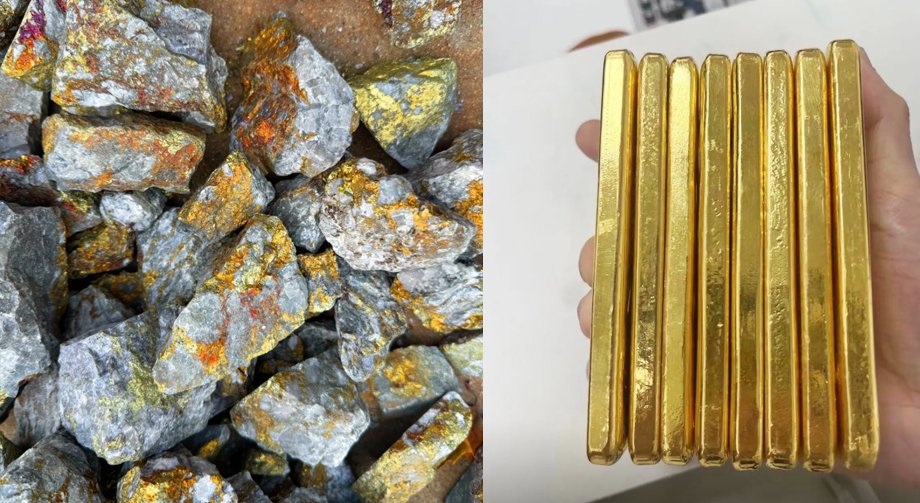
Having worked in the mining equipment industry for so many years, I’ve noticed a phenomenon: many clients come to me with ore samples or test reports, and their first question is always, “Is this mine worth investing in? What equipment do I need for a complete production line?”
Frankly, asking this question means you’re genuinely interested. In 2026, while gold prices fluctuate, they remain strong, making gold ore beneficiation still a lucrative business. The challenge lies in the vastly different characteristics of gold mines. Are they quartz veins? Or are they intertwined with sulfide deposits? Are they placer gold or lode gold? This directly determines how you allocate your funds and what equipment you should choose.
Today, we won’t discuss those incomprehensible chemical reactions. As a seasoned veteran who has sold equipment for over a decade, I’ll guide you through a complete gold ore beneficiation production line from start to finish. From the raw material entering to the gold ingot emerging, I’ll explain what equipment is needed at each step, what new technologies are available in 2026, and what equipment Chunlei Machinery offers to save you time and money—all explained clearly in one go.
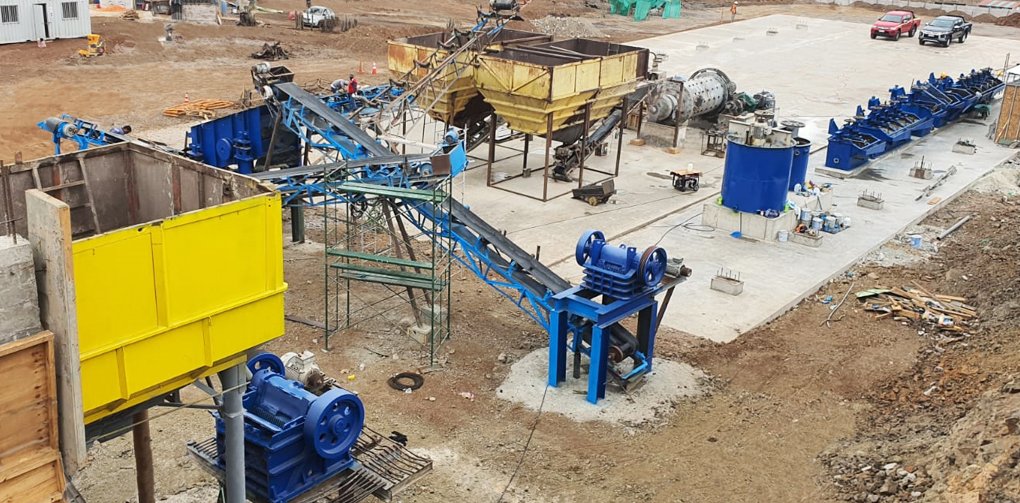
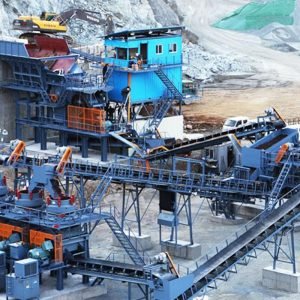
This is a standard, modern gold beneficiation plant. Don’t let its massive scale intimidate you; once you break down the underlying logic, it essentially boils down to a three-step process: crushing, separation, and refining.
Step 1: To Get Rich, First Crush (Crushing and Screening Stage)
Regardless of the type of ore, even if it’s a massive ore weighing thousands of tons mined from a mountain, the first step must be “slimming down.” Our goal is to crush large rocks with diameters of several hundred millimeters into pieces of a dozen millimeters or even finer, so that the subsequent ball mill can handle them efficiently.
The standard configuration for this stage is “one jaw crusher and one crusher, closed-loop cycle”:
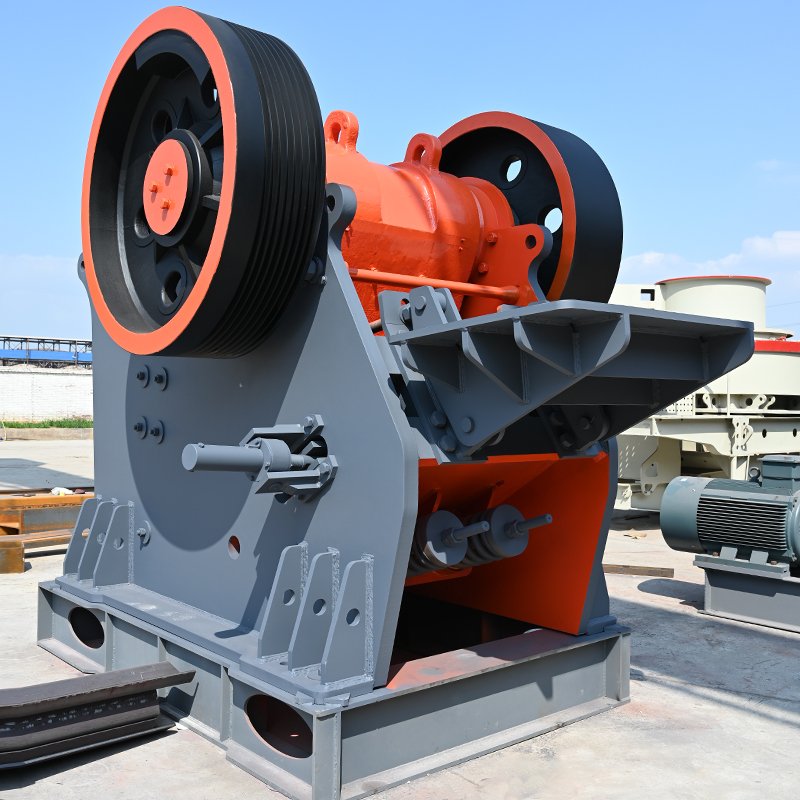
◎ Jaw Crusher: This is the “workhorse” of the production line, responsible for crushing large ore into smaller pieces.
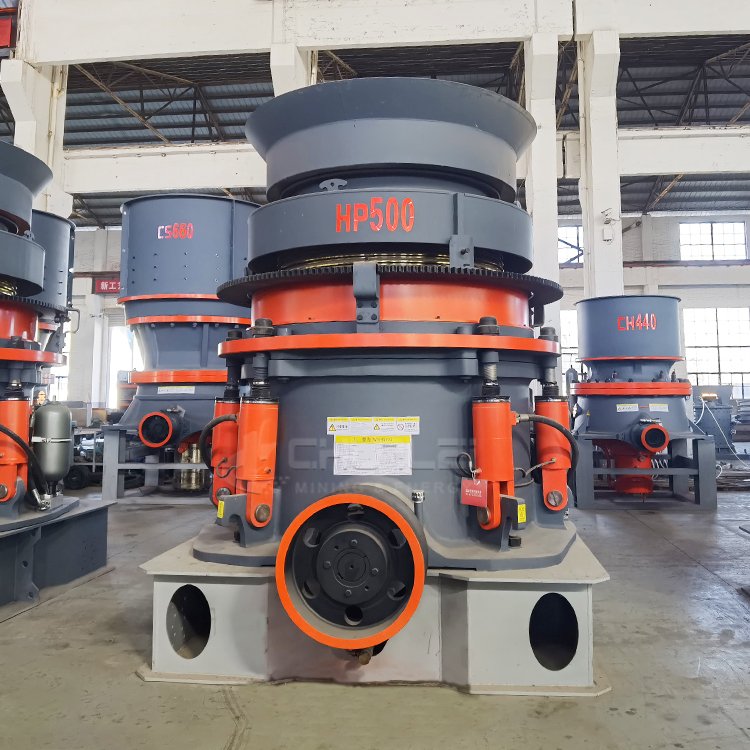
◎ Cone Crusher: The material from the jaw crusher isn’t fine enough; it needs secondary crushing by the cone crusher to be broken into suitable sizes for subsequent grinding.
◎ Vibrating Screen: This is crucial. The crushed material enters the vibrating screen. Material that passes through (fine material) proceeds to the next step, while material that doesn’t (coarse material) is automatically sent back to the cone crusher for further crushing. This closed loop is called “closed-loop crushing,” ensuring uniform material size entering the mill, allowing the ball mill to operate at its maximum efficiency.
Chunlei Equipment – Top Picks
Addressing the challenges of “high hardness and strong abrasion” faced by many mines in 2026, we highly recommend our Chunlei C-series hydraulic jaw crusher and HPT multi-cylinder hydraulic cone crusher.
C-series jaw crusher: Deep cavity, no dead zone, high throughput. Its discharge port adjustment, in particular, uses a wedge block device, which is far more convenient than the old-fashioned shim type, allowing for adjustment in just a few minutes, saving significant labor time.
HPT cone crusher: This is our flagship product. Fully hydraulically controlled, with overload protection offering sub-second response. No matter how hard the ore, it won’t stall. Furthermore, in the upgraded 2026 model, we’ve optimized the liner life, allowing it to perform 10% more work than similar equipment and providing greater wear resistance.
CJ Jaw Crusher
Hydraulic Cone Crusher
Step 2: From Stone to Flour, Gold Revealed (Grinding and Classification Stage)
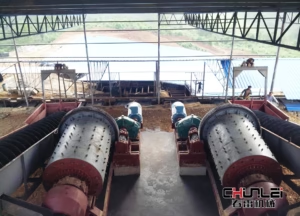
Crushing the stone into sand isn’t the end; the outer layer of rock encasing the gold must be completely removed—a process called “monolithic liberation.” This is where the ball mill comes in. It’s a giant drum filled with steel balls. As the drum rotates, the steel balls crush the ore into powder.
While ball mills are excellent, many people, due to lack of experience, improper steel ball ratios, or inadequate liner maintenance, experience uneven grinding. Some ore is ground too finely into a paste (which results in gold loss), while other parts remain unground. This is where classifiers or hydrocyclones come in to ensure quality control.
Hydrocyclones: Using centrifugal force, they throw the coarse sand (unfinished) back into the ball mill for further grinding, while the qualified fine slurry (mineral slurry) flows to the next process. The precision of this step directly determines your recovery rate.
Chunlei Equipment – Top Picks
Ball mills are energy-intensive, and choosing the right one can save you a significant amount on your electricity bill. Our Chunlei overflow ball mill boasts two key features:
Static and Dynamic Pressure Bearings: This is a feature typically found only in large mills, but we also equip our small and medium-sized mills with it. During startup, high-pressure oil “floats” the mill body, completely eliminating the risk of dry grinding damaging the bearings, and reducing starting current by over 30%.
Rubber Liners: For gold mines, we recommend rubber liners. Although the initial investment is slightly higher than manganese steel, they are lighter, quieter, and have a longer lifespan. Especially in terms of noise reduction, with strict environmental regulations nowadays, it makes working more comfortable for workers – a cost-effective long-term investment.
Step 3: Each Method Has Its Own Unique Skills (Selection Stage)
This is the core of the process. Different types of gold ore require completely different beneficiation methods. Never apply a single solution to all mining projects. In 2026, the mainstream methods are as follows:
Solution A: Gravity Separation – The simplest and most direct method, specifically for “coarse-grained gold”
If your gold particles are relatively large, or if you have placer gold, gravity separation is the most cost-effective method. Utilizing the high density of gold, water is used to wash it away, and a shaking table is used to shake it. The lighter stones are washed away, while the heavier gold remains.
Core equipment:Jigs, shaking tables, Nelson centrifugal concentrators (currently the most efficient gravity separation equipment, especially suitable for pre-selecting large gold particles during the grinding cycle to prevent them from being ground up).
Solution B: Flotation – The most universal method, specifically for “sulfide ores”
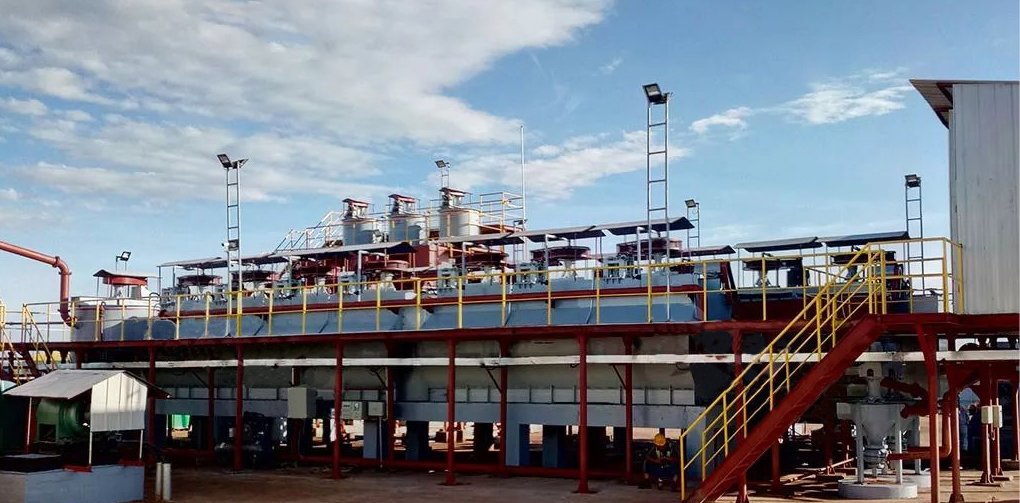
Many gold ores are found alongside pyrite. In this case, a flotation machine is needed. We add reagents to the slurry, causing gold or sulfide minerals to adhere to bubbles and float to the surface, forming foam. Scraping this foam yields gold concentrate.
Core equipment: Flotation machine (currently, aerated mechanical agitation flotation machines are popular due to their energy efficiency).
Option C: Cyanide Process (CIL/CIP) – Highest recovery rate, ideal for “tough nuts to crack” (gold particles).
For extremely fine gold particles, or gold that cannot be extracted using physical methods, chemical methods are necessary.
Carbon leaching is the mainstream process: cyanide is added to several large tanks (stirred tanks) to dissolve the gold, and then activated carbon adsorbs the gold. This equipment requires a large investment, but the recovery rate can reach over 95%.
On-site view of the leaching tank
Chunlei Equipment – Top Picks
For the beneficiation stage, we emphasize “precision” and “energy saving”:
Chunlei SF/KYF Combined Flotation Unit: This is our perfect combination. The SF type handles air intake, and the KYF type handles agitation. This combination saves 15-20% on energy compared to a single model. Furthermore, our impellers feature a backward-inclined design, ensuring excellent slurry circulation and preventing coarse particles from settling.
Double Impeller High-Efficiency Leaching Tank: For the CIL process, our leaching tank uses a double-layer impeller design, providing extremely strong vertical circulation. Activated carbon is more evenly distributed within the tank, eliminating bottom “dead zones,” meaning you use less cyanide and have lower carbon loss. This is a competitive advantage under the stringent environmental regulations of 2026.
Step 4: Everything Ready, Real Gold in Hand (Dehydration and Tailings Treatment)
After the gold is selected or analyzed, the final step is dehydration and smelting into gold ingots. The large amount of tailings (waste slag and wastewater) must be treated to meet standards; this is the bottom line for mine production.
Thickener: Removes water from the slurry, which can be recycled back to the workshop for reuse.
Filter: Further drys the concentrate or tailings. Dry-discharged tailings can be stockpiled or backfilled, greatly reducing the risk of tailings ponds.
2026 Gold Ore Processing Trends and Summary
To undertake a project, you need to understand the process and required equipment.
For hard rocks, use a Chunlei C-jaw crusher + HPT cone crusher to clear the path.
For fine grinding, use a Chunlei energy-saving ball mill to save on electricity costs.
Organization based on ore type: For coarse particles, use gravity separation; for sulfide ores, use a Chunlei flotation unit; for fine particles, use a high-efficiency leaching tank.
Environmentally friendly finishing touches: high-efficiency thickeners achieve water recycling, and tailings are dry-discharged, giving you peace of mind.
In short, there is no single best process, only the most suitable process for your ore. If you have ore samples, or are planning a project, don’t try to figure it out on your own. Send me your report, or directly mail your ore samples to our factory, and we’ll conduct beneficiation tests. What reagents were used, how finely was ground, how much gold can be extracted—we’ll let the data and our equipment speak for themselves.
We’re not just aiming to close a deal; we want you to achieve the desired benefits and results after investing your capital.
From Ore to Gold Ingots—Chunlei Equipment Is Your Most Reliable Partner.
Interested in receiving a “2026 Customized Equipment Configuration List” tailored to your specific ore samples? Simply send me a direct message or leave a comment saying “Ore Processing.” Provide me with your ore type and processing capacity, and I will have our engineers develop a customized solution for you!
Zircon Ore Beneficiation Process
Process Introduction Zircon beneficiation process is the process of removing impurities and increasing the content of zircon ore. According to the characteristics of the original ore, Chunlei design...
Recently, an African client contacted us seeking to concentrate gold and sulfur from sulfur ore. Based on the client's requirements and existing equipment, and to prevent tailings loss, our engineer recommended the Model 900 spiral chute. After...
Calcium carbonate mills, also known as calcium carbonate grinders or calcium carbonate grinding mills, primarily grind calcium carbonate minerals into various powders suitable for diverse industrial applications. Calcium carbonate is an in...
Wet grinding refers to the process where ore enters the mill and achieves the required degree of grinding through interaction between the grinding media and the ore itself, meeting the user's grinding specifications. Ore movement is facilitated b...
Welcome to Chunlei machinery website. We are a leading manufacturer and exporter of mining machinery in China with more than 30 years history in China.
We offer you one-stop solutions: online consultation --- customized solutions --- fast delivery --- comprehensive after-sales service
 Chunlei Mining Machinery