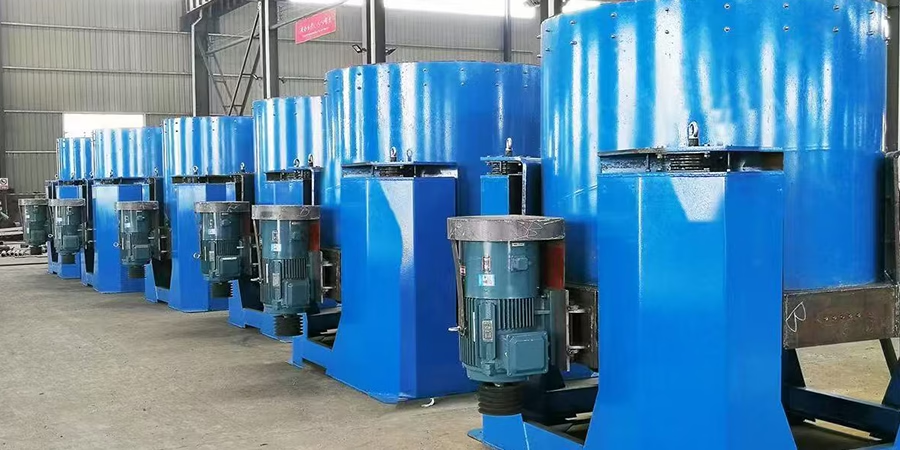
Centrifugal concentrators,also known as a mineral processing centrifuge, represent a pivotal advancement in mineral processing, utilizing high G-force fields to achieve superior density-based separation. These machines excel at capturing fine, heavy mineral particles—particularly those smaller than 0.074mm (200 mesh)—that are frequently lost by traditional gravity methods like sluice boxes or jigs. Their efficiency in boosting recovery rates and processing throughput has made them indispensable in modern, cost-sensitive, and environmentally conscious mining operations. This article explores five critical applications where centrifugal concentrators deliver maximum return on investment, driving profitability and sustainability in 2026.
The most prominent application of centrifugal concentrators is the recovery of fine liberated gold, especially particles smaller than 0.074mm. In standard sluices, these fine particles have insufficient mass to settle and are often carried away by water flow, resulting in significant losses.
How does it works?
The concentrator spins a slurry-filled bowl at high speed, generating centrifugal forces up to 200 times normal gravity. This immense force drives dense gold particles into a retained “concentrate bed” lining the bowl. Low-pressure fluidization water is injected through the bowl wall, keeping this bed fluidized so heavy grains can penetrate it while lighter waste minerals (gangue) are washed over the top and rejected as tailings.
Key Benefit:
This process achieves an extremely high enrichment ratio in a single pass, often upgrading feed material from a few grams per tonne to several kilograms per tonne in the concentrate, making subsequent refining much more efficient.
Optimization Tips for Fine Gold:
Feed Preparation: Ensure optimal particle liberation by grinding and remove all oversize material (+2mm) to prevent blockages and bowl wear.
Parameter Control: Precisely manage bowl speed (G-force) and fluidization water pressure based on the specific gravity and size distribution of the gold.
Cycle Management: For batch-type machines, optimize the cycle time between concentrate clean-outs to prevent overloading and gold loss.
Scavenging and Upgrading from Mine Tailings
Reprocessing historical or fresh tailings is a growing application that turns environmental liabilities into revenue streams. Older processing plants often had inefficient recovery methods, leaving valuable amounts of gold, tin, tungsten, and other heavy minerals in their waste dumps.
How does it works?
Centrifugal concentrators act as high-capacity scavengers on these low-grade materials. They can process large volumes of tailings slurry, efficiently capturing residual fine heavy minerals that were previously missed. This application often involves a pre-desliming stage (e.g., using a cyclone or classifier) to remove ultra-fine clays that can hinder separation efficiency.
Key Benefit:
This approach offers a low-capital, high-return project with minimal environmental disturbance (no new mining required). It also provides an environmental benefit by removing potentially reactive heavy minerals from tailings storage facilities.
In-Grinding-Circuit Recovery to Prevent Over-Grinding
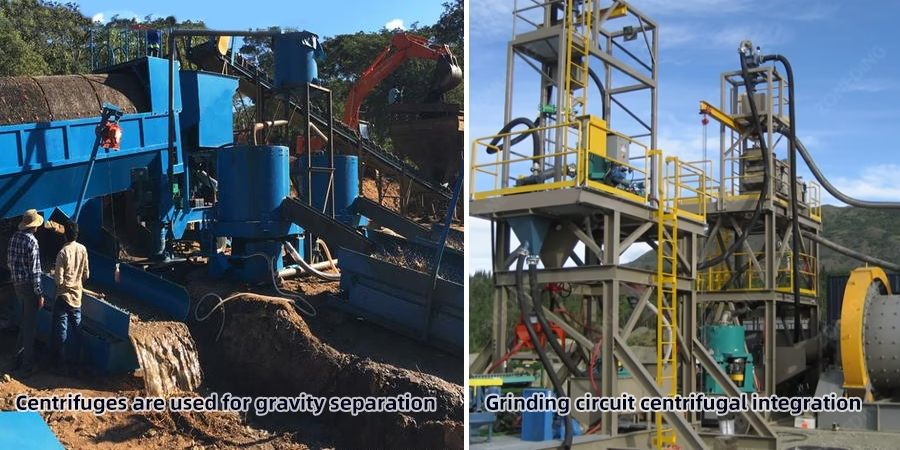
Installing a centrifugal concentrator within the grinding circuit—typically on the cyclone underflow—is a highly strategic application for gold and other dense minerals.
The Problem: Dense, malleable minerals like gold can settle in the mill sump and recirculate, leading to over-grinding. This can flatten particles into thin flakes (“smearing”) or coat them onto other minerals, making them non-recoverable by downstream processes like flotation or leaching.
How it works: The concentrator continuously “scavenges” the grinding circuit, catching dense, liberated particles as soon as they are produced. This free gold recovery step removes them from the circuit before they can be over-ground.
Key Benefit: This protects the target mineral, improves overall plant security by producing a clean, smelt-ready gravity concentrate early, and enhances the performance of downstream processes by reducing the circulating load of heavy minerals.
Grinding Circuit Integration Data:
Circuit Parameter
Without In-Line Concentrator
With In-Line Concentrator
Benefit
Gold Particle Shape
Flaky, Smeared
Natural, Granular
Higher overall recovery
Load on Leach/CIL
High
Reduced
Faster leach kinetics, lower cyanide use
Security Risk
Gold dispersed in circuit
Gold secured early
Reduced theft risk
Enhancing Alluvial and Placer Mining Operations
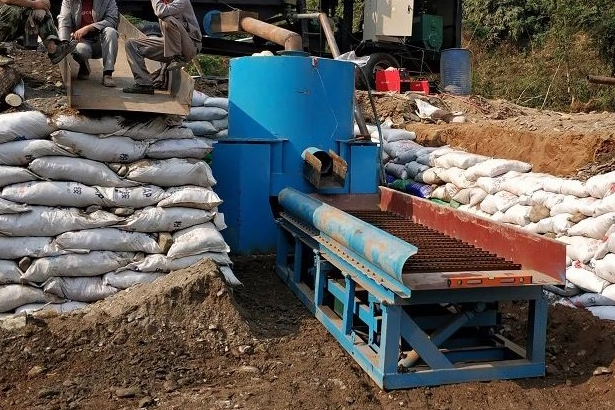
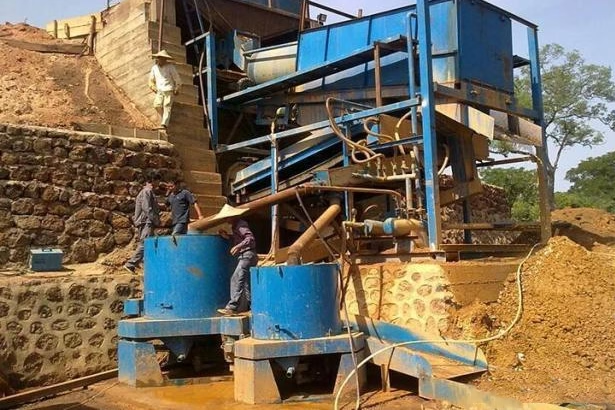
In alluvial (placer) mining, where minerals are recovered from sand and gravel deposits, centrifugal concentrators have largely replaced traditional sluices and jigs for primary recovery.
How it works: They are exceptionally effective at capturing fine, flat “flour gold” that has a high surface-area-to-mass ratio, which easily washes over conventional riffles. The high G-force overcomes hydraulic drag, ensuring these particles report to concentrate. They also avoid the issue of “riffle packing” common in sluices, as the fluidized bed remains dynamic.
Key Benefit: Offers vastly superior fine gold recovery rates from placer deposits, significantly increasing yield per cubic meter of pay dirt. They produce a cleaner, higher-grade concentrate on-site, drastically reducing the time and effort required for final cleanup.
Alluvial Operation Setup:
Mobility: Units are often trailer- or skid-mounted for easy movement along riverbanks or within pit operations.
Feed Preparation: Always use a screening stage to remove oversize rocks and debris (+5-10mm) before the concentrator.
Water Management: In muddy conditions, employ settling ponds or clarifiers to recycle process water.
Concentrating Heavy Rare Minerals (Tin, Tungsten, Tantalum)
Beyond gold, centrifugal concentrators are crucial for the beneficiation of dense, brittle minerals like tin (cassiterite), tungsten (wolframite, scheelite), and tantalum/niobium.
The Challenge: These ores are often low-grade and the valuable minerals are fragile, easily breaking into fine slimes during crushing and grinding. These fines are unrecoverable by most conventional gravity equipment.
How it works: The high G-force of a centrifugal concentrator is perfectly suited to recovering these fine heavy particles. It acts as a primary rougher, rejecting a large bulk of low-density waste rock and creating a significantly upgraded pre-concentrate for further processing on shaking tables or other finishing devices.
Key Benefit: Enables the economic processing of low-grade and fine-grained rare mineral deposits that would otherwise be uneconomical, ensuring maximum resource utilization.
Technical Trends and Operating Principles in 2026
The drive toward Green Mining continues to favor purely physical, chemical-free separation methods like centrifugal concentration. Modern machines are more automated, energy-efficient, and reliable.
– Automation & Smart Monitoring: Modern units feature sensors for bowl speed, water pressure, and motor load, allowing for real-time adjustment and predictive maintenance alerts.
– Material Science Advances: The use of polyurethane liners and hardened steel components has increased wear life and reduced downtime.
– Operational Focus: Success hinges on controlling key parameters:
Fluidization Water Pressure: Critical for maintaining a fluidized bed; must be balanced to not wash away gold.
Bowl Speed (G-force): Adjusted based on the target mineral’s density and particle size.
Feed Slurry Density: Typically maintained between 20-35% solids for optimal flow and separation.
Feed Particle Size: Must be controlled (usually below 2mm) to prevent blockages and equipment damage.
Conclusion
From capturing elusive fine gold to revitalizing old tailings and enabling the economic extraction of critical minerals, centrifugal concentrators are versatile workhorses of modern mineral processing. Their ability to deliver high recovery rates, low operating costs, and an environmentally friendly profile solidifies their essential role in efficient and sustainable mining operations. Understanding these five key applications allows operations to strategically deploy this technology for maximum financial and operational return.
CHUNLEI’s expert team stands ready to customize tailored processes for you, offering one-stop services from design to equipment supply. Inquiries welcome!
Having worked in the mining equipment industry for so many years, I've noticed a phenomenon: many clients come to me with ore samples or test reports, and their first question is always, "Is this mine worth investing in? What equipment do I nee...
A variety of models are available | Get the free price list!
Raymond mill is also called ultrafine grinding equipment, adopts a number of patented technologies such as bevel gear integral drive, internal thin oil ...
Ball mills and vertical roller mills are two mainstream grinding equipment. Vertical roller mills offer higher production efficiency, while ball mills are the preferred choice for ensuring product quality. This article will detail the differences...
Refined kaolin appears as an ordinary white powder, yet it holds indispensable significance in industrial applications. Its extraction process involves a complex industrial workflow, where purity levels directly determine its value and applicatio...
Welcome to Chunlei machinery website. We are a leading manufacturer and exporter of mining machinery in China with more than 30 years history in China.
We offer you one-stop solutions: online consultation --- customized solutions --- fast delivery --- comprehensive after-sales service
 Chunlei Mining Machinery