A high-quality gold mine tailings dewatering system is far more than a simple assembly of machinery; it represents a strategic decision crucial to the future sustainable development of the mine. A good dewatering system is not only reflected in controllable operating costs but also in its ability to transform tailings into renewable resources. In today’s era, tailings management is not only a societal standard but also a moral imperative. This guide comprehensively analyzes how to design a robust, economical, and safe solution for your gold mine.
Characteristics of Gold Mine Tailings Dewatering
Gold ore processing commonly employs the “fine grinding-leaching” process. To fully expose gold elements, the ore is typically ground to an extremely fine size (often exceeding -400 mesh). This generates substantial fine and ultrafine particles (e.g., “mineral slime”), resulting in severe muddiness that hinders natural settling and readily clogs filter cloths. Simultaneously, residual chemicals like cyanide and lime interfere with flocculant efficacy and corrode equipment. This process not only requires reducing filter cake moisture content below 15% to meet dry stacking safety and environmental standards but also demands achieving a high water recovery rate exceeding 85% to ensure water resource circulation. Ultimately, it forms a complex integrated system engineering project encompassing “high-efficiency sedimentation, deep dewatering, and water quality management.”
How can a dewatering system reduce costs and risks?
An optimized dewatering system can reduce tailings moisture content to below 15%, cutting tailings transportation costs by over 40% and reducing fresh water consumption by 85%—an absolute key advantage in arid regions. It also minimizes chemical consumption and mitigates risks. Tailings dry stacking technology employs a series of dewatering equipment to achieve deep dewatering of tailings, forming relatively dry filter cake solids. These solids can be layered, compacted, and stockpiled, thereby reducing the risk of catastrophic dam failures.
Conduct tailings analysis before equipment selection
Gain comprehensive understanding of tailings’ physical and chemical properties to provide precise data support for selecting optimal dewatering equipment (e.g., thickeners, filter presses, centrifuges) and process parameters (e.g., flocculant type, dosage, operating pressure).
Physical property analysis Physical property analysis determines dewatering difficulty and equipment selection, focusing on precise analysis of particle size distribution and sedimentation/filtration characteristics.
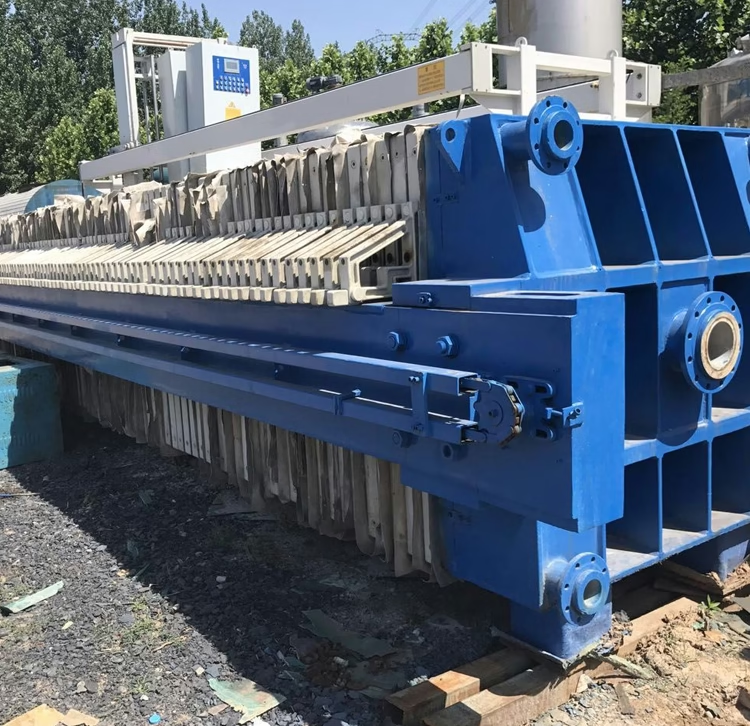
Particle Size Finer particles pose greater dewatering challenges. Sedimentation column tests calculate compression concentration and clarification rates, providing critical parameters for thickener selection. When fine particles dominate, the “enhanced thickening + high-pressure dewatering” process is typically employed, often using thickeners and plate-and-frame filter presses.
The Role of Thickeners in Water Recovery
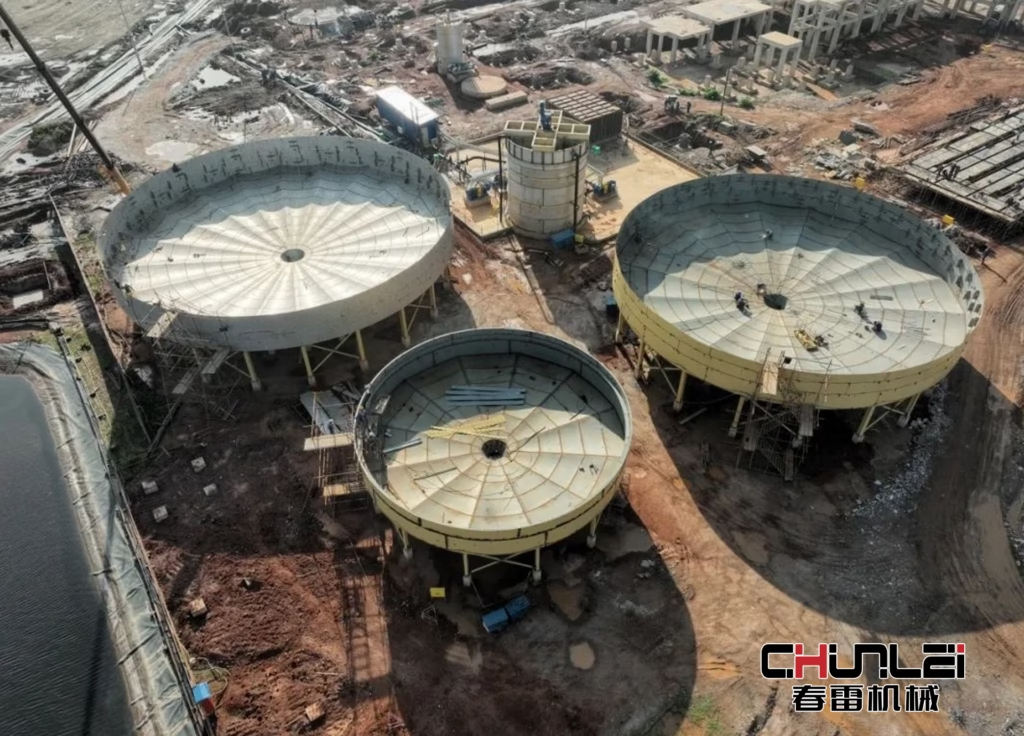
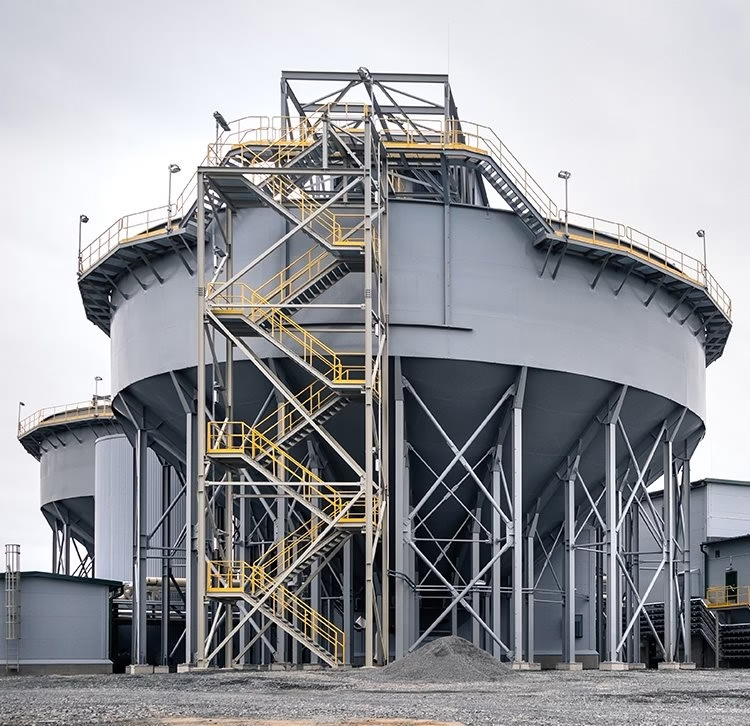
Thickeners are the primary equipment in all tailings dewatering processes. Adding thickeners to thickeners enables the recovery of 80% of treated water at just 20% of the consumption cost, with the primary function being tailings concentration. Specific functions include the following: Accelerating Solid-Liquid Separation and Enhancing Water Recovery Efficiency: Thickeners (typically high-molecular-weight polymers) adsorb multiple particles via their long molecular chains, forming larger, denser “flocs.” This accelerates settling velocity, causing solids to rapidly sink to the concentrator bottom. Consequently, a substantial volume of clear, immediately reusable process water separates at the top, significantly boosting water recovery rates and efficiency.
Increasing underflow concentration to reduce downstream load: The compacted flocs are further compressed at the thickener bottom, expelling more entrapped water to yield higher-concentration underflow. This not only reduces the total volume entering subsequent dewatering equipment (e.g., filter presses), lowering their energy consumption and processing load, but also creates favorable conditions for advanced dewatering.
Improved effluent quality ensures safe reuse: Flocculation captures more suspended fine particles, resulting in clearer overflow from the thickener with significantly reduced turbidity. This guarantees the quality of recycled water, minimizing interference with primary processes (like flotation or leaching) upon return to the mineral processing flow and lowering water treatment costs.
In summary, thickening agents transform “difficult-to-separate fine suspensions” into “rapidly settling flocs and clear supernatant,” enabling high-rate water recovery, high-quality reuse, and overall reduction in tailings dewatering energy consumption and costs. They serve as an indispensable bridge connecting tailings slurry with water resource recycling.
How to Select Tailings Dewatering Equipment Based on Project Scale?
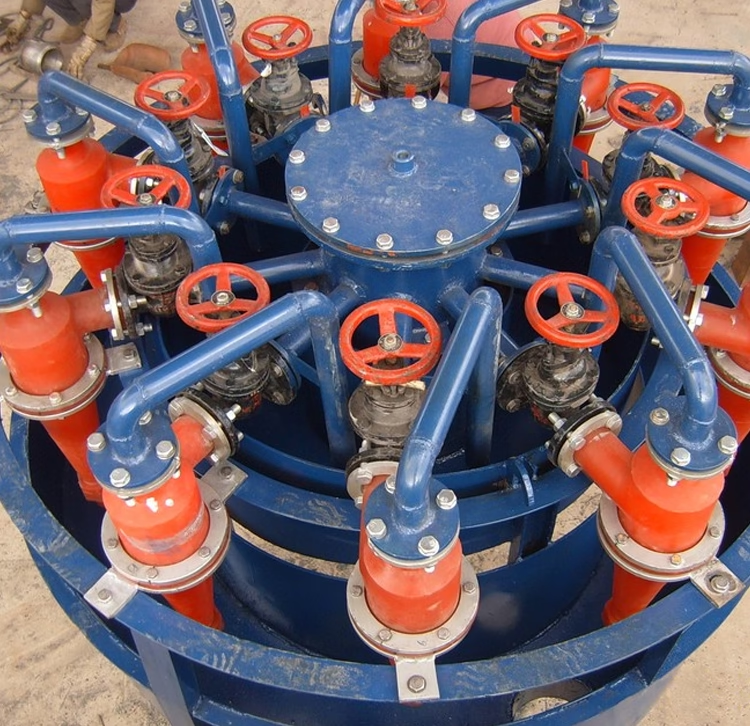
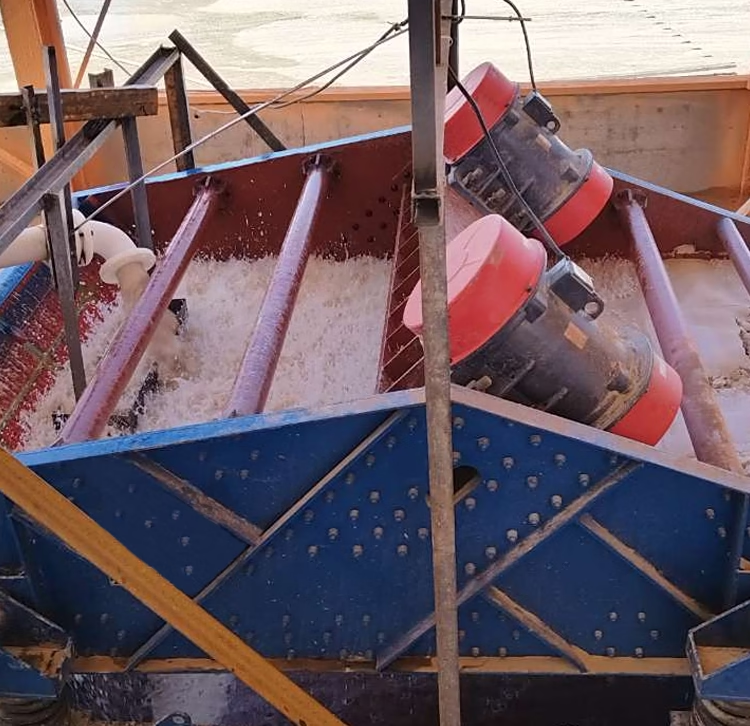
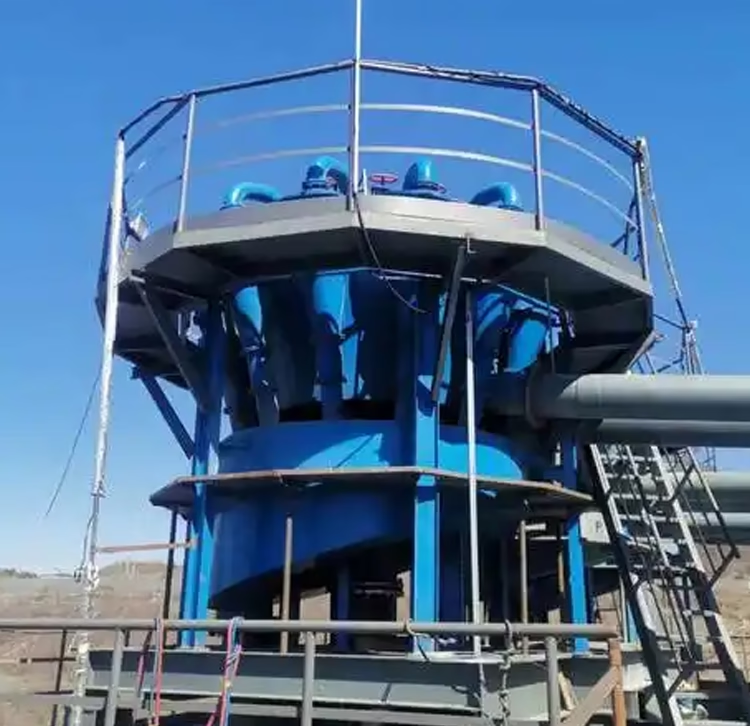
Typically, small-scale projects refer to those processing less than 500 tons of tailings per day, requiring low investment, simple operation, and easy maintenance. Recommended tailings dewatering equipment combination: Hydrocyclone + High-Frequency Dewatering Screen/Small Belt Filter Press. This setup offers a compact footprint, low investment, and minimal energy consumption. However, it may result in lower recovery rates and less clear effluent, potentially requiring a small settling pond for water treatment.
Process Flow:
Separation: First, convey tailings to the hydrocyclone to separate coarse particles and increase concentration.
Dewatering: For tailings with high coarse particle content, a high-frequency dewatering screen can be used to produce dry residue with approximately 18% moisture content. For tailings with high fine particle content or requiring higher dryness, a small chamber filter press or belt filter press can be used to produce filter cakes with lower moisture content. II. Medium-Scale Projects Medium-scale projects typically handle 500-2000 tons of tailings per day. Recommended dewatering equipment combination: High-efficiency thickener + chamber filter press. This combination is currently the most classic and widely applied, featuring mature technology, excellent effluent quality, and recovery rates exceeding 85%. The drawback is the high investment cost of the filter press, but it delivers stable processing performance and comprehensively resolves tailings safety issues. Process Flow:
2. Medium-Sized Projects
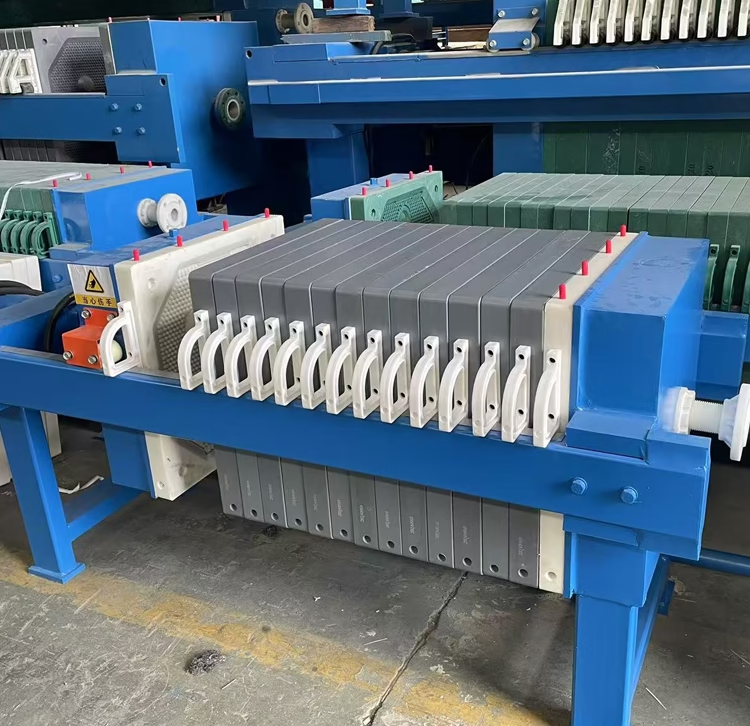
Medium-scale projects typically handle 500-2000 tons of tailings per day. Recommended dewatering equipment combination: High-efficiency thickener + chamber filter press. This combination is currently the most classic and widely applied, featuring mature technology, excellent effluent quality, and recovery rates exceeding 85%. The drawback is the high investment cost of the filter press, but it delivers stable processing performance and comprehensively resolves tailings safety issues.
Process Flow:
Separation: Tailings slurry enters the high-efficiency thickener, where flocculants are added to achieve efficient solid-liquid separation.
Dewatering: Treated tailings proceed to the plate-and-frame filter press, which produces a solid filter cake with moisture content below 15% under high pressure.
Thickener
Belt-Filter-Press
Hydrocyclone
3. Large-Scale Projects
For projects requiring daily tailings processing exceeding 2,000 tons with high demands for both capacity and continuity, the recommended tailings dewatering equipment combination is: hydrocyclone group + high-efficiency thickener + multiple filter presses/centrifuges. Although this combination involves significant investment and system complexity, it achieves lower operational costs per unit processed. It enables “tiered processing tailored to specific needs,” maximizing resource utilization.
Process Flow:
Sorting: Tailings slurry passes through the cyclone group to classify coarse and fine particles, reducing the burden on subsequent stages.
Thickening: The classified slurry enters a large high-efficiency thickener for deep concentration.
Dewatering: Slurry discharged from the thickener bottom flows into a chamber filter press for dewatering. For tailings with uniform particle size and low viscosity, large centrifuges or multiple belt filter presses can also be used for dewatering.
Conclusion
CHUNLEI Machinery provides mineral processing and dewatering solutions, offering a comprehensive range of tailings dewatering equipment, particularly thickening machines and filter presses. Should you have any tailings-related challenges, feel free to consult us anytime. Our experienced engineers will tailor a modern, safe tailings dewatering system specifically for your needs.
Calcium carbonate mills, also known as calcium carbonate grinders or calcium carbonate grinding mills, primarily grind calcium carbonate minerals into various powders suitable for diverse industrial applications. Calcium carbonate is an in...
Weight: 14-370 tonsOutput: 1.5-110 tons/hourPower: 55-3550 kWAdvantages: Fully automatic, high efficiency, etc.
A cement ball mill is a type of cement grinding machine, also known as a cement grinder. It is primarily u...
When designing and investing in an efficient and profitable aggregate production line, selecting the core crushing equipment is undoubtedly critical. Choosing the wrong crusher can lead to increased maintenance and downtime costs, compromised pro...
Gypsum powder is a white or grayish-white powder material produced from natural gypsum or industrial by-product gypsum through processes such as crushing, calcination, and grinding. As a vital raw material in the modern building materials industr...
Welcome to Chunlei machinery website. We are a leading manufacturer and exporter of mining machinery in China with more than 30 years history in China.
We offer you one-stop solutions: online consultation --- customized solutions --- fast delivery --- comprehensive after-sales service
 Chunlei Mining Machinery