Kaolin, also known as “china clay,” is a white, fine-grained clay primarily composed of kaolinite minerals. Alongside mica, quartz, and calcium carbonate, it ranks among the four major non-metallic minerals. Possessing excellent plasticity, refractory properties, adsorption capacity, and stability, it finds extensive applications in ceramics, papermaking, coatings, rubber, construction materials, and cosmetics industries. This article focuses on the process flow and core equipment of kaolin grinding plants.
From Ore to Fine Powder: Detailed Explanation of Core Processes in Kaolin Grinding Plants
As the bridge connecting raw ore to high-end applications, the core processes in kaolin grinding plants determine the final product quality. Every step from crushing to calcination requires precise control. The value of kaolin is closely related to its particle size—the finer the particles, the higher the value.
Klinker Mill Process Flow
From raw ore to finished powder, kaolin undergoes a complete processing chain including primary crushing, fine grinding, classification separation, and calcination.
Raw Material Preparation and Crushing Raw kaolin ore undergoes coarse crushing in a jaw crusher, followed by medium and fine crushing in a hammer crusher. The crushed material is screened to remove impurities and substandard particles. Soft kaolin requires no crushing and can proceed directly to subsequent stages.
Grinding Processing (Core Stage) Grinding plants select different pulverization methods based on final product specifications. Common approaches include wet grinding with ball mills or dry grinding with Raymond mills. These methods yield distinct particle morphologies and may be combined as needed.
Purification and Bleaching This step is optional based on product requirements. Products demanding high whiteness undergo chemical bleaching. Wet processes typically incorporate hydrocyclones for sand removal and classification purification.
Dewatering and Drying The wet-ground slurry is dewatered using filter presses before entering dryers or rotary kilns to produce dry powder.
Core Equipment of Kaolin Grinding Plants
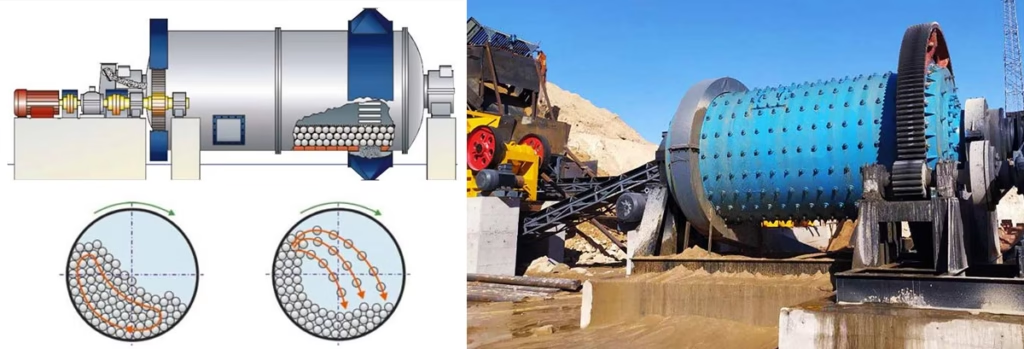
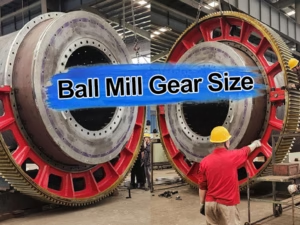
Ball Mill: The Mainstay of Wet Grinding
Ball mills are suitable for large-scale continuous production and can process materials of varying hardness and moisture content. They are particularly favored for wet grinding processes when producing ultrafine powders with high fineness requirements and narrow particle size distribution. The grinding process achieves refinement of kaolin slurry through rotational impact within the cylinder, with the resulting fineness meeting the demands of high-end coating-grade kaolin for papermaking.
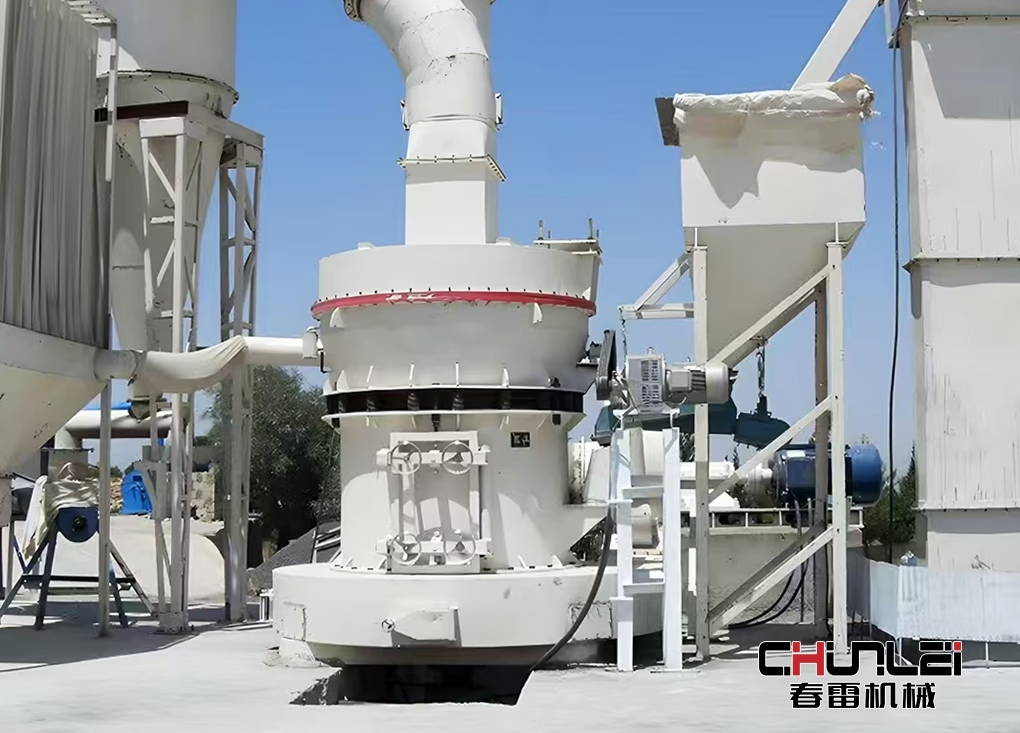
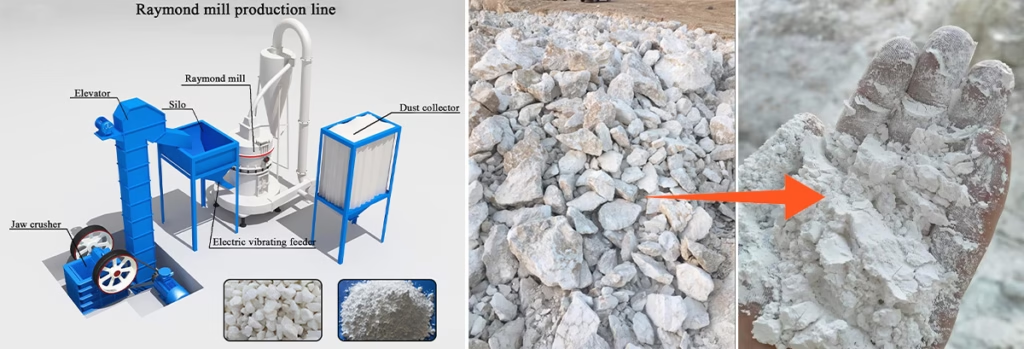
Raymond Mill: The Mainstay of Dry Grinding
Raymond mills suit small-to-medium production lines, processing non-flammable/non-explosive mineral materials with Mohs hardness below 7 and moisture content under 6%. As the mainstream equipment for kaolin dry processing, it crushes materials through compression between grinding rollers and rings. It features a compact footprint and high grinding efficiency.
Equipment Selection and Process Optimization Recommendations
Select process routes based on product positioning:
Standard ceramic or filler-grade products can use “dry Raymond milling” to reduce costs;
Recommend energy-efficient ball mills (e.g., ceramic ball mills), variable frequency control systems, and waste heat recovery units to lower energy consumption and carbon emissions. ● Smart Upgrades:
Implement DCS or PLC automation systems for real-time monitoring and automatic adjustment of grinding parameters, enhancing product quality stability.
Conclusion
Kaolin grinding plants transform natural ore into high-value products through crushing, grinding, classification, and drying processes. Ball mills and Raymond mills, as core equipment, ensure dual improvements in product fineness and production capacity. CHUNLEI Machinery remains committed to providing customized kaolin processing solutions, backed by automated production lines and an experienced technical team. Should you have related requirements, please feel free to contact us. We will help you achieve both cost reduction and efficiency gains while advancing sustainable development.
The gold ore CIL carbon-in-leach process primarily involves simultaneous leaching and adsorption, achieving gold recovery rates exceeding 90% while simplifying the workflow. Within the field of gold mineral processing technology, it stands as the...
There are two kinds of ball mill gears: large gear and small gear, and the large and small gears of ball mill are its important transmission parts, which are responsible for transmitting the power of the motor to the cylinder, so as to d...
With over 30 years in mineral processing, CHUNLEI has observed that fine gold recovery rates in many placer gold operations fall below 50%. Most of this loss stems from technical reasons. True purification requires optimizing the entire washing p...
The current sand and gravel market faces high demand but limited natural sand resources and rising prices. Conventional sand-making production lines suffer from low output and inconsistent quality. When searching for “clinker sand-making plants,”...
Welcome to Chunlei machinery website. We are a leading manufacturer and exporter of mining machinery in China with more than 30 years history in China.
We offer you one-stop solutions: online consultation --- customized solutions --- fast delivery --- comprehensive after-sales service
 Chunlei Mining Machinery