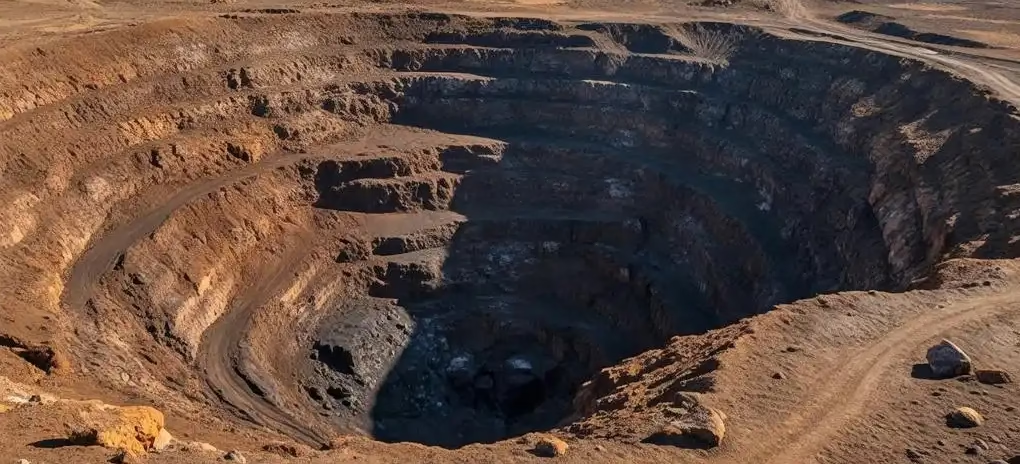
Titanium ore processing is a complex and precise operation that presents challenges alongside significant opportunities. Efficient separation forms the foundation for transforming raw ore into high-value concentrates. Experience teaches us that details determine success or failure—every step matters, and optimizing each stage offers an opportunity to redefine efficiency and value. This article reveals key strategies for enhancing production efficiency and value.
The Importance of Titanium Ore and Its Beneficiation Value
Titanium possesses steel-like strength yet remains lightweight, coupled with exceptional corrosion resistance, making it indispensable across numerous industries. Consequently, the beneficiation of titanium ore is critically important. This process separates and purifies key components from impurities within the raw ore, transforming natural rock into high-value materials.
What is Titanium?
Titanium exists in multiple minerals, with ilmenite (FeTiO₃) and rutile (TiO₂) being the most common. Ilmenite is an iron-titanium composite oxide, while rutile is pure titanium dioxide. Titanium from these minerals holds indispensable positions in aerospace, defense, and medical applications due to its high strength and lightweight properties. Titanium dioxide is a premium white pigment widely used in plastics, paper manufacturing, and numerous everyday products. CHUNLEI, with years of deep expertise in this industry, understands the critical challenges at every stage and provides comprehensive process design and complete equipment solutions.
Beneficiation of Different Titanium Ores
Ilmenite exists in two forms: primary rock ore and placer sand ore, each requiring distinct processing approaches. Primary rock ores are hard with tightly intergrown minerals, requiring multiple stages of crushing and grinding to extract titanium minerals. Alluvial sands are loose, with titanium minerals present in a free state, allowing extraction without extensive grinding. Understanding the ore type is essential for designing an efficient beneficiation process. Failure to do so can result in low recovery rates and excessive investment costs.
Titanium Ore Beneficiation Technology and Principles
To separate target minerals from gangue, one must understand their distinct physical and chemical properties, including specific gravity, magnetic properties, and electrical conductivity. Employing multiple methods synergistically often yields superior results, ensuring both recovery rates and concentrate quality. Each step in transforming raw ore into high-value products is critical, forming the foundation of titanium ore beneficiation through these core processes.
Gravity Separation
Magnetic Separation
Floating Separation
Core of Gravity Separation
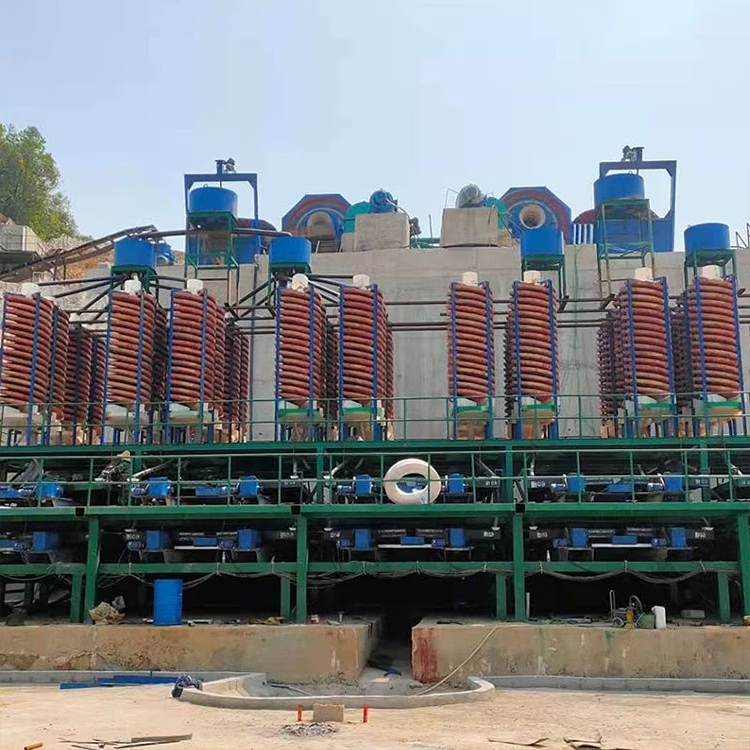
Gravity separation utilizes density differences to segregate minerals, serving as the initial step in mineral processing. It is particularly suited for placer deposits or minerals with coarse grain sizes. This stage primarily employs spiral chutes, centrifuges, hydrocyclones, and shaking tables. These devices perform preliminary separation, removing large volumes of low-grade waste rock. This significantly reduces the load on subsequent stages, lowers grinding energy consumption, and decreases the feed volume for magnetic separation or flotation, thereby reducing overall operational costs.
High-Efficiency Magnetic Separation
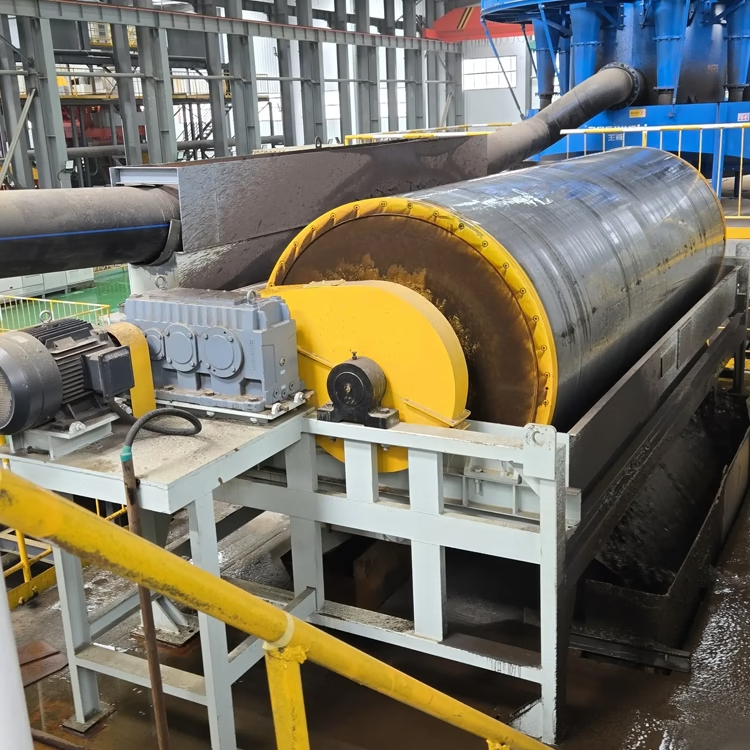
Titanium minerals (such as ilmenite) exhibit weak magnetism, making them suitable for magnetic separation. This method effectively separates ilmenite from non-magnetic minerals (like quartz) while also distinguishing it from strongly magnetic minerals (such as magnetite). An efficient magnetic separation process must adhere to the principle of “stepwise optimization.” Blindly increasing magnetic field strength does not always yield optimal results. First, employ a Low Intensity Magnetic Separator (LIMS) to remove strongly magnetic minerals like magnetite. This step protects subsequent high-intensity separation equipment and prevents magnetite contamination of the ilmenite concentrate. Subsequently, utilize a High Intensity Magnetic Separator (WHIMS) to enrich and purify the ilmenite. CHUNLEI’s magnetic separation equipment is specifically engineered for such fine separation tasks, dedicated to achieving efficient and pure separation of ilmenite.
Fine Separation via Flotation
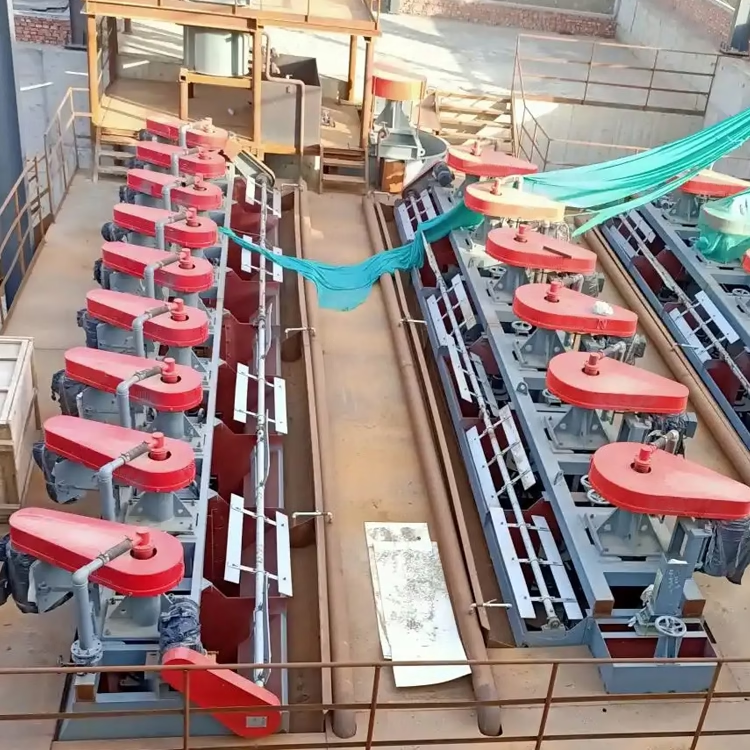
Flotation is a fine separation technology that achieves precise sorting based on differences in mineral surface properties. This method is particularly suitable for complex ores, effectively separating fine minerals while also addressing the challenge of separating minerals with similar densities or magnetic properties. Flotation primarily involves adding selective collectors to enhance the hydrophobicity of target minerals. This causes them to attach to bubbles and rise to the liquid surface, forming enriched froth. Collecting and processing the froth product yields high-grade concentrate. CHUNLEI’s flotation machines, renowned for their stable performance and efficient design, ensure smooth and reliable separation processes, earning strong customer preference.
Core Equipment for Titanium Ore Beneficiation
Crushing and Grinding
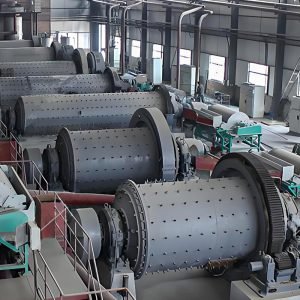
Crushing reduces the size of large material blocks, while grinding further refines particles to achieve liberation: separating target minerals from gangue to form individual particles suitable for separation. For hard rock ores, we typically employ jaw crushers for primary crushing, followed by cone crushers for secondary and tertiary crushing. The grinding stage is accomplished by highly efficient and reliable ball mills or rod mills. Selective liberation is the process criticality, requiring precise control of grinding fineness to avoid over-grinding. Excessive grinding not only increases energy consumption but also produces difficult-to-process ultrafine particles that impair separation efficiency. High-pressure roller mills (HPGR) excel in this process, as their laminar crushing action promotes internal fracturing of minerals, significantly enhancing liberation efficiency. CHUNLEI Machinery is committed to providing reliable solutions for your mineral processing needs, from robust crushing equipment to energy-efficient grinding systems, including high-performance ball mills and rod mills.
Gravity Separation Equipment
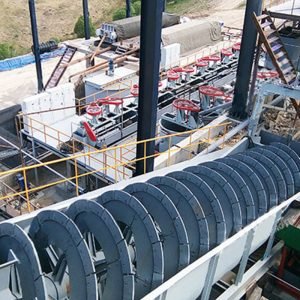
Gravity separation equipment achieves efficient sorting by exploiting density differences between materials. Jigging machines suit coarser particle sizes, using pulsating water flow to stratify and separate minerals; shaking tables target finer particles through reciprocating motion of the vibrating deck. Both achieve precise separation based on mineral density and particle size. Spiral chutes feature a simple structure and excel in pre-concentration, ingeniously combining gravity and friction to effectively remove light gangue while concentrating heavy target minerals. This pre-treatment step is crucial, laying the foundation for subsequent fine separation processes and comprehensively enhancing overall separation efficiency. CHUNLEI’s jig and shaking table equipment deliver stable performance, providing reliable separation solutions.
Magnetic Separation Equipment
Precise mineral separation using magnetic force is our core solution for titanium ore purification. Wet low-intensity magnetic separators first efficiently remove strongly magnetic minerals (such as magnetite). Wet high-intensity magnetic separators then capture weakly magnetic ilmenite for fine recovery. For dry materials, we also provide specialized dry magnetic separation equipment to meet diverse production needs. CHUNLEI’s magnetic separator series covers the full gradient of magnetic strength and process scenarios, ensuring high purity and high yield of titanium concentrate with reliable performance to help you achieve both efficiency and value enhancement.
Flotation Equipment
Flotation machines utilize reagents to enhance mineral hydrophobicity, efficiently separating target minerals from fine-grained materials. Flotation cells come in multiple types: mechanical flotation cells feature agitation devices that generate bubbles through vigorous mixing, ensuring thorough slurry blending; column flotation cells leverage counter-current principles to produce uniform microbubbles and form deeper foam layers, enhancing separation precision. This equipment is critical for recovering fine-grained titanium ores while effectively removing minute impurities, ensuring final concentrates meet stringent quality standards. CHUNLEI offers a comprehensive range of flotation models tailored to diverse process requirements, delivering reliable mineral separation solutions.
Dehydration and Drying Equipment
After separation, both concentrate and tailings contain residual moisture. The dehydration process removes most free water, while drying further eliminates residual humidity. Thickeners initiate operations by promoting solid particle settling while recovering circulating water. Filters subsequently reduce moisture content further. Rotary dryers efficiently remove surface moisture from concentrates, meeting market sale or downstream processing requirements. For tailings, thorough dewatering is critical—reducing environmental impact while facilitating waste disposal or resource recovery. To prevent slurry clogging in water systems, hydrocyclones and high-efficiency clarification systems can be employed for desliming, significantly enhancing overall operational stability.
CHUNLEI provides comprehensive equipment and solutions spanning dewatering, filtration, and drying, enabling precise moisture control, efficient resource recovery, and optimized operational costs.
How to Improve Titanium Ore Recovery Rate and Concentrate Grade?
Enhancing recovery rate means extracting more target metals from raw materials. Improving grade ensures purer products with fewer impurities. One effective approach is through intelligent process control. Deploying real-time monitoring sensors helps accurately capture production line dynamics. Integrating adaptive control systems enables continuous stabilization of optimal production conditions. Another approach involves optimizing flotation reagent ratios and addition strategies to enhance mineral separation selectivity. Meticulous management of flotation water quality is particularly critical. Slime adhesion hinders target mineral surface exposure, directly impairing separation efficiency. Employing high-efficiency scrubbing equipment, such as custom-designed mixed scrubbing tanks, effectively removes surface slime from minerals, significantly improving separation precision. Additionally, comprehensive recovery of associated minerals often yields substantial economic benefits. High-value elements like cobalt, nickel, and vanadium frequently coexist in most ore types. Strategically designing separation circuits to synergistically recover these components transforms traditional waste into value-added byproducts, thereby improving overall project profitability and resource utilization.
Frequently Asked Questions
Question 1: How to separate low-grade ore with finely dispersed minerals and complex associations with gangue minerals? Answer: Conduct detailed process mineralogy studies to establish a rational crushing and grinding process. Implement a “staged grinding, staged separation” approach to avoid over-grinding.
Question 2: Traditional gravity separation equipment (e.g., spiral chutes) has low recovery rates for fine-grained ilmenite. How can this be addressed? Answer: Introduce enhanced gravity separation equipment such as high-efficiency centrifugal concentrators to recover fine-grained useful minerals; optimize the gravity separation process structure and operating parameters.
Question 3: Ilmenite has moderate floatability and is significantly affected by surface contamination, oxidation, and mud, leading to poor flotation reagent selectivity. Answer: Employ high-efficiency combined collectors (e.g., MOH combined with benzoic acid) and add modifiers (e.g., oxalic acid, sodium silicate) to activate minerals and suppress gangue. Incorporate desliming or scrubbing operations prior to flotation.
Question 4: Floatation foam exhibits stickiness and poor flowability, affecting concentrate grade and recovery rate. Answer: Optimize frother type and dosage, adjust pulp pH and concentration, and use defoamers or dispersants when necessary.
Question 5: Ilmenite possesses weak magnetism, but magnetic properties are easily affected by ore composition and oxidation levels, leading to high middlings circulation and low separation efficiency. Answer: Employ high-gradient magnetic separators as key processing equipment, strictly controlling magnetic field strength and rinse water conditions. Subject magnetic concentrates to regrinding and reprocessing.
Problem 6: How can valuable associated minerals like zircon, rutile, and monazite be effectively recovered? Solution: Design a combined “gravity-magnetic-flotation-electrostatic” process flow, embedding dedicated circuits within the main titanium separation process to achieve comprehensive recovery of multiple minerals.
Problem 7: How to control parameter data when raw ore properties fluctuate significantly? Solution: Strengthen raw ore blending management and introduce automated process monitoring and control systems (e.g., online grade analysis, pH monitoring, automatic chemical dosing) to ensure stable production.
Conclusion
Titanium ore beneficiation is a systematic and meticulous transformation process that elevates raw ore into high-value concentrate. Its success begins with a deep understanding of ore characteristics and relies on the precise selection of process routes. Core processes encompass crushing, grinding, and critical stages such as gravity separation, magnetic separation, flotation, and electrostatic separation. Each step requires efficient, specialized equipment. Scientifically designed process solutions are paramount, balancing technical objectives, economic efficiency, and environmental sustainability. Continuous optimization remains a constant focus—aiming to enhance recovery rates and product grades while advancing green processes and intelligent technologies to achieve synergistic evolution in resource efficiency and industrial development.
CHUNLEI Machinery is China’s leading manufacturer of mineral processing equipment, specializing in B2B solutions. Our product line covers the entire process chain: crushing, grinding, beneficiation, screening, and drying. We provide full-cycle support including design, manufacturing, installation, training, and after-sales service. We are committed to delivering high-quality, customized, and efficient solutions to help clients achieve their operational goals.
Blast furnace slag is an industrial byproduct generated during the ironmaking process in blast furnaces. When smelting pig iron, iron ore reacts at high temperatures with coke, limestone, and other flux agents within the furnace. Impurities in th...
Feldspar Ore Dressing Production Line
Process Introduction According to different types of feldspar minerals and ore properties, Chunlei has developed a series of different feldspar ore dressing processes, including magnetic separa...
Mica Dressing Production Line
Process Introduction Mica beneficiation production line is a set of efficient and environmentally friendly process and equipment combination, which can not only extract high purity mica minerals, but a...
Gold Mine CIP - Carbon in pulp Process
CIP Introduction Gold CIP (Carbon in Pulp) is a non-filtered cyanide carbon slurry process that recovers gold from cyanide slurry through activated carbon adsorption. Gold CIP is the ideal c...
Welcome to Chunlei machinery website. We are a leading manufacturer and exporter of mining machinery in China with more than 30 years history in China.
We offer you one-stop solutions: online consultation --- customized solutions --- fast delivery --- comprehensive after-sales service
 Chunlei Mining Machinery