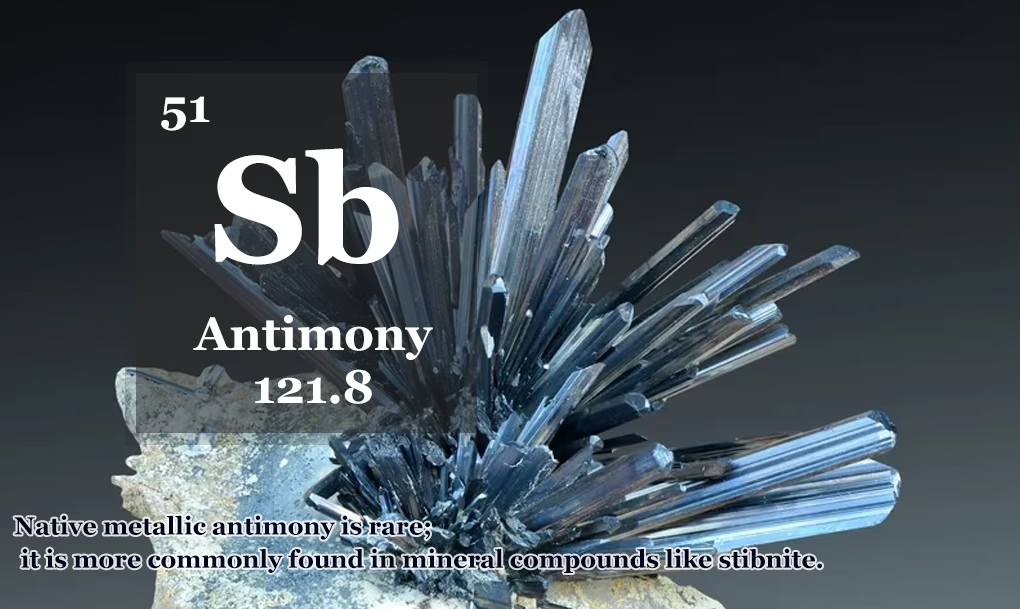
Antimony is a rare metal primarily concentrated in China, where its mining and extraction pose significant challenges. Antimony is ubiquitous in our daily lives and plays a crucial role in industrial, military, and other sectors.
What is Antimony?
Antimony is an element with a silvery-blue luster, chemical symbol Sb, and atomic number 51. It occupies a position between metals and nonmetals. The name antimony derives from two Greek words: “anti” (against) and “monos” (alone), reflecting its ability to form compounds with virtually any other element. Consequently, pure antimony is extremely rare. Antimony compounds find extensive applications in cosmetics and pharmaceuticals. In fact, antimony also plays a vital role in firefighting and clean energy technologies.
This guide comprehensively analyzes antimony’s geological origins, primary ore types, mining processes, and its indispensable role within modern industrial systems.
Chapter 1: How Antimony Ores Form
Magmatic Hydrothermal Type: Underground magmatic activity releases antimony-bearing hydrothermal fluids. As the magma cools, these fluids permeate upward, precipitating antimony deposits in favorable structural settings such as fault zones to form vein-type antimony ore.
Sedimentary-Modified Type: Surface antimony elements are incorporated into sedimentary rocks through sedimentation. Subsequent tectonic movements or hydrothermal activity activate antimony migration and re-enrichment.
Other Types: Includes magmatic, metamorphic, and weathering-leaching types, associated with magmatic intrusions, metamorphism, and surface weathering processes, respectively.
Antimony is often discovered as a byproduct of other metal mining operations, such as gold, silver, and lead ore extraction. Major deposits are distributed in China, Russia, Tajikistan, and Bolivia.
Chapter 2: Major Antimony Ore Minerals
While over 100 minerals contain antimony, only a few are of economic importance.
1. Stibnite (Sb₂S₃)
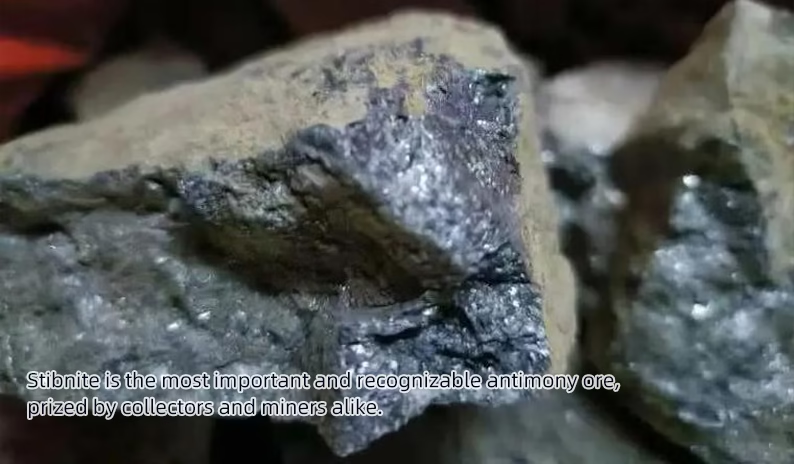
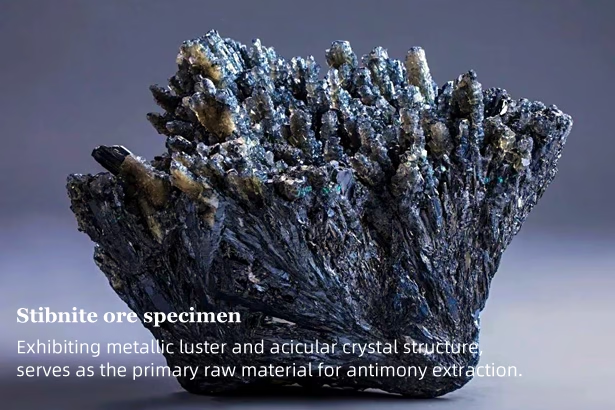
The primary ore of antimony. Stibnite forms striking, metallic gray, needle-like crystals or massive aggregates. It has a lead-gray color, a brilliant metallic luster, and is soft enough to mark paper.
2. Valentinite (Sb₂O₃)
An oxidation product of stibnite, valentinite forms white, gray, or red orthorhombic crystals. It is an important source of antimony trioxide, a crucial industrial compound.
3. Cervantite (Sb³⁺Sb⁵⁺O₄)
A yellow or red antimony oxide mineral found in the oxidized zones of antimony deposits.
Complex sulfide ores containing both lead and antimony. These are important sources where antimony is recovered as a by-product of lead mining.
Chapter 3: From Ore to Metal: Processing Antimony
Antimony ore primarily exists as stibnite (Sb₂S₃), commonly occurring in low-temperature hydrothermal deposits.
Stage 1: Crushing and Grinding
Mining Methods: Depending on the ore body’s burial depth, either open-pit or underground mining may be employed. For vein-type deposits, high-performance hydraulic rock drills and low-profile mining loaders are essential.
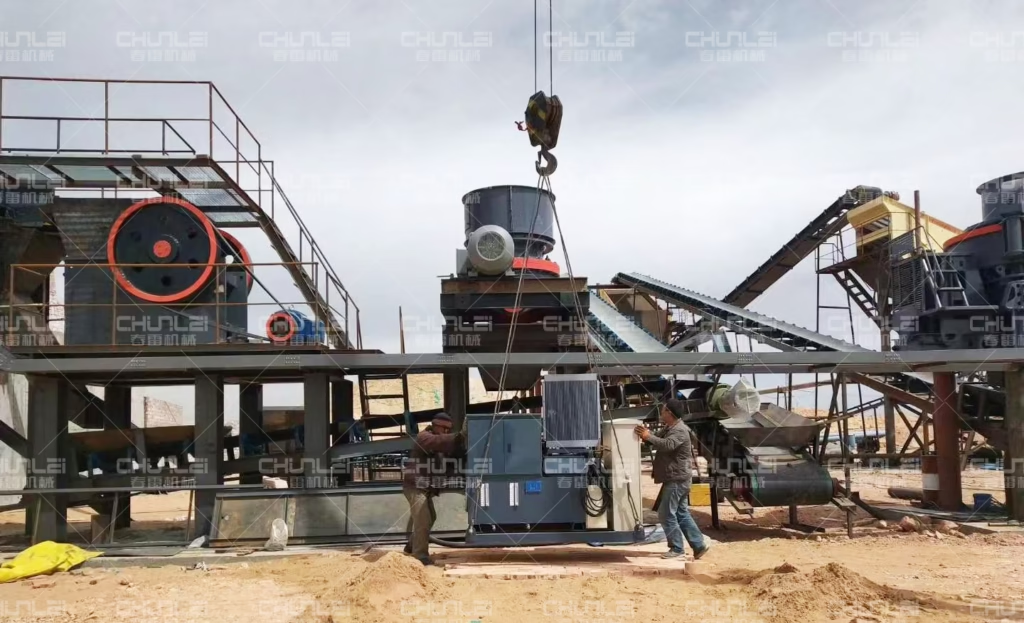
Crushing and Grinding: Raw ore undergoes primary crushing in jaw crushers, followed by secondary crushing in cone crushers. It is then finely ground in ball mills or vertical roller mills to a particle size suitable for beneficiation (typically exceeding 70% passing -200 mesh).
This is the core process determining economic viability, aiming to enrich low-grade ore (typically 1-5% Sb) into high-grade antimony concentrate (45-60% Sb).
Flotation (Main Process): Exploits stibnite’s surface hydrophobicity. Finely ground ore slurry is mixed with collectors (e.g., xanthates) and frothers in a flotation cell, then aerated. Antimony particles attach to bubbles to form froth layers, which are skimmed off for collection. High-efficiency, energy-saving flotation machines and precise automatic reagent dosing systems are key tools for boosting recovery rates and reducing costs.
Gravity separation (auxiliary method): For ores with coarse-grained mineralization, shaking tables or jigs can perform pre-concentration to discard waste material early, reducing subsequent processing loads.
Equipment keywords: antimony ore flotation process, large-scale flotation machines, mineral recovery optimization, automated reagent control systems.
Stage 3: Smelting and Processing
This stage transforms antimony concentrate into metallic antimony or commercial antimony trioxide (Sb₂O₃).
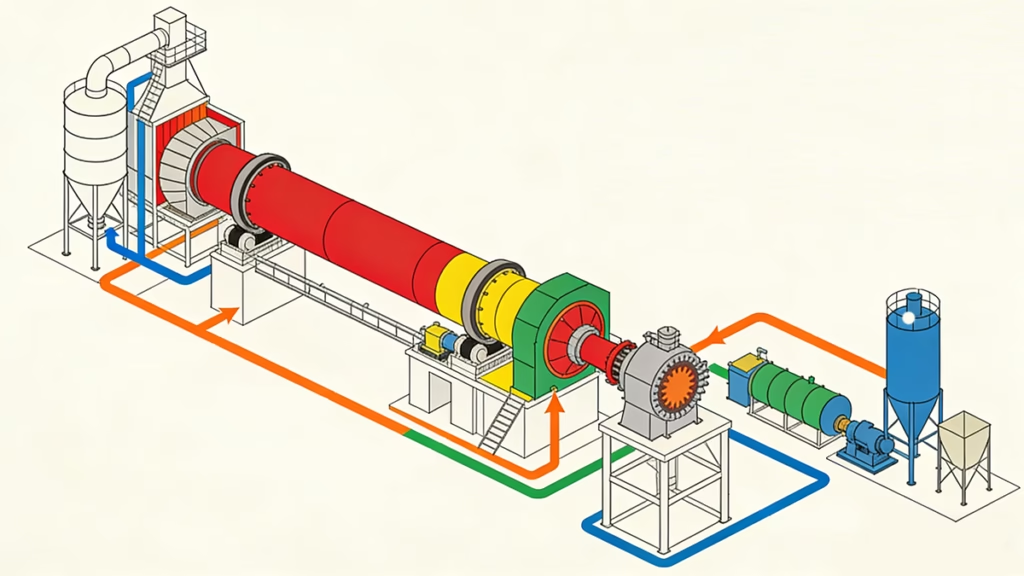
Process Flow: Antimony concentrate is heated in a roasting furnace (e.g., rotary kiln, blast furnace) under an oxygen-deficient or weakly oxidizing atmosphere (850-1000°C). Stibnite volatilizes into gaseous Sb₂O₃, which is then collected in a condensation system (e.g., baghouse dust collector) to produce antimony white.
Core Equipment: Rotary kilns are preferred for continuous operation, high throughput, and recovery rates exceeding 90%. Critical components include kiln head/tail sealing, precise temperature control, and efficient dust collection systems.
2. Reduction Smelting:
For producing metallic antimony, antimony white is mixed with a reducing agent (coke/coal) and a fluxing agent (soda ash) in a reverberatory furnace (around 1200°C) for smelting. The reduction reaction occurs: 2 Sb₂O₃ + 3 C → 4 Sb + 3 CO₂. This yields crude antimony.
Schematic Diagram of Volatile Roasting of Antimony Concentrate
3. Hydrometallurgical Process (Environmental Trend): Antimony concentrate is leached using alkaline sodium sulfide or acidic chloride solutions, followed by electro-deposition or displacement to obtain metal. This method demonstrates strong adaptability to complex ores and low-grade ores while being environmentally friendly.
Chapter 4: Why Antimony Matters: Critical Modern Applications
Antimony’s unique properties make it irreplaceable in several sectors.
Flame Retardants (~70% of global use): Antimony trioxide (Sb₂O₃) is a powerful synergist used with halogenated compounds in plastics, textiles, rubber, and electronics (like circuit boards and device casings) to prevent fire spread.
Lead-Acid Batteries: Antimony reinforces lead grids in automotive and industrial batteries, enhancing performance and cycle life. This application is vital for the stop-start systems in conventional vehicles and remains a major market.
Chemicals & Catalysts: Employed in producing polyethylene terephthalate (PET) plastic as a polymerization catalyst and in pigments for paints and ceramics.
Semiconductors: High-purity antimony is used in manufacturing diodes, infrared detectors, and Hall-effect devices.
National Defense: Utilized in ammunition primers, tracer bullets, night-vision goggles, and armor-piercing projectiles.
Chapter 5: Chapter 5: The Global Antimony Market & Future Outlook
China has dominated antimony production and reserves for decades, controlling over 50% of the world’s supply. This concentration poses a supply chain risk, prompting the USA, EU, and other nations to classify antimony as a critical mineral.
Future trends include:
Increased Recycling: Recovery of antimony from lead-acid batteries and flame-retardant plastics is becoming essential.
Exploration in New Jurisdictions: Projects are advancing in countries like Canada, Australia, and the United States to diversify supply.
Green Energy Demand: Antimony is being researched for use in next-generation liquid metal batteries for large-scale grid energy storage, linking its future directly to the renewable energy transition.
Conclusion
From its ancient use as kohl eyeliner to its modern role in fire safety and emerging clean energy technology, antimony’s journey is remarkable. Its geology is complex, its extraction requires precision, and its applications are vital to modern life. As global industries and governments seek to secure reliable, ethical supplies of critical materials, understanding antimony—from its ores to its end-uses—becomes increasingly important.
CHUNLEI’s expert team stands ready to customize tailored processes for you, offering one-stop services from design to equipment supply. Inquiries welcome!
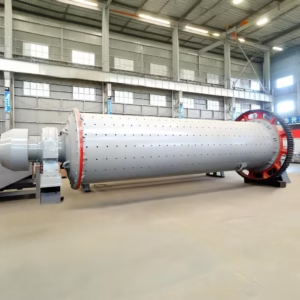
Ceramic ball mills are grinding equipment that replaces traditional metal liners with ceramic liners and uses ceramic balls (such as alumina, zirconia, silicon carbide, etc.) as grinding media. Material is finely p...
The thermal balance of cement ball mills refers to the calculation and analysis of the difference between heat input (such as physical heat carried by materials and mechanical heat generated during grinding) and heat release (such as heat ...
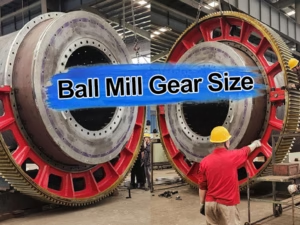
There are two kinds of ball mill gears: large gear and small gear, and the large and small gears of ball mill are its important transmission parts, which are responsible for transmitting the power of the motor to the cylinder, so as to d...
The iron ore crushing process typically involves feeding into primary and secondary crushers, screening, fine crushing, and dry separation. For economic efficiency, finer ore fed into the dry separator generally yields a higher proportion of iron...
 Chunlei Mining Machinery