 Chunlei Mining Machinery
Crushing Production Line: Impact Crusher or Cone Crusher?
It is widely known that in aggregate production lines, the jaw crusher unquestionably handles primary crushing. However, for secondary and tertiary crushing, should one choose an impact crusher or a cone crusher? Selecting the appropriate equipment not only reduces costs but also produces higher-quality products. This guide comprehensively analyzes both options based on their working principles, suitable materials, and applications.
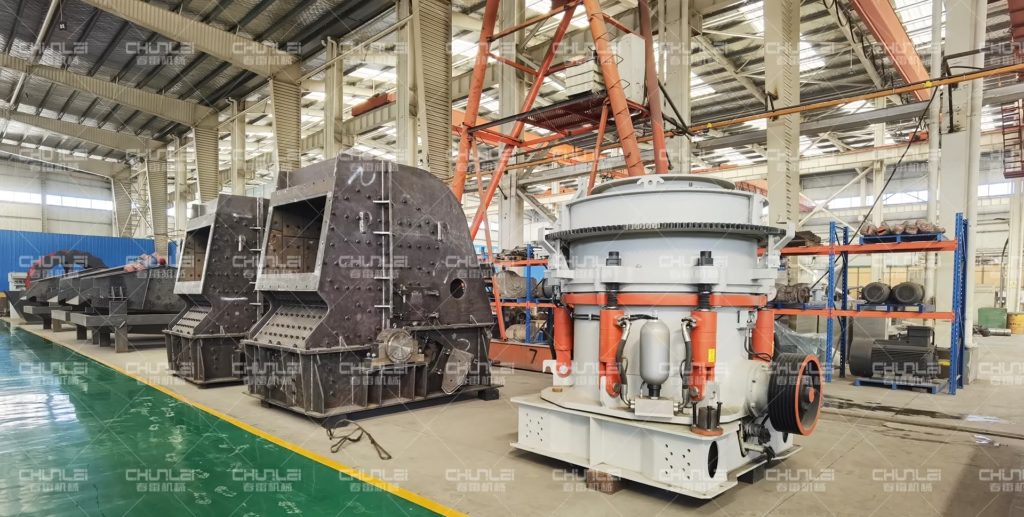
Similarities Between Impact Crushers and Cone Crushers
- During the crushing stage, both impact crushers and cone crushers are commonly employed for secondary or tertiary crushing after primary jaw crushing. Both utilize mechanical force to reduce coarse ore into smaller particles suitable for subsequent processing.
- In terms of application scenarios, both impact crushers and cone crushers are widely used in mining, building materials, metallurgy, chemical, and other industries.
- Regarding ore hardness, there is also overlap between the two, as both can crush medium-hardness ores.
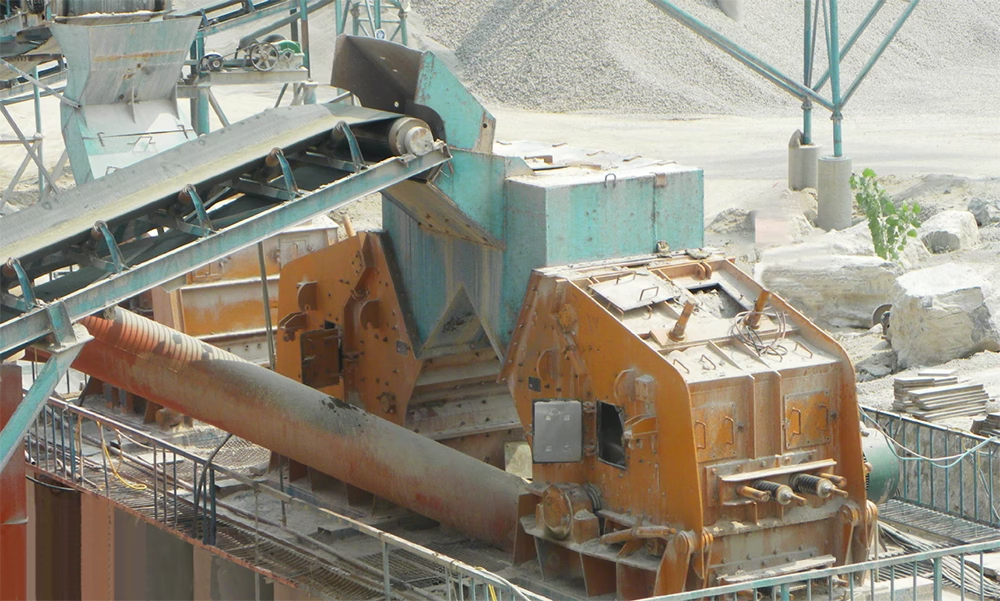
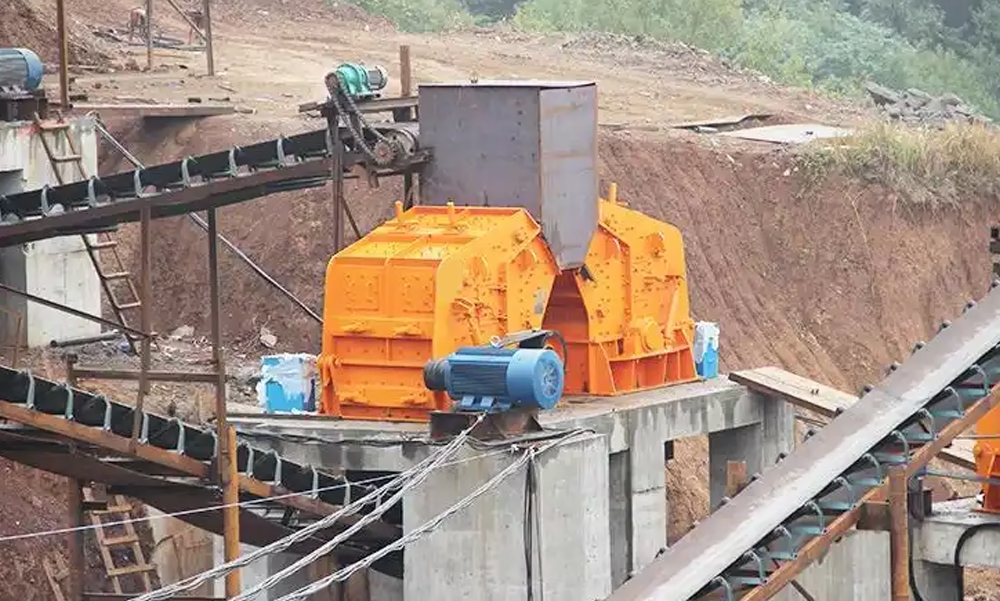
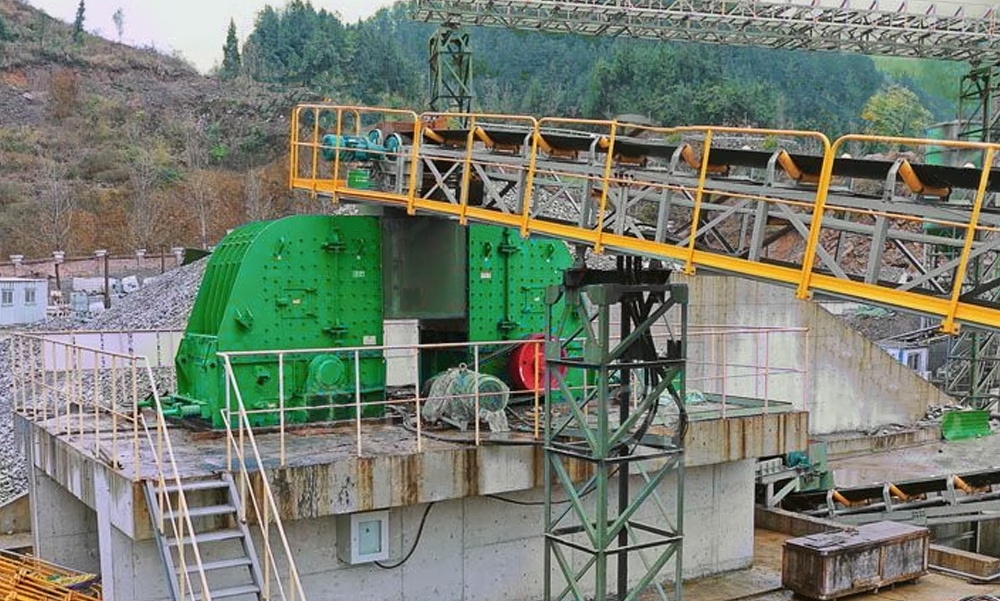
Differences Between Impact Crushers and Cone Crushers
1.Different Crushing Principles
- Impact crushers operate on the principle of impact crushing, primarily relying on “impact.” A high-speed rotating rotor drives impact plates to violently strike the material, causing it to break.
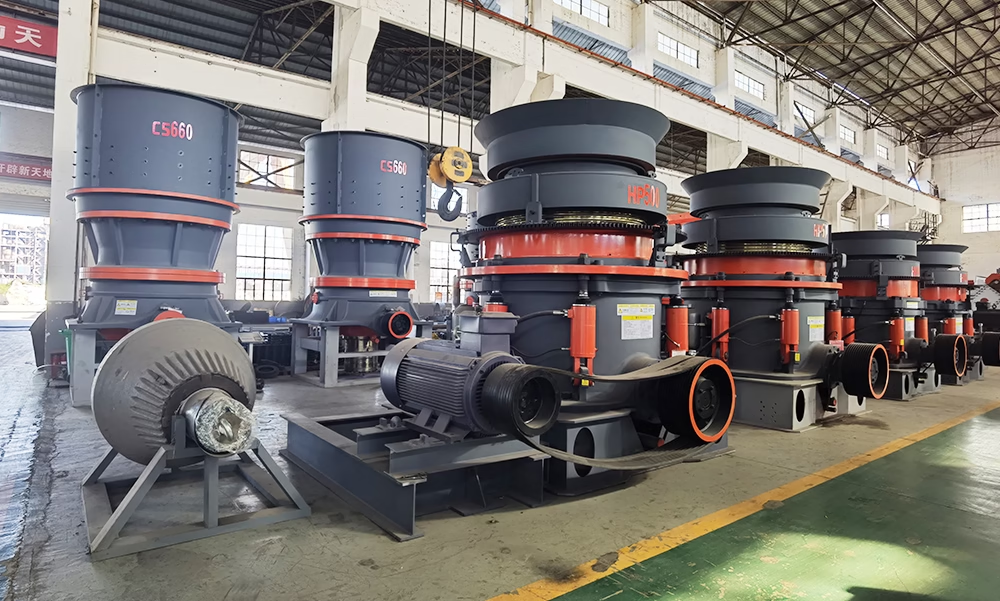
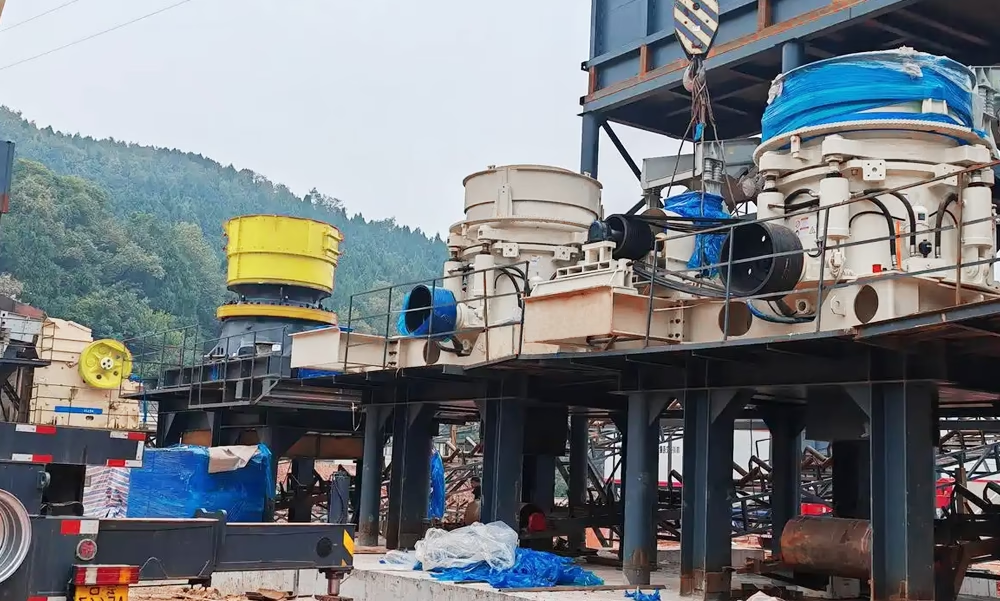
- Cone crushers operate on the principle of layer crushing, primarily relying on “compression and grinding.” Material is subjected to continuous compression, bending, and grinding between the fixed cone and the moving cone, causing it to break.
2.Different Applicable Material Properties
- Impact crushers suit medium-to-low hardness, relatively brittle materials like limestone, dolomite, coal gangue, and construction waste. High-hardness materials cause severe wear.
- Cone crushers handle medium-to-high hardness, highly abrasive materials such as granite, basalt, diabase, and river pebbles. Excessively soft or sticky materials may cause blockages in cone crushers.
Impact crushers rely on “striking” and suit medium-to-low hardness ores; cone crushers rely on “compression” and specialize in medium-to-high hardness materials. While cone crushers can process ores handled by impact crushers, this increases investment costs. Therefore, in secondary crushing stages, select the most cost-effective crushing equipment based on ore characteristics.
| Comparison Items | Impact Crusher | Cone Crusher |
| Core Crushing Principle | Impact Energy Crushing: Material is struck by high-speed rotating blow bars and thrown against the impact plate for secondary or multiple impact crushing. | Laminar Crushing/Compression Crushing: Material is crushed within the crushing chamber formed by the fixed cone and moving cone through repeated compression, bending, and grinding actions. |
| Structure and Operating Method | Relatively simple structure. The rotor drives the blow bars to rotate at high speed, operating on a “striking” principle. | Features a complex and precise structure. The moving cone performs an eccentric swinging motion within the fixed cone, operating on a “kneading and squeezing” principle. |
| Applicable Material Hardness | Suitable for medium-low hardness, soft, and brittle materials. | Suitable for medium-to-high hardness, highly abrasive materials. |
| Examples: Limestone, dolomite, coal gangue, construction waste, etc. Not suitable for high-hardness or highly abrasive materials like granite or basalt (causes severe hammer plate wear). | Examples: Granite, basalt, diabase, quartzite, etc. The preferred choice for hard rock crushing. | |
| Discharge Particle Shape | Produces well-shaped, cubic particles with multiple edges. Impact crushing better follows natural cleavage planes, enhancing aggregate-cement bonding and improving concrete strength. | Particle shape is generally average, with a higher proportion of flaky and needle-like particles. Due to the squeezing crushing mechanism, it tends to produce flattened or elongated particles. |
| Product Fineness Content | High. Impact action generates more stone powder. | Relatively low. |
| Energy Consumption | Relatively low. High energy efficiency when crushing medium-hardness and softer materials. | High. Requires substantial crushing force, typically necessitating larger motor power. |
| Maintenance Costs and Wear Parts | Maintenance is straightforward, but wear parts (hammer plates, impact plates) wear quickly and require frequent replacement. Wear part costs constitute the primary operational expense. | Complex maintenance (requires specialized technicians), but long service life for wear parts (bowls and liners). High initial maintenance costs, but potentially more stable long-term operation. |
| Price | Equipment acquisition costs are relatively low. | Higher equipment acquisition cost. |
| Environmental Performance | Significant dust and noise generation. | Relatively favorable, with lower dust and noise levels. |
| Key Operational Characteristics | Output particle size can be flexibly controlled by adjusting rotor speed and impact plate clearance. Possesses a certain degree of “shaping” capability. | Primarily adjusts discharge size by raising or lowering the moving cone, thereby controlling output particle size. |
Should you choose an impact crusher or a cone crusher for medium-fine crushed stone?
- If your raw material is medium-to-low hardness rock like limestone, and you require high-quality finished particle shape (e.g., for high-strength concrete), or if your investment budget is limited, prioritize an impact crusher.
- If your feed material is high-hardness, highly abrasive rock like granite or basalt, and you prioritize long-term stable production line operation and low wear part consumption, a cone crusher is essential—even with higher initial investment.
In large-scale aggregate production lines, combinations like “jaw crusher + cone crusher + impact crusher” or “jaw crusher + cone crusher + vertical shaft impact crusher” are commonly employed. Such configurations significantly enhance both particle shape and overall efficiency.
Conclusion
In summary, while both impact crushers and cone crushers serve as primary equipment for medium and fine crushing, their underlying principles are fundamentally different. The choice between them isn’t simply a matter of superiority but requires comprehensive consideration of your raw material characteristics, product specifications, and profitability goals.
If you are planning a stone crushing production line or have any other questions, please consult us immediately. We will leverage our professional expertise and service to configure the most capable and efficient “crushing partner” for your production line.
Latest News

Gravity Concentration vs. Flotation for Gold: Which Process Should You Choose?
800In gold beneficiation projects, many mining engineers face a critical question: Why does the final gold recovery rate consistently fall short of expectations, even when grinding fineness and reagent regimes are strictly maintained according t…
-
Gravity Separation for Gold: When Is It Suitable for Gold Ore?
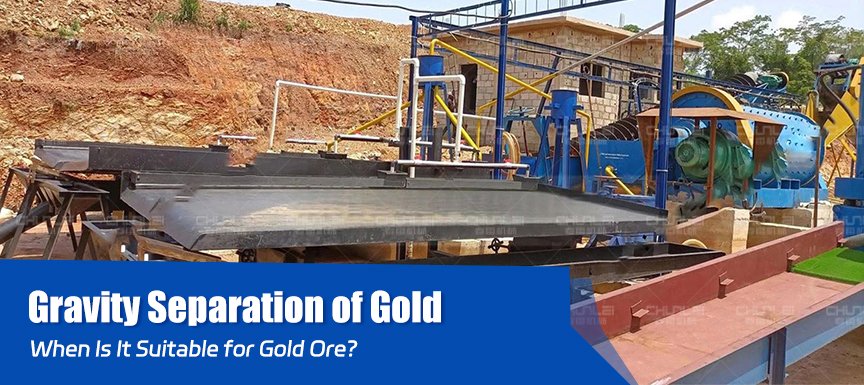
800Many people immediately associate “gold ore” with gravity separation, yet not all gold deposits are suitable for recovery using gravity methods alone. Gravity separation is appropriate for liberated native gold or other heavy minerals that ex…
-
How Classification Affects Gold Grinding Efficiency
800In gold ore grinding circuits, attention is often focused primarily on ball mill capacity, power consumption, and grinding media; however, in actual operation, classification plays an equally critical role in determining grinding efficiency. …
-
Gold Ore Crushing and Grinding: What Equipment Do You Need?
800When designing a gold ore processing line, my clients often ask which crushers and mills to purchase. However, the equipment selection should actually be based on a thorough understanding of the ore characteristics. Issues in many projects do…
loading…
已经是到最后一篇内容了!