 Chunlei Mining Machinery
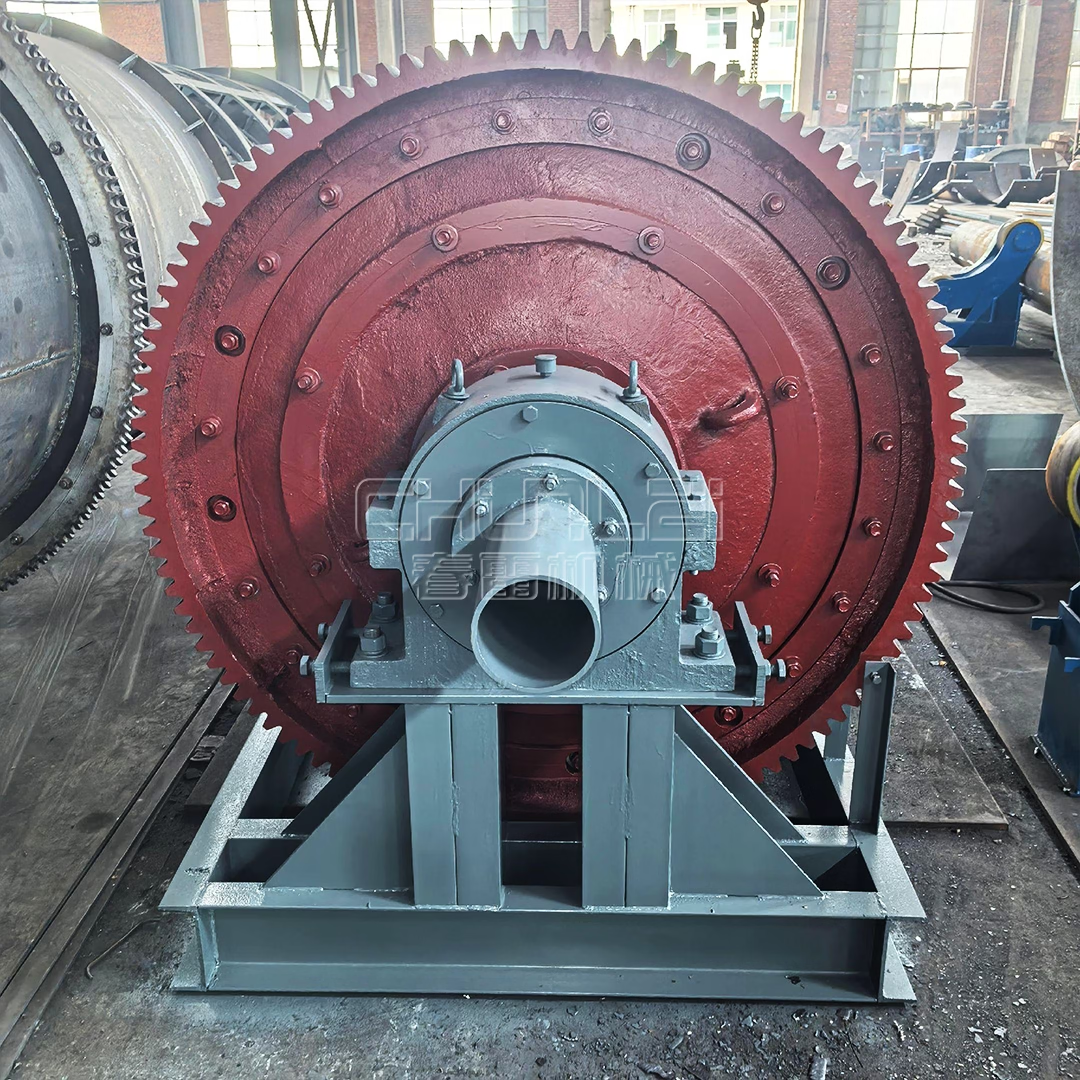
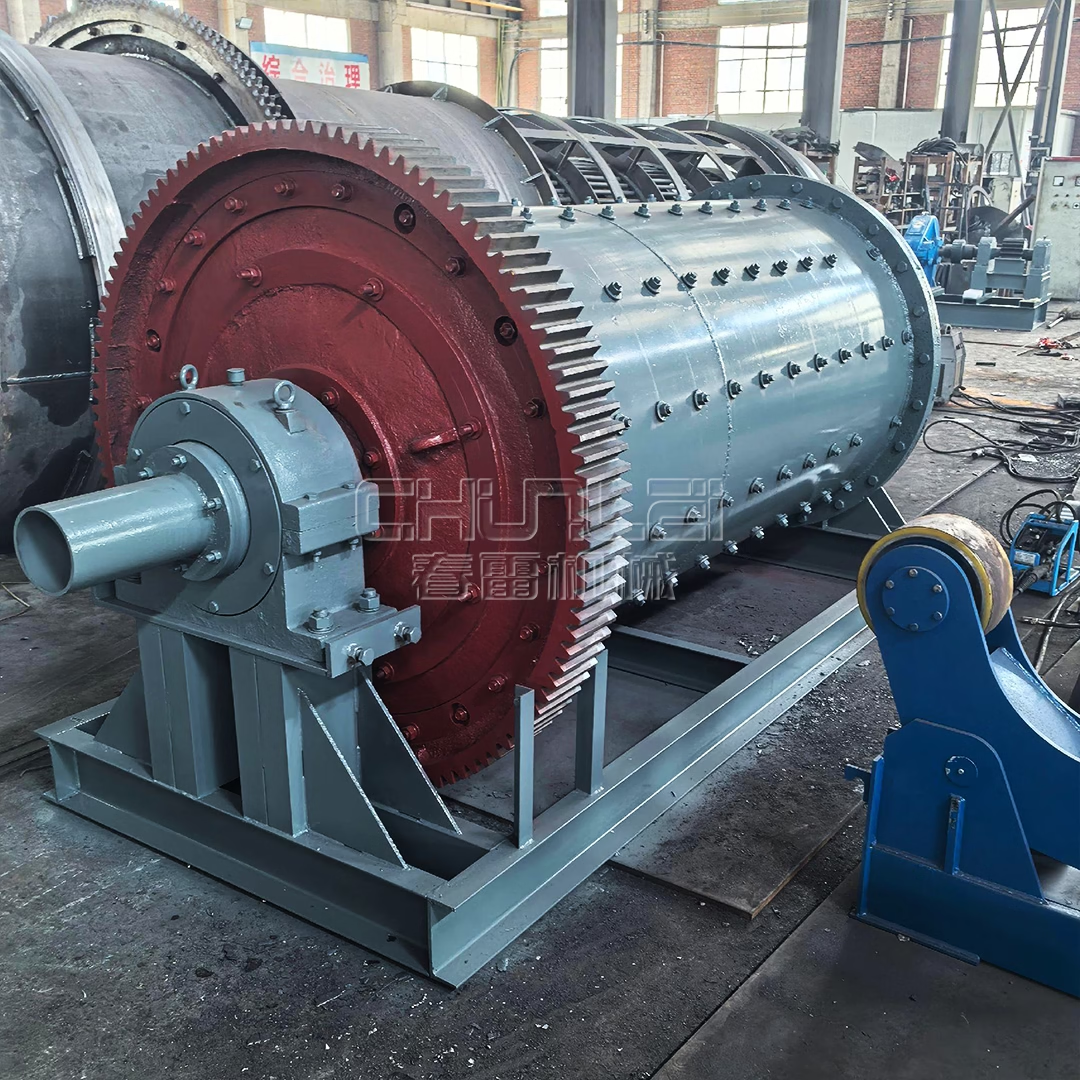
Wet Ball Mill
A variety of models are available | Get the free price list!
- Wet ball mill is a rolling bearing, high efficiency and energy saving ball mill. It is commonly used for grinding ores with coarse particle size.
- effective volume:1.14-41.5m³
- Cylinder diameter:1200-3600mm
- Capacity:0.17-180t/h
What is Wet Ball Mill?
Wet ball mill, also called wet energy saving lattice type ball mill, adopts grooved ring liner, which increases the contact surface of ball and ore, strengthens the grinding effect, and has lifting capacity for ore and reduces energy consumption.
According to the loading of grinding media can be divided into ball mill, rod mill and self-grinding mill without media.
Working Principle of Wet Ball Mill
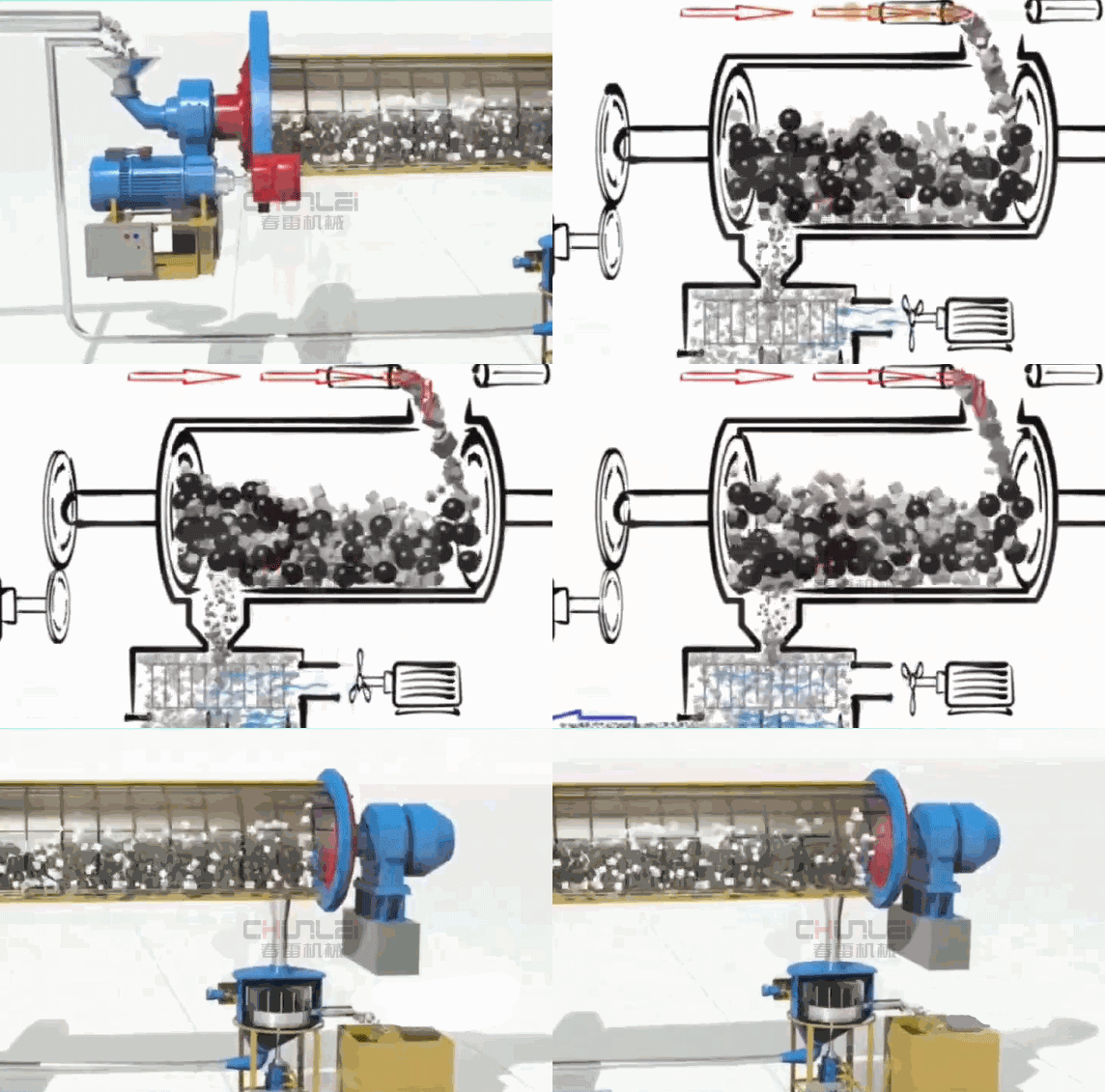
Wet ball mill through the transmission device to make it rotate slowly, the material from the cylinder feeding end to feed, in the cylinder due to the steel ball and the ore itself to throw down the impact and self-grinding, the material can be crushed. Due to the continuous feeding of materials, the pressure prompts the materials in the cylinder to move from the feeding end to the discharging end. The material that reaches the finished size is discharged from the discharge end of the cylinder.
When wet grinding, the material is carried out by water flow; when dry grinding, the material is carried out by air flow.
Why Choose CHUNLEI Wet Ball Mills?
CHUNLEI wet ball mills are specifically designed for mineral processing and industrial grinding, offering the following advantages:
- High-Efficiency Grinding: Optimized cylinder structure and ball gradation improve grinding efficiency and reduce over-grinding.
- Wide Applicability: Suitable for various metallic and non-metallic ores and wet beneficiation processes.
- Energy Saving and Consumption Reduction: Employs a high-efficiency transmission system to reduce energy consumption and operating costs.
- Stable Operation: Key components use high-quality wear-resistant materials, resulting in long equipment life and low failure rate.
- Customization Support: Personalized equipment and production line solutions can be provided based on material characteristics, processing capacity, and output fineness.
- Comprehensive Service: Provides one-stop service including process design, equipment manufacturing, installation and commissioning, operation training, and after-sales technical support.
Choosing a CHUNLEI wet ball mill not only provides you with high-efficiency, low-energy-consumption, and long-life grinding equipment, but also allows you to enjoy professional mineral processing support and customized solutions, helping to improve production efficiency, reduce operating costs, and achieve a higher return on investment.
What are the differences between wet and dry ball mills?
The main difference between wet and dry ball mills lies in their grinding methods and applicable processes. Wet ball mills add an appropriate amount of water during the grinding process to form a slurry, resulting in higher grinding efficiency and less dust. They are suitable for use in conjunction with wet beneficiation processes such as flotation, magnetic separation, and gravity separation, and are widely used in mineral processing production lines for gold, copper, and iron mines.
Dry ball mills do not require the addition of water and are suitable for materials that are sensitive to moisture or require dry powder products, such as cement, limestone, and some non-metallic minerals.
For most mineral processing projects, wet ball mills are the most widely used grinding equipment due to their large processing capacity, high grinding efficiency, low energy consumption, and more uniform finished product particle size. If your production line uses a wet beneficiation process, a wet ball mill is generally recommended.
How to Choose the Right Wet Ball Mill Model?
When selecting a wet ball mill, factors such as material properties, processing capacity, feed particle size, output fineness, and production process should be comprehensively considered. For ores with high hardness, equipment with better wear resistance should be selected; production lines with large processing capacities require larger ball mills. If it is used in conjunction with wet processes such as flotation and magnetic separation, the model should be selected based on the overall process flow.
If you are unsure about the specific model, you can contact CHUNLEI engineers to conduct ore tests first. Based on the test results, a customized wet ball mill and complete grinding solution can be developed to achieve higher grinding efficiency, lower energy consumption, and a better return on investment.
What equipment is needed to power a wet ball mill?
A complete wet ball mill production line typically consists of equipment for feeding, grinding, classifying, beneficiation, and dewatering, which can be flexibly configured according to the ore properties and process requirements.
Common supporting equipment includes:
- Vibrating feeder: for uniform and continuous feeding;
- Jaw crusher: crushes large pieces of ore to the grinding particle size;
- Wet ball mill: completes ore grinding and is the core equipment of the entire production line;
- Spiral classifier or hydrocyclone: controls grinding fineness and improves grinding efficiency;
- Flotation machine, magnetic separator, or gravity separator: separates minerals according to ore type;
- Thickener, filter press, or ceramic filter: used for dewatering concentrate or tailings;
- Conveying equipment and automatic control system: achieves continuous and efficient production.
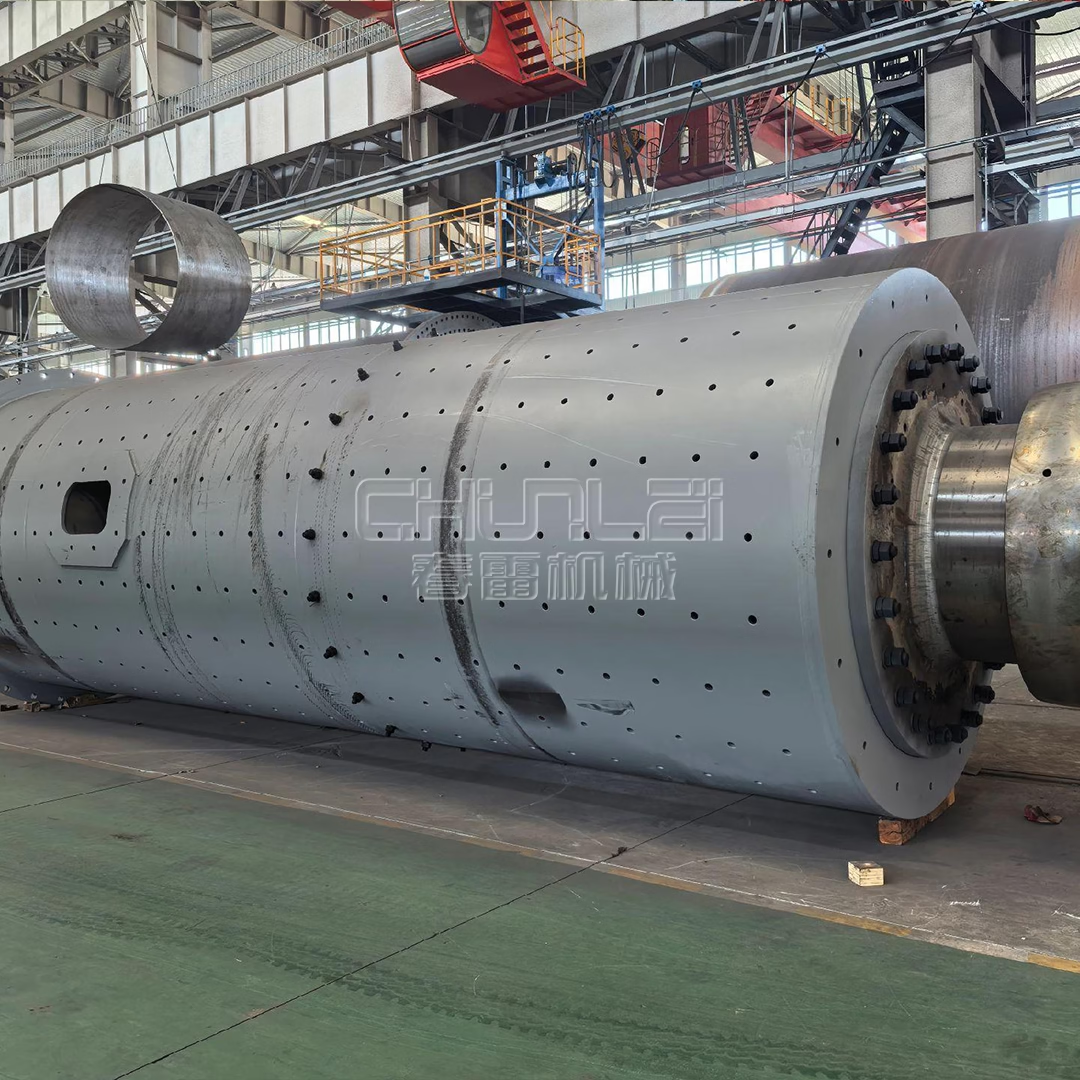
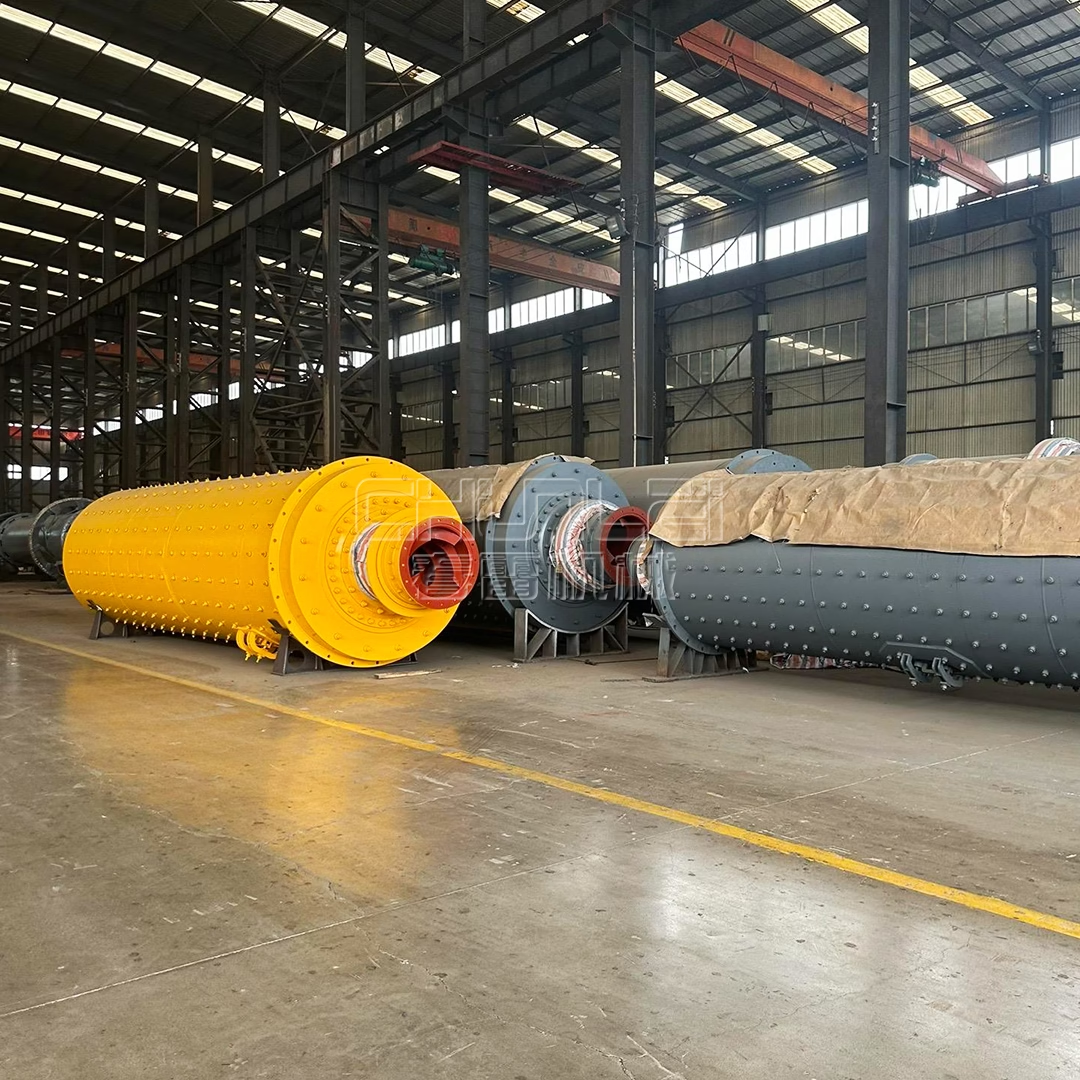
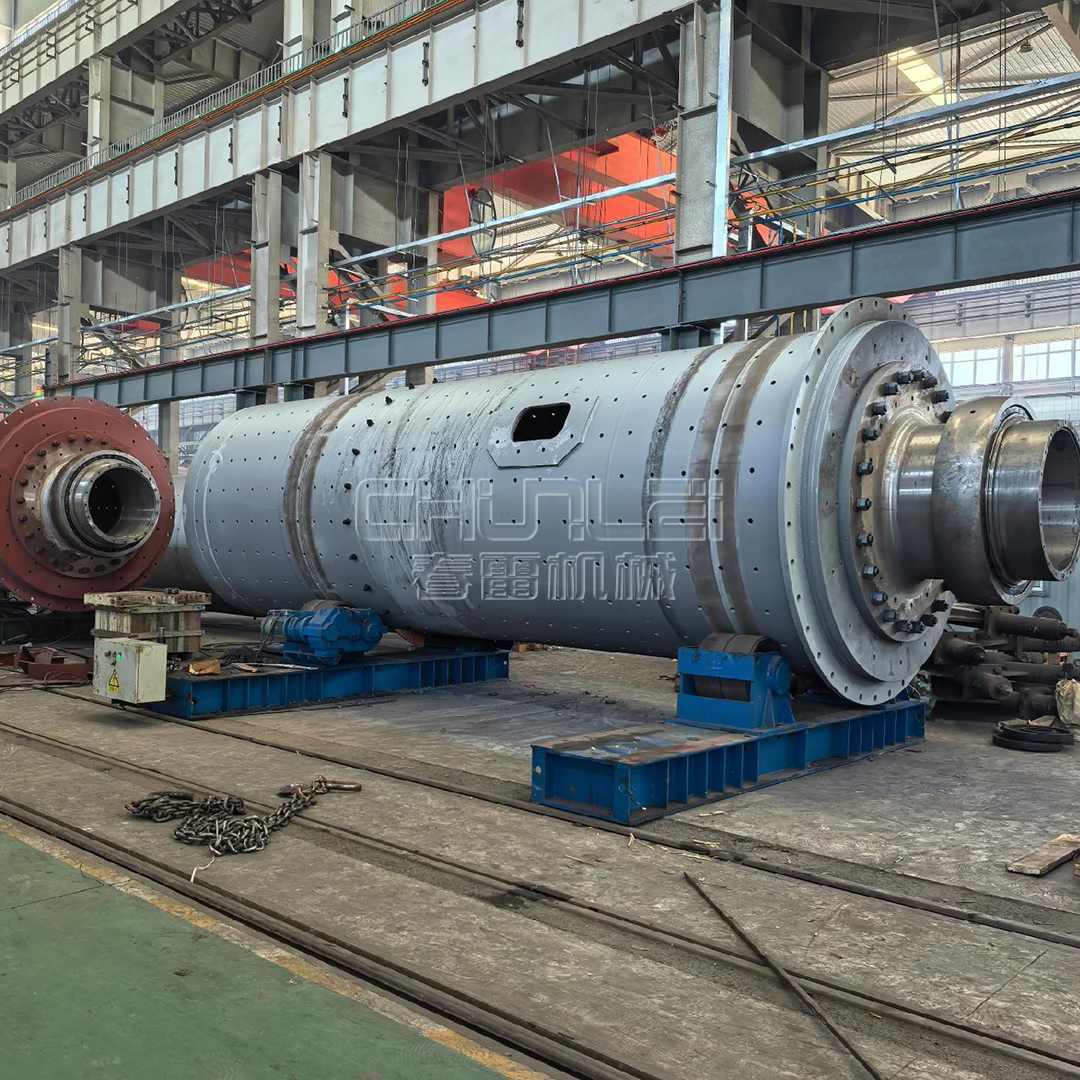
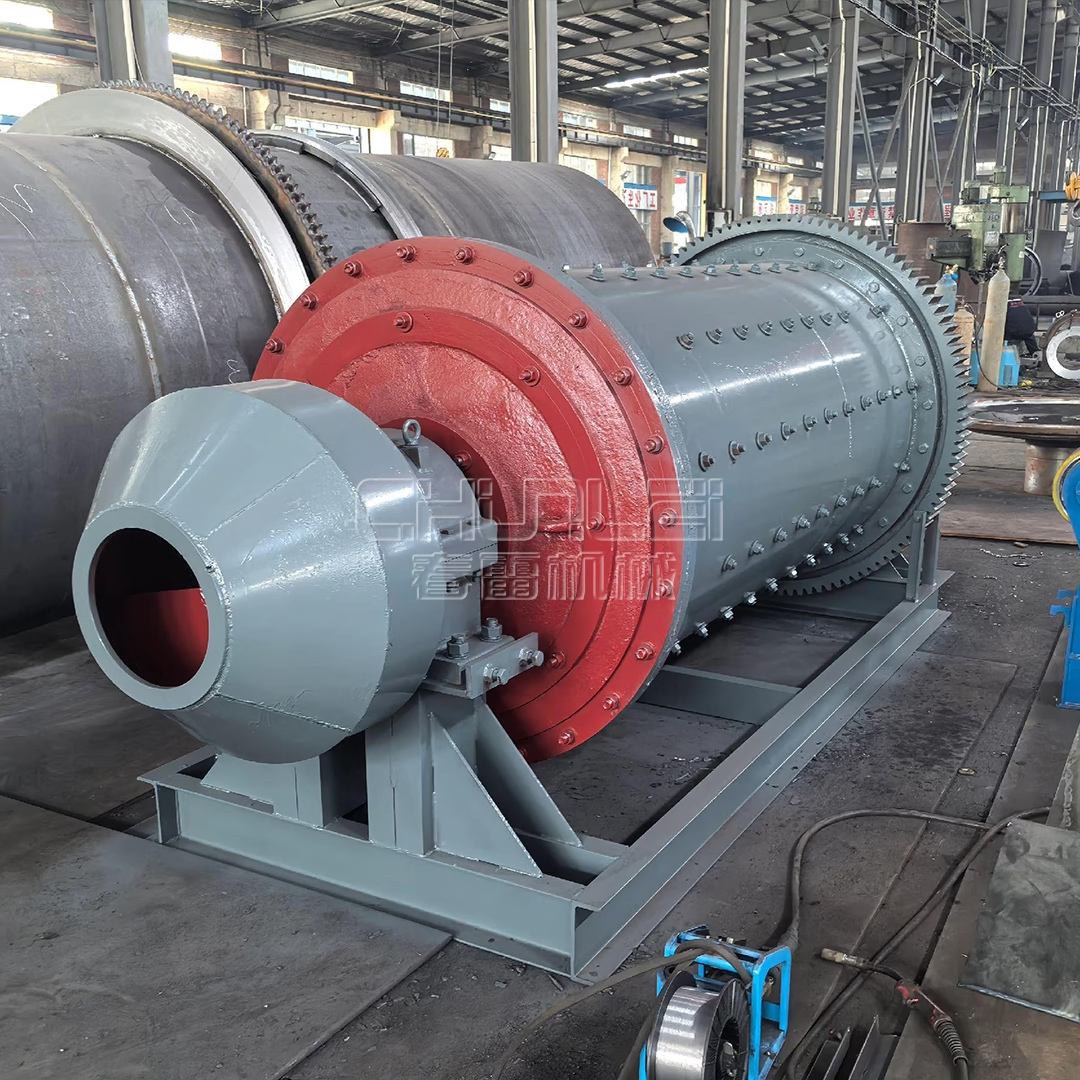
Wet Ball Mill ordered by Customer
Chunlei Machinery has been engaged in mining machinery manufacturing for more than 30 years, with a wealth of experience in building websites and customer cases, served customers all over the world!
Technical Parameters of Wet Ball Mill
| Model | Cylinder diameter (mm) | Cylinder length (mm) | Motor Model | Motor power (kW) | Length (mm) | Width (mm) | Height (mm) | Capacity (t/h) | Effective volume (m3) | Maximum ball loading(t) | Weight (kg) |
|---|---|---|---|---|---|---|---|---|---|---|---|
| MQ 1212 | 1200 | 1200 | Y200L2-6 | 22 | 3512 | 2076 | 1620 | 0.17 ~4.1 | 1.14 | 2.4 | 9610 |
| MQ 1224 | 1200 | 2400 | Y280M-8 | 45 | 5745 | 2352 | 1778 | 0.26 ~6.15 | 2.4 | 4.6 | 12692 |
| MQ 1240 | 1200 | 4000 | JR117-8 | 80 | 7990 | 2210 | 2262 | 0.34~8.3 | 3.8 | 7.8 | 15932 |
| MQ 1515 | 1500 | 1500 | Y280M-8 | 45 | 5740 | 3075 | 2280 | 1.4~4.5 | 2.2 | 5 | 17125 |
| MQ 1530 | 1500 | 3000 | JR117-8 | 80 | 7253 | 3070 | 2280 | 2.8 ~9 | 5 | 10 | 21425 |
| MQ 1536 | 1500 | 3600 | JR126-8 | 110 | 8595 | 3185 | 2280 | 3~11 | 5.4 | 11.4 | 24213 |
| MQ 1545 | 1500 | 4500 | JR127-8 | 130 | 9680 | 3254 | 2370 | 3.5~12.5 | 7 | 12 | 27346 |
| MQ 1830 | 1800 | 3000 | JR136-8 | 180 | 8250 | 3620 | 2785 | 4.5 ~27 | 6.65 | 14 | 31850 |
| MQ 1836 | 1800 | 3600 | JR136-8 | 180 | 8866 | 3683 | 2785 | 4.5 ~29 | 8.2 | 13.8 | 35467 |
| MQ 1845 | 1800 | 4520 | JR137-8 | 210 | 9808 | 3683 | 2785 | 5~35 | 10.2 | 19 | 38909 |
| MQ 1856 | 1800 | 5620 | JR137-8 | 210 | 10909 | 3683 | 2785 | 6~40 | 12.2 | 22 | 41681 |
| MQ 1870 | 1800 | 7020 | JR138-8 | 245 | 12404 | 3783 | 2735 | 7~50 | 15 | 31.5 | 45166 |
| MQ 2122 | 2100 | 2200 | JR128-8 | 155 | 7135 | 4137.7 | 3083 | 5~29 | 6.6 | 20 | 38340 |
| MQ 2130 | 2100 | 3000 | JR136-8 | 180 | 8220 | 4220 | 3083 | 6.5 ~36 | 9 | 27 | 43100 |
| MQ 2136 | 2100 | 3600 | JR137-8 | 210 | 9154.5 | 4320 | 3433 | 7.5 ~42 | 10.8 | 23.5 | 45833 |
| MQ 2140 | 2100 | 4000 | JR137-8 | 210 | 9654 | 4320 | 3083 | 7.5 ~45 | 12.8 | 22.5 | 47262.4 |
| MQ 2145 | 2100 | 4500 | JR137-6 | 280 | 10350 | 4253 | 3125 | 10 ~50 | 13.5 | 23.6 | 52648 |
| MQ 2230 | 2200 | 3000 | JR137-8 | 210 | 8220 | 3864 | 3183 | 7.5 ~45 | 9.8 | 20.6 | 44600 |
| MQ 2430 | 2400 | 3000 | JR138-8 | 280 | 9023.5 | 4836.4 | 3490 | 7.2 ~92 | 11.5 | 22.5 | 59544.5 |
| MQ 2436 | 2400 | 3600 | JR138-8 | 320 | 9604.5 | 4836.4 | 3490 | 8 ~100 | 13.8 | 25.5 | 63932.5 |
| MQ 2442 | 2400 | 4200 | JR138-8 | 320 | 10204.5 | 4836.4 | 3490 | 8 ~110 | 16 | 30 | 67370 |
| MQ 2721 | 2700 | 2100 | JR138-8 | 245 | 8300 | 4786.4 | 3495 | 7.2 ~84 | 10.7 | 23 | 66743 |
| MQ 2727 | 2700 | 2700 | JR137-6 | 280 | 8901 | 4786.4 | 3490 | 7 ~110 | 13.8 | 29 | 71030 |
| MQ 2730 | 2700 | 3000 | JR1410-8 | 320 | 9610 | 5000 | 3495 | 8 ~115 | 15.3 | 32 | 83909.2 |
| MQ 2732 | 2700 | 3200 | JR1410-8 | 320 | 10724 | 5000 | 3620 | 8 ~120 | 15.7 | 32 | 88073 |
| MQ 2736 | 2700 | 3600 | JR158-8 | 380 | 10409 | 5150 | 3620 | 12~145 | 17.7 | 37 | 95300 |
| MQ 2740 | 2700 | 4000 | JR158-8 | 380 | 10609 | 5150 | 3620 | 12.5 ~152 | 19 | 42 | 98454 |
| MQ 2745 | 2700 | 4500 | JR1510-8 | 450 | 11534 | 5200 | 3670 | 13~160 | 22 | 40 | 100016 |
| MQ 2747 | 2700 | 4700 | JR1510-8 | 475 | 11779 | 5571 | 4175 | 13~170 | 23 | 45 | 101645 |
| MQ 2760 | 2700 | 6000 | JR1512-8 | 630 | 13299 | 5540.6 | 5140 | 15~200 | 30 | 60 | 119546 |
| MQ 2836 | 2800 | 3600 | JR1510-8 | 400 | 10964 | 5350 | 3670 | 13~160 | 19.7 | 41 | 106350 |
| MQ 3231 | 3200 | 3100 | TDMK630-36 | 630 | 12750 | 6750 | 5150 | 14~180 | 22.5 | 45 | 115430 |
| MQ 3245 | 3200 | 4500 | TDMK800-36 | 800 | 13896 | 7200 | 5152.5 | 95~110 | 32.8 | 65 | 147588 |
| MQ 3645 | 3600 | 4500 | TDMK1250-40 | 1250 | 18280 | 7700 | 5496 | 115~170 | 41.5 | 76 | 195727 |
FAQ
Q: Which industries are suitable for wet ball mills?
A: Wet ball mills are widely used in mining, mineral processing, building materials, chemical, and power industries. They are suitable for wet grinding of materials such as gold, copper, iron, lithium, and quartz sand.
Q: Can wet ball mills process high-hardness ores?
A: Yes. Wet ball mills can process high-hardness materials such as quartz, iron ore, and copper ore while maintaining stable grinding efficiency.
Q: Can the output fineness of a wet ball mill be adjusted?
A: Yes. By adjusting the steel ball gradation, grinding time, and classification system, different particle sizes can be obtained to meet various process requirements.
Q: Why do wet ball mills produce less dust than dry ball mills?
A: Because water is added during the grinding process to form a slurry, dust is effectively suppressed, improving the working environment and reducing material loss.
Q: Do wet ball mills require a continuous water supply?
A: Yes. A stable water supply helps maintain a suitable slurry concentration, improving grinding efficiency and subsequent mineral processing results.
Q: What are the vulnerable parts of a wet ball mill?
A: These mainly include steel balls, liners, bearings, and seals. Regular inspection and maintenance can extend the equipment’s service life.
Q: How to reduce the energy consumption of a wet ball mill?
A: Reasonable control of feed particle size, optimization of steel ball ratio, maintaining a stable feed, and regular equipment maintenance can effectively reduce energy consumption.
Q: Does a wet ball mill support customization?
A: Yes. Customized equipment and grinding solutions can be provided based on ore characteristics, processing capacity, output fineness, and production processes.
Q: How long does it take to install and commission a wet ball mill?
A: Installation and commissioning time depends on equipment specifications and project scale. Generally, it can be completed quickly and put into production under the guidance of a professional technical team.
Related Products —
High Gradient Magnetic Separator
A variety of models are available | Get the free price list! The High Gradient Magnetic Separator (HGMS) is a new type of strong magnetic separator developed on the basis of general strong magnetic separa…
BLL Spiral Chute
BLL spiral chute, also known as spiral chute separator, is a heavy separation equipment that utilizes the inertial centrifugal force generated by the slurry in the spiral rotary motion to realize the separation of light and heavy minerals. …
Spiral Sand Washing Machine
Spiral Sand Washing Machine, also known as gravel washing machine or Spiral sand washer, can be divided into single screw sand washing machine and double screw sand washing machine due to the different number of screws inside the screw s…
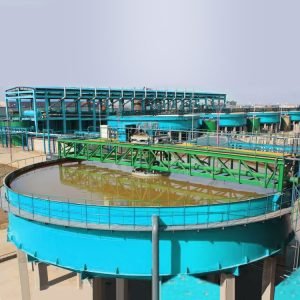
Thickener
The Thickener, with built-in degassing tank and sawtooth external overflow weir, prevents solid particles from attaching to air bubbles, improves localized suction phenomenon, and substantially increases the sedimentation area; at the same …
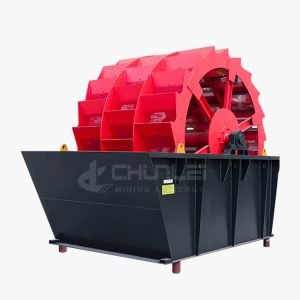
Wheel Sand Washing Machine
Wheel Sand Washing Machine is a kind of sand washing equipment used with sand making machine. It has high washing degree, reasonable structure, large handling capacity, small power consumption, and less sand loss in the sand washing proc…


loading…
已经是到最后一篇内容了!