 Chunlei Mining Machinery
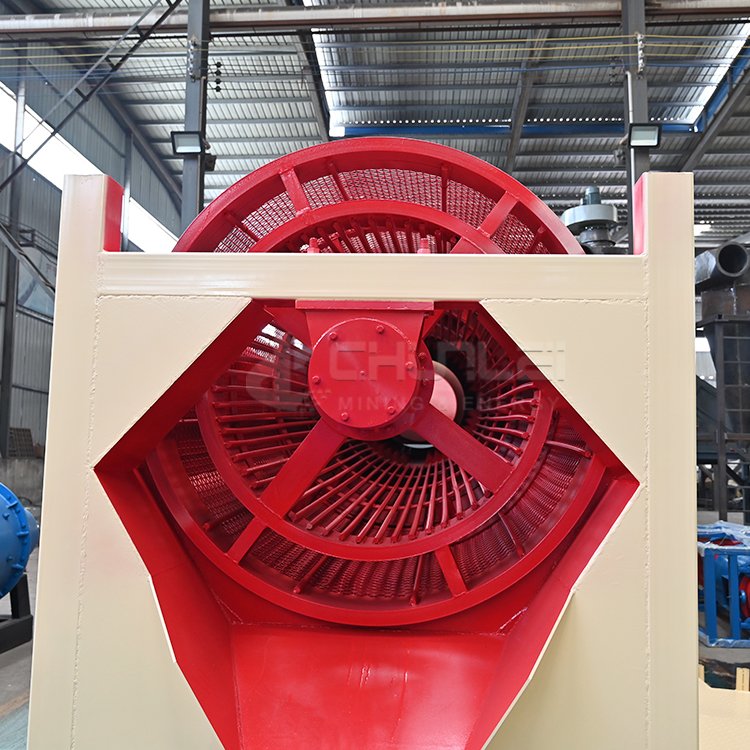
Tumbler Screen
A variety of models are available | Get the free price list!
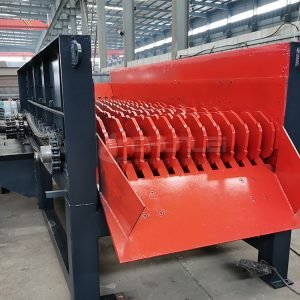
- Trommel screen is divided into two kinds of shafted and shaftless, shaftless trommel screen is also known as cylinder screen, gold separating screen machine, trommel trommel. Trommel screen is a kind of screening equipment which is graded according to the particle size of the material, which can be screened dry or wet with water, and it is a kind of highly efficient screening equipment which is highly popular.
- Feed size: < 300mm
- Capacity: 10-300 t/h
- Applicable areas: Suitable for quarry screening sand and stone, but also for coal, mineral processing, building materials, power and chemical industries for product classification.
What is a shafted drum screen?
The shafted rotary screen—also known as a shafted trommel screen—utilizes a central main shaft support structure; the main shaft drives the screen drum to rotate, enabling the continuous screening and classification of materials.
Shafted rotary screens are particularly well-suited for screening dry, free-flowing bulk materials with low viscosity. They are an ideal choice for stationary production lines and small-to-medium-scale screening projects, commonly serving industries such as mining, coal, and sand and gravel aggregates.
Working Principle of Tumbler Screen
Driven by a central shaft, the inclined screen drum rotates at a constant speed; as material enters from the feed end, it tumbles, turns over, and cascades along with the drum’s rotation, ensuring thorough loosening and stratification. Fine material smaller than the screen apertures passes through the mesh, while coarse material larger than the apertures moves along the inner drum wall toward the discharge end for removal. The entire process relies on gravity and centrifugal force—eliminating the need for external vibration—resulting in smooth operation and resistance to clogging.
The machine features a direct drive system, minimal vibration, and robust continuous processing capabilities, making it ideal for long-term, uninterrupted operation within fixed production lines.


Why Choose CHUNLEI’s Shafted Trommel Screen?
As a professional brand with years of deep expertise in mining equipment, CHUNLEI combines mature technology with extensive field experience, earning consistent praise and repeat business from clients. Choosing our shafted trommel screen offers the following key advantages:
- Superior Quality: Constructed from thickened carbon steel and wear-resistant plating, the unit is highly impact- and wear-resistant. It undergoes rigorous factory testing to ensure reliable operation and an extended service life.
- Tailored Customization: We customize the drum, screen mesh, feed/discharge structures, and auxiliary components based on your specific processing capacity, particle size requirements, site conditions, and environmental standards—delivering solutions perfectly matched to production lines of any scale.
- Optimized Screening Performance: With an optimized drum inclination angle and blade structure, combined with a variety of screen mesh options, the system ensures uniform material screening and high classification precision.
- Factory-Direct Value: By eliminating middlemen, we offer competitive pricing that reduces overall costs, including procurement and long-term maintenance.
- Comprehensive Service System: We provide free equipment selection advice, production progress updates, and remote installation guidance; for large-scale projects, on-site engineering support is available.
What materials are suitable for screening with a shafted rotary screen?
Shafted rotary screens are primarily designed for screening dry, free-flowing bulk materials with low viscosity; they are widely used in industries such as mining, coal, sand and gravel aggregates, and construction materials.
Commonly screened materials include:
- Ores: Iron ore, gold ore, copper ore, limestone, etc.;
- Coal: Run-of-mine coal, washed coal, coke, etc.;
- Sand and gravel aggregates: Manufactured sand, crushed stone, pebbles, and other construction aggregates;
- Construction material raw materials: Lime, cement clinker, clay, etc.;
- Chemical raw materials: Granular materials such as fertilizers and salts;
- Metallurgical materials: Coke, sintered ore, etc.
Featuring a central shaft support structure, shafted rotary screens offer stable operation and high load-bearing capacity, making them particularly well-suited for continuous screening operations involving large throughputs and materials with low to moderate moisture content. For materials with high moisture content or a tendency to tangle, a shaftless rotary screen is recommended.
Are shafted trommel screens suitable for the mining industry?
Yes, shafted trommel screens are widely used in the mining industry, particularly for the screening and classification of gold, iron, copper, and lead-zinc ores, as well as limestone and other minerals. Thanks to their stable central shaft support structure and high load-bearing capacity, these screens are capable of handling large-particle ores and high-volume material throughput.
In mining production lines, shafted trommel screens are typically employed for run-of-mine pre-screening, pre-crushing classification, and final product screening; they effectively enhance the efficiency of downstream crushing and mineral processing, reduce equipment load, and lower overall operating costs. They serve as highly efficient and reliable screening equipment for processing dry ores with uniform particle sizes.
Tumbler Screen ordered by Customer
Chunlei Machinery has been engaged in mining machinery manufacturing for more than 30 years, with a wealth of experience in building websites and customer cases, served customers all over the world!


Technical Parameters of Tumbler Screen
| Model | output (t/h) | power(kw) | |
| Sieve pore(2mm) | Sieve pore(30mm) | ||
| YTS1230 | 4-12 | 16-50 | 5.5 |
| YTS1240 | 4.5-14 | 20-60 | 5.5 |
| YTS1250 | 5-15 | 23-70 | 5.5 |
| YTS1530 | 6-18 | 25-75 | 5.5 |
| YTS1540 | 6-18 | 25-75 | 7.5 |
| YTS1550 | 7-20 | 26-80 | 11 |
| YTS1560 | 7-22 | 33-100 | 11 |
| YTS2040 | 8-25 | 40-120 | 11 |
| YTS2050 | 10-30 | 50-150 | 11 |
| YTS2060 | 12-35 | 55-175 | 11 |
How do you select the right model of shafted trommel screen?
When selecting a shafted trommel screen, you should consider factors such as material characteristics, processing capacity, and screening requirements. To obtain an accurate selection recommendation, it is advisable to provide the following information:
- Material type (e.g., sand and gravel, coal, ore, or organic fertilizer)
- Processing capacity (tons/hour)
- Screen aperture size (feed particle size) and finished product particle size
- Material moisture content
- Installation site conditions and any special requirements
Based on these parameters, CHUNLEI engineers will recommend the most suitable shafted trommel screen model to help you improve screening efficiency, reduce operating costs, and ensure long-term, stable equipment operation.
Does the shafted trommel screen support a mobile design?
Yes, the shafted trommel screen fully supports a mobile design—a technically mature solution—designed to overcome the challenges associated with fixed installations and difficult relocation, thereby extending high-efficiency screening capabilities from the workshop to any required job site.
| Configuration Type | Implementation Method | Suitable Scenarios |
| Towed (Tire-mounted) | High-strength tires and a foldable tow bar are installed at the base; equipped with hydraulic or mechanical outriggers. | Situations requiring periodic relocation between job sites where a towing vehicle (e.g., loader, tractor) is available. |
| Truck-mounted (Chassis-based) | The trommel screen is integrated onto a self-powered, specialized vehicle chassis; operated from the cab; capable of self-propulsion. | Projects with dispersed work areas, requiring frequent short-distance relocation and demanding high mobility. |
FAQ
Q: Can a shafted trommel screen handle wet materials?
A: Yes. Shafted trommel screens are well-suited for wet materials. By incorporating anti-clogging features (such as self-cleaning scrapers or anti-clogging wire brushes) or using screens equipped with cleaning mechanisms, they can effectively process materials with high moisture content (e.g., soil, compost, wet sand). However, for extremely sticky materials (such as high-viscosity sludge), it is recommended to use a pre-processing step like crushing or drying.
Q: What is the service life of the screen mesh?
A: The lifespan depends primarily on material hardness, abrasiveness, and usage intensity. Under standard operating conditions (e.g., screening soil, sand/gravel, or grain), high-quality polyurethane screens typically last 6–12 months, while woven wire mesh lasts about 3–6 months. For highly abrasive materials (e.g., ore, construction waste), wear-resistant steel plate or manganese steel screens are recommended, along with regular rotation or replacement.
Q: Is the energy consumption of a shafted trommel screen high?
A: No. Shafted trommel screens are low-energy screening devices. Power consumption is primarily used to rotate the central shaft and screen drum, typically requiring a 5.5–30 kW motor. For a medium-sized unit with a processing capacity of 50–80 t/h, electricity consumption is usually around 0.3–0.8 kWh per ton of material—significantly lower than that of high-frequency vibrating screens.
Q: Does a shafted trommel screen require a dust removal system?
A: It depends on the material. If processing dry, high-dust materials (e.g., dry sand, cement clinker, coal dust), a dust removal system (such as a bag filter or water spray dust suppression) is recommended to meet environmental standards. If processing wet or bulky materials (e.g., construction waste, compost, wet soil), dust generation is minimal, so dust removal systems may not be necessary, or simple enclosure may suffice.
Q: Is the installation of a shafted trommel screen complex?
A: No, it is not complex. The shafted rotary screen features an integrated modular structure and is fully assembled and tested at the factory before shipment. On-site installation primarily involves leveling the ground, positioning the equipment (or moving the mobile unit into place), connecting the power supply, and connecting the feed and discharge ports (optional). Installation and trial runs can generally be completed within 1–2 days. Mobile units require virtually no installation; simply leveling the support legs upon arrival makes them ready for use.
Q: Can the shafted rotary screen operate continuously for 24 hours?
A: Yes. The shafted rotary screen is designed for continuous operation, with core components (bearings, gearboxes, and motors) selected for long-term, heavy-duty use. With proper daily lubrication and regular inspections, it is fully capable of 24/7 uninterrupted operation. We recommend inspecting bearings and seals every 500 hours of operation and changing the gearbox lubricant every 2,000 hours.
Q: Should the shafted rotary screen be customized?
A: In most cases, customization based on actual requirements is recommended. While standard specifications exist, processing volumes, particle size requirements, and operating environments vary significantly depending on the material. Common customization options include: screen mesh material and aperture combinations; feed and discharge port locations and dimensions; mobile vs. stationary configurations; dust covers or dust extraction ports; motor power and voltage; and anti-corrosion or wear-resistant treatments. Providing material samples and capacity requirements allows the manufacturer to propose a tailored design solution.
Q: What are its advantages compared to a vibrating screen?
A: For standard dry granular materials, the shafted rotary screen offers higher processing capacity, lower operating noise, and superior resistance to clogging, making it better suited for high-capacity, continuous production; however, for screening ultra-fine powders, a vibrating screen is recommended.
Summary
Drawing on our experience serving thousands of industrial clients worldwide, we offer the following practical procurement recommendations:
- Prioritize material characteristics: First, assess the material’s moisture content, viscosity, and particle size; shafted rotary screens are suitable only for dry, non-sticky materials.
- Consider site conditions: If your facility has limited space and requires a compact equipment layout, this model is an ideal choice.
- Balance budget and requirements: This equipment entails a low initial investment, making it highly suitable for small-to-medium-sized projects. Avoid purchasing oversized models unnecessarily to prevent equipment underutilization.
- Select appropriate accessories: Enhance operational performance by adding dust covers or material cleaning devices based on environmental regulations and material properties.
Please contact CHUNLEI’s professional engineering team for a free equipment configuration plan, a comprehensive specifications sheet, and an accurate price quote. We will respond within 24 hours to provide a tailored screening solution for your production line.
Related Products —
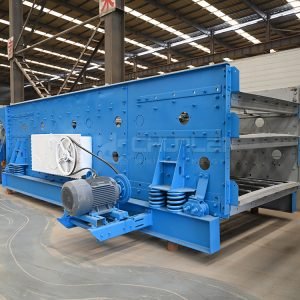
Three-shaft horizontal vibrating screen
A variety of models are available | Get the free price list! Three-shaft horizontal vibrating screen also called three-axis horizontal vibrating screen sieve , is a new type of vibrating screen with multi-layer num…
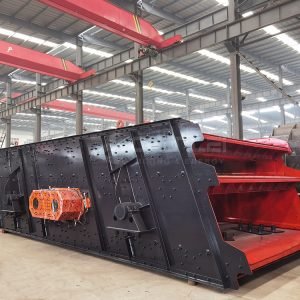
Circular Vibrating Screen
A variety of models are available | Get the free price list! Circular vibrating screens (also called inclined circular motion vibrating screens) are multi-layer high-efficiency screening equipment. Driven by an ecc…
Vibrating feeder
Vibrating feeder, also known as vibrating feeder, can provide continuous and uniform feeding for crushing machinery and screening of materials, which is widely used in crushing and screening combined equipment in mineral processing, buil…
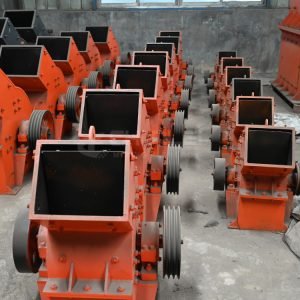
Small Hammer Crusher
A variety of models are available | Get the free price list! Small hammer crusher is a kind of small hammer crusher, which is mainly used for medium and fine crushing of various materials.Hammer crusher can be used…
Mud and Stone Separator
Mud and stone separator, as the name suggests, is a device to separate mud and stone, also called mud and stone separating and screening equipment. Roller screen is made of multiple shafts, divided into multiple segments to drive the mat…

loading…
已经是到最后一篇内容了!